DSM-5; step into the straight-jacket…

DSM-5


It is out today.

Back in February, I wrote a long piece reflecting on a number of issues thrown up by the new American Psychiatric Association edition of the Dignostic and Statistical Manual of Psychiatric Disorders. I confessed to considerable skepticism and concerns into the way this hugely dominant document had been drafted. Here is some of what I said

 It matters on an individual level because all of us will be affected by mental disorder. One in four of us will be diagnosed according to one of the classifications above, so even if this is not you it will be someone you love or someone you work with. Lots of us feel a strange relief when distress is given a name – it suggests understanding, companionship, a removal of uncertainty and the possibility of treatment. However, for many these can easily become self perpetuating and destructive as they have the effect removing responsibility, ownership and eventually hope of recovery, which some never find again.

It matters too on a sociological level. Our societies are increasingly regulated by psychiatry. We medicalise, medicate and plan ‘evidence based interventions’ into all sorts of human variation. This may simply amount to the application of science and knowledge to the alleviation of mental illness, but the question is whether this is ‘healthy’? Are we seeking to make a world in which the mess and gristle of life is edited out, tidied away, chemically suppressed? And is it working?

Psychiatric classification almost always demands treatment, so step forward the drug companies, with another product to push by fair means or foul. All those countless drug rep funded lunches, gadgets, even holidays, in the name of publicity for the next wonder drug. Even if the drugs do half of what they promise there is no doubt that our population is increasingly medicated.

At the time I wrote a list of what I hoped might form the new direction within mental health care- which I am convinced will be looked back on by future generations with shame and anger;

Away from ‘illness’ towards ‘distress’

Away from ‘symptoms’ towards understanding that we develop different  means of coping with this distress.

Away from restrictive labels towards listening to individual experience.

Away from medicalised interventions, towards encouragement and support of individual recovery.

Away from simplistic distinctions between ‘psychosis’ and ‘neurosis’ towards a greater interest and understanding of the effect of trauma.

Away from segregation and ‘otherness’ towards seeing mental distress as an essential part of the human experience and as such, part of all of our experiences.

Away from ‘maintenance’ towards hope and acceptance.

I was not expecting quite so much public and professional resistance to DSM5- even to the point of questioning anew the core concepts of ‘mental illness’. This from here;

Critics claim that the American Psychiatric Association’s increasingly voluminous manual will see millions of people unnecessarily categorised as having psychiatric disorders. For example, shyness in children, temper tantrums and depression following the death of a loved one could become medical problems, treatable with drugs. So could internet addiction.

Inevitably such claims have given ammunition to psychiatry’s critics, who believe that many of the conditions are simply inventions dreamed up for the benefit of pharmaceutical giants.

A disturbing picture emerges of mutual vested interests, of a psychiatric industry in cahoots with big pharma. As the writer, Jon Ronson, only half-joked in a recent TED talk: “Is it possible that the psychiatric profession has a strong desire to label things that are essential human behaviour as a disorder?”

Psychiatry’s supporters retort that such suggestions are clumsy, misguided and unhelpful, and complain that the much-hyped publication of the manual has become an excuse to reheat tired arguments to attack their profession.

But even psychiatry’s defenders acknowledge that the manual has its problems. Allen Frances, a professor of psychiatry and the chair of the DSM-4 committee, used his blog to attack the production of the new manual as “secretive, closed and sloppy”, and claimed that it “includes new diagnoses and reductions in thresholds for old ones that expand the already stretched boundaries of psychiatry and threaten to turn diagnostic inflation into hyperinflation”.

Others in the mental health field have gone even further in their criticism. Thomas R Insel, director of the National Institute of Mental Health, the American government’s leading agency on mental illness research and prevention, recently attacked the manual’s “validity”.

And now, in a significant new attack, the very nature of disorders identified by psychiatry has been thrown into question. In an unprecedented move for a professional body, the Division of Clinical Psychology (DCP), which represents more than 10,000 practitioners and is part of the distinguished British Psychological Society, will tomorrow publish a statement calling for the abandonment of psychiatric diagnosis and the development of alternatives which do not use the language of “illness” or “disorder”.

The statement claims: “Psychiatric diagnosis is often presented as an objective statement of fact, but is, in essence, a clinical judgment based on observation and interpretation of behaviour and self-report, and thus subject to variation and bias.”

All this comes starkly to light when we hear the voices of experience;

“Strange though it may sound, you do not need a diagnosis to treat people with mental health problems,” said Dr Lucy Johnstone, a consultant clinical psychologist who helped to draw up the DCP’s statement.

“We are not denying that these people are very distressed and in need of help. However, there is no evidence that these experiences are best understood as illnesses with biological causes. On the contrary, there is now overwhelming evidence that people break down as a result of a complex mix of social and psychological circumstances – bereavement and loss, poverty and discrimination, trauma and abuse.”

Eleanor Longden, who hears voices and was told she was a schizophrenic who would be better off having cancer as “it would be easier to cure”, explains that her breakthrough came after a meeting with a psychiatrist who asked her to tell him a bit about herself. In a paper for the academic journal, Psychosis, Longden recalled: “I just looked at him and said ‘I’m Eleanor, and I’m a schizophrenic’.”

Longden writes: “And in his quiet, Irish voice he said something very powerful, ‘I don’t want to know what other people have told you about yourself, I want to know about you.’

“It was the first time that I had been given the chance to see myself as a person with a life story, not as a genetically determined schizophrenic with aberrant brain chemicals and biological flaws and deficiencies that were beyond my power to heal.”

Longden, who is pursuing a career in academia and is now a campaigner against diagnosis, views this conversation as a crucial first step in the healing process that took her off medication. “I am proud to be a voice-hearer,” she writes. “It is an incredibly special and unique experience.”

In the 1960’s the liberation battles were about race, the 1970’s gender, the 1980’s sexuality. The 1990’s we began to think we had sorted it all out and in the 2000’s we discovered that perhaps we had not.

This decade, let us take on the oppressive machine that makes madness out of the variety of human distress.

A few more reflections on our wilderness retreat…

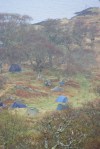
Looking down on our camp site

Regular readers of this blog will know that one of the things I really love to do is to immerse myself in wild places and for many years (along with some old friends) I have been taking time each year to make what we call ‘wilderness retreats’.  These usually involve camping on small uninhabited islands and following a deliberate rhythm of silence and community- with a lot of laughter in between.

Increasingly we have enjoyed being hosts and have been joined by friends, friends of friends and contacts from the assortment of church contacts and networks we are connected to.

This year, Crawford (a friend who has been coming for a few years now ans our go-to source for all things avian) described how it was usually only quite a while after we had left the island that its full impact was felt- almost as if we take a little of it away with us.

This year I felt very privileged to take some people who had never camped before and certainly never managed to get out to a wild west island. I always worry about the shock to the system that camping wild can be to those who have never done it before- particularly when (as happened this year) the weather is bad. It requires a methodical stoicism and can result in real lows as well as highs.

Half way through for example, I was convinced that my mate Graham was in some kind of stupour induced by wet waterproofs and fear of the poo-trowel. I would have taken odds on him chalking all of this camping in the wild stuff to experience and deciding that, if he were to survive, it was an experience he would never repeat.

Graham- "What have I done?"

Which just goes to show how wrong  I can be.

Graham is a blogger too, and his blog has had a series of reflections on the retreat- the last of which is here.  I loved this;

What I loved about retreat on that island was trying to discover a male spirituality that did not rely on dominance and aggression but had a measure of strength and vulnerability. It was ok to pray, share deeply, lose the mask of invulnerability and at the same time banter, fart, make toilet jokes, swear and build fires. Realising you are male, a Jesus follower and you don’t have to pretend/assume false piety is a very powerful thing.

I don’t claim to have discovered ‘a model’: there isn’t one, but the route of honesty is good for the journey…

It occured to me again that one of the most important spiritual disciplines is the attitude of vulnerability. We normally armour ourselves against this in a thousand ways, but in wilderness, on a tiny island, in silence, this armour falls away. For those like Graham who experience this for the first time, it falls with a loud clang.

There have been a couple of other lovely things that have been inspired by the retreat which I wanted to mention here- firstly Andrew wrote a lovely poem on his blog- which is here. A quick excerpt- but please go and read the whole thing;

Steel grey skies darken,
Hidden rock spires, deep depths, whirling, roaring tides and waves.
Wind and waves grow,
Deck lurching side to side,
Uncertainty,
Hope,
A rocky shore, but his plan, not ours.
Safe upon a new shore, an unknown glen, not known for generations passed.
Rocks, prayers,
The rough-hewn blackness sinking into waves,
Rocks, prayers,
Held, carried, prayed over
Are you there?
Finally, Andy- who has been a friend of mine for about 25 years, and a companion on many of these trips, wrote a song. More than that, he recorded the song, and made a video using clips and photos taken on quite a few of our trips- I recognised Scarba (x2) Jura, Coll, Eilleach an Naiomh, The McCormaigs and man more. It is quite lovely, and so here it is;

Today we cut down trees…

tree felling 1

….and I feels slightly sad.

Trees are creatures that seem in many ways senior to we fidgeting humans. They are older, more planted (ahem) still and silent. They provide shelter for a million lesser creatures in their wide spread generous embrace.

To plant a tree is to invest in the distant future- perhaps of our children’s children.

To cut down a tree means that we take a slice from our living history and discard it.

Having said all that, today we will fell 5 trees in our gardens. Trees in gardens always feel a little like ships in ponds. They might look nice, but really they need the open sea.

Two of them are non-native to Scotland. I have no prejudice towards aliens- I am that myself. These are great big awkward conifers that suck in the light that should ripen our vegetables. They are perhaps the youngest of the bunch- maybe thirty or forty years old.

The other three are odd shaped sticky sycamore trees- possibly self seeded around the edges of the garden, 60-70 years ago. Some of them have become unbalanced and diseased, and given the storm winds of late, we can no longer risk them falling on to our neighbors.

Sycamores are the mongrels of the tree world- they spring up like rabbits and scrabble for space with a lust for life that makes the more cultured pull in their roots in distaste. But the light of the sun on their bright spring leaves is lovely.

May they rest in peace.

The discussion has already begun as to what we might plant in their places…

tree felling 2

Ways to pray in public places…

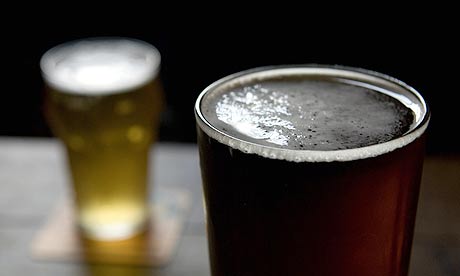
pints of beer

It has been a long day. I was off early to Lochgilphead as I was a trainer on a course for social workers who are about to participate in our emergency out of hours duty rotas across Argyll. Part of todays task was to look at some child protection issues- including the inevitable photographs of injuries that been inflicted on kids- little boys with cigarette burns on their feet and tiny girls with finger bruises wrapped around their faces. I am always broken a little bit when I see these photographs.

So I should be- but this relates also to my own childhood memories, fractured as they are.

However, in the midst of all this, I had a transcendent moment. Don’t get me wrong- no angels sang, there was no whiff of incense or pure white lights. What I was captured by was the sudden depth of the Kingdom of God- woven through everything, and this thing called the shalom of God. What might it mean to hope for a future in which the lion will lie down with the lamb, and in which all things are made new?

A world in which parents do not damage children, and damaged children do not do damage in turn? A world where love sets the agenda in more things than not?

Come the evening I was sat in a pub with some friends. We have been meeting to discuss a book by Brian McLaren called A New Kind of Christianity. Tonight however we did discuss the book, but I suggested we try to find a way, in the busyness of the public bar, to pray.

I started with something that we had used on an island recently, in the middle of a wilderness with eagles riding the late spring storms over our heads. I thought that if God was there, then he was here too.

  • I asked people to find a place of quietness inside themselves- to find a neutral spot on wall or table to look at, and to focus on their breathing
  • Next I asked them to listen to the sounds all around them in the pub. The hubbub of conversation, the chink of glasses, the scrape of knives of plates, phones ringing jokes raising burst of laughter. I asked them to notice as many different sounds as possible and acknowledge each one
  • Then I asked them to listen again to deeper sounds- the sounds behind the sounds. As we do this, a remarkable thing happens. The hubbub kind of fades and blurs together- it ebbs and flows like the sea, and behind it all are other noises- the hum of all creation. Some people still noticed things like the ringing of a bell on the till, or the footsteps of a lovely friendly waitress
  • I then asked people to imagine that the sound behind the sounds was the music of God. God in and through it all, rejoicing in the beauty of us all. Rejoicing in the drinks, the food and the lives being shared. It was not hard to do so.

Next I passed round a pen and paper, and asked people imagine what God might want for all these people in the bar. What might he hope for them. I asked people to write something down, and to fold the paper over so the next person could not see it, then pass it on.

This is what people wrote, in no particular order;

Eternal life

Freedom!

I see your heart and know your sadness and want to bring you my peace.

Peace, hope, love and understanding

Shalom

Peace

And there, with a pint in my hand, it was holy.

When the saints go marching in (it will be crowded…)

saints

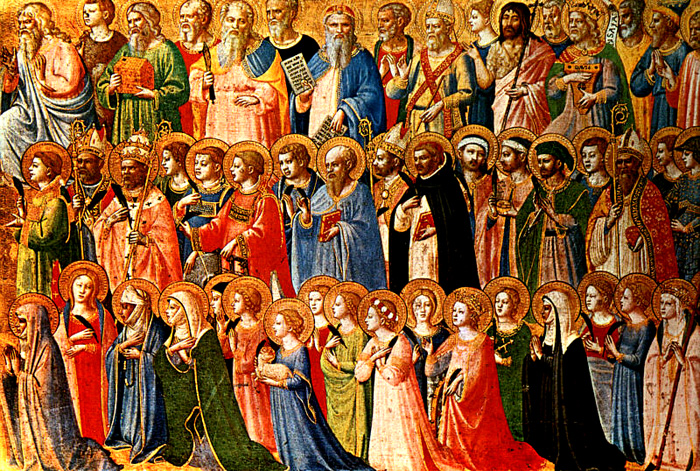
Pope Francis broke new records on Sunday by creating saints out of  813 citizens of Otranto, in southern Italy, who refused the demand of their Ottoman conquerors in 1480 to convert to Islam and were therefore beheaded.

There seems to have been a lot of saint making of late- John Paul II made 483 of them for instance- and there are now around 10.000- one per 100,000 Catholics.

‘What makes for a saint?’ you might ask- particularly those who are not of a religious persuasion. The rules are straightforward – check out Saints for dummies – basically you have to be responsible for two miracles from beyond the grave, and these have to be investigated and ‘proved’ before the Pope gives you the nod.

The recent batch where given their halos after the cure of Sister Francesca Levote from ovarian cancer after her fellow nuns prayed to them. The fact that she was also given chemotherapy and radiotherapy confuses things a bit however.

I confess I have always struggled a bit with all this sainting. I think there are some aspects of the reformation that still hold me, and one of these is the freedom from complicated formulaic means of accessing God through mediators, be they earthly or ghostly figures. However, in the way of remaining open and respectful of religious traditions that are not my own, I wondered what all these saints may bring to us that is of use in our own faith stories.

I suppose the most useful thing about all these saints is what they can teach us as examples of good people who lived out their faith.

Although to be fair, some of the saints are a bit, shall we say, suspect? Nobody is perfect (not even a saint) but we have people like St Ambrose, who inspired us to hate Jews. There were also a few that were a bit too liberal with the scarification, rolling in nettles and thorns a bit too much for my liking.

Some of them were great fun though. This from here;

 In the third century, St. Lawrence, who was burned to death on a grill, over hot coals, called out to his executioners, “This side is done. Turn me over and have a bite.” In the fourth century, St. Augustine of Hippo, puckishly prayed, “Lord, give me chastity … but not yet.”

Some saints were known specifically for their rich sense of humor. St. Philip Neri, a 16th-century Italian priest, for example, was called “The Humorous Saint.” Over his door he posted a small sign that read, “The House of Christian Mirth.” En route to a ceremony in his honor, he once shaved off half his beard, as a way of poking fun at himself. “Christian joy is a gift from God, flowing from a good conscience,” he said. And “A heart filled with joy is more easily made perfect than one that is sad.”

St. Francis de Sales, the 17th-century bishop of Geneva and renowned spiritual master, espoused what you might call a sensible, cheerful and gentle spirituality. “When you encounter difficulties and contradictions, do not try to break them, but bend them with gentleness and time,” he once wrote. His humane approach to spiritual matters stood in contrast to some of the rigidities of his day. So did his desire to help lay people live a life of deep spirituality — when “real” spirituality was thought to be the province of clerics. His classic text Introduction to the Devout Life was written specifically to help laypeople on their path to God.

Francis de Sales also knew how to use a joke to good effect. He was, for example, a great friend of St. Jane Frances de Chantal, a French noblewoman, and together, in 1610, they founded a religious order for women, the Visitation sisters. After Jane had initially decided to follow a strict religious life and remain unmarried after being widowed, she continued to wear low-cut dresses showing off her décolletage. On the night of their first meeting, Francis de Sales took a look at her dress quipped, “Madame, those who do not mean to entertain guests should take down their signboard.”

My kind of saints these.

Gentleness and time- I like that.

Anyone else got a favourite saint?

Vilifying the ‘other’- benefits and dehumanisation…

A-Jobcentre-office-007

A few days ago I was having a conversation with some friends about my experience of claiming unemployment benefit last year. In the room where a couple of doctors, two ministers of religion and a buyer for a large company- all of us with loads of education, years of contribution to our society, each with families and houses. Most had been in receipt of benefits at some time.

I found myself doing two things, both of which now feel like some kind of betrayal.

Firstly I felt the need to justify claiming benefits- out of a sense of shame. I talked about it (unwittingly) as some kind of sociological experiment. I added in a little bombast about all the years I had paid national insurance contributions and that claiming in my time of need was an act of civil justice that I felt myself entitled to. I don’t know if I convinced my friends, but the words certainly felt hollow in my ears.

The second thing that I heard myself doing was to describe my relationship with the staff at the job centre- how many of them knew me as a social work manager, and responded differently too me- in a confused way perhaps- unable to look me in the eye. I also told the story of how I saw a claimant ( a man I knew from my previous work) treated really badly.

What I was doing of course was distancing myself from the role of ‘claimant’. I was casting myself as an agent of class consciousness, humbling myself like Jesus, but really being ‘different’.

I listened to the stories of the other people in the room as they described their time claiming unemployment benefit- after redundancy for example – and it occurred to me that I was not alone in my ability to find ways of seeing myself as different- not like the others.

In my case this goes deep. I grew up as the child of a single mother, entirely reliant on benefits. We had clothing grants, free school meals, even vitamin enriched orange juice to try to ensure health. As I grew older, I enjoyed a free education, right up to degree level. I am a child of the Welfare State. In some senses I have spent my whole career trying to pay it all back- believing that the only job worth doing was one in service of the poor, the weak the broken. But when I look back at my childhood, the primary emotion I remember was shame, embarrassment, the feeling of being less-than, outside-of. Factually I know that these feelings are not fully rational- how could I help the position I was born into? However, they remain strong even now, and I did not realise how much until recently.

These emotions are pervasive and damaging to those of us who spend any time on benefits. It is hard not to lose our selves, hard to keep rising and creating new things, new ideas, new projections of ourselves. Friends of mine who are on disability benefits are both reminders of this (because I know how hard it is for them) but also transcend this daily. They are able to live fully and deeply in ways that I still find hard. I celebrate them as heroes.

But currently things are being made much harder for people who are on benefits. This from here;

Decades of findings in sociology and psychology tell us that as soon as a group can be defined as separate, as an “outgroup”, people will start to view them differently. We’re all familiar with the negative characteristics people seem to identify with benefit claimants. They’re lazy, dishonest, stupid, “scroungers”, and so on. But there are also deeper, largely unconscious beliefs that likely have even more profound and insidious effects. These have to do with whether benefit claimants are even felt to be truly, properly human in the same way that “we” are.

This idea comes from a relatively new body of work in psychology on something called “infrahumanisation“. The infra just stands for “below”, as in below or less than fully human. The term was coined by a researcher at the University of Louvain called Jacque-Philippe Leyens to distinguish this milder form of everyday dehumanisation from more extreme kind associated with genocide.

This is a fascinating (and quite scary) process whereby certain groups are not felt to have the same range of emotional experiences as everybody else. Specifically, while people are fine imagining them feeling basic emotions like anger, pleasure or sadness, they have trouble picturing them experiencing more complex feelings like awe, hope, mournfulness or admiration. The subtle sentiments that make us uniquely human.

Not all low status groups are in this invidious position. Some – for example disabled people and the elderly – tend to be disrespected, but are also felt to be warm and unthreatening. There are only a few groups that have the dubious honour of being considered to be both threatening and incompetent. These include poor people, homeless people, drug addicts and (you’ve guessed it) welfare claimants. It is these most stigmatised groups that people have the most trouble imagining having the same uniquely human qualities as the rest of us.

You can try it for yourself. Imagine the most stereotypical “chav” you can. Imagine their clothes, their surroundings, their posture, their attitude. Now imagine them feeling surprise, anger, or fear. Easy right? Well now imagine them experiencing reverence, melancholy, or fascination. If you found that just as easy, congratulations. But I’d bet for a few of you it was just that bit harder. I’m ashamed to admit it was for me.

The reason this is scary is that it takes the “infrahumanised” group out of the warm circle of our moral community. If we don’t think of them as experiencing the same rich inner life that we do; don’t imagine them feeling things in the same way that we do, then we lose some measure of our empathy for them, and consequently our sense of ethical obligation. This would explain why people are so tolerant of the cuts – on an unconscious level, the people being hurt aren’t real, full people. If this is true then fighting the cuts is going to be much, much harder than just fighting myths and misapprehensions.

The most shocking thing about this kind of dehumanisation is that it is found most present where the respectable folk gather- in our churches, in out prosperous neighbourhoods, around the coffee machines in posh coffee bars. It is how good people justify privilege and inequality- be that material/financial or the blessing of emotional/psychological resources that allow us to gain a position of security that others fail to reach.

But let us remember that shit happens. Each one of us is only an unpredictable event away from needing to claim benefits. If this happens, we will start out with a conviction that we are different, but perhaps we are not.

There are many reasons for followers of Jesus to stand against prejudice and dehumanisation. The hope of a better society, the call to include the outsiders, the call to bring justice to the oppressed. Perhaps too we can just remember that if we allow the current nasty victimisation heard in the press and the politicians mouths to go unchallenged, we all lose.

Watch this; “the enclosure act mark 2″…

In the Name of Greatness is Dorothy Allen-Pickard’s winning film in the documentary category of the Intergenerational Foundation young filmmakers’ short film competition in association with the Guardian and the National Union of Students. It is written and performed by Nicki Williams.

It combines a powerful poem with moving images to address questions of debt, greed, consumerism and the need for community.

And it is a new poetry of protest…

Aoradh wilderness retreat, 2013…

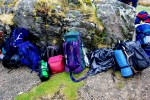
Andy in contemplation above the Grey Dogs tidal race

I am back!

Sadly, we did not manage to get on to Eileach an Naoimh, our planned retreat venue this year- the weather made a landing (via small inflatable from larger boat) rather dicey. Lindsay, the skipper of Sea Leopard II (highly recommended if you are in the need of a boat charter in these parts) had a good try,  from a couple of different points, but a storm was approaching, leaving only one sensible choice.

We had the choice of loads of other venues in the area, but opted for the northern end of Scarba- offering shelter from the approaching south west storm in the old birch trees in the hollow of big hills.

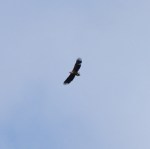
It was stunning, despite the weather being a challenge- made all the more special by two sea eagles who were our constant companions- huge birds, with 9 foot wingspans riding the winds over the raging tides of the Grey Dogs.

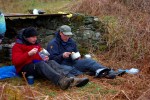
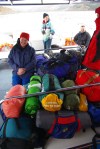
This year there were 11 of us who traveled in the end- a really great bunch of blokes from all parts of the country and many different walks of life. We had lots and lots of laughter, times of deep silence, prayer, fireside conversations and experienced the close camaraderie of sheltering in a rudimentary shelter rigged expertly by Sam and Neil.

There is so much I could say (and probably will) about our days together, but for now here are a few photos;