Christianity is weird…
Reply


So, another serious case review is convened to investigate the tragic circumstances of the death of a child at the hands of his parents.
This from The Guardian back in August. It makes for gut wrenching reading;
The mother and stepfather of Daniel Pelka will each spend at least 30 years in prison after a judge told them they had waged an “unprecedented” campaign of cruelty on the four-year-old boy.
Mrs Justice Cox said Daniel looked like a concentration camp victim at the time of his death and on the evening he suffered the fatal blow to his head had been force-fed salt and subjected to a form of water torture, which would have left him “terrified”.
The judge said it was possible the little boy, who was left to die in his filthy box room at the couple’s home in Coventry, may have been “lucid” after the final brutal beating and would have suffered “fear, anguish and physical pain” before losing consciousness.
She told his mother, Magdelena Luczak, 27, and her partner, Mariusz Krezolek, 34, that one of the most aggravating factors was the “chronic and systematic starvation” Daniel endured in the last months of his life.
“Both of you deliberately deprived him of food. He was literally wasting away,” she said. “His starvation was so chronic that his bones ceased to grow.” The judge reminded them that experts said during the trial that they had never seen such emaciation in the UK. “They likened his appearance to those who failed to survive concentration camps.”
Faced with stories like this, we first ask how on earth parents could do this to a tiny child. What kind of depravity could bring someone to such evil? Are they mad, or just bad?
Next we ask another question- why was nothing done about it? How come in this modern age, with billions spent on societal supports like social work, health, education and police, still we could not save this boy?
The most high profile case of the blame game that then follows on from these dreadful incidents was that known as ‘Baby P’. I have written extensively about this case- here for example. In this case, the media and the then Labour goverment (particularly Ed Balls) competed with each other to heap burning coals on the heads of people involved- particularly social workers. The arguments over how this tragedy became politicised and spun by a government on its last legs rages still.
Early signs are that we currently live in different times. David Cameron actually praised social workers in his speech at the recent Conservative Party Conference- which ironically contained many other policy statements that will fill social workers with rage and despair. The mood at present seems to be to accept that the nature of the social work task is incredibly difficult and that perhaps we can never save all children. There was another brilliant piece in The Guardian that tries to dig into the psychology of what happens when a social worker is faced with the messy reality of a family in difficulty (sorry, I know most of my references come from here, but it is my daily read!)
These were not bad or psychologically flawed practitioners; they were outmanoeuvred by aggressive parents, and overcome by the suffering and sadness in the atmosphere of such homes and in children’s lives. The case review on Daniel refers to how his home “was clearly one with a tense and sometimes violent atmosphere”. Caught up in such atmospheres, social workers become overwhelmed by anxiety and lose their purpose and focus.
Teachers, who tend not to visit the home, can be immobilised by how parents project into them their rage, lies and irrational beliefs – such as Daniel’s supposed eating “obsession”.
The case review concludes that Daniel “must have felt utterly alone and worthless … At times he was treated as inhuman, and the level of helplessness he must have felt in such a terrifying environment would have been overwhelming.” Perhaps the most painful truth that must be confronted is that, faced with the helplessness of children, social workers themselves can become helpless because they find the children’s suffering unbearable.
Every time we take a postmortem examination of the what when an why of one of these tragic incidents, there is a depressing familiarity about some of the conclusions. We always see ‘missed opportunities’ when professionals might have acted differently.
The other conclusion that might be inked in before the serious case review begins is this one- agencies will not have been seen to work together closely enough. They will not have ‘communicated’ or ‘co-operated’ effectively.
Why? It sounds so petty does it not? I have been reflecting on my almost 25 year social work career and trying to understand what this is all about. Here are my thoughts;
Are these things to blame for the death of children?
No, the cycles of damage done and received by individuals are cause the death of children. Drug use, alcohol use, broken people who break others. The blame game often answers few questions about why.
However, there is no doubt that some things will make it harder for us to co ordinate our efforts to save kids.

Prince Charming
.
I am the watcher watching those who watch
The shop windows blink
A man walks solely to prevent falling forward
-mouths clenched-teeth fuckers to the phantoms in his head
No-one meets the eye of the invisible woman at the checkout
She has no knight-errant
.
I am gasping for air in your waters
A cartoon shark swims by, making speech bubbles through a posh phone
Three girls on sex-stilts clatter out canned laughter
A bus passes like high tide
Sweeping the street clear of flotsam
The ship did not come in
.
I am monochrome
The colours bleed in the yellow light
A fug of fast food hangs like sulphur in the evening air
As a man pulls hard on his cigarette, making a warning light from his face
A girl walks with pretended purpose into empty shadow
Still hoping for Prince Charming
Advertising; a black art, I am sure you would agree.
Except, Pete Ward’s Book ‘Liquid Church’ changed my view somewhat a few years ago. He suggested that advertisements are a good way to read culture. No one reads culture more carefully than the advertisers and so new trends in advertising are always worth noting.
The drinks industry has produced some of the most interesting adverts of late. They are selling us an idea of who we are, in communal form, or who it thinks we want to be.
I loved the new Guinness advert for example. It plugs into something simple and beautiful- the power of friendship, the brotherhood between groups of men, competitive yet held together by strong ties of something that could never be uttered, but what Jesus called love.
See for yourself. (Sorry about the advert before the advert. The world is a mad place.)
Today is national poetry day in the UK. I thought it would be rude to let that one slip by unmarked…
Firstly, a wee thanks to all of you who sent poems for consideration for our up and coming collection via Proost. It has taken me longer than I thought to gather and sort them for the dreadful job of making final selections. I am still hoping that we will have a finished product out this year however. The delay has in part been because I am still getting submissions- which I have wanted to squeeze in. No more however please- I will now have to formally send them back with an apology…
On this auspicious day, lets celebrate the achievement of a friend of ours, who is the winner of the Hume Poetry Prize 2013; fellow Dunoon resident Marion McCready. She has submitted some poems for the book mentioned above and they are simply wonderful.
Her book will be published by Eyewear in the Spring of next year. I look forward to getting my copy.
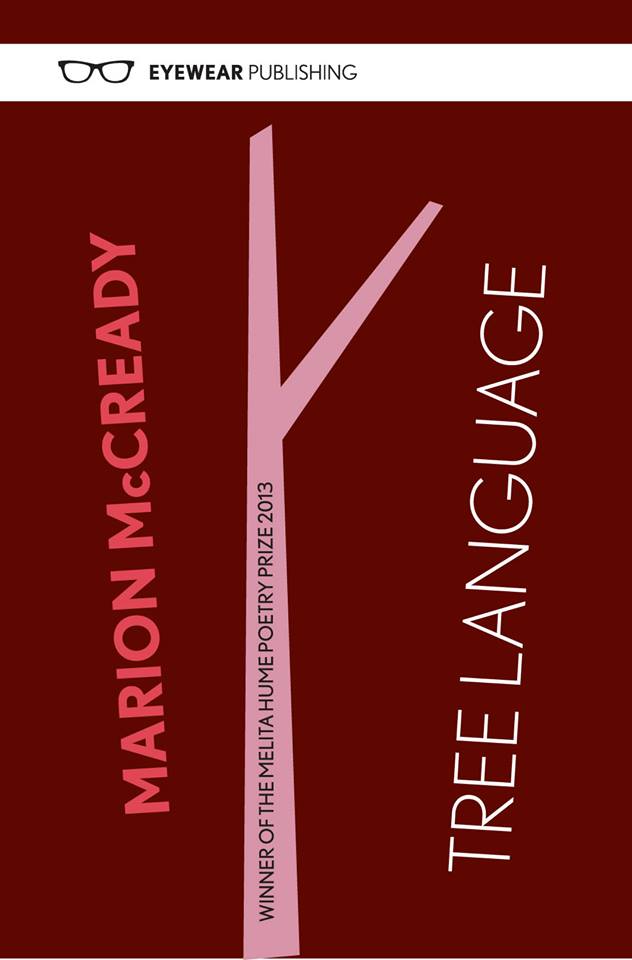
Marion is a proper poet- someone who has spent years honing her craft. By comparison, I am a scribbler of a few snatched lines in the edge of another confused day. However, this being National poetry day, here is something that I wrote today after last nights storms;
Storm, October
.
Last night the rain fell like anvils on the old house
Hammering me like pewter
And this morning the peninsular is an island again
High roads wearing half a hillside like ragged hats
The white-toothed burns bite at tree roots
And spit out stones like gristle
.
I fear what is to come;
Just over the dark horizon the troops are massing
Guns lowered in this direction
.

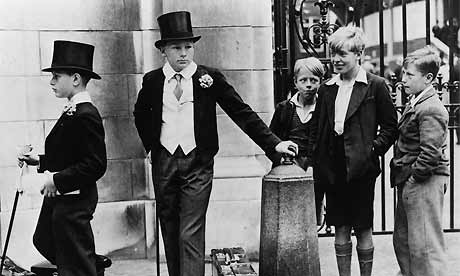
In an epoch when so much is made of democracy, equality, social mobility, classlessness and the rest, it has remained a basic fact of life in advanced capitalist countries that the vast majority of men and women in these countries has been governed, represented, administered, judged, and commanded in war by people drawn from other, economically superior and relatively distant classes.
Ralph Miliband, 1969, from ‘The State in Capitalist Society‘.
Miliband was one of the people that I remember well from my student days 27 years ago. Words like those above seem ever more prescient.
Despite what The Mail will have us believe, his was always a quintessentially British voice- a kind of socialism mediated by gentle academia and quiet discourse. His writings take a deeply thoughtful and engaged look at who we are and what we are becoming, from an ideological perspective of the far left. His determination was to attempt to make Britain a fairer and more equal place. He had the deep respect of everyone, from a wide variety of perspectives.
To hear how he is being vilified at present makes me seethe.
I also think that we could all still learn from his writing- particularly his son Ed, who desperately needs some ideological testicles.
As for The Mail, it is what it is- a grubby small minded prejudiced rag that peddles a little Britain for a small slice of modern Britain. It does not understand the rest, and so seeks to smear it, using a tissue of half truths and distortions.
Which reminds me, I have posted this on my blog before, and was reminded of it by Grahams FB post;

I had lots of good discussions on my recent wilderness retreat, one of them was a chat with Andrew about teaching in church.
This was relevant as in my ‘church’ we do not really do teaching- most of us have had a belly full of sitting in church services listening to people preach at us. This has been replaced by lots of different kinds of learning however- reading, internetting, discussing, visiting other places. Whether or not this is a fair exchange has been the cause of some discussion.
Andrew however (who is a NT scholar at Aberdeen University, so his opinion seems well worth listening to) described his own frustration with how church has become addicted to teaching, but has forgot entirely about learning.
I had to think about that- surely if someone is a good teacher, then this has to be measured by the degree to which his or her (but lets face it, in this context it is more likely to be his) pupils learn? Well no, says Andrew, at least not in the context of Church. Rather, his experience of preaching/teaching is that it is mostly totally disconnected from learning; rather it offers a kind of moralised, spirtualised entertainment for the faithful. Rather than challenging anyone to change, to develop, to grow, to explore, to adventure with the Spirit, it actually just provides a religious diversion from real life.
Another friend of mine, Graham, called it ‘theological masturbation’ over on his blog;
… I used the phrase ‘theological masturbation’ where I referred to our tendency, in Bible study groups just to ‘self pleasure’. Groups becoming just sharing of points and opinions with no vulnerability or attempt to relate it in an active or missionary way to the world outside…
The interesting question is, if people are not learning from our teaching, what do we do instead? How do we set people free to learn for themselves?
My initial response to Andrew was that I thought it was something to do with hierarchy. Churches have people whose job it is to teach others- the paid ministers. Therefore the rest of us step back and leave the hard work to them. Sometimes they (and in turn, we) are inspired, but mostly we defer responsibility to them. What if we actually had to come up with our own solutions to the small theological questions that surround our every day life? Sure, it might be possible, even necessary, to not get into the meat of all of them, but no faith is possible without a search for meaning- and in this instance, the meaning we find is our own, it is not lazily appropriated.
However, I am not fully satisfied with this answer- after all, we are all standing in a long line of followers of Jesus, and to suggest that others have not got things to teach us is foolish. We are all subject to the influence of others, and why not at least listen to people who have given this more thought than we have.
There is still the issue of learning. What are we learning for? Is it to refine the subtleties of our doctrine? There has been a lot of this kind of learning after all. Or should learning be actually about being schooled in the disciplines shown to us by Jesus? These are perhaps best understood in terms of learning to love one another, to live in community, to let go of all the stuff that gets in the way, be they possessions, selfish obsessions, or sins. This kind of learning seems to be to be as much about unlearning, simplifying, going deeper and slower.
I write these things not because I have learnt well- rather because I am a long term remedial pupil in need of extra tutoring.
I think that is what the Holy Spirit was tasked with was it not?
Which makes me wonder again whether we have not made his job rather difficult- by filling the classroom with theological masturbation.
Perhaps what we actually need is a small island with no internet or phone reception…
 this fragile tent