
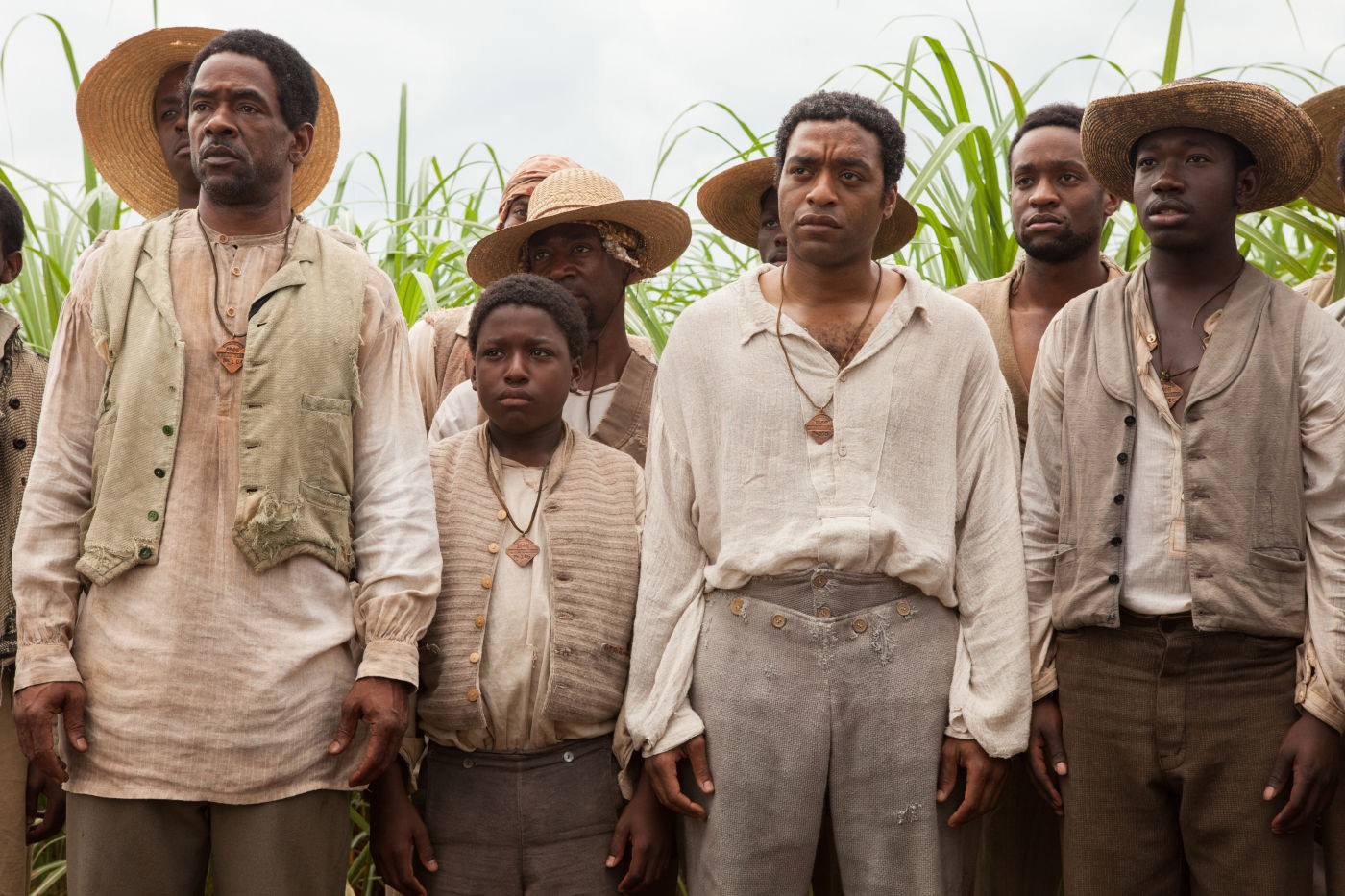
How long does it take a nation to deal with it’s demons?

12-years-a-slave

I have just been to the cinema to watch 12 years a slave.

It is a great film- exposing the raw underbelly of the racism that was a formational part of the development of the nation that became the USA. It has to be said that we on this side of the Atlantic are ultimately culpable, but our convulsions in relation to racial equality have been more subtle on the whole.

Think about it though- slavery is entangled with much of our society that might be regarded as our sickness- our addictions to tobacco and sugar, our morning coffee pick me ups. The slavery age set the tone for the rapid economic expansion based on huge profits for an elite. In many ways we all stand on the backs of slaves.

What the film did quite well was to convey how ‘good’ people could come to accommodate such a great evil as slavery- how they regarded black people as less-than. Even there however, I found myself wondering if the film was guilty of showing us the drama through a set of goggles that were entirely of our age- it is impossible not to engage with these black actors as wholly rounded emotional beings, which is of course something that was almost impossible to do from a 19th C perspective.

The film also seemed to show two Americas- the evil South, and the north in which black people lived in nice middle class houses and had the respect of all their peers.

History teaches something slightly different- about how pervasive the imagery of the chicken loving, feckless, sexualised, untrustworthy and unclean negro had become. This stain on blackness spread all over the world- including the free states. Black people were not chained, but neither were they regarded as equal partners. This was true also in my country.
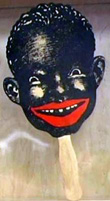
Picaniny

Some would argue that this remains the case today- demonstrated by just about every social statistic you care to examine- educational and vocational achievement, health, mental health, prison numbers, poverty, life expectancy etc etc.

What is it then that makes race such a stubborn social discriminator? Why should the colour of our skin really make any difference to all the things listed above? In the past eugenicists argued it was simply because black people were lower down the evolutionary ladder- they were closer to the monkeys, and therefore good at sport, but not as intelligent as the rest of us. Despite the science of eugenics having been shown to be totally bankrupt, the conclusions peddled by this despicable chapter in the history of science still has resonance with instinctive prejudices that people carry.

There was a point in the film (slight spoiler alert!) where Solomon is free, and standing in front of his family. It is no moment of triumph- rather he is broken, weeping. He has been nothing and he has come to believe this of himself. He has nothing to offer his family as he is nothing.

This is what prejudice does to us- it erodes our sense of self. This is what the ruling classes can never quite understand about the poor. The current discussion about ‘benefits scroungers’ in the UK seems to involve a government made up of privileged people asking why are these people living like this? Why do they not get up and get on? What is wrong with them? They fail entirely to understand the denuding impact of poverty and prejudice on body and mind. From their perspective of ‘everything has always been possible’ they have no concept of how people can become so restricted by circumstance.

American literature has been trying to understand this phenomenon in relation to race for many generations now- from Harriet Beecher Stowe’s Uncle Tom, through Mark Twain’s Tom Sawyer and Huckleberry Finn, onwards into Alex Haley’s Roots. It has always felt like the nation is lagging behind the literature. Perhaps this generation might be the one to finally put away the prejudice, but is seems we still have a long way to go.

We came out of the cinema today and immediately thought of our local murky past- symbolised by Jim Crow Rock.

I maintain that these things matter, because even though the physical chains have been taken off, there are still many hidden chains that are laced through our societies. Changing this is the work of centuries.
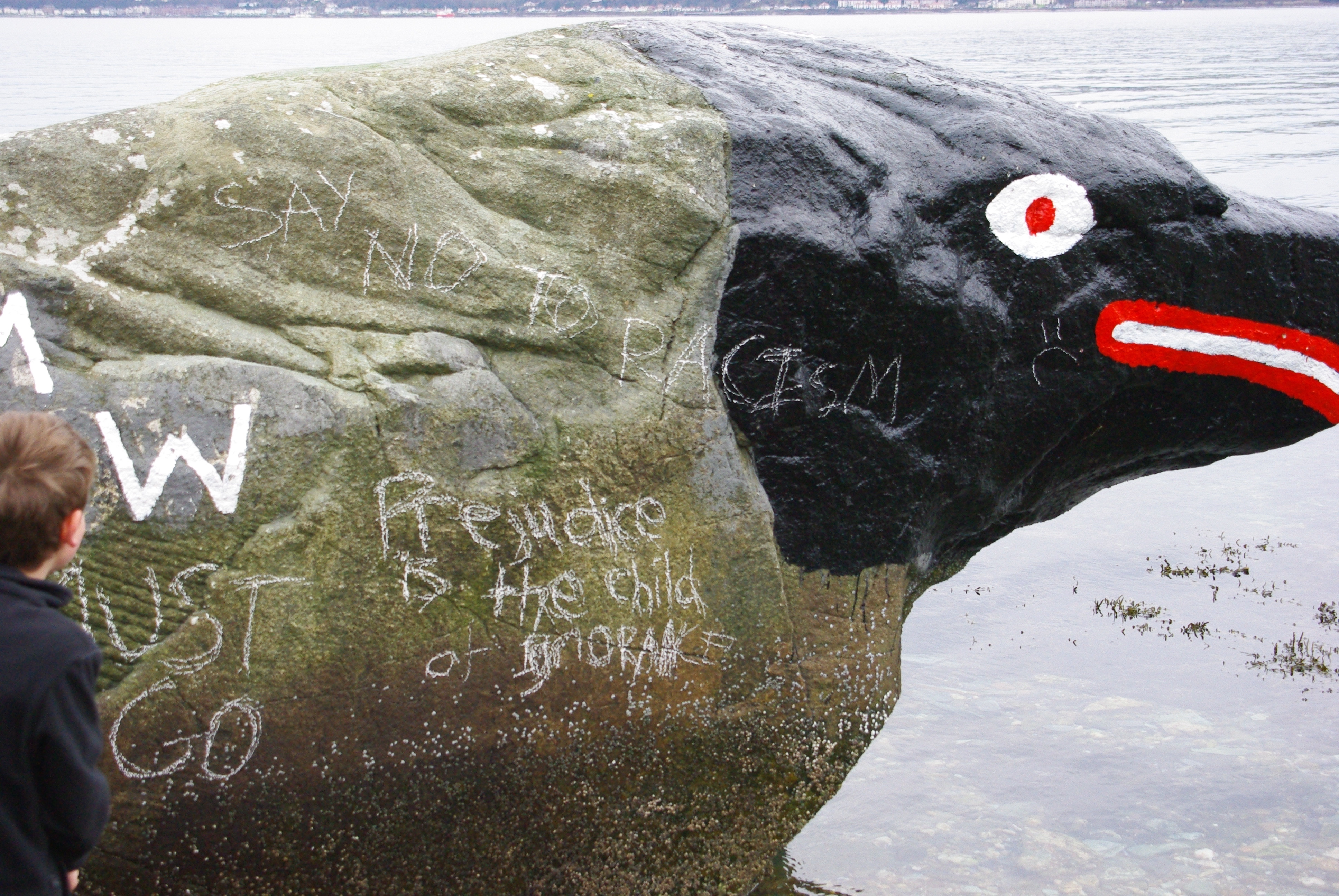
jim crow prejudice

All scripture is useful…

new-dead-sea-scrolls-theory_24016_600x450

If you like your Scriptures crusty and ancient, then you will love the updated on line resource displaying the Dead Sea Scrolls.

These amazing documents contain fragments of include the earliest known surviving manuscripts of works later included in the Hebrew Bible canon– preserved for two thousand years by the hot, dry desert climate and the darkness of the caves where they were placed.

Part of their fame to Christians is the fact that the many fragments contain almost identical versions of OT scriptures that we still read today. This serves somehow to preserve the idea that the Bible is Gods Word, for all time, floated down intact as the ultimate instructional manual for life.

(As a matter of interest, there is a rather good discussion about how we might understand the phrase ‘The Word of God’ here.)

Most Christians I grew up with had no idea about how the library of books they knew as ‘The Word of God’ came to be gathered. They would have regarded such things as irrelevant, dangerous- trickery of those who would stain the purity of the the holy paper. However, the Dead Sea Scrolls give a window into how scripture was understood even before the wranglings over the Christian Canon.

Biblical scholars can not agree about when the Hebrew closed the book on their own collection of scriptures, but it was clear that those who put away the scrolls in the caves of Quran still experienced scripture as a work in progress.

They also used copies of the book of Enoch;

The book of Enoch was not included in the canon of the Hebrew Bible. It tells of Enoch, the great-grandfather of Noah, who lived for 365 years and “walked with God”. The displayed fragment describes the heavenly revolt of the fallen angels, and their descent to earth to cohabit with the daughters of men and to reveal secret knowledge to mankind, a story hinted at in Gen. 6.

The Apocryphon of Daniel (and other fragments of Apocrophal writings, whose significance is mostly lost to us.)

The Dead Sea Scrolls contain extensive apocalyptic literature relating to the final messianic battle at the End of Days. The Aramaic Apocryphon of Daniel describes either a messianic figure or a boastful ruler that will arise as “Son of God” or “Son of the Most High”, like the apocalyptic redeemer in the biblical book of Daniel. The text calls to mind the New Testament proclamation of the angel Gabriel concerning the new-born Jesus: “He will be great, and will be called the Son of the Most High… ” (Luke 1:32)


It is almost impossible to begin an adventure into trying to understand where these scriptures came from without having to set aside the idea that the ONLY relevant writings useful to Christians are contained within the book we know as The Bible. However we might also come to view these books as all the more remarkable.

The papers today are full of a blundering UKIP MEP who has published a charter that he wants Muslims in the UK to sign ‘rejecting violence’. He also has suggest that some Muslim texts need updating, claiming some say “kill Jews wherever you find them and various things like that”. “If that represents the thinking of modern people, there’s something wrong, in which case maybe they need to revise their thinking. If they say they can’t revise their thinking on those issues, then who’s got the problem – us or them?” he added.

The fool thinks you can re-write scriptures for other people’s religions. As if there are not enough blood thirsty bits in our own.

What we need is more understanding, and an open dialogue about how these still-incendiary ancient texts should rest on our post modern souls.

Lagom…

teenagers, shopping mall

In Sweden, despite the mythology of the almost-egalitarian welfare capitalist state, apparently the rich are getting richer and the poor poorer. It is the way of the world, and despite never having been to Sweden I feel a sense of disappointment.

The idea of the existence of a stable, well ordered nation populated by reasonable (if slightly dull) people, dressed in cardigans and listening to too much euro-pop exists for us like some kind of promised land. So much so that the countries of Scandinavia are touted as role models by those selling us the idea of an independent Scotland. We can be like them too if we vote for independence.

Perhaps we can, and I hope that Sweden finds its way back to the principles that gave birth to their national identity- something about being ‘humble towards life, and humble towards success’ (a quote from a recent TV programme about Sweden.)

The Swedes have a word that has no direct translation into English- one of those that I reckon we should borrow. it is this one; Lagom;

The Lexin Swedish-English dictionary defines lagom as “enough, sufficient, adequate, just right”. Lagom is also widely translated as “in moderation“, “in balance”, “perfect-simple”, “optimal” and “suitable” (in matter of amounts). Whereas words like “sufficient” and “average” suggest some degree of abstinence, scarcity, or failure, lagom carries the connotation of appropriateness, although not necessarily perfection. The archetypical Swedish proverb “Lagom är bäst“, literally “The right amount is best”, is translated as “Enough is as good as a feast” in the Lexin dictionary. That same proverb is translated as “There is virtue in moderation” in Prismas Stora Engelska Ordbok (1995).


Enough is as good as a feast. I like that.

Knowing when enough is enough is the trick though.

Cold…

Winter sky from our house


North wind


Weather sun shines or snow falls

Sometimes the old house lies cold

Containing a kind of chill that three pullovers

Cannot keep at bay

It seems impervious to

Obvious external influence

Mercurial

Like me


But both of us are vulnerable

To the direction

Of the wind