A few weeks ago I listened (as I always do) to a Nomad podcast. I am a subscriber to Nomad as it has been a portal for all sorts of ideas that I have found useful over the years. This particular episode featured a conversation between David Benjamin Blower and a theologian/community gardener called Sam Ewell, from whom I was grateful to be reminded of the work of Ivan Illich, a name forgotten since my undergraduate sociology studies, which were (ahem) some time ago. Illich suddenly seemed to be a prophet worth listening to in the midst of our present realities.
Since then, I have been skimming the internet for Illichian materials. He was somewhat prolific, both in terms of his written output but also in film and video. I’ll throw a few links into this post, which might be the first of a few emerging from my deep(ish) dive into these materials.
A good place to start is to do a bit of a skim of this book – Tools for Convivality – which can be read online, and gathers many of the themes and ideas that Illich explored in his work.
I cannot begin to summarise the broad brush of Illich’s writings becuase he was prolific, but for a little bit of background, this old school chat is rather good (although rather dense!)
Illich comes from a place out of which so many good things seem to flow- that of the rebellious priest. His background as a Catholic priest anchored him in the religious tradition but also led him to quiestion it all in the name of truth.
The central part of his thinking seemed to be concerned with the nature of post industrial societies, and how the shapes and objects we make (the tools) start to become bigger than all of us. The end result, for Illich, is that what might start out good easily skews towards something else.
His use of the word ‘conviviality’ is rather useful. Some tools (defined widely to incliude both the screwdriver and the car and the national health service, or the school system) are simply more convivial than others, but within our complex societies, they tended towards becoming less convivial.
Illich defines “conviviality” as the opposite of industrial productivity, or “autonomous, creative intercourse among persons and between individuals and their environment“. Tools for conviviality are those which maximize an individual’s autonomy and impose the fewest constraints on their freedom.
Conviviality has a rather helpful way of not being a black and white. good and bad dualistic way of seeing the world, rather it sees all things as being on a spectrum. Things will be more or less convivial – for example, he also discussed how health systems, offering universal health care to wider population, are good things, but that they also tend towards a loss of convivility. Humans are lost in a larger system. Our inate ability to create, to connect, to love one another becomes overwhelmed by an industrial institution.
One tool Illich thought a lot about was modern education. Here is a good summary.
Why is this particularly relevant now?
Many of us have an awareness, or a ‘feeling’ that the world we have created is now creating us. Change is impossible because the tools around us have become fixed. We feel this within our politics, our economics and our enslavement to the unsustainable comsumer culture that is destroying our planet. Illich gives us a language to talk about these feelings.
You could describe them as ‘convivial conversations’.
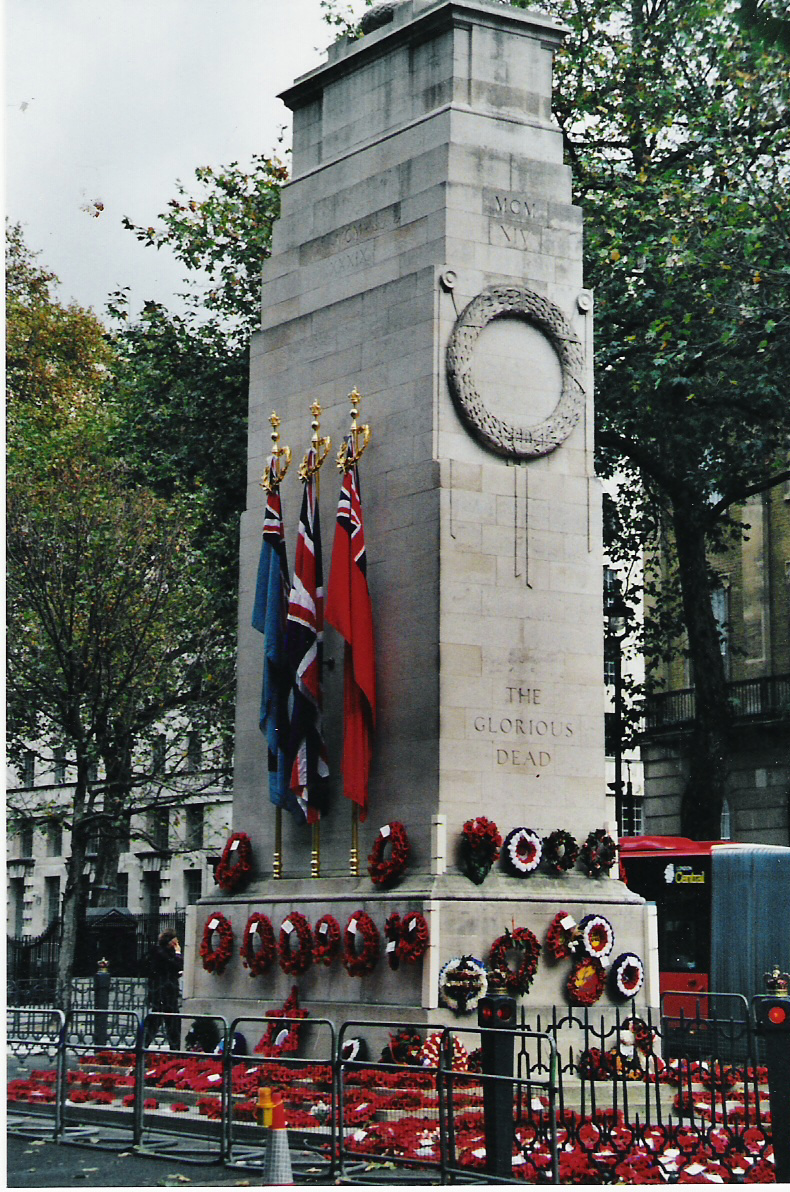
I have lived through a period in which many small wars have been fought, mostly in poor countries a long way from here. Overwhelmingly, the British soldiers who have died in these wars have been young working class men. We have taken no serious count of those we have killed.
These wars are often framed using the same language as the last world war, as if they were the same. Whatever your stance on the nature of war itself, surely we must concede that the world wide struggle against fascism is not analagous to an empire struggle in Kenya or the dreadful, deceitful, illegal Iraq war which has left such a legacy of pain and stoked the hate that has led to so much more violence.
Back in 2018, I put it like this
Every year, we remember those who died in the world wars of the last century. Industrial slaughter after industrial slaughter.
They died for us, we are told. To preserve our way of life.
At some point, I fear that the act of remembrance was hijacked. We do not remember the terrible first war as being a futile obscene expression of empire. Rather we remember it as a mass exercise in noble sacrifice. The dead soldier is sacred. We must worship him.
And we do not remember the second war as arising in brutal consequence of the first, in that it created the precise broken and splintered context into which populism and fascism could flourish. Rather we glorify and obsess over Merlin engines and the Dunkirk spirit. Britain is sacred. Her empire will last for a thousand years.
I fear that both kinds of remembering are an exercise in forgetting. They miss the point, perhaps deliberately.
Perhaps the war generations did not die for us after all. They died for them– the others, those for whom war is simply politics by another name.
I am done with it all. Rememberance day is no longer a way to make a commitment to peace, in the wake of all the suffering that war brings. I will not stand with those who glorify and fetishise the poor expendab le soldier as some kind of noble defender of our way of life.
The more astute commentators have pointed out that the (very nasty) political game behind the victimisation of the most vulnerable people in our society relates to who might be the next leader of the Conservative party, God help is all…
Braverman’s brand of toxicity has traction, and her strategy seems to be to make as big a splash as she can in order to rile up the far right of her party. The more unpleasant she is towards the old ‘enemies’ (scroungers, benefits cheats, liberal protestors, environmentalists etc.) the better. In these polarised times, this may well be a winning strategy, but at what cost?
I have been chewing over Braverman’s comments and the mostly (frustratingly) weak and thoughtless response to them in the media. You know the sort of thing- a panel discussion in which a Tory politician spouts stories about ‘begging scams’ and experts from homeless charities try to talk about the unsexy messy work of trying to help people off the streets. There are some exceptions;
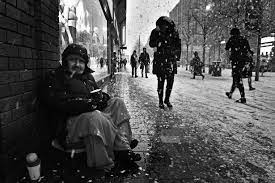
Lord Bird says so many things that resonated with me, including his suggestion that street sleeping is an indictment on the failure of services and social policies. A phrase I have used previously is that they are our ‘litmus people’. They show us what we are.
I have some experience in this area because of my background as a social worker, mental health practitioner and manager of heath and social care services. I have met many people who have previously been, or were currently, living on the streets. Not one of them did so as a ‘lifestyle choice’ (whatever that actually means.)
Social policy has never been a perfect science (my undergraduate degree was in applied social policy), but at best, it is evidence-based and carefully shaped by both history and international comparison. Since Thatcher, we have pretty much abandoned this approach. Acedemic research has been mostly ignored – by the right as being too liberat, by the left as being unpalatable to middle English taxi drivers and suburban pensioners. We stopped seeking to understand society-wide shifts and instead placed our emphasis on individuals.
During the Blair years, this meant a focus on education, as if the poor could be socially engineered away via the classroom. The subsequent Conservative led governments have taken the Thatcher lesson much further, weaponising individualism by suggesting that all poverty, all vagrancy, all homelessness is the result of individual failings, choices, or character flaws. This justified a period of austerity during which social services, funding to voluntary groups and local authority support was slashed. The message has been underlined by increasingly punitive policies to police/sanction benefits claimants, or to stop people claiming housing benefit for properties with too many bedrooms.
When considering the wider causes of individual distress, it is almost never appropriate to make what is general specific.
Or to put it another way, we can point to a number of societal factors that might explain the rise in homelessness in the UK;
The rise in cost of living, having particular impact on low income households
Soaring rents and unafordable homes for first time buyers
Chronic housing shortage, including supported living environments
The sqeeze of benefits, increase in sanctions, the bedroom tax
Underfunded addictions services due to austerity cuts
Underfunded mental health services due to austerity cuts
A voluntary sector expected to pick up the slack, but also underfunded
A job market dominated at the bottom end by insecure poorly paid employment
To this list we have to also add a number of potential individual factors;
Childhood trauma,
Poverty leading to erosion of resillience
Addiction
Mental health problems
Divorce, bereavement, family breakdown
Uncontrolled debt
Prisoners struggling to adapt after release
Ex servicemen with PTSD
Refugees not allowed to work
Bad judgement, mistakes made
Bad luck
This begins to describe the complexity of factors that might lead to someone ending up sleeping in a tent on the street. Each individual story takes place in a context that is to a lesser or greater degree helpful. The presense or absence of individual vulnerabilities tells us little before the fact.
Do you think Braverman knows all this? I suspect she does.
A couple of weeks ago I wrote a post about church leavers – making reference to work done mapping an increasing Christian diaspora here in the UK who used to go to church but for many reasons no longer feel that they can. The research reveals a rather fascinating pattern of people who retain faith, but not religious observance in the sense of attending institutional gathered worship. As far as we can tell, these are not small numbers of people – in fact Steve Aisthorpe (in his book Invisible Church) has suggested that we need to start thinking about these people as the larger part of the ‘church’.
This raises lots of questions. Here are just a few of them;
If more people who seek to live out faith in the UK are NOT attending Church regularly than are, what is Church doing wrong? Or what are those non attenders looking for that they are not finding? (My last post tried to describe some of the past ways that Church has tried to renew itself, with at best limited and local successes)
How can faith form and reform without gatherings, without buildings, without programmes and paid staff?
How will we ‘make diciples’? How will we learn? How will we find commonality and inspiration? How will we prevent our ‘coals going cold’?
If we even wanted to make converts, what would we do with them after they converted?
If people are free to believe what they want to practice what they feel like, then what is the point of doctrine or creeds? Is this OK? How much freedom to make a new way is acceptable? What if this new way takes extremist paths?
One explanation/condemnation for church leaving we hear within Church is concerned with the scourge of post-modernist individualism. Those who leave do so because we are seduced by it. Whether this is true or not, it points to a cultural reality of isolation, ex-carnation and avotarism. (I might have made up at least one of those last words.) In this contect, how do people find connection and community?
Perhaps these church leavers need help. What does this look like? Where will the help come from?
I have few answers to these questions, but I think they need to be asked. The current approach has tended to take a ‘save the Church’ approach and it does not seem to be working. If it was working, I would still think it wrong headed.
I should say again that I certainly do not mean this to be read as a criticism of Church. So much good happens in and around the old buildings. So many good people still work in them. Those who attend are not to be abandoned.
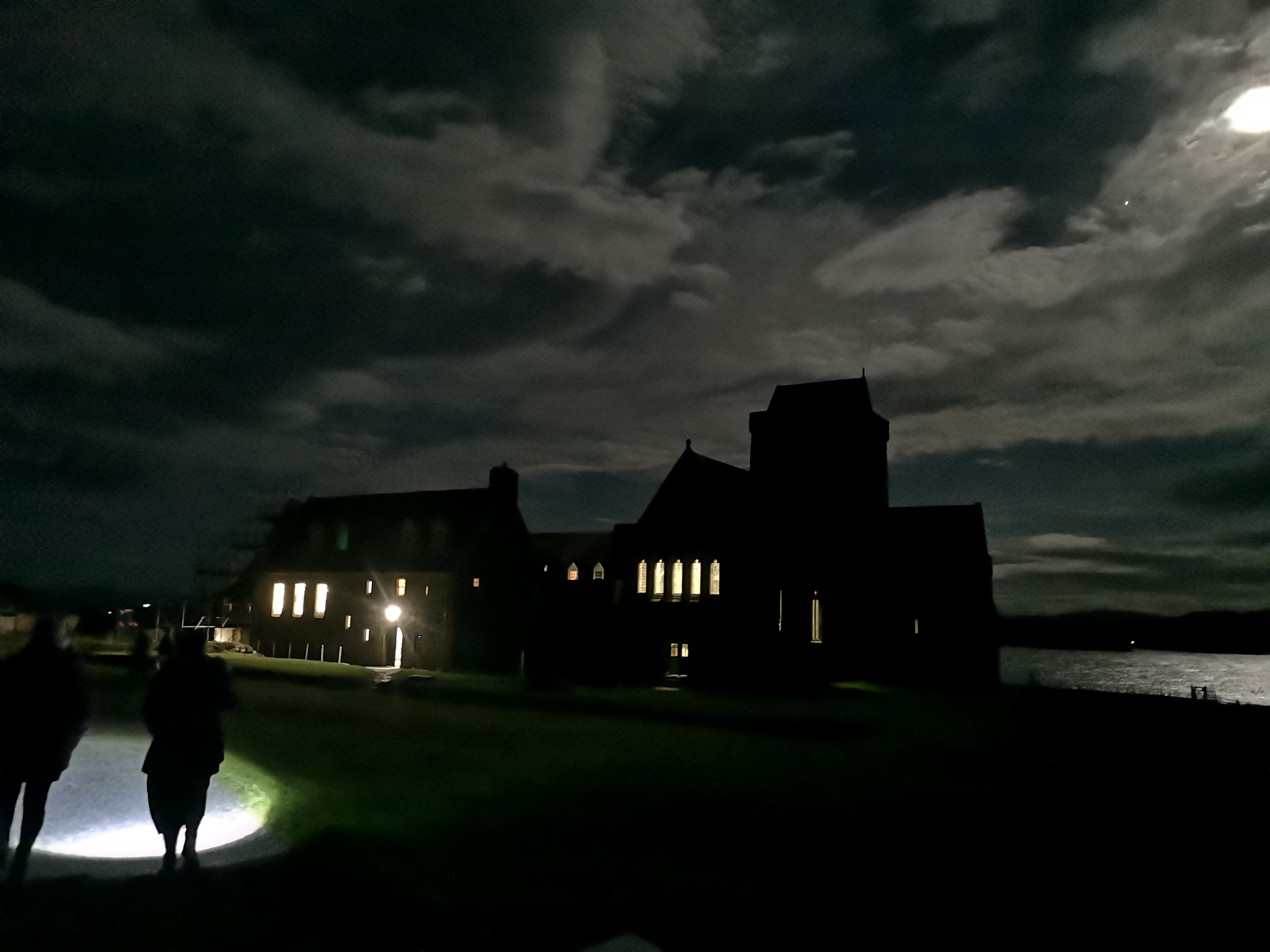
I took the photo above a week ago, on our way into the abbey on Iona to attend a service led by members of the Iona community. This service, and the one the next morning, had a profound effect on both of us. It was simple, unflashy, with dirge-like hymns. We sat in the cold and damp of the old abbey and I wept.
Why did I find this service so moving? It was the welcome, the sense of deliberate inclusivity, the freedom to make and take whatever I needed from the gathering with no expectations, no narrow hoops to jump through. Then there was the liturgy, skewed towards justice and grace. (It feels like a long time since I did not have to grit my teeth through at least some parts of a communion service.) Then there was the companionship, which included people from all over the world. A mental health social worker from Philadelphia wondering if she could keep going. A group of muslims from Bradford. All of us gathered around the same table which belonged to none of us and all of us at the same time. It was like coming home.
Later we spent a long time talking about the community to one of the members. Despite the relativly high profile of the Iona community, there are only about 250 full members, although a few thousand associate members around the world. The full members hold each other accountable in relation to four rules, wheras associate members make a more general commitment to the same;
Daily prayer, worship with others and regular engagement with the Bible and other material which nourishes us.
Working for justice and peace, wholeness and reconciliation in our localities, society and the whole creation.
Supporting one another in prayer and by meeting, communicating, and accounting with one another for the use of our gifts, money and time, our use of the earth’s resources.
Sharing in the corporate life and organisation of the Community.
I have been reflecting on all of this ever since. The gift of time and transcendance found in the abbey on Iona, then the scattering of goodness throughout the world in the form of a dispersed community. Some within this community have made a deeper commitment and this feels fine too, because we need them to act as elders, as eclesia.
Those two element – the occassional special gathering and the wider connection – seem to me to be very important in the context of our post-churched diaspora of faith. Those who do it well have a vital role to play.
There are other networks of course. Other ways that this plays out. The internet offers us and whole new way to move and connect. We zoom now as easily as we telephone.
I don’t think I have ever started a post with a quote from the bible before, but here we go;
Then the angel showed me the river of the water of life, as clear as crystal, flowing from the throne of God and of the Lamb 2 down the middle of the great street of the city. On each side of the river stood the tree of life, bearing twelve crops of fruit, yielding its fruit every month. And the leaves of the tree are for the healing of the nations.
Revelation 22
This passage is taken from an ancient text written in the mostly forgotten form of ‘apocalyptic literature‘, in which mystical language is used to shine light on the age; to bring new connection between the righteousnes of God and the oppression of the people. In the case of the book of Revelation, we are pointed towards a great reconcilliation, during which all the inequalities and injustices of the past will be wiped away. The bizarre imagary used may well have been better understood back then, and it has been subject to endless (and often problematic) interpretation since, but the utopian dream has been dreamed by all subsequent human generations.
Can we imagine better? What does this look like?
It seems to me that the Hebrew texts are full of these questions, couched not only in terms of individual righteousness, but also in the form of national/international justice and peace. Arguably, our religion has mostly emphasised the individual and convenienty forgotten the national/international.
We live in strange times, when shadows seem to be darkening, obscuring the light that remains. Wars in the middle east are not new, but this one seems all the more vicious and brutal, growing out of injustices that have been sponsored then actively ignored, resulting in hatred and extremist forming like sepsis in a wound. It is a deep irony to recall that the book of Revelation has played a negative part in the unfolding tragedy in Gaza. Christian Zionism, arising in part from a flawed and fantastical modern interpretation of St. John’s apocalypse, has entered the mainstream of US politics. It is a polarising force that makes heroes of one side and dehumanises the other.
Can we imagine better? What might this look like?
Or to return to those searing images from Revelation, where is that great tree whose leaves are for the healing of the nations?
I do not believe that history is unwinding like clockwork towards some kind of great reckoning point, shedding disposable casualties along the way. If the words of this ancient book are anything, if they have any worth, then they have to be encountered carefully, with safety goggle firmly in place. Their ‘meaning’ is no excuse for loss of compassion, loss of love, loss of perspective. The meaning does not outweigh the primary call of that sweep of Christian scripture towards grace, towards an understanding of the profound beauty and dignity of each person and of our relatedness towards each other, and to the created world that carries us.
Can we not image better? What might this look like?
How do we heal what has become sick? It seems as though we are not able to answer this question yet, because first we would need to understand the nature of our sickness.
The symptoms are everywhere. Not just in Gaza, but also right here in the UK. I read this in The Guardian this morning and felt broken;
It starts slowly at first. A food bank crops up inside your local mosque. You notice more sleeping bags on the walk to work. Over time, the signs seem to grow. A donation bin appears in Tesco for families who can’t afford soap or toothpaste. Terms such as “bed poverty” emerge in the news because we now need vocabulary to describe children who are so poor that they have to sleep on the floor.
Then one day you read a statistic that somehow feels both shocking and wearily unsurprising: about 3.8 million people experienced destitution in the UK last year. That’s the equivalent of almost half the population of London being unable to meet their most basic needs to stay warm, dry, clean and fed.
Does this sounds like a healthy nation? What does healing from this kind of sickness look like? What sort of leaves do we have to eat and where is the tree planted?
This blog has concerned itself with this question for a long time, in terms of politics, economics, theology, sociology, ecology and so on. I claim no deep personal insights, just ones borrowed and understood only in part. The answers here – if there are any – are complex and nuanced, and much like the interpretation of the passage above, have to be approached carefully, with safety googles in place and subject to the higher calls of compassion and love.
And the leaves of the tree are for the healing of the nations.
This passage also takes my mind towards the forest. As I put it in a poem once;
You cannot ignore the forest, for like all
Prodigal apes you must eventually return to
Crawl soft ground beneath your mother oak
Burying your nose in those half-familiar musks
That smell like home
From ‘Prodigal apes’, in ‘After the Apocalypse’ 2022.
I grew up in and around Churches. Most of my early adult life involved participating in, playing music for and serving the people of church. Then, after becoming increasingly unable to cope with narrow factional forms of faith, I left, albeit for at least a decade to become part of a small community of faith.
At present, I do not attend ‘church’. I can have a long conversation with you about why this is, but many of my friends are in just the same position.
For most of us this is not about the loss of faith – it might be that the way we think about this faith has changed and traditional forms of church no longer felt relevant. That is certainly not intended as a criticism of Church. We still need those who travel in the big old religious ships, even if many of us want to get into small boats.
Through the work of people like Steve Aisthorpe, we now know that we ‘church leavers’ form the majority of the people of faith in the UK. You might even say that these people ARE the church now. The old insitiutions have been and are continuing to be, hollowed out.
If this is true – if the church is now scattered, not gathered – what sort of support might people need? How do we collectivise? How do we teach? How do we debate? What the word ‘Christian’ still mean and do any of these things still matter in a world of global warming and mass extinction?
If this is of interest to you – and if you too are a church leaver, then you might like to add your voice to some research being undertaken by Katie Cross at Aberdeen University. You can join on on this link.
I wanted to reflect on this a little more. I have posted previously about Steve Aisthorpe’s research into this area, no least this book
We very much need people like Steve and Katie to enquire and research in this area, but more than this, it seems to me that we have to start thinking about ‘church’ in a different way. After all, we have tried for years to revive the old forms of Church. There have always been isolated success stories, but we know that the general pattern has been towards a decline in Church attendence for generations now across the Western world. I think responses to this decline within the insitituion of Church have led to attempts at innovation for a long time. I have been involved in some of them myself even.
The marketing approach
There have been a succession of attempts to get church to be more ‘seeker-friendly’, as if all we needed to do was to sell religion better. We had to have snappy answers to all the questions, sing modern soft-rock worship songs, serve coffee and doughnuts after the services etc etc. Alongisde this, we had an interest in ‘friendship evangelism’ (which always seemed a bit bait-and-switch to me) and dozens of versions of The Alpha course. This might actually work in some individual places, for a while at least, but the overall decline continues.
The embittered remnant
There are many small religious Churches, particularly those on the evangelical/pentecostal wings of the church, who see the decline as evidence of a sinful, permissive society. The fact that so few remain strengthens an idea of an eclusive elite who are waiting for the second coming of Christ, or the Great Tribulation (depending on the paricular interpretation of the Book of Revelation.) These communities see little or no growth, and decline as old stalwarts move on to glory.
The innovators
I feel most connected to those (including many of my friends) who are still trying to put new wine into the old wineskins. They are running messy church, forest church, alternative worship services, meditation groups, book groups, podcasts, art events, poetry circles and on and on. Many of them are also concerned about social justice, so others are running food banks or meal clubs, or addiction cafes, or mother and toddler groups. These people are the heart of much goodness in the middle of our communities. These people may well not be concerned with growing the numbers of Sunday attendees, but without a willing workforce, how can all this fantastic community activism continue? Who will champion the causes of the underclass, if not the Church?
The community makers
I have also travelled these roads. In leaving big Church, we started to do small church. We met around the table, we set up community events in the woods, in village halls. We did music, art and became Greenbelt Festival contributors. Our community lasted ten years, before it was time to stop, and this is the problem. Most groups like ours are ephemeral. They start well, usually led by pioneer types who bore easily, but what starts fresh soon feels stale. Organisation, holding together difference, staying focussed on things that matter- these things are not easy. Most groups like this have a shelf life, and after being in one, it can be hard to commit to starting all over again.
The wandering pilgrim
Those of us who have trod some or all of the roads above, but have found ourselves no longer part of any organised group can often feel alone. We still have friendship networks, podcasts, books. We may even be occassional attenders of religious services, but experience has made us wary of joining, for all sort of good and perhaps some bad reasons. Our theology shifts and finds new shapes because doctrinal conformity seems frankly ridiculous when the boundaries of faith are no longer policed by spiritual power brokers. Perhaps the new light we find is delusional, or perhaps we are in error, but increasingly we start to form the idea that what matters is not what you beleive but rather how we live our lives; what meaning we are inspired by and how we might move towards better.
The problem is that we are still alone. We form no salvation armies, open no food banks, make no converts,
But we are not going back.
I am often uncomfortable with the label ‘Christian’; It chafes, like a set of someone else’s clothes. I rarely apply it to myself, and when others, perhaps in response to reading one of my poems ask me directly, I usually prevaricate, wanting to narrow the descriptive field. The interesting thing though is that I do not say no.
If I am one of those wandering pilgrims I described above, it is because I am still looking for meaning – not ‘answers’ but meaning. I sill hope that light will get in through the cracks and have noticed that, for this particular pilgrim at least, this light is a particular shade of brightness when Jesus is involved with all that is beautiful and all that is broken.
In the wider sense, I find myself giving voice to something that sounds like it might have been uttered by those embittered remnants. We are living in a society that has lost its moral compass. Perhaps it never had one, but without religion, how do we unleash ideas of goodness? How do we commission people towards acts of grace? How do we measure our sectarian politics and find it wanting, thereby imagining something better? I make no claims as to the exclusivity of religious ideas to achieve these things, but we have to acknowledge that it has done so in the past… (whilst also remembering all those not-so-good aspects of the institutional religion that got in bed with empire.)
So, this question remains;
If this is true – if the church is now scattered, not gathered – what sort of support might people need? How do we collectivise? How do we teach? How do we debate? What the word ‘Christian’ still mean and do any of these things still matter in a world of global warming and mass extinction?
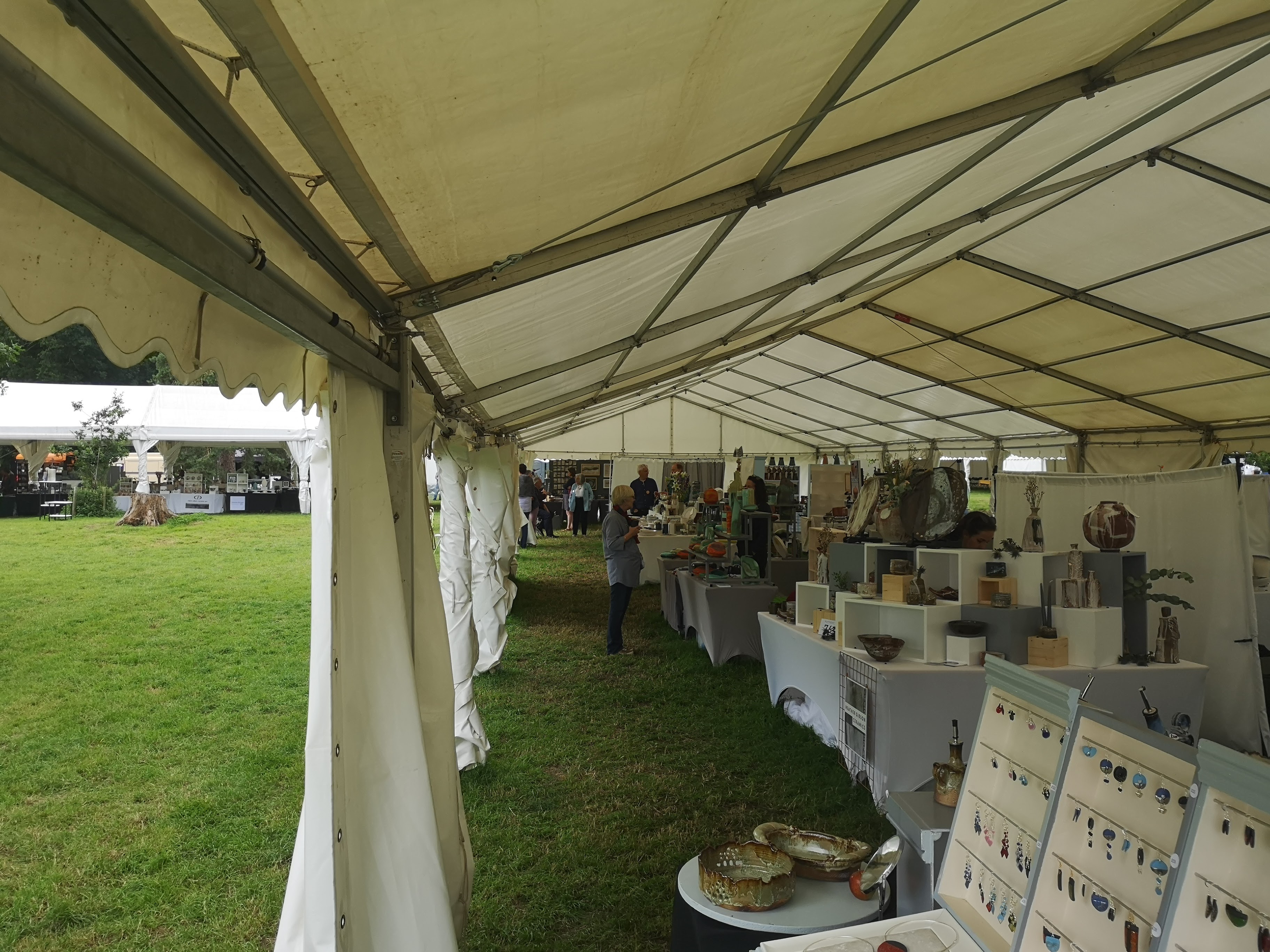
We are just back from a trip down to East Anglia, where we were exhibitors at the first ever Potfest at Haughley Park. It was a trip full of sunshine, friendship (with the community of potters who come together for these events) and thankfully, sales which paid for the trip and will pay our bills for a month or so to come.
I came home with this magnificent object, made by one of my favourite potters on the site, Sara Budzik. She makes things that make me smile and challenge me to rethink my place in things, most notably, giant slugs. I don’t know Sara well, having only met her a couple of times, but her work tells me that she thinks deeply and differently, an all-too rare quality that we need more now than ever.
Anyway, each Potfest event, the organisers arrange for a mass ‘mug swap’, which involves all the potters standing in a massive circle with one of their vessels in hand. Potfest Matt then calls out a series of instructions (three to the right, seventeen to the left, twenty to the right and so on.) It is impossible not to see the lovely pots passing through your hands and not to hope this or that one will finish up with you. This time, I watched a fantastic great big slug mug going around the circle, made by the aforementioned Sara, and I wanted it.
Imagine my delight to actually have it when the passing-round had been completed? Thanks Sara! May your creativity continue to expand…
It is good to be home, but we loved our trip away. We spent a few precious days afterwards on the Suffolk coast then called in for an overnight trip seeing family. The opportunity to stop working is rare when every hour spent away means that you are not able to work.
This is the life we have chosen, and we love it, but it does not come without challenges. If you are thinking about taking the leap into the creative unknown, then I would encourage you to do it, but do so with your eyes wide open. Make your plans carefully, find your community of support and expect times when your move forward and times when you seem to be getting nowhere.
In our current times, in these fading western economies, what does ‘good life’ look like?
This seems to me to be an ever more important question given the shift in culture that will be required if we are to finally come to terms with the damage we are doing to our environment and our enveloping ecosystems.
The prevailing answers emerging from our culture seem to be about lifestyle. Particularly the sort of lifestyle that can be digitised and displayed. It seems to me to be a constant attempt to display meaning, albeit in a way that often seems entirely manufactured.
I do not mean to be entirely disparaging about this phenomenon however because in the instagram mix we see other strands of idealising, often concerned with creativity, crafting and a return to some kind of modern day arts and crafts ideal.
We see this too within the ceramics world. Perhaps due to the enduring popularity of programmes like ‘The Great Pottery Throwdown’, pottery has never been so popular. Courses are all full, second hand equipment is impossible to find, gardens around the land have kilns in sheds. Perhaps all of us are on a mission in search of creative authenticity because in a meaning vacuum, what else is real?
But if this search for authenticity is real, it has to be more than a carefully applied instagram beauty filter and it is here that the hard work begins. We have to let go of perfection because success is always nuanced and partial.
If it is to be more than just a lifestyle change, it must also be about hard economics. We have to live; there has to be a safe space in which to create. Probably, we will have to live with less, even much less. This is easier for some than others depending on where we are start and we count ourselves as deeply fortunate for all sorts of reasons.
So, do I feel free?
Sometimes, and that is mostly enough. At other times I long for more, for deeper, but I am not sure I would have it any other way.
Firstly, a warning. This is going to seem like a strange direction to take in this discussion, but I hope you will stick with me…
Let me start with this;
We have lived our lives by the assumption that what was good for us would be good for the world. We have been wrong. We must change our lives so that it will be possible to live by the contrary assumption, that what is good for the world will be good for us. And that requires that we make the effort to know the world and learn what is good for it.
Wendell Berry, from ‘The long-legged house’.
It must now be obvious to us all that western lifestyles, despite the rich rewards they offer to us all, are not good for the world. Our economic models, our underpinning hermaneutics and our assumptions about how things work are all not good for the world.
This is a bold statement, but before we start attacking and defending sacred cows, consider this report to the UK parliament from the Environmental Audit Committee last year.
Piecemeal conservation efforts, and increases in the efficiency of production, cannot tackle the wholesale deterioration of the natural environment the world is now experiencing. Fundamental changes in the production and consumption of natural resources must be made. Without urgent, substantial action, ecosystem tipping points will be exceeded and the global biosphere will be left beyond repair….
….when compared to other G7 countries, the UK is at the very bottom in terms of how much biodiversity survives.
I will leave aside (for now) how our parliament and our government has failed to respond meaningfully to the warnings of this (its own) committee and return instead to Wendell Berry’s contrast between good for us/good for the world.
This piece of ironmongery is something known as a Gunter’s Chain, a distance measuring device used for surveying. It was designed and introduced in 1620 by English clergyman and mathematician Edmund Gunter (1581–1626). It enabled plots of land to be accurately surveyed and plotted, for legal and commercial purposes.
When using this device, surveyors were described as ‘Chaining the land’.
The history of how land went from being open, held as being the common places of the common people who lived there, to being ‘owned’ by individuals is not for this piece, but suffice it to say that before Scotland, England had their own ‘clearances’, known as the enclosures, when the ‘waste’ land (or common land) was made productive. All land was then expected to enrich individuals. What happened later here in Scotland was different, yet the same.
The poet John Clare spent half his life in a lunatic asylum, said to have been driven mad by the chaining of the land he loved so much. His poems now read like prophecies. Here is the beginning of one of them;
Far spread the moorey ground a level scene Bespread with rush and one eternal green That never felt the rage of blundering plough Though centurys wreathed spring’s blossoms on its brow Still meeting plains that stretched them far away In uncheckt shadows of green brown, and grey Unbounded freedom ruled the wandering scene Nor fence of ownership crept in between To hide the prospect of the following eye Its only bondage was the circling sky One mighty flat undwarfed by bush and tree Spread its faint shadow of immensity And lost itself, which seemed to eke its bounds In the blue mist the horizon’s edge surrounds Now this sweet vision of my boyish hours Free as spring clouds and wild as summer flowers Is faded all – a hope that blossomed free, And hath been once, no more shall ever be Inclosure came and trampled on the grave Of labour’s rights and left the poor a slave And memory’s pride ere want to wealth did bow Is both the shadow and the substance now
John Clare (1793-1864) The Mores
Our collective memories are short. Here in Scotland, we remember our version of the enclosures, but we tend to see it through the lens of victimhood in which the story we tell is one of oppression of the rights of the Scottish people. This is very much part of the story (in the same way that Clare’s poem above hints at how the enclosures ‘left the poor slaves’) but it also has contributed to a kind of ecological illiteracy.
We look at photos like this one and see ‘nature’. Perhaps we should see chains.
Perhaps you are wondering what all this has to do with forests? Everything, I would argue. If the value of land is always it’s ability to produce profit for individuals, then what has since happened to our ecology is entirely predictable – justifiable even.
If land is chained to profitability, it it logical to replace forests with sheep then when sheep are no longer profitable, replace sheep with plantations. The only measure that matters is money.
Worse than this to suggest that this is not working, and that we have to find a different way to relate to our places of living will soon provoke outrage.
One of the first point that will be raised will be about local jobs, the local economy. Communities like ours are already struggling. Our young people leave because of lack of opportunities. Our clubs and institutions – the glue that holds communities together – are often in terminal decline. And now I am suggesting that we have to destroy our forestry enterprises too?
Well, not really. What I am suggesting is that we have to unchain them.
We have to stop doing forestry (or at least a very signficant part of our foresty) for our own sakes and start doing it for the sake of the world.
But people are still important. Community is still important. A vital component of any unchaining has to be for local people to live and prosper in their own place.
Arguably, despite the chains on our land, most local people in my town feel only tenuous connection to the land. We suffer from the same ecological illiteracy I alluded to earlier. We have forgotten what this place once was.
A small example of this illiteracy can be seen by examining the maps of the native woodland survey of Scotland. If you zoom in to the map of the Clyde basin, you might expect to see far more ancient woodland over on the Cowal side- after all, we are in wild Argyll, place of eagles, red squirrels and pine martens. We are the gateway to the great Argyll forest park. The map tells a rather different story though, in that there is as much ‘native woodland’ in unfashionable Inverclyde over the other side of the Clyde. The point is that what we have overhere is mostly vast tracts of plantations of mostly Sitka.
Land restoration CAN live alongside community restoration. In fact, there are many projects both here in Scotland and elsewhere that demonstrate clearly how one can lead to the other. If a community can restore its connection to place then this is a huge part of the unchaining. (Dunoon project, take note!) In the meantime, Community Land Scotland can tell us some stories. This from their website;
The way that Scotland’s land is owned and managed has a huge impact on the country’s ability to tackle twin crises of the climate emergency and biodiversity. With the amount of land in community ownership now larger than the size of the Loch Lomond and Trossachs National Park, community landowners have a vital role to play in the just transition to net zero. No one has more of a connection with their land than the local community and, in this Meet the Pioneers, we heard from three Members about what community-led ecological restoration looks like for them.
Michael Hunter of the North Harris Trust shared learning from their habitat restoration project that aims to plant 200,000 native trees. The Trust will work with crofting townships on this project.
Angela Williams and Jenny Barlow of the Langholm Initiative told us how upland moor, ancient woodland, meadows, peatlands and river valley on the edge of the town are being developed into the Tarras Valley Nature Reserve.
Ben Inglis Grant, a Peatland ACTION Project Officer based with Urras Oighreachd Chàrlabhaigh / the Carloway Estate Trust talked about the work he is doing to support peatland restoration in the Outer Hebrides.
I want to make one final point about this unchaining business. One idea that soon triggers that same outrage is that of a Universal Basic Income. This is certainly not a new idea, but is so counter cultural that despite a growing body of positive research, it seems crazy. Give people an amount of money – everyone, not just those who already have it – and allow them to make unchained decisions about their lives.
What would living here be like for those of us so unchained?
I very much recommend this discussion as a means to imagine this unchaining.
A poem is never really ‘finished’. The ones I post on this blog often evolve further. Having said that, the ones that I work on for longest are also often poems that I am less happy with so getting them to the point where I can park them on this blog is helpful.
This poem started with a few conversations about the other side of mental health problems.
I have to start this with a warning though. A good place to start is this article, describing just how debilitating mental illness can be, and the destruction it does to people’s long term wellbeing. Here is a quote which hits home;
In 2013 I was advised by psychiatrists to withhold my diagnosis from employers and be judicious with everyone else, as understanding of mental illness was limited in the public sphere and highly stigmatised.This was, at the time, absolutely the right advice.But in the last decade I have noticed a shift in how openly mental health is discussed; how many people are willing to claim psychiatric disorders as their own or armchair-diagnose those around them.But the sickest people I’ve ever known – myself included – have had almost no part in this opening up, as if we’re suffering from a different condition altogether.Nobody I’ve ever been locked up with in a psychiatric hospital felt accepting or “proud” of their illness.
As someone who has worked within mental health care for 30 years, this hits home harder as I am convinced that the medicalised powerlessness we enforce on people is a huge part of the problem here, and I have no desire to minimise or trivialise the pain that many people with long term mental illness experience.
And yet there is more to be said here, hence my attempt to describe this in a poem. Many of the best people I know have had devastating experiences of mental ill health.
Perhaps this should not be surprising- after all one in four of us will have these experiences, so they might be described as ‘normal’ or ‘commonplace’, but I would argue that there is something extraordinary happening here too.
Perhaps when we have experienced the depths of despair and somehow survive, our perspective shifts. We see the world in different ways. We see people in different ways. If we are not destroyed that is, if we can hold on and find our way forward, no matter how tentatively.
Perhaps too we are forced to make changes that previously we had avoided, suppressed and hidden under all sorts of coping strategies that had no longer worked.
Perhaps we finally recognise that success and failure are not opposites. Perhaps our experiences force us to get off whichever treadmill we are treading.
All I know is that wounds, even unhealed wounds, can become places of renewal. On a good day at least.
My previous post concerned itself with a letter I sent to our local paper. I was surprised and really pleased to revieve a reply in the paper the next week. I foolishly failed to copy it, but the thrust of it all was that one of the instigators of the Dunoon Project (no longer a director but still very much involved) was expressing some agreement with my comments and offering to meet to talk further. It would have been rude not to take up his offer, right?
Of course, I first did the google search in order to find out who it was that I was meeting. We had met once before actually, at one of the local consultation events for the Dunoon Project a couple of years or so ago, but I was but one of many attendees. What I was not aware of was the forestry pedigree of the man. He had spent a whoe lifetime working the woods, and is a regular writer in the Forestry Journal. One particular article spells out his feelings about the damage done and overall wastefulness of modern forestry practices.
Some of his concern appears to be the damage done to the ground by massive machines, which typically require buldozed access roads and rip the ground up in operation (incidentally, releasing huge amounts of carbon in the process above and beyond the removal of the trees themselves.)
The cable-crane operation is best suited to small, self-contained teams, be they employees or contractors. The timber-harvesting world has been taken over by the big boys to the demise of the smaller guys who were predominant in the days when I worked a winch. Small, focused teams tend to take more responsibility. In those days, a big team was one that had a winch and did the cutting, and quite often the cutters were separate to the winchmen – but it worked. Today, with harvesters costing half a million, small guys can’t get into the harvesting game and, worse than that, the competition between the big guys and the pressure from the end user contrives to keep harvesting rates at unrealistic lows, making it unattractive for new entrants. There’s little or no money for training or research and we are faced with a downward spiral of corner cutting to make ends meet.
My knowledge of forestry practice is almost non-existent, mostly gleaned from looking at the Cowal hillside then going on a deep internet dive in order to try to understand better what I was seeing. The chance to talk to someone who had actually worked these hills for decades seemed too good to pass up.
So meet we did.
Firslty, what a lovely man. He invited me to his home, where he proved to be a fantastic host, full of good stories, good humour and we shared a love of cricket. I really liked him and hope our paths will cross again.
He told me that when my letter went in the paper, some of his forestry chums had been rather disparaging, but his question to them had been ‘but what of what he is saying is wrong?’
Later he took me on a tour of the glen where he lives, where there has been much effort to restore the land, including a new project to bring fish back to the burn, which has involved looking at the marginal planting along the whole stream.
The glen has three main land owners – not counting Forestry Land Scotland (FLS) – and all three have their own committment to land restoration. The owner at the head of the glen seem to be trying to establish a new plantation of Caledonian pine forest, which seemed like a strange choice to me, as the great pine forests of the estern Highlands never previously grew in these parts, but alongside this there is other planting going on.
My guide showed me remnants of old growth forest, as well as newly planted mixed woodland and even a restored meadow. He is a man who clearly loves the land and regards himself as a steward. There is no doubt in my mind that he will leave a legacy in the land that will live on and on.
He is also passionate about the need to remove invasive rhododendrons and frustrated about the fact that FLS do not seem to have the same commitment to this within the glen.
Much of the woods in the lower glen are owned and managed by my guide. He explained how they had taken hundreds of tons of wood out of the still-dense spruce plantations in order to thin the trees, thereby creating greater diversity. Laudable, but the woodland is still so dense as to prevent any undergrowth. It remains the same brown desert that all plantations in these parts seem to have become. Perhaps this will change as the space created is colonised by other species. Certainly my guide had noted how birds now flew through the woods when previously they would have been excluded. There is no doubt that the glen is a place of much more diverse planting than most other parts of Cowal, with a wide variety of trees, including the elusive aspen.
I very much enjoyed our chat, which never became contentious even in areas of mild disagreement. Perhaps we were both on our best behaviour, wanting to focus more on what united us rather than what divided, but I think it was more than that. I think my guide was reflecting on a lifetime in the woods – a good life, lived out in good places – and is genuinely worried about what is happened to our once-wild places. His worries take him to a different set of questions and different solutions to what my own ill informed ponderings have taken me, but we both see the same problem; plunging biodiversity and an unfolding climate change catastrophy which at very least is already putting our woodlands in a vulnerable place.
For him I think that the solution is to do forestry better. To look at the most damaging practices and change them. This seems in part about industrial-scale machinery, poor management practices and appalling waste.
What about those areas of mild disagreement though?
I start with a warning. I don’t really know what I am talking about. All opinions I express, particularly ones that might contradict a man of the forest. Having said that, I do bring some skills to this quest for knowledge. I am a left field thinker, one used to looking at complex human designed systems and trying to understand what they are about. This was my gift (perhaps the only gift!) in the latter years of my last career, but also is what fuels my poetry, which is after all another kind of quest for truth. I am far from unbiased, but I am trying to keep my eyes wide open.
My first thought is that it does not seem sufficient to manage our way out of the denuded state of our hillsides by trying to do the same things better.
My guide may well be correct in saying that the problem has revealed itself most since the break down of the old local forestry systems – the selling off, the privatisation, the lack of public interest or investment, the advent of large machine driven solutions. For instance, he spoke about how the old chief foresters for an area had a connection to the land and to the local community that is almost entirely absent now.
They way I see it however is that this was not the golden age, it was part of the decline. The damage had already been done and what seems like best practice from back then is infact part of the problem, albeit one which we have made even worse.
The reason that our hills are planted up alien species of trees goes back to a different kind of clearances which saw small scale subsistence farming – which had already slashed and burned in to the forests and driven back the wild animals and large herbivores – were themselves cleared from the land by land owners who replace them with sheep, who munched their way to creating ‘green deserts’. Empty rolling hills, which we can see in old photos of Innellan for example, or the bare hills in Victorian photos around Loch Eck. The sheep still munch, but the national pressure, post war, was to be more self sufficient in producing our own timber needs, something that we could argue has been an abject failure, given how much we still need to import.
This was what led to much of the planting of the Cowal hills, not least those above my house here in Innellan. In other words, we replaced the green deserts (albeit with small remnants of biodiverse forest) with brown deserts – dark, dank closely planted alien species of spruce trees, underwhich almost nothing lives, nothing thrives, nothing prospers, bar the midge and the deer.
There is a problem with these statements though, in that in the febrile and overheated polarised debate about biodiversity in forests, with the foresters on one side, rightly trumpeting their carbon capture and renewable resources, and the conservationists on the other side, pointing the obvious deteriorating situation for wildlfe accross the board, and in the forested hills in particular, the actual EVIDENCE is far from clear. Here is a quote from this literature review undertaken in 2020 looking at the situation in Norway which kind of sums things up;
The controversy between the forestry sector and the nature conservation sector relies on low quality of evidence. In addition, studies on other aspects of biodiversity like habitats, landscapes and genetics are needed to strengthen the level of knowledge. We consider that the debate will benefit from a more knowledge-based approach where Sitka spruce is judged in a rational way based on both negative and positive effects. The present body of knowledge suggests a future management modification of Sitka spruce in Norway, and forest managers should consider more stand-wise mixtures of tree species, increase the proportion of early and late growth stages compared to the thicket stage but also avoid plantations on high risk “take off landscapes with respect to spread” to restrict future spread into conservation areas.
So, we think it more than likely that th eplanting of Sitka plantations is problematic, but we need to know more. A lot more. Best practice is not well understood and not actively promoted, leaving the (often very wealthy and powerful) vested interests to make it up as they go along, based on their own private profit or personal politics.
The question of WHY this research is not being done rears its head here. Why are we not asking these questions, despite being well in to the third or fourth cycle of harvesting/replanting of spruce plantations here in Scotland? This must relate, at least in part, to those vested interests mentioned above?
Partly too I think this might be because forestry is such a long term issue. Any problems develop slowly and mostly belong to future generations – perhaps with the exception of the recent Phytophthora outbreaks which have so devastated our forests of late. Perhaps these really should be the warning that we all need to heed. The canary in the coal mine perhaps? However, mostly, generations come and go and mostly the forest appears unchanging. In fact, our landscape has changed radically. Here is Loch Eck, around 1900 for example, with not a tree in sight.
The next problem is one of OWNERSHIP. This is a summary of ownership of Scottish woodlands from here. It should be noted that this data was from a survey conducted between 2012 and 2015. It seems likely that ownership has been further concentrating into the hands of companies and individuals, driven by the carbon capture industry, as made clear by the Scottish Land Commission, here.
Ownership type
Woodland area (000) ha
% of country woodland area
Public Forest Estate* [National forest and lands]
527.9**
38.4
Local Authority
7.0
0.5
Crown, Church and Educational Institution
0***
0
Other Public – not PFE or Local Authority
21.4
1.6
Charity funded by voluntary subscription
37.0
2.7
Private forestry or timber business
57.7
4.2
Private Personal
546.1
39.8
Private Business – companies, partnerships and syndicates
146.6
10.7
Private Community
13.8
1.0
Mixed
2.6
0.2
Other
13.5
1.0
Since the great free market Thatcherite revolution, it was not longer tenable to allow a nationalised industry to stand in the way of the rampant and endlessly creative free market, so the hold of the forestry commission had to be broken, but despite the best efforts of Thatcher’s government somehow the Forestry commission remained in public ownership, albeit with an ever increased push towards profitability. The forests then became devolved matters for the Scottish government. As can be seen from the above figures however, the government only has control over just over 34% of the forest in Scotland. The largest percentage is in private hands. This is perhaps not a surprise, given that we already live in a country with the most unequal land distribution in Europe, and this is probably getting worse, not better.
Ironically, it would seem that some of the most innovative and conservation-focussed forestry practices in Scotland are not happening in the public forests, but rather due to the passions and deep pockets of individuals such as Anders and Anne Holch Povlsen, who own more than 80,000 hectares (200,000 acres) across Sutherland and the Grampian mountains.
Other large scale land restoration projects in Scotland have been driven by community action, most notably the Affric Highlands initiative, or charity projects like Trees for Life’s estate at Dundreggan.
As well as the conservationist/forestry divide evident on the focus of these projects, we should also mention some other obvious differences of approach. The first and most obvious is the issue of profit. If the forest has to pay for itself as its primary purpose then all other considerations will be secondary. It will then become logical to extract as much profit as possible, giving justification to the kind of heavy machinery practices that my guide found so destructive. In a world driven by free market thinking modification of this profit imperative feels immoral. By the same token, the development of a different relationship with the land that is not driven by unmodified profit, or even sets economic production aside entirely in favour of other pressing concerns, is extremely difficult but experience has surely taught us that if our land is to flourish again, we have to free it, at least in significant part, from the chains of profit. This can not simply be left piecemeal to the whims of individuals.
The next major difference is notable from the very language we are using to discuss this issue. Forestry is about trees, plantations, harvesting, timber. BIodiversity on the other hand is not about trees, but rather about complex interwoven relationships between species of flaura and fauna and the land/climate in which they are located. The trees are a vital component of this biodiversity, but not all trees are equal. When we talk about forest, we are not always talking about the same thing.
On the tour up his beautiful glen, my guide pointed to stands of old growth trees up the hillsides. He pointed out areas where vast amounts of invasive species had been cleared and where old drains are being left to clog in order to restore wetlands. He made a comment something like this when you are in old forest, you can feel the difference. I very much agree, but I think there is another difference in the way we might think of these precious place is as repositories for preserving what is left.
A comparison (albeit one that runs the risk of further polarising this debate) might be made with how marine protection areas are intended to work. Research has shown how these contentious interventions into the free extraction of fish and the use of the sea have real, measurable benefits. The difference is that land based ecosystems are even more denuded than marine ones, so for many species, merely protecting what is left and allowing it to flourish is not likely to be enough, which means that conservation has to be replaced by a degree of restoartive engineering in order to create the circumstances in which a protection area might have a chance.
And so we return to the Dunoon project.
Ownership matters, so if this land comes into ‘public ownership’ then this presents us with a huge opportunity.
Profit matters, in that the burden we place on this damaged and denuded land will shape its recovery entirely. Also, not all profit is equal, and certainly not all measurable in terms of money.
The conversation is vital. We have to share ideas, good practice and unfolding research in order to inform the public about the whole breadth of this complex issue. At present, this conversation is not happening in Dunoon. Those involved in the project may have all this in hand, but it is not a shared conversation either in terms of specific or general information about the state of our forests.
I am very grateful to my guide for allowing me to get deeper into this conversation.



















 this fragile tent