Great art? The soldier who self sacrifices for his fellow fighters? Grand scientific or techincal achievements? Space travel? Our god-like ability to make machines that think?
Or could it be something called love? Could active acts of compassion at all levels of human society show the very best of what we are?
What I mean by ‘all levels’ is important here – from the lovely good neighbour who cared for my aging and difficult mother in her last years, through to the benefits system that fed her and the health care system that treated her. Within all these things we see a skew towards grace and goodness.
From whatever part of the religious/political/social spectrum you come from, I am sure most of you would agree with this, even if followed by a lot of clarification. Perhaps the devil is in the detail?
Or perhaps not. Perhaps it really is as simple as letting compassion come first, then working out the details from there, then looking back at those details through the lens of compassion in order to make sure we got things right. Then repeating this over and over again.
What would a government who tried to do this look like? Would it be totally impractical? What compromises would it have to make? What would it be forced to let go of?
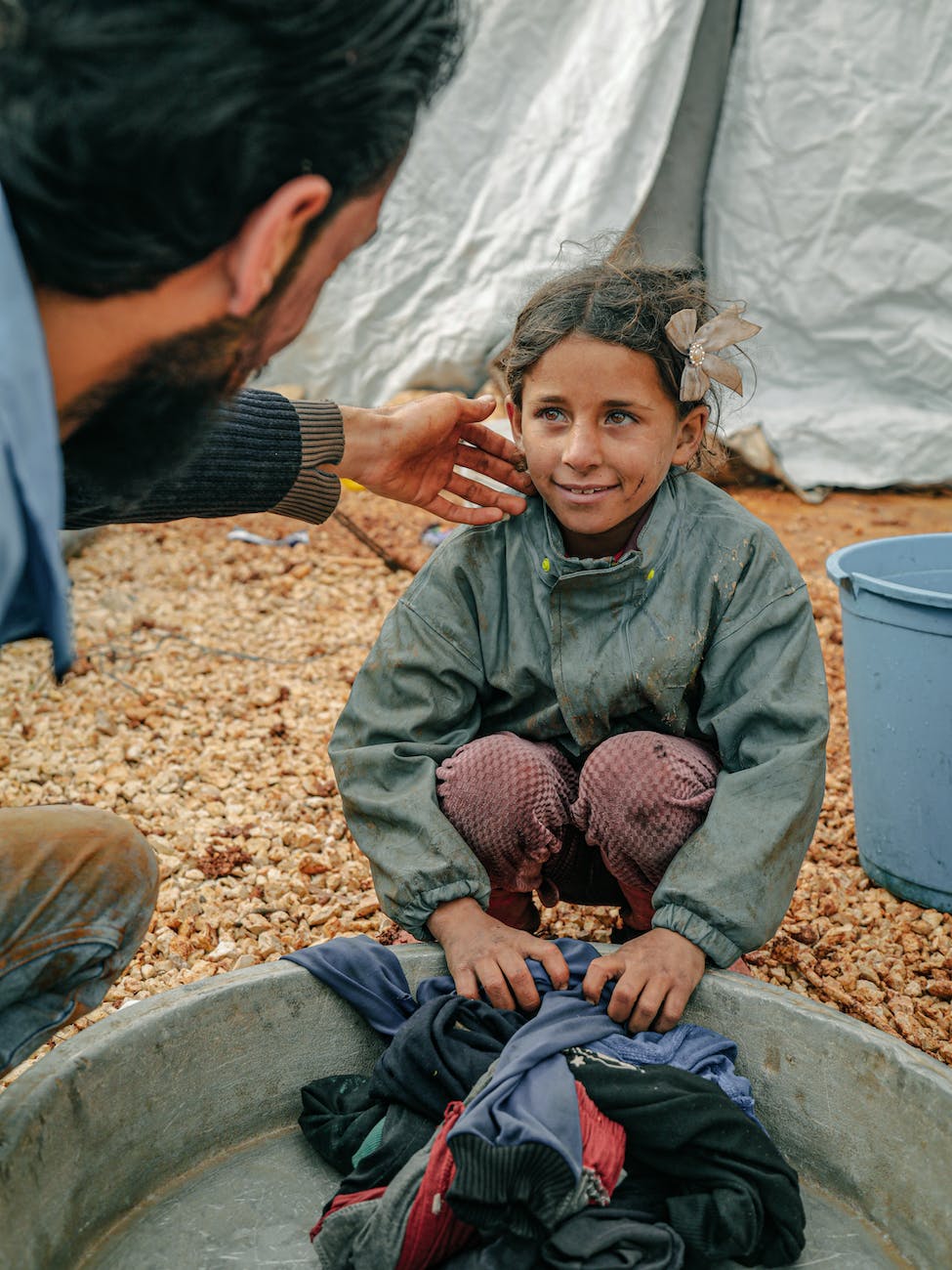
Here in the UK, the news is full of efforts by the governing Conservative party to manage the number of refugees that arrive from Europe in small boats, having made perilous journeys firstly across Europe from the war zones of the middle east and northern Africa, then onto the cold waters of the English Channel, the busiest shipping lane in the world.
What principles should guide our response to the realities of this situation?
I can be pretty categorical in saying that, no matter how hard the government tries to dress their response up as ‘cruelty to be kind’, it does not have compassion as a guiding principle.
I could say so much more about this – the ‘hostile environment’, the slowness of the system, the fear mongering, the constant use of the term ‘illegal’ when all other routes have been closed, the deliberate downgrading of accommodation used to detain people within (because hotels are seen as too cushy), the racism inherent in welcoming white Ukrainians whilst rejecting brown Syrians and Black Eritreans etc. etc.
The point here though is that actions like this are justifiable precisely because other things have been prioritised above compassion.
The narrative then used to describe the ‘migrant crisis’ is then viewed through a different set of principles – ones which serve better to keep those who are comfortable free from and disturbance of that comfort, and ones that make use of the baser human emotions (fear of the outsider, fear of losing what is ‘ours’) to keep or gain political power in a system in which small shifts in public opinion have huge reward for our two main political parties.
Obtaining or keeping power is more important than compassion. Middle class ‘prosperity’ is more important than compassion.
Oddly, we then see a scramble to make this lack of compassion look like… compassion.
Our government has tried to tell us that…
if we do not treat refugees badly, then we will encourage more to come, and this will place vulnerable people at risk
the real issue is the ‘criminal gangs of traffickers’ who are making money from the refugees
they are not real refugees, they are ‘economic migrants’ coming here for a ‘better life’
we can not take everyone- there is not enough room/acommodation/beds in the NHS, therefore we have to have a ‘fair system’ (even when we have anything but)
Our borders have to be secure because of the criminals/rapists/terrorists that otherwise will sneak in through the back door
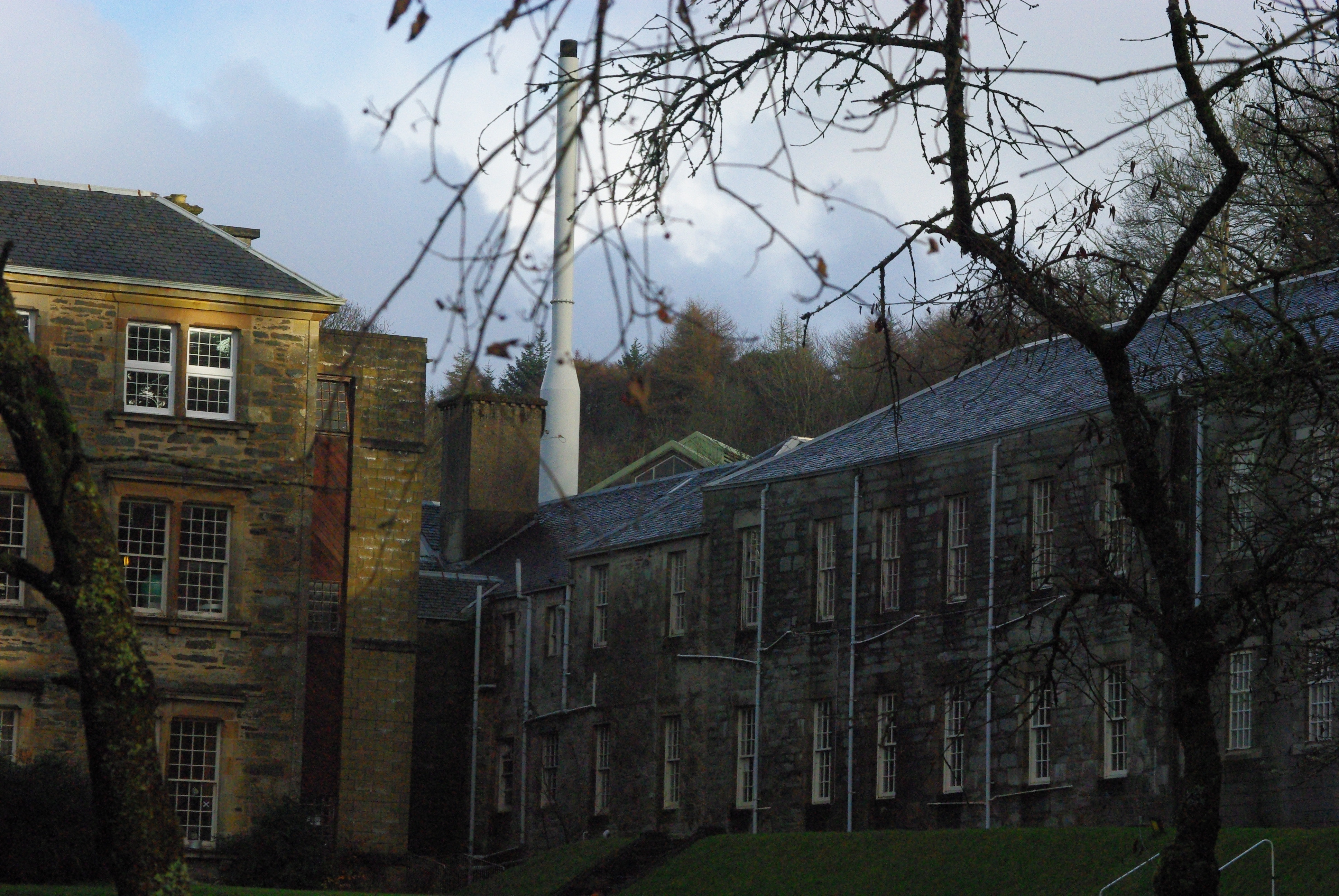
Argyll and Bute Psychiatric hospital, now mostly demolished.
Compassion is never perfect. It will lead us to make all sorts of mistakes. Consider the legacy of the Victorian Asylums, built at least in part with compassion in mind. It turns out that they did so much damage to the human spirit that we had to look back at them with compassion and compassionately replace them with something better. (There is a valid debate as to whether or not we have fully achieved this, but at least we can agree that the Asylums failed!)
As I said, perhaps it is as simple as letting compassion come first, then working out the details from there, then looking back at those details through the lens of compassion in order to make sure we got things right. Then repeating this over and over again.
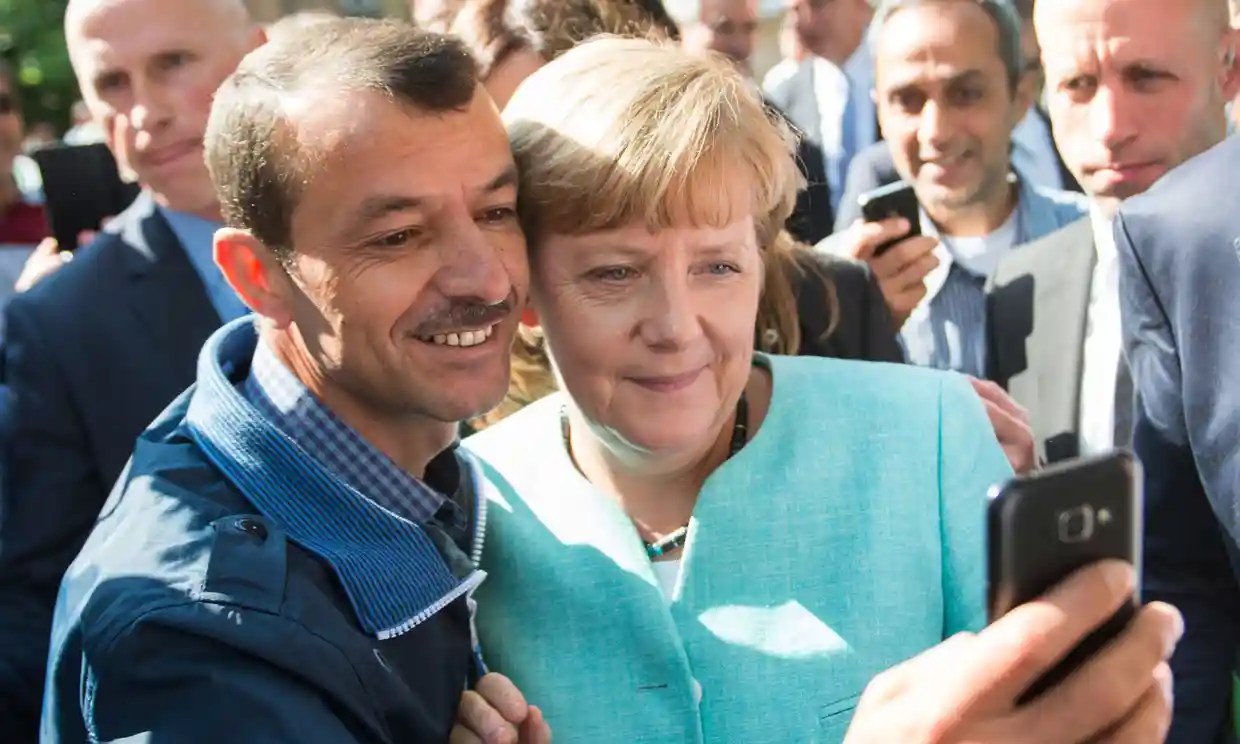
Compassion is also a hard sell. It will almost certainly have require personal and political compromise and sacrifice. It requires bravery – perhaps of the sort that Angela Merkel displayed in the way she led her country towards compassion for the millions of refugees Germany took in during the heights of the Syrian civil war.
Merkel, from a totally different part of the political spectrum that I am most comfortable with, took a huge political gamble because it felt like the right thing to do. I applaud her for it, and I think history will do so to.
Perhaps you may legitimately point of the impracticality of what I am suggesting. Merkel aside, not many people have been able to carry this kind of committment into politics, or rather it does not seem to have survived long within a political context. Merkel spent political capital she had already been able to accumulate. Corbyn was never allowed that opportunity.
You may be right, but I still reserve the right to measure any government (or government in waiting, such as Starmer’s Labour party) against this principle.
How can anyone who has been animated by the stories of Jesus do anything else?
Imgage by Si Smith, from the book After the Apocalypse
Last year we published a collection of poetry called ‘After the Apocalypse’, written before, during and after the pandemic. It was concerned with anger, hope and desire for change in a world shadowed by all the things we know shadow it. (You can get a copy here.)
They are not hidden after all, but because we see them only through the lens of individual consumers, our only response is to hunker down in the deepest bunkers we can dig for ourselves and our small tribes.
I have shared these two poems before, but I share them again because of yesterdays post, dealing as it was with vitalising ideas, in this case, collectivism.
The poems are both constructed from ways of understanding the wild. The dominant one (arising during the enlightenment) views the world as a great big competition, in which we scratch upwards for ascendancy. The ‘good’ here is that only the fittest survive to pass on their victorious DNA to the next generation, who do it all again, and again. Mapped on to a world of individualsm, of personal accummulation and high garden walls this makes perfect sense.
Hermeneutic #1
Do not think
Trust instead in evolution
To shape the world, if not for best
At least for least worst
Do not act
Worlds are not built, they
Emerge through tectonic friction, they
Were abraded by natural forces
Far beyond your control
So do not rescue
Let weakness whither
Set the fittest free to celebrate
Ascendancy
Do not regulate
Let greed sow seeds
Like forest trees, set
Free markets free
However, my contention is that any truth contained in this way of looking at the world (which after all is a total distortion of Darwin’s writing) only reveals itself in geoplogical time, not human time.
It might also be true to say that humans have been so successful precicely because we have learned something we might call intelligent empathy. We learned to co-operate and to appreciate the needs of one another. It turns out that Wiliam Golding got it wrong.
Which brings us to the second analogy (or hermaneutic) which comes to us through an understanding of what is happened in the secret hidden world beneath our feet in that few inches of soil that sustains the whole life of the planet.
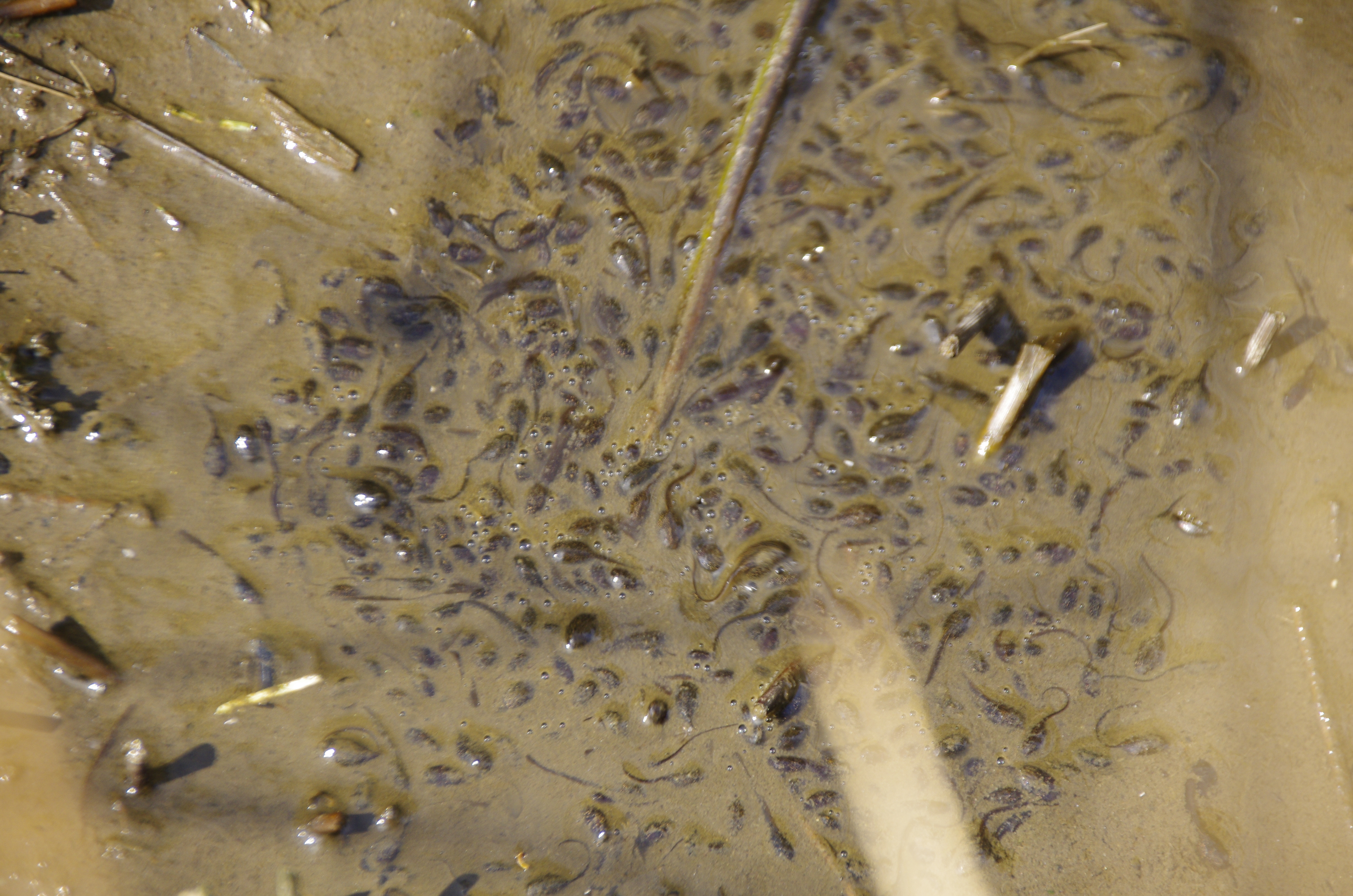
Scientists tell us that soil is not what we thought it was. It is not just accumulated inert dirt, it is in fact a living organism.
We are also now beginning to understand how funghal networks work in co-operation with trees, but what we know is already incredible, particularly when set as a contrast to the first hermaneutic above.
Hermeneutic #2
Tree is not tree without forest
Bird is not bird without sky
Man is not man on an island alone
With no fruit there is no fruit fly
Fungus is not just about fungus
It carries the world on its back
It holds under soil the truth of us all
It gives out but also gets back
In places of disconnection
Between the you and the I
May mycelium grow and nutrients flow
Lest all of us wither and die
Simply put, one species depends on another. Or I should say, many others. Here is some of what we know.
In the same way that we need to appreciate and nurture our soil, perhaps we also need to nurture and appreciate our communality, our shared humanity,
What does a society organised on this principle look like? That is the question that constantly nags at me. I call it the voice of the Spirit…
In my last post, I was described my decision to leave the Labour party, which was partly about what appears to me to be dishonesty and underhand dealings from the leadership, and also because I no longer feel comfortable that the party is vitalised or motivated by a set of principles that I can get behind.
One of the foundational ideas behind the Labour party was ‘solidarity’, by which I mean collectivisation; mutual support; working together towards a common goal.
This idea arose in direct response to 19th Century experiences of the powerlessness of industrialised populations in which workers were subject to the whim of the wealthy and powerful. The revolution here was that ‘the people’ have a vast numerical advantage and despite a long history of sometimes violent oppression of dissent, an organised collective voice can confront manifest injustice to great effect. This did not come to us easily;
It is this collective organisation of labour – and of ordinary people – that became the origin of the Labour movement. It is all there, in these sorts of ways
Mass protests, from Peterloo massacre to the mass trespasses on Kinder Scout that opened up private land to urban ramblers from Sheffield and Manchester.
The co-operative movement, in which poor people tried to take control of their own food supplies.
Universal suffrage- resisted for so long and so hard won.
Unionisation of the workplace, bringing in a vast set of improvements to working conditiions, health and safety, a shorter working week, contracts of employment etc.
Universal health care available for all on an equal basis.
Non means-tested benefits in response to the punitive poor law which blamed the poor for their own indolence. The great post-war Beveridge report ushered in an era of ‘social insurance’ (that has been almost entirely wound back and replaced with the individualised punative system that Beveridge wanted to leave behind.)
The other root of British solidarity and collectivism was, ironically, the way we did religion, particularly non-conformist religious movements like Methodism, which emphasised works of charity, selflessness and sacrifice for our fellow (wo)man. I say ironically because a different kind of religion may well be undermining our collective identity. I have used this video before;
The backlash
Collectivisation become greatly unfashionable. Suspect even.
Partly this is the dominance of the American empire, in which individulism is religion and any collective action is satanic socialism. From the perspective of British history (as above) the logic of this is very hard to grasp, but goes something like this;
People should be self reliant. This is the healthiest, highest form of humanity and is the most American. Anything that undermines this, for example by creating dependency or rewarding lazyness, is immoral.
Poverty is the result of poor choices by individuals. The answer to poverty is for people to work harder. Where this is not possible (through sickness for example) the answer is the charity of individuals
This is powerful magic when filtered through a mass media machine in both the US and the UK that is largely receptive to ideas convenient to the rich and powerful. In fact, the idea is so powerful that it can be used to overwelm all research or bodies of knowledge that point out the flaws in the argument.
Here in the UK, Margaret Thatcher’s 80’s governments successfuly employed this magic in the wake of the political/social/economic upheaval of the 70’s, typified by confrontations between unions and industrial management (everyone of a certain age remembers the ‘winter of discontent’.) Thatcher was able to ride this crisis in order to confront the collectivised power of the unions, replacing the collective consensus with a new kind of militant individualism, in which she even claimed that there was ‘no such thing as society’. It also enabled her ministers, confronted with huge unemployment in the wake of the deliberate devastation of old nationalised industries, to claim that the jobless just needed to get on their bikes.
The interesting thing is that the post-Thatcher era Blair and Brown Labour governments never challenged the limitations of this kind of individualism – rather, they copied it, reshaped their language to accommodate it and left behind collectivisation as ‘old Labour’. This is nowhere more obvious than when Blair stopped using the word ‘poverty’ (the eradication of which had been a political consensus in the three dacades post WW2) and instead began talking about ‘social exclusion’.
The shift here is from understanding poverty as a structural problem requiring macro collectivised solutionstowards seeing the poor as people who need to be corrected/rescued/re-included. As if the poor are not like us, not ‘normal’ so the kind thing to do is to try to ‘lift’ them back into the fold. It was as if the decades of research into the nature of poverty – how it happens, how it brutalises and how it re-vicitmises generationally – never happened.
With the coming dominance of individualism as a guiding principle not ony for policy, but of hegemonic discourse, it should be no surprise that successive governments were under no pressure whatsoever to address – or even notice – growing structural inequalities within society. At best the language used was around ‘fairness’, an amorphic concept that seemed ot owe more to individual consumer rights than the deeper morality of compassion for the most vulnerable within society.
Some problems can’t be solved alone. If the pandemic taught us anything, surely it taught us that?
Our percieved powerlessness in the face of the climate emergency is likewise almost entirely because we are not able to concieve of a way to solve complex problems that require collective action to solve. Internationalism seems a universe away when our borders end at our own front doors, or our own bank accounts.
Of course there are things called corporations, which require complex interactions and social hierarchies, but these are still strangely… individualistic. They are about creating individual wealth, not creating a common good.
Wait a minute, I hear you ask, doesn’t this collective action you are talking about sound like communism?
This is spectre summoned when we start to talk about what can feel like top-down solutions, centrally planned solutions or solutions derived from mass activism. The right-wing media start to talk about starvation from state farming and dreadful cars made from pig-iron.
The job of any progressive political movement has to be to reframe collectivism in a way that allows people once more to catch a vision of what is possible when humans use the power of coming together around a common cause.
The opposite is death (of the planet) from human self-centredness.
This month, I left a political party. I don’t think they have missed me, but this was not a small thing for me as this party had been my ‘tribe’ for most of my life. When I fell out with them previously, it felt like falling out with my family, but this time it feels like divorce; it feels final, similar to when I left church. Something inside has been wrenched and torn to the point where I could not live with the cognitive/emotional/spiritual dissonance any more. Anyone who has been through this process will know how painful it can be.
I am going to try to describe this process of change in some detail but before I do so, it is probably worth reading the question I asked in title of this post again. No matter how idealistic or how cynical you are in relation to politics, I think you would concede that this is a ‘both-and’ sort of question.
Of course there needs to be inspirational/vitalising ideas behind our political process- even if some have that hidden, hermeneutical quality, by which I mean they have become so mainstream as to become ‘common sense’ so we do not think about them as ideas at all, rather they are just ‘common sense’. regular readers of this blog will know that it is this area that I have often been interested in exploring. Ideas matter, even (and perhaps particularly) when we do not see them.
Not all political ideas are equal – not when applied to the vast complexities of human society. Some either by accident or design victimise parts of that society. Others are operationalised on behalf of those who already have wealth and power in order to ensure they have more of the same. New ideas are often resisted for this reason, because they tend to unseat the power of those who have benefitted from the old ones, but arguably, without new ideas (or at least better formulations of the old ones) it will not be possible to solve the two great emergencies facing our age- climate change and inequality.
At the same time, as demonstrated by two recent political failures, ideas are just the start of the political process.
Corbyn’s leadership of the Labour party was full of ideas- many of them very good ones in my opinion, but whilst individually these ideas were very popular, Corbyn was unable to achieve power, so the ideas remained just that – ideas. (Spoiler alert, we will return to this later.)
The other recent example of the same is that of Prime Minister Liz Truss and her decision to enact Thatcherite extremism, pushed on by right-wing think tanks and the free market economist ultras. The extreme nature of her ideas scared even the UK financial institutions to death and she crashed an burned.
The lesson for all would-be governments seems to have been to hold your ideas very lightly and focus instead on image, mediated through… the media. There is a danger that this approach becomes so important as a means of achieving power that tiny manipulations in media message determine policy much more than ideology. Spin doctors become more important than economists or climate scientists. Media outlets become shapers of policy more than party conferences or social policy researchers.
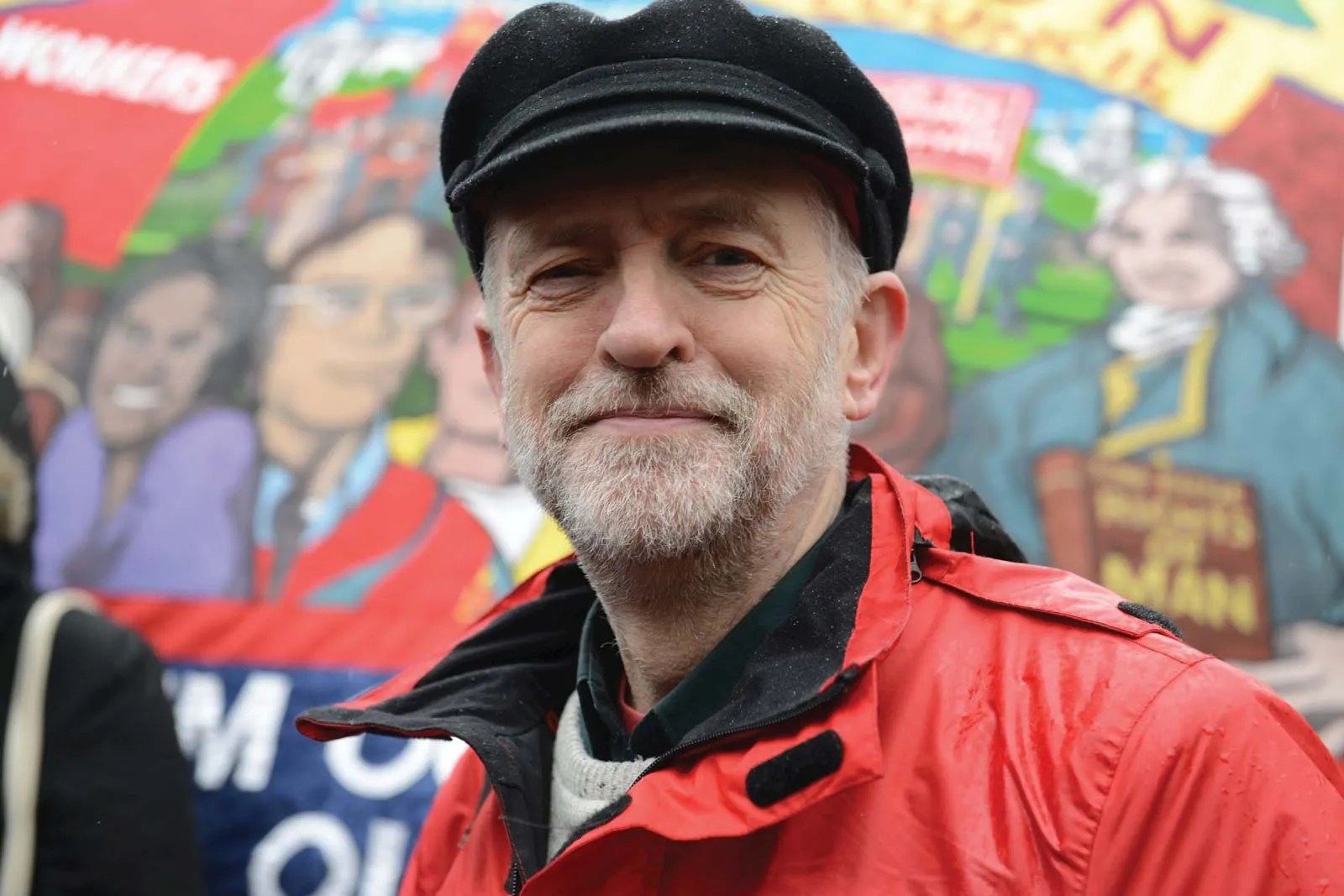
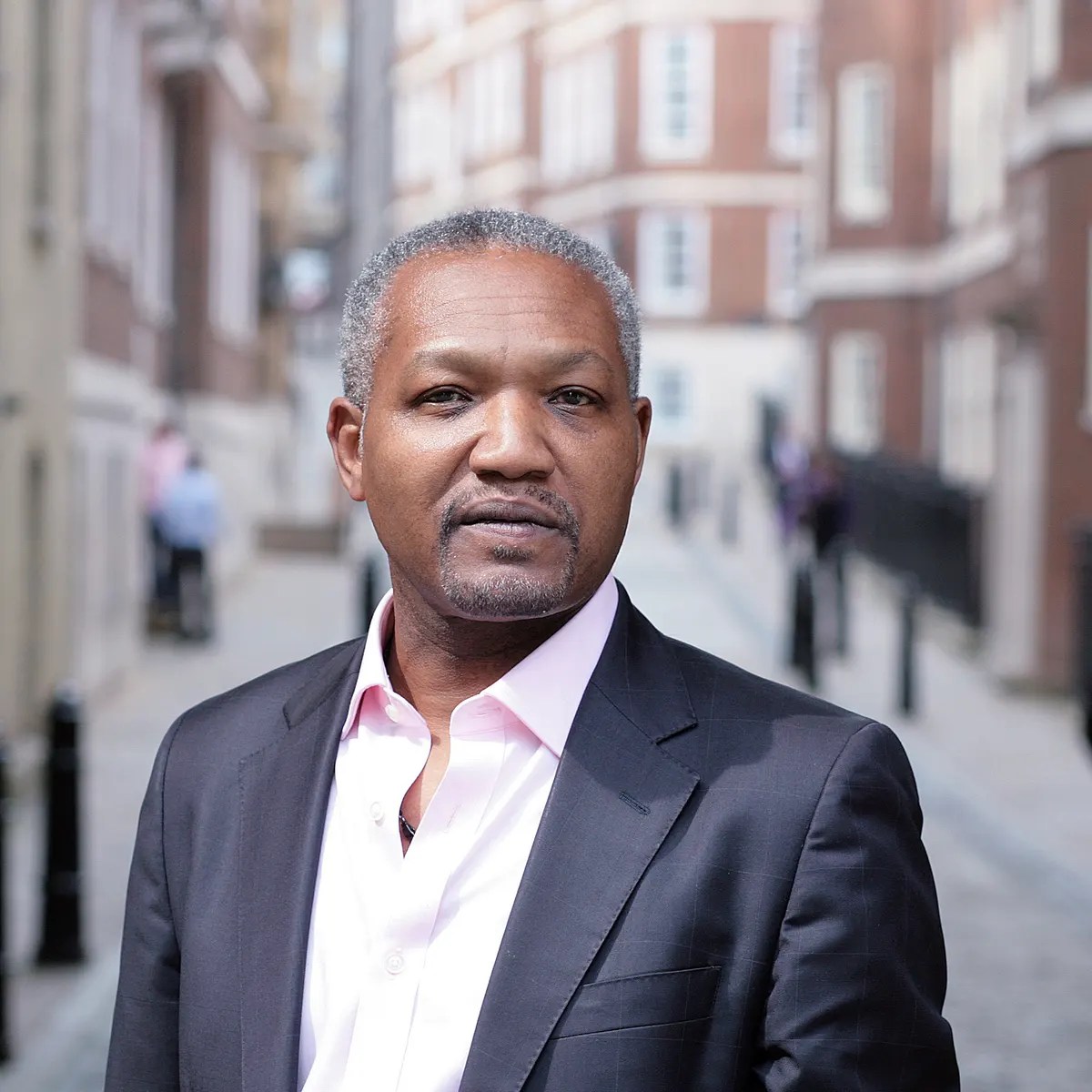
But enough of this, back to my own story. It has a lot to do with this man;
If you are reading this from abroad, it is possible you don’t know who this is, but his name is Jeremy Corbyn, and he was the (reluctant) leader of the British Labour party for five tumultuous years from 2015 to 2020.
The fact that he was leader at all was kind of an accident. Following the resignation of the previous incumbant (Milliband) there was an attempt to have a broad shortlist of potential leaders in order to represent the ‘broad church’ that was the party. A left wing candidate was required, and it was Corbyn’s turn. He had spent his long parliamentary career out on the fringes of the party, involved in activism- working to support worthy causes and to fight percieved injustice both at home and abroad. He was scruffy, not particularly media-savvy and stubbornly resistant to saying ‘the right thing’.
What the party establishment (some of whom nominated him as the token left-winger for the leadership shortlist) failed to realise was that although the parlimentary labour party was largely centrist, rank and file labour membership was much more radically minded. They also failed to understand that when Corbyn’s brand of politics – authentic, compassionate and anti-establishment – was given a larger platform, people began to listen, including me.
I had been a member of the party previously. I grew up in a community devastated by Thatcherism, and the Labour party represented the resistance. The Tories were all about greed, our side was about looking after one another, seeking to lift up the poor and broken. In 1997, I was not particularly a fan of Blair, whose politics seemed even then to be far too compromised to me, but I was swept up in the same euphoric ecstacy when finally we had a Labour government. At the time I was a young social worker on the outskirts of greater Manchester and it seemed that things finally had a chance of getting better.
They did – at least in part. There was investment in public services that we now look back on with wonder, particularly in the education system. ‘New’ Labour had moved on though. They no longer talked about poverty – ever. Instead, we started to use words like ‘social inclusion’. This change was evidence of a clear shift in ideology, in that Blair’s government was working firmly within the same individualistic neoliberalism that Thatcher had employed – a softer version perhaps, but the fundamentals remained. The poor were not poor for structural reasons, but because of individual indolence. The purpose of government was to promote private sector innovation above almost all else.
It worked. Blair kept winning elections.
There were international shadows from very early however. The first test (which eerily fortold things to come) was the falling apart of Blair’s so-called ‘ethical foriegn policy’ when we sold British planes and weapons to regimes engaging in despotic wars of oppression like Indonesia and Zimbabwe. Blair later became a world wide military interventionist- a hero in the Balkans, but ultimately (arguably) a war criminal in Iraq. By then we were all heartily sick of him and his smug certainty.
Blair’s time in office left me politically bereft. Between him and the world he had helped create, there seemed no hope left in politics – no hope for progressive change that is.
Partly this was about ideas, in that It was very difficult to understand what Blairs ideas were. Neoliberalism had become that ‘common sense’ normality I referred to earlier and so all that was left was the power gaming. Most of the problems I saw day to day in my social work career or I saw internationally were about rampant and growing inequality, but there seemed no political solution that was possible- no political idea that was anywhere near the mainstream.
Others have argued far more persuasively than me that it was this ideological vaccuum that created space for the popularism of Brexit and Boris Johnson – that we have Blair to blame for this much more than the Conservative party. Others have said the same about the rise of nationalism in Scotland. This may or may not be true, but even though I still voted Labour, I had long lost any feeling that they represented anything I beleived in. They were the least-worst option.
The ‘better than the Tories’ option.
When Corbyn unexpectedly won the party leadership in 1995, there was total consternation within the national political establishment. He was seen as at best a fringe figure, not ‘a leader’ and would likely be a ‘disaster’.
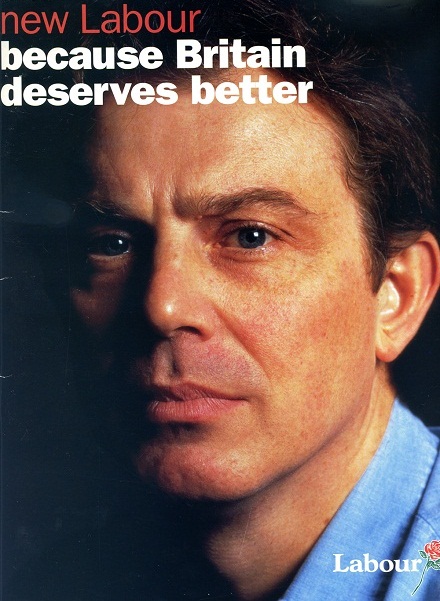
Tony Blair made no secret of his feelings. At first, the Blairite right wing of the party (which was the vast majority of the Parliamentary party) stood as far back from him as they could and waited.
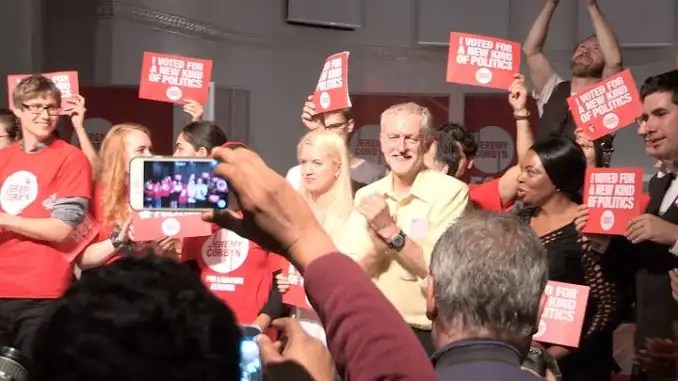
What happened though was that Corbyn continued to catch the imagination of people within the country who had previously been alienated from politics, particularly younger people, but also people like me. Membership of the party swelled with these new members. I rejoined too. My late sister became a party activist, ironically in the consitiuency that is now held by the Conservative party deputy chairman, the dreadful Lee Anderson.
In part, it felt that Corbyn’s success was popularist in nature, in that he was the anti-politian politician. He was the outsider on the inside. Even surrounded by a shadow cabinet containing a number of rather unpolished performers, he was making an impression. There was more to him than popularist protest though, for two main reasons.
Firstly, his character. He was a man who seemed to project integrity in a political system that had long seemed to abandon this as a worthy goal. His visible compassion was in stark contrast to the then leader of the Conservative party, Theresa May. Corbyn had a long track record of standing with marginalised and oppressed groups and he was not changing his stance now. Here was a man who walked where he talked.
Secondly, under Corbyn, Labour policies began to be shaped by different ideas about how the world worked. The attack lines tried at the early stage were that he was ‘old labour’ and ‘hard left’ and ‘marxist’ and a ‘throw-back dinosar’, but it was notable that these assaults, even applied by the full weight of the largely right wing media in the UK did nothing to undermine his core support.
Nevertheless, Corbyn went into the 2017 general election (called by May in order to consolidate her base in the wake of Tory Brexit ruptions) trailing by twenty five percent in the polls. What happened next exceeded all resonable expectations. Corbyn did not win the election, but he increased Labour’s share of the popular vote and gained thirty seats. This success was largely seen as a vindication of Labour policies – the popularity of its 2017 Manifesto that promised to scrap tuition fees, address public sector pay, make housing more affordable, end austerity, nationalise the railways and provide school students with free lunches – but it strengthened Corbyns position, less with the general public, more against a largely hostile parliamentary Labour party.
It all felt fragile, but people like me started to hope that a new movement was possible – one that took seriously the need to grapple with inequality on both the national and international stage and to finally get serious on climate action and climate justice (incuding the refugee crisis.)
I am convinced now that what happened next will come to be regarded as one of the most grubby periods in Labour party history.
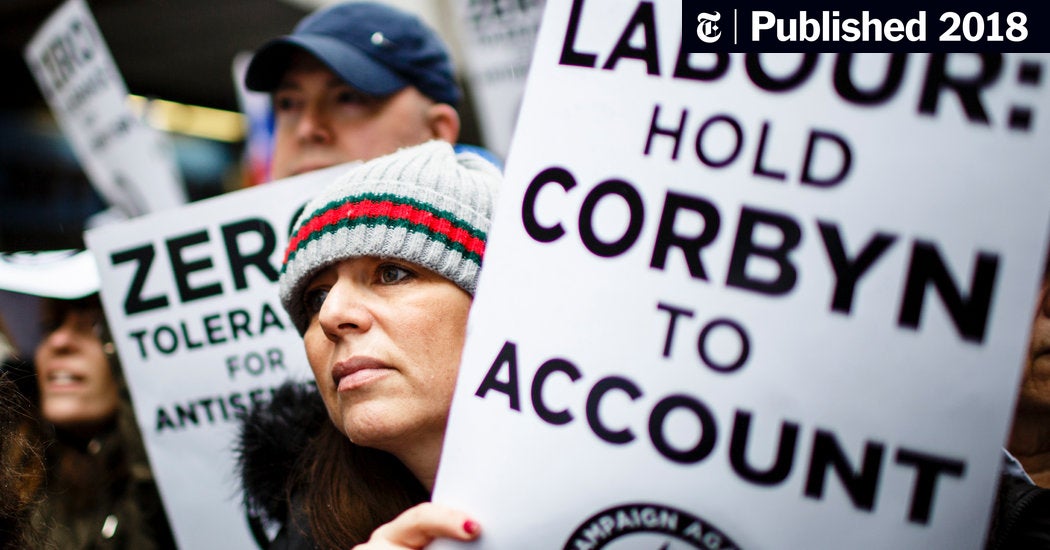
It seemed almost impossible to understand that the downfall of Jeremy Corbyn – that great champion of anti-racism – should be caused by anti-semitism but no matter what steps Corbyn and his supporters tried to take, the narrative just kept getting worse. He was associated with Pallestinian terrorists, shared anti-semitic murals, surrounded himself with anti-semites like Ken Livingstone and, most damningly of all, he presided over a party that was found to be institutionally racist by the Equality and Human Rights commission.
At the time, I grappled with the whole thing. Whilst I wanted to listen to those Jewish voices who felt excluded, there were always other Jews within the left wing who had a very different view;
Was the late David Graeber right to say that this was a strategic attack on the left wing? If so, it was notable that this was happening from WITHIN the party as much as without. I am no conspiracy theorist, so I read the IHRC report in full. I listened as carefully as I could to people like Margaret Hodge.
Even though I had no problem believing that there were anti-semites in the party, I found it very hard to pin the issue down. The examples I was coming across did not seem to prove this as a system wide issue, or that this was a left wing problem more than it was a right wing one. The IHRC report seemed to have drawn conclusions mostly about interferance in a complaints process which were disputed and anyway, given the pressure, how could the leadership not seek to control the message in this way?
Perhaps this reveals only my own bias, but I simply could not understand exctly what the issue really was. If there were problems I wanted them dealt with, but the febrile atmosphere seemed to make this an impossible task.
For most of the population, it sealed the deal. There was something rotten in the Labour Party, and Corbyn, once held as a man of compassion and integrity was now to seen as a racist pariah.
In 2019, Boris Johnson won the national election by a landslide. Corbyn resigned as leader. Despite a genuinely brilliant, detailed and carefully costed manfiesto, Labour had won just 202 of the 650 seats and according to polling, this was largely to do with how the public percieved Corbyn.
Corbyn’s replacement leader had a problem though – the membership. Labour party members were not only to the left of the ccountry – with its aging population of home owners – they were also considerably to the left of most of the Labour MP’s, including those standing as his replacement. The eventual winner of this process managed this process by making a lot of promises, his so-called ten pledges.
I did not vote for Starmer, but understood why many did. As my brother-in-law put it, he was the one who looked most like a Tory, so would scare middle-England the least. What I did not expect was what happened next. Starmer began a war against the left wing of his own party, on the grounds of electability.
At the same time, his ten pledges – perhaps we could describe them as his motivational ideas – fell away, one by one.
In front of the media however, Starmer cut a much more credible figure, no more so than in the way that he seemed to finally get the party back on the front foot by ‘dealing’ with the issue. How he was dealing with it was not clear at first, but it now seemed that a lot of people were being suspended. expelled or silenced.
We know this not because of party transparency, or because of home-grown investigative journalism. Rather we know this because of work done by Al Jazeera, in a series of films called The Labour Files– more of this below, but if you are interested in this issue at all,you need to watch them. They are all available via Youtube, here is the first one.
(It is notable that most of the current leadership, rather than engaging with the issues raised in these films, claims not to have seen them.)
Meanwhile, there was another process taking place within the party. The Forde Report. This from The Guardian
A long-delayed report on allegations of bullying, racism and sexism within the Labour party has finally been released.
Keir Starmer commissioned the report, by Martin Forde QC, in the wake of the leak of a document containing private WhatsApp messages that exposed deep factionalism in Labour’s efforts to combat antisemitism.
In case you do not know about the grubby beginnings of this report, this video gives are reasonably fair summary;
This was all landing at the same time as the Al Jazeera Labour files were revealing lots of details that at very least cast doubt on the new messaging that Starmer’s labour party was putting out about antisemitism, and also revealed some rather Stalinesque treatment of members of the left wing on a rather scary basis.
The staggering thing about Forde’s report was that it was NOT a whitewash. It is detailed and forensic – far more detaled and considered than the previous IHCC report. He found that Labour operated a ‘hierarchy of racism’ with anti-semitism being treated in a totally different way than racism towards black or muslim people, and that factionalism within the senior leadership was largely to blame for the failure to address antisemitism.
The report was very inconvenient for Starmer’s leadership, so mostly they ignored it. So did most of the UK media. Forde himself has expressed his surprise that no-one from the Labour leadership has spoken to him, and that he has not been invited to speak to the National Executive Committee about his 165 recommendations.
In this video, the two parts of this outside critical examination of the party- Forde and Al Jazeera – are both discussed in detail. Of particular note is how that crucial BBC Panorama programme is being revealed as… well, watch for yourself.
Where I am up to with all of this?
I have left the party because I have no wish to be part of a movement that punishes some of it members for political expediency.
I have left too because I see no ideas that I can believe in, no policy direction that I can get behind. This might be good politics, but I want more from a party I belong to than simply waiting for the morally bankrupt Tories to leave.
I left because I have no confidence in the current leadership. They have shown themselves to be dishonest and unwilling to spend any political capital on things that really matter- not least the climate and social justice issues that dominate our age.
I get that they need to be in power to do anything, but they also need ideas, principles, passion and compassion. These things seem to be in short supply in the party at present.
I left also because my current working theory (based on the evidence I have been able to see and being clear that there might be things that I am not seeing that might change my mind) is that the Corbyn project was at least in part overwhelmed by the weaponisation of antisemitism within the party. It was a convenient attack line, and it worked. Forde and the Al Jazeera reporting has revealed enough to suggest that Corbyn was right.
There has been no reflective honest examination of either Forde or the findings revealed within the Labour Files.
This is a problem not just because it is underhand and deceitful, but also because it gives voice to a resurgent extreme right wing government in Israel, which continues to oppress, murder and illegally occupy.
What next?
I find myself politically homeless at present. I have never NOT voted Labour in any general election in my entire life- not even for tactical reasons. For the first time ever this feels likely, because I do not think I can trust the people who have acted so appallingly in the purge of the left in actual government- even though I suspect that is where they are heading. Are they still the least worst option? Perhaps they are, but I am less convinced of this than ever.
Many of my best friends abandoned Labour a long time ago – many of them have given their passionate support to the Scottish National Party and believe that the only possibility for a better future is to seperate themselves from the UK government entirely. I understand this impulse, but have some real reservations about nationalism. Perhaps this is about identity, in that I am an English/Irish man living in Scotland, but all this is for a different post, this one it too long already.
Other friends joined the Greens, and these certainly seem to be most in alignment with my thinking at present. Up here in Scotland, they have had a pact with the SNP which means that the Greens do not field a candidate when this would split the SNP vote.
But, I have always been an outsider.
Perhaps my passions are best employed looking inwards…
My heart sings with the coming of spring. Like, the soil, as the wetness is warmed and awakened, I feel alive as if for the first time. It is enough to drive me towards… poetry.
All things contain both silver and shadow.
All things rise then fall, then rise again.
All things have their arc.
You and me are no different – but this is no sadness.
This is no failing.
Rather this is the glory of the life we live.
We have spring and we have summer, then we have autumn and the darkness of winter.
But in this moment, we have that most precious unfolding
Called spring.
Below is one of my poem in which I tried to say much the same thing…
My mother died, aged 79, in December 2021, and I have still not been able to distribute the proceeds of her will.
This is perhaps not unusual when people die leaving a complex estate, but my mother did not have a messy will or lots of difficult assets – she had a small amounts of savings in several accounts (two of which she seems to have forgotten about) and a semi-detatched house full of vast amounts of worthless things collected over a long life time.
She had spent much of her adult life on disability benefits after all, having suffered from chronic mental health problems and having lived a life of poverty and extreme self-denial.
Furthermore, there were only two main beneficiaries from her will, myself and my late sister.
As the only executor charged with the ‘sadministration’ of her last will and testament, the greatest challenge was clearing out the aforementoined lifetime of hoarding and accummulation in her house, or at least I thought this to be the case. What actually happened was that after one of the hardest weeks of my life, filling skip after skip and making innumerable trips to charity shops, we returned to Scotland to find a letter waiting for us from the benefits agency.
It turns out that the benefits agency check the probate records of anyone who dies whilst on benefits. My mother had a top-up of ‘pension credit’ as well as her state pension, which amounted to a few extra pounds a week, and because this entitlement tapers off dependent on the amount of savings someone has, the agency noted that she had more savings than the threshold and so started an ‘investigation’.
To understand how this came about, you need to understand something of the circumstances of my mother’s life. I mentioned some of this previously in this post, but suffice it to say that she never fully escaped the extreme poverty and emotional neglect of her childhood. She never felt safe or worthy. One of the ways she sought to make the world more predictable was by hoarding and stockpilingv- mostly food, but also shoes and clothing. She also had a relationship with money that was entirely dysfunctional, in that she scrimped and saved every single penny, way beyond what was reasonable, even for people on benefits. For example, her daily food intake was almost all gathered from the past-sell-by-date section of supermarkets, and she spent much of her later leisure time in charity shops.
This ability to make her tiny income stretch out started early, in that she had saved and borrowed enough money to purchase her house (the one I was born in and the one I had to sell after her death) long before her short marriage to my father. She did this by working long hours at various jobs – a butchers, various factories, Boots chemist (who sacked her when she married as they did not employ married women) and a bread delivery service.
She then brought up two children as a single mother on benefits. She passed on her fear to my sister and I, but at the same time we never went without anything that mattered. Even if our comparative povery marked us out as less-than, it was not the poverty of the food bank or the begging bowl.
But back to the money thing. For most of her life, my mother did everything by cash. She withdrew her benefits (and later her pension) then paid all her bills ‘over the counter’. She lived in fear of NOT paying her bills – due to some encounters with bailiffs in the wake of her marriage ending – so was very careful to always be in credit if at all possible with all her utility bills.
For the same reason, she always tried to have some kind of emergency ‘nest egg’, in the form of a stash of cash hidden somewhere around the house. After all, the roof may need to be mended or the cooker could break, and these sorts of things were the greatest fears of my mother’s life (and being found out as the child of unwed parents, but that is a story for another time.)
Towards the end of her life, due to the slightly more generous income of a state pention and dissability living allowance, my mother was unable to increase her lifelong committment to extreme penny-pinching, so the cash she was accummulating in her house started to increase. By then my sister, who was geographically much closer to my mother and more involved in her day-to-day life, was very unwell and subsequently died, so I was trying to support my increasingly infirm and very eccentric mother from distance.
I should paint a picture of just HOW eccentric she was for those who did not know her. The effect of her mental health problems and isolation had been the adoption of a number of coping strategies that she held on to fiercely – extreme religion, an addiction to exercise that to others seemed remarkable and ideas about food and central heating that left medical people aghast. What seemed extreme was her normal, for example in terms of the distances she walked, pushing a disability trolley, bent over by arthritis. She lived in a home with almost no heating and until the last year or so of her life, no hot water. She cooked a limited number of spartan meals, often using ingredients that anyone else would have condemned as unfit for humans. The problem was that as she became more infirm, she was unable to let go any of her coping skills or eccentric routines, with some small exception – one was was slightly more willing to let me make some decisions on her behalf.
The other was that she became very dependent on the care and support offer to her by a remarkable neighbour called Sam. I will remain grateful to Sam for ever – she is one of the reasons that humanity still has a future. Same cooked, cleaned and watched over my mother when my daily phone calls and increasingly frantic visits seemed woefully inadequate.
But as I said, her normal was other people’s extreme. Those of us who knew her best had to come to terms with this.
Then, on one of my visits down from Scotland to try to help her sort out some of her affairs, I discovered nineteen thousand pounds in cash. Around the same time, the way my mother had always withdrawn her pension – through a Post Office card account – had come to an end because these accounts were all suspended. This meant that she needed to open her first ever current account. After numerous complications, this is what we did, with me as an administrator on her account so I could set up direct debits and make other payments as necessary. This enabled me to get some repairs done on her house, including installing a water heater.
My mother was very keen for me to keep the nineteen thousand pounds, but I refused to do this, insttead putting it in to her new current acount. You may think me fool for doing this, given the trouble it has caused since, but at the end of the day, I know I did the right thing. I have seen too much dodgy family practices about money in my former life as a social worker, often resulting in adult protection invesigations. I wanted to keep everything correct and straightforward.
It is important to remember that this money was all paid out to my mother as per her entitlements. Had she not lived the eccentric life of self denial, but spent the money on the things that others would have done – good food, taxis and busses, heating bills, new clothes etc- then she would never have accumulated this money. She had cash because she could not bring herself to break the fearful habits of her lifetime.
Having said that, I think my mother knew well that she was breaking the rules. At some point she had put some money in an ISA savings account. It was around ten thousand pounds. The threshold of savings that the benefits agency look at before they started to progressively reduce benefits was around eight thousand. In practice this meant that my mother would have lost a small amount of her ‘pension credit’ – which was less than ten pounds a week in total, so it would not have made much difference. She chose to ignore this.
I tried to talk to her about it a few times, but she always closed me down, so I chose to ignore it too, and regard it has ‘her business’. I still feel guilt and anxiety about this – as I said, I tried hard to do things properly. Perhaps I could have forced this issue, but there were so many more pressing issues at the time, as I stuggled to set up packages of care, deal with complaints about carers not showing up, and manage the constantly problematic interface with health care workers.
The end result is that my mother when my mother died, the level of savings she had – when we add together the money she had in different savings accounts and the cash I had placed in to her current account – was above the threshold for continued reciept of pension credit, which as I have already mentions was less than ten pounds per week. On reviewing the probate information I submitted, the benefits agency now knew this and wanted it back. They had started an ‘investigation’.
My mother was being pursued beyond her grave for money that she had only lost entitlement to because she had not spent it quickly enough.
What happened next was a long series of seemingly unending information flows.
Many telephone calls.
Letters of explanation. Everything by post as the department involved do not do e-mail.
Bank statements were requested going back into the 1990’s. The bank only keep ten years of records, but even to access them as a third party means a whole process of submitting forms and documents and proofs of identity.
I send what is requested then they ask for something else. The letters they send me never arrive so I only discover they were sent when I ring to ask what is happening.
Then they same for post office records. Some of these accounts are now handled by JP Morgan – a massive accountancy firm – who have different processes, requiring aurhorised copies of identity documents.
Everything moves at glacial pace, and here we are still. The sadministration continues.
I have to add that in my dealings with the department within the benefits agency charged with this investigation, all staff have been pleasant, decent and as helpful has they could be.
On one level, rules are rules. If my mother was not entitled to this benefit, then she should not have been getting it. If we need to pay back her savings to cover what she should not have been paid then so be it. I have said all of these things and meant them.
But this is not the whole story. It feels as though the legacy left – both literally and figuartively – by this remarkable woman is being demeaned, much as she was when she was alive. A hard and lonely life is being followed by a grubby and unpleasant afterlife. The money that would come to me, my children and my sisters children is not huge, but it now feels worth much less than it was, no matter how much the benefits agency eventually reclaim.
There is another question here too about the different ways we deal with the wealthy and the poor in our society. Here is a test – do a simple internet search entitled ‘inheritence tax’. You will be deluged with advertisements for companies trying to help you avoid paying it. There is no hidden subterfuge here, the purpose of this activity – the avoidance of tax to be paid after the death of someone who is very wealthy – is shouted out loud, as if this is a social good. As if tax avoidance is good sense.
I am sure you get the contrast here. One involves those who have much giving more of it than they should to their own. The other involves those with very little being scrutinised and criminalised for taking more than they should.
Perhaps this is right. Perhaps this is the only legacy my mother in all her mess and eccentricity could ever leave. Hers was not an ordinary life so how could her death be ordinary?
All I know is that the impact of this process on my own life and my own grieving is more difficult than it is possible to describe. I find myself in the same place emotionally that I was aged 13, wearing home-made clothes to school and walking everywhere because we had no car. Back then, benefits were so much more generous than they are now, but still we felt ourselves to be less-than. We were those who were entitled only begrudgingly, and this feeling is hard to escape.
This is a line from a poem I wrote some time ago, in which I used some ideas pinched from philospher Timothy Morton, whose writing has done much to shine a light on the way we are in the anthopocene age.
His most frequently cited book, Ecology Without Nature, says we need to scrap the whole concept of “nature”. He argues that a distinctive feature of our world is the presence of ginormous things he calls “hyperobjects” – such as global warming or the internet – that we tend to think of as abstract ideas because we can’t get our heads around them, but that are nevertheless as real as hammers. He believes all beings are interdependent, and speculates that everything in the universe has a kind of consciousness, from algae and boulders to knives and forks. He asserts that human beings are cyborgs of a kind, since we are made up of all sorts of non-human components; he likes to point out that the very stuff that supposedly makes us us – our DNA – contains a significant amount of genetic material from viruses. He says that we’re already ruled by a primitive artificial intelligence: industrial capitalism. At the same time, he believes that there are some “weird experiential chemicals” in consumerism that will help humanity prevent a full-blown ecological crisis.
On the micro level, this kind of thinking chimes well with ideas around permaculture, which seeks to replace consumptive and destructive industrial/capitalist/enlightenment methods with systems modelled on flourishing natural ecosystems. It is of course a feature of these ecosystems that they are circular – that each element of the system is dependent upon others and in turn forms the raw material for the next.
Rather than seeing the whole as a blank space in which elements compete for ascendency, the reality of natural systems is that they exist and sustain themselves by co-operation, interdependency.
Another way to put this is that rather than an input-output system in which resources are fed in one end and products spewed out the other, a system designed around permaculture principles includes the whole cycle within its model of production, including the generation of raw materials and the recycling and reuse of waste.
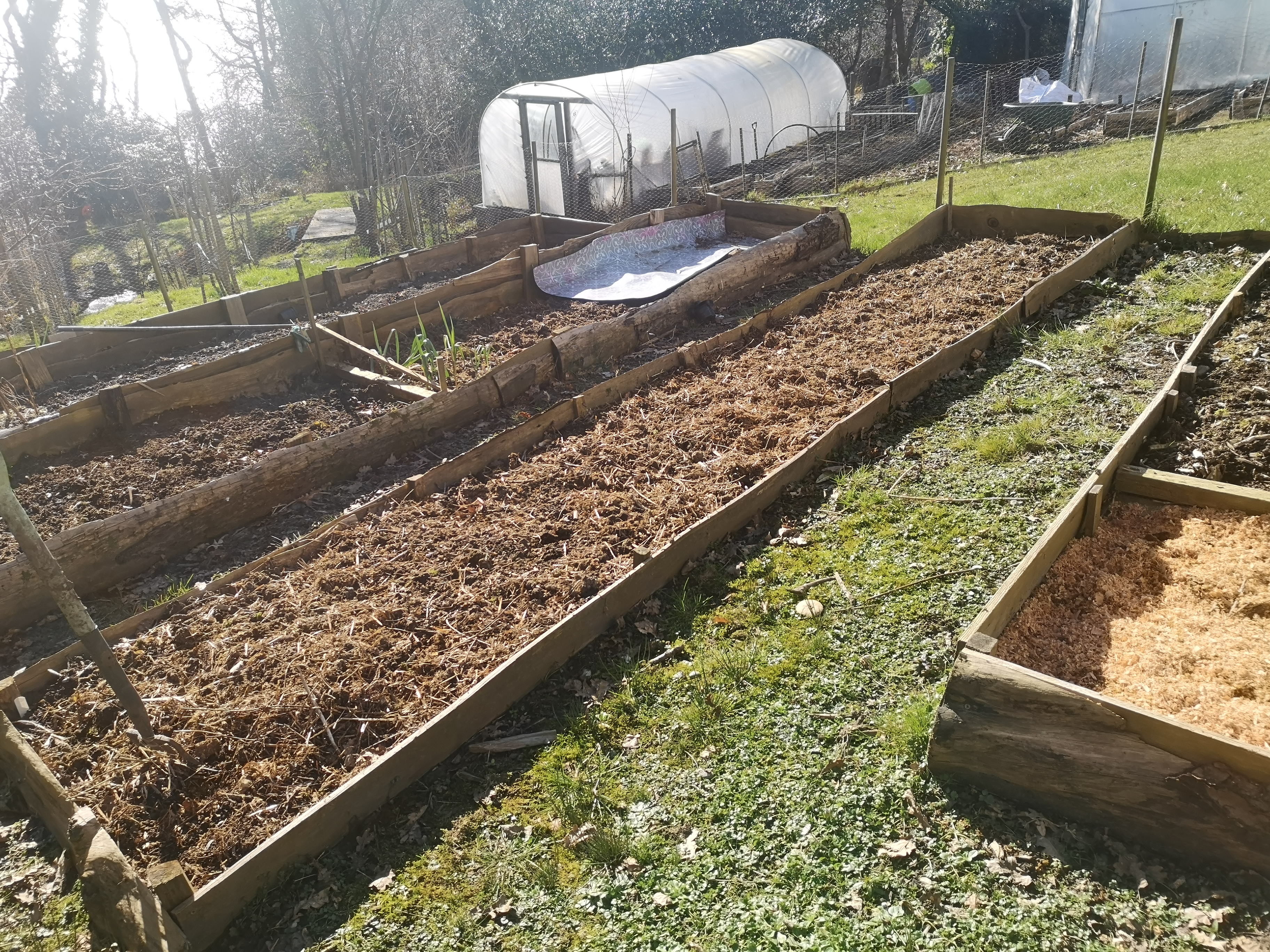
The most common way we hear the word ‘permaculture’ used is in relation to small scale food production. This is problematic as increasingly this is how the word is understood, rather than the much more dynamic transformative promise that it contains in relation to wider design principles. Having said that, it is a very useful way to think about my own attempts to grow food, allowing me to evolve my small holding practice in these ways;
I do not worry so much about ‘organic’, but try to only use things that can be re-used and re-purposed. This means that ‘doing as little harm’ to the natural world is built in.
If I need something, I try to find it within what I already have, even if it is ‘messy’, for example fences made from felled rhododendrons.
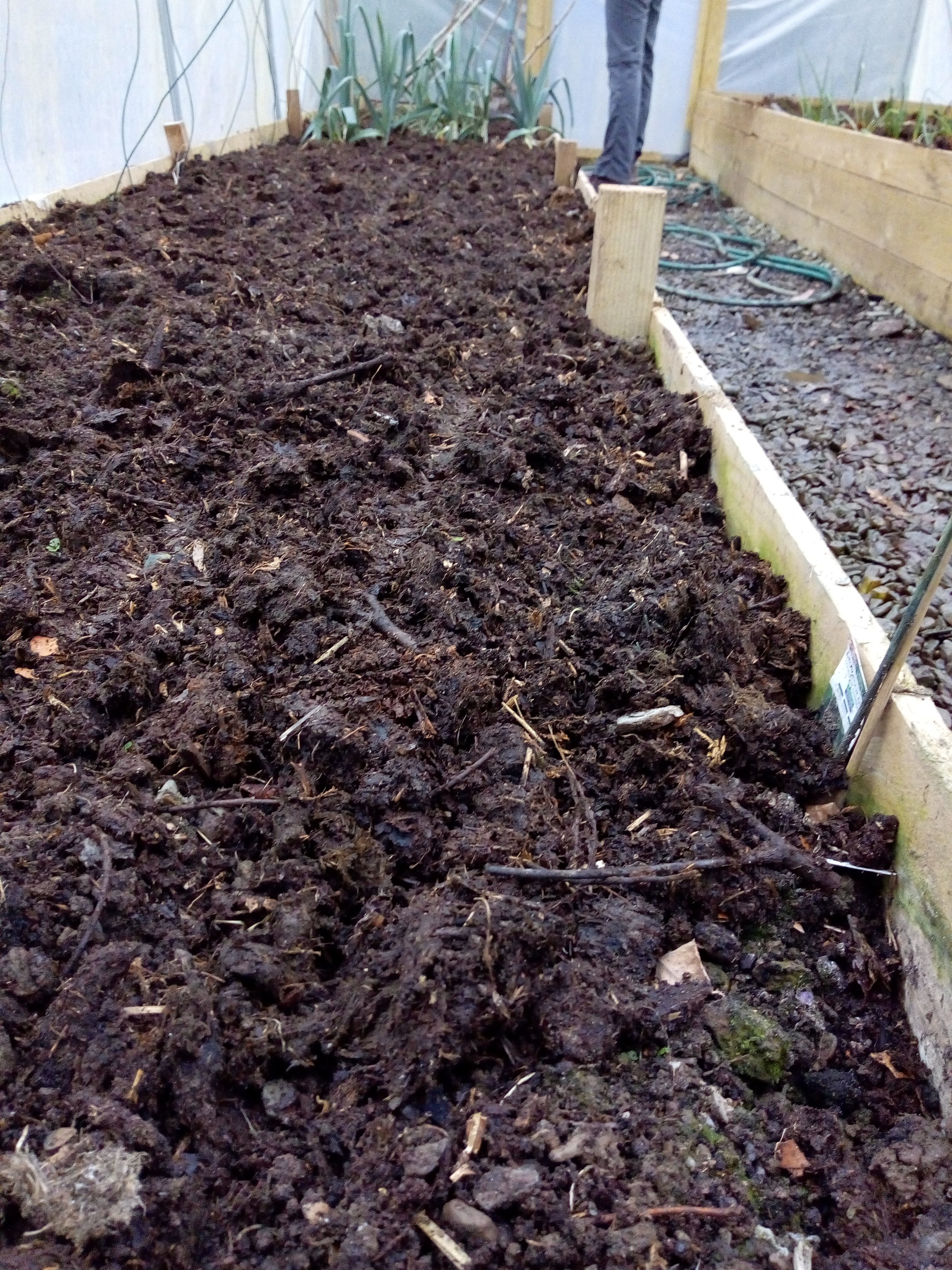
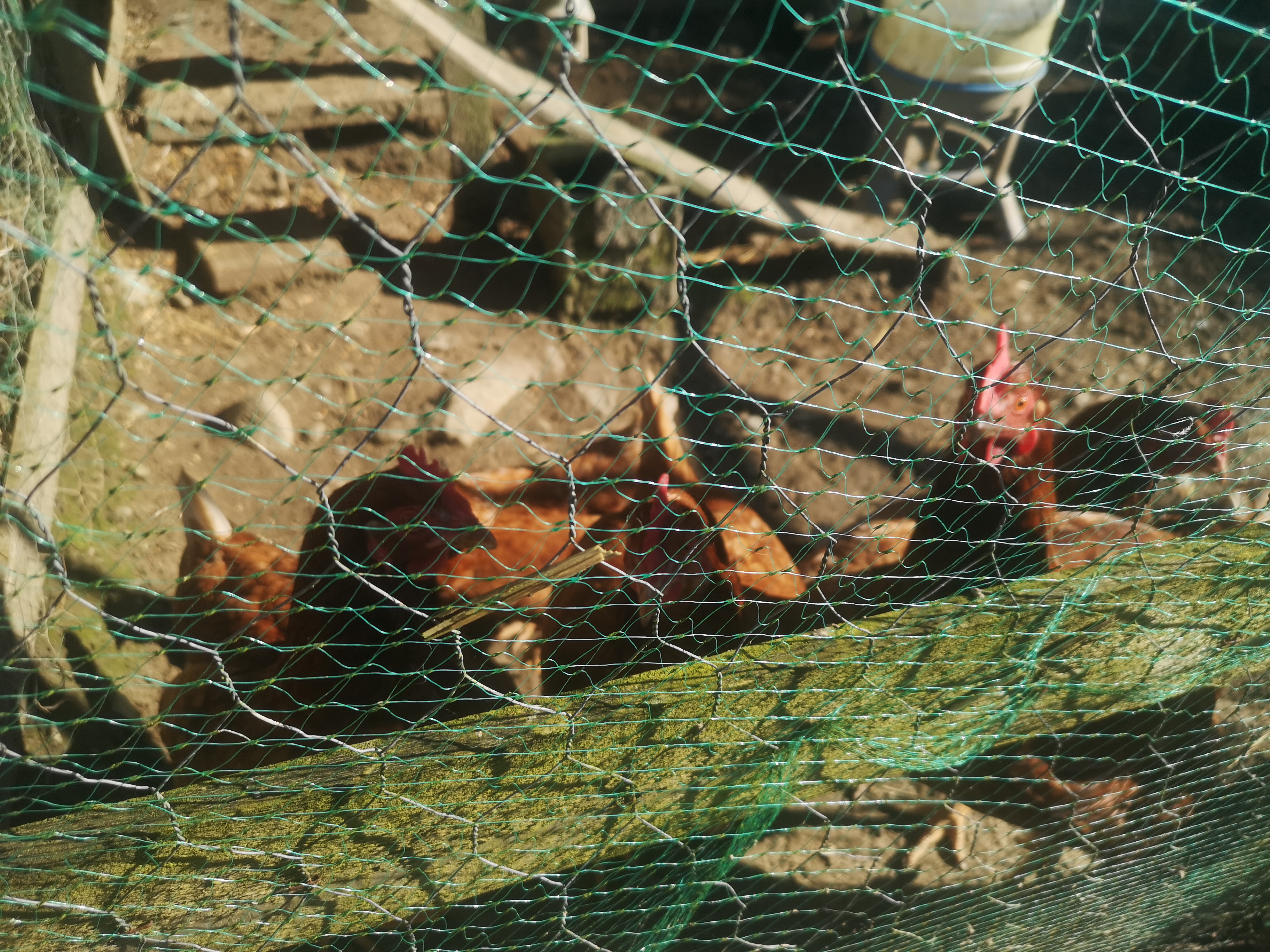
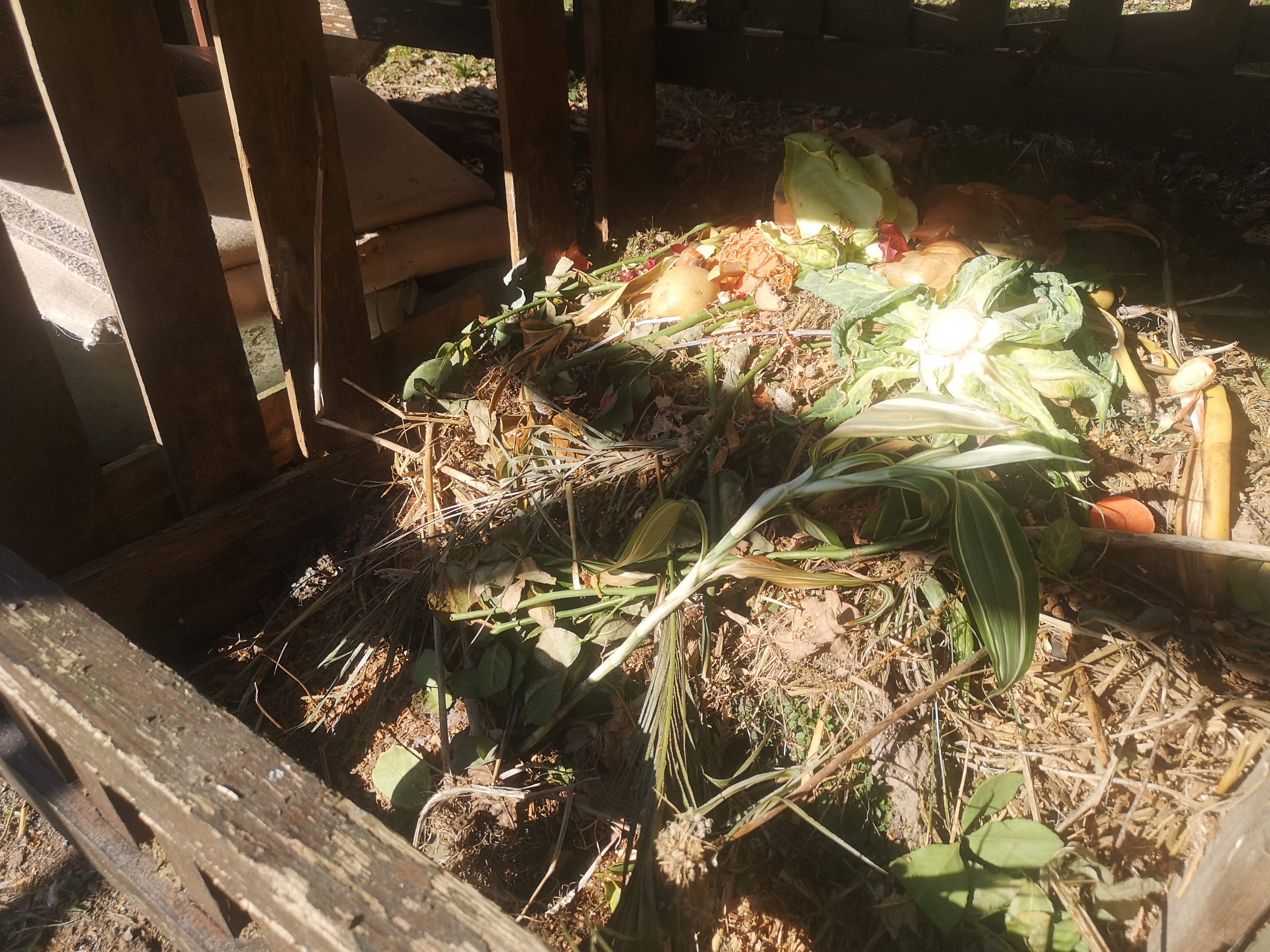
If I know I will create a waste product, I try to find a use for it in advance. The obvious part of this is compost, but I also make deliberate use of chicken bedding or even the soil in the chicken run.
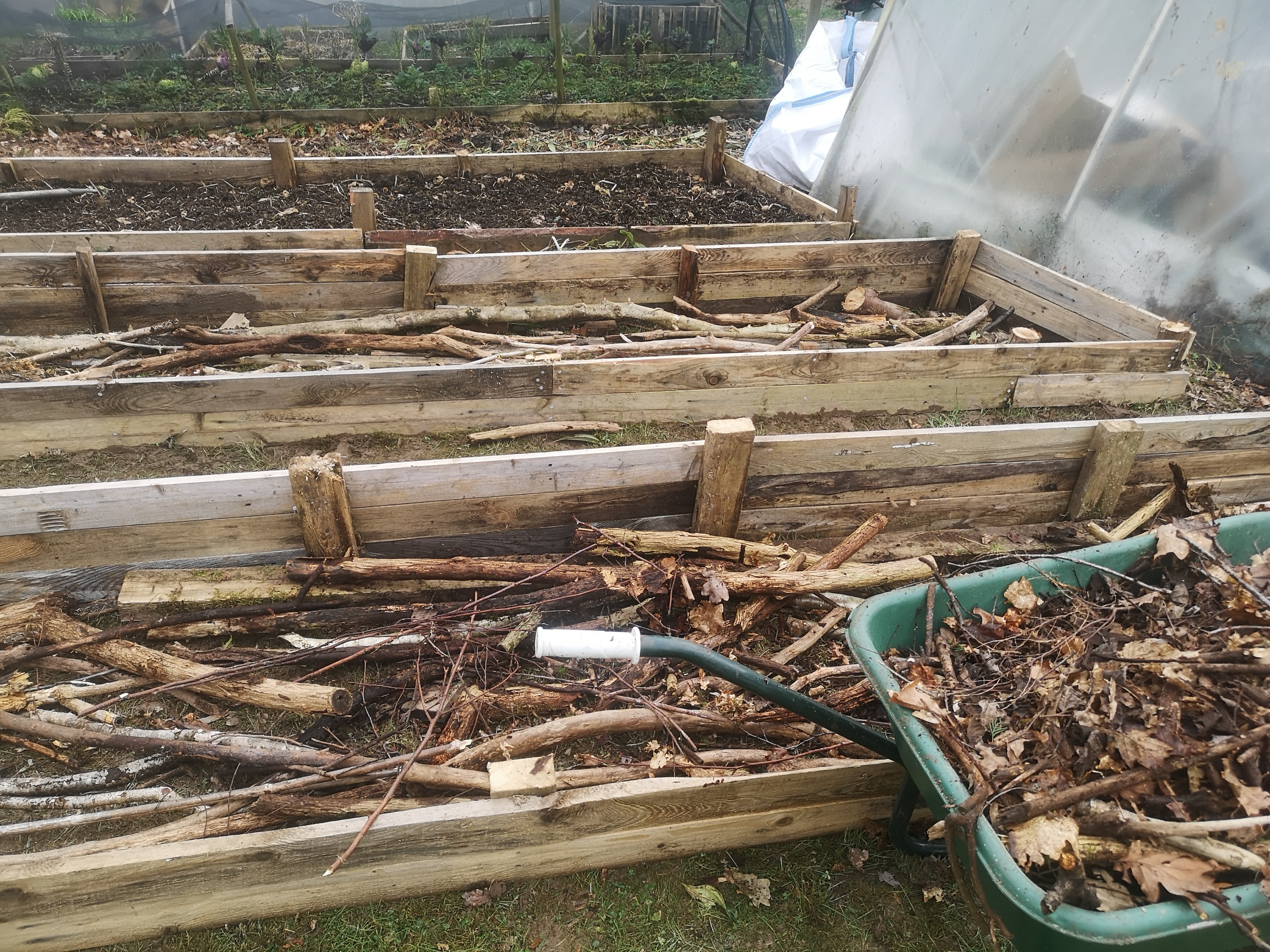
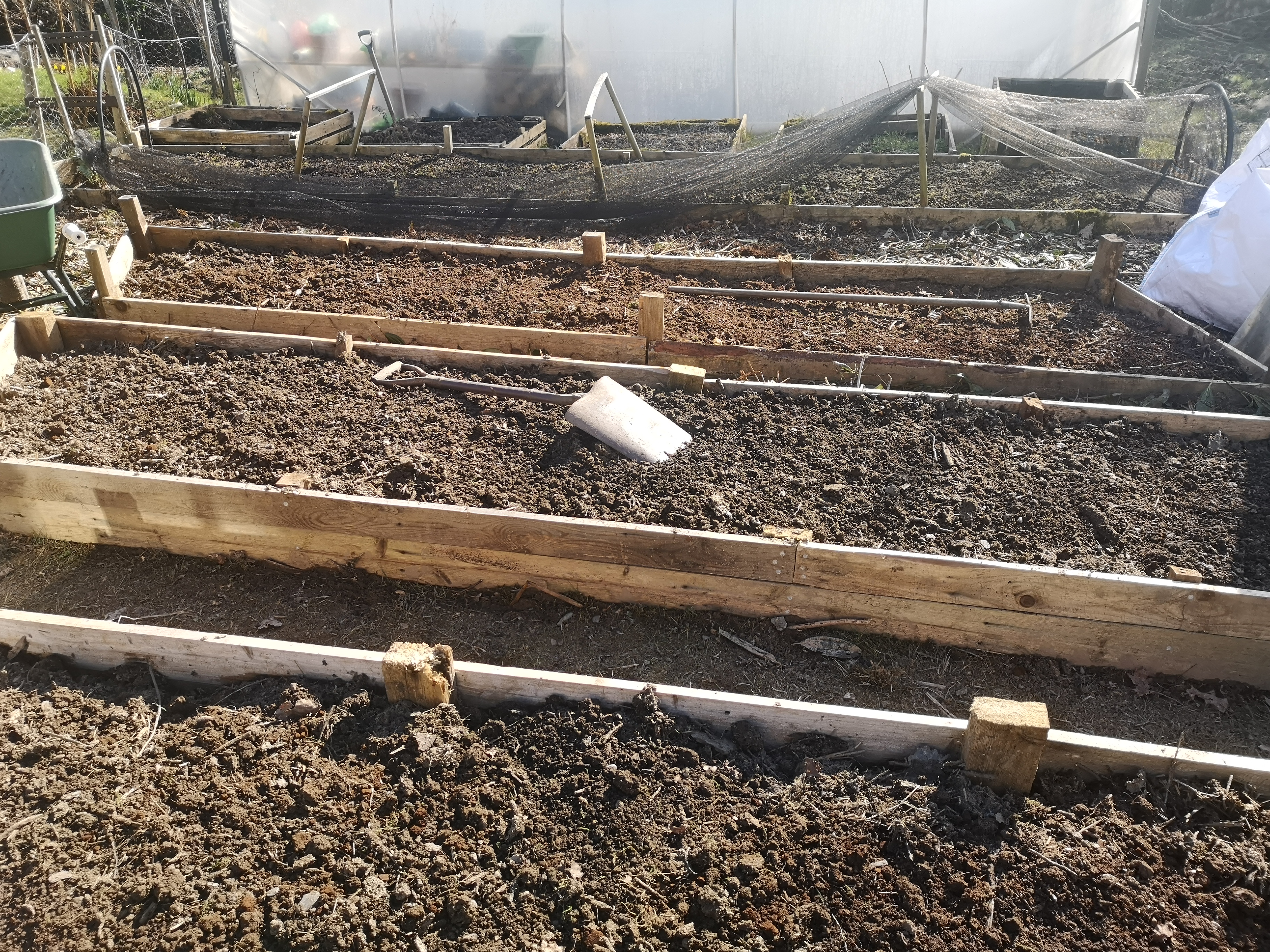
I try to work with what I have – the west of Scotland climate, the heavy soil, the forest I live within, seeking to allow these to shape my practices, rather than try to alter things to fit other models of growing elsewhere. This leads me to raised beds, hugelkultur and forest gardens. I grow watercress in a stream and create ponds to increase helpful biodiversity.
Don’t read me as claiming towards climate sainthood. I have poly tunnels. I still buy seed compost. I make all sorts of compromises, including running petrol machines to cut and mulch. No paradise is perfect.
Which brings me to the theology of all of this.
Everything that ever was is with us still
We who try to understand our spirituality do so – unwittingly or otherwise – within the landscape of meaning that our circumstance give us. This is an unavoidable truth, made clearer when considering the difference between enlightenment and post-modern mindsets. The first, dominated by the book, by the ‘rise of mankind’, by ‘human progress’ towards industrialisation, by white Europeans. Meanwhile, postmodernism brought to us the chaos of competing information streams, the conspiracy theories, the doomsday realities of climate destruction, the tyrany and freedom of so-called individual choice. Do we accept the bias that these persepctives give to our spiritual meanderings? Can we ever hope to move beyond them?
Perhaps this is the wrong question. The right one might be how can we include them? After all, post-modernism is not just a repudiation, a replacement of the enlightenment, it is also a product of it.
So it is that many of us who have left behind older understandings of faith and spirituality might do well to check ourselves on some of the slash-and-burn destruction we have poured on the places we left behind. They are with us still. They were not wasted.
That is not the same as saying that everything goes. When waste material is put into my compost bin, it is transformed.
Or to put it another way, it is redeemed.
Or to put it another way again, it is included and transcended.
I am no (spiritual) permaculture saint, so I perhaps tend to waste more than I should. I am sloppy with my recycling and easily pulled towards a shiny new thing, often forgetting that the point here is not just the end product, rather it is the life it is embedded within.
It is the whole cycle, not just the point of swing.
I read this quote recently which seemed to follow a familliar furrow on this blog;
The significance—and ultimately the quality—of the work we do is determined by our understanding of the story in which we are taking part.
Wendell Berry
I went looking on t’internet to see if I could find where this quote is from, and to my slight disgust, I found it emblazoned on motivational posters and used to promote business success speak. It occurred to me that most people who use Wendell Berry quotes have not read much of what he wrote. Then it occurred to me that I was being an intellectual snob because I have not read much of what he wrote either, beyond a few poems here and there…
Quotes like this are used to tell stories, even when the quote is reminding us that it is the story that matters most.
The absence of a story makes us sick.
But not all stories are equal.
A song comes to mind;
I am entering a new season. After being being cloistered for some time, locked into my own world of words and distractions, I am trying once more to connect with others, to get out into the flow, to chase stories that matter. (More of this below…)
I don’t think we can do this on our own.
Partly, we need story tellers. We need people who tell stores of better, of more whole, of more beautiful, of more peaceful. Perhaps they will tell old stores or perhaps they will be brand new.
I did a little review of stories that have been important to me on this blog. Here are some of them, in no particular order;
Recovery stories of those who have trancended their mental illness stories.
Economic stories in which we change the relationship between communities and global commerce.
Religious stories in which we find ourselves, if we can see beyond the religion.
Political stories and the limitation of these stories if you carry idealism.
I won’t go on – suffice it to say that I remain convinced that our society, saturated as it is by a constant deluge of information, has lost our stories. Or rather we have allowed our stories to be told for us by corporations for whom our only value is that of consumer. Where is the magic, the mystery and the majesty in that?
Far be it from me to make my blog about…me, but I mentioned the start of a new season.
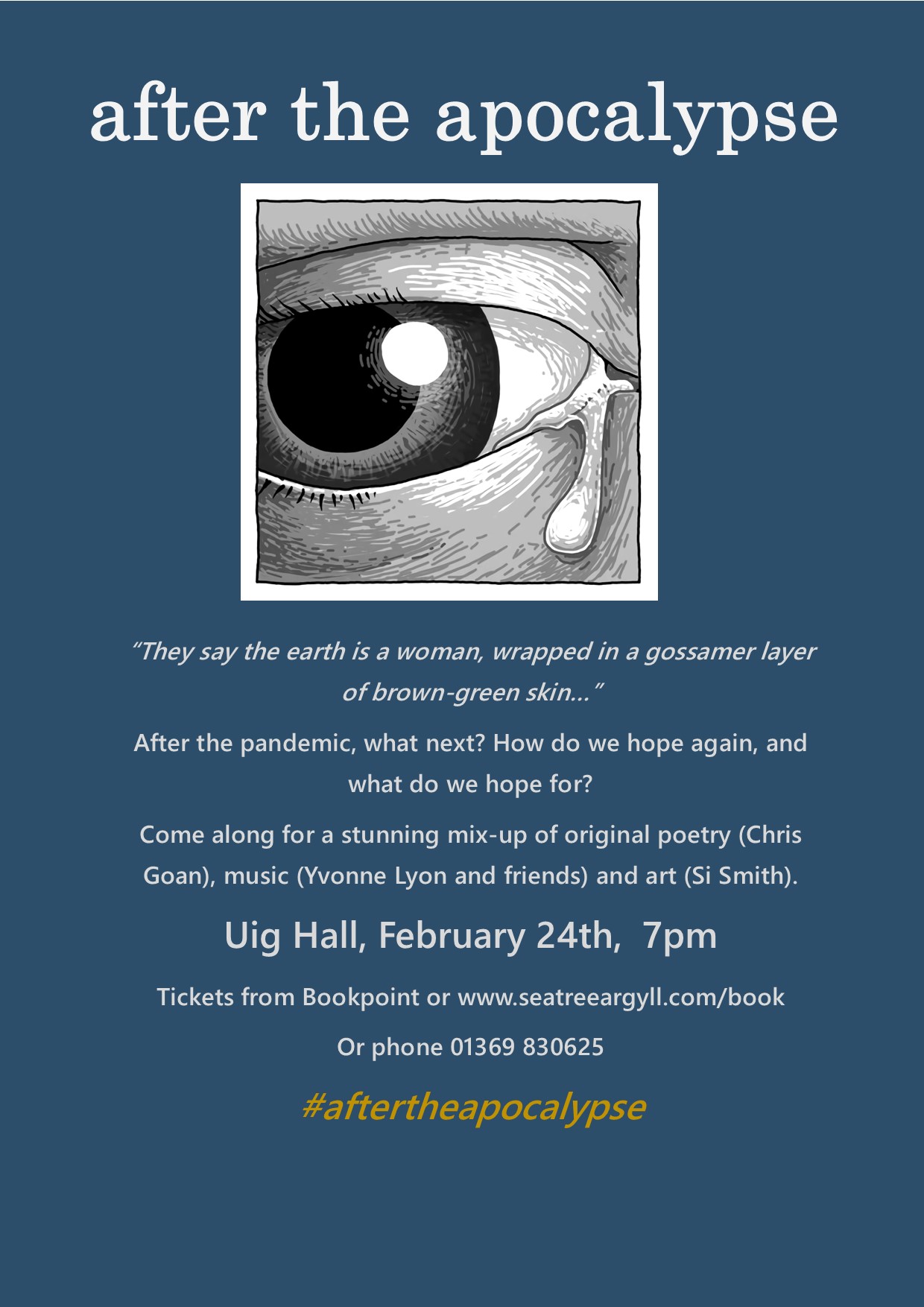
Part of this is to take my latest book – concerned as it is with these ideas of a better story for a post pandemic world – on the road. The poster above is the first of these events, and underlines the degree to which it is not possible to find new stories on your own. These things would never happen without those who would host them, Michaela who organises them, Yvonne and the other musicians who play at them – not to mention people who come to be part of them.
In other news, in conspiration with a couple of friends (fellow poets Chris Fosten and Vicky Allen) we will shortly be launching a new podcast, named (Theo)Poetics, exploring the connection between meaning-making and poetry. Or at least this is what I think it will be about but all good things evolve.
In order to find new stories, we need to articulate them first.
That is not the same thing as inventing them, but unless stories are told together, they are not real, they are just merchandise on a shelf.
If I am right (and Richard Rohr) then if our belief systems remain the same from young adult into middle age and beyond, then something has gone very wrong.
Surely, any spiritual path that has meaning must involve transformation through reformation, rejection, rediscovery, letting go, doubting, leaving, finding and just… being?
I can not offer my own experience as any kind of exemplar, unless we add the word ‘failing’ to the list above (and perhaps we must) but in many ways it seems to me that defining beliefs is almost pointless. I don’t mean to be rude, but who cares what you believe?
So what that the Bible/Koran/Bhagavad Gita told you it was true?
What does spiritual truth mean if not anchored to our actual lived experience?
What is spirtual knowledge for if not to facilliate progress?
What is religion for if not to help us help things get better?
Having said all that, what we believe does matter.
Without new ways of understanding and seeing the world, how can we hope?
Sometimes it seems that my religion has gone. I have few rituals any more, few things that I collectivise with others around. When pushed I can give you an explanation but perhaps it might be easiest just to share this Mary Oliver poem with you, which says (like all poems do) what I was not sure how to say for myself.
I don’t know who God is exactly. But I’ll tell you this. I was sitting in the river named Clarion, on a water splashed stone and all afternoon I listened to the voices of the river talking. Whenever the water struck a stone it had something to say, and the water itself, and even the mosses trailing under the water. And slowly, very slowly, it became clear to me what they were saying. Said the river I am part of holiness. And I too, said the stone. And I too, whispered the moss beneath the water.
I’d been to the river before, a few times. Don’t blame the river that nothing happened quickly. You don’t hear such voices in an hour or a day. You don’t hear them at all if selfhood has stuffed your ears. And it’s difficult to hear anything anyway, through all the traffic, the ambition.
2.
If God exists he isn’t just butter and good luck. He’s also the tick that killed my wonderful dog Luke. Said the river: imagine everything you can imagine, then keep on going.
Imagine how the lily (who may also be a part of God) would sing to you if it could sing, if you would pause to hear it. And how are you so certain anyway that it doesn’t sing?
If God exists he isn’t just churches and mathematics. He’s the forest, He’s the desert. He’s the ice caps, that are dying. He’s the ghetto and the Museum of Fine Arts.
He’s van Gogh and Allen Ginsberg and Robert Motherwell. He’s the many desperate hands, cleaning and preparing their weapons. He’s every one of us, potentially. The leaf of grass, the genius, the politician, the poet. And if this is true, isn’t it something very important?
Yes, it could be that I am a tiny piece of God, and each of you too, or at least of his intention and his hope. Which is a delight beyond measure. I don’t know how you get to suspect such an idea. I only know that the river kept singing. It wasn’t a persuasion, it was all the river’s own constant joy which was better by far than a lecture, which was comfortable, exciting, unforgettable.
3.
Of course for each of us, there is the daily life. Let us live it, gesture by gesture. When we cut the ripe melon, should we not give it thanks? And should we not thank the knife also? We do not live in a simple world.
4.
There was someone I loved who grew old and ill One by one I watched the fires go out. There was nothing I could do
except to remember that we receive then we give back.
5.
My dog Luke lies in a grave in the forest, she is given back. But the river Clarion still flows from wherever it comes from to where it has been told to go. I pray for the desperate earth. I pray for the desperate world. I do the little each person can do, it isn’t much. Sometimes the river murmurs, sometimes it raves.
6.
Along its shores were, may I say, very intense cardinal flowers. And trees, and birds that have wings to uphold them, for heaven’s sakes– the lucky ones: they have such deep natures, they are so happily obedient. While I sit here in a house filled with books, ideas, doubts, hesitations.
7.
And still, pressed deep into my mind, the river keeps coming, touching me, passing by on its long journey, its pale, infallible voice singing.
“At the River Clarion” by Mary Oliver, from Evidence: Poems, Beacon Press.
I am both excited and not a little nervous about the first of our live poetry/music/art events. We hope to do a series of them through the year. If you are anywhere near the west of Scotland, please come along!
24th Feb, 7PM, Uig Hall (Which is very close to Benmore Gardens, on the Lock Eck road out of Dunoon.)
In case you are wondering how such an event will work – one answer is, who knows? This will be our first, so we will be flying blind to a certain extent. But then again, this is not entirely honest. The ingredients are incredible after all- Yvonne Lyon will be weaving keyboard and song around my poetry, accompanied by Will Goan on Guitar/vocals and perhaps other instumentalists too (yet to be confirmed!)
Alongside this we will be projecting art from the book from the fantastically talented Si Smith, like this one.
The whole thing is about hope. Even when hope is hard to find. Our politics is often toxic, and the meaning we used to find in churches has largely been left behind. How else do we start to hope again, if not together with our friends, and if not through sharing art?
By the way, thanks so much to those of you who offered to host one of these events. If we have not already been in touch, then we will be soon. Michaela is trying to thread together a plan for the year.
We still have room for more events though. We can scale what we do to fit your venue, so if you think an event like this might be worth hosting in your living room/garden/pub/church hall/cafe/theatre, drop me a line!











 this fragile tent