Oh America…

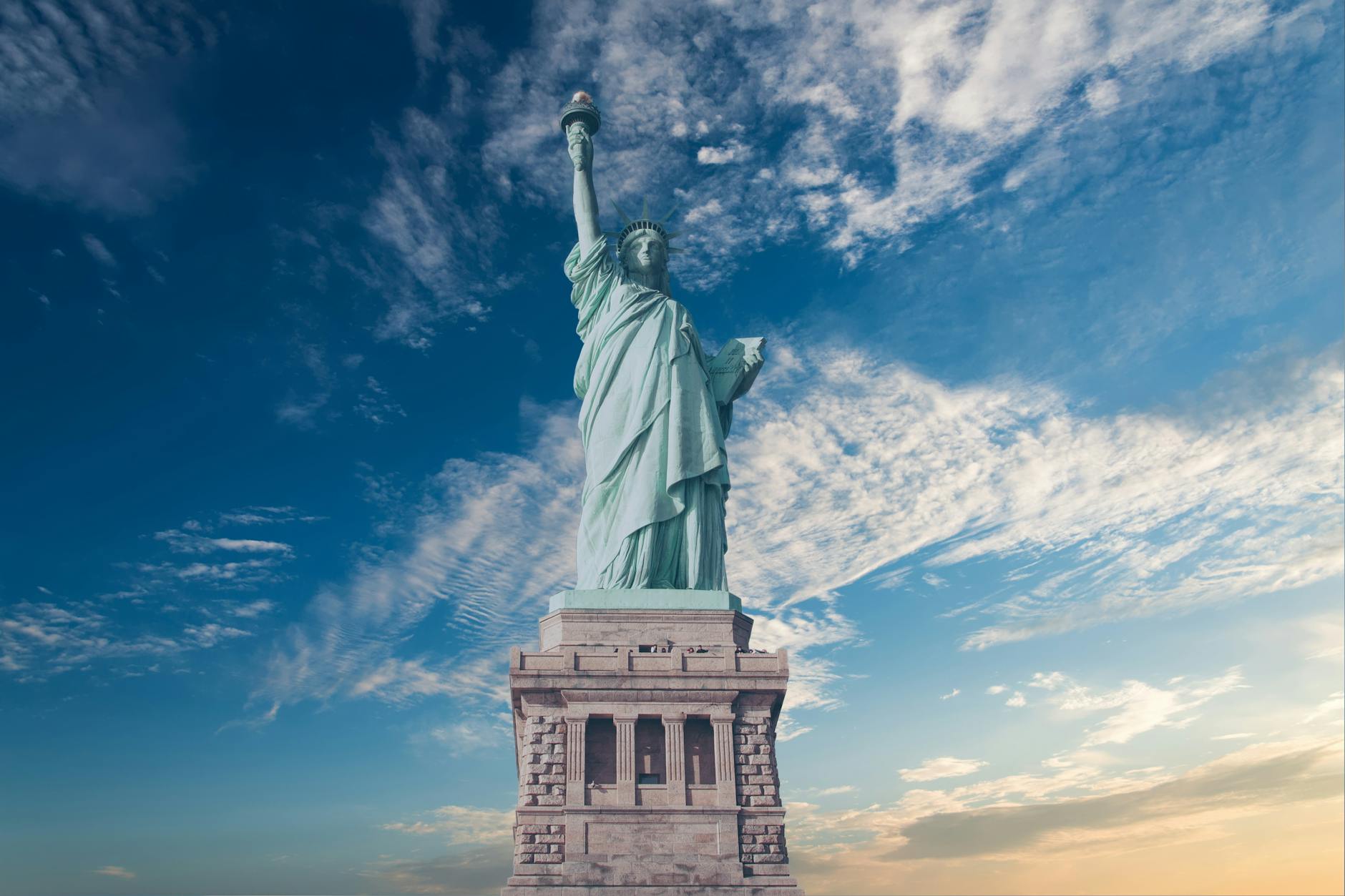
Photo by Pixabay on Pexels.com

Eight years ago, I wrote this, quoting Richard Rohr;

Our very suffering now, our crowded presence in this nest that we have largely fouled, will soon be the one thing that we finally share in common. It might be the one thing that will bring us together politically and religiously. The earth and its life systems, on which we all entirely depend, might soon become the very thing that will convert us to a simple lifestyle, to a necessary community, and to an inherent and natural sense of the Holy. We all breathe the same air and drink the same water. There are no Native, Hindu, Jewish, Christian, or Muslim versions of the universal elements. They are exactly the same for each of us.

It was an attempt to hold on to the idea that things would turn again towards good – in the wake of that first Trump victory in 2016. What I did not say in this post was that I wanted to be an active part of the resistance. I spent years writing and agitating, longing for better. Pleading for a world in which justice-making would push back the war mongers, the hate dealers and those who would exploit our human and non-human brothers and sisters for profit.

It almost seemed possible that the arc of history was turning. Trump lost. Bolsonaro lost. Johnson was toppled. But in a world of Starmer and Biden, any kind of radical shift was managed out of our expectations from the outset.

And now, the Mad King is back once more, vengeful in his dotage, full of fear and thunder, spewing lies and bombast, promising to prosecute an agenda that can only make things worse.

It feels like Nero, fiddling whilst Rome burns.

Perhaps this really is the fall towards the end of the civilisation we have known.

If so, this will not be the first time civilisations have fallen – in fact, they all must, eventually. You could even make a strong argument that would say ours is overdue. In his book Life After Doom: Wisdom and Courage for a World Falling Apart, writer Brian McLaren suggested that there were four possible future scenarios for our planet, based on current climate research- Collapse Avoidance, Collapse/Rebirth, Collapse/Survival, and Collapse/Extinction.

In Collapse/Avoidance, we heed the warning, take radical action, lower emissions, etc. The danger is, all we do is kick the can down the road for a further collapse in the future.

In Collapse/Rebirth we experience the pain of things falling apart – our lifestyles, our security, etc. and we finally wake up to the need to live differently on this planet. We consume less, throw less away, distribute more equally.

The other two outcomes I will leave to your own imagination.

Photo by Polina Zimmerman on Pexels.com

But I can not go back to that same place I found myself in 8 years ago.

I learned that if you spend too long in protest – eating only bitter seed out of a half empty bowl – then you will start to lose yourself. You are in danger of just picking at scabs till they leak.

This is not to say that we should not stand against injustice – of course not. But this is not enough. We must also live and love.

This poem has become increasingly important to me, so I offer it here in a format we have previously offered to our patreon feed. I hope our patreons will forgive me, but it feels very necessary just now….

Remaking religion 4; power and community…

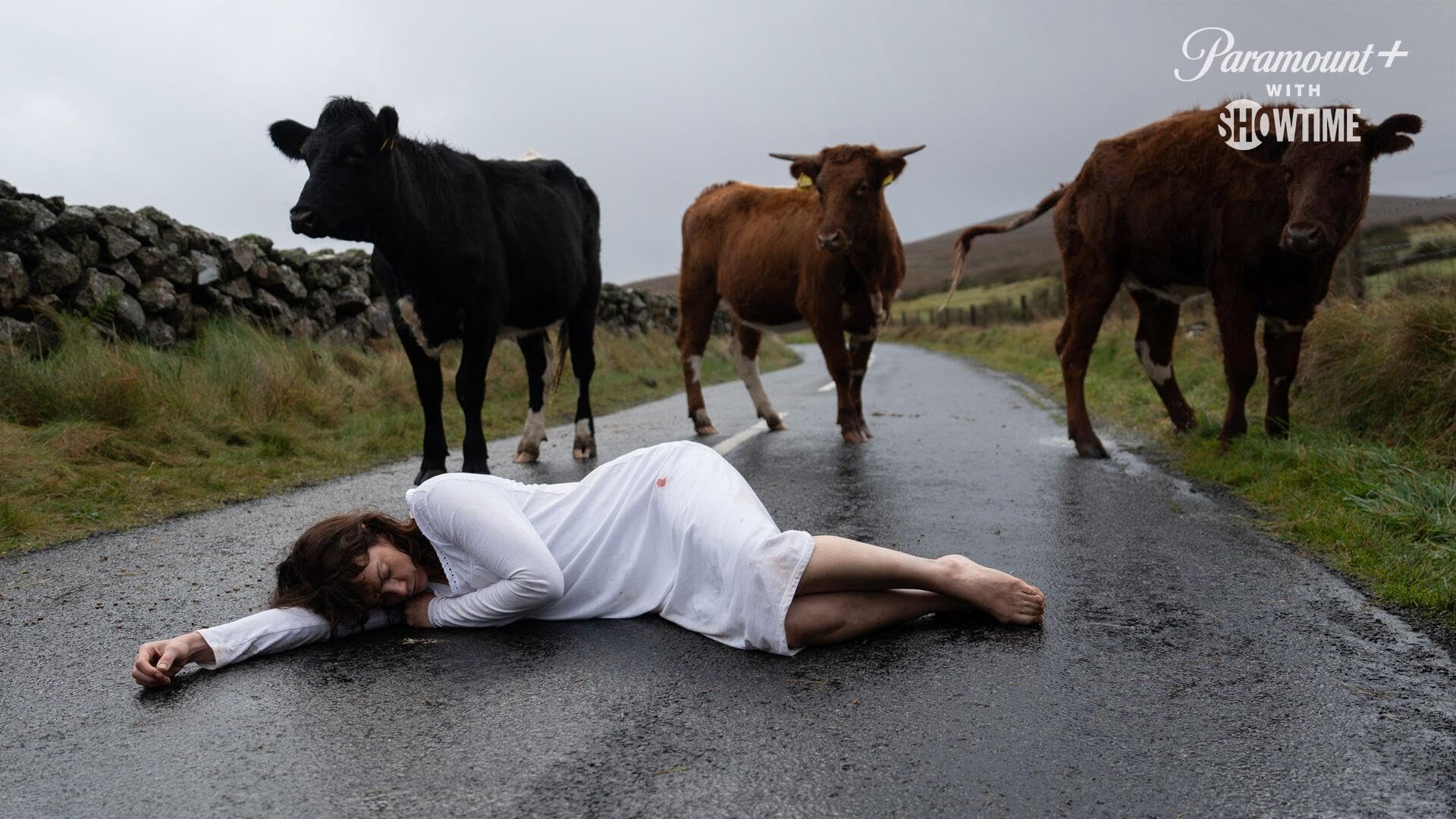
Last night, I watched this series. All of it. I was transfixed, wide awake through the whole thing, so that I only went to bed in the small hours. It concerns itself with the dreadful story of the Magdelene Laundries, which were Catholic run institutions for ‘fallen women’, in which pregnant young girls or those regarded as promiscuous outside of marriage, were abused and incarcerated, forced to work long hours. All lost their children, many of whom were ‘sold’ for adoption in Ireland and across the world. Yet here I am in the middle of a series in which I am advocating for a new religious engagement.

Perhaps you think that unfair – and want ot defend all those fine Jesus-inspired ways that people try to serve and work towards good, but I would counter by asking this. When religion is given official status within society or culture – as arbiter, as moral ajudicator – has it ever gone well?

I find myself immediately thinking of how Christianity has given cover for so much brutality and exploitation within the British Empire, or how the Americans have made the same idolotrous mistakes with their version of Christian nationalism. Then we have to remember Hindu nationalism in India and Islamic state. I honestly can’t think of one positive example of what happens when religion is given power in an of itself, or perhaps more when it compromises with the power of empire.

This kind of religion seems to traffic in fear more than almost anything else. Fear of hell, fear of being ‘outside’, fear of getting things wrong, fear of saying the wrong thing, wearing the wrong clothes, being the wrong gender/race/sexuality. This from a religion whose holy book tells us not to fear at least 365 times.

Is the problem here religion, or power mongering? Is there an intrinsic problem with the way we humans ascribe control to a distant God, or do the problems start when religious institutions take on power for themselves, then foster and bolster it within the context of greedy and godless empire.

I would contend that religion has always struggled with this problem. Depending on where you look, it is both reactionary or revolutionary. It is a force of oppression, but also a force for liberation. Arguably, this was the whole Jesus project in a nutshell. He proposed a different kind of empire making, which he called ‘the kingdom of God’, with an upside-down, inside-out power structure that is very inconvenient for empire, so has mostly been tidied away ever since.

Having got that off my chest, what activities should a renewed and evolved church engage in?

How should it worship? How should it congregate? How would it share life? Would it evangelise – ever? How would it pray? How would it teach itself and share ideas and inspiration?

(The next image comes with a trigger warning for some of you!)

I should come clean right away and say that I am not going to try to answer these questions in any depth, rather just (tentatively) suggest broad areas of enquiry. The task has to be to work these things out in your own small community – bringing as much integrity, passion and creativity as possible. Have fun, make mistakes, learn from them, but in order to set out on this adventure, we have to be free. We have to give ourselves/be given permission to start afresh, letting go of the chains we inherited.

After all Jesus came to set us free did he not? Where the spirit of the Lord is, there is freedom, and it is for freedom that you have been set free. What then shall we do with this beautiful freedom of ours – with this wild living we have been given? Shall we get back in bed with the Pharasees, or sell ourselves to the Empire? Surely we can do better.

Many of us feel the need for a clean break from these aspects of our history but at the same time want to embrace the best examples we can find in our heritage, in turn forming them into new expressions, new collective gatherings. Our context and the overarching crises we are grappling with in our age demands this of us, because the alternative is despair. Which is another way of saying that (almost) anything goes – as long as our practices flow from the freedom we have embraced, grounded in love.

In this new landscape, concerns about correctness and orthodoxy have little currency. Instead I sense a deep longing for authenticity and compassion – towards others, towards our broken natural world and even to ourselves.

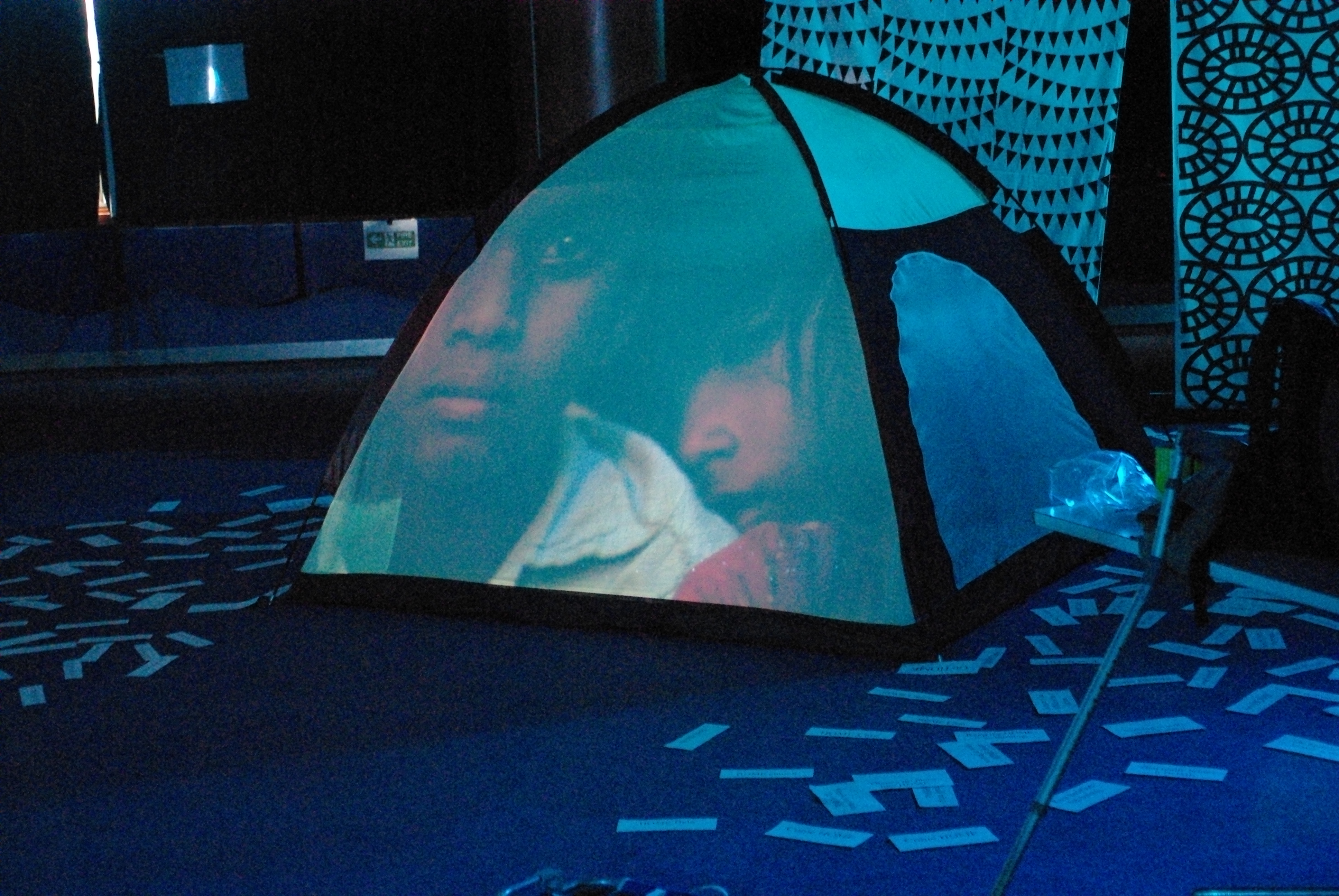
Worship installation, Greenbelt festival

Making (small) authentic community

There has been so much said (not least on this blog over the years) about the nature – formation, maintenance, leadership, challenges etc. – of community. It is something I have often idealised, but rarely experienced in truest form. It can also strip us bare and can even be a dangerous place- I have experienced both. But I would argue that community remains the place of encounter for humans.

What is certain is this- community and Church are not/have never been synonymous. Certainly we can experience communality in Church, but I would argue that we mostly experience what Peck calls ‘pseudo community’. We also carry the traditions of sharing ‘Communion’, which we have understood to be primarily about heaven and hell, not about the actual communing…

…and yet the writings about Church that we have inherited, and the forms it has taken since those early days, have (almost) always been collective over individual. Certainly there have been hermits, anchorites and pillar saints, but these have been exceptions to the norm- a fact that should offer a challenge to our modernist individualist westernist mindset. We are not islands alone and in through connections we make shared meaning.

Community deepens, validates, challenges, uplifts and celebrates. At best, it includes, gives us a home and allows us to become better versions of ourselves. Without community, humans sicken. In community, we flourish.

Community reflects our nature – as upright apes, as creatures of interdependence.

Community reflects our nature – as containers of one spirt, as part of the network of all living things. (We might also seek ways to reflect this broader non-human community within our human gatherings.)

Community allows small bands ordinary people to become more than the sum of their parts. Together, we can create an generative environment. We can conspire. We can collaborate, we can mix and match skills and abilities.

Community honours the traditions and practices of followers of Jesus from the very start. It is no surprise that the words of Jesus in that most profound sermon he gave as recorded in Matthew chapter 5 concern themselves overwhelmingly with rules for how to make loving community. It is almost as if, for Jesus, community was an end in itself.

Likewise, Paul’s great list of ‘fuits of the spirit’, as recorded in Galatians chapter 5 (love, joy, peace, forbearance, kindness, goodness, faithfulness, gentleness and self-control) are above all the gifts of good community.

Community is counter-cultural, particularly in an age which over-values individualism and forgets the collective.

Then we can rip each other apart, because community can be the best of us, but also the worst. After the trauma of the abuse of power within community settings, or an experience of divisive, exclusive and toxic community, it is tempting to recoil and go it alone, but we soon realise that this is not a long term solution. These experiences mean that we must eventually cautiously try to make safer, more healthy and whole forms of community, because this is the nature of our humanity.

Photo by ELEVATE on Pexels.com

So far, an argument for gathering together – but what has this to do with faith? Surely we humans gather in all sorts of ways, for all sorts of purposes? I am part of a cricket club for instance, and I love to blunder around at ceilidhs. I have also run therapeautic groups of different kinds in my past work as a mental health social worker. All of these things are good – in fact I would go as far as to argue that they contain things that might even be called sacred – so why do we need religion?

Perhaps we first need to concede the fact that we do not have a monopoly on meaningful, profound community making. Having said that though, not all communities are equal.

Not all communities come together around the guiding principles of love, peace and justice-making.

Not all communities seek to align themselves to – to celebrate, to conspire, to agitate, to protest and to demonstrate – the priorities of what Jesus called ‘the kingdom of God’. (Whatever that means!)

Not all are able to harness the power of ritual and season-celebrating. Not all offer means to hold each other in prayer through the glory and pain of life, sickness and death.

Not all communities are deliberately inclusive, particularly of those who have been marginalised and otherwise excluded.

Not all communities seek to confound the logic of empire by declaring the sacredness of all people.

Not all communities seek to break the logic of consumption by declaring the sacredness of the ‘first incarnation’ – the created world which holds us in communion with our non-human brothers and sisters.

Not all communities offer radical alternative ways to live life – collective, sustainable, deeply connected to the earth and the love that holds it all together.

Perhaps NO communities exist that are like this. But if not, then how we need them! Or we need to keep trying to make them… imperfect though they will surely be.

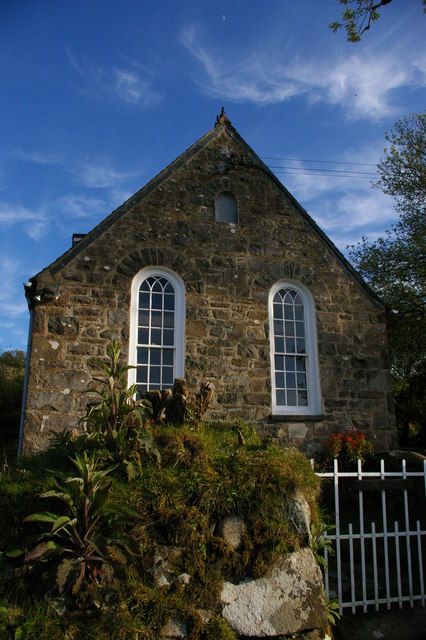
Converted chapel, above Newport / Trefdraeth by Christopher Hilton is licensed under CC-BY-SA 2.0

What is community, in this context? How is it different from those that have gone before? Perhaps it is not. There is nothing new under the sun, it has all been done before.

The key words here is authenticity. The community that it made has to belong to those who make it – it has to fit who they are are and what they stand for. How, where and when is then up for grabs. Uniquely in history, there is even an open question as to whether community has to locate itself within the same location.

Being big is hard. To paraphrase Jesus, it is harder for a large group of people to make community than for a camel to fit through the eye of a needle. Bigger groups require organisation which easily becomes unconvivial. As Illitch puts it, large institutions make it much harder for us to develop autonomous, creative intercourse among persons and between individuals and their environment.

Big requires big leaders, and this tends to bring in the power hungry.

Small is human, it is portable, it is resource-light and capable of mighty things.

Small can belong to a network – one that facilliatates rather than dictates. One that can cope with diversity and supports broad orthodoxy, mostly around principles rather than narrow rules or requirements. But even this is harder than just being… small.

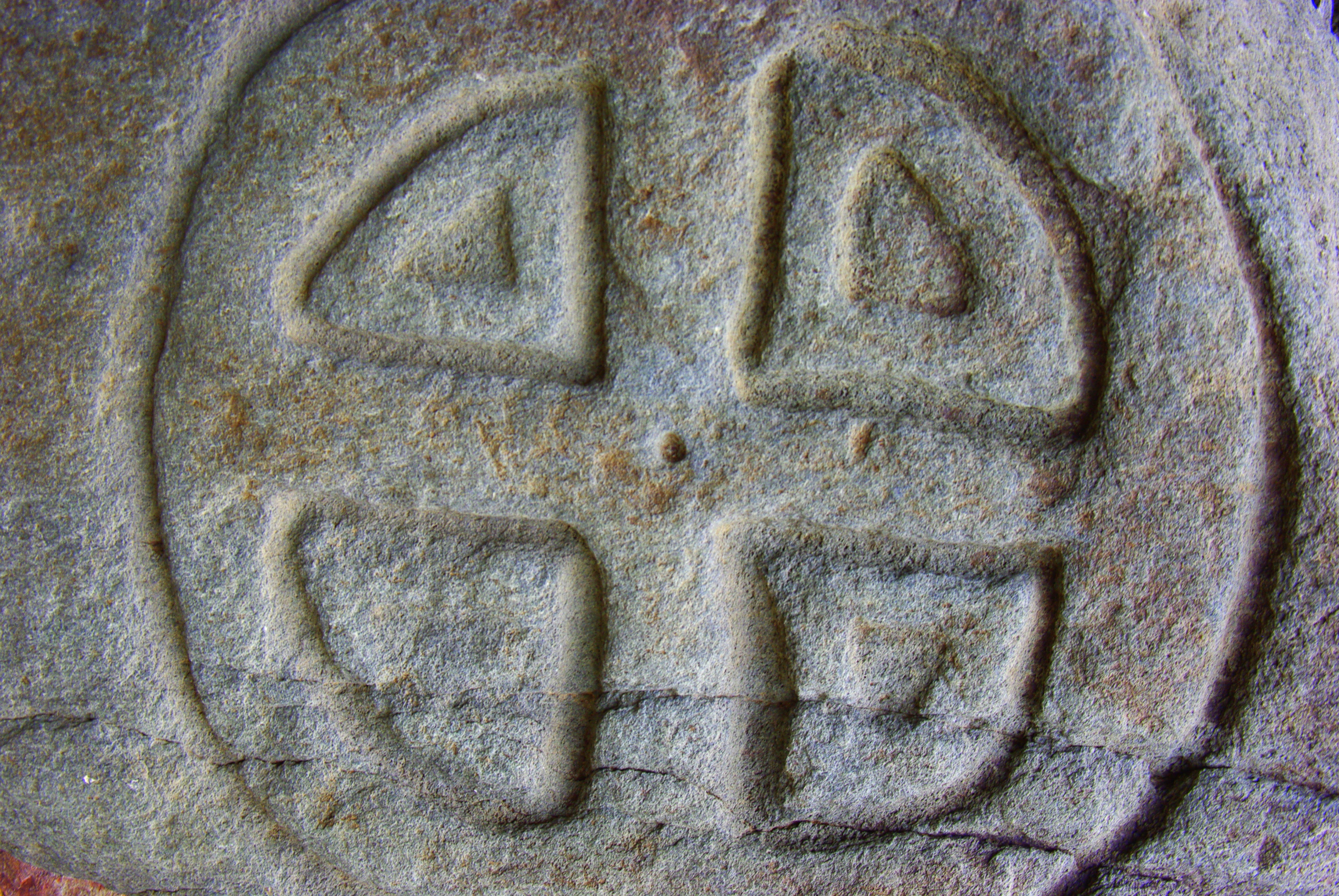
Cross from Hermits cave, west of Scotland

Community practices

I set out on this journey by longing for a different kind of religion- one that was a lover of the earth and a seeker after justice and peace. These would be the priorites of a community that I would belong to, but you would have to work those things out for yourself.

As a lovers of the earth, we might seek ways to connect, to dwell within, to appreciate the wild. We might make a practice that includes nature within the way that we worship or meditate. We might seek to make the connection we sense towards all living things – through our shared am-ness, grounded in the god who loves things by becoming them – a lived, present reality.

This might inlfuence the rituals we make together in my community, the liturgy we might use, the songs we might sing. The poetry we will write, or the art we make together.

As people with awareness of climate injustice and of the harm we are doing to our ecosystems – our community might seek to live more simply, to consume less and grow more, to share what we have with others who need it more. We might look to the fields and woods around where we live and notice the lack of diversity and the unbalance. This might lead us to try to use our resources differently, and to use our collective voices to demand better economic and agriculural practices from our politicians and local businesses.

This might influence the way we shop, the way we travel, the places we go to on holiday, but it might also mean that we use our collective power to support local activism, or to work on local nature conservation projects. We will probably need help with this, so we might seek connection with others on the same path.

As people who appreciate the way that all people carry within the spirit of god, we might appreciate the dignity and beauty of all people. This might lead us towards concern for those who have been marginalised, dehumanised or excluded.

This might influence the way we seek to make friends, or the way we look to include people in our gatherings who are different – even if this means doing the difficult work of decolonising ourselves from the empire that has privileged us. We will probably need help with this, so we might seek connection with others on the same path.

The rest of it, we will make up as we go along. Perhaps we will share tables, make community art, attend protests, write to politicians, invite others to feasts.
We will make diciples out of each other.

Remaking religion 3: organisation…

Before we get into this, if you are wondering where some of these ideas come from, here are a few earlier posts which might give background to the discussion;

Churchless faith– an old (two part) with Jason Clark.

Link to Steve Aisthorpe’s work on Church leavers.

Link to podcast with Katy Cross, 2024 research on church leavers

Discussion about dispersed networks.

Wondering what sort of organisations might work best to support post-church spirituality.

Photo by Helena Lopes on Pexels.com

What right have I to talk about these tihngs? I am not a theologian nor a church planter or a priest. I make pots and write poems. Those of you who either read or stumble accross this series of posts in which I try to imagine an entirely different approach to faith would do well to consider my lack of credentials. I am not writing a road-map to victory or a blueprint for milimetric construction, rather I am dreaming out loud, because that is what poets do. But this is not a casual excersise. It is very serious.

Why do I persist then? What gives me the confidence to continue to commit these ideas to silicon? Firstly, I have been thinking about them a long time. Long term readers of this blog (if such things exist!) may note that all the ideas gathered into this series of posts have been discussed here before, and that (almost) none of them are original, all are borrowed from people who are much more learned. Secondly, I have some experience of strategic analysis and planning for change, arising from by background in social studies, social work and my (failed) attempts to transform a mental health service.

Thirdly, I have many friends who are active in and around what remains of Church and even though many will disagree with me in wholly or in part, in private at least our conversations have often centred on how exhausted they feel working to hold up the old structures. It is as if the machine has long ago ceased to function well, but the only choice is to keep it running, because what else is there? And perhaps there may yet be a way of making the machine run better, of adapting its mechanics… but then again we have been trying this for so long.

Finally, I do so because I must. If this blog is about anything it is a journal in which I try to describe the light I see through darkness. I claim no divine inspiration, but then again, all poetry comes from somewhere.

In my last post I tried to describe a different origin story for a new/old kind of Christian faith, based around cosmic connection, through Christ, to all created things. I used words like ‘non-dual’ and ‘shared am-ness’. I wondered how a rejection of the doctrine of original sin might change us and restated the centrality of the idea of a counter-cultural ‘kingdom of god’, whose adherents seek to live towards love and grace. This last point gives us the starting point for this post.

What might a church (or churching) look like if we followed the narrative logic of this kind of story?

And perhaps most importantly, what would it do? How would it worship (if at all?) What practices would it follow?

Photo by cottonbro studio on Pexels.com

Organisation

Once again, it is difficult to imagine ‘church’ without seeing Church, particularly for those of us who have grown up with the insitution – even those of us who have tried to reform and reshape it. We have perhaps loved it and railed against it, or have even been one of those people who tried to return to the ‘New Testament model’ of church (which every new expressions of Christian organisation seems to claim.) Perhaps you have been to the church planting conferences or employed one of the many stategies for church growth or attempts to make Church relevant to culture. None of these things necessarily qualify you or me to speak with authority on what sort of organisational structure might best fit our new dispersed context. At best they will give clues and hints.

We have already discussed our changing context – one in which less and less people are interested in in attending Church, despite some (many) local examples which buck the overall trend (particularly some of the hard line findementalist Churches, albeit from a much lower base.)

Rather than trying to suggest ONE structure, what we might be able to do is to propose some broad principles;

Decentralisation

In a world of dwindling religious participation, we have seen a retreat into religious silos. The focus has been on preserving buildings and maintaining a front door, albiet for fewer and older visitors. However, my experience has been that my ‘church’ is not just local. My closest friends and conspirators are at distance.

I have written before about my instincts around the increasing value of dispersed community, as something that offers a sense of belonging and connection at both distance and by drawing people together for less frequent in person meetings.

There is a romantic link here to the old Celtic tradition of the wandering holy folk, or Wanderers for Christ – who were often poets or minstrels and saw themselves as wandering the roads spreading the news and talking of God. Making their holy voyage, or ‘perigrinatio’ was often an internal as much as external journey towards God, possible only because of the hospitality and welcome of those they met on the road.

Hyper-connectivity

During the pandemic there was much innovation within the locked down churches concerning the use of online activities and meeting spaces – although there was also much push-back, as if religious spaces had a divine right to ignore those restrictions imposed on the secular world. It is notable that although many have continued to live stream services and maintain facebook pages, much of this innovation has not continued. Like it or not – for both good and ill – we now live in a digital age. If the goal is meaningful community, kindness, justice, healing, then the challenge is how we can pursue these in a changed world, not just to continue as if the world is the same. That is not to say that we do not deeply appreciate fleshly human connection, or love the mystery of tradition, but we have new ways to encounter and connect.

The production of resources for support , for worship, for exploration, for contemplation, for protest, for celebration – all of these things are now available to us for almost no cost (apart from skill and time.) This is part of the reason that Rob and I are working so hard to try to revive the Proost network. (You can find out more about this from our podcast, in which we have tried to let people know our thinking out loud.)

Loose association

We can not afford only to connect to people/organisations that are just like us, that have the same theology or political views. This is hard work, particularly in our polarised times. The value of common purpose and generous orthodoxy is both a religious imperative and has wider implications for engaging with societal and global problems. This means letting go of purity of ideology/theology in pursuit of coalitions of kindness.

Project focus

The above might suggest that collectivising takes place around particular projects rather than forming an end in itself. In my experience it is better to time limit these projects in oder to maintain momentum and focus.

Minimal infrastructure

What support/back office/hierarchy can survive? We know that all the major religious denominations are asking these questions here in the UK. The other (and perhaps better question) is ‘what do we need’? How will the resources left be best employed? The cost of buildings are a huge burden, not to mention maintaining salaries, pensions and other costs associated with a professional clergy. A smaller, minimal back office might include facillitators, mentors, advisors and encouragers. This might be a very different skill set, requiring different training than that offered to our professionals currently

Lean

It goes without saying that in a religious world of less money, we need to manage with less. More than this we need to understand that this is not necessarily a ‘crisis’ – rather it is a reality that requires a different approach.

Small

Small gatherings of people who seek to share life, to pray and to plan small revolutions have a long history within the very best of our traditions. Not just those who grew to become mega churches or subsequently built cathedrals (in fact, this is possibly where things had gone wrong!) We need our friends, we need to share our houses and our lives with people close to us (and now, even at distance, given the internet.) Small is beautiful. Smal is normal. Small is human. Small is messy and real. Small is ephemeral and fragile, but so are we.

Convention

Sometimes we need to go large – to make big music or big art. There is a link here to the ‘project’ tag above. These events do not need to be frequent, or expensive, but larger gatherings seem crucial.

Radical alternatives

The final thing I will mention here is the need for some of us to go hard core.

The other lesson from history is that there has always been a sliding scale of commitment to a religious life. Most seek to incorporate faith into their ordinary. Some make a new ordinary in the form of taking on relgious orders, of various degrees of austerity and severity. The point of these communities has always seemed odd from the outside – sometimes they have closed the doors on the outside world and become houses of prayer, whereas others have seen themselves as healers or peace makers. All have taken on the ‘habit’ of following Jesus on a mission beyond what has been understood as normal.

What mission are we being called to now? Where do we need healing or peace? What prayers are needed most?

Dipping back into my Celtic bag of heritage, there are lots of examples here, of how monastic sites or holy houses became places of learning and hospitality, unlike any of the religious institutions we see today. Some followed strict segregation of men and women, others (Culdees for example) had married couples. Some were withdrawn from the world, others were active and engaged. All were seen as somehow offering a point of difference, of spiritual wisdom and focus.

What might a modern day Culdean house look like? We have seen a renewed interest in monasticism – particualarly that known as ‘new monasticism’. Here is me mate Mark talking about the same;

Remaking religion 2: telling a new story…

Photo by Alvin Sadewo on Pexels.com

Behold, I am making all things new…

These are words attributed to a returning Jesus in the wild Book of Revelation, the last book in our Bible – and possibly the most controversial. (Incidentally, there is a really good podcast exploring some of the themes and excesses we have made from readings of Revelation here.)

You can find echoes of the same idea written many hundreds of years before by the prophet Isiaiah. Behold, I am doing a new thing; now it springs forth, do you not perceive it? I will make a way in the wilderness and rivers in the desert.

For some reason, this sentence always pokes me in the heart, right where I hope from. It has often come to me with tears. It was out of this place that I wrote this poem…

The great Becoming

.

How small we made you.

How constrained by our constraints;

We wore you like a lapel badge,

Pocketed you like a personal passport, then

Raised you at our borders like a flag.

We locked you in the pages of

Our Book, then threw away the key.

.

But how we worshipped you.

How we pointed at you with steeples.

You asked us to follow you, to

Give away our second shirts, but instead

We made a million icons, each one framed in gold.

We swayed and raised our egos, singing love songs-

Not to you, but to idealised versions of ourselves.

.

How is it that still, you love things by becoming them?

How was it that this brown-skinned man with the heart of a woman

Took upon herself another name for everything, so we could

Encounter her in all these beautiful things and bleed with her when she

Lies broken? And just when all seems lost, she whispers still;

See, I am making all things new.

Even you.

I think that when I first read these words, I saw them (or they were described to me as) the description of a one-off event – most likely a supernatural Jesus event – or prehaps an individualised thing done by our own personal Jesus. It may well refer to both of these things, or it might mean something… bigger.

What if this is a constant kind of ‘being made new’?

Rather than describing a divine rescue plan for a chosen few, what if it is the description of a great cosmic unfolding that began with an explosion of love so powerful that nothing can stop it from reaching outwards, and continues on and on not just through history, but through each and every one of us, every bade of grass, every living and love-made thing?

An unfolding that can be sensed in the kindness of strangers, the flow of water or the feeling we get in the pit of our stomachs when we stare up at stars…

Photo by dennis George on Pexels.com

What does this origin story look like, and how is it different from the one described yesterday?

How might it be more fitting for our times, as means of engagement and movement towards good in the areas we need it most?

How might it build on insights discovered by previous spiritual adventurers/theological wonderers?

Here is my suggested version (with room still for refinement and expansion.)

Photo by Belle Co on Pexels.com

We celebrate the Cosmic Christ, the God who loves things by becoming them (with a nod to the writings of Richard Rohr and his grounding in the Fransican tradition.) Christ might also be a word which means ‘another name for everything’.

Christ the substance through which all things have their being. S/he might be understood as the shared am-ness of all things. Through Christ we are interwoven and connected to all created things both human and non-human. Through Christ we are drawn to be lovers of the earth not because we are ascendent, but because we are included and interdependent.

Learning from the Celtic tradition, this same Christ is the very ground of our being, the truest deepest part of our personhood and our shared humanity. Sin is that which prevents us from being our truest selves, and this can be seen both in our individual lives and our collective brokenness.

This might mean that we discover Christ in our own souls not by addition, but by subtraction (with a nod to the wisdom of Meister Eckhart) by finding our way through all the mess, trauma and bad choices through to what was there all along, waiting for rediscovery and re-connection.

Remarkably, the story of Jesus (the historical Christ rather than the Cosmic Christ) suggests that god has been revealed not only through nature (the first incarnation) but through taking on flesh (the second incarnation) The life and death of Jesus is a deep call towards sacrificial love towards our human and non-human neighbours.

Christ taught a gospel of grace, in which we remember that the god who is the light behind our light and the soul within our souls knows our woundedness, and waits for us to journey towards her. A Christ who no longer is the deserter of earth, but an example of its greatest lover. A Jesus who is no longer a supra-human ‘other’, but rather one of ‘us’.

After the Celtic tradition, we seek to take our place in world where nature is the gift of being, but grace is the gift of wellbeing.

In other words, we enter the Kingdom of God (which the historical Jesus called us to take our part within) is way to describe a non-dual, engaged way to collaborate in the service of healing, peace-making and acts of love towards the world, with a particular emphasis on those parts of the human and non-human world that are broken, enslaved, endangered or subject to injustice.

Photo by Henrique Feiten on Pexels.com

Is this it?

Is this enough?

So far, in terms of trying to uncover an origin story, perhaps it is. In future posts, I hope to turn again to examining the degree to which this story might influence our practices, our ways of worship and our organisational structures- following the narrative logic that it might suggest to us.

One more thing before we leave this story though. I made reference to how we might discover God in our souls through subtraction rather than addition. This takes us back to an old debate between Pelagius and Augustine of Hippo.

Pelagius, thought to have been a learned Celt, from somewhere in the British Isles or Ireland, travelled to Rome and started to write things that upset Augustine, who had proposed the idea of original sin as a theological technology for making sense of our relationship with god, and to give meaning to the death of Jesus on the Cross. Pelagius held with the Celtic tradition, which saw humans as containing the living god in the core of our being – clearly not compatable with original sin.

One side called us towards the inate dignity and sacredness of each and every soul. The other required salvation through a narrow gate, controlled by the power of the Church. You can guess who won the argument. Pelagius was written out of the Christian story.

In a previous post, I wrote this;

What would the world look like if Augustine had lost the argument with Pelagius? What if we had never been convinced of our ‘original sin’, but instead built our thinking around the idea of original sacredness at the core of everything that has breath?

Without the empire that would we have had the religion of Christianity at all? What else might have filled this space?

What if the old Chritstianity is at the end of one of its natural cycles of existence?

What if it needs to be born again, and if so, who will be the midwives?

Remaking religion 1: examining the old origin story…

The point of this series of post is simple- renewal of a whole religious tradition to make it fit for purpose. For many, this is heresy of the kind that previously would have earned me a bloody end, but revolutionary reformulation is needed more urgently than ever.

After all, despite the grand proclaimations, what current use is western religion as a means of healing and restoration in our current broken world? I would argue that this is not just a minor issue requiring a slight shift of focus. Rather we need to remake our religion at source.

In this post, I attempt to reconsider our origin story, but first we have to consider the one that is still firmly in place.

When considering the stories told about the life of Jesus – those that have come to us through the inspired/historically accurate/mythological/unreliable (delete words as appropriate) written record – this thought occured to me;

If, by some strange circumstance, we lost all the scriptural records apart from the death and resurection story, would modern Christianity be any different? If we knew nothing of the teachings of Jesus – which we have ignored in large part anyway – could modern Christianity still stand?

Then there is a subsiduary thought.

If we only had the records of his teaching, and how he lived his life, WITHOUT the death and resurection story how might Christianity have developed- if it had been allowed to develop at all?

I think this is a significant question because (arguably) the religion Paul made – and was later adopted as the official religion of Empire – concerned itself to a large degree with the next life, not this one.

The origin story of this religion went something like this.

God is a divine judge who can bear no sinfulness, but because of his great love, he sent his only son into the world to be tortured and killed, taking on the rightful punishment of the rest of us, so that those who practice correct belief might be saved from eternal hellfire.

The degree to which ALL followers of the Christian relgion understood the origin story to be like this is, of course, debateable, but perhaps we can agree that this became the dominant Christian ‘good news’ story (or Gospel) fairly early, particularly in Rome, centre of the new Holy Christian Empire.

Meanwhile, those inconvenient teachings of Jesus slipped quietly down the list of priorities. For example, just off the top of my head;

  1. The first shall be last and the last shall be first stuff
  2. You don’t need two shirts on you back
  3. Blessed are the poor (in spirit) and his recognition of the beauty and dignity of all people
  4. Harder for a rich man to entire the kingdom than a camel through the eye of a needle
  5. The band of malcontents, failure and low-lifes he spent his time with, who he saw as his disciples
  6. Non-violence, offering the other cheek
  7. The ‘new kingdom’ (perhaps better understood as ‘anti-Empire’)
  8. Breaking national /ethical morality codes by speaking to women and Samaritans, lepers and Roman soldiers
  9. The radical inclusion of outcasts and outsiders
  10. The call to love for all and everything, even enemies

That question again- to what extent are these sorts of teachings central to our practice of the Christian religion?

Is it possible that we have made them at best ‘optional’ matters, much less important than saving souls from hell? We might hear preaching about them, but I think we can see clearly how Empire is always more important than the Kingdom of God’s anti-Empire messge. The dominance of American Evangelicalism is only the latest version of the same.

The goggles we have been given to look back at Jesus through make it very difficult to look afresh at the religion we have inherited, but if we were to invite an uninformed alien to read the gospels then visit one of our cathedrals, or attend one of our evangelical worship services, surely they would be very confused?

How did we end up here?

If the story of Jesus is the origin story not just of our religion but of our whole culture, it is hard to deny that this story does not seem to have been adopted whole. Rather it has all-too-often been interpreted in such a way as to protect the powerful and ignore the needs of the weak and oppressed. (One of the key ways that this replacement trick seems to have been wrought is by the deployment of a theological construct called ‘original sin’ but we will return to this later.)

Do we need a new origin story? Might we yet redeem our religion from the clutches of Empire? More than this, might there be somethng in this new origin story that might be useful to us as we grapple with the world that has been made in the shadow of the old one?

My answer to this is yes – and no.

Yes because the story as laid out above is not fit for purpose so we have to replace it. I say this because it fails to challenge the fundamental economically over-reaching, socially unjust and environmentally unsustainable problems created by the western culture it has sustained and developed within.

No because (many would argue) this was never the real story in the first place. The religion named after Jesus lost itself along the way. It became corrupted by those very things he spent so much time warning us against. Therefore, the task is not to make a new story, but to strive to find the one that was always there.

No also because rather than inventing anything new, perhaps the better strategy is to go back and examine what other followers of Jesus found most persuasive. We are not the first generation to grapple with these issues and perhaps others had a better story in the first place, engaging better with the problems described above?

This is difficult work, even for those of us who have been through painful deconstruction of the religion we previously knew. Where should we start? Who can we trust to guide and inspire us? After all, the Christian religion – particularly in Protestant form – sometimes seems like one long argument in which successions of men (it is always men) think they have a better grip on Truth than those before, and where did all of that get us?

One lesson we might take from the Protestant project is the failure of attempts to create correct belief based on ever more narrow readings of scripture, as if an ascendant Christian tradition would eventually reach a final ‘true’ position on all things – because the Bible says so. This approach has so many problems, but perhaps the more obvious one is that it is based on an unexamined and unacknowledged set of assumptions about the nature of scripture itself and the blind spots deployed to protect those asssumptions. I have written a lot about this – if you are interested, perhaps here is a good place to start.

If this approach was always flawed, and even worse has failed to deliver a religious framework that can engage with the crisis facing our society, perhaps we must instead find ways to prioritise practicalities and praxis – the efficacy and usefulness of religion. After all, what is belief for?

Or to put this another way – who cares what you believe if it does not change you/the world towards better? The saving souls business has too often been a distraction convenient to vested interests opposed to any real change.

It might be worth mentioning here my own process as I grapple with what might be described as ‘reconstruction’, along these lines;

  1. I acknowledge those whose teaching/writing/leadership has inspired me, consciously holding on to the things I inherited that are ‘good’. These act like signposts or filters or channels through which I measure and encounter the new
  2. I pay attention to what sings in my soul. I have decided to trust my own embodied reaction as a guide for accepting and adventuring. If I read something or encounter something and it lights me up emotionally/physically/spirituality (even intelluctually) then I follow this down and let it lead me to new places. are
  3. What is useful? By which I mean the degree to which ideas contribute towards my understanding of peace love and justice. If they do not seem immediately useful in this regard, I am not necessarily rejecting them as ‘wrong’, rather I am far less interested.

Enough with picking over the old story, what about a new/old one?

We will turn towards this in the next post.

What religion do we need, and can we remake it?

If you are reading this (after glimpsing the title) then I am going to make an assumption that, like me, you think that religion can be/might become/sometimes is part of the solution to some of the difficulties that assail the world we live in. Sure, you might (like me) be deeply frustrated by the fact that it has failed to be this so regularly and in so many ways, but (like me) you perhaps still have this feeling that ideas matter, and that ideas of the spirit perhaps matter even more…

I was listening to Brian McLaren talking about his new book (which I have not read yet) Life after doom: wisdom and courage for a world falling apart. He defined the ‘problem’, or the things falling apart in four ways

  1. Crisis of the planet – the planet not being able to cope with the amount humans take nor absorb the amount of waste we give it back
  2. Crisis of the economy – Our economic survival seems to be based on continuing to consume more and more
  3. Crisis of our politics – Our political systems seem incapable of envisioning or implimenting alternative solutions, even when offered a pathway by science
  4. Crisis of our religion – our religious institutions are not able to bring to us a deep conviction of our responsibility or connection to the living world we are part of.
Brian McLaren makes do with a bullhorn after power failure at Greenbelt festival a few years ago..

I have written about all of these issues on this blog,but it is the last of the four crises that I have been thinking about of late. In fact, it has been a long term conversation with many of my friends too.

There is a similar-sounding issue that we might easily confuse this conversation with, aound CHURCH. I have spent too long on that journey… so much time has been spent trying to preserve the institution by making stylistic superficial changes in the hope that the centre can hold. I no longer think it can, but even if it does, how might Church inspire real change by doing business as usual? What dynamic ideas might be embraced without letting go of the old ones? The question I have begun to consider is whether it might be time to re-examine not just the flavours of religious institutions, but the fundamentals of the religion itself.

I should start by saying that I am NOT talking about inventing a brand new religion – I’ll leave that to the Scientologists. Neither am I able to comment on the reform needed in other faith traditions other than my own.

The religion that I both reject but also want to re-invent is the one named (perhaps despite his best warnings) after Jesus Christ, a historical figure whose teachings (I would argue) we have largely ignored.

Here is the thing – I don’t think I am alone. Back to those conversations with my friends. Most , like me, have left the institution of Church behind, but some are very much still within, working hard for change. The commonality between all of us is that we all long for something else, something better, but we all struggle to conceptualise what that is, and what it might look like.

I am going to try. It may take me a while. If you have thoughts or ideas that are triggered by my ponderings I would love to hear them- as long as you are kind.

From here.https://www.brin.ac.uk/figures/church-attendance-in-britain-1980-2015/

It is perhaps worth reminding ourselves of the reality of declining church attendance in the UK. It is not always a straightforward picture in the short term, for instance, some hard line conservative churches have actually grown in recent years- including the Free Church of Scotland and many Pentecostal or funamentalist gatherings – even though the long term trend is still downwards, some have seen significant increase in attendees.

But this brand of religion stays firmly within the ‘crisis’ territory outlined by McLaren above. The solutions they are offering – moral certainty in relation to homosexuality, gay marriage and the fear of Hell – do little to address the problems facing our age. In fact, given the dominance of American right-wing faith models across the whole world, we might argue that this religion is the problem, not the solution. It is at best a distraction, at worst, one that has fully accommodated itself with the same capitalist economics and politics that are throwing us towards destruction.

Photo by Jeff Stapleton on Pexels.com

It might be worth thinking about religion in terms of these different components’

  1. Origin story/ Messianic figure/ supporting documentation
  2. Core tenets/ docrine
  3. Mission and emphasis
  4. Community organisation

So this is where I will start… after I have done some more pondering anyway.

Rosa and Resonance part 3, connections…

A final look at Hartmut Rosa’s reframing of modernity, this time in order to place his thinking alongside some other broad themes.

Image by Si Smith, from After the Apocalypse

This post might be stating the obvious, but I wanted to sketch out a few ways that Rosa’s description of our human condition has resonated with many other themes explored on this blog. Here they are then, in no particular order…

Downshifting/slowing down/degrowth

If I am evangelical about anything these days, it is to encourage people to step back from those high pressure, high consumption, high stress lifestyles that can trap us in cycles of mortgage making and shiny-stuff-owning. Our experience has been that even when we percieve this way of living to be toxic, we find it extremely difficult to stop. Perhaps this is a cultural pressure, an mutual anxiety about being left behind or losing significance, or even falling into poverty and non-citizenship. Perhaps too this is an ecomomic issue, given that unsustainable growthism is built in to the very DNA of our ideas of what a ‘good’ economy might look like.

But even as I have tried to go against the flow – as I have turned towards simpler ways of life, as I have dug my veg beds and put up my poly tunnels – I have often wondered what difference I was making, even to myself. It has felt indulgent, a lifestyle new middle class dream in which I remake a paradise for me and mine. Is it credible that enough people might follow this path to make any kind of difference to the ecocide we are inflicting on the natural word?

Rosa had similar questions, and this led him away from ‘slowing down’ as a solution towards the more difuse and (dare I say) ‘spiritual’ idea of resonance. He pins his flag of hope to a solution dependent on a mass increase of connection to the essence, or the ground of our being, via deeper appreciation and communication with the natural world, or with the great beyond, or with art. Is this a crazy idea?

After the apocalypse

Perhaps it is crazy, but this idea oddly mirrors the arc of my last book – the collection of poetry entitled After The Apocalypse (Si Smith’s wonderful images for this book are all over these posts). I began writing the work for this book before the pandemic, as a kind of passive/active resistance to the rise of so many political and economic powers I found deeply troubling- the swing to the far right and the mainstreaming of lies and dishonesty, often in service of those who were happy to prioritise short term profit over climate or social justice.

In the end, because of the intervention of the pandemic. the book fell into three parts- before (protest) during (silence and enforced slowing down) and finally after, which dared to hope for change… even if the only way I could envisage this change was in a wider turn towards meaning, towards spirituality and connection with the earth.

Rosa would call this resonance.

It did not feel enough. I wanted to tear down border walls, remake the world better, liberate captives and feed the hungry. But given that none of these things were available to me (and even if they were, I am not the Messiah) what is left is to go deeper into the world, to live more fully and to connect with those I am in community with, both human and non human. If enough of us do this, then surely the wall will fall anyway.

(Celtic) Spirituality/Mysticism

It will be of little surprise that when Rosa talks of resonance, I hear it first and foremost as a spiritual matter.

Even the detail of how he described the process of resonance – in terms of how we feel a call towards something…

Phenomenologically speaking, we all know what it means to be touched by someone’s glance or voice, by a piece of music we listen to, by a book we read, or a place we visit. Thus, the capacity to feel affected by something, and in turn to develop intrinsic interest in the part of the world which affects us, is a core element of any positive way of relating to the world. And as we know from psychologists and psychiatrists, its marked absence is a central element of most forms of depression and burnout. Yet, affection is not enough to overcome alienation. What is additionally required is the capacity to “answer” the call: when we feel touched in the way described above, we often tend to give a physical response by developing goose bumps, an increased rate of heartbeat, a changed blood pressure, skin resistance, and so on. Resonance, as I want to call this dual movement of af<-fection (something touches us from the outside) and e->motion (we answer by giving a response and thus by establishing a connection) thus always and inevitably has a bodily basis. But the response we give, of course, has a psychological, social, and cognitive side to it too; it is based on the experience that we can reach out and answer the call, that we can establish connection through our own inner or outer reaction. It is by this reaction that the process of appropriation is brought about. We experience this kind of resonance, for example, in relationships of love or friendship, but also in genuine dialogue, when we play a musical instrument, in sports, but also very often at the workplace. The receptive as well as active connection brings about a process of progressive self- and world transformation.

From here.

Does this not sound like a mystical experience? An embodied call and response to something deeper than ourselves that ultimately is transformative?

Image by Si Smith, from ‘After the Apocalypse’

More than this, there is something about resonance that takes me back into my appreciation of the Celtic Wisdom tradition, which might be understood as first and foremost about connection with the great spirit that holds everything together. In other words, we resonante because we connect with the truest form of ourselves, which is god.

Rosa and resonance part 2…

the second part of three posts exploring sociologist Hartmut Rosa’s ideas of resonance. The first part was concerned with ‘dynamic stabalisation’ within modernity. You should probably read part one first!

Image by Si Smith, from the book ‘After the apocalypse’

Rosa’s definition of the problem, or perhaps the in-built dysfunctionality of modernity is highly persuasive, perhaps in part because we all have a sense of the gathering speed within our society and our culture. Stress is expected, even embraced. We are all running to stand still and we can not pretend that this is working out well either for us or for the planet. Having described the problem, does Rosa have a solution?

One obvious response to the accelleratoin critique is to… slow down. For a while, Rosa was known in Germany as the slow-down guru, but he was always uncomfortable with this description, at least in part because he doubted that ‘slowing down’ was actually possible. Even if we do indeed need to slow down, her thought that this was unlikely to be the full answer. Any attempt to change the course of modernity would be like swimming against the direction of a whirlpool. The rules of modernity are simply too engrained. Rosa was searching for other ways to engage and connect with the world. What he came up with was something called resonance.

In this video, Rosa takes us on the full journey. Strap in for the ride.

If you have stayed the course with this video, well done! If not, here are a few things I would point towards.

Alientation

Rosa identified alientation from the world as a defining quality – perhaps even a progressive quality – of human modernity. He describes alienation as “a specific form of relationship to the world in which subject and world confront each other with indifference or hostility (repulsion) and thus without any inner connection” (Rosa, 2019, p. 252)

I came accross this paper, exploring Rosa’a ideas in relation to nursing. Here is a quote;

In most cases, the interaction between caretaker and patient is no longer an encounter between two unique individuals who “speak with their own voice” each. Instead, the focus is on an ever-growing number of measurable, documentable, and above all optimizable parameters. How is the patient’s blood pressure? Their pulse? Their dosage of medication? What services are needed and how long will it take to perform them? What sort of insurance benefits are they entitled to? What kind of services can or should be billed? What qualifications do trained assistants need to perform what services? What parameters need to be recorded on what forms? Doctors and caretakers have to deal with documents, measurements, and display screens under constant time pressures; they are always trying to optimize their performance economically, technologically, medically, and temporally. Meanwhile patients expect the “optimal care” promised them; who their caretaker is doesn’t matter, so long as the services rendered are parametrically optimized in every respect. There is no longer any space, even at a conceptual level, for caretakers with an individual voice that cannot be made controllable (…) Nurses and caretakers, who need to account for their actions minute by minute, cannot allow themselves any open-ended interactions with their patients. (Rosa, 2020, pp. 81–88)

The eyes of every patient and child express a demand for resonance, and what is more, without resonant relationships, caregivers and educators cannot adequately carry out their work. Not only children, but also the ill (as well as the elderly and the homeless) want to be seen, heard, touched. They expect not just to be attended to, but responded to. (Rosa, 2019, p. 329)

As I may mention in my third post, this description sounds very much like something that Ivan Illich may have written 40 years ago.

Image by Si Smith, from ‘After the apocalypse’.

Resonance

It turns out that for Rosa at least, the opposite of the accelerating alienation is something he called resonance, defined like this;

…a kind of relationship to the world, formed through affect and emotion, intrinsic interest, and perceived self-efficacy, in which subject and world are mutually affected and transformed.

Resonance is not an echo, but a responsive relationship, requiring that both sides speak with their own voice. This is only possible where strong evaluations are affected. Resonance implies an aspect of constitutive inaccessibility.

Resonant relationships require that both subject and world be sufficiently “closed” or self-consistent so as to each speak in their own voice, while also remaining open enough to be affected or reached by each other.

Resonance is not an emotional state, but a mode of relation that is neutral with respect to emotional content. This is why we can love sad stories.[3]

From here.

I love that last little line about sad stories. Resonance is not happiness, neither is it positivity, or self actualisation. It is connection.

The components of resonance

Rosa believes that resonance can be identified and defined through four criteria: firstly, the ‘affection’ (or responsiveness) we experience in relation to an object, be it a piece of music or literature, a painting, a landscape or any ‘event’ triggering a personal reaction; secondly, the ‘efficient emotion’ which might be understood as our reaction to the ‘call’ of the specific external event in our own unique way; thirdly, the ‘transformation’ experienced by the subject in contact with this new external event and lastly, the fundamental ‘elusiveness’ of resonance in its long or short-term effects on the subject. 

Is this enough?

Can this central idea of resonance really describe the difference between an alienated modern human and a person living a good life? On the face of it, of course not. Rosa seems to have rejected the utopianism of Marxist theories, but their critique of structural inequality and more recently, the descriptions of colonial legacy of north/south inequality – Rosa’s resonance seems inadequate to engage with the scale of these things.

But perhaps this is the point. Trying to address big problems as small people is impossible. But small engaged, resonant people, en masse? Might he be on to something?

Hartmut Rosa and resonance part 1…

Image by Si Smith, from ‘After the apocalypse’

I came across the work of German sociologist Hartmut Rosa recently. His thinking had so many connections with things I find meaningful that I decided to do a deeper dive, which for me often means trying to gather some strands on this blog…

I would like to talk about Rosa in three parts, which will form three blog posts. The first will concern itself with ‘the problem’. In case this might seem negative, I would argue that sometimes we need a new perspective on things we already see. I think that Rosa’s work offers this in a new an fresh way.

On a personal level, Rosa’s thinking maps very closely to the narrative arc of my last poetry collection After the apocalypse. I will say more about this later, but for this reason, this post features some of the wonderful illustrations that Si Smith contributed to this book.

A return to the idea of modernity

The first insight I found interesting was that rather than the incessant talk about postmodernity (which has often felt like an elitist affectation to me) Rosa anchors his analysis of our society on a definition of modernity, along these lines;

Modernty is a form of society that (in order to survive) has to constantly speed up in order to stand still. It seeks to control all forms of human existence within the world, to constantly innovate and increase efficiency in all tasks.

In this way, modernity is always speeding up, or accelerating, if it did not do so, it would lose stability and things would fall apart. Rosa calls this phenomenon dynamic stabilization.

We should linger on this idea for a while. Firstly, it feels correct, particularly in light of growthism in our economics, or the phenomenon of planned obscelecence. We live with a strong sense of hurtling forward towards… well who knows, but it often feels out of control, as if it can only end badly, for us and for our non-human neigbours.

We can trace the way modernity affects our human relations in many ways. Here are a few examples;

  1. We look at a mountain and feel moved by beauty and form, so climb it. It is hard work so we build a road to get up easier and quicker. We build a sheter at the summit so we can enjoy the view from protection. We open a cafe there. We cut trees to preserve the view. It becomes popular. There are more eating places, shops selling things. It gets busy, polluted. The mountain is no longer beautiful.
  2. We feel stressed and exhausted in our work which makes ever more demands, so that we find it hard to spend time with our children. Nevertheless, we push them into an educational machine that makes the same demands of them, so that they too can get jobs that will exhaust them in the same way.
  3. Our religion, once a place of mystery and wonder, has been through a series of protestant improvements and innovations, in which each new and ‘better’ iteration has been seen as ‘true’.

Controllability

Rosa argues that modernity has at root a desire to control the world. With a nod to Charles Taylor, he describes this as a spiritual declaration of independence from nature.

This desire for control could be concieved of in terms of accumulation and greed, but arguably, it stems more from fear. Consider the degree to which the super wealthy might be regarded as ‘greedy’. Do they feel themselves to have ‘enough’? Or are there other more powerful drives to do with the fear of being left behind, of being less significant?

Wherever we come up against things that are not controllable – a pandemic for example, or the common everyday experience of death – modernity has a problem.

It is perhaps worth remembering here that Rosa is a sociologist, rather than a psychologist. he is less concerned with individual reasoning and more concerned with the dynamics that drive mass consciousness and mass behaviour. Often the logic of these dynamics is masked, even though they drive us in ways that are hard to understand.

Perhaps now is a good time to suggest watching this video, which attempts to sketch out Rosa’s ideas in wider form…

In part 2, I intend to consider the implications of Rosa’s ideas, and what his ‘solution’ to the problem might be…

Mark Berry and poesis…

The new Proost podcast is out, this time featuring a fantastic chat with Mark Berry.

If you don’t know Mark and his work here is a starter;

Before training to be a Youth Minister, Mark Worked as a Theatre and Music Lighting designer and a musician, he retains a deep love for the arts, and plays Guitar and Bass.

Mark began his ministry as a Youth worker in 1994, before becoming a Pioneer minister in 2005. His ministry has seen him sharing life with Far Right Skinheads, Gangs and Nightclubbers, growing a Church with unchurched young people in a secondary school, becoming a Chaplain and then a Director of a professional football club and running ‘Sanktuary’ an overnight café andsafe zone for the night time community.  

These days, Mark is working with prison leavers and (pertinent to this discussion) teaches a module on art and spirituality.

Here is the pod;

I very much enjoyed this chat – as I always do with Mark – there is so much in here that I feel the need to explore further, both in terms of my own ponderings, but also in relation to the broader issue of Proost. After all, Rob and I have done a lot of talking about what might emerge around Proost, but as yet there is no actual publishing or promoting going on. Having said that, I think this is right. We are determinded that if and when a new organisation emerges, it will do so because it is part of a movement of people who have some clarity about what they are about. We can’t do it by ourselves anyway so we need to explore and develop these ideas in community.

That word, Poeisis

In pod 10, we spoke a lot with Mark about this word, which had been very significant for him as he found meaning in artistic expression. My entry into this idea had been through theopoetics (you can read more about this here) and you may be able to hear me grappling to reach some kind of clarity as to how these things fitted together. In the end we got there, but it required a lot of subsequent chat with Mark, and another pod chat with Rob, which you can listen to here;

We would love to know what others think. Are these useful terms? Might they give clues as to our unfolding, our unveiling?

Allegory

I particularly love this; art making is itself an allegory, another way to encapsulate – no, to demonstrate – the ground of our being.

In making this statement, I am rejecting another common way to think about art, namely, as the means of defining the ‘specialness’ of humanity, as the only animals capable of abstract expression. (This also means rejecting at least in part, the ‘specialness’ of the individual artist.)

Instead, perhaps we can think about art as co-production, in deliberately deciding to join the great unfolding, the explosion of creativity which we are part of. You might chose to use religious language here- Creation and the endless excitement of a creative god – or you could just decide to leave this space wide open.

If we follow this logic, the intrinsic value of the art we make is found not in its percieved ‘excellence’, but rather the degree to which it enables reconnection to the creative stream at the heart of everything. Not that this is easy to define, but I think we know it when we encounter it.

Artistry

The above photo is of one of Dame Magdalene Odundo’s pots, on dsiplay in the appalling oppulence of Houghton Hall, Norfolk. The juxtaposition of empire plunder and black female art was by far the highlight of our vist there a couple of months ago.

In my above rejection of the centrality of the ‘great artist’ narrative, I must acknowledge that some people have particular gifts and skills. What they do with this gifting should be a matter for their own exploration and of course some will reach fame and acclaim in their own lifetimes. Many will not.

I am more interested in ordinary artistry – in the way that we all seek to orniment, to illustrate then to make meaning through object and experience. When we collectivise this pursuit, adding power to each other, becoming more than the sum of our individual talents, special things happen.

There has to be space and room for both.