Our garden harvest festival…

DSCF5249

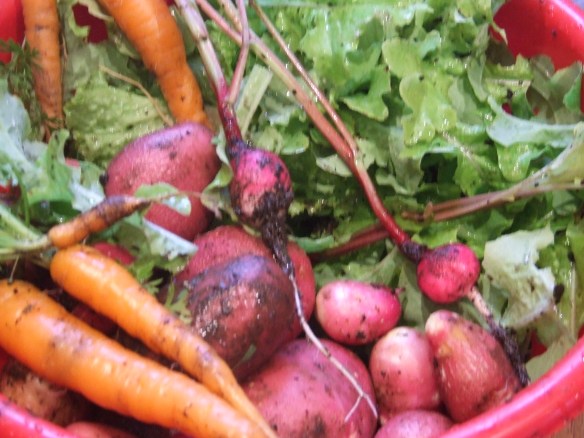
So the garden delivers up some more autumn harvest…

We spent an hour in the rough land next to our garden collecting blackberries- scaring out some of the deer that have shared our garden produce over the last few months.

Michaela lifted our garlic and the last spuds. The garlic smells wonderful- filling the whole garden and kitchen with it’s scent. Where you would use several cloves of supermarket wimpy stuff- you need one clove of the home grown variety!

DSCF5250

And then there are the apples- for pies and chutney and crumbles.

It never fails to amaze me how much of what grows that we can eat. Check out this clip from Greenbelt (thanks to Earth Abbey.)

Shallots- lots and lots of shallots….

DSCF4898

Today we spent an hour nor so harvesting some veg- the first major crop from our marvelous raised beds.

We have bought no salad leaves at all this year, and the carrots and spuds that we have been picking a little at a time have to be tasted to be believed. The kids eat the carrots raw, gobbling them like mars bars.

It is one of the best things we have done to our rambling old house and garden- a chance to connect with the real business of food production, to celebrate the bounty of this unfolding creation, and to appreciate the passing seasons anew. We, the Goans, highly recommend it to anyone who has a window box.

It really is easier than you think, and the maintenance and tending of the growing crop is one of the more pleasurable chores that easily finds a place in even the busiest life. We do not use a lot of space- we have three boxes, about 8 feet square, and it is incredible what you can produce.

Now the shallots are out, we will immediately use the ground for something else- time to start thinking about winter carrots we think…

Power to to Ali in his ongoing campaign to get Argyll and Bute council to recognise their obligation to provide a decent allotment site to the folk who are crying out for one in Dunoon…

DSCF4899

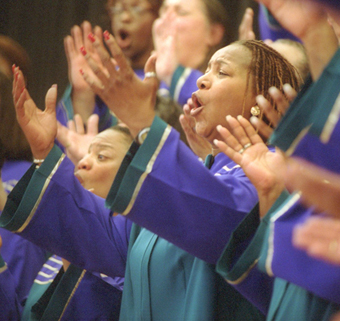
Worship music, revisited…

singing

A friend asked me to get involved in playing some worship music recently. He and I used to play together quite a lot, but (as I have blogged about before, here) I have found myself deliberately stepping back from worship driven exclusively by music- or perhaps to be more accurate (if a little jaundiced)- music to pep people up for a sermon.

I think I may have posted this before-

But I do not think I am ready to leave worship music behind altogether. I continue to wonder where are the songs that will carry forward the culture that is emerging in our Christian groups and gatherings, and whether we might yet rescue something from guitar driven worship from the marketing machine that made it a sacred cow.

And wondering too whether the raw creative fun that making music can be might find a new rhythm outside the institution of formal church, and still allow small groups of Christians to worship together in meaningful, authentic and inspirational ways.

And even when we ‘plug in’ and make noise, needing space and greater organisation- I wonder too whether we can do this, but avoid the ego-worship hero stuff. Avoid the search for the next Matt Redman (who was, of course, the next Martin Smith.) I like Matt Redman by the way- some of his songs are great. Some are not. Like all song writers!

On the Tautoko network site, I made these comments ( and asked these questions)-

This is a bit confusing for me. I spent years ‘leading worship’- by which I mean playing soft folk rock choruses. I became increasingly dissatisfied with this, in terms of style, underlying theological assumptions and the exclusive one dimensional character that it brought to our collective worship.

I began a journey that will be familiar to many of you- towards older more contemplative ways to approach God, and into experiments with ‘alternative worship’.

But the love of music was still on me. It’s power to move and to unite. The beauty that comes when people join small talents to make something that is much bigger than the sum of their parts.

And as I look around me, in the wider alt. worship scene, we seem to use a lot of ambient stuff, and the odd bit of singer-songwriter creativity. But we do not sing very much. Is this because it is not cool? Or is it a pendulum swing reaction against the CCM/Worship machine that has made worship music a commodity?

In my group, we have members aged 9 to 75. And people want to sing. I have found myself digging into a 30 plus year backlog of songs and choruses looking for ‘hymns and spiritual songs’ that hold some meaning and truth that fits where our group is at.

So- a few questions…

Do you sing?
What songs still have meaning?
How does music fit with the wider alt worship stuff you are involved with?

There were a few answers. There is a lot of music out there unfamiliar to me. Songs from a Catholic tradition, or from the Iona Community (often by the brilliant John Bell– who, I contend, has also written some stinkers!)

But I am yet to feel that I am building a collection of songs that are I can sing with passion and integrity in my developing context. Sure, some of them I have carried with me- reworked old hymns, or the few songs that connect with Justice issues, and the mission of Jesus. But so much of the love-songs-slightly-reworked-to-be-religious, I simply can not sing any more- even ones I used to love.

I came across this bloke, Andy Flanagan on the Greenbelt website today- who I feel an affinity with as he seems to be a cricket fanatic and Christian socialist too. Must get along to his gig @ Greenbelt if I can.  I liked some of the words of his worship songs.

But if you know of others- songs that gather some of the hopes and dreams of this thing that is the emerging church, I would love to hear them. What songs allow you to reach up towards God and offer him something meaningful and beautiful as you gather together?

I can trade you a few that mean something to me…

Science/faith- apologetics worth chewing on?

Thanks to Jason Clark for this link to Test of Faith.

The site is another attempt to find that dangerous interface between science and faith. It is based around the thoughts of Scientists who are Christians.

I have mixed feelings about projects like this. I have spent some time in the past thinking about the whole creation/evolution thing (here for example) and more or less came to the conclusion that science asked different questions to those needed by people of faith- typically the scientific ‘how’ and the religious ‘why’.

I also worry that there is much BAD science that is being used by Christians to ‘prove’ the truth of their interpretation of the Bible. I find these dishonest and highly selective attempts to squeeze the world into a narrow set of prejudices repellent.

But then I am not a scientist, and never will be. I write poetry that celebrates mystery. Those with a different, more analytical and precise mind set will always need a different level of engagement with these issues.

This proposed set of resources and film seem to promise much…

Here is the trailer…

Vodpod videos no longer available.

more about “Science/faith- apologetics worth chew…“, posted with vodpod


Advent unexpected

cimg1099

A storm rattled the old house through the night, and the skirl and howl of the winter wind took away sleep. Or perhaps it was rather the swirl of stuff in my head- but either way, the grey of the dawn brought a headache and a developing awareness of the inevitable head cold gifted no doubt by William, who has been stretched out on the sofa for a few days.

But today is a Saturday, and Saturdays are special.

They offer the possibility of all sorts of meeting and greeting and adventuring. But above all, they offer time away from the worries of work and school, and I can share them with my wife and kids. There is nothing better in this life I reckon.

Having said that, perhaps because of the fallen nature of this wonderful but flawed world, things are rarely as easy as this. Saturdays are often stolen by a thousand obligations.

Michaela, bless her, will often introduce the subject of another ‘task’ obliquely. Or perhaps it just seems that way as I was not listening properly. But she knows that every second filled with tasks, no matter how blessed, I easily resent…

Today was a case in point. A day filled with DIY, trips to the tip and the collecting of kids and then a trip to fetch a Christmas tree… which turned out to be an absolute joy.

It began with a drive in the early winter dusk as the mingling air misted at the level of the lower branches.

Past Loch Eck, a glassy smooth reflector of the mountains lined with bones of snow.

And a friendly man at the Glenbranter forest station who helped us pick out a tree with humour and a genuine warmth with the kids.

Crunching over the muddy ground half concreted still by insulated ice.

Then a tea and mince pie in the ranger station, whilst the kids were drawn like iron filings to the magnet of the piles of ploughed surviving snow- too hard now to compact into balls, but magical just the same.

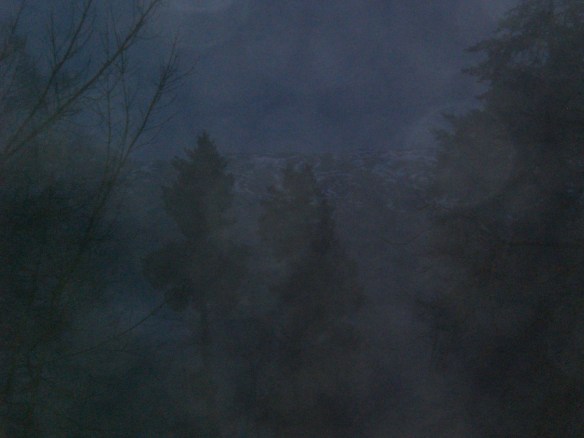
And I walk out on my own for a moment, in the middle of Argyll Forest in the gathering dark. Mist still hanging in the trees, but just enough light to make out the white of the mountain tops beyond.

And rejoice.

A suitable advent moment- all the better for being unexpected, in the press of a curmudgeonly day.

Reflections on the futility/centrality of sport

athens_olympic_stadium_greece_2.jpg (JPEG Image, 600×391 pixels)

Stuart Cutler, whose blog I enjoy, said something interesting about sport here

He said “when you deconstruct any sport, it is ridiculous…”

I reckon he’s right. It set me thinking about something else-

“Bread and circuses”

A phrase used by a Roman poet to deplore the declining heroism of the Romans after the end of the Roman Republic, and as the Roman Empire began. “Two things only people desire- bread and circuses”. In times of unrest, the Roman governors threw huge spectacles, and handed out free bread.

At present, the Olympics fill our screens, but it seems only a sneeze since the football world cup raised a million hopes and dreams for English football fans. Flags waved from suburban windows and on car aerials. There was probably another song in the charts about football coming home, badly sung by an embarrassed set of England footballers. And the sun shone on the hopes of the whole nation, at least for a while…

I suppose I am a sports snob. I love cricket, and so got all worked up over the Ashes win over Australia (we were soon humbled by the return matches in Australia, which we lost 5-0!) but I am genuinely bemused at the effect of watching some men kick a ball about on a football field.

It has been suggested quite seriously by economic and political analysts that the success or otherwise of the England football team (and perhaps that of other nations too, even Scotland!) has a measurable effect on the nation. People’s spending patterns change, they impregnate one another more or less frequently, they vote differently, and crime and public order offences fluctuate like the league table itself. Such is the power of public entertainment, filtered through mass media, to a population hungry for meaning- for significance rather than the mundane predictability of life.

The Romans knew this, and perhaps little has changed, apart from the forms of entertainment themselves. They used to idolize men who fought and killed for entertainment. We now just reserve our thirst for blood for whoever the current England manager is. Why would anyone want that job?

But I too also love those moments of magic when a man or woman transcends what all have the right to expect, pushing beyond every psychological and physical barrier, and against all the odds, winning the prize.

A sublime goal scored by the 18 year old Michael Owen

A 6 smacked high over the boundary and into the crowd by Andrew Flintoff, right into to the hands of his proudly watching father (who promptly drops it),

And the time when I heard about Eddie the Eagle strapping on his milk bottle bottom glasses and launching himself from his garden shed, in training for the Olympic ski jump.
I remember these moments. As much as they can be, in a disposable age, they become almost eternal- they are public property, the milestones of our lives. We store them away like songs and smells that always take us back to particular time and place, and in their own way, they are as beautiful as sonnets.

But it is not enough. How can we elevate football or cricket or rock music or package holidays or anything for that matter, to become the pre-eminent point of emotional and spiritual expression in our lives? It seems to me that so many of us have let these manufactured things become the mechanism for fulfillment and borrowed success in our lives. We fill the voids in our lives with off-the-shelf imitations of reality, sanctioned and given shared legitimacy by TV. As with all things, it is hard to go against the flow.

We could talk about the state of the earth, of inequality, of poverty and starvation of children, of global warming and the melting polar icecaps. Or about the death of conversation, the end of community, and the breakdown of family life. But it is all a bit earnest, a bit oppressive. The issues are too big for us to grasp, and anyway, we are all entitled to a bit of a rest at the end of a working day, right? A bit of down time, a good match?

Yes, but time goes by so quickly. We start out full of optimism, and all too soon our children have grown, and mortgages have become the millstones that tie us to jobs offering little beyond a wage check. I believe in an eternal perspective, which offers a life in so many more dimensions. And in a God who sends his Spirit amongst the crowd, stirring like a wind on the waters, reminding us of what it means to be made in the image of a creative, Creator God, softening us from the plastic wrapping of our lives, bringing in life and love and freedom. Calling us to be so much more than passive observers of the TV screens-

But to see Flintoff in his pomp, humbling the mighty Australians, making them look like children bowling at their older brother, punching a smooth extra cover drive, then rocking back and smashing a square cut of withering power past a startled baggy green cap…

Blogged with the Flock Browser

Rob Bell on quantum physics and Hebrew poetry…

We watched a DVD from Rob Bells recent ‘Everything is spiritual’ speaking tour. He pours out these facts and figures onto huge whiteboards- what a mind the bloke must have (or some kind of special auto cue prompter!) Here is a clip from the DVD- there are a few more on you tube but it is worth getting hold of the DVD and letting is wash over you.

The message that comes through all the incredible complexity is that of the Creator God, in whom all things are made, and who sustains everything. Everything, then, is spiritual.

Bell seems to draw a familiar conclusion about the power of the poetry in Genesis…

One thing that concerns me about this approach to science and faith, is that there is a danger of relegating the creator to a ‘God of the gaps’.

By this I mean that we look to science for explanations for all things. Where science fails to fill in all the blanks, we turn to God. As science advances, then God shrinks. He is pushed into the narrow spaces- in this case, into the quantum spaces…

You could say that this God of the gaps has been the logical outcome of the age of enlightenment. And Christians have fought this truth battle in the backyard of enlightenment- on the terms dictated by modernity.

But science and faith- they ask different questions, and the answers- they find their agreement only in God.

Creation/evolution 4- Genesis

02.jpg (JPEG Image, 260×357 pixels)

So what of the poem from the beginning of the Bible? What relevance does it have to our understanding now? How does the poetry of three thousand years ago shine light into our post-modern lives? We people of faith tried first to deny the science, then to reconcile it within the framework of scripture. I choose to do neither. I choose instead to stand on both power of the poem, and the awesome scope of the story revealed through science.

God spoke “Let there be light!” and light exploded into the universe. God saw that light was good, and he separated night from day- it was evening then morning – day one.

God spoke “Sky” between the waters, and separated the air from the waters. It was evening then morning – day two.

God spoke – let the waters gather to one place, and let dry land appear, and it was so.
God spoke – earth – cover with green vegetation and trees, bearing fruit and all good things. It was evening, then morning – day three.

God spoke and made the lights come out in the day and at night, made lights to mark the seasons and the days and the years. And he made lights to take charge of the day, and another the night. It was evening, then morning-
day four.

God spoke and the ocean swarmed with fish and all sea life. Then he filled the air with flying creatures and told them to prosper and reproduce. It was evening, then morning – day five.

God spoke and said earth- generate life! Every sort and every kind- cattle and reptiles, and wild animals, insects. And let us make human beings in our image- reflecting our nature, and responsible for the fish of the sea the birds of the air, and the animals of the land. He said “prosper, fill the earth, take charge! I give you every seed bearing plant on the face of the earth for food, and to every animal, I give every green plant” It was evening, it was morning- day six.

On the seventh day, God looked at all He had made, and saw that it was good. He rested.

Adapted from ‘The Message’

As I read this poem, it speaks to me of the wonder of God, as He sets forth the explosion of unfolding creativity. As His imagination formed stars and planets rushing outwards in a massive expanding burst of light. As his planet Earth was formed and positioned in the heavens, and formed its atmosphere. Its atmosphere thinned and revealed the sky above, with the sun for warmth by day, and the moon at night. And then bursting into our fossil record comes all the fish and fowl and beasts of every colour and shape, until, right at the end of the creative story, came humans, who were gifted with the skills to reflect and emote and abstract their experience- in the image of God. Made for relationship.

And I start to connect again with the heart of God in the middle of this poem. He saw all, and it was good. His love for what he made was great, and nowhere was it greater than for this last creature, this human, to whom he gave the special dominion over the whole of his creation.

This poem sings with wonder and joy and the very essence of who we are, and why we are, and what we have become. It dances around science like a butterfly out of a net.

There are other poems in the early part of the Bible. They tell the story of the descent of mankind and our loss of the place of innocence. They tell the stories of our passage from hunter gatherers to inquisitors and tamers of the land – a process of unfolding history that divides peoples from the heart of God, and then from one another. But these are different poems, and different stories.

So let us rejoice in the poem of life, and its origins in the mind of God.

Blogged with the Flock Browser

Creation/evolution 3- science…

Scientists are developing their own story of life. At present, it goes something like this;

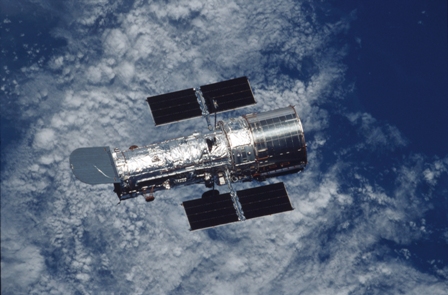
Some of the most exciting areas of scientific discovery today are thought to be in the field of Astro-physics. The Hubble telescope, now in orbit around the earth, out from the obstruction of our atmosphere, has been able to see much further into space, and in doing so, to see light coming to us from further back in time. Through examination of what are thought to be the oldest stars, and by measuring the apparent rate that the universe is expanding, scientists have suggested a new age for our universe, of between 13 and 14 billion years old. This means, according to the predominant (physical) theory of the origin of the universe that around 13 billion years ago, out of nothing, something happened, and in a mighty explosion of unimaginable force, time as we know it began. Particles of cosmic dust formed globules, some burning bright as stars, others taking their orbit around these stellar objects and forming planets. The universe continued to expand – to get bigger.

EVERYTHING that we see around us is made up from molecules and elements that were spewed out into the universe by this one event- what scientists have somewhat unimaginatively called “The big bang”. More than this- look at your hand. It too is made of star dust. because, about 4.6 billion years ago, a small planet was formed, on the edge of one of the spiral arms of a small galaxy of stars- as a swirling mass of debris accreted and took on spherical form. We have come to see this planet as Earth, our home.

The conditions on this planet eventually became just right for the beginning of another process – life. For about a billion years, the earth was ‘without form and void’. But from around 3.4 billion years ago, we can find evidence in the rocks of microbes. Nobody knows WHY these primitive forms of life began. Some early research suggested that the right chemical reactions happened to allow for the production of amino acids, perhaps through the characteristics of the chemistry on early Earth, or maybe in the deep sea vents where volcanic heat stirred the seas. Others have suggested that organic matter was deposited on earth by comets, although it is not clear where the comets came from. We do not know whether it was ONLY on our planet that these conditions existed. We still wait to see if early forms of life developed on our neighbouring planet, Mars.

It was not until about 600 million years ago that we see the first evidence of multi-cellular life on Earth in the fossil record. However, diversity seems to have remained constant, perhaps even declining, until approximately 200 million years ago. Then there was an explosion of diversity- all the marine invertebrates, including many that no longer exist, plus plant life on the land. No-one knows why this diversity suddenly appears in the fossil record, although there are many theories- from levels of oxygen in the atmosphere, to more complex theories about cell structures. All subsequent forms of life on earth are substantially similar to the animals that came to be from this period- vertebrates, invertebrates, arthropods and so on.
The carboniferous period, from about 360 million years ago appears to have been hot and humid. Huge trees forested the land, but there were no flowers yet, and no grasses. Bony fish were found in the ocean, and somehow, some of these fish formed the ability to become amphibian. In the air were seen huge insects, including one with a 14 inch wingspan!

The Permian period, from around 286 million years ago, was typified by cooler climates- and many land animals began to take their place on our planet. However, at the end of this period, and for no clear reason, many of these animals became extinct. It took another 100 million years for this diversity to recover.
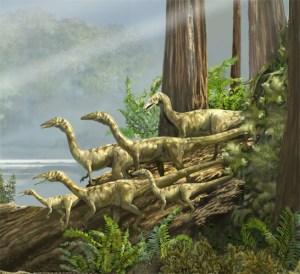
The next age, often called the Age of Reptiles was from around 245 million years ago. This period includes time of the Triassic and the Jurassic dinosaurs. They dominated the animal life of the planet for 150 million years, then disappeared, again for no clear reason. Giant meteor strikes have been suggested, but no-one knows for sure.
Next, the age of mammals – from around 65 million years. Mammals had been around for much longer of course, but during this period, they (and eventually, we) dominated the planet. Different species ebbed and flowed, some displaced by others as land masses move and reform, others varying hugely in size and shape as time places different demands on their adaptability. And we mammals were extremely adaptable.

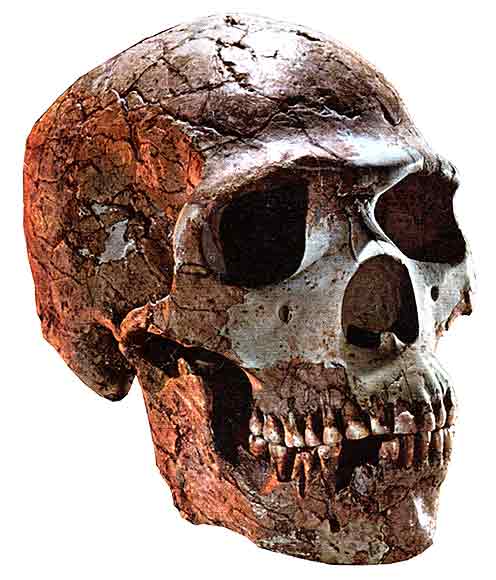
The first hominids (Apes closer to human form than to that of the ape) lived in Africa about 7 million years ago. Around 2.5 million years ago, Homo Erectus appeared in Africa, with a brain almost as large as ours, and began to make use of tools and perhaps, fire. The first recognisably human remains date back to around 250,000 years ago, and have been called Neanderthals. They had, if anything, slightly larger brains than us, and evidence of their communities, and the residue of their lives, can be found in caves in a northern climate ravaged by advancing and receding ice sheets.
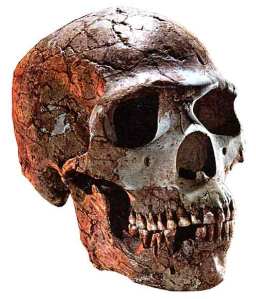
From about 50,000 years ago, there has been a mass extinction of animals in many different parts of the world. All herbivores of over 1000kg disappeared in Europe and America, and 75% of all animals between 100-1000kg. The rise of mankind, with our hunting skill, and communal organisation is the only logical explanation.

Around 30 million years ago, Neanderthals disappeared. They had been replaced, over some time, by what we now know as Modern Humans, who had first left records of their existence about 100,000 years ago in Africa. Palaeontologists have speculated that Neanderthals, despite their big brains, lacked something that the moderns had.

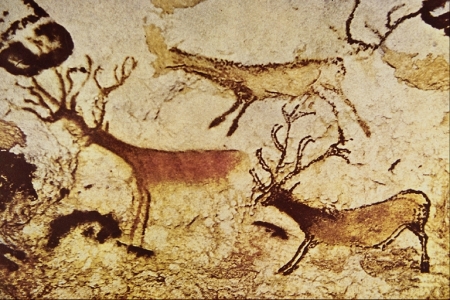
Their tools appeared primitive and poorly designed, and although they lived in social groups, there was little evidence of that oh-so human thing, abstract thought. The modern humans, on the other hand, from around 40,000 years ago, left cave art, jewellery, sophisticated tools. It was almost as if, by a freak genetic mutation, ‘humanity’ was switched on! Evidence has emerged recently however that suggested that this modern human behaviour started at least 30,000 years earlier in South Africa, where geometric carved pieces of Ochre and impressive tools were discovered from an earlier period. Human thought and abstraction seems to have been unfolding- emerging- for some time.

We stand as evidence of all that is amazing about the story told by scientists- of an unfolding story of life, beginning from nothing then gathering a fragile foothold, until at the very end of history, humans appear and make the world their own. We conquer mighty rivers, remake the building blocks of our planet into new composites and use the facts of our understanding to travel through the air, to communicate and to destroy one another. And some say that we are at the edge of destroying our planet because of our headlong rush to accumulate more and more.

This is the story given to us by the best scientific study and theorising.