Very few people write lyrics that catch in my brain like Bruce Cockburn.
I am sat listening to some old vinyl this morning, toast in hand, before we head out into the lovely Sunday morning, and was captivated by this song again.
It is an outpouring of images and words from the road.
Silver wheels
High speed drift on a prairie road
Hot tires sing like a string being bowed
Sudden town rears up then explodes
Fragments resolve into white line code
Whirl on silver wheels
Black earth energy receptor fields
Undulate under a grey cloud shield
We outrun a river colour brick red mud
That cleaves apart hills soil rich as blood
Highway squeeze in construction steam
Stop caution hard hat yellow insect machines
Silver steel towers stalk rolling land
Toward distant stacks that shout “Feed on demand”
100 miles later the sky has changed
Urban anticipation — we get 4 lanes
Red orange furnace sphere notches down
Throws up silhouette skyline in brown
Sundogs flare on windshield glass
Sudden swoop skyward iron horse overpass
Pass a man walking like the man in the moon
Walking like his head’s full of irish fiddle tunes
The skin around every city looks the same
Miles of flat neon spelling well-known names
USED TRUCKS DIRTY DONUTS YOU YOU’RE THE ONE
Fat wheeled cars squeal into the sun
Radio speakers gargle top 40 trash
Muzak soundtrack to slow collapse
Planet engines pulsate in sidereal time
If you listen close you can hear the whine
Very Ginsberg. But Ginsberg never played the guitar like this…
Call me a groupie (I do come close to hero worship with this man) but I came across these clips the other day and could not resist re-posting. He is talking about an album that I reviewed here– and to be honest I was not very kind. By way of some slight redress, I offer these two clips…
Here we are, sat drinking tea and listening to music. Sabbath blessings abound, and outside the foghorns are still sounding on the Clyde.
Specifically we are listening to a CD sent up to us from our old friend and neighbour, Terry. Terry is a lover of Bluegrass music, and regularly digs out music that he thinks I will like- he is usually right.
This time he sent an old Iris DeMent album- The way I should.
The first track made me cry- it somehow hit the Sunday morning spot. It is saturated with longing and hope- all the more so as it is associated with the kindness of a friend.
When my mornin’ comes around, no one else will be there
so I won’t have to worry about what I’m supposed to say
and I alone will know that I climbed that great big mountain
and that’s all that will matter when my mornin’ comes around
When my mornin’ comes around, I will look back on this valley
at these sidewalks and alleys where I lingered for so long
and this place where I now live will burn to ash and cinder
like some ghost I won’t remember
When my mornin’ comes around
When my mornin’ comes around, from a new cup I’ll be drinking
and for once I won’t be thinking that there’s something wrong with me
and I’ll wake up and find that my faults have been forgiven
and that’s when I’ll start living
When my mornin’ comes around
OK, people have sung to worship God since the earliest times of church. The Hebrew Bible gives a whole book over to songs of praise, otherwise known as Psalms. Does that mean that we should follow their example?
There are lots of other traditional forms of worship that we no longer practice as a norm (certainly in the non-conformist tradition that I come from anyway.) We are not much into sacrificing animals, or washing feet, or burning incense, or flagellation, or dancing (particularly the naked Dancing that King David was known for.)
Then there is are lots of others that are fashionable, but still relatively rare- pilgrimage, silent meditation.
So- why sing?
Some people would point to the passages in the Bible that would seem to instruct it- ‘Sing unto the Lord a new song’. Clearly early followers of Jesus sang together-
1 Corinthians 14:26
[ Good Order in Worship ] What then shall we say, brothers and sisters? When you come together, each of you has a hymn, or a word of instruction, a revelation, a tongue or an interpretation.
I have to say however that my times of direct literal application of words like this without any wider questioning are gone. There are lots of other passages that we do not apply in this way. The question of how much is social/cultural/historical, and how much is expected conduct for all subsequent followers is always a point of debate. In this instance- the practice seems to me to be less important than the purpose and the meaning of the practice.
However.
There are some things about singing that are special. I will divide these into three areas- physiological, communal and spiritual.
Physiological
There is plenty of evidence of the health benefits of singing.
Singing releases endorphins into your system and makes you feel energized and uplifted. People who sing are healthier than people who don’t.
Singing gives the lungs a workout,
Singing tones abdominal and intercostal muscles and the diaphragm, and stimulates circulation.
Singing makes us breathe more deeply than many forms of strenuous exercise, so we take in more oxygen, improve aerobic capacity and experience a release of muscle tension as well.” — Professor Graham Welch, Director of Educational Research, University of Surrey, Roehampton, UK- from here.
Other claims made are that singing can increase your life span, can reduce depression, improve your posture. If half of this is true then perhaps every hospital should have its own choir. GP’s should prescribe barber shop.
We do not worship for our own benefit of course- and I suppose you could argue that worship music has already become too centred on ‘us’- our needs for a ‘high’, not to mention the egos of we worship leaders. However, we might argue that things that carry a simple wholesomeness about them always seem to draw us towards God.
Communal
Everywhere, in all cultures, through all time, when people come together, we sing.
In these times when individualism tends to dominate our western culture, very few things still collectivise our activities. There are very few semi-ritual activities that bring us together. Communal singing is one of the few things that achieves this- whether on the football terraces, or our national anthems, or in churches.
When we come together like this, interesting things happen. We humans are above all things, social creatures. Our sense of wellbeing is very dependent on our connection with people around us. The stronger- more harmonious- that these are, then the better we tend to feel.
Perhaps the most developed example of this is the choir. Choirs come together to rehearse, with an overarching mission- the performance. Fairly ordinary voices are combined with other fairly ordinary voices, and the sound that is made collectively can be extraordianry- even sublime. And along the way, we learn together, laugh together, form relationships with people from other walks of life. There is much of the ways of the Kingdom of God in this I think.
And then there is the high of performing together. Like this, for example.
Spiritual
If our culture skews us towards individuality, then perhaps our means of worship have taken a similar course? Our spirituality is ‘personal’ and ‘private’, and newer forms of worship may have underlined this too- for example, ‘alternative worship’ spaces (which I love) which owe more to art installations may tend to make individuals of all of us even within a communal space.
Singing is one of the few spiritual practices that can be totally shared. When done together it requires us to align ourselves entirely with our fellow singers- to find the same rhythm and chordal structure, to feel the ebb and flow of the emotional content of what sing and to depend on others to fill out the polyphonic diversity.
There is more however- many of us who have sung in groups would describe transcendent experiences whilst singing. These things are extremely difficult to define- but perhaps the shared intensity, allied to deep breathing and exposure to rich lovely sounds will always open us wide to deeper experiences.
Of course, you might experience similar things from exposure to all sorts of art/beauty- from a rock concerts, to films, or beauty in nature. But singing is slightly different- in its democratic accessibility.
It is also a means of making worship deliberate and directional. It combines something abstract- music, with something concrete- words.
In many ways, these words are the carries of our faith- the ones that we remember more vividly and use to encapsulate beliefs. Some of these words rest on our souls- we never forget them. They come to us in moments of significance almost unbidden- either in times of adversity or ecstasy. Somehow their allegiance to music makes them spiritually more three dimensional.
So perhaps the arguments for singing remain strong?
This is the first of a series of post on worship music. My current working titles for he others include ‘Authenticity/Creativity’, ‘Transcendence’ , ‘Songs of community’ and ‘What is so special about singing anyway?’- hopefully these will emerge over the next few weeks. But in the meantime, here is a bit about my own journey, in which I have to acknowledge some rather negative aspects to my experience…
I have written before about my own previous encounters with worship music- the practice of which has been extremely important to me.
I started out singing in a church choir. I had a high pure voice as a boy, and sang solos in church. I learned to play piano, and church organ- earning some pocket money playing at weddings and funerals.
Later we discovered simple choruses- and during the late 70’s and early 80’s I started playing guitar. We played simple songs such as ‘We have come into this house’ and ‘Freely’, and were indebted to the songs of the ‘Fisherfolk’, whose music became the soundtrack to the Charismatic revival that swept through the Church of England. I still feel a strange nostalgia for the simplicity and ‘wholesomeness’ I remember from this time- and the music was a huge part of this.
I then spent 15 years as part of a large independent church in the north of England- in which my major contribution was musical. I eventually became the leader of the music team. We made a journey through all the waves of new church music that emerged- at first it was all sourced via new songbooks- which would come out every now and then- but later the machine that poured out songs (mostly from America) used many different portals- books, CD’s and increasingly, the internet. Vineyard soft rock worship was something we constantly imitated- although the shiny happy Hillsongs worship always left me a bit cold.
Following a move to Scotland, I continued to lead worship- now in a small Baptist church. Through connections there, I also became slightly itinerant- leading worship in the USA, Europe and for some different events in Scotland.
Then I stopped.
I found it increasingly difficult to sustain any kind of passion for this kind of worship. It had become so formulaic and anchored within a narrow world view- based on set of core assumptions that were all-dominant even if rarely spoken. I was increasingly finding myself at odds with these assumptions, which were grounded in a particular American Evangelicalism.
Then there was the place of this kind of worship at the centre of all of our services. At first, worship music was all about FREEDOM- it was the means by which we escaped ritualistic liturgy and ‘made room for the Spirit.’ Except the longer we did this, the more liturgical and rigid we became. The formula went something like this-
Open service with a time of ‘praise’-
Upbeat high energy praise songs. However, there were (and presumably still are) far fewer exuberant praise songs than quieter ones, so we tended to do the same 10-15 or so over and over, after which typically the kids will leave for Sunday School, and we hear notices.
Time of ‘worship’
We then have more singing- quieter songs now which worship leaders try to theme slightly, with a nod towards the coming sermon. In my experience, we often talked about worship being about a much broader thing than just music, but in practice other artistic forms of collective worship had little part in our services. The odd bit of drama, or music/power points. Possibly a bit of dance. The job of the worship leader here is to generate some intensity and expectancy as we prepared to hear the preaching of Gods word- mainly by singing songs.
The sermon
Teaching within this tradition is of paramount importance. We talk of being ‘fed’ by this teaching, and skillful preachers were the top of the tree in terms of status. The very best preaching has this goal of creating a climax– you could call it a spiritual/emotional crisis- during which the congregation is expected to ‘make a response’. This might mean coming forward for prayer for healing and deliverance. The public nature of these crises is valued as some kind of statement before man and God, but I have long wondered whether it might also serve the purpose of measurable ‘success’ of the peaching.
And while all this happens, the music has a vital role again- ecstatic, emotional love songs to Jesus. Matching/creating/heightening the emotion of the event. A benign manipulation of our emotions in the name of Jesus.
The sending out
The last part of the service was about commissioning the congregation to go out into the world, changed by their encounter with God in the service. Songs tend to be more martial, triumphalist and perhaps more hymn-like.
All of this can be energising and vibrant- it can also be very ego-centric for those of us on the stage.
That is not to say that all this has no value- but I think we greatly exaggerated it. People were challenged and even changed in these services, but most were not- they were just caught up in the weekly merry go round. I once heard these services described as like a weekly wedding with the same couple getting married each time. And me, the wedding singer.
About 5 years ago I decided that I could do it this no more. The ‘crisis point’ of services seemed to me increasingly to be manufactured and divorced from the reality of the lives of the people present. At worst it became a religious show- a pep-me-up for the dwindling faithful. The particular context I was part of did not make this easier as there was also a surface dishonesty about levels of conflict and political in fighting.
There were other reasons why I walked away- firstly, theological ones. I found myself adventuring into new ideas, questioning and rediscovering aspects of my faith- and the Evangelical assumptions of many of the songs I had previously used became very difficult to sing. They tended to be strange quasi-erotic love songs to Jesus, or triumphalist war songs for the army of God. They use the Bible as source material- but only parts of the Bible that come pre-packaged by Evangelical assumptions.
And they tend to be American, arising from the cult of the super worship leader- a strange cool guy (mostly male) who has an expensive guitar. His music only finds wider release if he is marketable, and hopefully photogenic. Then the music goes into a highly profitable (but not necessarily prophetable) machine, which spews out visuals, CD’s and sheet music for the whole band. All worship leaders have their favourite super worship leader. We aspire to be like them, and to make music that is a second rate version of their music.
Secondly, I was discovering other forms of worship that I could connect to in a different way- both older forms of worship (from a contemplative tradition) and also new forms of ‘alternative worship’, which had more in common with performance art that with praise and worship as I had used to understand it.
I am a few years down the line now though- and have been involved in many a prayer room, curated worship space or wilderness meditation event. These experiences are very precious to me, in my on going attempts to reach towards God, and to offer my worship.
But I still love to sing. Gatherings with friends still often involve getting out some of the range of instruments our family have accumulated. And within my community (Aoradh) we still sing when we gather from time to time. What I have however, are a set of open questions that I am still working through-
Where are the songs of lament, of thanksgiving, of hope, of brokenness, of joy, of doubt, that fit this new context?
What songs are counter cultural- challenging the idolatry of the consumer driven unsustainable way of life our churches are embedded within?
This new context- what songs might collectively release us towards a different kind of mission? Encourage us to seek after justice, truth, beauty- and when we find it, to sustain it?
If these songs are the cultural carriers of our theology- then what of our faith do we want to celebrate? How do we move towards songs that are more open, less reductionistic, more comfortable with mystery and less concerned with the promulgation of fake certainty?
Where are the songs of community- not of individuality- all of that personalised spirituality from the God of success?
Are there different kinds of songs needed for small community contexts?
Why do we need to sing the songs of the machine- how can we encourage local expressions emerging out of community?
What of the old is still usable? From the 1560s or the 1960s?
I long for poetry- deep and honest lyrics. I am sick of the same old sacred rhymes- grace/face, love/above, sing/bring. We can do so much better.
I long for music that carries emotion, not just a steady tune. Where are the solo instruments, and the complex rhythms and harmonies? I am so tired of soft rock.
Is all this just because I am looking for something new, something trendy? Am I overreacting?
So, the journey continues- think I will go and get my guitar…
Emily spent a day doing some fiddle workshops in Glasgow yesterday- and they decided to invade Kelvingrove gallery/museum in a kind of flashmob event.
Michaela had just enough power on the battery of her camera to record this- but we managed to miss getting Emily in frame at all!
I love simple creative flashmobs- the pleasure that they give to people. I suppose there has to be a limit to them or it will all go a bit mad. The staff in Kelvingrove certainly thought so- they only managed a couple of tunes inside.
Or perhaps un unthankyou (to torture a double negative.)
One of my highlights of Greenbelt festival was listening to The Unthanks– a totally surprising feast of gorgeous harmonies and instrumental arrangements.
And clog dancing.
I had heard the sisters Rachael and Becky sing before- and to be honest, despite being a lover of folk music- particularly of the northern British kind- I found it a bit too woolly-jumper-finger-in-the-ear. I could appreciate the history and the connection to something lost, but not quite be drawn in to the music.
I got round to ordering their recent album ‘last’-
This album combines lots of lovely things- wonderful songs, simple but sweet vocals, string quartet, guitar, piano- and the combination is beautiful.
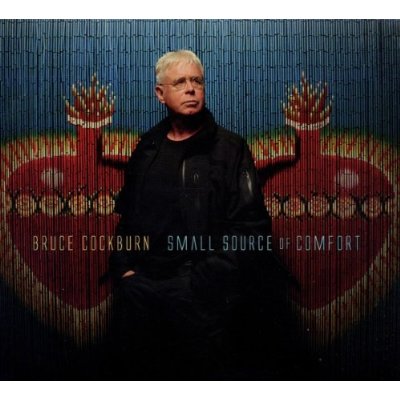
I have had this album a while now, and thought I would commit myself to a review. Bruce Cockburn’s poetry and music are sublime- there simply is no-one better. I have loved this man’s music for 25 years, so I will listen to him playing biscuit tins, but…
This album is good, but it is not great. I wondered whether it would grow on me, as others have- particularly ‘The Charity of Night’, which I struggled with at first, but now it is one of my favourite ever albums. However, if anything, ‘Small source of comfort’ is well named- it has slipped deeper towards the back of my record collection, where it is likely to remain.
Why?
Well, the production is lack lustre- almost as if musicians were going through the motions. It is competent, but it does not innovate or sparkle. He badly needs a new producer- or perhaps a new challenge.
The songs themselves are similar- some of them OK, but none of them really memorable. Then there is the strange song about the planes returning with the bodies of Canadian soldiers from Afghanistan (‘Each one lost’.) Strange because it is so accepting, so ‘compliant’- asking no questions, issuing no challenge. Most un-Cockburnesque.
Then there is ‘Call me Rose’- imagining Richard Nixon re-incarnated as a single mother living on a rough estate. A fun idea, but it just does not work as a song- not by his high standards. It is the sort of song knocked out after too much wine that really should be abandoned during the morning hang over.
What I feel like saying is- “Come on Bruce, sharpen your steel. We need you back at your best.” In these strange times, we really need our troubadours, our poets and our prophets.
Because Bruce can write like this (The last song on the album, written in 1968.)
Silver rain sings dancing rhyme
sunlight on blue water
rocky shore grown soft with moss
catches all our laughter
and it sends it back without its edge
to strengthen us anew
that we may walk within these walls
and share our gifts with you
Home we are, shower fresh and full of stories. I had such a great time that I am reluctant to let it go and so refused to shave this morning for work. I am going beardy for a while as a wee celebration of all things festival.
Our worship thing went well- and as we were first up, we suddenly had time to relax- a rare luxury! This meant actually going to talks and sitting down listening to music. Fancy that.
Highlights-
Perhaps most of all, time with family and friends- I laughed so much at times that I ached. Several of the kids of my long time friends were there too- Sam, Caleb, Sarah, Nathan, Gail and Andrew- it was such a privilege to spend time with such great young people (not to mention my own kids!) It was great also to meet up again with a growing network of creative folk from around the UK, many of whom are involved with ‘Tautoko’.
The meet up in Gloucester Cathedral was great- we managed to get down in time this year.
As for music- The Unthanks and Martin Joseph on mainstage were both really great. Billy Bragg was at his polemical best.
Gungor redefined worship music with intelligence and musicality.
In terms of speakers, I began slightly skeptical of the celebrity headliners- but Brian McLaren inspired me, and made me cry. He also sat down and spent half an hour speaking to one of our young people, Sarah. If you were to download just one talk from GB this year- go for this one. I also enjoyed hearing a couple of my longer term heros speak- Christian social worker/activist Bob Holman and Psychologist Oliver James.
This year I even saw some comedy- not usually something I bother with- Jo Enright was hilarious, and Mark Thomas (swearing like a Gatling gun) managed a two hour romp about his walk around the Palestinian wall.
Michaela has always rather tolerated Greenbelt through gritted teeth- it has always been much more my thing. She goes because it is important to me, and has other practical benefits. However, this year seems to have been a real change for her- she too had a great time. Michaela is happy when she has made connections, and this year she had some quality time with lots of friends too- including Yvonne Lyon (copies of whose new album sold out almost immediately on the strength of another lovely tender performance, despite a bad cold.)
Finally, one other performer deserves a mention- Sam Hill. Sam used to go to the same church as us near Preston, and despite all the music I have seen performed, I reckon that one of his gigs was the best I ever saw live. He is a hugely talented songwriter and performer. Our mate Andy played backing guitar for him at his last GB performance 9 years ago, since when he has hardly performed. Now he is back!
There was probably so much more that I have not immediately remembered, but that is festivals for you…
I took very few photos this year- I was relying on Andy ‘5 cameras’ Prosser. Here are a few however, mostly from Michaela’s camera.
I watched some of one of those late night music compilation programmes last night- hits of the 80’s. Rather than flicking past as I would normally have done, I found myself back in Preston, as a student. Or slow dancing to Tears For Fears at parties in my earlier teens. Music does this to you- even music that may not have been a personal preference- it somehow becomes a powerful cue for memory.
One of the tracks that surprised me in this way last night was The Communards ‘Don’t leave me this way’- suddenly I was in the Student Union again, with my house mates Mark and Steve- and the electronic pulse of this track, combined with Jimmy Sommerville’s astonishing falsetto singing was carrying us along.
I was never really a fan of The Communards- I did not own any of their music. Partly this was because I was never into dance music, but also (to be honest) there was this sexuality thing, that made me uncomfortable. The band were openly gay- at the forefront of the campaign against homophobia. This was the time of AIDS- seen as a ‘Gay plague’ and ‘section 28’.
Listening to this song yesterday was more than just a nostalgia trip- it made me think again about how far my thinking- and that of wider society- has come since the 80’s in relation to homosexuality. Don’t get me wrong, I was never openly homophobic. I lived in a house with two other lads- one who was gay. I was a very left leaning student of sociology and social science.
But I was also from a Christian background- and always there was this conflict in me- because there were hard lines drawn here- homosexuality was sin. End of discussion. Sure, people like Tony Campolo proposed a path of grace in which we should accept that people were born gay (rather than the prevailing view that it was a debauched ‘lifestyle choice’, or perhaps the product of some kind of childhood damage or weakness of character.) Campolo’s view was that the way to resolve the issue was to accept people as gay, but to expect celibacy. This was not an argument that went well with my gay friends at the time- most of whom longed for companionship after desperately lonely and stigmatised early lives.
Watching The Communards yesterday made me feel ashamed of my rejection of their music on the basis of their sexuality. I have written before how I have come to believe that the Church will look back on it’s teaching on homosexuality in the same way that it does now on its previous teaching on other culturally based rights issues- on the basis of race, or gender for example. Another example is the change (over the last 30 years) in relation to divorce/remarriage in most of the Protestant church at least. The meat of this issue always comes back to how we understand the nature of Scripture of course- but I will not re-rehearse these arguments here.
I also discovered something about the other member of the band- Richard Coles– a classically trained musician who played most of the instruments. He has since presented programmes on Radio 4 and BBC 2, but the surprising thing about him is that he is now a Church of England vicar.
Coles talks about coming to faith after attending the funeral of a friend who died of AIDs. Which reminded me of this song- which I offer here as a lament for all of this faith based homophobia…









 this fragile tent