Persian poetry 2- Attar

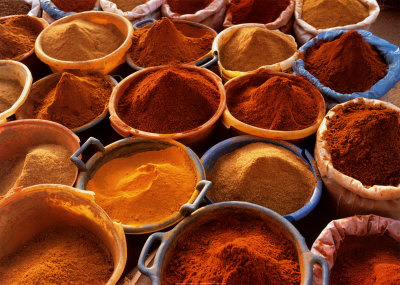
Gulab_Jaman_spices

On my continuing mission to find out a little more about Islamic culture, I am have been reading the Persian poet known as Attar.

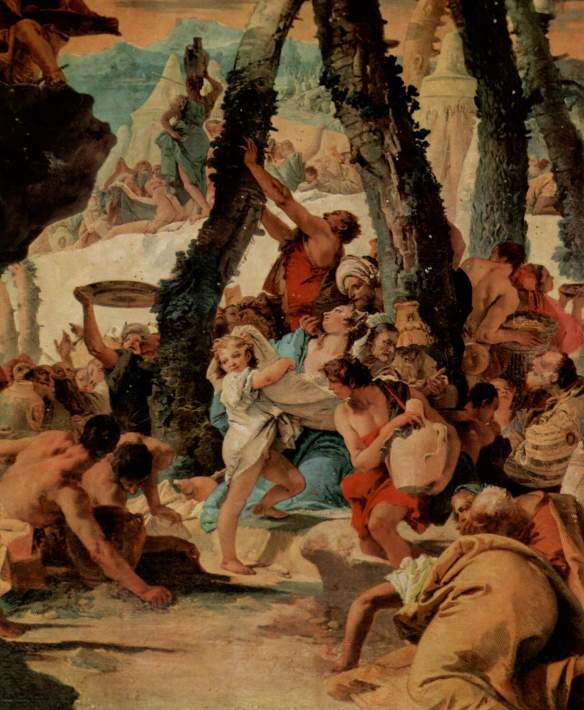
To imagine the world of Attar, we have to make a journey back around 800 years, to a far corner of what is now Iran, and to the ancient City of Nishapur, standing astride the silk road that connected the Mediterranean tradesman with the mystery and spices of the far East. In the year 1000CE, it was among the 10 largest cities on earth. After the husband of Genghis Khan‘s daughter was killed at Nishapur in 1221, she ordered the death of all in the city (~1.7 million), and the skulls of men, women, and children were piled in up in high pyramids as a warning to others, and a visible sign of the grief of a despot.
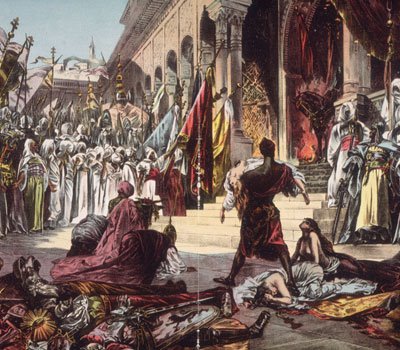
genghis-khan-murder-2

On of the people who was thought to have died in this massacre was Attar. At the time, he was said to be 101 years old.

The little we know of his life has been recorded as having been a chemist, a physician, a perfume maker and a Sufi– those who sought to live by a science whose objective is the ‘reparation of the heart and turning it away from all else but God’.

And as well as his ministry through herbal preparations and the study of essences that bring life, he was a prolific poet and mystic.

Time for some poetry…

Mysicism

The sun can only be seen by the light
of the sun. The more a man or woman knows,
The greater the bewilderment, the closer
to the sun, the more dazzled, until a point
is reached where one no longer is.

A mystic knows without knowledge, without
intuition or information, without contemplation
or description or revelation. Mystics
are not themselves. They do not exist
in selves. They move as they are moved,
talk as words come, see with sight
that enters their eyes. I met a woman
once and asked her where love had led her.
“Fool, there’s no destination to arrive at.
Loved one and lover and love are infinite.”

The Newborn

Muhammed spoke to his friends
about a newborn baby, “This child
may cry out in its helplessness,
but it doesn’t want to go back
to the darkness of the womb

And so it is with your soul
when it finally leaves the nest
and flies out into the sky
over the wide plain of a new life.
Your soul would not trade that freedom
for the warmth of where it was.

Let loving lead your soul.
Make it a place to retire to,
A kind of monastery cave, a retreat
for the deepest core of your being

Then build a road
from there to God

Let every action be in harmony with your soul
and its soul-place, but don’t parade
those doings down the street
on the end of a stick!

Keep quiet and secret with soul-work.
Don’t worry so much about your body.
God sewed that robe. Leave it as it is.

Be more deeply courageous.
Change your soul.”
Persian poetry 1- Sanai…

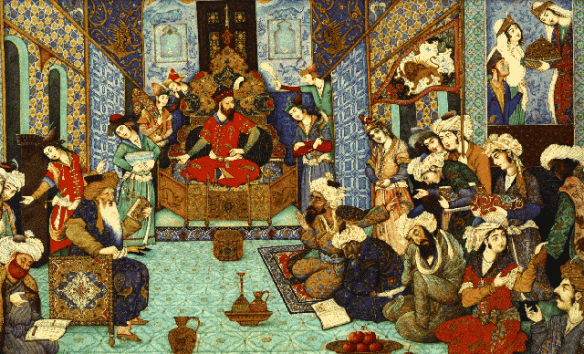
The court of Sultan Mahmud of Ghazna

I have been reading some Persian poetry.

My reason for doing this was simply because I knew nothing about Persian poetry- and in these times when the Western world is increasingly at war with most of the Eastern world, it seemed important to understand a little more the rich cultural subsoil that Middle Eastern Islamic civilisations grew within.

I post these bits and pieces like bit of a beautiful mosaic found in a river bed. I do not understand the whole picture- and never will, but I am starting to appreciate it some of its quality.

Beauty, humanity, truth, humour, a search for meaning and a longing for God.

And to encounter the culture through poetry seems to me right somehow. I suppose this is because I write poetry, but also I think this is because these poems are still alive. They have none of the dust of history.

The first poet I want to quote is Sanai.

We know little about him. He died around 1150, and was a subject of Bahramshah, one of the rulers of the Ghaznavids– whose empire covered much of the middle East- and was centred around Garzna, in what is now Afghanistan. He is thought to have been a court poet, who became dissatisfied with the shallow life of court and left to follow Hajj to Mecca.

So here are three poems of Sanai. Let them rest on you for a while-

Streaming (excerpt)

When the path ignites the soul,

there is no remaining in place

The foot touches the ground,

but not for long

The way where love tells its secret

Stays always in motion

And there is no you there, and no reason

The rider urges his horse to gallop

and so doing, throws himself

under the flying hooves

In love-unity there’s no old or new

Everything is nothing

God alone is

The puzzle

Someone who keeps aloof from suffering

is not a lover. I choose your love

above all else. As for wealth

if that comes, or goes, so be it.

Wealth and love inhabit seperate worlds.

But as long as you live here inside me

I can not say that I am suffering.

The time needed

Years are needed before the sun working on

a Yemini rock can make a bloodstone

Months must pass before cotton seed

can provide a seamless shroud

Days go by before a handful of wool

Becomes a Hater rope

Decades it takes a child

To change into a poet

And civilisations fall and are ploughed under

To grow a garden on the ruins

The true mystic

My Uncle Napoleon, and Iranian culture…

I recently confessed to an attempt to find a deeper understanding of Islamic cultures through reading literature.

The books I read were wonderful, but very much from a western perspective. I needed to adventure a bit further- and given that this was around the edges of bits of leisure time, I needed it to be reasonably digestible.

This evening, I watched two programmes on BBC 4 about Iran. One of them was about this book

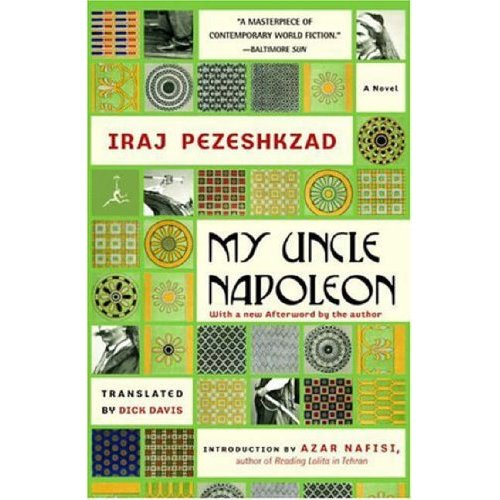
my uncle napoleon

This book (and this programme) deals with a different part of Iranian history- that we British people are very ignorant about- that is the occupation and manipulation of Iran as part of the power struggles first with Imperial Russia, and later as a way of ensuring the continued flow of oil to fuel our battleships. 4 separate invasions, and 100 years of political manipulation.

And we wonder why Iran today has no trust of western powers whatsoever?!

The second programme (also available on the i-player, here) follows a BBC foreign correspondent on a journey through his homeland- again Iran. It shows the beauty of the countryside, then richness of the culture, and the vibrant life of the people. It paints a picture of a country a million miles from the dark satanic oppressed place that we may have been led to understand. The film was almost certainly made under reporting restrictions, and does seem just a little too air brushed- almost like a tourist board film- but it is well worth watching.

And it reminded me that it was time I read some more Persian poetry- Rumi, Hafez and Saadi for example. 600 years of distilled beauty, spirituality and culture both alien, and yet so very familiar. The turning of seasons, and the preoccupations of love and and the approach of death…

Reading to understand the other…

This summer I have been reading some literature in an attempt to combine my leisure time with an understanding of Islamic cultures far removed from my own experience.

I am not sure I picked the right source material.

Firstly I read this book.

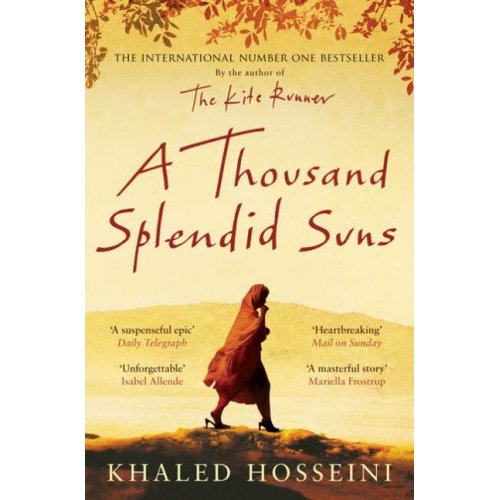
a thousand splendid suns

I enjoyed the Kite Runner previously, which dealt with a similar period in the history of Afghanistan- but from a very different perspective. This book is beautifully written, with characters that draw you in, and stories that make you sad and glad.

Next I read this book.

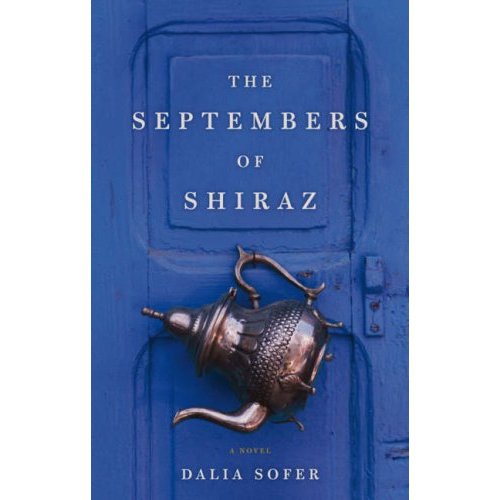
the septembers of shiraz

It tells the story of an Iranian family at the end of the Shah’s rule in Iran, and of the Islamic revolution, and the subsequent persecution of the countries rich elite.

Both tell their stories well. The cultures and traditions of their countries felt vibrant and real. I felt the loss of something wonderful as the stories described the rise of religious intolerance that swept away and suppressed older traditions.

Typified perhaps by the blowing up of the Buddhas of Bamyan.

Both engage with the circumstances that resulted in the rise to power of the Extremists- the involvement of foreign powers, the cycles of violence and civil war. The ungrace that hardens peoples hearts towards unyeilding doctrines and bitter prescriptions for their enforcement.

But I wonder a little about both of these novels- written by naturalised Americans, who arrived in the USA as refugees fleeing from homelands. Their novels reflected both their own personal history, and the dominant perspectives and ideologies of their chosen countries.

So the bad guys were really bad- and were mostly Islamic extremists.

And the survivors fled towards democracy, enlightenment and freedom- in the West.

Accepting that many have indeed made this journey, including the authors themselves, I still wonder at the easy distinctions being made. And how the market in the USA is hungry for these stories, but blind to others.

I can not help but think that there are other stories being told. And eventually we will hear them too- not necessarily contradictory ones, but rather ones that complete a picture. Lives lived facing a different direction. Thriving whilst others suffer.

Like we do.

Hosseini’s title comes from a poem by the 17th Century Persian poet Saib-e-Tabrizi. Read it and feel the humanity that flows too in the blood of the other. Hold in your mind the TV picture of broken and battered Kabul, under a cloud of dust thrown up by tank tracks…

Kabul

Ah! How beautiful is Kabul encircled by her arid mountains
And Rose, of the trails of thorns she envies
Her gusts of powdered soil, slightly sting my eyes
But I love her, for knowing and loving are born of this same dust

My song exhalts her dazzling tulips
And at the beauty of her trees, I blush
How sparkling the water flows from Pul-I Bastaan!
May Allah protect such beauty from the evil eye of man!

Khizr chose the path to Kabul in order to reach Paradise
For her mountains brought him close to the delights of heaven
From the fort with sprawling walls, A Dragon of protection
Each stone is there more precious than the treasure of Shayagan

Every street of Kabul is enthralling to the eye
Through the bazaars, caravans of Egypt pass
One could not count the moons that shimmer on her roofs
And the thousand splendid suns that hide behind her walls

Her laughter of mornings has the gaiety of flowers
Her nights of darkness, the reflections of lustrous hair
Her melodious nightingales, with passion sing their songs
Ardent tunes, as leaves enflamed, cascading from their throats

And I, I sing in the gardens of Jahanara, of Sharbara
And even the trumpets of heaven envy their green pastures

Greenbelt here we come…

Greenbelt

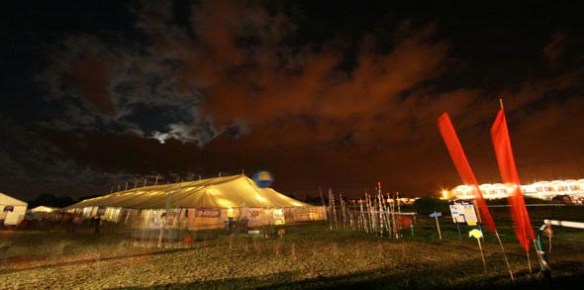
Our preparations for Greenbelt festival are skipping over into the inevitable last minute panics.

We have to spray some fabric and Gazebos with fire retardant solution- which would be fine if we could get hold of some! We ordered it, but it did not arrive. We now wait to see if it will come tomorrow, and then hope we can get it sprayed and dried in time.

I am driving down with my friend Nick on Thursday, so we can pitch our tent in a good place and get started in setting up some poetry banners around the site. We set up a little competition- The first 10 people who collect the titles of all 10 poems and brings them to our worship event will get a free book.

We hope to get along to the Tautoko network pre-Greenbelt gathering in the Gloucester Cathedral on Thursday evening- along with a lot of other Greenbelt contributors, and the weird and wonderful worship of Agents of the Future.

Michaela, and 5 others will be joining us on Friday. It will be great to meet up with old friends who will be there- Simon McGoo and Mark and Dee from Wales…

Aoradh are responsible for a worship slot in the New Forms Cafe at 1.00 PM on Saturday- please come along!

We are also putting up 10 banners with poetry based on the Ecclesiastes 3 passage on seasons/time. Some of them are from my last book.

I am also doing some reading from this book, and an interview at the Proost Unususal Suspects event, also in New forms, 10PM, Friday. Proost have produced some really cool publicity cards for the book, so if anyone fancies spreading a few around, let me know!

I was also asked to be part of a panel on the use of new liturgy, something which I declined as I felt very under qualified, and we will miss most of Monday, as we will need to be on the road back up to Scotland.

So- looking forward to it- hope to see you there.

Ah, that delicious first sight of a crisp new book…

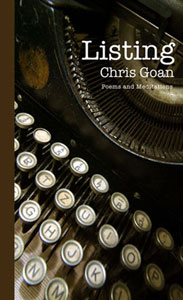
listingcover

I got a box full of my new book from Proost today- the first time I had seen the hard copy of ‘Listing.’ It is published in small (but beautifully formed!) ‘pocket’ size.

Holding a book you have worked on for so long is such a self indulgent, narcissistic pleasure. It must be sinful… like lingering lustful glances or too much chocolate.

I hope people will like it, and find themselves drawn towards God. Otherwise it is just about fragile ego. And mine certainly is fragile!

Religion as poem…

Came across this poem recently, by Catholic poet Les Murray-

Religions are poems. They concert
our daylight and dreaming mind, our
emotions, instinct, breath and native gesture
into the only whole thinking: poetry.
Nothing’s said till it’s dreamed out in words
and nothing’s true that figures in words only.
A poem, compared with an arrayed religion,
may be like a soldier’s one short marriage night
to die and live by. But that is a small religion.
Full religion is the large poem in loving repetition;
like any poem, it must be inexhaustible and complete
with turns where we ask Now why did the poet do that?
You can’t pray a lie, said Huckleberry Finn;
you can’t poe one either. It is the same mirror:
mobile, glancing, we call it poetry,
fixed centrally, we call it a religion,
and God is the poetry caught in any religion,
caught, not imprisoned. Caught as in a mirror
that he attracted, being in the world as poetry
is in the poem, a law against its closure.
There’ll always be religion around while there is poetry
or a lack of it. Both are given, and intermittent,
as the action of those birds – crested pigeon, rosella parrot –
who fly with wings shut, then beating, and again shut.

Not quite sure what I think of this, but liked the fact that it made me think!

poetry-t

The Epic of Gilgamesh and ancient scripture…

gilgamesh_louvre

I have been thinking a little about ancient times recently- so humour me while I scratch a familiar itch- that of the relationships between culture, history and the formation of faith through the interpretation of Scripture.

I heard some of the ancient poetry from the Epic of Gilgamesh read out on a TV programme recently. It was beautiful…

‘Gilgamesh, where are you hurrying to?
You will never find the life for which you are looking.
When the gods created man
they allotted to him death,
but life they retained in their own keeping.
As for you, Gilgamesh,
fill your belly with good things;
day and night, night and day, dance and be merry,
feast and rejoice.
Let your clothes be fresh,
bathe yourself in water,
cherish the little child that holds your hand,
and make your wife happy in your embrace;
for this too is the lot of man.’

But Gilgamesh said to Siduri, the young woman,
‘How can I be silent,
how can I rest,
when Enkidu whom I love is dust,
and I too shall die
and be laid in the earth for ever.’

One translation of the full text available here.

A summary of the text, and discussion about some of the themes is available here.

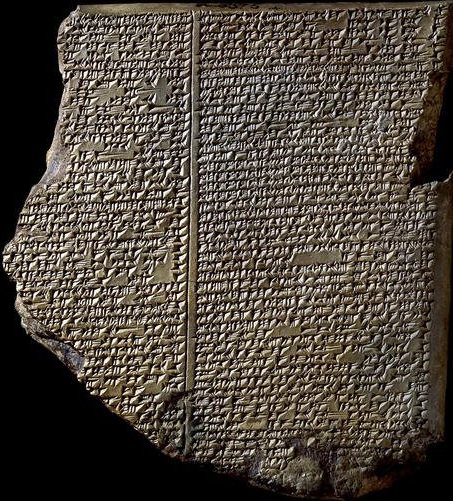
The Flood Tablet, relating part of the Epic of Gilgamesh -Nineveh 7th Century BC

I had heard of this ancient writing before, but knew little of it, so set off to find out more. It interested me for several reasons-

  1. As far as I can understand, this poetry is amongst the earliest literature known to have been written down, emerging from a little known civilisation that pre-existed the Ancient Assyrian and Babylonian empires- back to the earlier Sumerian peoples.  The poetry was held as significant to cultures for the next 3000 years, before being lost into history until tablets telling the story began to be unearthed in the 19th Century AD. The amazing endurance of the story, and it’s survival on tablets of stone is fascinating and intriguing.
  2. These civilisations occurred in the middle east, in the areas now known as Iraq and Iran, and the more understanding we have of middle eastern culture in this time of war and the ‘demonisation of the other’ the better.
  3. The Epic of Gilgamesh is a poetic recording that pre-exists the recording of the oral tradition that became the Hebrew Bible. There are many parallels between the creation stories in Genesis and those described in the Epic, as well as an account of a great flood. Clearly there are many differences too, but I find myself once again interested in the origins of Scripture- and its relationship with the culture and context that it was inspired within.
  4. There are also echoes of what appear to be perennial human pre-occupations- the origin and meaning of life, friendship, courage, and the approach of death. Consider again the poetry of Solomon from the book of Ecclesiastes- and compare this with the words from the Epic above…

7 Go, eat your food with gladness, and drink your wine with a joyful heart, for it is now that God favors what you do. 8 Always be clothed in white, and always anoint your head with oil. 9 Enjoy life with your wife, whom you love, all the days of this meaningless life that God has given you under the sun— all your meaningless days. For this is your lot in life and in your toilsome labor under the sun. 10 Whatever your hand finds to do, do it with all your might, for in the grave, [c] where you are going, there is neither working nor planning nor knowledge nor wisdom.

11 I have seen something else under the sun:
The race is not to the swift
or the battle to the strong,
nor does food come to the wise
or wealth to the brilliant
or favor to the learned;
but time and chance happen to them all.

12 Moreover, no man knows when his hour will come:
As fish are caught in a cruel net,
or birds are taken in a snare,
so men are trapped by evil times
that fall unexpectedly upon them.

(Ecclesiastes 9, NIV)

King-Solomon-Russian-icon

So the question on my mind, is whether this has any significance for how we Christians might engage with ancient Scripture, and in turn, encounter the Living God?

I have written some things before about my own struggles with these issues-  I asked a series of questions, which I tried to give my own incomplete answers to here.

But I find myself increasingly divorced from the way of understanding scripture that I grew up with in the left-of-centre-charismatic-evangelical-fundamentalist churches that gifted me with faith.

This is because the assumptions through which they appeared to approach scripture no longer make sense to me. They seem to include these-

  • The Bible is complete, sufficient, without error or contradiction, and was given to the Church complete as a gift from God.
  • Any challenge to the absolute authority of the Bible has to be resisted at all costs.
  • Any sources outside the Bible- be they writings of other early Christians, or the spirituality of other cultures- all these things are at best dangerous, or at worst, deceptions of the devil.
  • Appreciation and interest of history is highly selective, and should be focussed on the agenda and issues emerging in the 200 years following the Reformation.

I now find myself drawn into new areas of adventure- based on a new set of questions and assumptions. These are not my own, but rather ones that have ‘emerged’ into my experience of faith through a process of re-engagement. They include some of these things-

  • We stand on the shoulders of many other people of faith, who have been drawn by God into incomplete but inspired understandings.
  • Some of this was written down, and some of this writing survived and endured.
  • Over the period of one and a half thousand years, and after much deliberation, some this has been gathered together to form what we know as the Bible.
  • The original meaning of some of these words is lost to us.
  • But the words are still an amazing gift to us, as the Holy Spirit makes them sing again in our context.
  • Let us never pretend to understand fully or finally, or to restrict God to our narrow context or viewpoint.
  • Our ultimate engagement with the God is through the person of Jesus, and the promptings of the Holy Spirit.
  • But we too will fall short.
  • And others  that follow us will need to find their own adventure.

God bless them as they write their own Epics.