
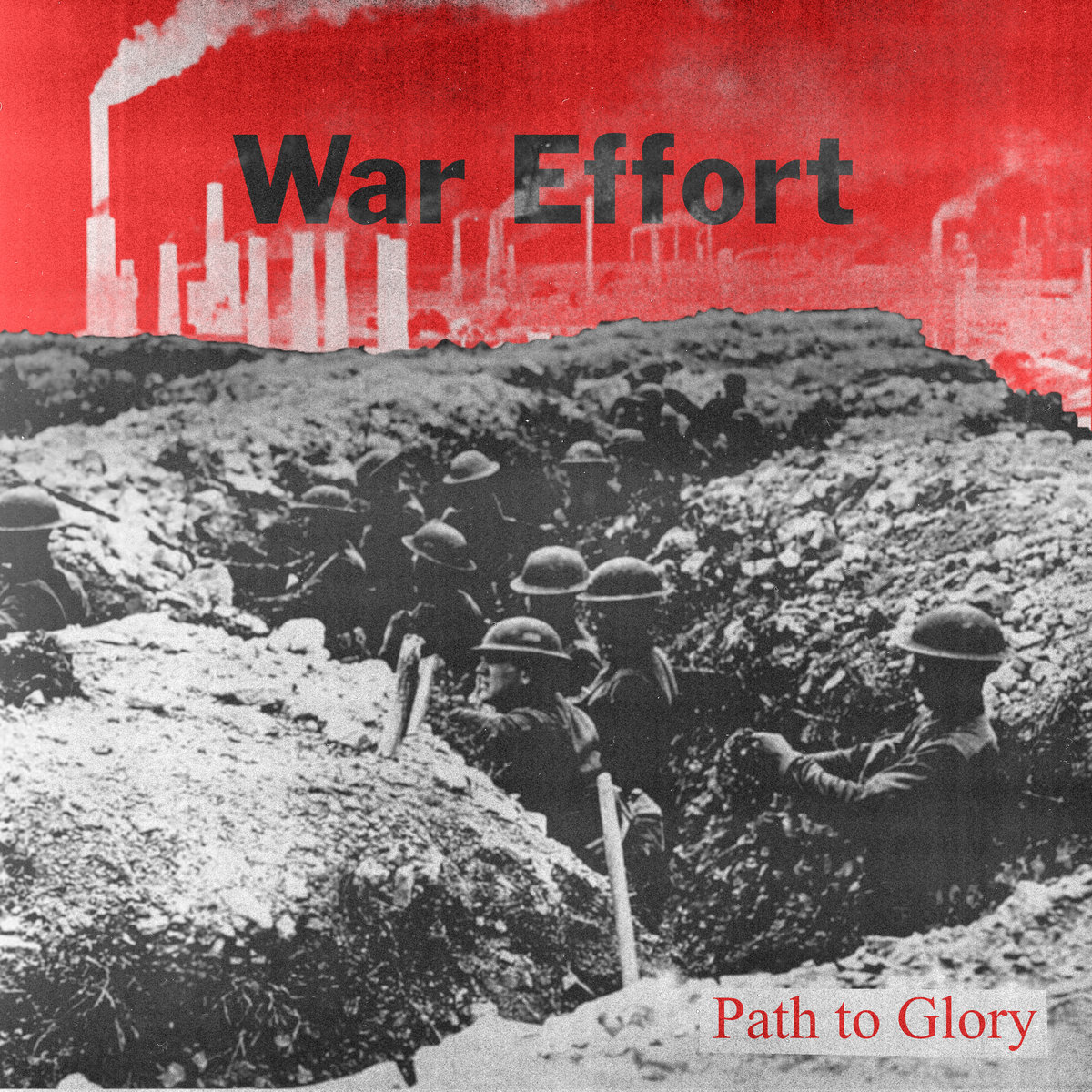
War during peace

There is an almost uncontested view in our political and media establishment at the moment in relation to our war machines. It seems we have too few of them and the ones we have are too old and not smart enough. The Defence Investment Plan (DIP), which promised a further £15 billion for the military, is not nearly enough, it seems. We need much more.

Those pesky Russians. The distant Chinese. Even the Argentinians or the faceless feared other that we tend to call ‘Muslims’. You will easily find ‘experts’ from all sorts of think tanks with impressive accents who will describe all sorts of ‘strategic threats’.

The logic here is inescapable because nothing unites like a common enemy even if we have to make one up. It is an easy sell for a nation obsessed with Churchill and the Hitler. There are echoes of an old Britain here – after all the awfulness of our own Empire are airbrushed out in sepia – in which the plucky under-bulldog fights heroically against evil others in the cause of freedom and justice.

What are we as a nation, if we are no longer this? Perhaps we never really were- the complex arc of 20th C history was always messier and more nuanced.

Part of the problem is that the persistent mythology of those bluebirds over the sandbagged cliffs of Dover are remarkably useful to a certain kind of politician and a certain kind of politics. Faced with massive long term problems that demand a radical break with business as normal, instead hey are doubling down on the mythology. Time to raise the colours, to patrol the border and stockpile Spitfires.

The Iona Community (of which I am a new member) has just signed this letter urging the UK to rethink its spending on arms;

Signatories including CAFOD, Green New Deal Rising and the Iona Community warn against skewing funding away from other forms of international engagement.

The shift represents a “staggering shift” of resources from productive to destructive ends, at a time of armed conflict, inequality and climate breakdown.

Development, diplomacy, peacebuilding, and conflict and atrocity prevention are all essential and underfunded tools in building a safer world, they say.

Signatories say:

  • The UK’s military spending is on track to reach its highest level since the Second World War
  • The ratio of military to development spending will soon reach almost nine-to-one, up from below four-to-one six years ago.
  • The UK’s nuclear weapons programme now exceeds Russia’s spending and is the third most expensive in the world.

I live on the Clyde estuary, watching the dark shadows of our nuclear submarines head out with their cargo of mass destruction.

There is also a new base up around the corner from which our two massive new aircraft carriers are supplied and re-armed. These ships – the biggest ever to sail under the white ensign – emit a low rumble, which is sensed more than heard as it passes the trees at the end of our garden.

It’s enough to drive you to poetry.


HMS Queen Elizabeth

Cloaked behind oak
The carrier makes passage out to sea
Salt air sucks and pulses to sound
Part rumble, part drone
Sound like shadow
Like that mythological Death Star

What games we played
All those war stories we gloried in
Even now I am not immune from the allure
Of a big boy’s war toy, or
The easy separation of hero
From villain…

…as if guns every made anything better.
As if bombs solved problems
As if massive ships full of killing machines
Represented good value for money
As if the stinking corpse of Empire
Could yet resuscitate
Persian poetry 2- Attar

Gulab_Jaman_spices

On my continuing mission to find out a little more about Islamic culture, I am have been reading the Persian poet known as Attar.

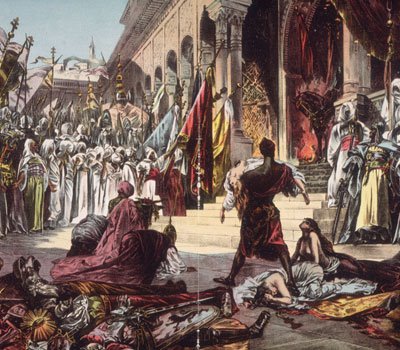
To imagine the world of Attar, we have to make a journey back around 800 years, to a far corner of what is now Iran, and to the ancient City of Nishapur, standing astride the silk road that connected the Mediterranean tradesman with the mystery and spices of the far East. In the year 1000CE, it was among the 10 largest cities on earth. After the husband of Genghis Khan‘s daughter was killed at Nishapur in 1221, she ordered the death of all in the city (~1.7 million), and the skulls of men, women, and children were piled in up in high pyramids as a warning to others, and a visible sign of the grief of a despot.

genghis-khan-murder-2

On of the people who was thought to have died in this massacre was Attar. At the time, he was said to be 101 years old.

The little we know of his life has been recorded as having been a chemist, a physician, a perfume maker and a Sufi– those who sought to live by a science whose objective is the ‘reparation of the heart and turning it away from all else but God’.

And as well as his ministry through herbal preparations and the study of essences that bring life, he was a prolific poet and mystic.

Time for some poetry…

Mysicism

The sun can only be seen by the light
of the sun. The more a man or woman knows,
The greater the bewilderment, the closer
to the sun, the more dazzled, until a point
is reached where one no longer is.

A mystic knows without knowledge, without
intuition or information, without contemplation
or description or revelation. Mystics
are not themselves. They do not exist
in selves. They move as they are moved,
talk as words come, see with sight
that enters their eyes. I met a woman
once and asked her where love had led her.
“Fool, there’s no destination to arrive at.
Loved one and lover and love are infinite.”

The Newborn

Muhammed spoke to his friends
about a newborn baby, “This child
may cry out in its helplessness,
but it doesn’t want to go back
to the darkness of the womb

And so it is with your soul
when it finally leaves the nest
and flies out into the sky
over the wide plain of a new life.
Your soul would not trade that freedom
for the warmth of where it was.

Let loving lead your soul.
Make it a place to retire to,
A kind of monastery cave, a retreat
for the deepest core of your being

Then build a road
from there to God

Let every action be in harmony with your soul
and its soul-place, but don’t parade
those doings down the street
on the end of a stick!

Keep quiet and secret with soul-work.
Don’t worry so much about your body.
God sewed that robe. Leave it as it is.

Be more deeply courageous.
Change your soul.”

My Uncle Napoleon, and Iranian culture…

I recently confessed to an attempt to find a deeper understanding of Islamic cultures through reading literature.

The books I read were wonderful, but very much from a western perspective. I needed to adventure a bit further- and given that this was around the edges of bits of leisure time, I needed it to be reasonably digestible.

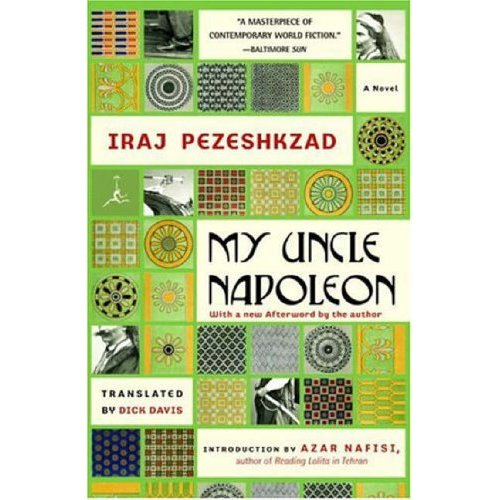
This evening, I watched two programmes on BBC 4 about Iran. One of them was about this book

my uncle napoleon

This book (and this programme) deals with a different part of Iranian history- that we British people are very ignorant about- that is the occupation and manipulation of Iran as part of the power struggles first with Imperial Russia, and later as a way of ensuring the continued flow of oil to fuel our battleships. 4 separate invasions, and 100 years of political manipulation.

And we wonder why Iran today has no trust of western powers whatsoever?!

The second programme (also available on the i-player, here) follows a BBC foreign correspondent on a journey through his homeland- again Iran. It shows the beauty of the countryside, then richness of the culture, and the vibrant life of the people. It paints a picture of a country a million miles from the dark satanic oppressed place that we may have been led to understand. The film was almost certainly made under reporting restrictions, and does seem just a little too air brushed- almost like a tourist board film- but it is well worth watching.

And it reminded me that it was time I read some more Persian poetry- Rumi, Hafez and Saadi for example. 600 years of distilled beauty, spirituality and culture both alien, and yet so very familiar. The turning of seasons, and the preoccupations of love and and the approach of death…