Clubbable…

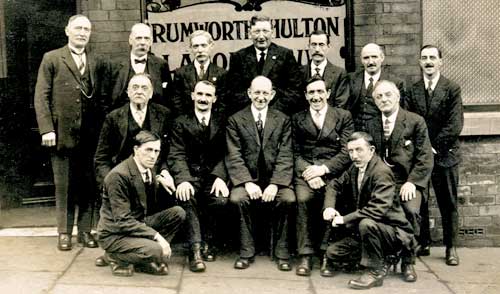
I like this word- it was coined (I think) by one of our friends- to sum up that formal-collective thing that you will find in churches and all other places managed by committee. It is used as an adjective- as in “I am not clubbable.”

And in many ways, I am not. I am fine with ritual, but hate stuffy formality. I love a good conversation, but find making small talk very wearing. I love to meet with my friends and dream big dreams but once these things become filtered through bureaucracy I have no interest. I think we are at our very best in community, but often find communing hard- it can strip you bear.

I have found the churchy kind of clubs to be particularly challenging- as all of the above mixes in with a certain kind of external ‘righteousness’ and ‘correct doctrine’ and ‘spiritual maturity’. This kind of rather intense clubbability can suck you dry- it can become all consuming in its demands of time and energy. It becomes a vortex into which life hoovered up to the exclusion of anything outside its gravitational pull.

I had had enough of clubs. I wanted to freestyle for a while- to adventure in company, not just to retire to the bothy and sing songs of the adventure of others.

Strange then that I now find myself a member (or about the become a member) of two local clubs- cricket, and (as of tonight) bee keeping.

I am sure that both will have their challenges- relationships and internal tensions- but the interesting thing about both, is the richness that they bring into my life. Both seem to give me more than I give out- they facilitate, encourage and enable. Members of the clubs seem to delight in sharing knowledge and offering advice- not so we might be just like them, but rather so that something that they are passionate about might have a life beyond.

Both are about sharing an activity- having a praxis in common. They are much less concerned with theory and doctrine. But that is not to say that theory and doctrine are not there or thereabouts- rather that these things are downplayed, and absorbed through contact with wider example.

So it is soon obvious that playing cricket is all about a certain kind of sportsmanship- some things are simply just not done. If you are out, you are gracious in defeat. You look after the inexperienced players and when competition becomes too heated, someone has a quiet word.

And through beekeeping, it seems that we learn patience. This is no overnight process.

Hmmmm. Perhaps I am clubbable after all.

‘Save me’- religious reality TV…

Saw this the other day- still not sure if it is a hoax.

Volunteers might have just missed the deadline, but you never know- drop him a line…

The bloke behind all this is Jim Henderson (no not that puppet bloke- his name was Henson.) I liked what he claims as his ‘mission’- 

The Three Practices of Otherlyness (the Way of Jesus.)

• Be unusually interested in others

• Stay in the room with difference

• Refuse to compare my best with your worst

Quite how this will work out on TV remains to be seen. Not sure it will ever air on British TV anyway- if it comes to a screen over there- let me know!

Which does bring to me again the question of the Great Commission for we followers of Jesus. Most of the Christians I know have given up on selling religious product- in fact, perhaps we have gone in the opposite direction entirely. Refreshing then, to read this via Jim Henderson’s blog- 

The old paradigm of presenting a case and demanding a verdict just isn’t working anymore (and nobody is doing it anyway). So what DOES work? And how can we get more people engaged with the process of spreading the Gospel?
Here’s what I’m banking on these days: Listening. Hearing their story. Finding out what God has been up to in their life and (gently) calling their attention to it. Becoming a safe person for others to share their doubts, fears, anger and distress with regarding life. And then, in that kind of context, being asked to share YOUR story (which is simply what Christ has done in your life), and in that context HIS story (as simply as you can). An invitation to follow Jesus may or may not fit that initial conversation. But we should be ready for it just in case, I think.
So, I am suggesting we give up the obsession with making converts and start getting serious about calling others to join us as disciples (students) of Christ. That process is messy, hard to “count”, and unpredictable. But I think it’s more like what Jesus was asking us to do in the “Great Commission”. So the short answer to your question is, “Quit doing that. Make disciples, not just converts.”
Yes, I think I can go along with that!

Blog the Koran day- on women…

To commemorate the 10th anniversary of the terror attack on the World Trade Centre, I am joining Andrew Jones (aka TallSkinnyKiwi) in blogging a passage from the Koran.

I do this not in any way to disrespect the memory of all those people who died as the towers burned then collapsed but rather to open up a window through which we might seek to understand one another better.

Since 2001, America and her allies (above all, my own government) have unleashed war on whole nations, kidnapped, unlawfully imprisoned, tortured in reaction to the violence of a few Islamic terrorists. In doing so, they have created a culture of fear and revenge. To those who follow an Islamic faith all this seems like another unholy crusade. The end result is a classic feedback loop- one action creates a reaction which in turn creates a reaction and so on.

For many in the west, every Muslim is another potential suicide bomber and the Koran is a ticking roadside IED.

Except most of us have never read the Koran; we certainly have not  tested it through scholarly engagement. Perhaps most of us never will, but on the terrible anniversary of the attack on the twin towers, being open to engagement with the hopes, dreams and ambitions of the ‘other’ has never been so important.

I have been doing a little reading of An-Nisa, the 4th chapter of the Koran- dealing with the issue of women- their rights and obligations, outlining the requirements of modesty, including the verse traditionally interpreted to require wearing of the hijab. I encounter these things as a white Christian male with little real insight into the culture or theological issues, or the real experience of women across the Muslim world.

The way some parts of the Islamic world regard women is one of those things that we in the West find most difficult to understand or tolerate. It appears to amount to God-sponsored and state-enforced oppression, particularly when these understandings are allied to fundamentalist interpretations of the text.

(We Christians are familiar with these kind of interpretations of course- we still have our own voices calling for hat wearing seen-but-not-heard child bearers who know their correct place of subservience.)

It might be of interest to remember that according to tradition, Muhammad was married either 11 or 13 times. However, his first marriage lasted 25 years- he married his employer, the 40-year-old merchant Khadijah. It was this marriage that appeared to release Muhammad to follow his calling- it was foundational to the development of an entire faith.

This marriage destroys any idea of submissive, invisible, powerless women. Rather, the very beginning of Muhammad’s ministry was made possible by his allegiance to a wealthy, independent female merchant. In many ways, the writings in the Koran might be understood as a means of protecting and enhancing the freedom and rights of women within the cultural context that they were written. Does this sound familiar to those of us used to trying to grapple with the writings of Paul in the Bible?

Even accepting this, there remains the question of what might constitute freedom in terms of gender relationships NOW. There was all the fuss recently about the (scandalous) decision of the French to ban the wearing of the Hijab in public. I think that ultimately, these are not primarily theological questions, rather they are cultural-political ones.

These verses are my portion from the Koran-

“Men are the protectors and maintainers of women, because Allah has given the one more (strength) than the other, and because they support them from their means. Therefore the righteous women are devoutly obedient, and guard in (the husband’s) absence what Allah would have them guard. As to those women on whose part ye fear disloyalty and ill-conduct, admonish them (first), (Next), refuse to share their beds, (And last) beat them (lightly) (leave them [3]): ; but if they return to obedience, seek not against them Means (of annoyance): For Allah is Most High, great (above you all).”

These verses are troubling and disturbing to our ears. If we read them with no understanding of the context that is, or the stories of the life of the man who wrote the words.

Holy words are encountered through the lens of faith used to examine them with. Conservative Islamic scholars will clearly have a very different understanding than liberal Muslims, or Feminist Muslims. From a human rights perspective, we might hope that these latter voices are strengthened, but this is a debate that we are on the outside of and ought to be cautious for that.

What we should avoid are black and white conclusions filtered through prejudice. It is easy to condemn all of Islamic teaching based on a cartoon of the Taliban. Just as it is easy to dismiss all Christians as fraudulent tricksters based on Jimmy Swaggart. Stereotypes can not survive encounters with real flesh and blood.

Only then might we seek to protest injustice wherever we encounter it- although perhaps we should always start with our own stuff before leaning into others.

I think I will finish be quoting a poem by and unknown author, relating to freedom. It is a poem which seems to be well known in the Moslem world. I quote it because it seems to me to ask some interesting questions about freedom- because we in the West worship our own version of freedom- or some would say the illusion of freedom. We enshrine it in all our philosophies- our politics, our economics, our gender relations.

‘Freedom’ is something we will kill others for, and send our young soldiers to die for. Our freedom is something we would enslave others to preserve.

What does ‘freedom’ mean?
Does the eagle want to swim in the sea,
Restricted by the sky?
Does the fish want to dance on the wind,
Not enough river to explore?
Yet the sky is freedom for the bird
but death for the fish,
The sea is wide for the fish
but will engulf the bird.
We ask for freedom but freedom to do what?
We can only express our nature as it was created.
The prayer mat of the earth is freedom,
freedom from slavery to other than the One,
Who offers an shoreless ocean of love to swim in
and a horizon that extends to the next life,
Yet we chose the prison and call it freedom.

Julian of Norwich was a gardener then?

At least it would seem so according to todays minimergent meditation-

Live it

Be a gardener.

Dig a ditch,

toil and sweat,

and turn the earth upside down

and seek the deepness

and water the plants in time.

Continue this labor

and make sweet floods to run

and noble and abundant fruits

to spring.

Take this food and drink

and carry it to God

as your true worship.


— Julian of Norwich, 

(c. 8 November 1342 – c. 1416)


Class…

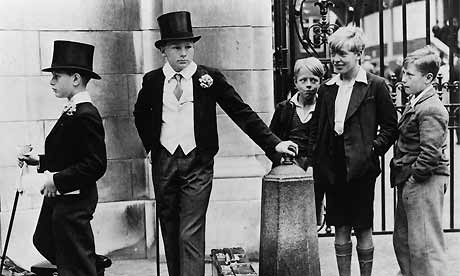
I have been thinking about social class. This was triggered in part because of listening to Polly Toynbee’s programme on Radio 4, ‘The Class Ceiling’  This was in two parts, and examining some of the myths and enduring realities of social class, and social mobility, and asking what social class means now.

It was an old issue for me, as a former student of social policy. For 40 years since the second world war, social class was the central concept of British social policies. After the war, even the Conservative party had to grapple with the fact that the working classes were no longer prepared to be passive fodder for the industrial machines that produced wealth for a ruling elite. There was the shadow of communist revolution hanging over us all of course, which always tends to focus the altruism of the rich, but it was also a time of idealism when we really believed that we could make things better.

The end result was a kind of political and economic hegemony- accreted through a combination of Keynesian economic stimulus, more or less progressive taxation structures, health care free at the point of delivery and education systems that sought to operate as a kind of social engineering- measuring success by the degree to which working class kids were able to attain similar educational success as those whose families came from well off backgrounds.

Whether any of this worked is a real debate- was the real hope for a more just and egalitarian society ever really realised?

Education is a case in point- we started out with the tripartite system- Grammar, Secondary Modern and Technical schools. The idea was that children could be tested aged 11, and them streamed into the kind of education that would get the best out of them. Except, kids from disadvantaged backgrounds continued to do really badly.

So we tried Comprehensive schools- educating all kids together, regardless of ability. That did little for disadvantaged kids too.

Finally we tried a few experiments with ‘Community Schools’ (one of which was my own) where we tried to engage the whole of the community in the education of our schools. They did not deliver different results either.

Education cannot compensate for society. The deep seated political, social, psychological and economic forces that tended to perpetuate the class system proved remarkably difficult to shift. And being ‘poor’ in a rich western society means that your disadvantages are stark when compared with the averages.

However, in many ways, I am one of the beneficiaries of this countries attempts towards social justice. I grew up the child of a single mother, living off state benefits. But I did well enough at school to be offered a place at University, and the state funded my place there, and paid me a grant to allow me to live whilst studying. I then became a middle class professional social worker.

It all began to break apart in the 1980’s. Thatcher shattered the bipartite cross party attempts to support social justice. Greed was good. Let the wealthy chase money, because this will benefit the whole of society in the form of ‘trickle down’. Return to ‘traditional values’ (whatever they are) flog the delinquents and smash the unions of the great unwashed. Sell off the council housing stock, as the Englishman’s (and Scottishman’s) home is his castle and we are all middle class now.

What is interesting, and perhaps worrying, is that according to the programme mentioned above, since these times (and despite 14 years of a so called Labour government) the gap between the poorest and richest people in our society is about the same as was the case in Victorian Britain.

You are less likely to attend university if your parents did not than 30 years ago.

You are less likely to own your own home if your parents did than 30 years ago.

We are far less likely to see Cabinet Ministers who came from council estates (or whatever has replaced these) than 10 years ago.

If your parent are not ‘in the know’- steering you towards the right experience, via contacts and internships- then you are far less likely to succeed.

Does any of this matter? Well I think that aspiring towards social justice- to a society where people’s measure of success is not determined by their parents social standing- is a good thing. It was one of the things that led me into social work- the thought that it was possible to make a difference. Social work without ideology is- administration.

The fact that at present our society is becoming more unequal- the rich are richer than ever, and those without are increasingly shut out of the opportunities that are available to those who already hold all the cards- has to be of concern to us all.

However, as I look at this now, my feelings are mixed. Despite all our efforts, we did not achieve an egalitarian society. Perhaps there has never been one. For everyone who moves up, someone else moves down.

And how are we measuring this success? We use the currency of our cultural addictions- houses, shiny cars, lifestyle choices, disposable income, consumer power. All those things that got us into this mess in the first place, and we hold onto like a drunkard to a gin bottle. We know this thing is not sustainable, nor is it making us healthy or happy or fulfilled- but it is so hard to shake ourselves loose…

Jesus knew this- I think this was the point of this ‘Camels through the eyes of needles’ point.

So, do I want to see a more equal society? Yes, absolutely. I think it should shame us to think that we live alongside an underclass of people whose offspring are condemned to some kind of broken ground hog day. And when we have riots, to talk of people as ‘ferral’, less than human. We should set ourselves to challenging this and seeking to bring grace- wherever we can.

Because the most beautiful expression of the Christian faith is still to be found in the gutter, not in any Cathedral. Redemption is not just an abstract thing to be encountered when we die- it is also an everyday miracle to be loved into being.

But perhaps this is not the whole story of what we aspire to- to live as counter-cultural critical participants in our lovely but broken world?

Perhaps it might mean seeking to apply a different kind of measure to our worth. Not an economic one, but one based on simpler and older classifications- shared lives, including the outsider, belonging to one another, generosity to the stranger and good husbandry of the earth we are wedded to.

In this we are not seeking to be social climbers but rather to be becoming the beloved of God.

Buzzzz…

I am thinking of keeping bees.

Just a couple of hives. 30,000 bees in each. Gathering, collecting, sowing sweetness.

The trouble is, I am a little scared of bees.

I am away to a session at the local association soon, and have been doing some research. I came across this-

Aoradh worship event materials…

A few folk asked about the use we put to images and other materials from our GB worship event.

I have uploaded them to Google docs and so they should be available here- https://docs.google.com/?tab=oo&authuser=0#query/vr?view=0&hidden=1&visibility=0

I have included a script and seperate versions of a couple of the poems used. The powerpoint doc was too big, but if anyone is interested, drop me a line and we will find a way!

Below are some of the slides of houses, which we displayed with the house beatitudes added.

This slideshow requires JavaScript.

Thomas Merton on travelling…

Courtesy of minimergent-

In one sense we are always traveling, and traveling as if we did not know where we were going.  In another sense we have already arrived.  We cannot arrive at the perfect possession of God in this life, and that is why we are traveling and in darkness.  But we already possess Him by grace, and therefore, in that sense, we have arrived and are dwelling in the light.  But oh! How far have I to go to find You in Whom I have already arrived!

Thomas Merton

The Seven Storey Mountain

The houses of the Kingdom…

Been doing more Greenbelt thinking- it is only a few days away after all! If you are going to the festival, Aoradh’s worship slot in the Worship Collective (Used to be called New Forms Cafe) is first up- 7.00pm on Friday.

The GB theme this year is ‘dreams of home’, and we have used this to consider something of the contrast between our house-obsessed culture, and the deeper things of home that we long for- resulting for most of us in a kind of yearning, that might be called ‘homesickness’.

For many Christians, this impulse seems to have resulted in a deliberate focus on ‘heaven’- as in some place that we go to when we die. In doing this, the danger is that we enter into that old dual thinking trap- we split into sacred/profane, temporary/eternal. What seems to have happened at times is that our religion became an escape pod from this doomed planet.

This is not the way of Jesus.

How might our homes reflect this then?

I turn once more to the Jesus manifesto from Matthew chapter 5…


Beatitudes for houses


Blessed is the house of the poor in spirit (for this home belongs to theKingdomofHeaven.)


Blessed is the house of those who mourn (for their homes will be places of comfort.)


Blessed is the house of the meek (For their house is bigger than the whole earth.)


Blessed is the house of those who long for righteousness (for their homes will be pregnant with grace.)


Blessed are houses full of mercy (for love will rest in them.)


Blessed are the house of the pure in heart (for God will be ever present.)


Blessed are the houses of the peacemakers (The sons and daughters of the Living God.)


Blessed are the houses that are broken because of Jesus. (The Kingdom of heaven is no earthly insurance policy.)