Lent 5…

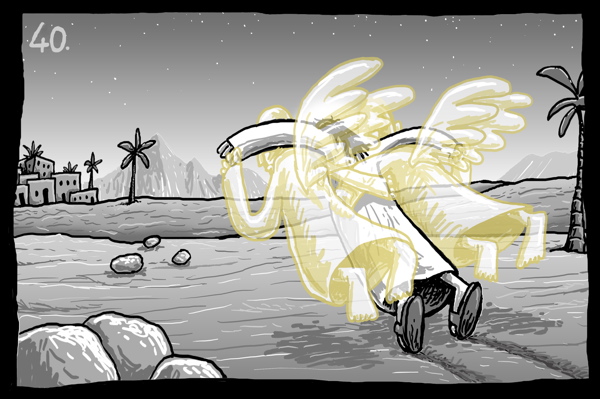
After a time, the desert seemed so big, and he, so small.

A panic rose in him. It clutched him like a hand at his throat


Who am I?

What am I?

What terrible road lies before me?

Father- my body is weak

I am a drop of water

On a rock

Under the hot desert sun

Soon I will be gone.


But still he walked- still he followed…

That voice.


New Monasticism podcast…

It is snowing here!

So my plans to go and work in the garden have been thwarted, and I am drinking tea and listening to podcasts. It’s a hard life.

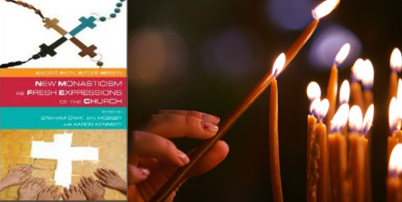
But I came across something that I think is really important- a discussion at the London Centre of Spirituality about New Monasticism and Fresh Expressions of Church.

Bishop Graham Cray goes as far to describe New Monsasticism as a ‘New Wave of the Spirit.’ If he is right, then these small experimental groupings have a deeper relevance for the whole of church.

The discussion has a clear resonance for me, and my small community- Aoradh. Like most small groups, we ebb and flow, then ebb again. The energy we find as a group is easily drained by external and internal forces, and the need to seek renewal within practice becomes very real and urgent.

Strong themes that emerged from this podcast are perhaps those which most reflect our own situation-

  • Rule, order, seriousness
  • Spirituality allied with action
  • Courage, challenge
  • The pain/joy of community
  • Incarnation- being deliberately present, not removed.
  • Spiritual direction
  • Mission- rediscovering what this is about for us
  • Thanks to Moot for making this available, as I feel the need to rediscover a passion for what I do- to set my face in the Wind of the Spirit again…

    Lent 4…

    As he walked he began to leave something of himself behind. He felt the skin of civilisation being burned away by the sun…


    Driven away by the wild animals of the wilderness.


    But with the rhythm of every step there came this incredible music… singing to him


    It’s your time…. And mine.


    Lengthening…

    … is the English language root of the word Lent.

    40 days

    40 days of rain to flood the earth in Genesis

    40 years for Israel to wander the desert

    40 days of hunger for Moses as he waited for the law of God on Sinai

    40 days for Jesus to wander and fast in the desert as preparation for 4 years

    And for us- tomorrow we feast on pancakes, as our own 40 days begin- then our Lenten journey towards Easter begins, when Christians traditionally make preparation for remembering and celebrating the death and life of Jesus through prayer, repentance, serving others or self denial/fasting.

    To mark the Lent journey on this blog, I am going to use a daily excerpt from ’40’- a collection of images by Si Smith and my words- available from Proost as a book, download or movie.

    We in Aoradh have used it several times as a worship installation, but never as a daily Lent meditation.

    I do not usually fast during Lent- observance of such things were not a big part of the Evangelical tradition I grew out of- too ‘Catholic’ probably. But this our family have discussed finding something to forgo as part of our celebration of Lent.

    Emily suggested meat (we are vegetarian)

    William suggested fruit and veg, as this would leave chocolate and chips- and so all the 10 year old food groups are covered.

    I am not sure that they quite get it…

    A life of immersion…

    I loved this-

    Jacqueline Novogratz TED speech, discussing her experience of people who have immersed themselves in a cause, a community, a passion for justice.

    How I wish this for my kids, and for the life I have left in me.

    The legacy we leave should mean more than the fact that we achieve a certain insecure suburban comfort.

    So when I look at my beautiful daughter, and see the pull of peer pressure towards the destructive things that each generation lays on its young people, I have this longing to see her catch a glimpse of how short, how fragile, and yet how glorious this life is.

    Immerse yourselves in the sea of humanity my love. And swim well, in the company of the weak, so that together we might be strong.

    Rob Bell’s upcoming book…

    Rob Bell’s new book is already cooking up a storm– and it is not out yet.

    It seems he is being accused of heresy.

    Must read it.

    Although I can’t help but feel just a little bit cynical about the fact that all this controversy will likely make the book a publishing phenomenon- which will certainly make his publishers very happy.

    Twitter is going mad about it all apparently.

    Although controversy as an end in itself is pretty pointless, some times perhaps it has to be confronted because the issues need to be cracked open by people who are prepared to say uncomfortable things. The book deals with an issue that feels absolutely of this time- right now. That is how we understand heaven and hell- the subject of a discussion in my small group as recently as last night.

    I see that Rob Bell is at Greenbelt this year- I hope I get to hear him, if he survives the lynch mobs…

    .
    Vodpod videos no longer available.

    “Why do men no longer go to church?”

    ‘Beyond Belief’ on radio 4 asked this question today, quoting statistics that would suggest that 35% of the male members of congregations have stopped attending in the last 10 years. It is well worth a listen – here.

    And as I confessed in my most recent post- I am one of them- at least as far as Sunday attendance at traditional church services goes.

    This despite the continued male-domination of the religious machine, and the historic misogynistic flavour of many of our religious traditions (at odds with the way Jesus turned the tables on gender stereotypes.)

    The questions I have often heard asked are-

    What is about church that alienates men- even more so than women?

    What is it about male spirituality that is no longer catered for within church?

    How are healthy, holy versions of masculinity affirmed and modeled within church?

    The spirituality of Jesus and his band of (male) disciples was one that tended to use words like these-

    Risk taking,courage, self sacrifice, togetherness, adventure, mission, journey, loyalty, faithfulness in the long haul, friendship. ‘Taking a prophetic stance in order to change the world.’

    The stories of the new men of the New Kingdom are full of tales of men fishing together. Learning and debating on the road. Living out practical God stuff in the presence of real human tragedy and ecstasy. The shadow of death and love of life in the middle of dangerousness.

    What people like me have been forced to acknowledge is that our experience of church is often not like this at all.

    We seem to have reduced spiritual practice to a very narrow band- as someone said on the programme- ‘Everything fixed by reading the Bible more and praying more.’ The problem is above all a moral one, and the answer to the problem easily results in  living more narrow, less colourful lives- less connected, less rounded, less real.

    .

    So- what is the answer?

    There were stories of wilderness retreats on the programme, which is something we have been experimenting with for a few years too (here and here for example.) Dorothy recently sent me some information about a course being run at The Bield doing similar things too- along the lines of the Richard Rohr ‘Rites of Passage’ material.

    The chance for us to go off on these kind of defined pilgrimages can be wonderful.

    I have a mixed feeling about  male-only courses though. Some of this may relate to my own lack of clarity over what it means to be ‘masculine’- and what of my masculinity is praise worthy, positive and to be preserved.

    I also am slightly suspicious of some of the language- the ‘warrior’ stuff, and the idea that at the heart of every man beats the heart of a hunter. I am not sure I ever want to fight or kill anything or any one- even in metaphor.

    Richard Rohr describes his encounters with groups of nuclear scientists like this- “They don’t have a language to talk about faith.  They can’t discuss things, the chaplain says, unless they are objectified and given a law, order and structure.  But the language of inner states, inner movements, inner awareness, and inner consciousness is foreign to them.” I know men who are just like this- and many others who are entirely UNLIKE this.

    I also strongly feel that male spirituality is substantively just the same as any other kind of spirituality. And I am not convinced that the answer to men leaving church is just to make what we already do more ‘butch’- tone down the love stuff and make it all less touchy-feely. As if women are not leaving church too.

    Faith without works is dead- but ‘works’ without an inner awareness will almost always lead to damage- both to our self and to others. We need to be active and vital in how we live lives, but we also need to discover those soft supposedly feminine attributes and stop pretending that we can live like stones.

    a final thought- I have come to believe that the obsession with getting men (and women) to come to church is entirely the wrong emphasis- rather we need to discover new/old ways to take church to them.

    New/old ways to live out the mission of God in our context, and to learn to share this in community.

    New/old ways to live authentic real lives.

    And at the end of each day, new/old jokes to share around a fireside.



    “The long failure of the enlightenment project”

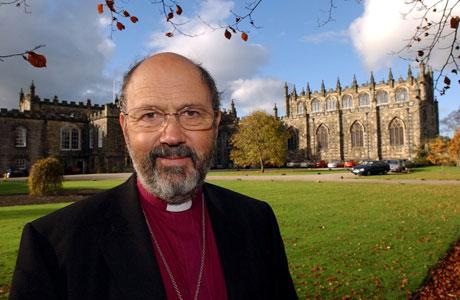
    One of my heroes was interviewed on radio 4 this morning- Bishop Tom Wright. You can listen again in this link-

    Tom Wright on Enlightenment

    He was asking questions about the nature of society, in what he described as an ‘increasingly religious age’- where the poor and rich are more divided than ever.

    And particularly, what might be the place of the Church. And he said- do not look at the Church- Look at Jesus.

    More of him on the radio please…


    Humanity reshapes itself, so another little think about church…

    I do not usually repost anything from Jonny Bakers blog- despite being a very frequent visitor- simply because I always assume that most of you have also already read it! However, I will make an exception today as he pointed (via Steve Collins) to an article about ‘Curated Membership Communities.’

    Jonny’s interest in curation as applied to worship was the subject of his recent book, that takes a journey through communities whose experiments with worship have interesting parallels with how art might be shaped, curated and displayed.

    But I am more interested in what implications these apparent changes in dominant social entrepreneurial groupings might have for church. That is, church in the broadest sense.

    I liked this from the article-

    even in a world of immensely powerful social technology, shared experience is what drives us to care about and contribute to others. As the social graph has come online, we’ve been able to keep better track not only of our friends, but all the amazing people we haven’t met yet. The explosion of curated membership communities is an attempt to create the shared experiences which bring us into contact with those people, giving us access to the amazing world which we can see, if not fully yet grasp.

    We have become used to discussions about post modern society, shaken loose from the ordered structure of modernity by the coming of a new communication revolution, and perhaps characterised above all be individualism. It has been a regular theme on this blog too- as have my own grapplings with the feeling that I have that we post moderns still crave connection. And this has to be collectivised in some way beyond what might be possible on a computer screen because this is simply not enough- it is not human enough.

    It has not been clear up till now what might replace our empty social clubs, community centres and (of course) churches. What might come to facilitate our shared journeys of faith? What channels might the Spirit of God find in which to travel through and in our society?

    We have tried so hard to force some kind of solution- both to try to preserve the old, and also to convince ourselves that there is a methodological answer to evangelism in this new context. It is almost as if we forgot that we are followers of Jesus into culture, not his advance guard.

    Meanwhile, it seems that the humanity shaped petri dish may indeed be producing some new organic shapes and formations.

    Which brings us back to this idea of the ‘Curated Membership Community’. Here are a few thoughts that occur to me in relation to church-

    • Leadership- curation implies facilitation, encouragement, hospitality, nurturing and a celebration of creativity. It is far less interested in management, or hierarchical structure, or hard measurable outcomes. This sounds remarkably similar to the church-I-would-love-to-be-part-of.
    • Membership- this is an interesting concept.’ Belonging’ in this new context seems to come through friendship, aspiration, inspiration from those who have pioneered new ideas, and to be more driven by ethos than specific tasks. Membership is fluid, flexible, and might also be fairly shortlived, as streams of connection merge and cross-fertilise.
    • These new groupings are perhaps a re-invention of the idea that our collectives are more than just the sum of individual one to one relationships- rather that there is also an aspect of human character that emerges when we are part of something larger- when we share our hopes, passions and values, and when these things allow us to flow together- not as our primary purpose, but rather as a natural consequence of our togetherness.
    • The emphasis then is in the creation of ‘social capital’- “The benefits of participation tend to come in the form of the members sharing their extended network of skills, connections, and other resources with one another. In other words, it is other members more than the organizer or curator who provide value to each other.” So rather than becoming passive consumers of religious product, we might be learning to become co-conspirators with one another to discover and celebrate for ourselves, and in the process of doing this, carry each other forward.

    None of this is really new thinking- it has been the very substance of the ’emerging conversation’ as we have called it- but what is more interested is how these ideas are playing out in the wider world- perhaps in particular in the commercial world, sick to death of megalithic faceless conglomerates, and looking for something on the human scale that they can once again believe in, and share with their friends.

    What was on the edge, is becoming part of the mainstream.

    Hmmmmm….