Learning from space men…

I write this blog for many reasons. It is not a hardship really as I love to write- it is one of the things I do at rest.

But for me, it is also a deliberate spiritual practice. By this, I mean that it is a way of searching deeper into the mess of life, looking for what I can only describe as ‘God’.

And what you look for, as the good book says, you will surely find. In the most unlikely of places.

Today, for instance,  I was thinking about extra terrestrial life forms. I could be cruel and suggest that the meeting I spent several hours in left me feeling like an alien- or wondering whether I had been abducted by aliens from planet bureaucracy.

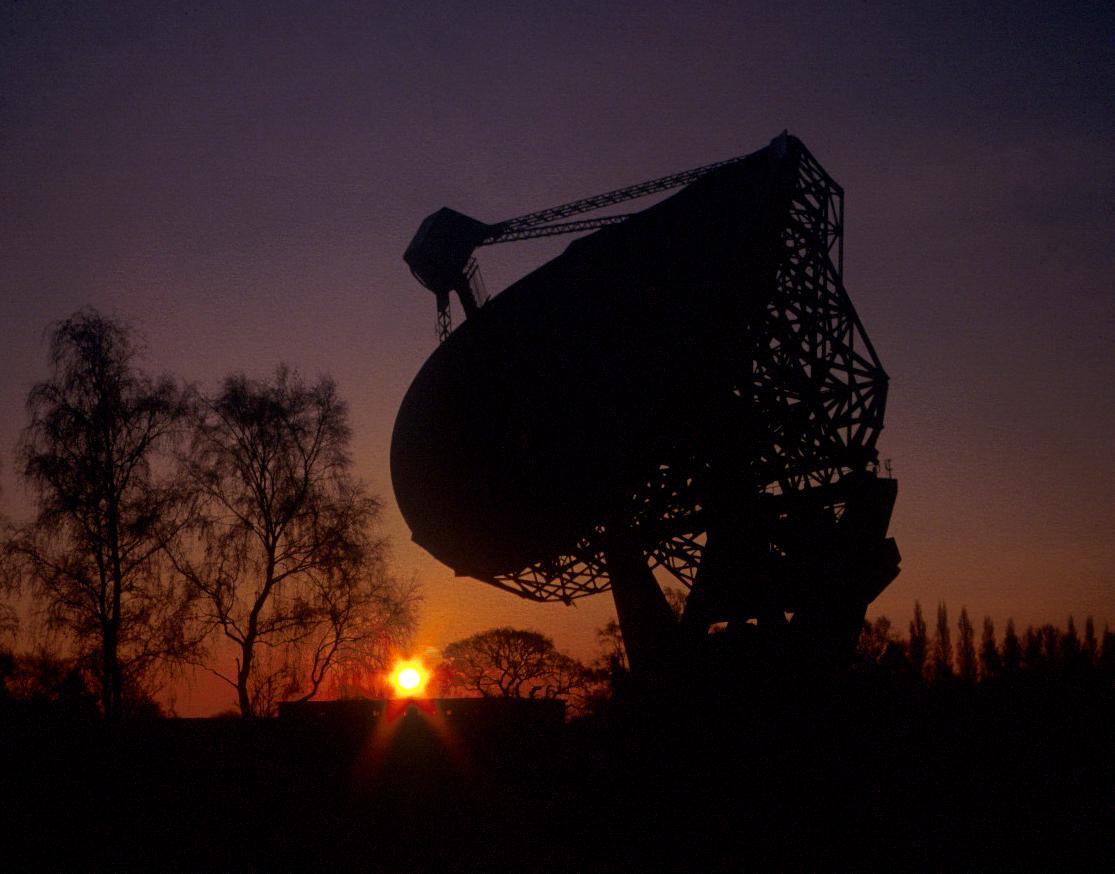
But I was reminded of The Drake Equation.

So- the argument goes something like this-

  • Around 7 new stars form even in our galaxy each year. There are thought to be more than 80 billion galaxies in the universe.
  • Around 40% of sun like stars have planets
  • Around 10% of stars systems in our galaxy may be hospitable to life- in terms of stability, having access to right mix of building blocks for life etc.
  • It is possible that two planets in our own star system may have actually developed life- Earth and Mars. Our star is one of 100 Billion stars in the Milky way.
  • But intelligent life? Drake guessed that of all planets with life, one in one hundred might go on to develop intelligent life. A controversial estimate. There are billions of life forms on earth- and only one regarded as ‘intelligent’.
  • But if they develop elsewhere, it does seem to be reasonable that they might seek to communicate.
  • Assuming, of course that they do not destroy themselves before they get round to it.

And there is the rub.

Unless you believe the conspiracy theorists and the UFO nuts, then we have to deal with the fact that no one has yet found any evidence of intelligent life beyond this planet. Even accepting the fact that the universe is very big, according to Drake’s equations we really would have expected to do so.

He thought that there would be around 10,000 communicating intelligent life forms just in our own Galaxy.

Drake could have got his numbers all wrong- after all, there are a LOT of wild speculative assumptions. Perhaps this planet is unique in all creation, as some Christians are quick to believe. This means that we humans are indeed the very centre of everything- the epicentre of all creation- that the whole universe is a giant cup cake, and we are the cherry.

The flat earth folk thought this too- before they failed to fall off the edge and discovered humans on the other side of our own planet much like themselves. We did not treat each other well- but that is a different story.

Another possibility was suggested by Enrico Fermi– who believed that technological civilisations tend to disappear very quickly. We either destroy ourselves, or we destroy others. Or perhaps there is always going to be a comet coming our way if we wait long enough.

And when you think about it, the durability of our civilisation in the vast timeline of the universe is rather untested.

What has this to do with spirituality?

Well- these thoughts occur to me-

  1. Whether or not we are alone, we are beautiful
  2. Whether or not we are alone, we are deadly and destructive- particularly towards those who are ‘other’
  3. We are ephemeral, and caught up in tiny matters of total insignificance
  4. And yet we are special- called to live in the image of the maker of all this majesty and mystery
  5. And the ripples we make on our universe will be dependent on the quality of our loving, not our invention and enterprise. Because without the former, the latter will end badly

What can I say- it was a very long meeting.

You niverse…

You niverse

.

Roll me on your riverbed

Pebble me in your water

Dance me with your sediment

Then lay me down in strata

.

Wrap me up in last year’s leaves

Crumble me down to loam

Sow your spores and mushroom me

Let worms make me their home

.

Pound me like a high sea cliff

Find my pressure cracks

Hollow me with roaring caves

Shape me into stacks

.

Drumlin me in creaking ice

Make my crevasse a valley

Terminate my last moraine

Make me your U shaped alley

.

Irradiate with your distant rays

Crisp me to a crust

Suck me up with comet tail

Scatter me in stardust

Dunbar’s number and Facebooking…

I was reminded today of Dunbar’s number– the theoretical numerical limit of people that we can maintain meaningful relationship with- relationships in which an individual knows who each person is, and how each person relates to every other person in the group.

The suggestion made is that for groups to be cohesive and integrated beyond this number, then increasingly rules and enforced norms have to be used. Dunbar proposed this number as a result of studying primate groups.

The number has been argued about in anthropological circles, but is somewhere between 100-150.

Strangely this number corresponds to the average number of Facebook friends (I have around 120 I think. Michaela has many more, but then she is a very sociable kind of monkey.) I have written before about how Facebook, useful and clever though it is, can reduce communication to a kind of cyber-autism.

The other figure that is relevant though is the number of people with whom you can sustain intimate, deeper friendship- our close community. This is a much smaller number- usually thought to be between 5 and 10.

Even if these figures are more or less accurate (and we humans form a broad bell curve on just about everything) then so what?

If these numbers are a feature of the limitations of our cerebral cortex as Dunbar suggested, then it would mean that we humans (who are above all things SOCIAL animals) are at our best in small groups.

There are clear evolutionary and anthropological implications for this- but of course, I am interested too in the theological ones. These are the things that seemed important to me-

Jesus called us to live in communities, where we might learn to practice the mysterious and challenging ways of love.

And although this love was never intended to be restricted to our small groups, we simply can not be all things to everyone. Start with were you are, and seek to live graciously and generously. Accepting that you will fail.

And there will be some who we are called towards deeper relationship with- soul friendship.

This kind of relationship requires so much more than informational exchange, status updates and Mafia wars games.

It needs flesh.

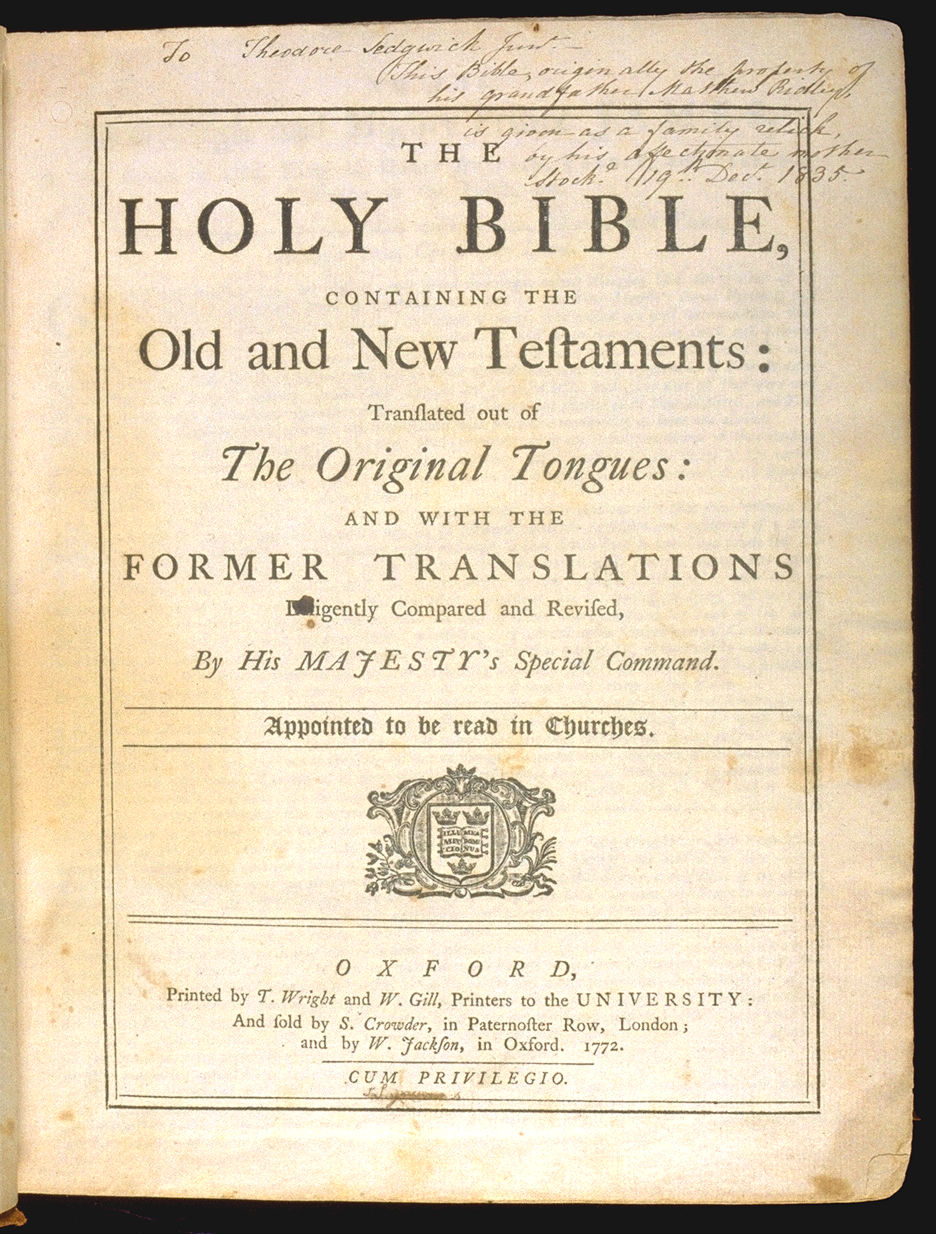
The King James Bible on radio 4…

Today was the last in a series of programmes celebrating the 400th anniversary of the translation of the Bible commissioned by King James as a means of sorting out some of the theological dynamite that afflicted his life and times. It became one of the most influential books of the reformation in a country (Britain) that was to become the most powerful state in the world.

You can listen to the three programmes for a while at least on the i player, here.

The first programme dealt with the circumstances in which this translation arose, and particular with the man who the translation was named after- James, the Scottish King who took over from childless Elizabeth the first, popular in England (but less so in Scotland- he appears to be have been glad to leave, and only returned once!)

Perhaps this was in no small part due to his difficulties with the Scottish kirk- and the kind of religion espoused by men like John Knox (who had reduced James’ mother to public tears.)

This King ruled during a belief in the divine right and divine appointment of Kings. His kingdom was active in the burning of witches.

There have long been speculations about the nature of King James sexuality- beginning with allegations of homosexual relationships with a mentor as a young King in Scotland, and then throughout his Kingship with other courtiers. This issue is  fearcely debated, but seems to have been a popular insult even during his lifetime- Rex fuit Elizabeth, nunc est regina Jacobus (Elizabeth was King, now James is Queen.)

The translation was born in conflict, and was created by men of mixed motives and transparent humanity. Does any of this matter?

Because the legacy of it’s soaring prose and poetry lives on. Full of phrases that have entered into our language, and given shape to our dreams and hopes.

I should confess to very rarely reading this translation. In my time it has been too readily appropriated by people who would hold it as the ONLY translation that should be used- as if it floated down from heaven on a silver cloud. It has been asscoiated with dogmatic fundementalism.

My eyebrows always rise when I hear people pray using the language of the King James Bible- rich with resounding thees and thous, as if God himself spoke the language of the Court of St James.

But then words- no matter how well spoken and written- are always influenced most by the ears and eyes that they fall upon…


Magi…

(Image from here.)

A great programme on Radio 4 this evening on the theology and history of the Magi– the Wise Men who, according to Matthew 2, visited the infant Jesus with precious gifts of gold, frankincense and Myrrh.

You can listen again here.

9 After they had heard the king, they went on their way, and the star they had seen when it rose went ahead of them until it stopped over the place where the child was. 10When they saw the star, they were overjoyed. 11 On coming to the house, they saw the child with his mother Mary, and they bowed down and worshiped him. Then they opened their treasures and presented him with gifts of gold, frankincense and myrrh. 12And having been warned in a dream not to go back to Herod, they returned to their country by another route.

I love this story.

The way the coming of Jesus sent ripples out far beyond the edges of the Jewish world. The way his coming was anticipated, hoped for by ancient people searching for signs in the sky.

The way that men of a magical mystical tradition alien to the world of Jerusalem and Bethlehem were so transfixed by the hope brought be a coming king that they were prepared to travel hard long miles to attempt to find him. Some stress the Biblical condemnation of sorcery and astrology in such texts as Deuteronomy 18:10–11, Leviticus 19:26, and Isaiah 47:13–14, but there is no condemnation in the account above.

The sparse account of these men in Matthew has been added to by tradition. Names were added, and somewhere along the way, people started calling them Kings too.

Most accounts believe the Magi to be from Persia- Zoroastrian scholars well versed in astrology, and their own deep spirituality. They had their own belief in a coming Messiah, and a virgin who would conceive.

Many believe that it was from the Zoroastrian tradition that some Jewish sects- the Pharisees in particular- came to believe in an eternal life (more about this here.)

It brings to me again the possibility of a Messiah who came for all- not just a pre-selected few.

Blair and Hitchens debate religion…

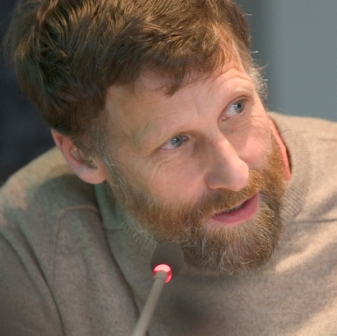
I have just listened to the debate on religion on radio 4 between Tony Blair (convert to Catholicism, former prime minister, invader of Iraq, possible war criminal) and Christopher Hitchens (writer, journalist, atheist, cancer sufferer).

They debated the proposition that ‘religion is a force for good in the world‘- you can listen again here.

I found myself in agreement with much of what Hichens had to say. He was witty, erudite and thoughtful.

Hitchens described faiths’ view of mankind as-

“…victims of a cruel experiment, in which we are created sick and then ordered to be well. Over us, to supervise is installed a dictatorship- a kind of celestial North Korea… But there is a cure- salvation at the low price of the surrender of your critical faculties.”

Blair was Blair- earnest, persuasive, but at the same time repetitive, on message, but a message that is degraded by our recent shared history. He spoke of the good that faith pours into the world, and how bigoted fundamentalists exist both within and without our institutions of faith.

Hitchens won the debate hands down for me- but that was more because his moral authority and his intelligence won against Blair- who is yet to be re-invented by history as many politicians are in the years after power.

I was left to reflect on my own faith- which has had to find a place within the powerful critique that Hitchens uses, but somehow still survives- is stronger even.

I am not alone. Many of us who have grown up trying to reconcile the irreconcilable have found that if you let go of trying to hold together the absolute truths- to stop the desperate defence of positions on Biblical authority, atonement, sexual sin etc etc- then we rediscover the hope that God is bigger than all of that.

And we turn again to Jesus.

Aoradh advent sky lantern launch…

We are just in after a our sky lantern launch.

It was lovely.

We have been passing out lanterns to community groups, and selling others for charity, and invited people to decorate them with prayers and hopes.

Here are a few pictures-

Songs of Praise: carols in a pub…

I know I know, it’s a bit early for all this carol singing, but it is the second Sunday in Advent…

Sorry folks, but I think this video clip will only work in the UK, as it uses the BBC i-player, but I loved this episode tonight. The long running BBC songs of praise programme is a bit of a joke over here- often ultra traditional and a miss-match of the vaguely religious with secular awfulness.

But it often make me cry.

Because in the middle of all the mush, there will often be a story full of grace, or a hymn that takes me back to childhood, or a moment of delicate beauty.

Tonight features Kate Rusby, one of my favourite singers- who could sing the words of a phone book and still be worth listening to. She describes a tradition of singing carols in pubs from the end of November up to Christmas, in the South Yorkshire and North Derbyshire area of the UK- not far from where I grew up.

It is where Michaela learnt music by playing cornet in brass bands that grew out of the mining communities now long gone.

So if you are not moved by choirs and organs, skip this clip forward to around 22 mins into the show (but the hymn before is lovely too…)

It is worth it.

Vodpod videos no longer available.

Psalm 139 meditation, part 2…

(From Aoradh daily meditations- the first part is here.)

9 If I rise on the wings of the dawn,
if I settle on the far side of the sea,
10 even there your hand will guide me,
your right hand will hold me fast.

I am sometimes invincible

And forget my need for you

Even in the shallow certainty of success

Stay with me father

.
11 If I say, “Surely the darkness will hide me
and the light become night around me,”
12 even the darkness will not be dark to you;
the night will shine like the day,
for darkness is as light to you.

And when I surely succumb

To the gravity of my human condition

Let the darkness be holy

Let the black become royal purple

And the shadows

Become your open arms

.

13 For you created my inmost being;
you knit me together in my mother’s womb.

This means that you are never

An accidental father

You have no bastards

No unwanted drains

On your holy resources

.
14 I praise you because I am fearfully and wonderfully made;
your works are wonderful,
I know that full well.

Because there is a masterpiece you made

In me

Framed in this shabby shape

Are your majestic brushstrokes

.
15 My frame was not hidden from you
when I was made in the secret place,
when I was woven together in the depths of the earth.

Unborn I was known

Unconceived I was expected

There was a space empty

Waiting for the shape of me

.
16 Your eyes saw my unformed body;

And you became incandescent

With hope

.
23 Search me, God, and know my heart;
test me and know my anxious thoughts.

Weigh me on scales

Skewed towards grace

For my heart is heavy

With the unshed weight of my world

.
24 See if there is any offensive way in me,
and lead me in the way everlasting.

Open me gently

To the new-

To the possibility

Of something deeper

And more beautiful