It concerned a piece of research published in the Journal of Medical Ethics suggesting that whether or not your doctor has a religious faith may have a significant effect on the care and support you are given at the end of your life.
This from The Guardian-
The significant findings included:
First, whether doctors undertook medical measures that they either intended or expected to hasten the death of a terminally ill patient. It should be stressed that this dealt with entirely legal and ethical practices such as the withdrawal or withholding of, especially onerous, life-sustaining treatment (on the basis of futility or a patient’s autonomous decision to refuse) or the use of high-dose opiate pain control. This was nearly half as likely in non-religious doctors than very religious ones.
Second, whether they had discussed the medical management of the process of death with their terminally ill patients or their relatives. The study suggested that very religious doctors were about four times less likely than all other doctors (the non-religious or the mildly religious) to have had those discussions.
So, doctors with a strong faith have scruples when it comes to ending life, or discussing ‘living wills’ or other such options with patients. No surprises there really.
Atheist doctors are twice as likely to consider ending life early. Which feels very uncomfortable, but the meaning of this in the mess of medical ethics is far from clear. Is this euthanasia by another name? Or is it just a dose of reality, given the shape given to life by advances in medical care- at least for the rich parts of the world?
Does it matter?
Well I think that everyone has a right to be properly consulted and advised, particularly if you are facing the ultimate test of humanity- which is the inevitability of death.
I think this is a helpful study because it brings these difficult issues out of the shadows, and into the light.
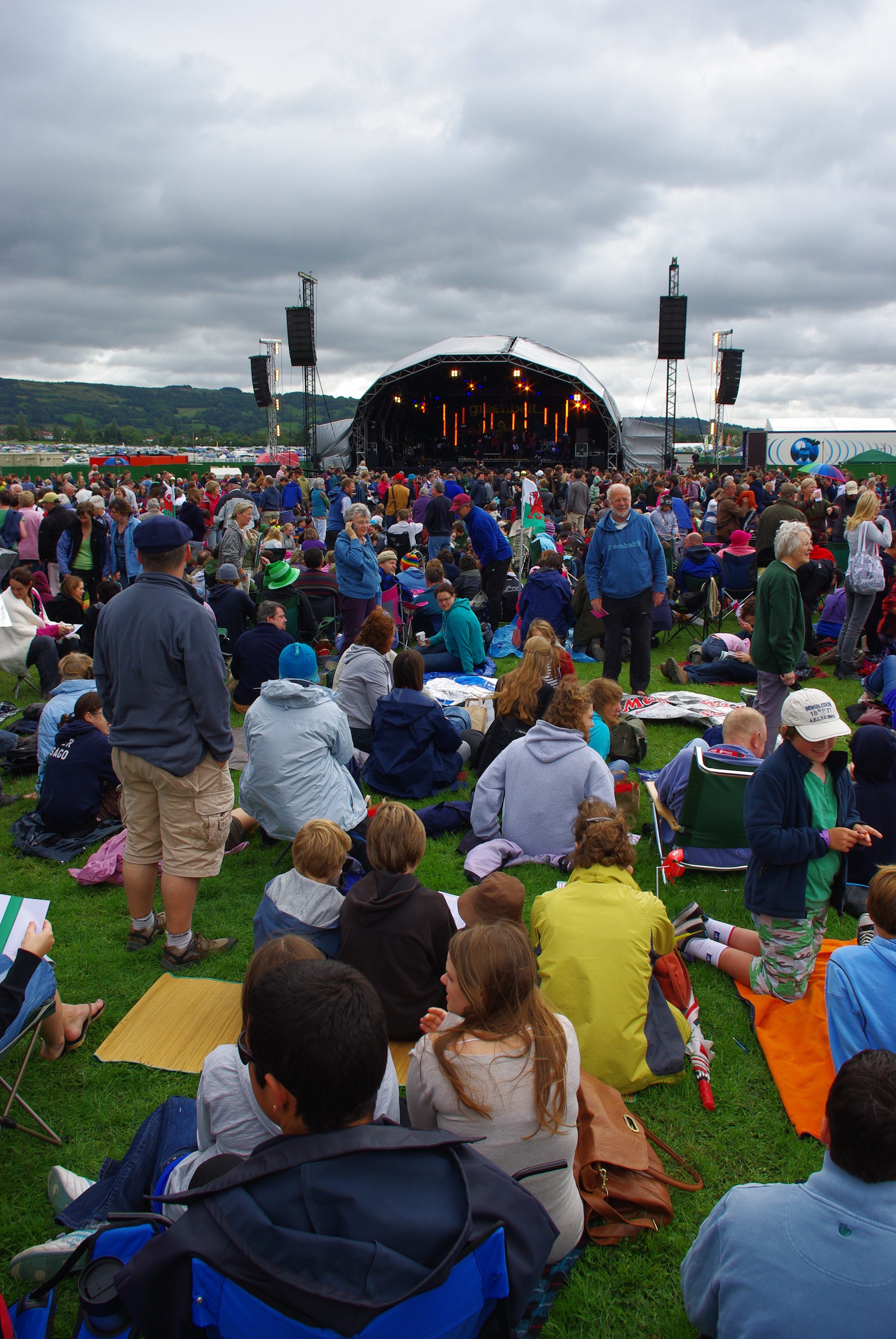
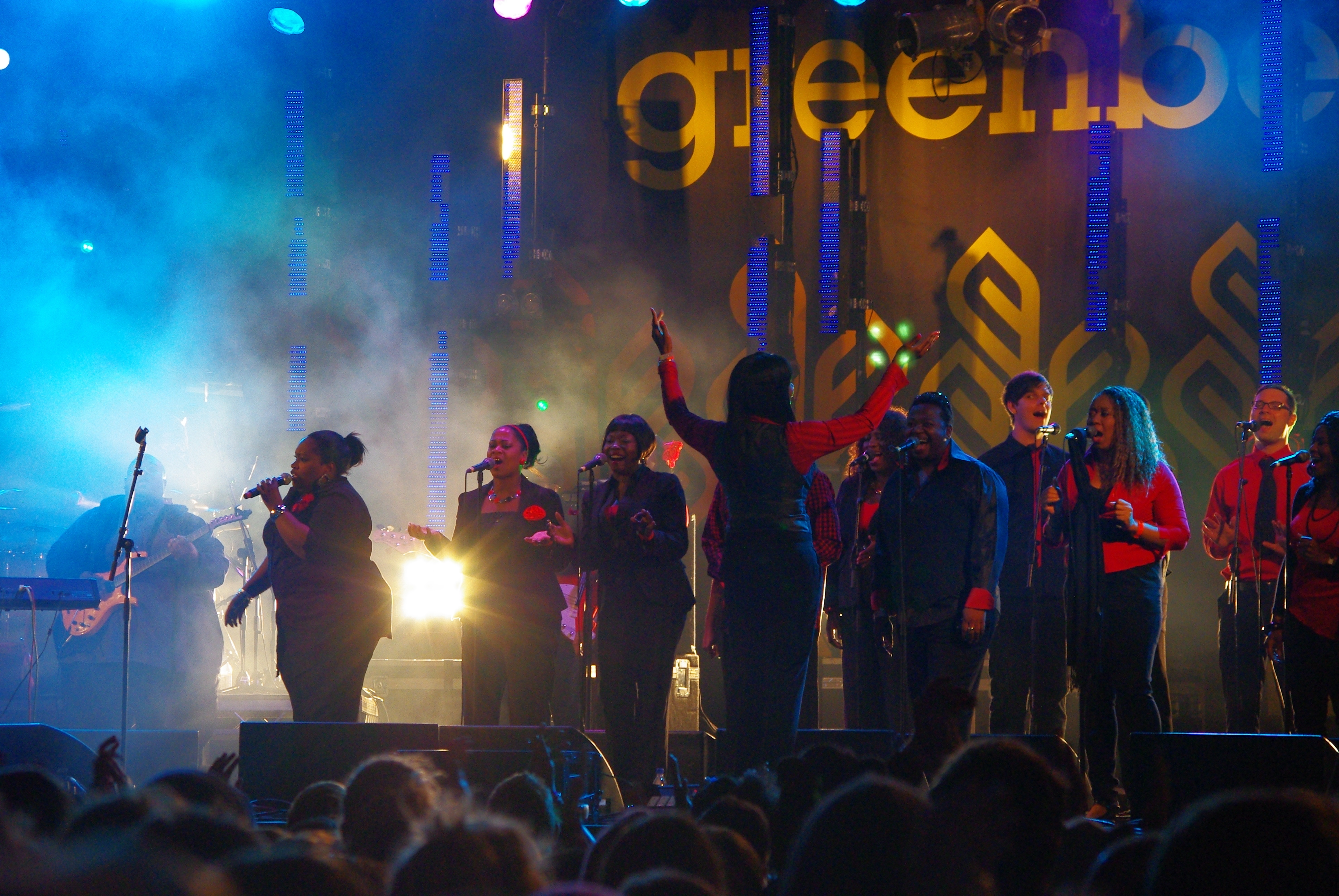
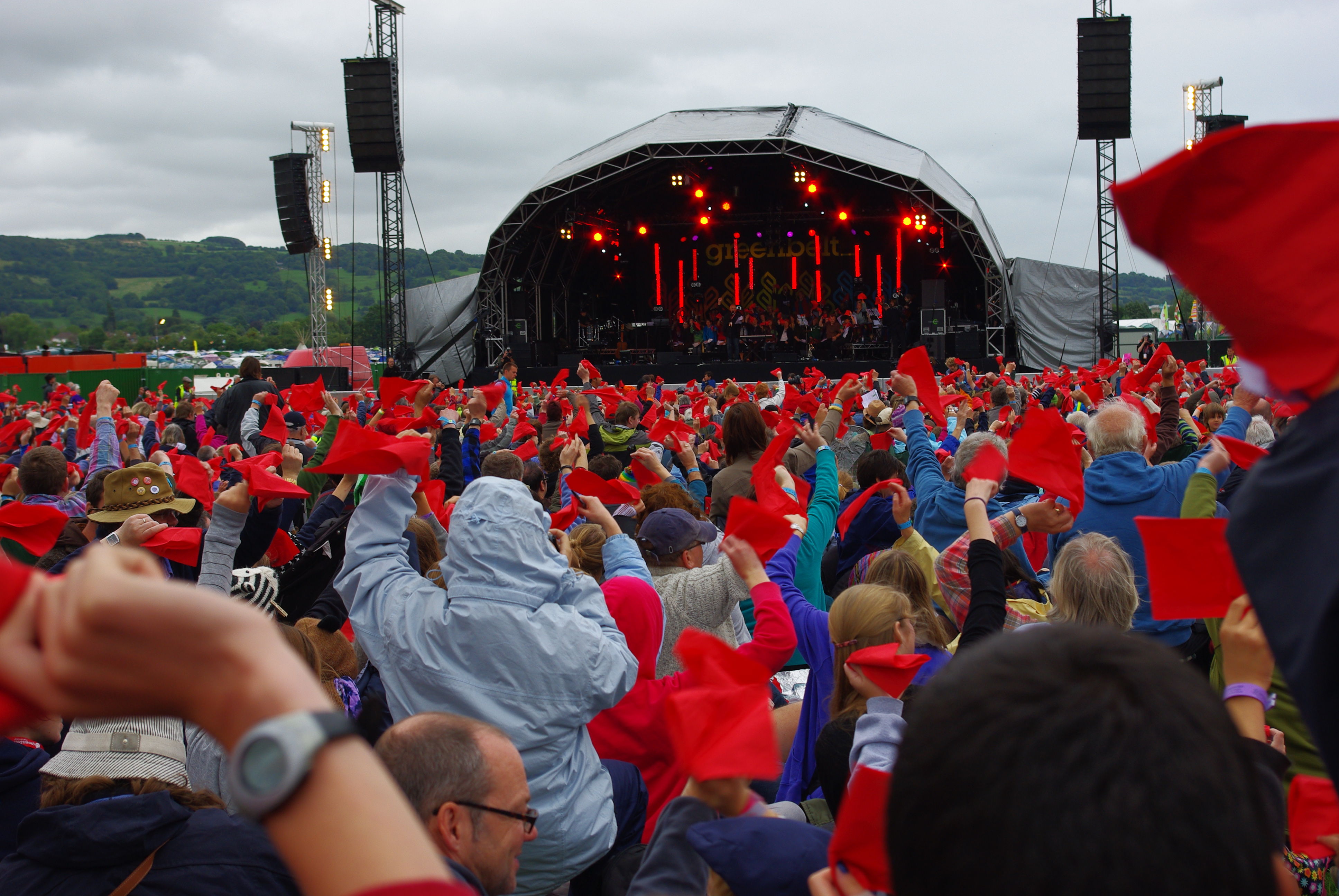
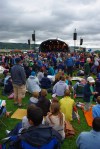
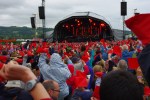
After a thousand miles of driving, and hours of motorway, our Aoradh roadtrip down to Greenbelt 2010 is all over.
And it was good!
A few personal highlights-
Our worship collaboration between Safespace and Sanctus 1. We spent all day on Saturday co-hosting a worship space in which we invited people to consider their community. This involved ‘stations’, and also liturgical ‘led’ worship events through the day. We did a think with spilt wine, and blood serum pots that was very powerful, and it fitted in really well with the lovely work done by the other groups.
Meeting people, and having conversations.
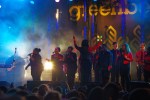
London Community Gospel Choir!
The large scale worship service on Sunday. They can be hit and miss affairs, but this year was lovely.
Of course, we missed as much as we saw- you always do. I was very sad to miss the Tautoko gathering at the Cathedral this year- we did not get down in time. And there were so many speakers that I wanted to hear, but missed. Need to download some talks…
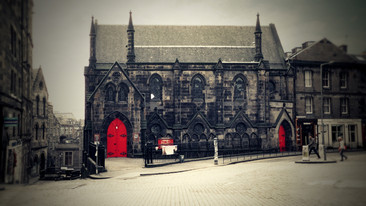
It told a familiar story- empty pews, closed church buildings, shrinking services.
If the Church of Scotland continues to shrink at it’s current rate, it will cease to exist by 2033.
It also asked- ‘Would Scotland miss it if it were gone?’
A bleak programme, offering little hope for the future of the Kirk. As an outsider, I can only sympathise, and hope that there may yet be an opportunity for renewal and engagement with a changing world.
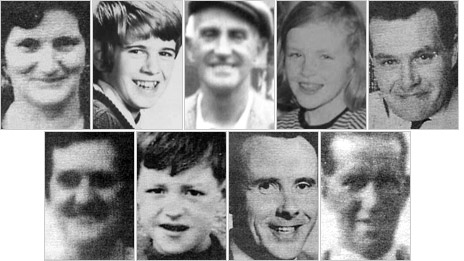
It told a story of the troubles, and of a Irish Republican Army bombing squad who may have been led by a Roman Catholic Priest. And of the stories told of that same priest driving a car containing a nail bomb, leaving it outside a shop where an 8 year old girl was cleaning windows, and walking away.
The girl died, along with 8 others in the small village of Claudy.
It was an open secret who had done the deed, and the role played by Father James Chesney.
What the report made clear was what everyone suspected- a deal had been done between the Catholic primate, the government and the police to get Chesney out of Northern Ireland into Donegal, where he died a few years later, after travelling into Northern Ireland weekly.
Murky, disturbing and upsetting as this story is, it has to be seen in context- a time when civil war was a real possibility in the province, and placing a Catholic Priest on trial would have been political dynamite.
What is disturbing to those of us who are Christians is how a PRIEST could carry out such acts of violence and destruction.
And how a church that could produce such evil as well as so much good.
But I suppose it has always been this way. People who use religion to load guns and sharpen knives…
And we fool ourselves that terrorism belongs to a different religion, not to ours…
We read our Old Testament and focus on all those stories of slaugter- like this one-
A bit more writing around the theme of fatherhood- stimulated by a discussion with a friend who has particular challenges to face in his own fathering…
Our fathering arises from human brokenness
And so is easily broken
We are prodigals, coming home
.
Our fathering arises in a place where we struggle for power and control
And so it can become oppressive
Or even abusive
We are prodigals, coming home
.
Our fathering finds the limits of our patience, our tolerance and our finances
It can be conditional
And we can be easily angered
We are prodigals, coming home
.
Our fathering can be decayed by divorce and marital disharmony
It can become distant and removed
We are prodigals, coming home
.
Our fathering can be stolen by death, leaving us in desperate grief
I picked up a book that a colleague was throwing out today- entitled ‘The Celtic Year- a celebration of Celtic Christian saints, sites and festivals‘ by Shirley Toulson.
I had a flick through- and came across this
Brigid’s Feast.
I would like a great lake of the finest ale
For the King of Kings.
I would like a table of the choicest food
For the family of heaven.
Let the ale be made from the fruits of faith
And the food be forgiving love
I should welcome the poor to my feast
For they are God’s children
I should welcome the sick to my feast
For they are God’s joy
Let the poor sit with Jesus at the highest place
And the sick dance with the angels.
God bless the poor
God bless the sick
God bless our human race
God bless our food
God bless our drink
All homes, O God, embrace.
And this in turn reminded me of the film Babette’s Feast.
For those of you who have not seen this film, it tells the story of an extreme religious community on the wild Denmark coast, living a life of simplicity and austerity, clinging on to the teachings of their now dead leader. Then along comes a refugee from the wars in a troubled 19th Century Europe, and they take her in. For years she works as an unpaid servant, preparing the dreadful food- fish soup and gruel- that the community eat.
Then one day, after years of hard work, news reaches her that she has won a lottery- a small fortune. The community prepare themselves to say goodbye to their loyal servant, and reluctantly agree to allow her to cook for them- a feast.
A feast the like of which this community- with all its austerity, its petty squabbles and its suspicion of all things ‘of the world’- could not begin to imagine. The finest wines, turtle soup, amazing complicated dishes.
And Babette’s former life as a famous chef in Paris is revealed- as the members of the community are transformed by this encounter with the feast- as tongues are loosened, and rigidity eroded. Until they stand together and sing hymns under the stars.
And discover that Babette had spent every single penny of her new found wealth on this one meal…
It is a story of grace and redemption and religion gone wrong, only to find itself again.
Here are a couple of clips- you can watch the whole thing on You tube should you fancy it.
Following on from my somewhat negative previous post, I have just been reading a couple of reports from this conference.
The discussion focused on the future of Christianity in the USA- and this is clearly potentially very misleading. The global growth of Christianity is a very different discussion. However, the influence of American Evangelical Christianity on the UK religious scene is huge- all the TV channels, the publishing juggernaut and the big name preachers. We watch changes there with interest, knowing that the impact of these changes will be felt this side of the Atlantic.
Brian McLaren believes that over the next period, the Conservative Evangelical denominations (protestant and Catholic) in the USA will “constrict, tighten up, batten the hatches, raise the boundary fences, demand greater doctrinal, political, and behavioral conformity, and monitor boundaries with increased vigilance.”
He believes that this will drive out many, whilst increasing the anxiety and ‘bunker mentality’ of those left inside the denominations. At the same time, he sees a new coalition forming-
That new coalition, I believe, will emerge from four main sources:
Progressive Evangelicals who are squeezed out of constricting evangelical settings.
Progressive Roman Catholics (and Eastern Orthodox) who are squeezed out of their constricting settings.
Missional mainliners who are rediscovering their Christian faith more as a missional spiritual movement, and less as a revered and favored religious institution.
Social justice-oriented Pentecostals and Evangelicals — from the minority churches in the West and from the majority churches of the global South, especially the second- and third-generation leaders who have the benefits of higher education.
Scott McKnight points out that Conservative Evangelical Mega churches in the USA (and I believe,the UK equivalents) are in fact growing. He does not believe that ‘Evangelicalism’ is made up of one stream- believing that some incarnations will be around for a long long time to come.
However, what he sees as now having ended is the old ‘Evangelical coalition’-
The evangelicalism that formed in the 1940s and 1950s, more accurately called “neo-evangelicalism,” was a reaction to strident forms of fundamentalism, a call to serious intellectual engagement so that evangelicalism could gain both theological and academic credibility again, and a formation of a big tent coalition to work together for evangelism and theological development. By and large, this big tent coalition combined the Calvinist and Wesleyan segments of evangelicalism, found places for Christian colleges, parachurch ministries, missionary societies, and a plethora of magazines and radio stations, and gave a privileged place to evangelical leaders like Billy Graham and Carl Henry.
But perhaps the most powerful piece was by Philip Clayton who had this to say-
A major national survey recently published in USA Today shows that 72 percent of “Millennials” — Americans between the ages of 18 and 29 — now consider themselves “spiritual but not religious.” Even among those who self-identify as practicing Christians, all of the traditional forms of Christian practice have sharply declined from previous years: church attendance, Bible study, prayer. Doubts are higher, and affiliation with the institutional church is sharply lower. All of us who are still connected with local congregations already know this pattern, up close and personal. Still, it’s sobering to see the trends writ large; after all, we’re talking about almost three-quarters of younger Americans!
The decline of traditional churches and denominations will presumably continue, so that by 2020 the effects will be as devastating in the U.S. as they already are in Europe. (On a typical Sunday, for example, 0.5 percent of Germans attend church.) Numerically, two-thirds or more of mainline churches will close their doors or struggle on without a full-time pastor. Denominations will merge in order to be able to maintain even minimal national staffs and programs. A larger and larger proportion of those who still go to church will attend large “mega” churches, those with 2,000 or more attendees on an average Sunday.
Clayton issued what he called a ‘call to church’-
We churchpeople were the center of American society since this nation was founded. We enjoyed power and prestige; we were the center of the action; we counted presidents, educators, and industry leaders among our numbers. But those days, it appears, are over. We still have a crucial role to play in the world. But it’s no longer a world that revolves around us.
This new role actually makes it easier for us to model ourselves and our communities on the Head of the church, who “has no stately form or majesty that we should look upon him” (Isaiah 53:2). As Dwight Friesen puts it in Thy Kingdom Connected, the church can no longer be a “bounded set,” defining itself by the people and ideas it’s opposed to. We now have to be a “centered set,” pointing toward — and living like — the One whose life and ministry we model ourselves on. If we can’t communicate our Center with power and conviction, no one’s going to listen. Oh, and by the way: we have to find ways to do this that don’t sound or look anything like the church has looked over the last 50 years or so.
Finally, Clayton talks about an age of experimentation in church-
What does “church” look like when you take it out of the box, replant it, and let it grow organically? It’s going to stretch and challenge you; it’s going to take openness to forms and practices you’ve never seen before:
churches that meet in pubs, office buildings, school classrooms, or homes . . . or virtual churches, like those at SecondLife.com;
churches that have no leader, or have leaders who don’t look like any pastor you’ve ever known (OMG, what if they have piercings?);
pastors who are hosts to discussions, who can listen long and deep to doubts and questions before presenting the answers on which they center their lives;
churches that don’t have buildings, denominations, pastors, or sermons; that don’t meet on Sundays; that consist mainly of people who don’t call themselves “Christians”;
churches whose participants are drawn from many different religious groups; churches full of “seekers”; churches that consist mostly of silence (like the Quakers) or of heated discussions between participants.
Not only conservatives will wonder and worry where one should draw the line. And that’s the point: we’ve now entered an age where we no longer know how to draw lines, because the old criteria just don’t work anymore — except to exclude the vast majority of the people whom we hope to interest.
All this sounds very familiar from this side of the Atlantic. We are much further down the line that it all.
We have our Evangelical enclaves- who tend to be exclusive, embattled, and increasingly fuelled by an agenda that looks either to African or American Mega churches. Despite their vigour and apparent success, they are largely irrelevant to the larger cultural situation- and their engagement with mission is simply to attempt to create more ‘converts’ to their own kind of belief system. These churches feel to me to be about marketing and mass consumerism.
And then we have the huge majority of spiritually interested consumers, who may have been inoculated against Christianity, but not against Jesus.
And then we have a growing number of experimental pioneers, whose methods are increasingly being adopted by the mainstream traditional churches- through things like Fresh Expressions-
We live, my friends, in interesting times, where change is normal, and the future uncertain. But I have no doubt that church will continue, and that the mission of Jesus will be carried forward into new generations. Some will resist any change fiercely, others will embrace it.
We had a lovely evening tonight with friends, discussing life, childhood, faith and children.
Drinking wine and listening to good music.
One of our friends described her son as ‘not clubbable’- meaning that he was not comfortable joining in-groups. Such groups are scary, exclusive, and make too many demands that he does not necessarily want to be committed to on a week by week basis.
Does this remind you of anything?
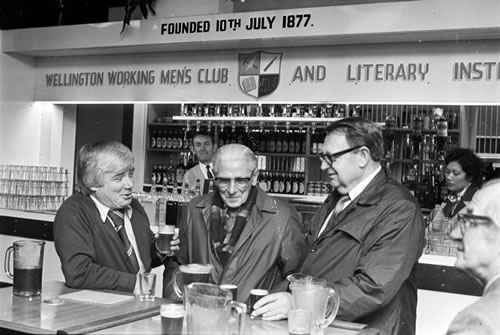
The decline in membership of unions, bowling clubs, debating societies, womens institutes, working men’s clubs etc etc.
And churches.
Perhaps we are increasingly not churchable.
Or perhaps churches can no longer behave like clubs…
Aoradh are going to be doing a few worship things again- participating in a day long worship event along with Sanctus 1 and Safespace. I just checked the GB website and see we are not mentioned as participants! How rude.
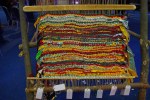
As part of the worship, we are providing a great big loom, into which people will be encouraged to weave in the names of their community- here is the loom frame in front of our house-
We are also doing a couple of liturgies- one around communion, with a really lovely piece that Audrey wrote, and another based on the Community of God- the Trinity, with our bit focussing on the Father.
If you are at Greenbelt this year, it would be great to see you- we will be in the New Forms cafe for most of the day on Saturday…
I pulled out an old piece of writing I did thinking about fatherhood, and have been doing some work on it. Here are a couple of sections I am playing with-









 this fragile tent