Wilderness retreat weekend- update…

Just an update on our planned Aoradh Wilderness Retreat– which will be from May the 1st- 3rd.

I am just trying to nail the venue for this weekend, and thinking about different venues. I think there are about 9 people confirmed, with another 5 or so possibles- this time it looks like there will be possibly 2-3 women coming too- brave souls that they are!

Terry may join us for the sea voyage out (or return) too.

Nick and I are keen to continue to use some of the ‘wilderness meditations‘ on the weekend- although Nick himself may not be there.

The prefered option was Lunga, Treshnish. However, I think this might be turning out to be potentially too complicated. The route to get there involves two ferries- one to Mull, then a bus, then the small boat out to Lunga. It is a lovely journey, but will take most of a day each way. Also- the ferry operator has been rather unhelpful, and appears to want to charge us more than his regular day trips. He did not reply to my questioning of this! There are other boat operators, but I think costs will climb, and we will also need to factor in the trip onto Mull, and driving over to where the boats operate from.

Which is a long way of saying that I think we need to simplify, and head out to either the other Lunga, or to the wild west coast of Jura.

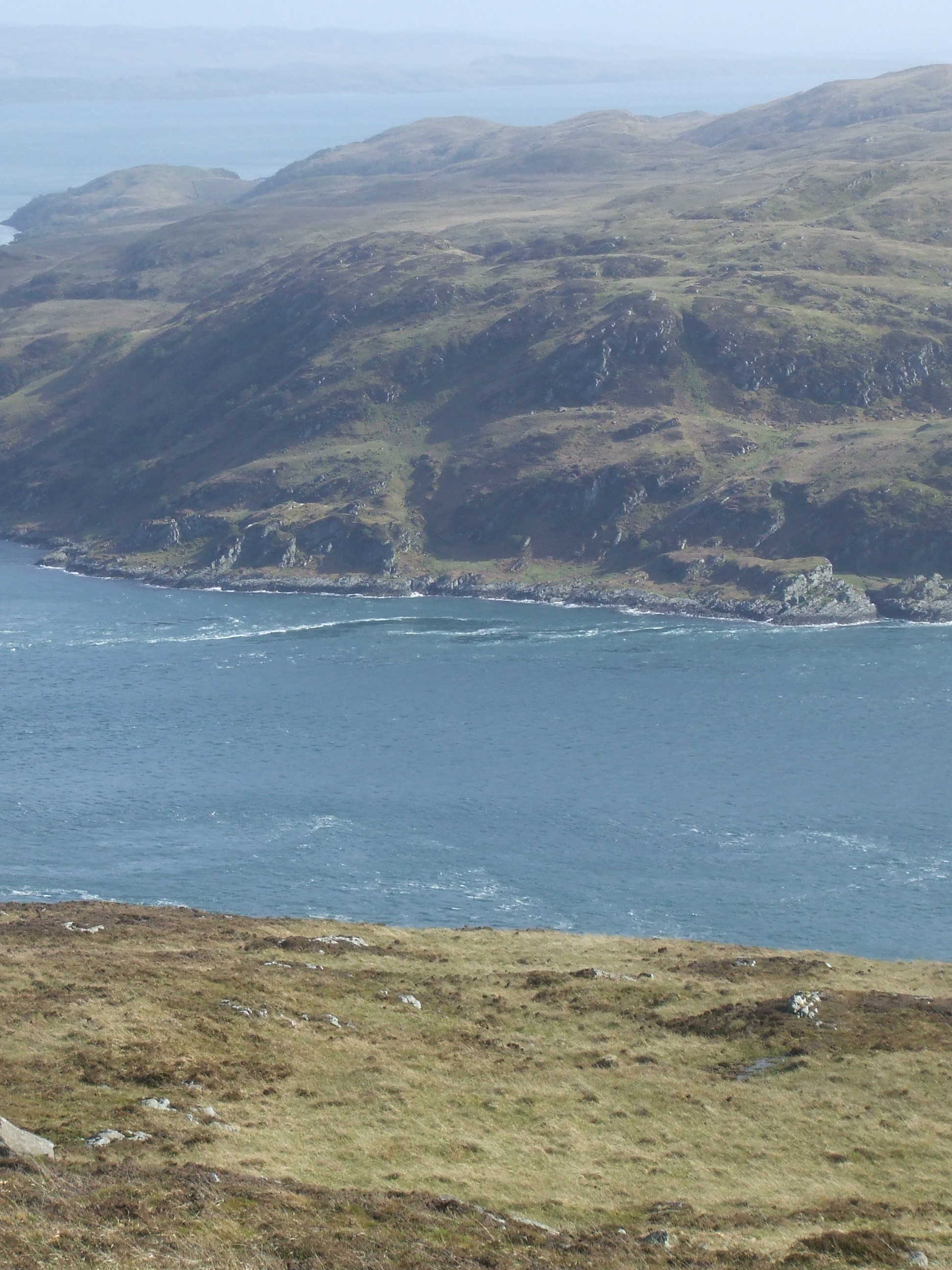
On closer examination of the maps, I think Jura offers the most. It is not as romantic perhaps- but it offers beaches and caves to shelter in if we get bad weather in the evenings.There are a couple of lovely bays that we can base ourselves at- with brilliant walking/exploring/scrambling/wildlife watching/sitting contemplating opportunities- according to your choice!

So- here is the question. To those who are coming- can you let me know if I should go ahead and confirm the boat from Ardfern to take us out to the other side of Jura? This will mean a wonderful trip through the Gulf of Correvreckan, past the famous whirlpool.

Cost of this trip will be about £250 in total- shared between however many of us go.

Yesterday there was spring in the air… not long now!

Look upon my works you mighty and weep…

For I have walked the wild country

And watched the sun slipping slowly down

Turning green to gold

working alchemy before my very eyes

I have seen the mountains

Lifting up their faces to the sky

Gathering in the starlight

So beautiful it makes me want to cry

And I can hear a voice- its calling me

Can you hear the voice?

It says;

Look upon my works you mighty and weep

(CG 2001)

The myth of immortality..

I have been very much enjoying the series on Radio 4 called “A history of the world in 100 objects”

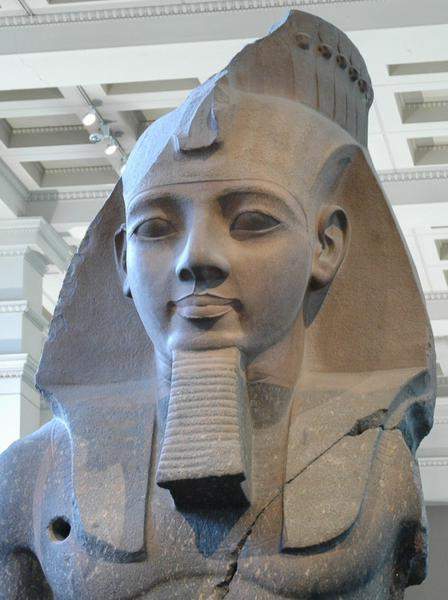
Today’s object was the statue of Rameses II, made around 1200 BC, broken up by an ex-circus performer-cum antiquities dealer, and sold to the British Museum.

It caused a sensation- inspiring poetry and art- including most famously, Percy Shelley who wrote this famous sonnet after visiting the museum in 1818

I met a traveler from an antique land
Who said: Two vast and trunkless legs of stone
Stand in the desert. Near them, on the sand,
Half sunk, a shattered visage lies, whose frown,
And wrinkled lip, and sneer of cold command,
Tell that its sculptor well those passions read
Which yet survive, stamped on these lifeless things,
The hand that mocked them, and the heart that fed;
And on the pedestal these words appear:
“My name is Ozymandias, king of kings:
Look upon my works, ye Mighty, and despair!”
Nothing beside remains. Round the decay
Of that colossal wreck, boundless and bare
The lone and level sands stretch far away

Rameses II was perhaps the greatest of all the Pharoes of the new Egyptian Kingdom. He ruled for 67 years, and determined to outshine all other pharaohs, called himself ‘ruler of rulers’ and had more monuments and statues created than any other Pharaoh. He ruled the most powerful nation in his world, but still, his concern was on casting his memory for ever in stone.

Shelley’s poem catches the futility of this ambition so beautifully. And so this statue can be seen as a symbol of the fragility of all human achievement.  They remind us that all civilisations, not matter how great- will fall. And no matter how meglomaniacal our leaders become- they too are made of clay. After Rameses II- it was downhill all the way for the Egyptian empire. Each successive Pharaoh was weaker, and had to make more compromises with the surrounding powers. Corruption and decay set in.

I began to think of this desire we all have to be immortal. As a young Christian, I was taught that this was the great selling point to offer as a carrot for potential converts. The promise of eternal life.

I have come to believe that this all consuming pre-occupation with living for ever prevents us connecting with the stuff of here and now. We forget that, as Brian McLaren would say, Christianity is not an ‘escape plan’, but rather an invitation to participate fully in the here and now.

Perhaps we also are affected with the same impulses that drove Rameses II- it can all become about ME. Placing ourselves at the centre of our universe. Including at the centre of our religion.

God exists in order to make me (and others that are like me, and believe in the stuff I believe in) immortal.

Hmmmm…

Conflict…

I hate conflict.

In my early years, I avoided it at all costs.

Too many memories of things I would rather forget from childhood. Too little (or too much) confidence in my own rightness. Too many people who saw me as a soft target for their own ego-boosting arrows. Too easily the loss of all power of speech when under pressure from stronger folk.

And then there is the wonderful Jesus stuff. The turning of the other cheek, despite the humiliation that this might involve. The call to seek peace, rather than to celebrate petty victories.

But as I have become older, conflict has been harder to avoid. In my work it is guaranteed – I have to make decisions that might directly contradict the expressed wishes of people, and then justify them- even in court. I manage staff, and sometimes need to tackle difficult issues with them. Sometimes people complain- either because I have got it wrong, or because it was never possible to ‘get it right’- because of unreasonable behaviour on the part of others.

But in all these things, I have a professional distance to hide behind. Mostly the real me is safe behind role and title. That is not to say it is not difficult, but I have found ways to deal with it- sometimes even very well.

But the personal stuff- this is harder.

Living in a small town, conflicts with others tend to be hard to escape. Once a relationship is broken, or bad words have been spoken- you tend to relive the situations in the supermarket queue. And there is so much of this here – sometimes it seems as if the whole place is stratified and splintered by years of conflict- enemies made and allegiances enlisted in the coming cold war.

And even though I try so hard to avoid adding to the toxic subsoil – there are areas of pollution that now are mine.

Then there is the conflict that occurs in small groups- the sort that emerges almost like a badge of true community. The inevitable consequence of being close enough to one another to rub away at the veneer we all like to display to the outside world.

It is possible to avoid conflict of this kind in only one way – by avoiding community. By keeping all relationships at arms length – or further. I know many people who live like this. Either because (like me) life has damaged them, and the scars are too sensitive for harsh daylight, or perhaps because life has become stuffed full of other smaller achievements and tasks.

The sort of conflict that is mostly unacknowledged and undisclosed but at the same time nurtured and fed, until it erupts into our gathering like an arc from an opened artery.

What I have learned- or I should say what I am learning– is that this kind of conflict can be holy.

It can be surgical. Like the breaking of bent bones in order to allow them to be set a little straighter.

Like all such procedures- the pain can lie you out all flat and immobile. But should you do what I always want to do- to drag myself off into a dark corner to pick over the scabs- then the chances are that infections will set in. And the bones will twist and curl again.

Broken bones, once set, are stronger.

Or at least, I hope so.

Of course, there remain some healing embrocations that are required. Those wonderful medicinal disciplines that grow on us like fruit propagated by the Spirit-

Love

Joy

Peace

Patience

Kindness

Goodness

Faithfulness

Self control…

If these things are not tangible, visible and visceral- then we will all need crutches.

And you will all have a limp- like mine.

Praying with maltesers…

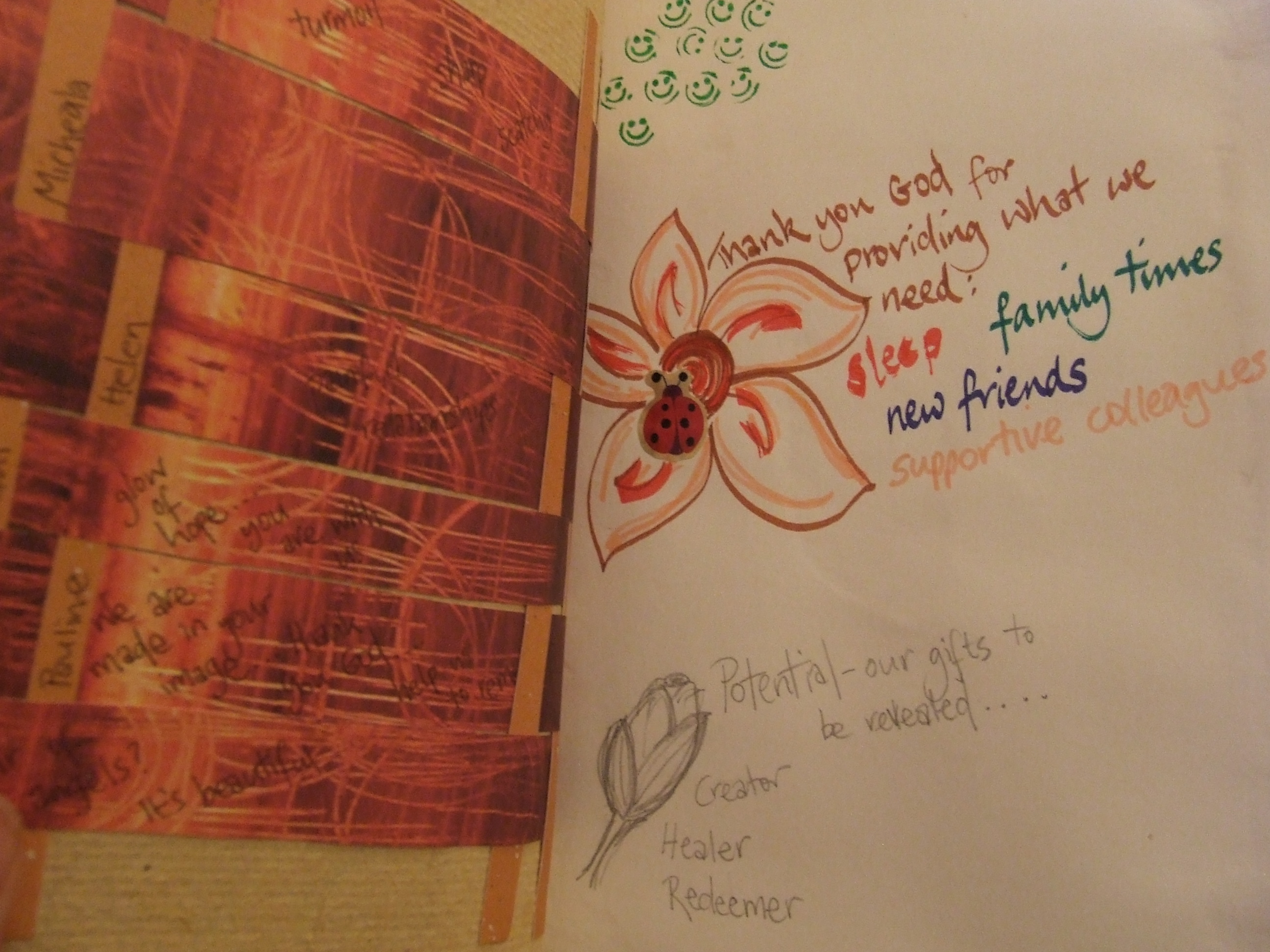
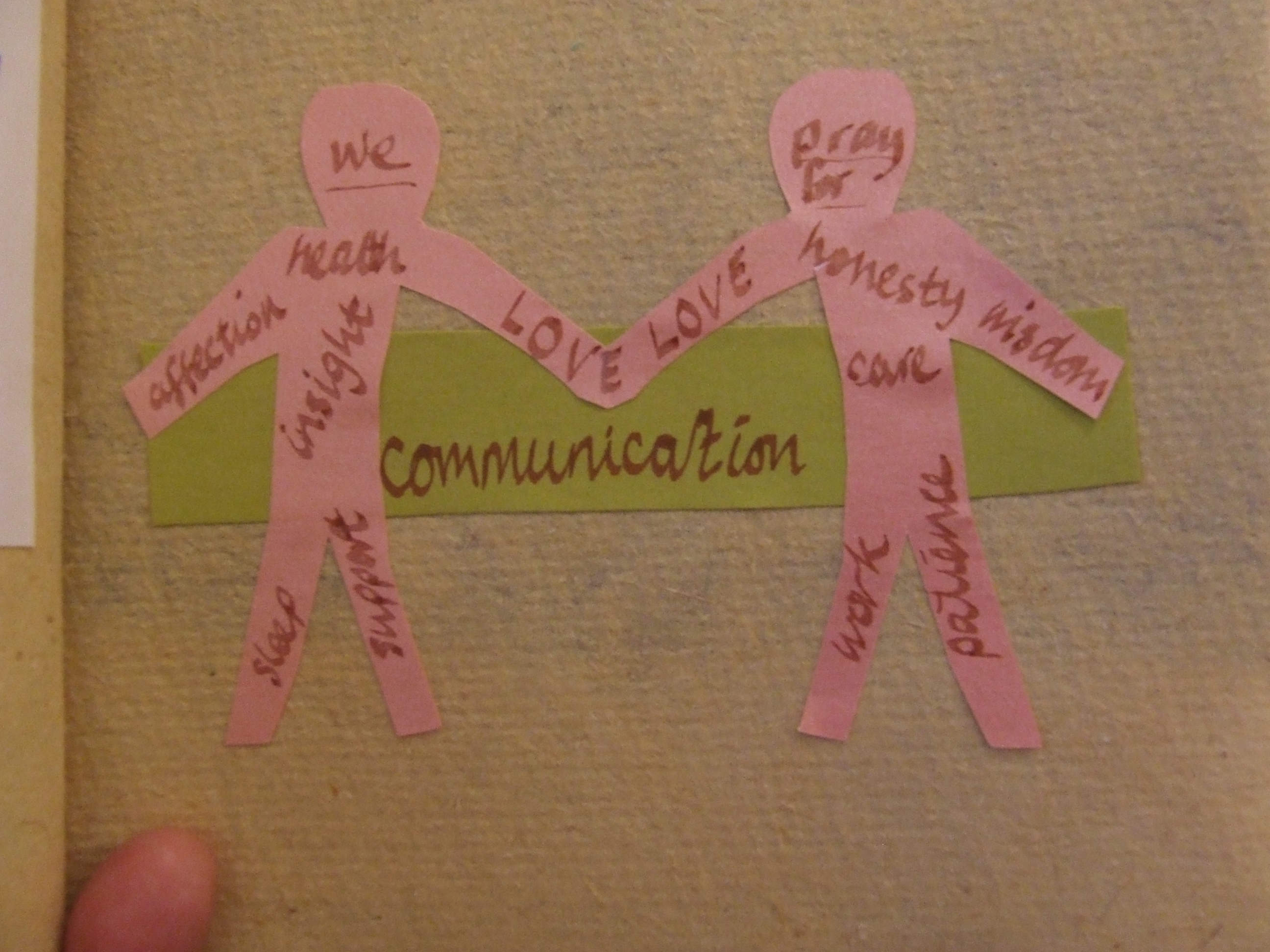
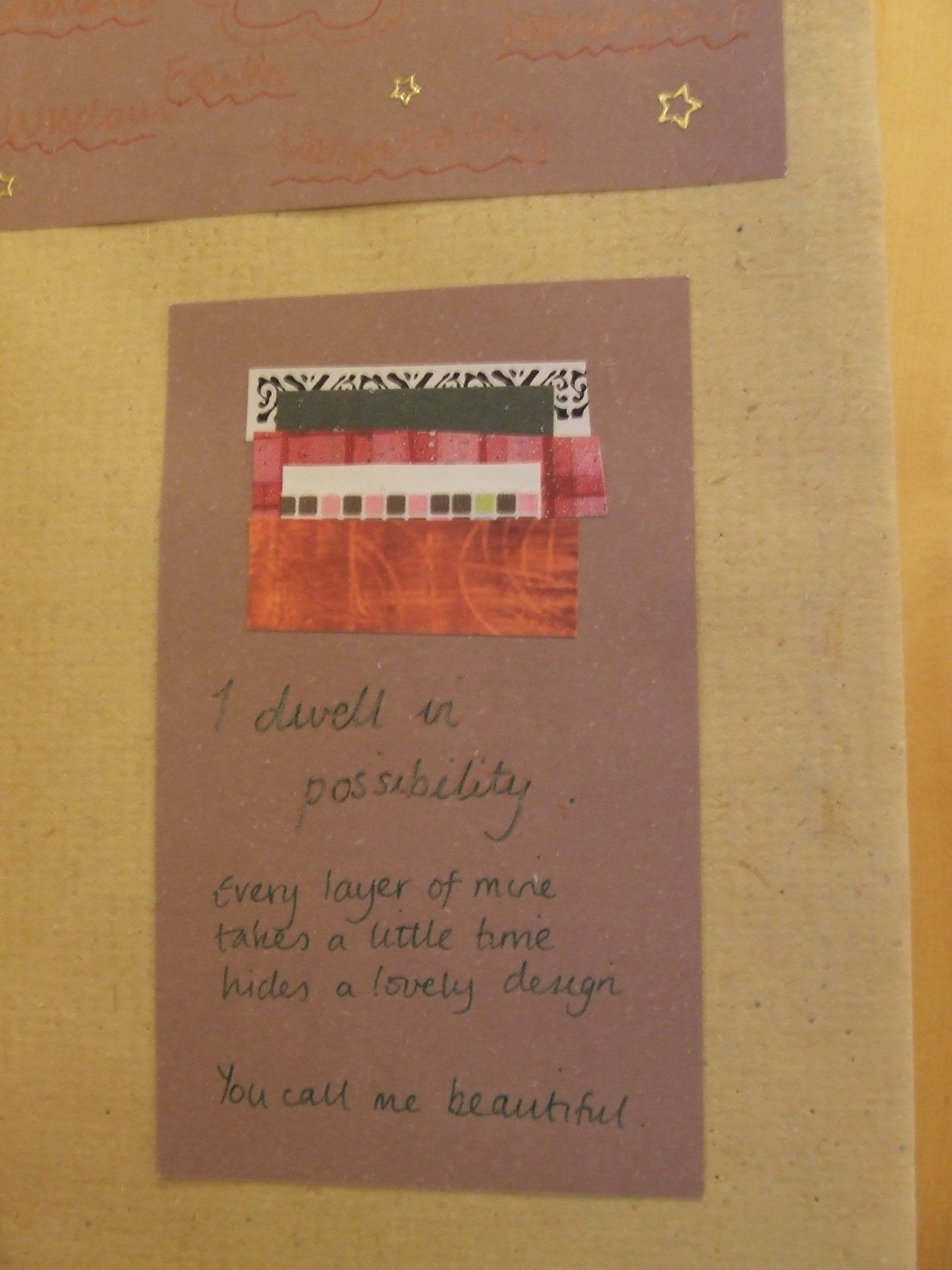
Michaela meets with a few friends to pray and chat about once a week. They sit round a table and make art whist they pray. Women are so much better at these things than we blokes I think.

Of course, being women, chocolate is involved.Today they sat round a big bag of maltesers. I am not sure what exact spiritual role the sweeties played.

Perhaps a kind of woman’s communion celebration?

One prayer, three maltesers.

One answered prayer, a bar of dairy milk.

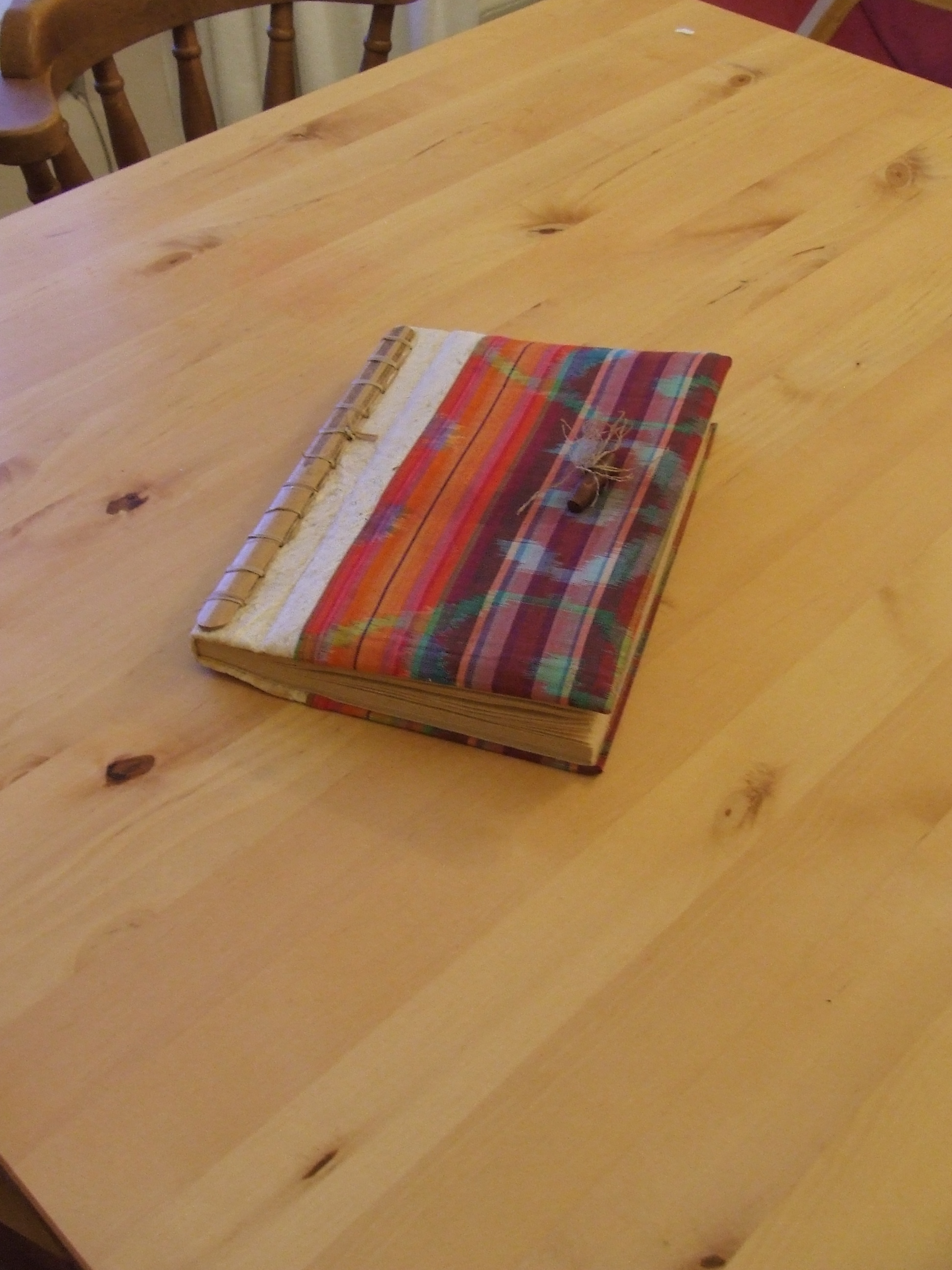
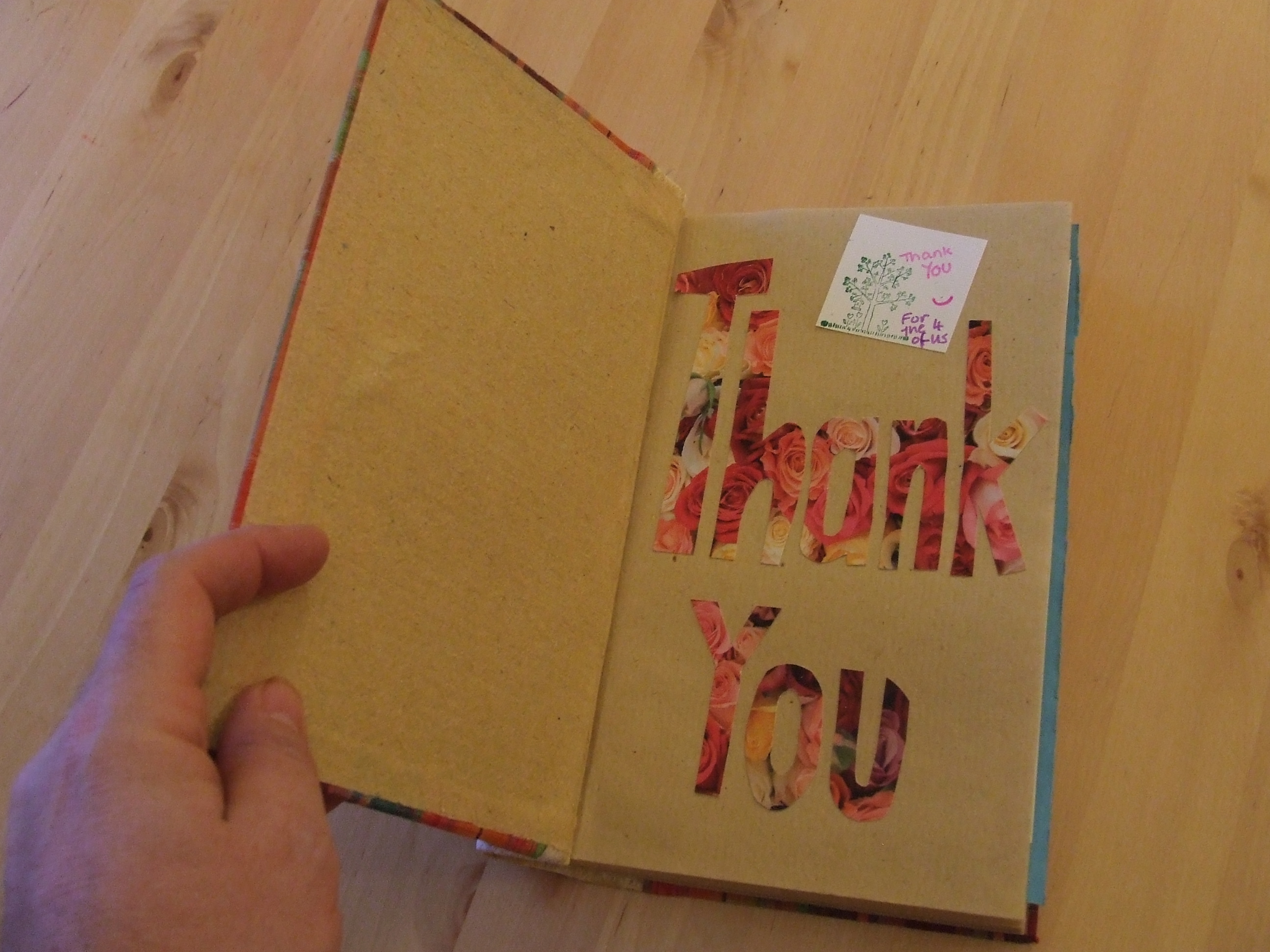
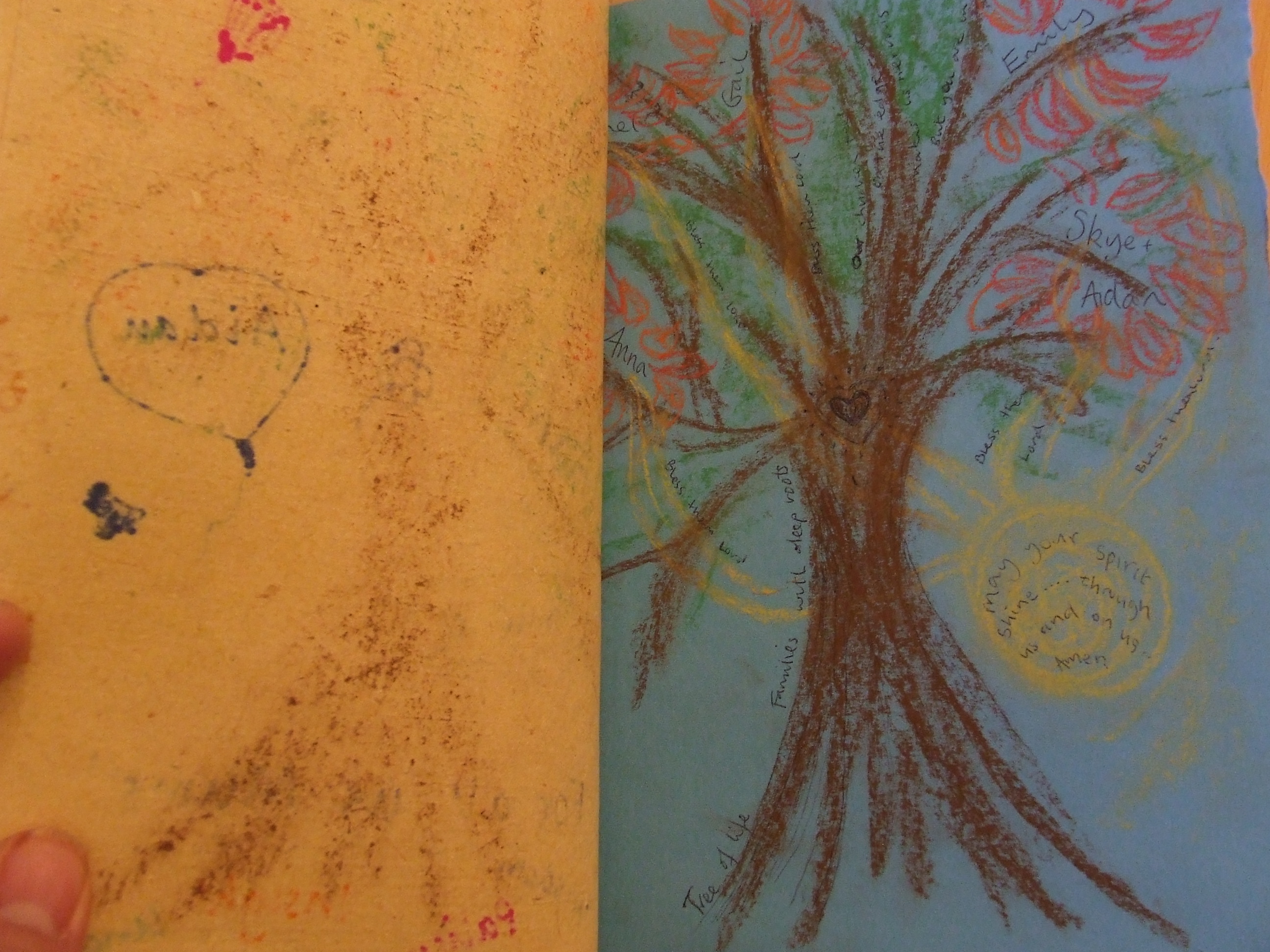
They keep this lovely book of things they have made- pictures and crafts. It is such a beautiful thing- like a living prayer

I got (grudging) permission to take some photos of the pages that are not personal. I hope you enjoy them, it is like an invitation into another world.

Where chocolate is freely available…

Religion makes you a better person?

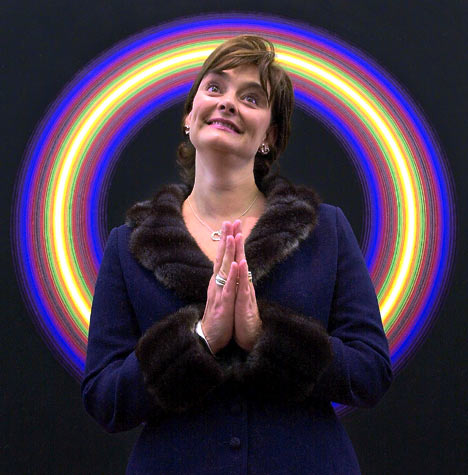
So Cherie Blair has got herself in trouble again

I always feel a little sorry for Cherie- she has been a tabloid target for years. There is something gawkishly vulnerable about her that always made me sort of like her, whilst being a little afraid of her at the same time.

But I suspect she is no fool.

But this latest story- it seems she was sitting as a judge in the case of a man who had suffered some queue rage, and ended up breaking a man’s jaw.

Inner London Crown Court heard that Miah, 25, of Redbridge, east London, went into a bank in East Ham and became embroiled in a dispute with Mohammed Furcan about who was next in the queue.

Miah – who had just been to a mosque – punched Mr Furcan inside the bank, and again outside the building.

Ms Booth told Miah that violence had to be taken seriously, but said she would suspend his prison sentence because he was a religious person and had not been in trouble before.

She added: “You are a religious man and you know this is not acceptable behaviour.”

The National Secular Society soon latched on to the story with a howl of militant evangelical atheistic outrage, feeling that Cherie’s comments meant that she might have treated a non-religious person less leniently.

I suspect that Cherie’s comments have been taken way out of context, and that if we examined most of the summing up comments made by Court Judges when passing sentence, we would find much more juicy morsels to splash around the red top papers.

But the story seems to have stimulated a wider debate about whether religion really does make people behave better- and whether faith makes us better people. And if so- then are Buddhists better than Followers of Jesus, or are Muslims better Pagans?

What do you think? Because I am not sure.

I can not comment on other faither, but I have known a lot of bad behaviour in churches. But I have also noticed that on the whole, people are motivated to do good. For every insensitive bigot, there are a whole lot of other folk who are seeking to live better lives.

In my experience, society is full of wonderful people, who seek to make the world a better place. Some of them have faith which gives a code for life, and a bridge to understanding things in a deeper way.

However we are all capable of such good and such evil. Sometimes religion brings out both.

I have not used one of these voting things for a while- so here we go-

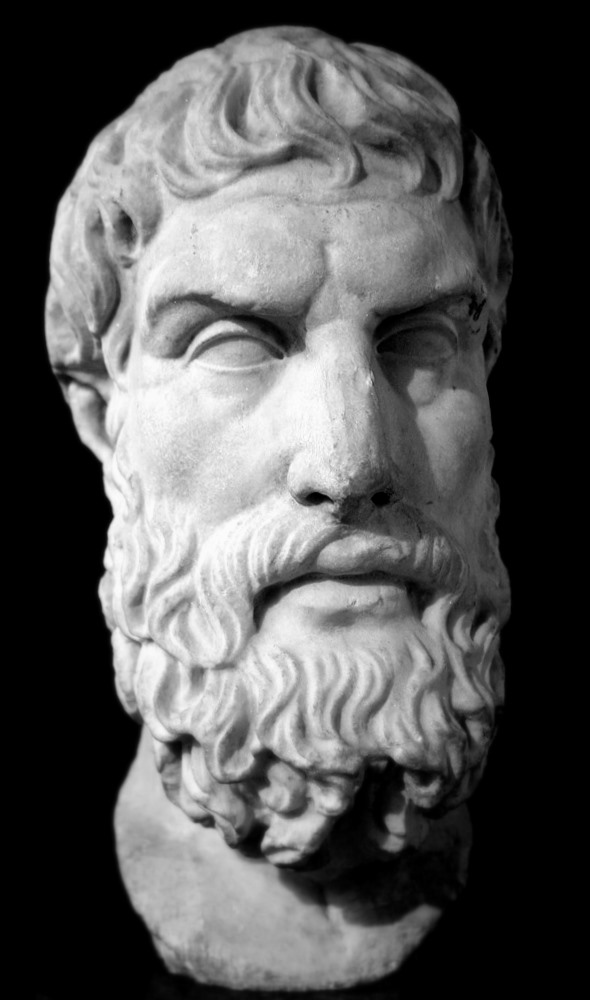
Epicurus, and a life lived for simple pleasures…

Time for a little ancient Greek philosophy…

I have been thinking about the things that motivate us to live fuller, deeper lives- the sorts of things that might encourage us to reach beyond the narrow things of our busy lives, and long for something better. It is kind of the theme of most of the stuff on this blog. For me this is a mingling of faith, family, community, art- poetry and music- and connection with the needs of others.

But a lot of the time, I find myself drawn into a different way of living, dominated by a desire to gather to myself stuff that gives life a degree of comfort and pleasure. It becomes about ME and MINE. Life becomes divorced from the way of Jesus, and the laughter of the Spirit.

Back to the Greeks, as there is nothing new under the sun (with the possible exception of velcro.)

Epicurus lived in a time when heroism was idealised- self sacrifice in the name of honour, public service, in service of the Gods. His culture was overshadowed by the whims and wishes of divine beings, as they looked down from Olympus and interfered with the ways of men. Epicurus and his followers suggested a different path- one that could be seen as similiar in many ways to our hopes for life in the West…

It propounded an ethic of individual pleasure as the sole or chief good in life. Hence, Epicurus advocated living in such a way as to derive the greatest amount of pleasure possible during one’s lifetime, yet doing so moderately in order to avoid the suffering incurred by overindulgence in such pleasure.

The greatest good was to seek modest pleasures in order to attain a state of tranquility and freedom from fear (ataraxia) as well as absence of bodily pain (aponia) through knowledge of the workings of the world and the limits of our desires. The combination of these two states is supposed to constitute happiness in its highest form.

Lawbreaking was counseled against because of both the shame associated with detection and the punishment it might bring. Living in fear of being found out or punished would take away from pleasure, and this made even secret wrongdoing inadvisable. To the Epicureans, virtue in itself had no value and was beneficial only when it served as a means to gain happiness.

Friendship was encouraged because it was personally beneficial.

Death should not be feared- it is merely the end of all things- on their tombstones, Epicureans were known to have inscribed- I was not; I have been; I am not; I do not mind.

The universe is infinite and eternal, and that events in the world are ultimately based on the motions and interactions of atoms moving in empty space.

I have to say that something about Epicureanism depresses the hell out of me. This is perhaps because it is so empty- so self seeking. Is this it? Is this all that we are about- the carving out of a life of modest pleasure, and avoidance of pain?

Perhaps for many of us, this is enough.

Many of us spend half a life time trying to achieve this ideal, then the rest trying to defend it.

Jesus was less interested in happiness, but talked about JOY. For him Joy is born in us- we do not make it or earn it or capture it. Joy rises up in the most unlikely of places, in spite of pain, discomfort, and loss. It is related to living a life that is connected to the deeper purposes of God- the ways of love. The ways of service. The walk of the humble.

C S Lewis said this- “I sometimes wonder whether all pleasures are not substitutes for joy.”

Life is here- then gone.

And in the midst of the thing is such great joy. Let us not miss it.

Dorothy Day- living the gospel…

Thanks Dean for pointing out these videos about Dorothy Day (November 8, 1897 – November 29, 1980), Catholic activist for Jesus in pre and post-war New York City.

I had never heard of Day until pointed her way by TSK’s post- here. He suggested that we would re-discover her work as the next period unfolds– and even if he ‘makes it so’ by mentioning her in this way, then her life and work is well worth further study. Voluntary poverty, living a life of service, non-violent activism. Gentle deep Spirituality- did we not know of her because we Protestants have had a blind spot to all things Catholic?

Let her speak for herself, below. See past the dated clothing and presentation, and remember that this lady was born 112 years ago…

Faith outside church- Spirited Exchanges…

We hear that increasingly, Christians do not go to church. What I mean by this is that many people who would see themselves as having a real and vital faith are seeking to find ways to live out this experience outside organised religious institutions.

A study by George Barna, looking at 20 million American Christian ‘Revolutionaries’ (Oh how Barna loves a label!) had this to say-

“A common misconception about revolutionaries,” he continued, “is that they are disengaging from God when they leave a local church. We found that while some people leave the local church and fall away from God altogether, there is a much larger segment of Americans who are currently leaving churches precisely because they want more of God in their life but cannot get what they need from a local church. They have decided to get serious about their faith by piecing together a more robust faith experience. Instead of going to church, they have chosen to be the Church, in a way that harkens back to the Church detailed in the Book of Acts.”

I liked this description, not because I see myself as a ‘revolutionary’, but because Michaela and I (along with a number of our friends) find ourselves trying to do just this. For me, the issue is not Church as a noun, but Church as an adjective. And at present, where I am, I find that the noun often gets in the way of the adjective. If you see what I mean.

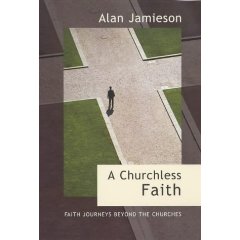
There has been some discussion about ‘Churchless faith’, and whether this will increasingly be the future of faith in the West. Alan Jamiesons book of the same title is well worth checking out on this issue. There is a good summary of the issues from a New Zealand point of view here. Some of the stories told sound very familiar from a UK perspective, and I suspect that we have far more in common with those down under than with the USA faith community in terms of the Post Christian nature of our society.

This seems a good time to give a plug to Spirited Exchanges UK.

I came across Spirited Exchanges at Greenbelt, and later met up with Jenny McIntosh (the New Zealander who came to the UK with a vision to get things going here) at a Tautoko Network weekend. I really liked Jenny, and on this basis alone, I wish them well!

This from their website about what they are-

Spirited Exchanges UK Network is an umbrella name for a variety of initiatives. It is based on the recognition that many people of all ages and backgrounds are struggling with issues related to faith, church and institutional religions:

  • some want freedom to explore the questions without being told the answers
  • some have been abused in a controlling church culture
  • some have had life experiences that cause them to doubt God
  • some are hurting, some are angry, some are bored
  • some are hungry for more spiritual reality
  • some are simply curious


Spirited Exchanges UK :

  • does not try to convert people
  • does not try to lure them back into a church fellowship
  • does not try to “fix” problems
  • does not assume problems are there when they are not

In summary, Spirited Exchanges UK lets God defend God.

I have been thinking about my own journey outside church- the process of having to separate my relationship with God with my relationship with an institution. Having to learn (and then relearn) what spiritual practices allow me to contine to pray and worship and live out a life of faith- and having to take responsibility for this myself, not relying on the developed, even if sometimes uninspiring, programmes that church lays on for me.

Of failing to do this at times.

And having to turn, and turn again.

This journey has been special for me, but I still recognise that CHURCH, in its bricks and mortar form, with all its baggage and stipends and organ funds- this church too is beloved of God.

Our awareness of the false boundaries we made between the ‘sacred’ and the ‘secular’ may have been replaced by a deeper awareness of the present Kingdom of God, but this Kingdom still needs its ambassadorial residences. It still needs places where it’s agents can collectivise and practice the disciplines of love.

Many of us who adventure outside Church may yet return. And if we do not, we are still learning how to become- Church.