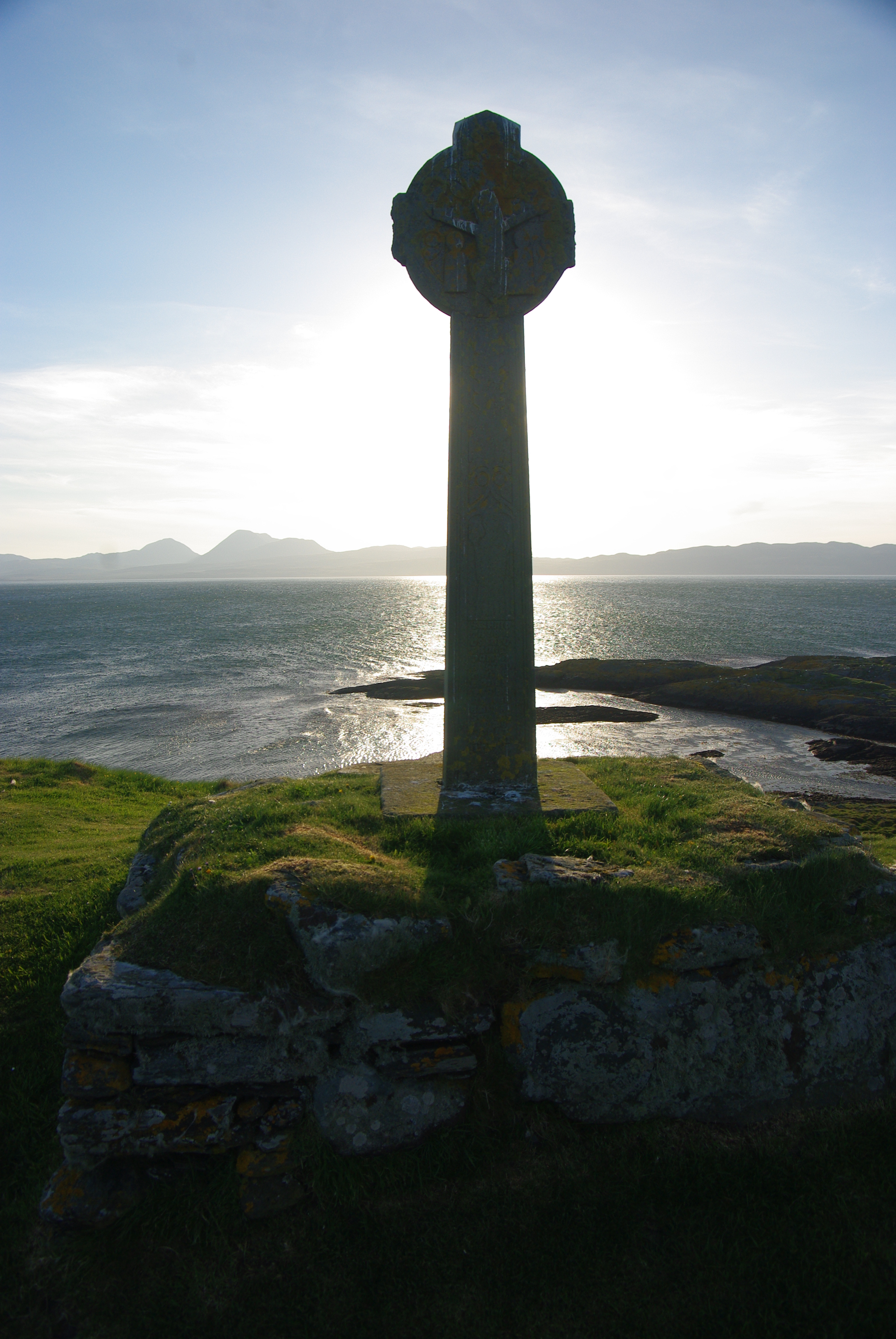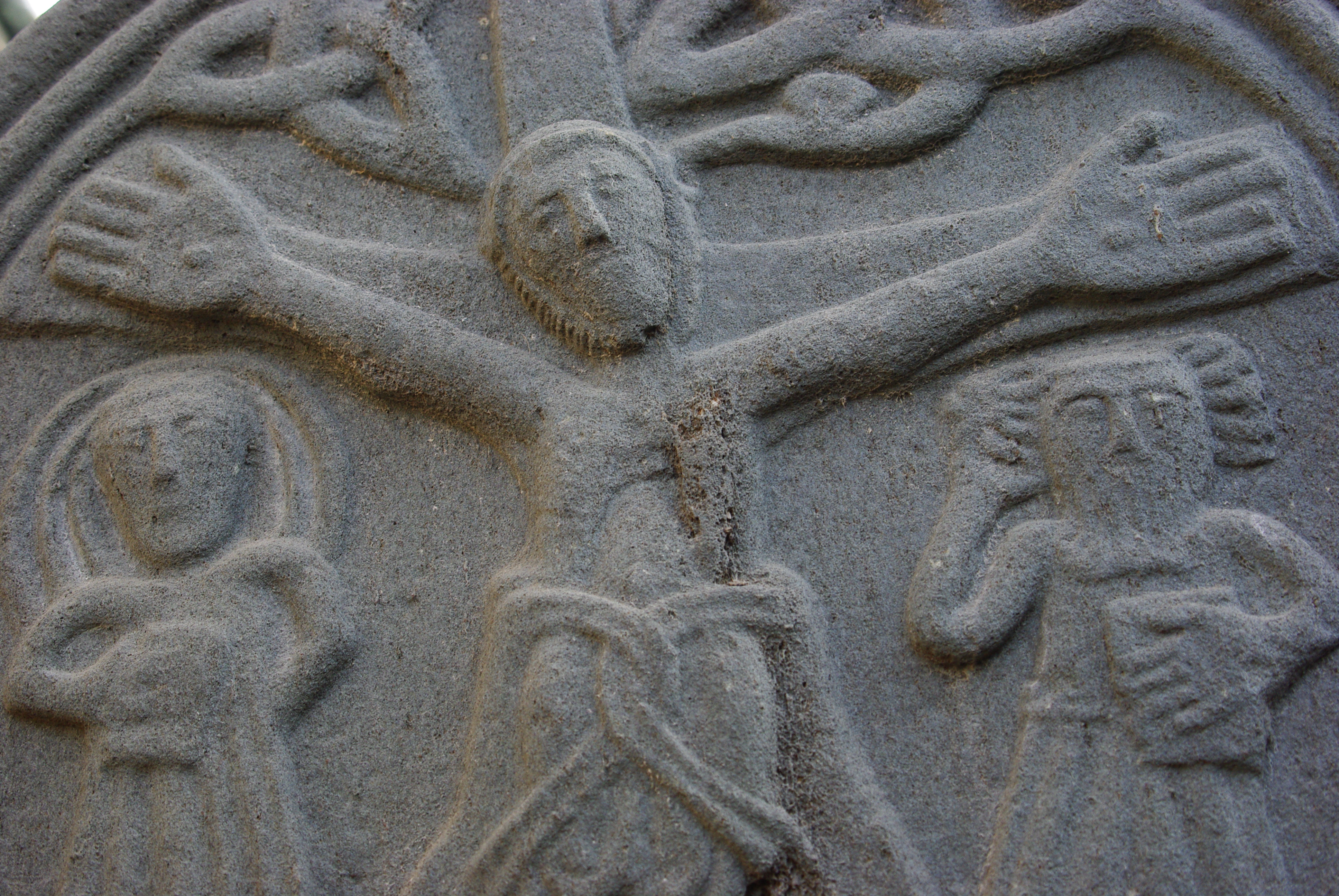
Is God violent?

It is a question I was discussing with a friend last week. She, like me, comes from a background in which the stories of the Bible were regarded as unquestioned absolute fact. The problem is that as you start to take a look at some of these stories, you start to hope that they are not.

But if they are not, then the absolutes that faith has been built from start to come unravelled- if you pull at these bricks the whole wall will fall in.

I wrote a series here called ‘Bible Nasties’ in which I tried to explore some of the issues that arose from my own theological meanderings. You can catch the first one here, and the others via the links in the comments.

However, Brian McLaren does it much better in this article here. Here are a couple of quotes;

Let’s define violence simply: force with the intent of inflicting injury, damage, or death. I think believers in God have four primary responses to the question of God’s violence defined in this way:

1. God is violent, and since we human beings are made in God’s image, we’re free to use violence as one valid form of political communication (to borrow a famous phrase from Carl von Clausewitz), and in fact we are commanded to use it in some cases.

2. God is violent, but in a holy way that sinful humans are incapable of. That’s why violence is generally prohibited for humans except in certain limited cases. In those cases, only those designated as God’s chosen/elect/ordained, acting under God’s explicit direction, are justified in using violence.

3. God is not violent, so human violence is always a violation of our creation in God’s image — both for the perpetrator and the victim. If it is ever employed, it is always tragic and regrettable, never justified.

4. God is not violent, so violence in any form is absolutely forbidden, no exceptions.

McLaren goes on to describe his own struggles with this issue- how the violent version of God contrasts with the other version in the pages of the Bible- the loving, forgiving, self sacrificing one, who eventually casts himself as the victim of violence, not the originator of it. Which version is the truest one, because increasingly it becomes impossible to hold them both together.

McLaren points us to Jesus, and along the way, we again bump into how we understand attonement;

In my own grappling with this subject, a single question has brought things into focus for me: Where do you primarily find God on Good Friday?

If God is primarily identified with the Romans, torturing and killing Jesus, then, yes, the case is closed: God must be seen as violent on Good Friday. The cross is an instrument of God’s violence.

But if God is located first and foremost with the crucified one, identifying with humanity and bearing and forgiving people’s sin, then a very different picture of God and the cross emerges.

Both locations present a scandal. The former, it seems to me, subverts the entire biblical narrative. God is not then identified with the slaves seeking freedom, but with Pharoah keeping them in their place. God is not with the woman caught in adultery, but with those who want to stone her. God is not with Paul, accepting Gentiles as sisters and brothers, but with the Judaizers, upholding the Law. And God is not hanging on the cross, but stooping over it, pounding in the nail. That’s scandalous in one way.

The latter understanding subverts violence and all those who depend on it for their security, affluence, and happiness. God is with the slaves, not with the slave-drivers. God is found in the one being tortured, not the ones torturing. God is found among the displaced refugees, not those stealing their lands. And God is found in the one being spat upon, not in the one spitting. A very different scandal indeed — and a very different cross, with a very different, but no less profound, meaning.

 

Secret agent…

There is a strange appeal in the idea of the secret agent. All that subterfuge and daring in the service of the higher calling.

I am convinced that for most of our time, we question too little, protest far too infrequently, and in the name of politeness tolerate far too much injustice. Or at least I do- perhaps you are different.

Of course most of the time, spitting out splenetic screeching opposition will achieve little. This is where the secret bit comes in. Time to work in the shadows of the Empire- whatever this Empire might be.

The insurgency of God is rising.

Shhhhhh.

Or to put it another way- this from the Emergent Village daily minimergent;

While complying can be an effective strategy for physical survival, it’s a lousy one for personal fulfillment. Living a satisfying life requires more than simply meeting the demands of those in control. Yet in our offices and our classrooms we have way too much compliance and way too little engagement. The former might get you through the day, but only the latter will get you through the night.

Daniel H. Pink

The wisdom about Solomon…


Old Melvin Bragg did it again this morning- great discussion on what we know (and don’t know) about King Solomon. You can listen again to this programme (and all sorts of others spanning years and years) here.

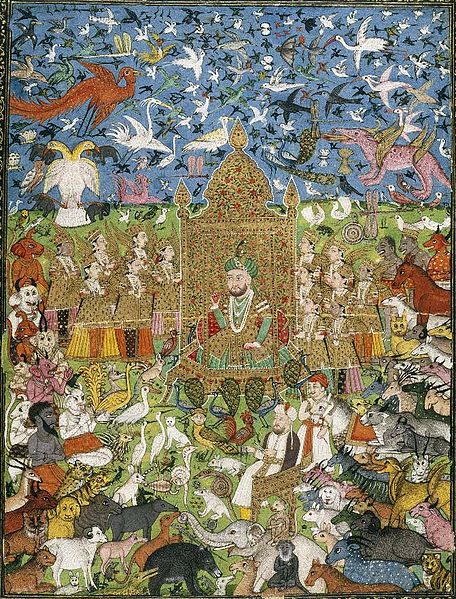
Solomon- the archetypal enlightened Oriental monarch, the nearest thing we have in our adoptive western tradition of a Sun King. He is said to have lived in relative peace, accumulated great wealth, a vast harem of wives and concubines, built temples and palaces and a network of ‘chariot towns’ in an expanding Kingdom. He was said to have been visited by great Queens, and to have ‘satisfied’ them. Along the way, he asked God to grant him wisdom, and is accredited with authorship of several books in the Bible- Ecclesiastes, Proverbs, Song of Songs. He is revered in Hebrew tradition as presiding over a golden age, and in the Islamic tradition as a prophet.

The truth of all this is in the dust. No certain evidence of his existence, or that of his great building projects, has been found. Authorship of his books in the Bible are almost certainly more complex. Having said that the written record of the minutiae of his life in the Bible are beyond almost any other comparable ancient figure. There is no doubt that Solomon is a dominant Icon in the history of us.

He is also a flawed figure. The Bible story talks about his enslaving of the people, and his descent into the paganism of his many wives. He accumulated vast wealth and thousands of horses- all on the back of slavery. According to scripture, God was not pleased, but rather than destroy his Kingdom in Solomon’s lifetime, God decided that the Kingdom would not stand. Solomon’s sons fought, argued and it all fell apart.

The interesting thing is that despite the obvious flaws that the Hebrew tradition records in this great leader, we remember mostly the wisdom and the glory. We somehow root for Solomon- we envy him his achievements- his wealth, his women, his worldly wisdom.

This led me to wonder what wisdom might these stories communicate to us, here, now? Why are these stories so central to the Bible story? Whatever the historical truth of these stories, what truth do they have to our spirits?

It is all there I think- the pursuit of a nationhood of conquest and empire. The accumulation of wealth and fame. The exploitation of women and sexuality. The enslavement of the powerless individual towards the wealth of the few. The demonisation of those outside the boundaries as less-than-human.

Then there is the rise and inevitable fall. Like boom and bust economics. And at the core of it all, the loss of the core of things- the turning from what is good and pure towards idolatry.

I look at this story through what we know of the journey that was to come, and perhaps most of all through the person of Jesus; who had no stately majesty, no wealth, no interest in power, other than power-to-save. Jesus who came to proclaim that other word that we have heard too much of over the last few days in the UK- Jubilee.

Jubilee not in the sense of a celebration of wealth and pompous privilege. Jubilee that had nothing to do with looking backwards towards an empire now gone, and had nothing to do with jingoism or nationhood. Rather it was about this;

The Spirit of the Lord is on me,
because he has anointed me
to proclaim good news to the poor.
He has sent me to proclaim freedom for the prisoners
and recovery of sight for the blind,
to set the oppressed free,
to proclaim the year of the Lord’s favour.

(See Luke 4 and Isaiah 61)

The focus shifts to the little people like you and me.

Solomon has had his day. May all Kings and Queens take note.

There is a light…

I just watched this advert, and it caused my glasses to mist a little…

I know- it is carefully calculated clever manipulation to make me buy insurance. The ‘Hiscox values’ made clear to build a ‘customer base’.

But I misted because of the glimpses of humanity, or the glimpses of grace. The possibility that we were indeed made in his image.

So even if I am being sold a carefully researched and focus grouped ideal, good for you Hiscox.

Although to be honest, I am not about to buy any insurance. Michaela told me that we tried to insure our annex with Hiscox, and they would only do so if we took in no one on benefits.

Goodness is not without economic compromise in the world of risk and loss and big business it seems.


All manner of things shall be well…

I have been working on a song today. I used to write songs a lot, but stopped (unsurprisingly) when I no longer sang as much.

It forced me to return to rhyme, which I am usually glad to put aside when I write poetry.

I was thinking about those words of Julian of Norwich– All shall be well, and all manner of things shall be well. The theology behind these simple words is highly complex. Despite living in a time of the the Black Death, which religious people saw as the just punishment of a wrathful God because of the sin of the people, she chose to believe in love and hope. Interestingly, in our times when the theological debate around Atonement is causing such conflict, Julian had some very non standard views about sin and the punishment of God. This from the Wikipedia entry;

Julian believed that sin was necessary in life because it brings one to self-knowledge, which leads to acceptance of the role of God in one’s life. Julian taught that humans sin because they are ignorant or naive, not because they are evil, which was the reason commonly given by the church for sin during the Middle Ages.Julian believed that in order to learn, we must fail. Also, in order to fail, we must sin. The pain caused by sin is an earthly reminder of the pain of the passion of Christ. Therefore, as people suffer as Christ did, they will become closer to Him by their experiences.

Similarly, Julian saw no wrath in God. She believed wrath existed only in humans but that God forgives us for this. She writes, “For I saw no wrath except on man’s side, and He forgives that in us, for wrath is nothing else but a perversity and an opposition to peace and to love”. Julian believed that it was inaccurate to speak of God’s granting forgiveness for sins because forgiving would mean that committing the sin was wrong. Julian preached that sin should be seen as a part of the learning process of life, not malice that needed forgiveness. Julian writes that God sees us as perfect and waits for the day when humans’ souls mature so that evil and sin will no longer hinder one’s life.

Here are the words so far, still listening for their tune;

In the morning when I rise
In the evening when I die
You are there

In the cloister or the gutter
In the music and the song
In the heart that breaks wide open
In the right and in the wrong
In the tear that no one noticed
In the flow of every stream
In the leaf slowly unfurling
In things seen and yet unseen

In the mist of mellow fruitfulness
Or a stinking torture state
In the stab of empty promises
And twisting with our fate
In the road as yet untraveled
In the barrel of a gun
In the plan that comes unravelled
Or the journey just begun

In the cracks of what we concrete
In the atom and the bomb
In the hope of each spring morning
In a moment too soon gone
In the Bible and the bar room
In famine and the feast
In the spaces we make for him
And where we expect him least

I am learning trust in you
For all manner of things
Shall be well
All manner of things
Shall be well


Geek worship!

I saw this via Ian Adams on FB this morning;

It is a film of a worship service in Exeter Cathedral, making use of the X-box game ‘flower’ throughout as an image of creation.

The curmudgeon in me wants to scoff at such techno-geek worship- in many ways the use of an X-box seems to me the ultimate in what some already might regard as excessively gimmick-driven alternative worship.

However, it was really lovely wasn’t it? And perhaps it is totally logical to start to use new media within our worship as it becomes increasingly part of who we are and how we interact.

Perhaps Call of Duty as an way of symbolising spiritual warfare might be a step too far though…

Teaching, preaching- in small missional groups…

In the middle of all the laughter around the campfire on my recent wilderness trip, conversation took a much more serious turn. I found myself in the middle of a rather intense and difficult discussion with one of my friends and Aoradh chums. Some of this was about leadership in Aoradh- which I will return to when I have had a chance to process and discuss it again, but another issue flickered briefly in a way that surprised me- ‘Teaching’.

‘Teaching’ that is, in the traditional Christian/Evangelical sense of the word. Apologies to those not from a background like this, but those that are will know exactly what I mean. All our services revolved around one thing- the climactic 45 minute to an hour long sermon. Through this a skilled preacher would expound on a passage from ‘The Word’, inspiring us, shaping us, challenging us and bring us to repentant response.

This kind of spirituality grew out of Victorian spirituality- a combination of the elevation of the written words of the Bible  as the primary (even the only) revelation of God, and the syncretism of faith with modern rationalistic culture. So it was natural to engage with spirituality in the same way that we would engage with the study of medicine or chemistry- in a lecture hall, with the celebrity scientist at the centre, sharing his accumulation of knowledge- even his life long labour- with those eager for understanding.

Along with this of course, scientific rigour was required, along with reliable, testable source material. So faith became something it was possible to organise, define and defend. And we did this above all things by knowledge of the Bible- carefully cross referenced verses, once produced, ended all argument.

Perceptive readers may sense a certain scepticism in the tone of this piece. It is easy to have a go at all this from a post modern cynical perspective.  We can point to all sorts of problems that we inherited with this kind of spirituality-

  • The top down nature of it, casting us in the role of passive receivers, not active questioners
  • The potential it gives for the misuse of power and control
  • The one dimensional quality of a lot of preaching- the giving of one man’s (and it usually is a man’s) perspective on ‘truth’
  • The elevation of the words of the Bible to what I would describe as idolatry- a tendency to treat the words as some kind of unassailable blue print that arrived down on earth on the wings of an angel as the transcription of the very word of God (in case you are wincing at my heresy, there is a fuller discussion of this issue here.)
  • The changing communication style of the age- the shortening of attention spans, the endless competition of other media has now entered into the human condition.

There is also this question in me about my own experience of listening to preaching. I have had the privilege of hearing some really great preachers- people who hold the attention by their great oration and carefully constructed sentences. Preaching like this is an art form, all the more to be celebrated in this age of the 30 second sound bite. Some of my friends still are responsible for delivering sermons each weekend- and I celebrate their honest creativity- their genuine efforts in the long direction, to bring light into the lives of a congregation through words.

I also love to go and listen to speakers at festivals like Greenbelt- people who bring a totally new and sometimes controversial perspective.

But having said all this, when I consider the shape of my own journey, and try to remember how this was affected by teaching or preaching I have heard, I struggle to remember more than one or two actual sermons/teaching sessions (and even those, not necessarily for the right reasons.) Perhaps I was shaped by the experience more than I can remember the actual events, but considering the countless hours of preaching I have sat through, we might expect there to be much more connection between hearing a message, responding to the challenge, and life changes that flow from this.

I think that we have been caught up in the idea that refining our knowledge of a certain kind of moral interpretation of the Bible equates to something we called ‘spiritual maturity’. It was like a uniform we put on- a way of identifying with the church culture we belong to. But as I look back now, this is not the kind of spirituality that has deep value to me.

It is not that knowledge is unimportant, or that we do not need someone to give us some basic knowledge for the road, but despite all this, spirituality (in my experience) is only discovered in real places, encountering real people and asking questions of the experiences along the way.

I also think that the reductionism of faith down to basic facts is dangerous. It suggests that there is ONE understanding that we should all be conforming to- and increasingly I have found faith to be a glorious question mark, within which there are routes for many lines of enquiry.

Those of you that preach will right now want to tell me that there are other ways to skin the cat- and I would agree with you. Preaching can open up issues, not close them down. Preaching can soar like poetry in the ears of the listener. This kind of preaching I want to hear.

Perhaps preaching is reshaping too- think of all those wonderful TED talks that go viral on t’internet. Like this one;

So, what of our short discussion about teaching in small missional groups? How do we ‘teach’ one another in this kind of context?

The very idea initially took me by surprise. Why would I want to ‘teach’ my fellow community members anything? Does this not assume that I am some kind of God-expert who needs to sprinkle my knowledge on my disciples? Are we not learning together constantly just by living deliberately shared lives of faith? Ideas enter constantly into conversation through books we have read, things we have encountered through the internet etc.

Then I thought of our young people- who perhaps do need to learn some things in order to go through their own process of deconstruction/construction. Is it enough for them to learn in this kind of community chaotic way? Perhaps it is time to think again, if not about teaching, then certainly how we facilitate discussions around particular questions.

It is a work in progress- like most of my theological positions, but some principles seem important to me;

  • Open spaces. Learning requires safe spaces in which to adventure. We have to be free to get it wrong.
  • The honest question is worth a million cheap answers.
  • Community is teaching. Teaching is community.
  • We learn in different ways- listening, watching, reading, experiencing, discussing.
  • Everyone has something to teach.

hmmmm….

Wilderness retreat pictures…

We are back after a wonderful few days out in the wild.

This year the Aoradh wilderness trip did not venture out to one of the islands- a few people dropped out and so the boat charter would have just been too expensive. We decided that we would stay more local, so I scouted out a location half way up one of our lovely lochs- Loch Striven.  Five of us walked/canoed in from the road end and spent two days and nights in silence, in community and preparing lavish outdoor meals.

This time we managed to bake bread in a biscuit tin oven, bake potatoes and apples, cook mussels harvested from the shore in front of the tent, and spend hours sitting round the campfire talking and laughing.

Even though the weather was mostly lovely it was unusually cold, which was a shame as I took advantage of the trees to use my camping hammock/tarp set up- which turned out to be rather chilly.

This trip was very different to our other wilderness retreats but still really great- it made us appreciate again the wild places right on our doorstep here in Argyll. We also wondered whether it might be a chance to offer people short taster sessions of what wilderness and spirituality together can offer.

I also got to do some canoeing too, for the first time for a while. Andy and I clocked up around 18 miles of paddling. In the process of which we saw seals, porpoise and countless sea birds. Today we canoed to the head of the Loch and Michaela came to collect us. Lovely!

Desperately seeking Spirituality…

Check out this article by Simon Cross on the Christian.co.uk site- he has included some discussion of our wilderness retreats.

(There is no particular link to the image above by the way, other than it reminds me of one of our island retreats!)

Simon’s article was focussing on what he saw as a significant change in the way Evangelical Christians are approaching spirituality, and whilst I would not regard myself as Evangelical, I recognise the patterns he describes. Here is a quote;

“Contemplative spirituality is a radically different way of being for most evangelical communities.”

In contemporary British society, with its emphasis on the importance of activity and consumption, a sustained path of contemplative Christianity is profoundly counter cultural. Success is generally measured by achievement, and when it comes to contemplation, achievement is hard to measure, or display.

I interviewed Roy Searle of the Northumbria Community for a book about new forms of monasticism , and during our discussion he made the point that the way in which desert spirituality differs from ‘conventional’ Christian spirituality, is that it focuses upon the inner journey – or the ‘journey of the heart’. This is in contrast to ‘normal’ life which is marked by external signs of movement, progress and achievement.


Ubiquiosity and self curation…

I managed to use two words in the title to this piece that my spell checker does not recognise. Possibly because I made at least one of them up, but also because in many ways blogging (another word the spell checker rejects) is a process by which we construct a new version of ourselves- a cyber me.

I was reminded of this by listening to a radio programme today about how humanity is being shaped by the digital media. It was particularly interested in the proliferation of photographic images that we take to illustrate and document our worlds.

It asked a lot of questions about how when faced with an event, or an occasion, or just a sunset, our first thought is how to record it on one of the many devices we habitually carry for the occasion. In doing this, we not only shape our own interaction with the world, but we also are creating a version of ourselves for other people- we are curating our own self exhibit.

As the programme described…

…imagine yourself in a picture in front of a staggering view, smiling into the camera. The picture was taken to display your adventure, your specialness in relation to the special place. It is taken to show others your uniqueness, despite another million other pictures taken in the same place. Just you, having a carefree wonderful time.

Because you were there, you know the wider story- the blisters on your feet, the tiredness and hunger, the row you had with your partner a few minutes before. Also, all those other dimensions- the smell of the place, the sounds in the liquid air.

But interestingly, when you come to think back on this experience in the years to come, the amazing thing is that your entry into the memory will be shaped by this photograph- it will be a telescopic frame that distorts the reality towards the exhibit you were creating.

You, on a good day…

Sure, this reveals us (particularly if like me you make yourself an exhibit on the internet) as rather vain, rather shallow, rather foolish. We are making a meal of what is ubiquitous.

But more than this I wonder whether we are missing out somehow. If every event has to be recorded and digitally validated on some kind of external hard drive version of who we are then what might this be doing to us?

Do we lose some dimensions of experience?

Does it distance us from ourselves and each other?

I remember a conversation on a small island last year. We were there to get away from all the electronic noise and retreat, seeking silence, community and the voice of God. Conversation turned to the camera. Most of us had one- one us had 4. I suggested that given that we were seeking to immerse ourselves in nature, potentially the camera could be a distraction, a barrier between us and the place of retreat.

I remember getting quite a strong reaction. People fiercely defended the camera as means of looking more deeply, as a tool to aid spirituality, not to get in the way.

Which it may be. Because these things are never simple and straightforward. It is not either/or, it is both/and.

There is an undeniable vanity in recording your life through photography and writing as I am doing here. It is our connection with significance, however minimal and fleeting that this might be in this age of information overload.

But there are other reasons too- and (unsurprisingly) I feel that these are valid, even if we have to acknowledge the contradiction. I write to allow me to think deeply, to live vulnerably and to seek out God in the small things and the unlikely places.

I am away next weekend to another small island with some of my friends. Can I really leave behind the camera?

Perhaps I will take it, and leave it in the bag for one day.

One step at a time after all…