David posted this clip in response to my previous post, and I loved it.
It echo’s my own thoughts about the dominance of positive thinking here.

David posted this clip in response to my previous post, and I loved it.
It echo’s my own thoughts about the dominance of positive thinking here.
It will all come round again if you wait a while. There is nothing new under the sun.
David Cameron (Michaela says she always finds herself shuddering when his name is mentioned) has this idea- and it goes something like this-
Lets stop all these public services, and suggest that people just get on with it for themselves.
The middle classes will come through.
An army of people dressed in sensible shoes will organise committees to clear slums, dig sewers, set up homes for the incurables and feed Tiny Tim till his little tum is fit to bust.
Cameron seems to have taken advice from Samuel Smiles.
And meanwhile, all around us, community groups who might give structure and organisation to all this community activity are all going to the wall as they lose their funding.
It is not as though I could ever be accused of being against community activity, or believe that the Big State can ever be the answer to all the issues that society throws up. But when a ‘big idea’ is used as a mask to do the same old confidence trick- cuts to services, and power and wealth to the already powerful and wealthy- then I start to feel the need to rant.
Now, rant over- have a laugh at this little clip…
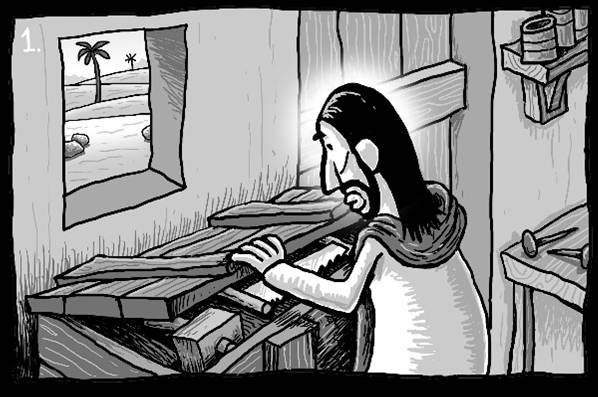
In a room scented by the smell of sawn timber, a man hears a voice in his inner ear calling him
it is time-
your time, and mine
enough of the mending and making and shaping of wood
time to put aside the tools
the sharp nails…
can wait.
Images by Si Smith
We went to the James Duncan exhibition at Benmore Gardens today.
Quite a story- which captures the character of Victorian industrial expansion, philanthropy, sponsorship of the arts and the importance of religion.

Duncan was born in Greenock, to a father wealthy from selling books, but who died young. His son was a bit of a clever lad, who did very well in his studies- particularly chemistry. As a young adult in early Victorian Britain, he had a choice of industries to apply his science within, and chose the sugar industry- one of the engines of prosperity for the West of Scotland. Perhaps even one of the reasons my house was built back in 1840.
After working for various companies, whilst on a wee trip down Loch Long, Duncan came up with a new way of refining sugar- slow boiling it to produce less waste and a higher quality product. He set up partnerships, factories first in Greenock, then in London- and made a vast fortune.
But for this Christian tycoon, born into an age of philanthropy, with such wealth came responsibility. Or perhaps guilt. Duncan began to sponsor all sorts of philanthropic schemes- sewer works, slum improvements, hospitals, libraries, churches (interestingly, despite his Free Church background, he supported both Protestant and Catholic church plants. He was reputed to be giving away 20% of his £100,000 annual income.
Around 1870, he bought Benmore Estate, and set about making huge improvements to the landscape. He built the biggest glass houses in the whole of the country, planted millions of trees, and opened his land for vistitors.
He also began to collect art. He was the first Scottish collector to buy impressionist paintings, and pretty soon, he needed more space to display his collection. He built a massive display hall next to his house at Benmore, and opened it to the public too.
He lost his fortune as the sugar market was transformed by the lifting of trade barriers, and opening the British Empire to cheap imports. He vanished into relative obscurity, forgotten within his own lifetime.
The place of my small sleepy town at the heart of the Empire is a surprise. The morality tale of the rise of huge wealth at the expense of poor people half way across the world, whilst opening up a philanthropic urge to use this wealth responsibly at least in part for the poor people of this country, is also one that seems archetypal of the Victorian age.
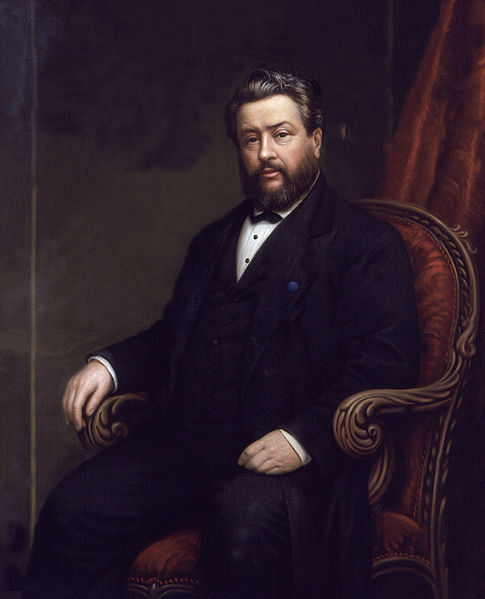
There is another interesting footnote to this story. Duncan was a close friend of Charles Haddon Spurgeon– hero of the current Evangelical right wing, super-preacher and Pastor of the Christian world’s first mega church, the Metropolitan Tabernacle.
Spurgeon took holidays at Benmore each year, and regularly preached to thousands of people on the grass of the formal gardens- people who flocked to hear his particular brand of muscular, Bible-first theology.
Both Spurgeon and Duncan were men of their age- forged out of the fires of the enlightenment during a time when everything seemed certain and the world was ripe for improvement. God may or may not have been an Englishman, but he certainly showed favour on the righteous and industrious men of the British Empire. Or so it seemed.
The legacy that these men left is far from insignificant. But from our perspective, it is nuanced and shadowed, like a finely carved marble statue, gathering layers of grime and bird droppings, belonging to another age.
I loved this-
Jacqueline Novogratz TED speech, discussing her experience of people who have immersed themselves in a cause, a community, a passion for justice.
How I wish this for my kids, and for the life I have left in me.
The legacy we leave should mean more than the fact that we achieve a certain insecure suburban comfort.
So when I look at my beautiful daughter, and see the pull of peer pressure towards the destructive things that each generation lays on its young people, I have this longing to see her catch a glimpse of how short, how fragile, and yet how glorious this life is.
Immerse yourselves in the sea of humanity my love. And swim well, in the company of the weak, so that together we might be strong.
We are just back from a lovely meal with our friends Nick and Lindsay.
Nick has been writing a lot of stuff on his blog on the theme of gratefulness- being thankful for all the good stuff we have in our lives- and we were teasing him a little about him morphing from Shrek into Polyanna.
If you have not come across the story of Polyanna before, she is a little girl who copes with adversity by the power of sunny disposition and optimism- transforming the lives of people around her along the way.
And she plays the ‘glad game’-
Teasing aside- there is a kind of gratefulness that allows us to enter into our situation in a deeper, more connected way- to be more mindful, more alive. Thankfulness opens us up to something vital and good.
This is not the same thing as ignoring adversity, and pretending all is well. There is pain, and seasons of suffering will come. But it might be that living in gratefulness is a humble path towards healing and wholeness.
My wife Michaela (for whom Polyanna has always been a bit of a role model) had a tough time a year or so ago, and as part of her own recovery, started to write in her diary three things that she was grateful for each day.
Very occasionally it is- me.
Some photos taken by Michaela the other day.
Lovely.



Rob Bell’s new book is already cooking up a storm– and it is not out yet.
It seems he is being accused of heresy.
Must read it.
Although I can’t help but feel just a little bit cynical about the fact that all this controversy will likely make the book a publishing phenomenon- which will certainly make his publishers very happy.
Twitter is going mad about it all apparently.
Although controversy as an end in itself is pretty pointless, some times perhaps it has to be confronted because the issues need to be cracked open by people who are prepared to say uncomfortable things. The book deals with an issue that feels absolutely of this time- right now. That is how we understand heaven and hell- the subject of a discussion in my small group as recently as last night.
I see that Rob Bell is at Greenbelt this year- I hope I get to hear him, if he survives the lynch mobs…
.
Vodpod videos no longer available.
1st collector for Rob Bell’s Upcoming Book
Follow my videos on vodpod
I loved this-

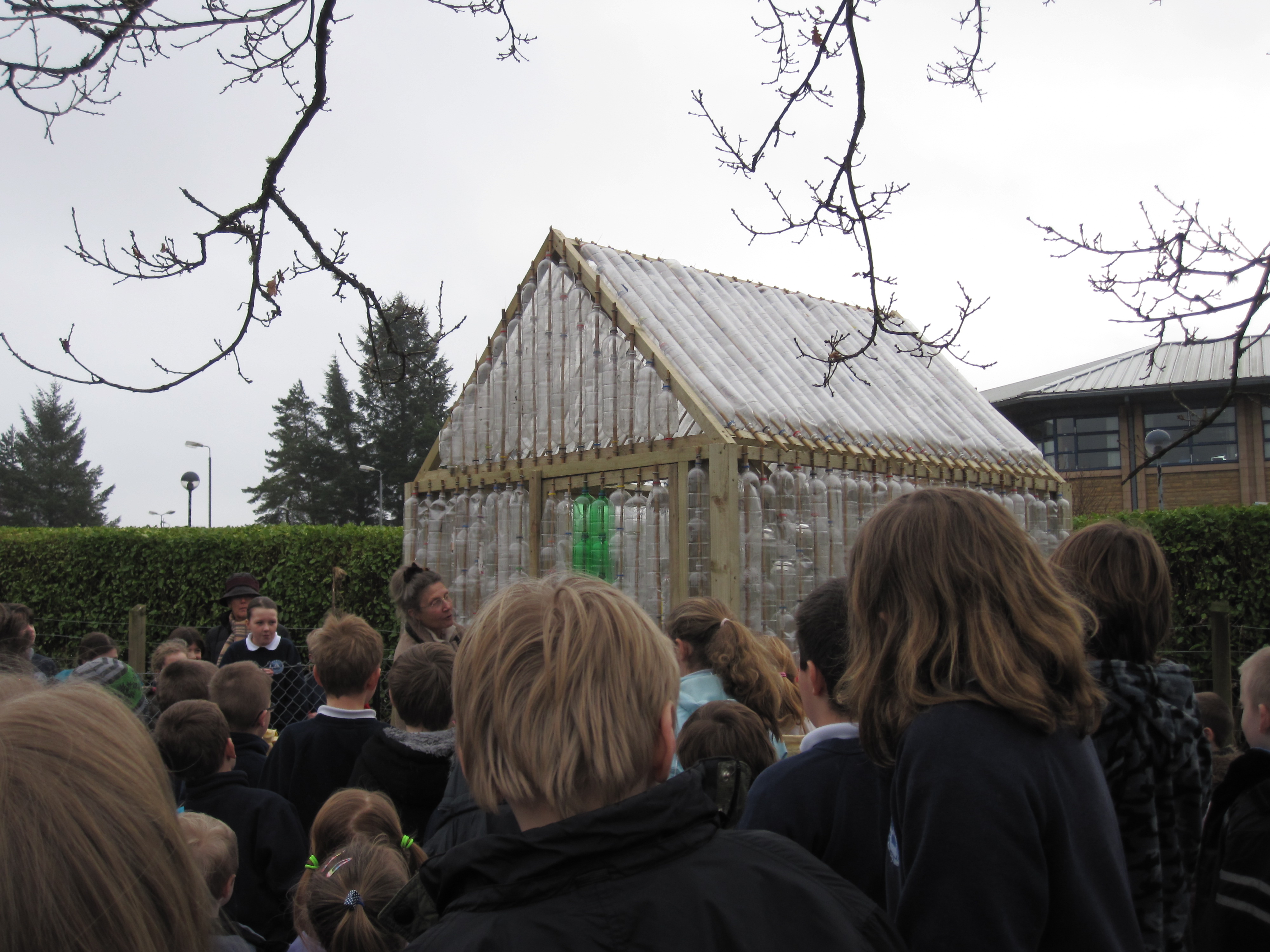
It is the new greenhouse at Will’s school. He has been collecting fizzy drink bottles for months.
So the kids now have a really cool eco greenhouse, but no teeth.
Here are the instructions on how to make one for yourself-
1500 bottles. Better start drinking…

I do not usually repost anything from Jonny Bakers blog- despite being a very frequent visitor- simply because I always assume that most of you have also already read it! However, I will make an exception today as he pointed (via Steve Collins) to an article about ‘Curated Membership Communities.’
Jonny’s interest in curation as applied to worship was the subject of his recent book, that takes a journey through communities whose experiments with worship have interesting parallels with how art might be shaped, curated and displayed.
But I am more interested in what implications these apparent changes in dominant social entrepreneurial groupings might have for church. That is, church in the broadest sense.
I liked this from the article-
even in a world of immensely powerful social technology, shared experience is what drives us to care about and contribute to others. As the social graph has come online, we’ve been able to keep better track not only of our friends, but all the amazing people we haven’t met yet. The explosion of curated membership communities is an attempt to create the shared experiences which bring us into contact with those people, giving us access to the amazing world which we can see, if not fully yet grasp.
We have become used to discussions about post modern society, shaken loose from the ordered structure of modernity by the coming of a new communication revolution, and perhaps characterised above all be individualism. It has been a regular theme on this blog too- as have my own grapplings with the feeling that I have that we post moderns still crave connection. And this has to be collectivised in some way beyond what might be possible on a computer screen because this is simply not enough- it is not human enough.
It has not been clear up till now what might replace our empty social clubs, community centres and (of course) churches. What might come to facilitate our shared journeys of faith? What channels might the Spirit of God find in which to travel through and in our society?
We have tried so hard to force some kind of solution- both to try to preserve the old, and also to convince ourselves that there is a methodological answer to evangelism in this new context. It is almost as if we forgot that we are followers of Jesus into culture, not his advance guard.
Meanwhile, it seems that the humanity shaped petri dish may indeed be producing some new organic shapes and formations.
Which brings us back to this idea of the ‘Curated Membership Community’. Here are a few thoughts that occur to me in relation to church-
None of this is really new thinking- it has been the very substance of the ’emerging conversation’ as we have called it- but what is more interested is how these ideas are playing out in the wider world- perhaps in particular in the commercial world, sick to death of megalithic faceless conglomerates, and looking for something on the human scale that they can once again believe in, and share with their friends.
What was on the edge, is becoming part of the mainstream.
Hmmmmm….

