Photographs of hope for Egypt, and the rest of us…

Michaela pointed this out to me today- which had somehow passed me by-

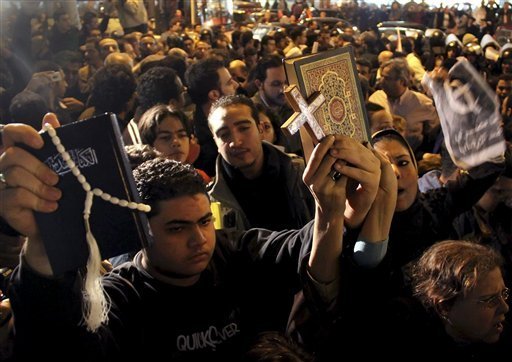
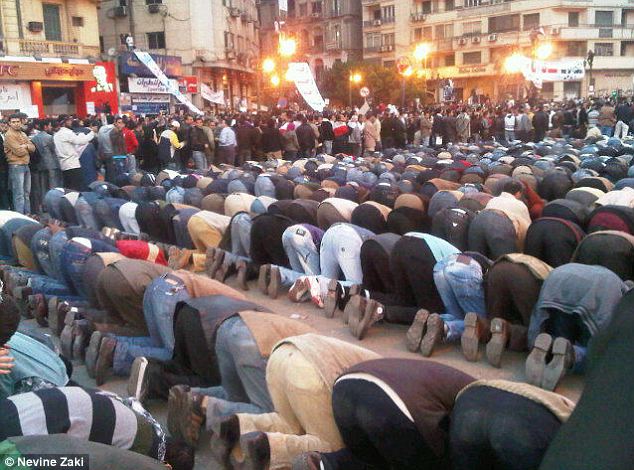
(Egyptian Muslims raising the Bible & Quran side by side while forming human shields around a church)

It relates to two events in Egypt over the past couple of months.

Firstly, on Christmas eve, thousands of Muslims turned up at Christian Coptic Mass(the 7th of January) services across the country to offer themselves as human shields to protect the Christian worshippers from the threat of suicide bombers.

This in the wake of a brutal attack on a church service on New Years Eve (which left 21 people dead) Mohamed El-Sawy, a Muslim arts tycoon, organised the event behind the slogan “We either live together or we die together.”

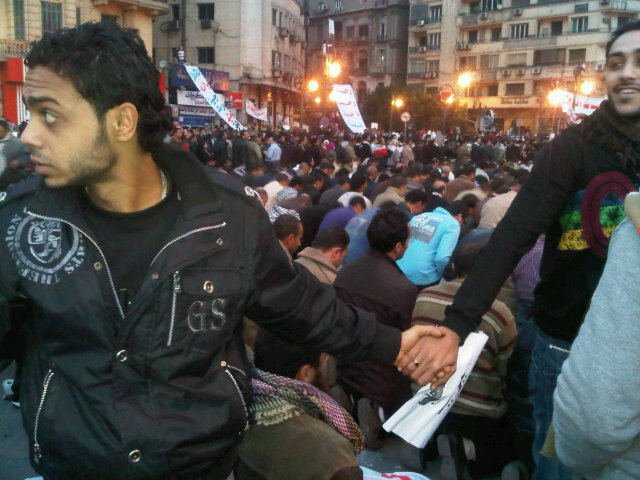
Then, in response to this act of solidarity and peace making from Egyptian Muslims, during the recent street protests, Christians formed another human shield to protect Muslims praying in the street-

Hallelujah.

A little parochial politics…

I added a link to an excellent local news website to my blogroll recently. I found myself visiting ForArgyll frequently, as they seem to be committed to a muscular, opinionated kind of investigative journalism that often makes for interesting reading. Whether or not you agree with their comment, they seem to be committed to holding our local government to account in an intelligent and committed way.

And although many of you probably care little about the politics of Argyll- the county in which I live and work-I thought it worth reflecting on how the economic crisis is working itself out locally.

I work for the local council, and whilst it would not be appropriate for me to discuss detail of the financial situation the social work department is facing, it is no secret to say that it is frightening.

Argyll and Bute council is one of those few local governing bodies that has been governed by coalitions of mostly ‘independent’ councillors for years. Political parties tend to be minorities in any administration. Whether this is a good thing or not is a point of debate, but it is very hard to know what individual representatives stand for. It also means that the representatives often lack a wider context of support, political affiliation and even scrutiny by national political organisations. And things can become very parochial indeed.

Overall, Argyll is home to around 60,000 people dispersed across remote islands and large rural areas. Our largest town, Helensburgh, has less than 20,000 people- and often feels like part of a Glasgow rather than the Highlands. We are an ageing population-  not just in terms of more older people, but more OLDER older people. Our school rolls are shrinking and all services tend to be marginal in their cost effectiveness because of the dispersed nature of the population they serve.

Into this context will come savage cuts.

But at present, no one seems to have a clue what is going to be cut, and how the council will balance it’s budget. It has already been a total dog’s breakfast- with all sorts of allegations flying around.

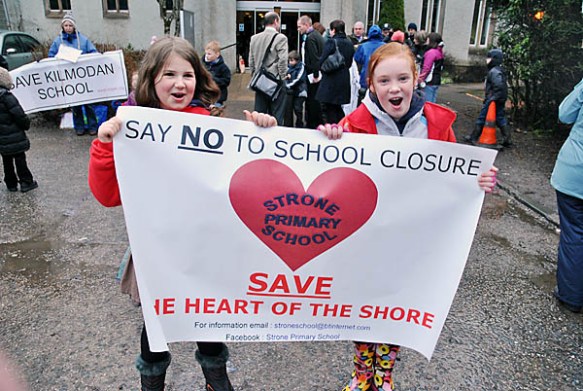
The council took the decision to close a number of local schools, in order to save money, but then effective campaigning pointed out that the calculations of savings on which the closures where based on were totally wrong- this because of the grant allocations from central government and a whole host of other things. Oh- and the council is supposed to consult on these closures, and they had failed to do so. Chaos ensued. The Scottish National Party councillors who were then part of the ruling coalition (one of whom was the education spokesperson) withdrew from government, and since then we have had much politicking to form a new ruling group.

Meanwhile, the executive and the administration are coming under increasing fire- not least from ForArgyll, whose probing questions have centred around-

  1. The role of the council leadership in negotiating a way of calculating allocations of central government money to local  authorities in Scotland. Our council leader appears to have participated in this debate, not understood it, and the end result is that Argyll were hit with an extra £5 million of cuts.
  2. Resignations of leaders, and their future electability.
  3. Poor administration- for example unmanageable agenda’s at council meetings, resulting in absolutely no meaningful discussion or debate of key issues, or as ‘For Argyll’ put it- We lost the will to live shortly before the end of the interminable and rambling Executive Committee and escaped to fresh air and a world that slowly righted itself. It is hard to describe to anyone who has not been there, just how deadly and cock-eyed these occasions are. Logic, reason and genuine discussion simply do not penetrate the fog, the artifice and the blindly defensive fortifications.

I have worked for the council since 2002, and these are chaotic times.

Meanwhile, over in the health service…

This is the front page picture from our local paper. It features a friend of mine, and local Episcopal minister, Andrew Swift, taking part in a campaign to save the local hospice.

This has caused unprecedented local ill feeling- the hospice was formed as a result of considerable local fundraising, and in partnership with the local Health Authority, who have now decided to close it. This is related to their own financial crisis, but has been spun out over a long period of time, with lots of allegations and counter allegations.

First many local GP’s issued a joint letter of protest.

Followed by a joint statement from local ministers- represented ably by Andrew as above.

Local passions are running high.
In the middle of all this, I find myself asking whether some good will come from all this?

Optimism is not really my natural condition, and there is much to fear as we face an uncertain future, locally and nationally.

But local engagement in politics, and a shakedown of old hierarchies and hegemonies- these things are good I think. They are a gift that comes with crisis- and the promise of real change.

Elections are coming…

Finally- local political quote of the week-

The leader of the Council is one of Dunoon’s councillors, Dick Walsh. When questioned about the closure of the hospice (and possibly relieved that he was not in the firing line for a change) he had this to say-

“The hospice will close over my dead body.”
 

The end of success culture?

Interesting discussion on the radio this morning about art, led by graphic designer Neville Brody. Brody was scathing about how art has been domesticated and even emasculated within our culture-

When was the last time you encountered any culture that you can say was really dangerous, that actually challenged anything?” so questions the Anti-Design Manifesto launched by the graphic designer Neville Brody. The former art director of The Face and Arena magazines has now taken over as head of the Royal College of Art’s Visual Communications department, where he plans to challenge the norm. While graphic design has become heavily associated with commercial art, Brody insists it’s a discipline that was born out of social engagement and the desire to give form to ideas and feelings, and that this role is needed more than ever in the digital age.

I am not well placed to agree or disagree with Brody’s assessment, but he suggested that for the last 20-30 years (since Thatcher,) the dominant ideology of our culture has been success.

All other ideas were swept away before the desire for success.

Tools to aid success became the most popular subject of study in our universities.

A successful life within this world view means wealth, choice, holidays, and personal happiness. We bought the idea that these things were available- almost by right- to all of us.

Success has to be quantifiable- and this usually means money. Art is not the only thing that we have monetised.

But there is a change in the air. The fluctuations in the economy increasingly dictate the kind of success we attain and for many of us, what we have strived for is simply not attainable nor sustainable.

There is a hunger for deeper, more spiritual ways of life.

And if people like Brody are right, then this might become a time of protest and challenge of the old dominant success-driven culture, and a time of new ideas…

The kiln descends…

We finally managed to get the kiln down the cellar steps today. It has been a bit of a puzzle- how to move half a ton of metal and fire bricks down some crumbling narrow stairs into a confined space.

Some very kind blokes who are used to moving heavy objects around the hillsides did the job. Thanks boys!

They were able to set up a ground anchor, and use a sledge and winch line to lower the kiln.

Its a big relief- and I look forward to seeing some pots emerging out of raw clay…

Pop up cinema and Ken Loach…

I caught the end of a lovely programme this afternoon on Radio 4 all about ‘pop up cinema’- an idea we in Aoradh have been playing with- where you set up your own cinematic happening.

Simon has had this dream of using the old buildings on Dunoon pier as a temporary cinema/discussion space. Others, it seems are doing similar things…

The programme was all the more interesting, as it contained a live (Scottish) audience discussion with one of my favourite directors- Ken Loach. He works in a rather unique way, with actors improvising rather than using a script.  His subject material is often working class Britain, and people marginalised and brutalised by poverty.

His films are always challenging, poignant and saturated with humanity. And some have made me laugh out loud. One of the things he said on this programme really made me smile- he said that he could only make films about people that he liked.

This is film making that is motivated by a set of principles a million miles from those that predominate in Hollywood, and we British people should be proud of what Ken Loach has achieved.

The film being discussed on the programme is the challenging Sweet Sixteen– filmed within sight of my house over the other side of the Clyde in Greenock.

A powerful film, that I have not been able to watch twice- but some of the images still linger with me.

Here is a clip- with French subtitles for all you posh people who can’t understand the accent.

Faith and homosexuality collide again…

A couple of news stories this week brought this issue out into the open again-

Firstly, there was the story about the gay couple who won a court case against a Christian hotel for discriminating against them by refusing to offer them a bed.

Then in another story reported on the news today Lesley Pilkington, a psychotherapist for 20 years, faces being stripped of her accreditation to the British Association for Counselling and Psychotherapy (BACP) after treating a patient who had told her he wanted to be “cured” of his homosexuality.

You can listen to the short news item with associated interviews here-

\’Gay cure\’ row- from \’Today\’, radio 4

Full story in the telegraph, here.  It describes how a gay journalist struck up a conversation with her at a conference run by the US organisation called the ‘National Association for Research and Therapy of Homosexuality’ or NARTH (see here for an earlier discussion about NARTH on this blog.) She then offered the man therepeutic help for his homosexuality.

She is quoted (here) as saying this- “When a therapist believes in good faith that a person can change his or her lifestyle she should be free to offer her expertise without the fear of the loss of her job or professional credentials.  The equalities and anti-discrimination agendas are undermining the freedom of individuals to choose to change their lifestyles. These laws are leading to the elimination of a fundamental human right.”

I found myself feeling very sorry for this woman- she is facing a media witch hunt, as well as a threat to her livelihood. But I also find myself wondering at her naivety, and also worrying about her approach to therapy.

She is not without her supporters- see here and here. Some would see this as another attack on Christian values, undermining the Biblical basis for our society. I am afraid I do not concur.

Most therapeutic approaches (eg Cognitive Behavioural Therapy, psychodynamic psychotherapy, Person Centred Counselling, Rational Emotive Therapy etc) start from a set of core beliefs about the nature of our psyche, and offer more or less evidence based therapeutic tools to provide opportunities for meaningful change.

But the kind of help being offered by some Christian Counsellors, such as Mrs Pilkington, starts often with a different kind of fixed position- one based on a view of sin, and in particular, the nature of sexuality-

“We don’t use the word ‘cure’ because it makes it [homosexuality] sound like a disease. We are helping people move out of that lifestyle because they are depressed and unhappy.

“We say everybody is heterosexual but some people have a homosexual problem. Nobody is born gay. It is environmental; it is in the upbringing.”

It seems (rather startlingly) that Mrs Pilkington has a son who is gay-

“He [my son] is heterosexual. He just has a homosexual problem,”

“[My son] is still gay … we are developing a relationship that was quite difficult for many years but is now coming back in a very nice way. I am confident he will come through this and he will resolve his issues and that he will change.”

I am a Christian, who has worked as a mental health specialist for 20 years, including a number of years as a therapist/counsellor, using CBT and Person Centred therapies. But I beleive that when ‘therapy’ is allied to narrow views, even narrow Christian views, it becomes very dangerous. It becomes very easy to lose sight of the individual, and focus instead on ideology.

You could argue that Mrs Pilkington gave fair warning to the journalist, and he carefully manipulated her and set her up. It is also quite possible that the full story has not come out in all the news articles that are out there.

But this kind of intervention has no place when practiced by someone working in a position of trust accredited by the BACP.

Christians are still getting into such strange waters over the issue of homosexuality. I find it so frustrating. Even if you accept the reading of the three Bible references that are unequivocally condemnatory of homosexuality as being directly translatable into our context- and there is a real theological debate about this- then you are forced to acknowledge that there are far more references in the Bible (and particularly the words of Jesus) against other things- Greed, avarice, jealousy, misuse of power over the weak and poor, religious bigotry etc etc.

Some of you may think that this is just because I have been sliding like a liberal for too long and if the Bible says it, then it is true. And you are entitled to your opinion. And to my continued friendship.

But please- do not take up therapy.

Making fire and longing for spring…

I am longing for spring.

It always happens to me around this time of the year. Not because winter isn’t beautiful, but rather because spring releases something in me. It is a physical thing, as well as a psychological/spiritual thing.

The days open up and lengthen with a soft green light.

New life is everywhere- every leaf, every lamb, every bracken shoot is a bursting with hope and potential.

And I can start to linger again in wild places- perhaps in my new camping hammock! A present from Michaela for Christmas. I am still not sure exactly how sleeping in a hammock under a tarpaulin will compare to a tent, but I am looking forward to finding out.

The other essential ingredient to such a trip is this one-

Here in Scotland, as opposed to England, sensible and sensitive use of small campfires is permissable- check out the Scottish Outdoor Access Code. This is a controversial issue- as in high pressure beauty spots such as Loch Lomond, the mess made by weekend revellers is everywhere.

Trees ripped and damaged, charred paper and disposable barbecues strewn around- and always some idiots who think it is possible to burn bottles and cans in wood fire and as a result leave a welded mess on the otherwise pristine shore line.

It has long been a point of argument between my friends and I as to which one of us lights the best fire. I maintain that my ‘chimney’ technique, where combustible material is stacked above the source of heat in a collapsible, self feeding tower is the best way. But the reality is that none of us are really good at it.

I have never successfully used one of those spark making fire steels, let alone rubbed sticks together to make flame.

So to help us dream of long evenings under the spring stars- here is a bloke who knows what he is doing-

A bit more on Jim Crow Rock…

There has been a little more local agitation in relation to our rather infamous local land mark-

There has been an upsurge in traffic on my previous post- here.

I did a quick google search, and came across this disturbing post on the blog of the Jim Crow Museum at Ferris University– Michigan. They pull no punches. Here is the post in full-

It’s not Loch Ness, but it’s still a monstrosity.

Jim Crow RockThe Jim Crow Museum is familiar and disturbed by this painted rock that dates back to the early 20th century. It rests off the shores just north of the small Scottish seaside town of Dunoon. The local population is somewhat divided over the idea that it is a monument to racism. From the looks of this thing, it is obvious to us that this object isconsistent with the blackface caricaturesthat populate our museum.

The Jim Crow Rock is painted black, with the words “Jim Crow” in boldface white, and a red mouth. It’s blackface in an obsidian form. For us at the Jim Crow Museum, the question remains — why does this rock hold a special place among the local population? Or, are we as educators over-sensitive to the symbolism that Jim Crow artifacts represent?

The Jim Crow Rock has existed for over 100 years. At times it has been painted over and “vandalized,” only to be regenerated by “well-meaning” preservationists. Pro-rock defenders cite the historical footnote that the U.S. Navy had a base in Dunoon for many years without any complaints (on record) from black sailors. Local historians also claim the rock refers to a local builders’ yard once owned by a fellow named Jim Crow. However, the Jim Crow Museum has learned that controversy has enveloped this object for decades and that newspaper accounts debating the fate of the rock have routinely stirred passions among the local population.

The Jim Crow Museum has received reports via email of ongoing racial tensions in Dunoon. Originally, the painted rock may have served as a warning to minorities that they were not welcome and to“stay in their place.” Recently, individuals who find the rock’s symbolism offensive have been publicly discredited and ridiculed. In a newspaper poll taken earlier this year, voters in Dunoon favored keeping the rock intact instead of painting it over by a 5-to-1 margin. Today, we’re left with the popular notion that the only people who have issues with the rock are “incomers” with no connection to Dunoon and that it’s a harmless landmark of local tradition.

Jim Crow Rock

The Jim Crow Museum believes that in order to promote racial tolerance, people must understand the historical and contemporary expressions of intolerance. In Scotland, all myths aside, there are indeed monsters in the water and lessons to be learned.December 2010 response by Ted Halm, Webmaster, Jim Crow Museum of Racist Memorabilia

POSTED BY SANDY GHOLSTON AT 12/02/2010 09:28:00 AM

In a recent reply to a comment on my own previous blog piece, I suggested that if we are to keep this rock, then perhaps the best thing to do is to make it into something that we can be proud of again- a monument that reminds us of the past of this area, and the role of slavery in its prosperity.

What about an interpretive board, with an account of this history, and the role of the minstrel shows?

Perhaps someone from the Jim Crow Museum might be willing to work with us to make this happen.

Over to you local politicians. See if you dare to step into the firing line.

‘The Places In Between’ review…

I have just finished this book- and thought it worth posting a quick review, as it’s subject material is Afghanistan- post 911.

The author Rory Stewart is an ex soldier, some time diplomat- including serving as deputy governor of an area of occupied Iraq. But in 2000 he packed in work and walked for 6000 miles from Turkey to Bangladesh.

And following the invasion of Afghanistan in 2002, Stewart decided to take a winter walk across the middle of the country.

Which was by any measure a rather mad thing to do. The country was shattered by war, traumatised by successive violent and oppressive regimes and the route he chose was thought to be impassible in winter- because of deep high mountain snow and plunging temperatures. Then there was the political situation- the minefields (both literal and figurative) to stumble into.

And of course, the strong chance that he would meet people who might seek to do violence to him.

But the end result was a walk through a varied landscape and a variety of cultural/religious situations that tells us a great deal about the country in which British soldiers are still fighting in our name.

The book is in many ways of a style more akin to travel writing of a previous generation- which suits me fine, as I love Newby, Herrer, Theroux.  It is writing that emerges from perilous encounter and adventure. And it is very well written.

Stewart relied entirely on the kindness and hospitality of Afghan villagers and local leaders for food and shelter. This made me very uncomfortable as I read the book, as some of the people he imposed himself on had very little themselves. At times, he (and the dog he picked up along the way) was clearly an unwelcome burden.

But I think this book is worth reading for these reasons-

  • It is a contemporary window into a country that we only know through the very limited eyes of  journalists ’embedded’ in the occupying forces- living in military compounds and making short forays in armoured troop carriers.
  • It is very strong on the majestic history of the country- of its former empires and mythical cities and leaders- stories that live on through ancient writing and poetry. Stewart is currently living in Kabul and heading up the Turquoise Mountain Foundation, which is investing in the regeneration of the historic commercial centre of Kabul, providing basic services, saving historic buildings and constructing a new bazaar and galleries for traditional craft businesses.
  • The book also introduces us to the great diversity of Afghanistan- with its different people, traditions and religious divisions.
  • It confronts some of the easy stereotypes- the violence, ‘noble savages’, a country suffering from PTSD, as well as Blair’s rather patronising quoting from the Koran. But is avoids siding with any of them- giving an impression of a country that is all of these things, and none.
  • It makes clear the human cost of war, and the long term effects of the power struggles and violence that always follow in it’s wake.
  • It is literary, well informed, sensitive to religion and culture in ways that I can only assume are detailed, well researched and accurate.
  • Finally, it reveals a love of this place- in all of its mess and beauty.

Recommended reading as an essential antidote to the infotainment contained in the dreadful repetitive rolling news of Sky and BBC news 24.

It’s a cracker…

Well, Christmas is past for another year.

We have had a lovely time- we had an extra house guest as a friend had a burst pipe on Christmas eve.

Finally the hold of ice and snow has been loosened- it is raining at the moment, revealing slowly retreating treacherous sheets of wet ice.

Not a day to venture far from the fireside.

So as is my tradition, I think it is time for some bad cracker-type jokes (thanks Isobel for the raw material!)

Firstly for the numbers people

Apparently the  fattest knight at King Arthur’s round table was the very well fed Sir Cumference. He acquired  his size from consuming too much pi.

Next, for the geographers-

I thought I saw an eye doctor on an Alaskan island, but it turned out to be
an optical Aleutian

Now for the hardened drinkers-

She was only a whiskey maker, but he loved her still.

And the non-believers-

Atheism- the non-prophet organization.

For the sporty types-

He wondered why the ball just kept getting bigger. Then it hit him.

And my fellow poets-

Did you hear about the backward poet? He writes inverse.

For the engineers-

Two fish swim into a concrete wall. One turns to the other and says ‘Dam!’

For the long in the tooth-

Did you hear about the Sadistic Buddhist Dentist? His goal: to transcend dental medication.

And finally- for my fellow canoeists-

Two Eskimos sitting in a kayak were chilly so they lit a fire in the craft.
Unsurprisingly it sank,  proving once again that you can’t have your kayak and heat it.

(Perhaps I should get out more- despite the ice.)