Will competed in the local inter school sports event today- representing his school- and much to our (and his) surprise, he won 4 (yes FOUR) silver medals!
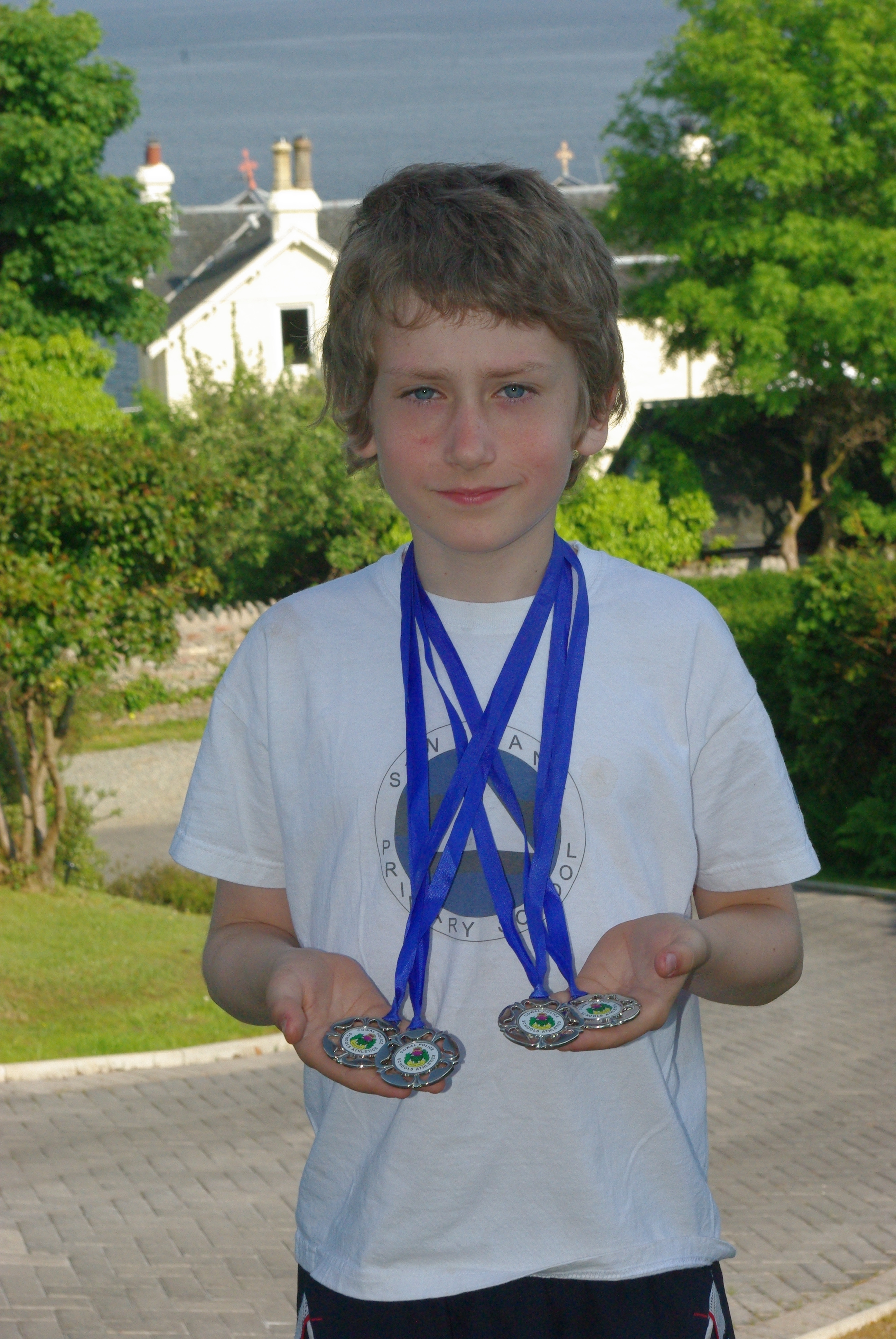

Will competed in the local inter school sports event today- representing his school- and much to our (and his) surprise, he won 4 (yes FOUR) silver medals!
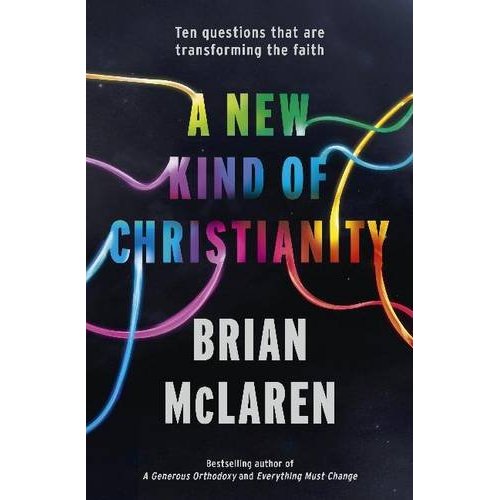
I finally got round to ordering a copy of this book today.
I have found McLaren’s remarkable writing transformative to my own understanding of faith for a number of years. I very much appreciate his willingness to be radical and controversial in his theological thinking, whilst remaining humble and graceful in his response to the tirade of abuse he has been subjected to.
However, I have found myself avoiding this book. Perhaps because I wonder if he is really saying anything new- all the reviews seem to suggest that it is a gathering together of ideas he has been developing in his previous writing. As I read the ’10 questions that are transforming the faith’ I suspect I know what his answers will be, more or less.
To be honest, the hype around the release of the book repelled me a little too…
But then again- perhaps this shows just how much the theological landscape has shifted over the past 10 years. Questions that would once have been as welcome as a trump in a spacesuit are now increasingly part of a the popularist mainstream.
Does this mean that we are seeing the development of a new kind of Christianity?
I am not sure. I hope so though.
In the meantime- I am going to read the book…
By the way- you can watch 10 videos and download study material for group discussions around the themes raised in the book from The Ooze.
Here is a taster- on that difficult questions of relationships with other faiths…
Vodpod videos no longer available.
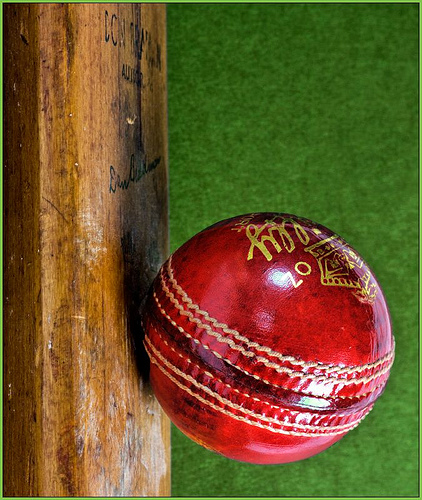
The grass is too long
Mossed by a hundred wet summers
Rolling in from the western sea
Deadening the bounce
And flattering my feeble attempts
At shape and spin
Cutting out all shots
Apart from sweep and drive
.
But to me and my boy
This too is sacred turf
Our ‘Lords’
.
Where memories are made
By crafty curl of leather
And the joyous crack of willow
As the bat hallelujahs its connection
.
And the trees around the field
Clap their hands
We spent some time sticking pictures at housegroup last night.
We had gathered loads of clippings from newspapers and magazines, and used them to construct a great big prayer of thankfulness.
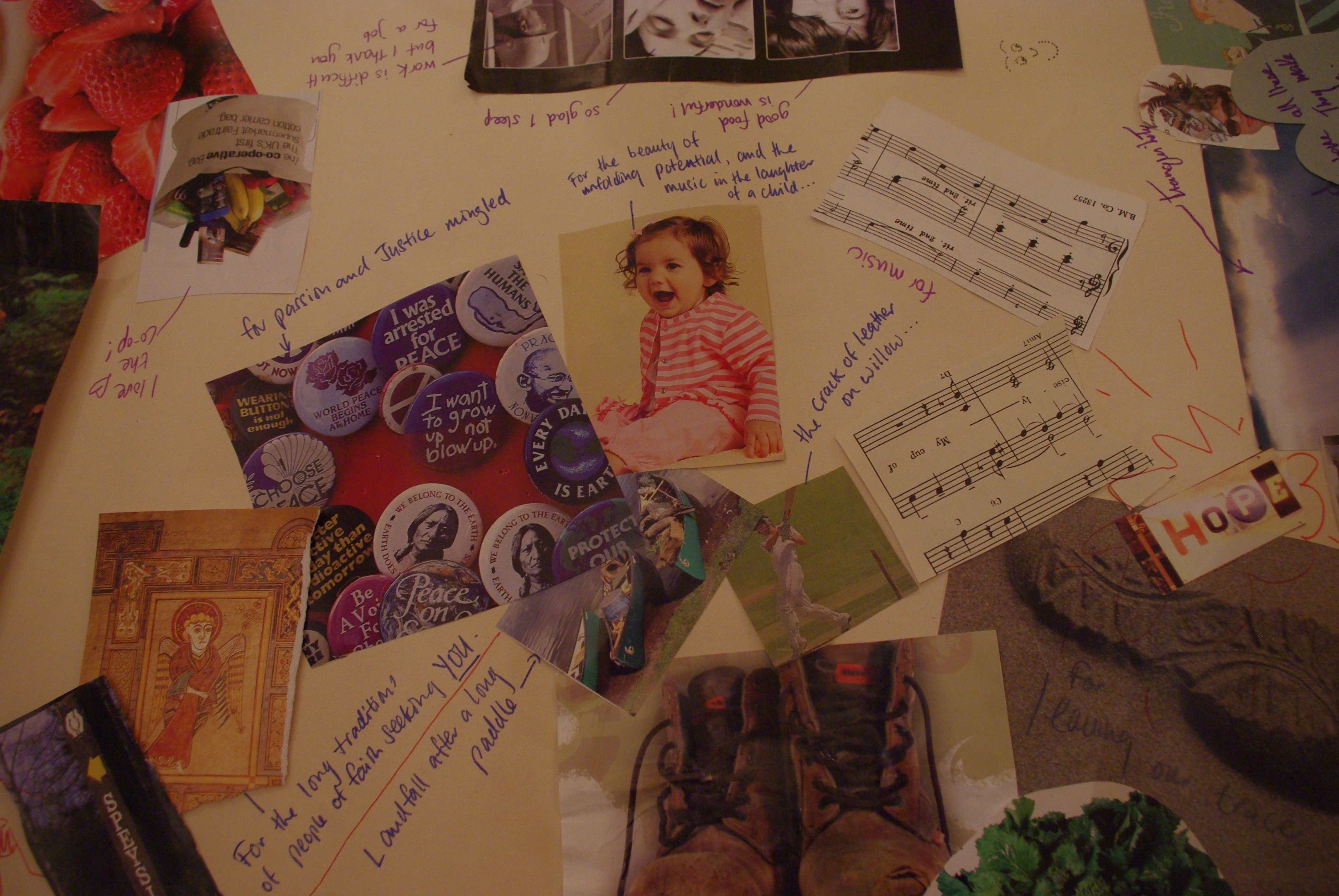
And there was much laughter, and much friendship.
Which was a kind of prayer too…
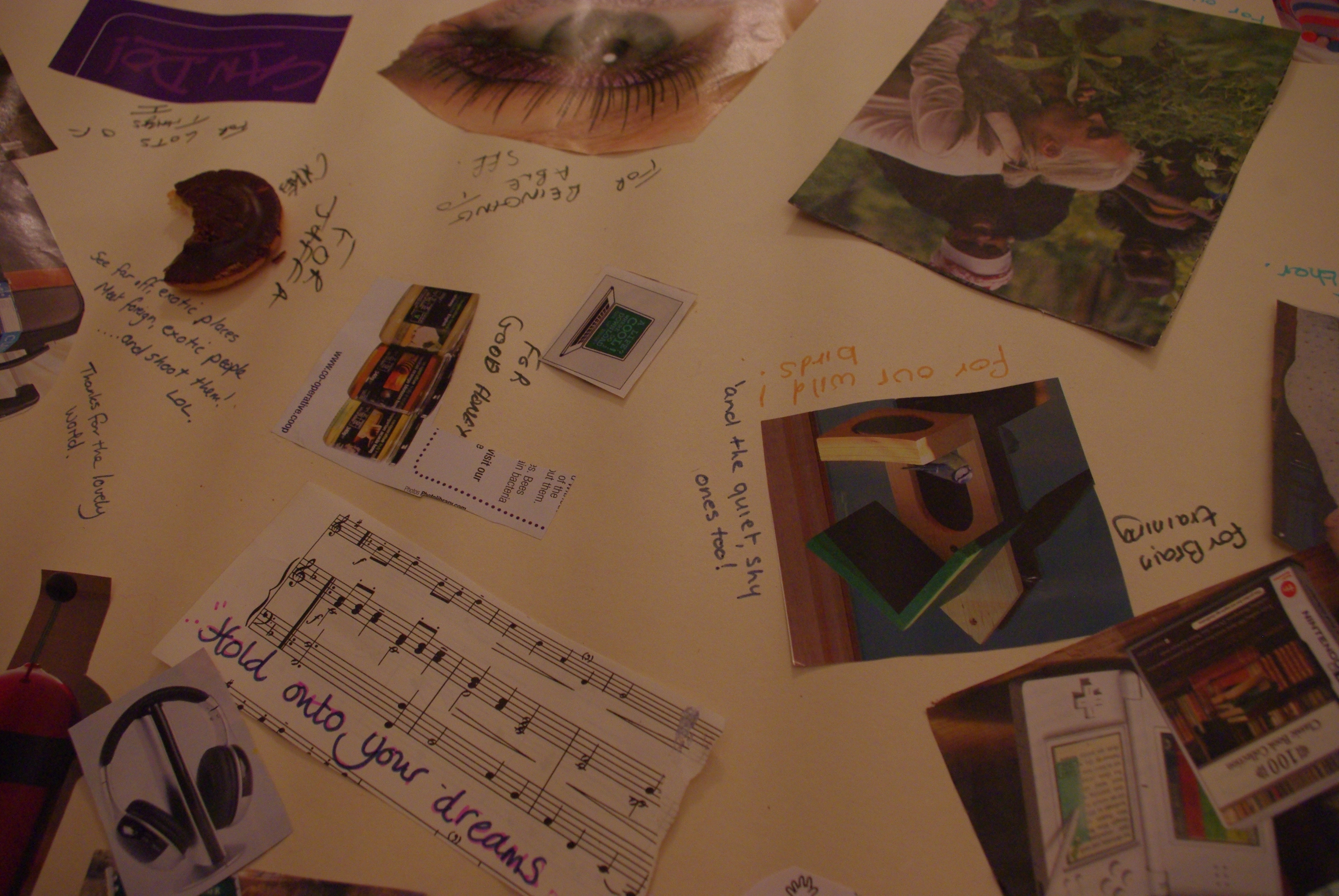
Michaela read this poem by Robert Siegel–
A Song of Praises
for the gray nudge of dawn at the window
for the chill that hangs around the bed and slips its cold tongue under the covers
for the cat who walks over my face purring murderously
for the warmth of the hip next to mine and sweet lethargy
for the cranking up the hill of the will until it turns me out of bed
for the robe’s warm caress along arm and shank
for the welcome of hot water, the dissolving of the nights stiff mask in the soft washcloth
for the light along the white porcelain sink
for the toothbrush’s savoury invasion of the tomb of the mouth and the resurrection of the breath
for the warm lather and the scrape of the razor and the skin smooth and pink that emerges
for the steam of the shower, the apprehensive shiver and then
its warm enfolding of the shoulders
its falling on the head like grace
its anointing of the whole body
and the soap’s smooth absolution
for the rough nap of the towel and its message to each skin cell
for the hairbrush’s pulling and pulling, waking the root of each hair
for the reassuring snap of elastic
for the hug of the belt that pulls all together
for the smell of coffee rising up the stairs announcing paradise
for the glass of golden juice in which light is condensed and the grapefruit’s sweet flesh
for the incense of butter on toast
for the eggs, like twin peaks over which the sun rises
and the jam for which the strawberries of summer have saved themselves
for the light whose long shaft lifts the kitchen into the realms of day
for Mozart elegantly measuring out the gazebos of heaven on the radio
and her face, for whom the kettle sings, and the coffee percs
and all the yellow birds in the wallpaper spread their wings
Ahhh.
I think I like this bloke’s poems.
(Although to be honest, I am not usually that grateful in the morning.)
So here is Audrey’s joke- it made me laugh anyway!
Did you hear about the agnostic insomniac dyslexic?
He lay awake all night tossing and turning, and wondering if there was a dog.
There has been a lot in the news recently about loneliness.
One in 10 Britons often feel lonely, and those aged 18-34 are more likely to worry about being isolated than older adults, according to a Mental Health Foundation report.
Four in 10 have been depressed because of loneliness, and 48% believe people are becoming lonelier.
While 17% of over-55s worry about being alone, 36% of under-35s do.
The elderly, jobless and those who are disabled are most likely to be affected.
Persistent loneliness is bad for people’s mental and physical health and can be linked to stress, heavy drinking and poor diet, says the charity.
Peter Byrne, associate registrar of the Royal College of Psychiatrists, said: “Our stereotype of the older person, home alone … is challenged by information [showing] the number of children calling a helpline who are lonely has increased by 60% in five years.”
I find myself interested for several different reasons-
I work in a mental health setting, and the role of community and social support is being ever more recognised as both cause and potential recovery of mental ill health.
I am interested in the role of social networking (and other on line health and social care platforms) in supporting us- and have a strong feeling that our reliance on the web is contributing to the isolation of many people. The stats above for example suggest that loneliness is especially concerning in the ‘facebook generation’- who might have three hundred on line friends, but no-one to go to the pictures with at the weekend.
This is a recurrent theme on this blog- here for example.
It is also a key theme for our Greenbelt worship event this year.
Here is the question- if the statistics suggesting that loneliness, isolation and disconnectedness are increasingly defining characteristics of our society- then what should be the role of we, the agents of the Kingdom of the living (relational) God?
Who made us in a way to be at our best when we love and serve one another?
As we seek to serve those around us, how might we need to structure our activities to better shine light and sprinkle salt to bring out the good flavours of the societies we serve?
It used to be the strength of our institutions of faith- the way we brought together and unified our communities (sometimes for ill as well as good.) We birthed a thousand community groups- womens groups, mens groups, kids groups. And we served our communities at points of crisis and celebration in a way that marked and deepened our understandings of transitions.
We still do many of those things- but perhaps we need to think outside of the boxes in which we currently work within. There is great need out there…
We are heading down to Telford to the Tautoko gathering in a few weeks. This is a chance to spend a weekend sharing ideas and hopes and prayers with other people who have found themselves doing similar things in and around the edges of established church.
There are some places left on the weekend- Check out Jonny’s description– (He has a thing against capital letters I reckon?!)
for a few years there has been a network of leaders/communities that initially got together off the back of al hirsch and michael frost’s visit back in 2005 and following on from various blah… events round the country. it grew out of alt worship and emerging church friendships. every so often there is a gathering of the network and there is one coming up in june. it’s a pretty low key affair – mainly hanging out and conversation with some space for talking around issues and some prayer and worship. we usually stay in a youth hostel to keep it cheap.
the next gathering is in june – info is here. if you think you fit with the description around the network below you’d be welcome to join us – just book in or e-mail me if you want to know more. there are spaces left on the weekend that we’d love to see filled…
The tautoko network was originally formed out of friends connected with alternative worship, emerging church, or missional communities. Why? Well mainly because we love hanging out together. The network was made a bit more intentional/formal recognising that there were plenty of others involved in the same kind of stuff who didn’t necessarily have the history of friendships but could gain a ton from being part of it. These were the words we put together to describe why it exists and they still seem a pretty fair reflection…
- To share the journey with others who face similar mission challenges.
- For mutual friendship, encouragement, solidarity, support, gift giving, discernment, resource sharing, ideas and learning
- To see what emerges as creative people connect.
And the ethos/values we try and shape the friendships around are…
Open set | Spin free | Generous | Vulnerable | Questioning
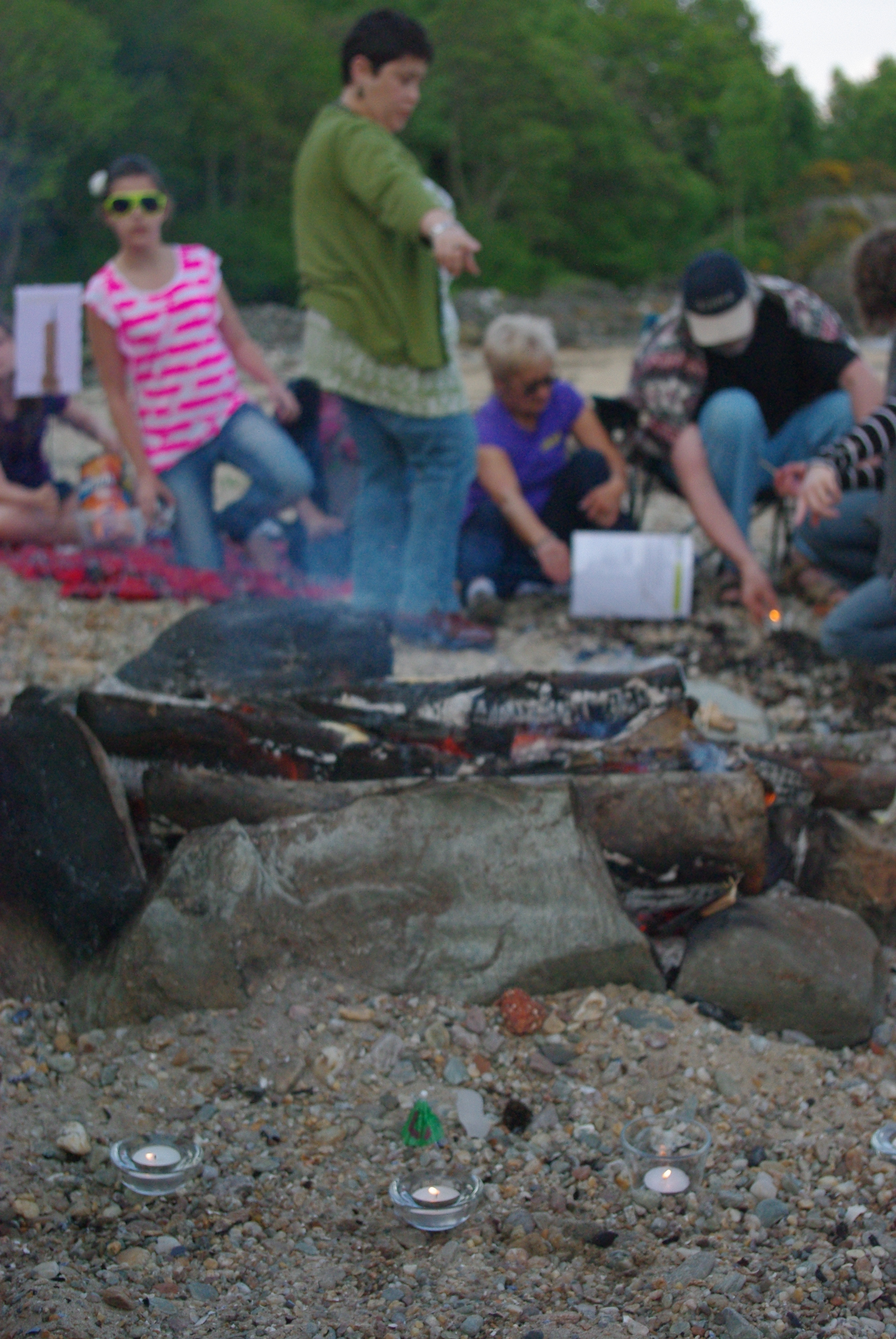
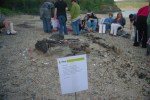
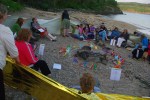
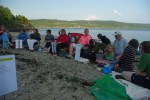
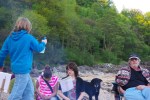
We are just back from Ardentinny beach, where we met to celebrate Pentecost, using a barbecue and a bonfire. The sun shone, the kids swam in the sea, and there were NO MIDGES!
After all the eating, we sat around the bonfire and celebrated the birthday of the church, and presence of the Holy Spirit. We used this prayer to give shape to our activities-
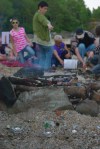
The bonfire was surrounded with concentric rings scratched in the sand.
Come Holy Spirit
Come Spirit like rain, refresh, renew, revitalise.
Come Spirit like fire, embolden, enlighten, enable.
Come Spirit like a mighty wind, move, challenge, enkindle.
Come Spirit like wave, move, tear down, lift up.
Come Spirit, come Breath, draw us close, make song, bring intimacy.
Come Spirit, come Love, make one, make justice, make peace.
Come Spirit, come Kingdom, come Love.
Martin Brown/CAFOD
We took each sentence, and used it as a prompt for an activity- after each activity we added symbols onto the circle.
RAIN- we made rain shakers, and mister sprays squirted over each persons head. We then added cocktail umbrellas to the circle.
FIRE- we threw handfuls of sugar onto the fire, which flared up, and then lit candles and placed them on a circle.
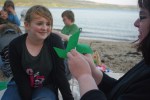
WIND- we made paper windmills and placed them in the circle.
WAVE- we did a mexican wave, and imaged the moving of stones up a beach- adding a stone to the circle.
BREATH- we spoke of the closeness of breath, then took streamers on sticks, and added them to the circle.
LOVE- we added painted stones in the shape of love hearts to the circle (and collected them later to carry away with us.)
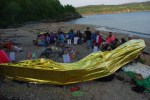
KINGDOM- we took a roll of gold foil, and wrapped it around the whole group as a crown- and a sign of being the agents of the Kingdom of God. We then stepped outside the foil as a sign of going outwards.
Then we closed by reading the prayer out loud.
And it was simple, and lovely, and soul-good.
I came across this interview today with Bruce Cockburn, singer-songwriter and guitar player. Some interesting insights into some of the processes of putting together songs and albums.
I confess to being something of a fan…
And I think we should have some more music too…

