1-2 The Word was first, the Word present to God, God present to the Word. The Word was God, in readiness for God from day one.
3-5 Everything was created through him; nothing—not one thing!— came into being without him. What came into existence was Life, and the Life was Light to live by. The Life-Light blazed out of the darkness; the darkness couldn’t put it out.
From The first chapter of John’s Gospel, the message translation
(I am still in Ireland, so another repost today, this time from a couple of years ago.)
With a great blaze of poetry, John begins to talk about the life of Jesus. He does not talk about babies in mangers or choirs of angels or wise men travelling from afar. Rather, he talks about light…
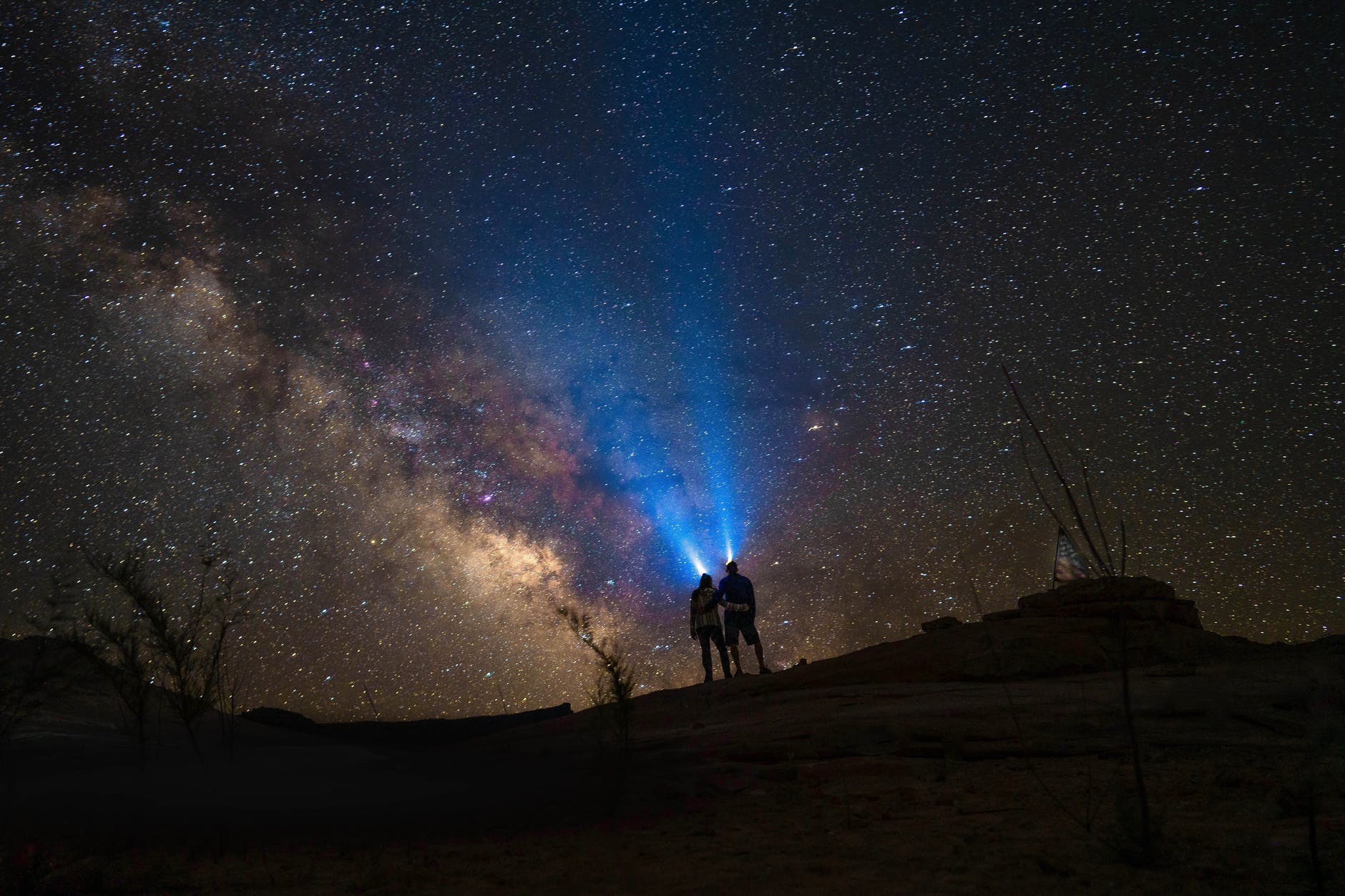
It is a cliche beyond my enjoyment to describe ourselves as made of stardust, even though somewhere deep in our carbon it may be true. I would much rather talk about how we are animated by light.
It is a mataphor of course, and one well employed by John, but I want to take a moment to consider whether it might also be ‘true’.
The life in us is only our own for a while. It burns bright and beautiful in some, in others it is obscured by so many shadows, but still the light remains.
As advent unfolds towards its apotheosis, I pray that whatever illuminates and animates you will sing in your soul. May it be the most graceful, the most loving, the most simple and the most human way of being.
I believe that this light is not gifted only to those who ‘belong’ through accident of membership or proximity, rather that it is the very core of all created/evolved life. I know this can be debated by application of all sorts of scripture-swords, but stil… I feel it differently.
It does not matter to me at all if you take a different view, because all will be revealed soon enough… in a blaze of light.
I was listening to a discussion the other day about the divinity of Jesus. Those involved were ambivalent about whether they thought of Jesus as divine or not, describing their shifting beliefs and the fact that Jesus is only recorded as making claims of his own divinity in one of the gospels- the book of John. I was reminded of the spiritual practice of doubt.
What follows is an Advent meditation I wrote many years ago on this same subject…
From the place where we are right
flowers will never grow
in the spring.

The place where we are right
is hard and trampled
like a yard.
But doubts and loves
dig up the world
like a mole, a plough.

And a whisper will be heard in the place
where the ruined
house once stood.

Yehuda Amichai
A few weeks ago, I had one of those conversations with one of my oldest friends. He had made a comment using Christian language that I no longer hear often, and I rather flippantly challenged it. This led to a two hour skype conversation that ranged far and wide over faith, doubt, the origins of the Bible and the meaning of faith and doubt. Unlike most of these discussions, my friend kept this one respectful and listened carefully to what I said, but I honestly think he was shocked be some of it. Perhaps he should not have been, because I have made no secret of my relationship to the spiritual discipline of doubt.
A few years ago I wrote about it on this blog. In hindsight, I remember it as a clear choice- I had spent so long fearing the loss of faith. There were so many thing about the tenets (both stated and unstated) of the religion I had known that bothered me, but for years I coped with this by NOT asking questions. It was easier to focus on the ritual, the shared practice, after all I was busy making music and facilitating the religious expression of others. When I moved to Scotland, it eventually became harder and harder to live with the contradictions however, and there came a point when I decided no longer to fear doubt, because if my faith was worth anything, it could survive my clumsy questions. Any faith named after the man who turned over tables in temples should have no sacred cows.
For a while it seemed as though my faith would wither and die- but it did not. If anything, it made me determined that ‘Truth’ would not be my theological straight jacket, rather it would set me free.
Not that we should ever pretend that this will be easy…
Truth is hard to come by
Harder than Love

Love is hard to recognise
harder than Need

Need is hard to justify
Harder than Dreams

Dreams are hard to testify
Harder than Hopes

Hopes are hard to simplify
Harder than Choice

Choices are hard to live by
Hardest of all.

Tommy Randell
So where has all this doubting taken me? Ten years ago, I started to read voraciously. I discovered other famous doubters, including many who had been grouped together under the (now curiously dated) label of ’emerging church’. Sacred cows started to wander off into distant pastures. We could list them- all those totemic beliefs that we use to define of theological positions. We could display them as sliders and tick of our position on the spectrum of belief (perhaps we started to do this in that conversation with my friend mentioned above) but it would all be a waste of time, because I simply do not think this is the correct way to measure faith.
If faith has value, it has to transcend religion.
Does that make sense? Let me try again.
Religion codifies belief. Think of it as a magnificent cathedral, built from once-molten rock, carved and shaped and rigid. But even though faith might be helped by the shapes and spaces created, faith is not stone.
I stood before this edifice of faith

And it was magnificent –

The curve of the certain arch

The immovable pillars

The knowing eye in all this carving

The soaring ceiling shaped by countless songs of praise

But there was this penetrating drip of doubt

I could ignore it for a little while

Until the swelling laths shed horse hair plaster

And the stalactites point down from on high

The end of everything

Like any fool under falling stone all I could do was move

Out into the sunlight and the gentle rain

Looking backwards to see what might still be standing

Whether it might be anything more than just a

Magnificent ruin

But a ruin holds age with pride

Through the open vault light falls dappled into shadow

And the song of birds blows in on the wind

Chris Goan
Some will rightly accuse me of descending into just a post-modern, pick and mix, me-first faith, in which I have shaped God to fit in with my needs, wants and prejudices. I say ‘rightly’ because we ALL do this, myself included.
This is why I must also doubt the God I have created.
This is why I must also set aside the distractions of doctrinal correctness and stop pretending that ‘truth’ is more important than love. I must doubt that kind of truth, particularly when it is mine.
After all, if we read the gospels, is this not the preeminent message of Jesus?
This is not a surrender to unbelief, it is the promotion of a higher mission. One that is much harder.
A time for the sent ones of God
To follow the rough roads
Into the barren broken places
To look for the marks left by Jesus
On the soft tissue
And brittle bones
Of the Imago Dei
The stinking, wretched
Image bearers of the Living God

Time for the revolutionaries of God
To follow the long hard march
Unyoked and with easy burdens
Looking for the soft places where people are
Where freedom flickers
Where hopes soar
And we seek out the Participatio Christi
With weak but willing hands and sore feet
Learning to partake in the labours of love

Chris Goan
As advent unfolds, may our walk towards faith be not shadowed by unbelief. Rather may the tread of doubt take us closer towards love.
A woman IRA volunteer on active service in west Belfast with an AR18 assault rifle. Photo: Colman Doyle Collection/National Library of Ireland
Today I am taking a ferry over the Irish sea to go to see my father, who is struggling. I have never lived in Ireland, and each visit brings me into contact with bits of my heritage which I mostly feel on the outside of, looking in.
Northern Ireland is almost synonomous with the word ‘troubles’. The legacy of all the violence is palpable, not just from the monuments and murals, but in more subtle ways in which people interact. There is a welcome, lot of humour, but also a caution. You can see it too in the lack of footpaths in the countryside, or the way that communities display their tribe in the form of street decorations and flags.
The history of the troubles is not well understood by most people on the English side of the Irish sea, despite the fact that many of lived with it as part of each news bulletin. But then, any attempt to do justice to this history would be long and winding and have to deal with sectarian rights and wrongs which lend different perspectives and woundedness.
It is important for all of us to remember however that the trouble were birthed in injustice – by whom, towards whom and who did it first, we will have to put to one side, but there was indeed injustice over many generations. The Irish diaspora, of which I am part, has scattered around the planet in part to escape this injustice, either in the form of economic hardships or direct threats to life and limb. Back ‘home’ the peace is fragile still, in part because injustice remains, all the worst for being divided along religious lines.
The stories of the Bible are full of similar material. In an almost-echo of the words from the beginning of the book of Isiaiah, this is from the prophet Amos;
There are those who hate the one who upholds justice in court and detest the one who tells the truth.
11 You levy a straw tax on the poor and impose a tax on their grain. Therefore, though you have built stone mansions, you will not live in them; though you have planted lush vineyards, you will not drink their wine. 12 For I know how many are your offenses and how great your sins.
There are those who oppress the innocent and take bribes and deprive the poor of justice in the courts. 13 Therefore the prudent keep quiet in such times, for the times are evil.
14 Seek good, not evil, that you may live…
…I hate, I despise your religious festivals; your assemblies are a stench to me. 22 Even though you bring me burnt offerings and grain offerings, I will not accept them. Though you bring choice fellowship offerings, I will have no regard for them. 23 Away with the noise of your songs! I will not listen to the music of your harps. 24 But let justice roll on like a river, righteousness like a never-failing stream!
from amos chapter 5
This sensitivity to injustice must have been particularly strong for a people in exile, enslaved within an all-power Baylonian empire. The Irish might have particular reason to feel empathy.
This part of my Advent journey will remind me once again that the every day work of justice and peace are not trivial matters and that the effects of injustice leave a long legacy, and one that down the road can lead to the very worst kind of trouble and violence.
But I will also give thanks for those peacemakers who still stand in the breach where they are needed, be that in Belfast, Gaza, or our own backyards.
Peace be with us


In the quiet space between snowflakes

We listen to sad songs, and

Feel the prickle of tears, pushed

By beautiful broken things

Less than half-perceived

But never forgotten


In the warm space you made for me

I hide, guilty for those we left outside

Wishing our table was bigger

That every mouth was filled

Every refugee was home

Like we are. Hoping that


In the dark space between all those twinkling lights

Peace is waiting

Like scented water

Fingered by frost and ready to fall -

Ready to anoint our dirty old ground

Like Emmanuel
The Advent waiting is a framing of looking forward in hope towards a time of peace, but it is not a magical peace, brought about by a Messiah who creates peace by the slaying of enemies – this was one of the things that got Jesus in so much trouble. Rather it is a peace that is won by peacemakers, one small step at a time. Here is a statement that I am wrestling with this morning;
There is no peace without justice.
I think this is true. Making peace must involve at some level, the rebalancing of manifest unfairness, partiularly in relation to those who hold power, because power has this way of padding itself at the expense of others – not just materially, but in the way it feeds egos. By the same token, powerlessness debilitates.
This takes us towards another element of this peacemaking- the inevitability of conflict. At first this seems paradoxical, until you remember that as the advent story unfolded, it was full of conflict. Making peace involves challenging injustice.
The way we do this is key. The great protest movements – the marches, the mass demonstrations – championed by Ghandi and MLK give us heroic templates, but hindsight tends to gloss over the messy painful nature of the personal interactions, even when faced with injustice that (at least from our current perspective) is so transparent. Currently we see other mass protests on the streets demanding a cease-fire in Gaza, a cause which seems so right, despite the fact that some seem to think this protest is not ‘British’.
If you callenge power, you should expect it to get ugly.
Most injustices however are not on this scale. They are small, grubby ones that we encounter in the mess of daily life. I am struggling with one just now. I hate conflict but have found myself making a complaint to a community employer because of serious problems in the ways they are treating their staff. I now need to see this through, but today, I am taking pause, and asking these questions;
Is my cause just, or have I got things out of perspective?
If my cause is just, how do I seek peace alongside justice? How do I hold on to integrity?
It is easy to make war in the name of peace, so how can I treat my ‘enemy’ with compassion, whilst still seeking a just outcome?
This is another repost, this time of something I wrote a few days before my mother died. A strange time to think about joy, you might think? Read on though and see if the direction of my thinking made sense.
Today, two poems about joy.
The first one might take you down, but stay with it for a while. Let it rest before you move on to the next.
Most of us are not used to reading poetry but for most of the history of written language, it was used as an aid to meditation and mysticism. The Hebrew Bible is at least one third poetry for instance – more than likely copying the practices of the Babylonian culture that dominated them, from which fragments have survived too, most notably the Epic of Gilgamesh.
Other spiritual/faith traditions are more familiar with this practice, particularly the Sufis within Islam who have inherited the astonishing works of poets such as Attar, Rumi and Sanai as their source material. If you have not read these incredible poems, do a quick search and prepared to be astounded at what was being written in places like Afghanistan around the time of Shakespeare was entertaining the unruly masses…
If you are approaching poems as a spiritual practice it might be worth remembering the tradition of lectio divina, or holy reading, in which we read a passage 3 times, attending to our bodies and looking for words that resonate. The simplest easy to do this is to read, but to allow one sentence to speak to you. Wait for a moment, then read again.
(There is a discussion to be had here about ‘scripture’ and whether it is appropriate to use poetry written by someone like me in this mystical way. I am happy to discuss this further…)
Life ebbs and flows. It is not for ever, or ever predictable. Plans may be thwarted by all sorts of adventure or misadventure. Sometimes we move into challenges willingly, but mostly we are beset by them, often at times when we feel least prepared…
Don’t make the mistake of thinking me wise or well regulated in my own encounter with the vicissitudes of life. Last year was one of the hardest I can remember, for reasons not always clear. The darkness of winter entered my soul and clawed at me from the inside and in my pain I was painful to be with. In hindsight it would be tempting to claim this as some kind of winnowing from which I emerged like a brand new butterfly into a new season of life but this would be bullshit. Rather, I survived by licking my wounds until they were only scars.
I say this not because I do not believe in change – clearly it is what I hope for both for myself and for the world – but rather because I think we need to be honest with ourselves about how this happens. Change is often raw and ugly but neverthless is is both necessary and inevitable.
Does it have to be this way? Of course not. We can all fondly recall those moments in an autumn forest when the dancing leaves turned sepia, or that deep joy in the first blush of bright green in spring. So it is with life. There are times to embrace the passion of the new as well as those times when just brace ourselves to survive. Both will shape and form us for good or ill, but we do have some control over what happens afterwards, in terms of what we do with our new season.
If I have any wisdom at all, it is this – watch for the season and wait for the seasoning.
Don’t expect it to be tidy or linear, but when there is a road ahead, walk it as well as you can with as much love and integrity as you can bring to bear. It is as simple (and as complicated) as that.
Recently we took some steps into a new season. I have no idea where it will lead, or what seasoning it will bring into my life, but it feels right and so that is enough to make me keep walking in the way of it. We became associate members of the Iona Community.
This may seem like a small thing, but I have have not ‘joined’ anything for years. In fact, I consider myself to have developed an aversion to membership or obgligation after living/working so much within institutions for much of my life. I can only desctibe the change like this. I was coming into a new season, and then I had an encounter with something both old and familliar and at the same time vitalising and new.
In a previous post I put it like this;
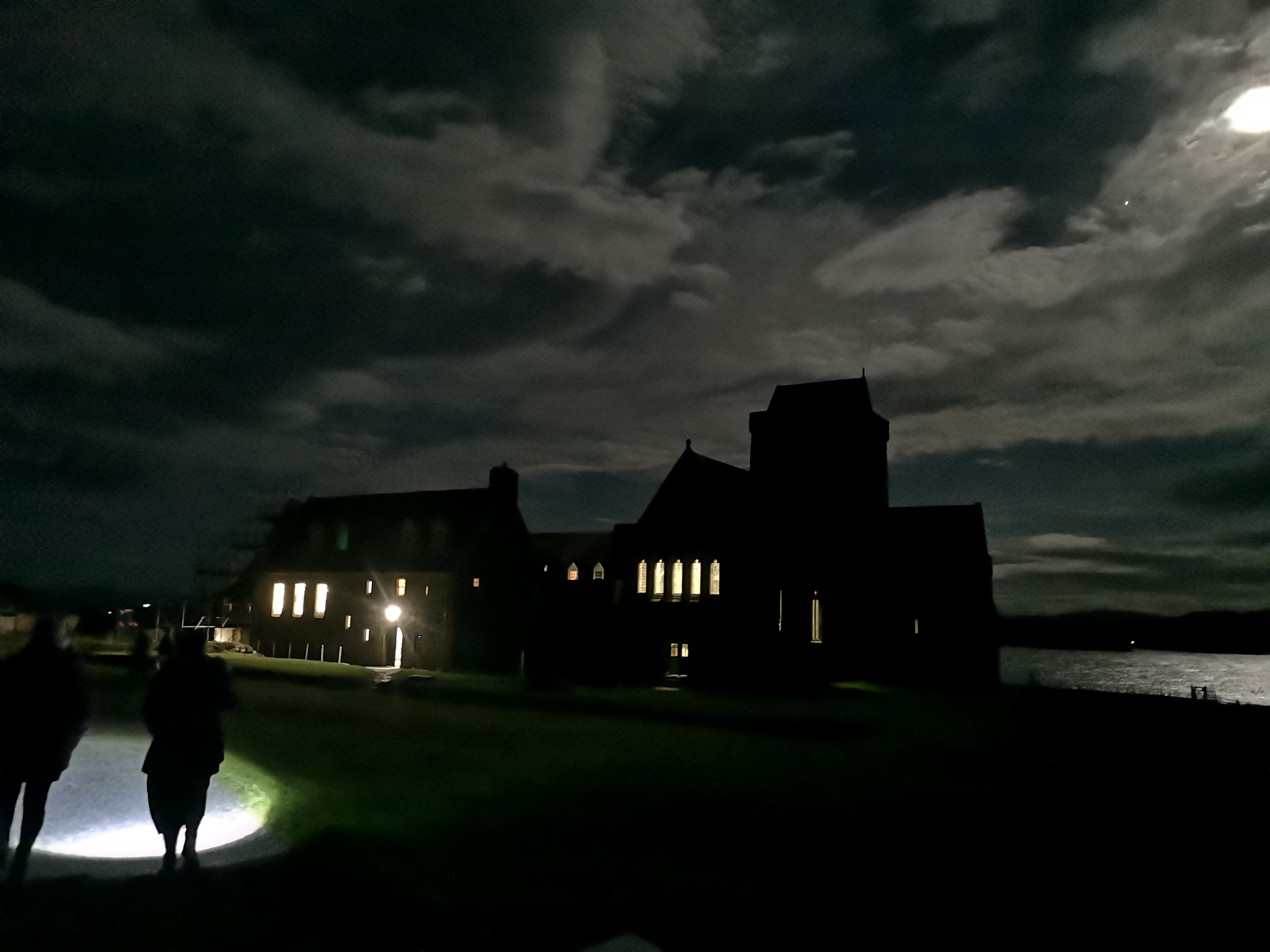
I took the photo above a week ago, on our way into the abbey on Iona to attend a service led by members of the Iona community. This service, and the one the next morning, had a profound effect on both of us. It was simple, unflashy, with dirge-like hymns. We sat in the cold and damp of the old abbey and I wept.
Why did I find this service so moving? It was the welcome, the sense of deliberate inclusivity, the freedom to make and take whatever I needed from the gathering with no expectations, no narrow hoops to jump through. Then there was the liturgy, skewed towards justice and grace. (It feels like a long time since I did not have to grit my teeth through at least some parts of a communion service.) Then there was the companionship, which included people from all over the world. A mental health social worker from Philadelphia wondering if she could keep going. A group of muslims from Bradford. All of us gathered around the same table which belonged to none of us and all of us at the same time.
It was like coming home.
I could say a lot more about our decision to join, and how long it took for us to make it, but we will save this for another time.
The point here is not that we should all join a community. Rather that as seasons turn, new roads will open to us. Trust this my friends, right the way through. Not just when we are fit and fighting, but even in the darkest winter.
As children of the great spirit who made the world and holds everything together, the roads we choose should sing in our souls. Lets walk on together.
(Image by Si Smith, from the book ‘After the Apocalypse’.)
When looking at all the brokenness this world contains – war, greed, injustice and shallowness – we might be forgiven for despairing. For throwing up our hands and seeking seperation and distraction. This would be a sane response.
But what if this story is only a partial truth, or even worse, a distortion of a deeper one? What if despite all of this darkness, there is goodness flowing still at the very heart of our humanity?
If this were true – even if we merely choose to believe that it is true – what difference would it make? What might be the sanest response?
If we can believe that there is goodness at the heart of everything, a strange thing starts to happen. We see it everywhere. It does not blind us to the presence of darkness but we start to notice those ever-present pricks of light…
Perhaps this is a useful way to characterise our whole Advent journey… so much of our lives have become detatched from each other. We live through performative pixels on screens but the good stuff – the best stuff – is made of warm flesh and friendship. How we need our tribes…
Tribalism can be bad of course, for all the obvious reasons, but how could humanity have survived without each other? It might have helped us hunt mammoths but it also gave us the grounds in which we could learn to love.
If we look for goodness, we will see it most commonly in the middle community.
May you find yours. May you give yourselves to each other and in return may you all be held.
And from this place of warmth, may you reach out to those who are still cold.
Stand


We are not helpless here

Thundering juggernauts will shudder to a halt

Inches from our upraised hands

When we make a stand


We are not victims here

Each injustice is remembered, not to avenge

But as the tender wound of our becoming

Back when we made a stand


We are not broken here

Our bodies embrace their beautiful imperfections

And here, in our many shapes and colours

We make our stand


We are not defeated here

There is much to do but we are many, and

Whole worlds are reshaped by loving

So, right here, we make our stand
When I was a boy, I attended an Anglican church that was part of what was later described as the ‘charasmatic revival’. Lots of werd things happened, but lots of very lovely things too. If there was a soundtrack to this experience, it was the gentle folk songs of The Fisherfolk, an American Christian community who inconcruously lived on the Island of Cumbrae, which I can see from my Kitchen window. (The story of this community is rather interesting but that is for another time.) One of the Fisherfolk ongs we sang went something like this;
Peace is flowing like a river
Flowing out through you and me
Spreading out into the desert
Setting all the captives free.
Of course, I had no idea what this meant. If pushed I might have had a very dualistic idea of how Christianity was going to take over the sinful world and sanctify it one soul at a time, but this song sometimes randomly comes into my head even now. It connects me with something simple and good, but also something I still hope for decades after I fist heard the song – even if my concept of what peace looks like has shifted considerably.
For a long time, I have been interested in something called the ‘Shalom of God‘. In my way of thinking, this is a foundational part of the Gospel of Christ- which is after all NOT primarly concerned with saving souls from Hell (If you don’t beleive me, read Mathew Mark Luke and John again) but with strange ideas about the coming of a ‘Kingdom of God.’ This Kingdom is both here and now and future hope, where peace and justice reign. It has an upside-down, topsy-turvy politics in which the humble will be lifted up and broken people will be healed. In fact, it seems to have a set of rules and obligations that are entirely incompatable with any earthly empire that has ever been built.
And there is is the problem. To make peace, it seems that we have to turn things upside down. To make Shalom, we have to learn a new path- one that goes beyond mere peacemaking into the idea of restoration of deeper dependencies and connections.
The Bible Project puts it like this;
Again, it is impossible to think about these ideas during this Advent and not constantly be aware of what is happening in Gaza, where the very opposite of Shalom is being displayed in all its horror and gore. There has been no peace in this desert for generations.
Perhaps the Shalom of God is not a final destination, but a constant process of engagement with the brokenness in the world and in ourselves. A constant call to be a channel for the peace to flow out from.
All wars must end, but this is not the end of war. We will always need peacemakers who long for the Shalom of God.
The fruit of the spirit is peace…
After the rain squalling
And the bombs falling
After the back stabbing
And the tongue lashing
After love is betrayed
And dreams disarrayed
When the knife cuts and slashes
After sackcloth and ashes
Comes the peace
After the tumours
And cruel vicious rumours
After bodies broken
And evil words spoken
After guns cease their shooting
Troops no longer jack-booting
With the grave trodden down
And the trees turned brown
Comes peace
Even after the failure
Of life-long labour
And after deadlines missed
After the getting pissed
When the pressure’s done mounting
And it’s all over-even the shouting
When the race has been run
In the setting of sun
Comes the peace
When anger burns out
After faith turns to doubt
When we give up on walking
And wolf packs are stalking
When the money is spent
Safety curtains are rent
At the end of all coping
Even Polyanna’s done hoping
Until now on this Advent journey, we have been focussed mostly on private, interior spirituality. This is only ever part of the story, because personal enlightenment is meaningless if merely used to boost to our individual ego strength. I do not mean to point the finger because we all fall into this same ‘me first’ spiritual trap.
In other words, we can find our selves drawn into a spiritual journey that might be described as ‘moralistic, therapeutic, deism‘, in which our spirituality becomes a lifestyle contract offering us a divine therapist in return for following certain cultural moral behaviour codes. There are many problems with this kind of ‘heavenly insurance’ approach, not least the fact that it is often tested to destruction by what life throws at us, but also because it can co-exist comfortably with western society norms that allow for the continuation of extreme social and environment injustice.
A spirituality that promotes ‘me’ and ‘mine’ at the expense of the other is simply not very Jesus-like. It is no Advent at all. You know this already.
What are we waiting for? What notable future event are we scanning the night sky for distant signs of?
The story of the first Advent might be instructive here, taking place as it did in a time of despots and child killers. Meanwhile, in a broken, invaded and troubled country, people longed for Messiah, the coming of the Prince of Peace who would set captives free.
These were people who lived in the shadow of the words of the great prophet Isaiah, who began like this;
The multitude of your sacrifices— what are they to me?” says the Lord. “I have more than enough of burnt offerings, of rams and the fat of fattened animals; I have no pleasure in the blood of bulls and lambs and goats. 12 When you come to appear before me, who has asked this of you, this trampling of my courts? 13 Stop bringing meaningless offerings! Your incense is detestable to me. New Moons, Sabbaths and convocations— I cannot bear your worthless assemblies. 14 Your New Moon feasts and your appointed festivals I hate with all my being.
Wash and make yourselves clean. Take your evil deeds out of my sight; stop doing wrong. 17 Learn to do right; seek justice. Defend the oppressed.[a] Take up the cause of the fatherless; plead the case of the widow.
See how the faithful city has become a prostitute! She once was full of justice; righteousness used to dwell in her— but now murderers! 22 Your silver has become dross, your choice wine is diluted with water. 23 Your rulers are rebels, partners with thieves; they all love bribes and chase after gifts. They do not defend the cause of the fatherless; the widow’s case does not come before them.
from Isaiah chapter one.
Like the words of all prophets, there is much here that disturbs and even offends us still. But the angry words that Isaiah places in the very mouth of God (or God placed in the mind of Isaiah) have visceral, furious power…
Later on, we come to the passage quoted each Christmas. It is often divorced from the anger of the words above, as if the two are unrelated;
The people walking in darkness have seen a great light; on those living in the land of deep darkness a light has dawned.
For to us a child is born, to us a son is given, and the government will be on his shoulders. And he will be called Wonderful Counselor, Mighty God, Everlasting Father, Prince of Peace. 7 Of the greatness of his government and peace there will be no end. He will reign on David’s throne and over his kingdom, establishing and upholding it with justice and righteousness from that time on and forever. The zeal of the Lord Almighty will accomplish this.
From isaiah chapter 9
What is this Advent hope we are reaching for? If we take our cues from the first Advent story, we can not seperate the anger from our Advent.
The Shalom of God referred to here is not for personal private sanctified satisfaction, rather it is the call towards the restoration of justice in the fullest sense possible.
Palestinians cook among the houses destroyed in Israeli strikes during the conflict, amid the temporary truce between Israel and the Palestinian Islamist group Hamas, at Khan Younis refugee camp, in the southern Gaza Strip, November 29, 2023. REUTERS/Mohammed Salem
In The Silent Cry German theologian Dorothee Sölle [1929–2003] writes “I think that every discovery of the world plunges us into jubilation, a radical amazement that tears apart the veil of triviality.” [1] When the veil is torn apart and our vision is clear there emerges the recognition that all life is connected—a truth not only revealed by modern science but resonant with ancient mystics. We are all one, connected and contained in a Holy Mystery about which, in all its ineffability, we cannot be indifferent. Sölle maintains that radical amazement is the starting point for contemplation. Often we think of contemplation as a practice that belongs in the realm of the religious, some esoteric advanced stage of prayer that only the spiritually gifted possess. This is not the case…. The nature of contemplation as I describe it here is one that lies well within the capacity of each of us. To use a familiar phrase, contemplation amounts to “taking a long loving look at the real.”…
That ‘connection’ thing has increasingly been a central part of the meaning through which I try to live. It seems such a simple idea, almost to the point of cliche, until you feel it, somewhere deep inside and then the journey starts again.
I have come to think of the human experience as a process of birth/disconnection, followed by a slow process of realising that our cherished (you might even say fetishised) individuality is mostly illusion.
That is not to say that our unique agency is illusion, rather that our being exists in the fullest sense when we are part the ‘great connection’ that has many names- including ‘The Christ’, which (through the writings of Richard Rohr) I now think of as another name for everything.
No matter how real my experience of this connection has been, it has only ever been fleeting. It comes and goes as encounter, or with the unexpected tingle of trancendence. So it is that I have found that certain practices help me to make what is ephemeral more fully present. Above all, I find this in creativity- writing and shaping things, pursuing ideas in abstract even if they often remain out of reach. I have written before about the idea of theopoetics which describes this same spiritual process rather well.
The strange thing about the creative life is that as we create, many of us have described a feeling in which the ideas/tunes/pictures/shapes/words etc. that flow from us are not ‘ours’, rather they have been given to us in some way as if we are not the origin, but somehow the channel. These experiences are special, in fact the things I am most ‘proud’ of having created are mostly things that are not mine at all, rather at some level they have been ‘co-created’.
The point here is not to make any crazy supernatural claims – after all, mystical experiences always seem madness to those who did not experience them – rather to honour again the recognition that all of life is connected, and that ‘radical amazement’ is a very ordinary and real part of this connection…