Another repost because I have found it helpful to take a look at previous advent journeys. This one was from last year, and uses a poem that I am still chewing on- it comes to me regularly as I walk the hills… the sense of being ‘not alone’. I hope it resonates.
It goes without saying that here in the northern hemisphere, the advent season is inseperable from the deepening of winter, the shortening of days towards icy darkness. The longing for light. It is this juxtaposition that adds immersurably to the poigniancy of how we approach it, so much so that I find it difficult to imagine what a southern hemisphere advent, with just the opposite trajectory, might look and feel like.
Here there is also a feeling that we are treading pre-Christian paths too, in that the traditions that come to us only in fragments suggest that our ancestors also felt the spiritual significance of this season, so much so that they celebrated their own rebirth in the great festival of Yule, the winter solstace. Of course, many of these fragments live on in our Christmas traditions – the date itself, the mistletoe, the father christmas, the tree, the candlelight…
Rather than disturbing our Christian world view, I think it is more helpful to attempt towards a gratefulness because we stand in a long line of people trying to hold and help each other through the darkness.
I don’t need to tell many of you about how hard the season of darkness can be, or why the depths of winter – approaching the enforced jollility of Christmas – can sometimes be a very lonly place. Perhaps it was different in past, in those more connected, agricultural communities that previously celebrated the winter solstace, but then again, there are always outliers in any human grouping; those of us who are cast low or cast out.
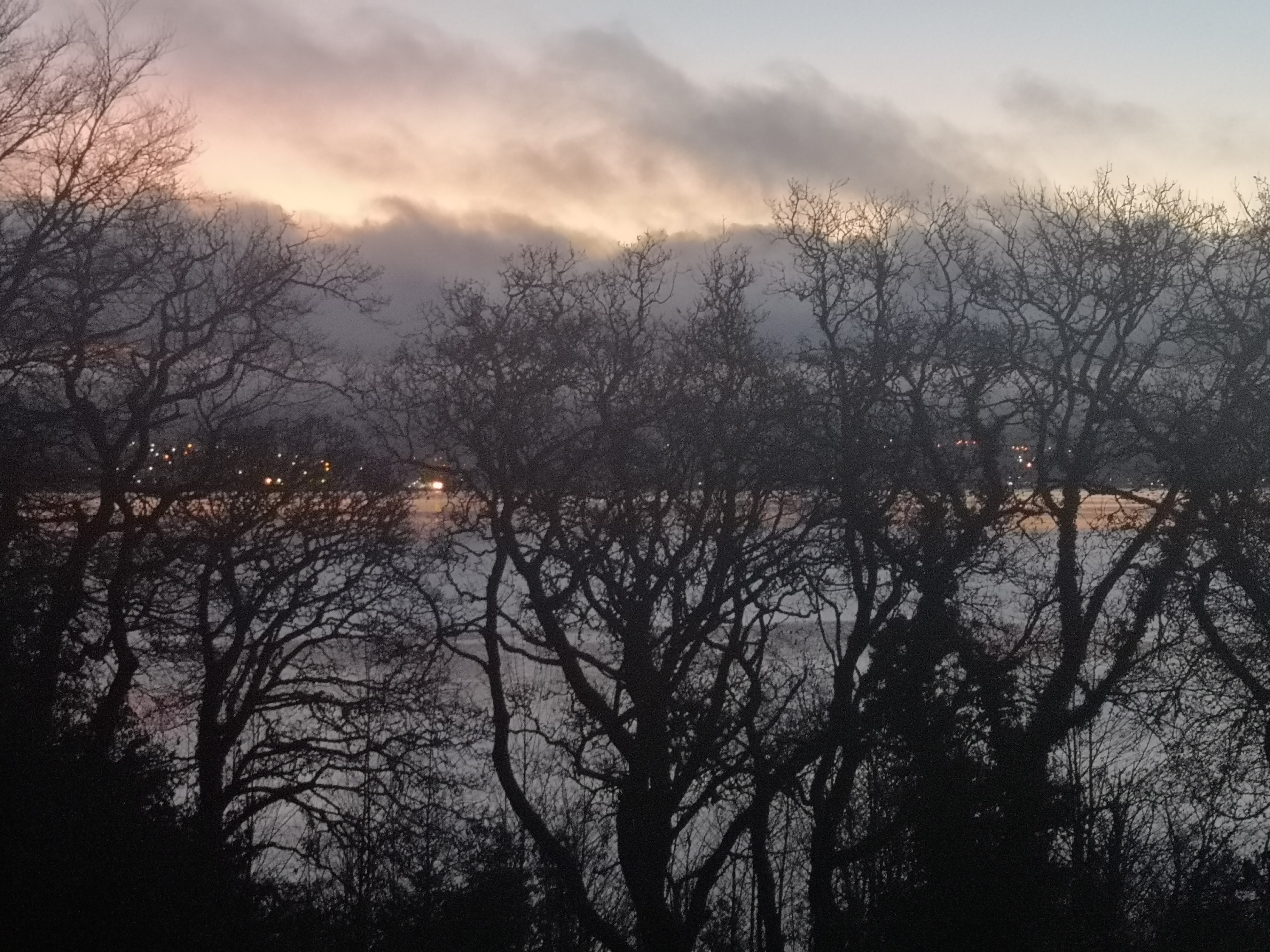
Despite the stark beauty, winter can be cruel.
In to this dark place, the Jesus that comes through old stories (and through the lives of those trying to hold and help) is not one who makes everything ‘better’. S/he does not make the winter go away. The searing passage from the beginning of John’s gospel about darkness not being able to put out the light never pretended that darkness would not continue.
Light exists in the midst of darkness, just like solstice comes at the depth of winter.
I would like to share with you a poem, which means a lot to me. It was my attempt to banish my own winter blues and to look for light.
When setting out on our advent journey, or any form of spiritual quest, it might be important to first let go of some assumptions about the nature of the pilgrimmage we are undertaking. For white men in particular, we must contend with a cultural inheritance based on the heros journey.
Here is the definition from Wikipedia;
In narratology and comparative mythology, the hero’s journey, or the monomyth, is the common template of stories that involve a hero who goes on an adventure, is victorious in a decisive crisis, and comes home changed or transformed. Earlier figures had proposed similar concepts, including psychoanalyst Otto Rank and amateur anthropologist Lord Raglan.[1] Eventually, hero myth pattern studies were popularized by Joseph Campbell, who was influenced by Carl Jung‘s analytical psychology. Campbell used the monomyth to analyze and compare religions. In his famous book The Hero with a Thousand Faces (1949), he describes the narrative pattern as follows: A hero ventures forth from the world of common day into a region of supernatural wonder: fabulous forces are there encountered and a decisive victory is won: the hero comes back from this mysterious adventure with the power to bestow boons on his fellow man.
Leaving aside the masculine grandiosity and ego-centric nature of what might be described as the hero complex, the idea of transformative struggle leading towards personal victory and public triumph over an as-yet-to-be-defined ‘enemy’ has considerable cultural power in ways which may be very unhelpful on our ordinary Advent journeys. One consequence is that we tend towards theologies of opposition in that we unconsciously set out not towards connection but towards conquest.
The prevalence of the ‘superhero’ genre within popular culture has always facinated me, at the same time as repelling me. What might this say about us? I tried to capture some of this in a poem;
Superhero


Tonight I am made new

The atomic spider bit deep, and

I am freak show, staring down from high buildings

My laser vision scans, searching

For photogenic girls to save

From comic-cut villains, whose role is crucial, because

Every empire needs a convenient easy evil

To scare children to their beds and

Parents to their polling booths


Yesterday I was just like you

Commuting through the same crowd towards

Jobs where work is anonymous. My weekend too

Was consumed by compensatory distraction

A movie perhaps?

We watch masked heroes high in their

Plastic palaces

Or zombies massing over the border wall.


If we are all extraordinary

How could I be special?

After all, I eat communists for breakfast
We see this in part in the way that we come to define the spiritual ‘problem’ that we set out to overcome. Most religious movements see to do this – after all, our society certainly needs to address many problems, but the particuar problem focus of our hero struggle is not neutral either. Even the best heroes can cause collateral damage.
For much of my early life, the religious focus I was exposed to was the problem of sin. Particularly sexual sin, which was the worst kind. If we (or I should say if I) was purer then the world might be transformed. My job was to make others see it that way too even if I was a very flawed hero. The life-or-death nature of this struggle was after all eternal.
Later, I characterised the ‘problem’ more in terms of poverty, inequality and injustice . My job was to overcome the brutalising, degrading nature of trauma associated with these things. I worked as a social worker on the ragged edge of the welfare state, trying to rescue people (including myself.)
There is sin in this world. There is injustice. We need people to challenge and rescue, but this advent journey is not towards a battlefield, It is towards a baby.
Here is a picture of my brother holding his little nephew. I love it, in part because it captures the vulnerbility of both. It has no grand purpose, but it is laced with a deep significance, a supra-humanity.
So, shall we let go the hero, at least for a while? There may be battles ahead that need to be fought, but there is also fragility and humility to be encountered, if we lay down the swords for a while…
Can we agree that the work of our Advent season is first and foremost concerned with the search for meaning?
Did I get this right? Do I place too much pressure on what is after all a period that is already put to far too much work? Perhaps, because after all, most of us perceive the rush towards the high season as we might the landscape from a speeding car, blurred by speed and then behind us. These words are not intended to bring any more ‘should’ or ‘ought to’.
No, the search of meaning is not an obligation, it is not even a discipline (although this could help.) Rather I think of it as encounter.
Let me say more about this, using that most useful of spiritual language known otherwise as poetry;
Joy 2

Joy is not a bauble
Not a bubble, too soon burst
Never manufactured cost effectively
It is not bought or sold
It is not gold

Joy is not a jacket
You pick from a handy peg, it is
Never something worn externally
It is always a surprise
Like sunrise

Joy requires no skill
Its practice is not taught
It is not being ‘happy’ or content
It is just being open, to the
Beautiful and broken

Joy is an ambush
Hidden in plain sight
Wrapped up in the most unlikely things
It often comes with grief, not even
Promising relief

Joy is a squirrel
Transcending a tree
It is music played directly on the spine
You do not need to look, because
It stabs you the gut
It is just being open to the beautiful and broken. This line has tapped at me for years. It refers back to an old Henry Nowen quote in which he described these two things – the beautiful and the broken – as the primary means through which he encountered God.
Of course some of our experiences of beauty (and even a few of our experiences of brokeness) are much easier to characterise in this positive way. Sunsets, rainbows, smiling babies or crashing waves seem simpler spiritual avatars than slugs or shopping trips or our own human fragility.
We are not always open to these things. Sometimes all we can do is to put our heads down and keep moving forward and there is no shame in this. Like a walk through the dense conifer plantations here about, it is almost possible to leave the tracks laid for us. If we try, the chances are that we will be forced back onto them, scratched and bleeding, within a few hundred yards. No, we must wait for the crossroads and take the opportunity when it is offered.
Today, for instance, we travelled through the ice and snow to Glasgow, where we were trying to sell some art. We always find ourselves in lovely deep conversations with people at these events and this time I treasure the lady who wept uncontrollably after standing reading poetry on some of our pieces. I eventually asked her to tell me what it was that she had found particularly meaningful but she could not point to individual words, rather she could only describe a feeling she had that washed over her in the form of tears.
Perhaps this seems like madness. A kind of sentimental unreality arising from fanciful imagination? I would caution against such judgement however, firstly because it would be to deny the validity of what to this woman was something very real but also, despite the highly subjective nature of these kind of transcendent experiences, they can be transformative.
I do not beleieve that this woman was responding solely to any particular qualities we managed to capture or convey within our art, although it is wonderful that these seemed to help. Rather I think she was encountering what I would categorise as ‘the divine’.
The God who is in all things.
The God who loves things by becoming them.
Or, as G M Hopkins put it; the Christ ‘who plays in ten thousand places, lovely in limbs and lovely in faces not his...’
I am cheating today and reposting an old piece. I took a trip through some previous Advent adventures, in part to recentre myself, and discovered this…
I would contend that any journey worth making will contain elements of the spirit.
By this, I mean that it will often contain a certain depth of meaning – a kind of inherent significance that is often difficult to define and in hindsight is easily dismissed as romanticism or random seredipity.
These moments of encounter are precious, not because they imbue our ordinaryness with something that feeds our own ego; not because we can boast about them on social media or record them on our smart phones for later consumption. Rather because they draw us towards a truer form of ourselves that is not constrained by our bodies.
This is what the mystics have taught for thousands of years and whilst I can claim no great enlightenment, what I have seen and experienced fills me with something that I would describe as ordinary hope.
We are not only this.
There is not only now.
These transendent moments are fleeting. Even as I try to honour them by noting and naming them, even as I try to capture some of them in the things that I write, I must also acknowledge that I often fail to do justice to the light they bring to my life. I too easily fall back on old destructive patterns, old distractions. I too easily fall into the old dualistic patterns in which my profanity seems entire seperate from anything sacred.
Humanity is complex. It is broken and it is beautiful. It is chained and it is free. It is clever but lives in almost total ignorance. It wraps itself up in a cloak of thick cloth in a futile attempt to hide from the consequences of eating the fruit from the tree of knowledge of good and evil.
Today I want to share an old poem with you, written whilst I was on a ten day silent retreat back in 2014. The poem tries to describe an envy of wild things, whose living seems somehow more complete, more connected, more sacred. It was written from the sudden realisation that the religion I was part of had so much baggage, so many barriers and restrictions, so many uncomfortable obligations and compropmises, so much humanity. I longed for a different kind of journey.
May a bird sing an ordinary song of worship and may we hear it, as if for the first time.
The boundary between seasons is always shrouded in mist, but nevertheless it seems clear now that autumn is burned out.
That great blaze of last-gasp beauty has been replaced by cold cold nights in which only the strongest stars out-compete the hooded moon.
Soon the thing will turn again. It will be wet hereabouts, but above us will turn to white.
Here, where cities and towns have thinned out only to strands, there is no hiding place from the coming of winter. It is not fooled by fire or distracted by screen. I fear it, knowing I must bear it. There is no other way.
Of course, beauty is not banished. Joy is not banished. Life does not end; rather the wildness that remains is still willd. It sleeps under surface of wood and glen, waiting.
Because we too are wild, we are not immune from winter. All we have is this; to seek meaning within it.
We look deep into darkness seeking colour and shape.
It rests like a concrete block, pressing down on our souls.
You know what I am talking about – the relentless messaging from our ruling class/government, echoed to a lesser or greater degree by ‘news’ stories in the media – all of which paints a picture of the world that just feels… wrong.
It is exhausting to keep it all in some kind of perspective; to keep striving to push back; to reframe; to give more considered perspective; a kinder, more compassionate set of goggles through which to view the world. Most of us reach a point (or many points) at which we simply switch everything off and seek the usual distractions.
How do we characterise what seems wrong? It is easy to take a swing at the pantomime villains whose faces are always in our news feeds – I have indeed done this many times – but this achieves little because what drives our political machine has changed. It is no longer a clash of ideas thrashed out through debate, protest and counter-protest. Rather what we have is an algorithm, through which power is mediated by the creation of division.
The appalling reality is that political success is achieved most not through inspirational, hopeful invocations towards higher ideals but through the creation of division because we are most enervated, most engaged, when we are outraged, offended, threatened or angry.
I wrote this once;
To the left, to the right
If they are not wrong
How might it be possible
For me to be right?
If they are not bad
How will we ever know
That we are good?
If they have success
How can I destroy it
To substitute my own?
If I grudgingly turn the other cheek
How many slaps am I entitled
To return?
From ‘After the apocalypse’
Anger is not always a bad thing, but when it is stoked in order to create convenient compartments into which to sell simplistic products/solutions, it becomes worse- far worse – than the old Roman bread and circuses. This kind of anger, bred as it is by a social media drip-feed of micro outrage and downright distortion, is toxic, but it is now seen by both sides of the political spectrum here in the UK (and of course, elsewhere too) as the only short-term means of getting and holding power.
Let me diverge for a moment and tell you a story from my week.
I play cricket for a small local team, Despite my introversion (leading to the obvious tendency to avoid/limit social events) I very much value the connection to the lovely bunch of blokes who make up this side. I am older than most and we are a diverse bunch, but I am motivated by two things. firstly, I love playing cricket. Secondly, I love the making of community, in this case all the more so because these are men that I would normally not share my life with. It is a chance to interact with different persectives, outside my own bubble. It is also good to feel that in small ways I can help to build a safe space in which others can feel welcomed and included, particularly those who have had some tough times.
In real community of any sort, we only get back in proportion to the investment we make. Part of the probem with the algorithm is that almost no investment of self is required.
Last weekend was our cricket club annual general meeting and dinner, which involved a complicated journey for me as it meant an overnight trip to an island. Fortunately William picked me up in his boat, which also give me a bed for the night and a chance to spend some time with my lovely lad. The dinner went well and afterwards the festivities moved to a local pub who sponsors the club, where much drinking commenced. I am not much of a drinker, so mostly I sat back and listened as people first relaxed then became exaggerated versions of themselves, getting louder and louder. In one case, this also meant making sexist and overtly racist statements.
Reflecting on this later with Will and his girlfriend (who was also present) made it clear that they were not impressed. I wondered at my complicity – should I have called out those bigotted statements for what they were? Was I just humouring him, people-pleasing as a I am prone to do? Perhaps, but after all, drunk people are not usually amenable to reasonable chastisement so a challenge was unlikely to go well. There is more here though…
Clearly, this bloke has had totally different life experiences to me. His childhood taught him different things. His politics where shaped by other ideas which were then stoked and re-enforced by the algorithm.
I have got to know this man a little and he is a warm, friendly chap, who loves his family. I sense in him a woundedness too, and have heard bits of his story that suggests where this comes from. I have set myself towards him, to try to hear from him and this investment must involve empathy and compassion. I might hate his views, but does that mean I have to hate him?
Must all opposing views be called out? Even those who make victims of others? In the algorithm, the answer is a simple yes. In community it is always more complicated than that.
I am not the hero here. I am not always right. Even when I am right, compassion might dictate caution within community. It might need to start with relationship and then look for opportunities to talk things through. It might nor go well but it should not be for the lack of care.
The principle, no matter how noble, has to be moderated by the person. Or, to put it in another way If I speak in the tongues of men or of angels, but do not have love, I am only a resounding gong or a clanging cymbal.
This kind of talk may seem like madness, but perhaps this is in part because it defies the zeitgeist imposed by the algorithm. The world is not divided into us and them, good and bad, right and wrong, rather it is made up of people who are trying to make sense of their lives, to find paths of meaning. Some of these paths lead us more towards the clenched fist than the open hand and the algorithm both encourages this trend and encourages it.
None of us are immune. Certainly not me. I am not the hero of this story. The holes you can see in what I have written are quite obvious.
That passage I quoted from first Corinthians ends like this; And now these three remain: faith, hope and love. But the greatest of these is love.
On a recent trip to Iona, I walked down to Columba’s bay and walked one of the labyrinths laid down in the close-cropped grass at the edge of the rocky shore. An old poem was on my mind, and here it is, along with some video footage I made.
I post it slightly uncomfortably, because the words of the poem were written a long time ago, using words that I would probably not use now.
But they are still ‘true’ I think. At least they are for me. I hope they are for you too.
A few weeks ago I listened (as I always do) to a Nomad podcast. I am a subscriber to Nomad as it has been a portal for all sorts of ideas that I have found useful over the years. This particular episode featured a conversation between David Benjamin Blower and a theologian/community gardener called Sam Ewell, from whom I was grateful to be reminded of the work of Ivan Illich, a name forgotten since my undergraduate sociology studies, which were (ahem) some time ago. Illich suddenly seemed to be a prophet worth listening to in the midst of our present realities.
Since then, I have been skimming the internet for Illichian materials. He was somewhat prolific, both in terms of his written output but also in film and video. I’ll throw a few links into this post, which might be the first of a few emerging from my deep(ish) dive into these materials.
A good place to start is to do a bit of a skim of this book – Tools for Convivality – which can be read online, and gathers many of the themes and ideas that Illich explored in his work.
I cannot begin to summarise the broad brush of Illich’s writings becuase he was prolific, but for a little bit of background, this old school chat is rather good (although rather dense!)
Illich comes from a place out of which so many good things seem to flow- that of the rebellious priest. His background as a Catholic priest anchored him in the religious tradition but also led him to quiestion it all in the name of truth.
The central part of his thinking seemed to be concerned with the nature of post industrial societies, and how the shapes and objects we make (the tools) start to become bigger than all of us. The end result, for Illich, is that what might start out good easily skews towards something else.
His use of the word ‘conviviality’ is rather useful. Some tools (defined widely to incliude both the screwdriver and the car and the national health service, or the school system) are simply more convivial than others, but within our complex societies, they tended towards becoming less convivial.
Illich defines “conviviality” as the opposite of industrial productivity, or “autonomous, creative intercourse among persons and between individuals and their environment“. Tools for conviviality are those which maximize an individual’s autonomy and impose the fewest constraints on their freedom.
Conviviality has a rather helpful way of not being a black and white. good and bad dualistic way of seeing the world, rather it sees all things as being on a spectrum. Things will be more or less convivial – for example, he also discussed how health systems, offering universal health care to wider population, are good things, but that they also tend towards a loss of convivility. Humans are lost in a larger system. Our inate ability to create, to connect, to love one another becomes overwhelmed by an industrial institution.
One tool Illich thought a lot about was modern education. Here is a good summary.
Why is this particularly relevant now?
Many of us have an awareness, or a ‘feeling’ that the world we have created is now creating us. Change is impossible because the tools around us have become fixed. We feel this within our politics, our economics and our enslavement to the unsustainable comsumer culture that is destroying our planet. Illich gives us a language to talk about these feelings.
You could describe them as ‘convivial conversations’.
I have lived through a period in which many small wars have been fought, mostly in poor countries a long way from here. Overwhelmingly, the British soldiers who have died in these wars have been young working class men. We have taken no serious count of those we have killed.
These wars are often framed using the same language as the last world war, as if they were the same. Whatever your stance on the nature of war itself, surely we must concede that the world wide struggle against fascism is not analagous to an empire struggle in Kenya or the dreadful, deceitful, illegal Iraq war which has left such a legacy of pain and stoked the hate that has led to so much more violence.
Back in 2018, I put it like this
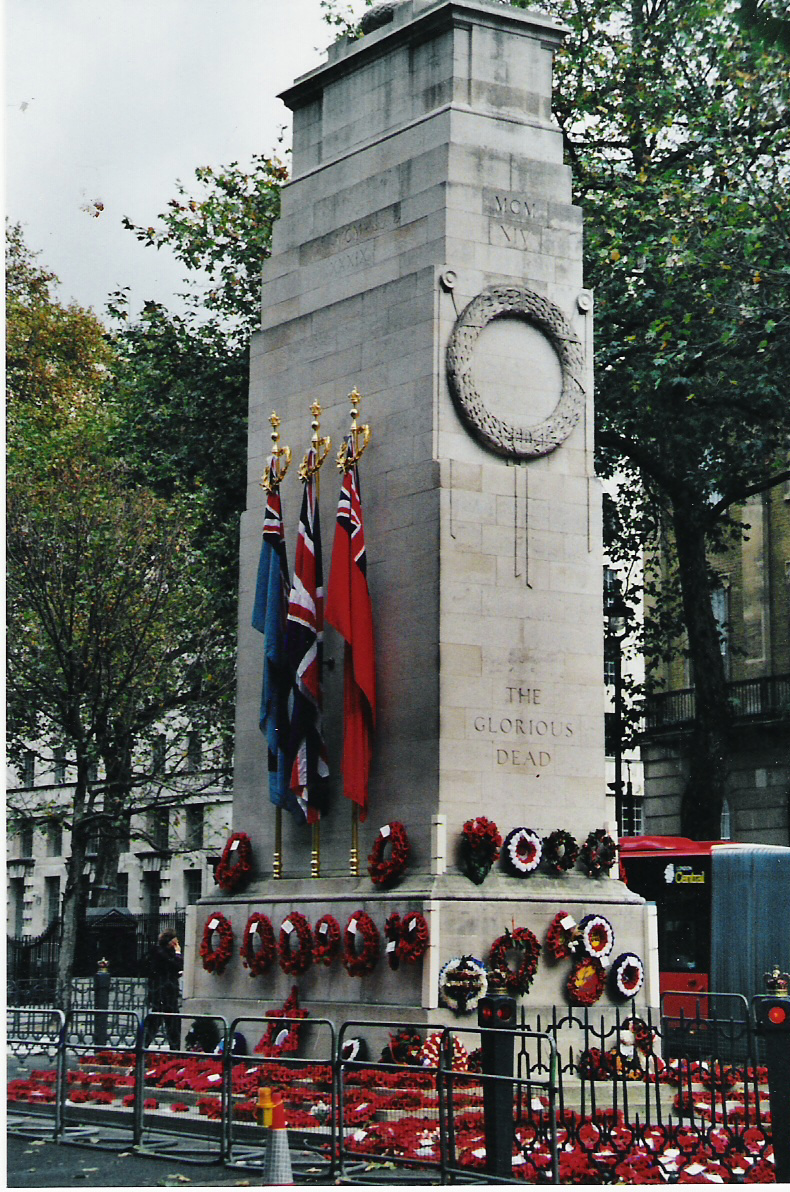
Every year, we remember those who died in the world wars of the last century. Industrial slaughter after industrial slaughter.
They died for us, we are told. To preserve our way of life.
At some point, I fear that the act of remembrance was hijacked. We do not remember the terrible first war as being a futile obscene expression of empire. Rather we remember it as a mass exercise in noble sacrifice. The dead soldier is sacred. We must worship him.
And we do not remember the second war as arising in brutal consequence of the first, in that it created the precise broken and splintered context into which populism and fascism could flourish. Rather we glorify and obsess over Merlin engines and the Dunkirk spirit. Britain is sacred. Her empire will last for a thousand years.
I fear that both kinds of remembering are an exercise in forgetting. They miss the point, perhaps deliberately.
Perhaps the war generations did not die for us after all. They died for them– the others, those for whom war is simply politics by another name.
I am done with it all. Rememberance day is no longer a way to make a commitment to peace, in the wake of all the suffering that war brings. I will not stand with those who glorify and fetishise the poor expendab le soldier as some kind of noble defender of our way of life.