Tomorrow is remembrance Sunday, the day when we remember what happens when we allow international relations to decend in to war, and the terrible human cost that has to be paid in the prosecution of this war.
Or at least this is what I think we are remembering, but with a heavy heart, I have to say that this is perhaps not the primary message being communicated within our culture each year in association with this solemn day,
All war is evil. Some are more evil than others. Those leaders who take us to war do so with the explicit compliance of we, the citizens, fed as we are by images of the noble heroic soldier sacrificed in order to preserve our ‘freedom’. This idea has some historical truth, but this truth obscures as much as it reveals.
I am going to celebrate this day by posting this video, because I think we need to hear from an actual soldier.
“Not surprisingly, this sense of bleakness and futility has seeped into wider culture. A recent international survey of young people found that 75% believed “the future is frightening”, 56% thought “humanity is doomed” and 39% were “hesitant to have children”.
Climate change is a critical issue and one that will require considerable political will and social resolve to challenge. Hallam and Franzen and similar thinkers insist that only an apocalyptic vision will persuade people to take action. In reality, as the environmental journalist Hannah Ritchie has observed: “Once anger transitions into hopelessness, we struggle to achieve much at all.” Telling people that there is no future is hardly conducive to getting them to act to change it….”
We need the next generation to dream of different, better ways of being. We need them to revolt against the world we have made, to tear down our institutions and make their own.
What skill set will let them do this? Pessimism is almost not likely to help.
As a father of two now adults, I have watched them struggle with these ideas. The problems of the world are so hard to take on when you are struggling aleady with your own becoming.
I have written before on this blog about how the ancient myths from the beginning of Genesis might be read as an allegory of the rise of mankind, from our start as hunter gatherers, to farmers, to accumiulators, to city builders then to the destructive rise and fall of empires. You can read more about this reading of the Bible here.
You may wonder what some ancient stories from the Bible have to do with climate change?
I think the stories we tell each other in order to make sense of our world matter, and perhaps none more than our origin story. We have been raised on the idea of human progress, defined technologically. Even with the destruction of world wars and the real and present realities of climate emergency, this myth is very hard to counter. We still hear grand plans to solve our problems technologically; some brand new carbon scrubbing technology, or brand new electric cars.
But what if we need to go back to the beginning? What if the problem started when we forgot the theology, the ecology, the politics and the economics of the garden of Eden?
What if, as we ate the fruit of the tree in that ancient story, we separated ourselves from the harmony and balance of the ecosystem that sustains us? What if this was our ‘sin’ all along, and that these sins are now finding us out?
.
The fruit from tree of the knowledge of good and evil
Most of the problems that our world is faced with at present are economic ones.
Or to put it another way, the way we organise our economic relations at both macro and micro levels is both the cause and the sustaining circumstance of global warming.
Or to put it one more way, any solution to the climate emergency has to be an economic one.
These things being said, where are the economic solutions? Why are different economic arrangements being not being openly discussed and debated in the mainstream media on a daily basis? Where are the breakthrough ideas? Where is the careful economic critical analysis of just how our economies are bringing us towards disaster? More importantly, what might be the best economic solutions?
Part of the problem is political. After all, economic theory is mostly seen through the lens of sectarian politics. ‘Progressive’ left wing solutions have been so effectively dismissed, vilified and undermined that it has become entirely logical to dismiss them as crackpot communism. Consider the efforts to introduce a version of the Green New Deal both sides of the Atlantic and the partisan campaign fought against it.
Another part of the problem is that the power of wealth suffocates all threats to their own ascendancy. This is not always deliberate (although often it is) rather it is an emergent quality of privilege and systems that have evolved that enshrine inequality and over consumption.
Then there is something about the nature of economics itself as an acedemic discipline. Remember the Post Crash Economics Society? The study of economics has too often happened within the comfort of its own establishment. There are many notable exceptions but the students revolted for good reason.
Having said all that, the ideas are there if you look for them. More than this, I would argue thtat we MUST look for them. We must find a way to educate ourselves so that when we hear both political parties talking about national debt and gross domestic product as the main economic factors that determine and justify economic policies we can scoff in their faces from a position of knowledge. With that in mind, the point of this post is to propose a couple of places to start.
Next, consider the brilliant work done by Thomas Piketty. Here is a TED talk he did about the role of wealth in our societies, and how this is pulling us towards destruction.
Finally, one of our own Kate Rowarth, who has given us a very simple and powerful model that might replace our dominant neoliberal hegemony. Here are 7 short vids that might change the whole world- start with this one and follow it through.
Climate change will effect us all, but not equally.
It is a present reality for many places in the world- not just the high-profile disasters like forest fires and flooding, but also the encroachment of sea over low lying pacific islands, or threat to many marginal ways of living through altered growing conditions or depleted wildlife. It is likely that we will see more political/economic instability as resources become squeezed.
We have been told to expect mass movements of refugees as people are forced to move away from places that are no longer able to support them, or as they are displaced by wars of unrest. But we are used to refugees, right?
.
Other
.
I am not like you are
I breathe under water
I make mystery prayers
To a god you don’t know, and
I lurk at your border with outrageous demands
I see what you have and I hold out my hands
.
I am not like you are
My skin is of scales
Should your tongue cut me deep
I will not feel pain, so
I climb in small boats and I sneak across sea
I see all that you are and I wish it were me
.
I am not like you are
I ate my own child
I walked through the fire but
Others were burned, and
I swarm through your neighbourhood, take over your town
We hired some e-bikes for a week, to see if we can integrate them in our lives as a form of transport.
We need to talk about hypocrisy.
hypocrisy hɪˈpɒkrɪsi noun
The practice of claiming to have higher standards or more noble beliefs than is the case.”his target was the hypocrisy of suburban life”
It is a word that I have heard often used in and around the climate debate. The gathering of world leaders arriving by private jet, only then to be whisked around Glasgow in massive convoys of gas guzzling luxury vehicles. The eco-warriors who chug around in old vans and take sneaky foreign holidays. The virtue signallers who fill their expensive houses with eco-technology and their garages with Tesla supercars whilst having a carbon footprint many times that of their neibours.
The COP has started with some interesting announcements. Two proto-fascists (Modi and Bolsanaro) have made big promises. Even BJ has said things that make people like me nod in agreement. Now we just need action.
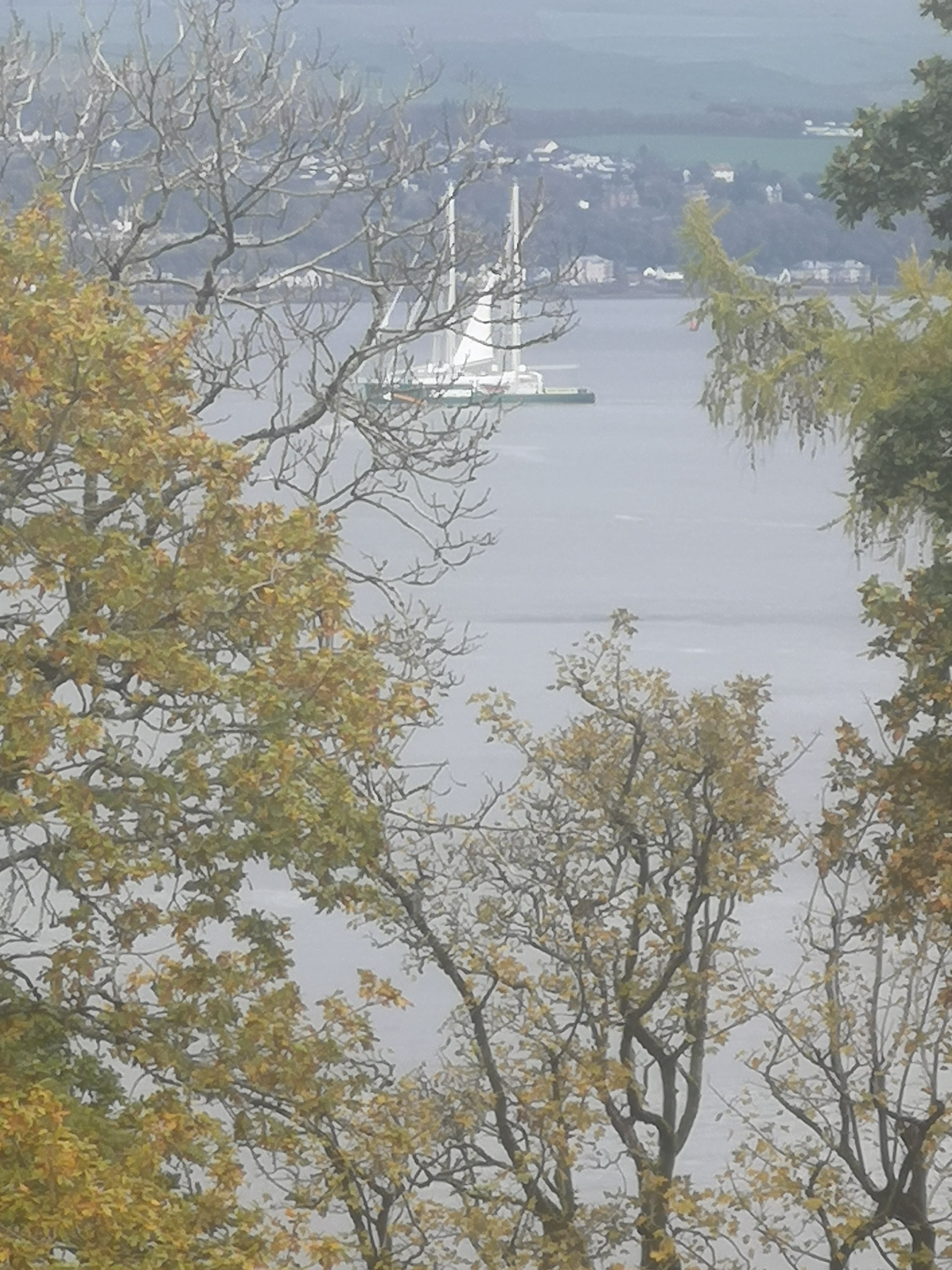
I have even heard Rainbow Warrior called hypocritical for forcing traffic to stop over a bridge whilst it sailed upstream to protest outside the COP. Or protesters who glued their hands to the road called hypocrites because an ambulance might have to take a detour.
Then there is my own hypocisy. I grow my own veg, try to live simply and in ways that do as little damage to the environment as possible. I write pompous poems and try to convince others of the rightness of my cause. I have decided not to fly anywhere ever again. Meanwhile I drive a diesel car, and live a live of comfort that most of the world could not dream of in my own house, surrounded by my own land. Even though I try to eschew consumerism, I am not immune to the allure of gadgets, even though I already have far too much stuff.
But there are worse things to be. Better to reach out towards something good than never reach at all.
.
Thorn
.
It has been said there are three kinds of people
Hypocrites (whose actions never match their ambition)
Cynics (mostly only adept at calling out hypocrites) and
So, great men and women are meeting in Glasgow, with the fate of the world in their hands.
Meanwhile, other forces are pushing back. Using the same spoil tactics developed by the tobacco industry, the paid-for ‘think tanks’, stacked with sypathetic pseudo-science aimed to cast doubt and confuse; the politicians in the back pocket, the media outlets primed and ready to push an agenda suited to those whose power and wealth is threatened by a change to the status quo. (If you want to know more about exactly how this works, I would suggest watching this BBC film.)
Here is another poem. My retelling of the Gaia myth.
The woman beneath the hill of the world
.
They say the earth is a woman
Wrapped in a gossamer layer of
Brown-green skin
Runnelled and pooled by
Salt tears
.
They say the woman is barren, for her sterile
Soils are not fed from the falling leaves
Now the trees are gone, and
Long tresses of her deep green hair
Have been stored as silage
.
They say the woman mourns her children
Whose bones now brine the ocean, and
Whose dawn song is no longer sung
Whose savannahs have all
Been stolen
.
They say the woman speaks to mountains
But they no longer listen; that she
Looks for signs in distant stars but their blink
Is blurred by all the smoke from her
Burning forests
.
They say the woman would write her story
Except that the black ink in her wells
Have all been pumped dry, and the
Tail-feather-quills from her favourite flightless birds
I was talking to a friend about how we do not notice change happening all around us, as if we are pre-programmed to assume stasis, even though our whole lives have been subject to continual change. We do not have to ponder long to consider how the world has changed in our own lifetimes. I am 54 years old, so was born before the internet, before mobile phones, before global warming was first widely identified (we commonly mention the first 1971 climate change conference) and before ABBA even.
I say this as we all have to live with the ever present reality of impending ecological disaster brought about by global warming. It can be overwelming and almost impossible to imagine both the scale of what is coming and how we might change the arc of recent history. Yet change IS possible. The pandemic should have made this clearer than ever.
If we add just a few generations into our change concept, then the human impact on the world around us becomes impossible to ignore. Rather than reading this as a death spiral down towards destruction, we have to remind ourselves that what is made by human hands can also be unmade, reshaped and reformed.
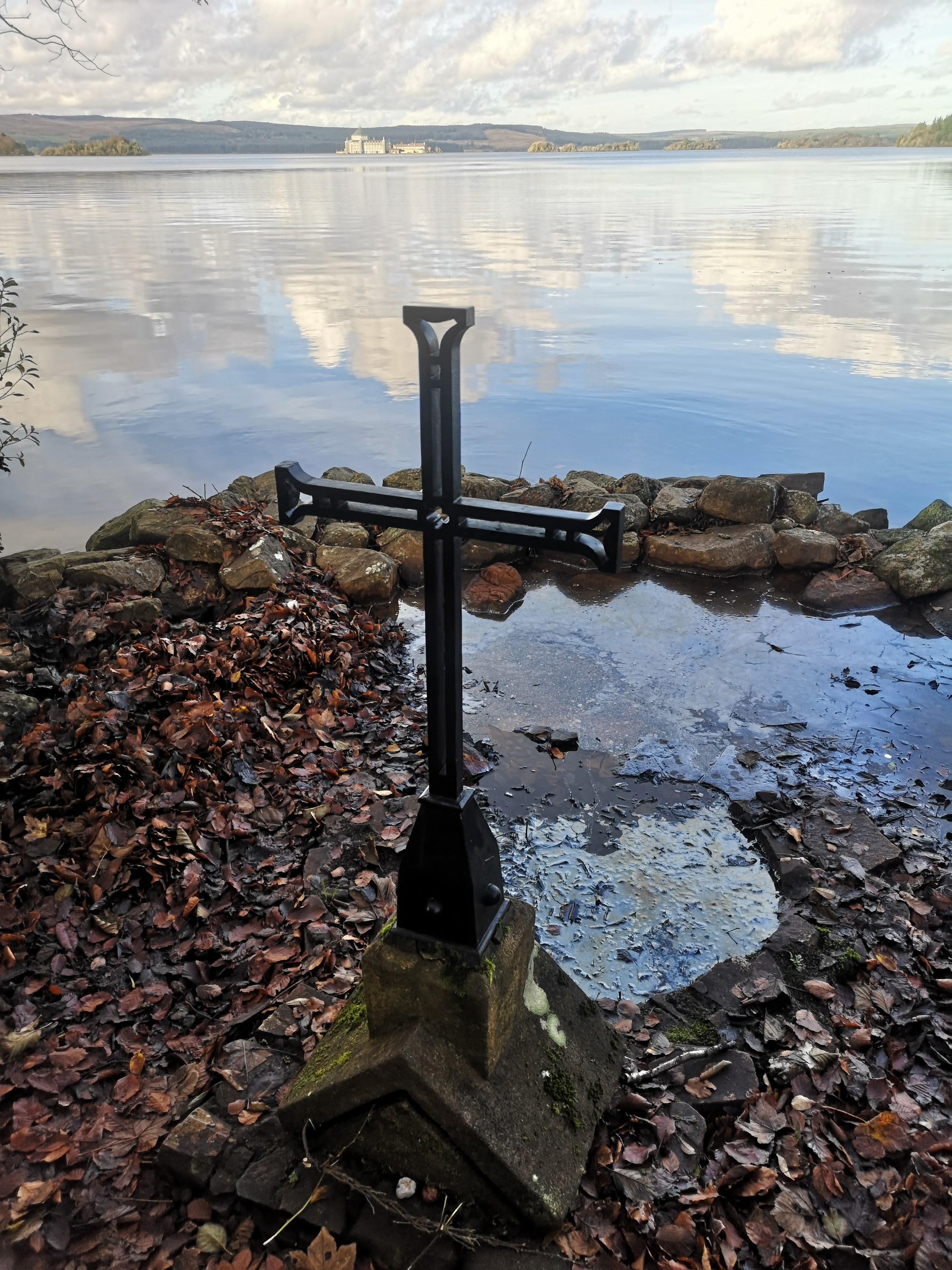
St Brigid’s well, Lough Derg, Donegal.
I am also still constantly wondering what it means to live a good life in our changing context, because personal change requires some level of aspiration. What models of goodness still apply? What do we aim ourselves towards and measure ourselves by?
The old religious ideas of goodness seem mostly irrelevent, with their emphasis on personal salvation from (mostly) sexual sin, rewarded only in the next life. I would suggest however that these models of goodness were always at best a contextualised, partial reading of the texts that they trumpeted so freely. Other kinds of goodness were ALWAYS there, but we have to reclaim them, place them front and centre and then allow them to reclaim us.
In many ways, this is what this blog is all about. I do not say this because I can claim any personal victory or success over my own demons, but rather because the journey has to start from where we are.
Today, on the teetering edge of the COP, I offer you this thought. What if goodness might require a letting go of old binary/dualistic ideas of good and bad – seductive and ego-satisfying as they always are – and deliberately moving towards ideas of deep connection, non-violence and partnership with the world and with each other. In the words of the book ‘against such there is no law’.
More than this we have to consider how this might change and challenge our attitudes. I would suggest it might be important to look in these directions;
This is just idealistic nonsense, right? Well, perhaps, but remember that change is shaped not just by power and progress, but also by the cultural context. The industrial revolution was almost entirely protestant Christian. It is time to move beyond this towards a new vision of goodness. We do not have to look far, but we have to look hard.



 this fragile tent