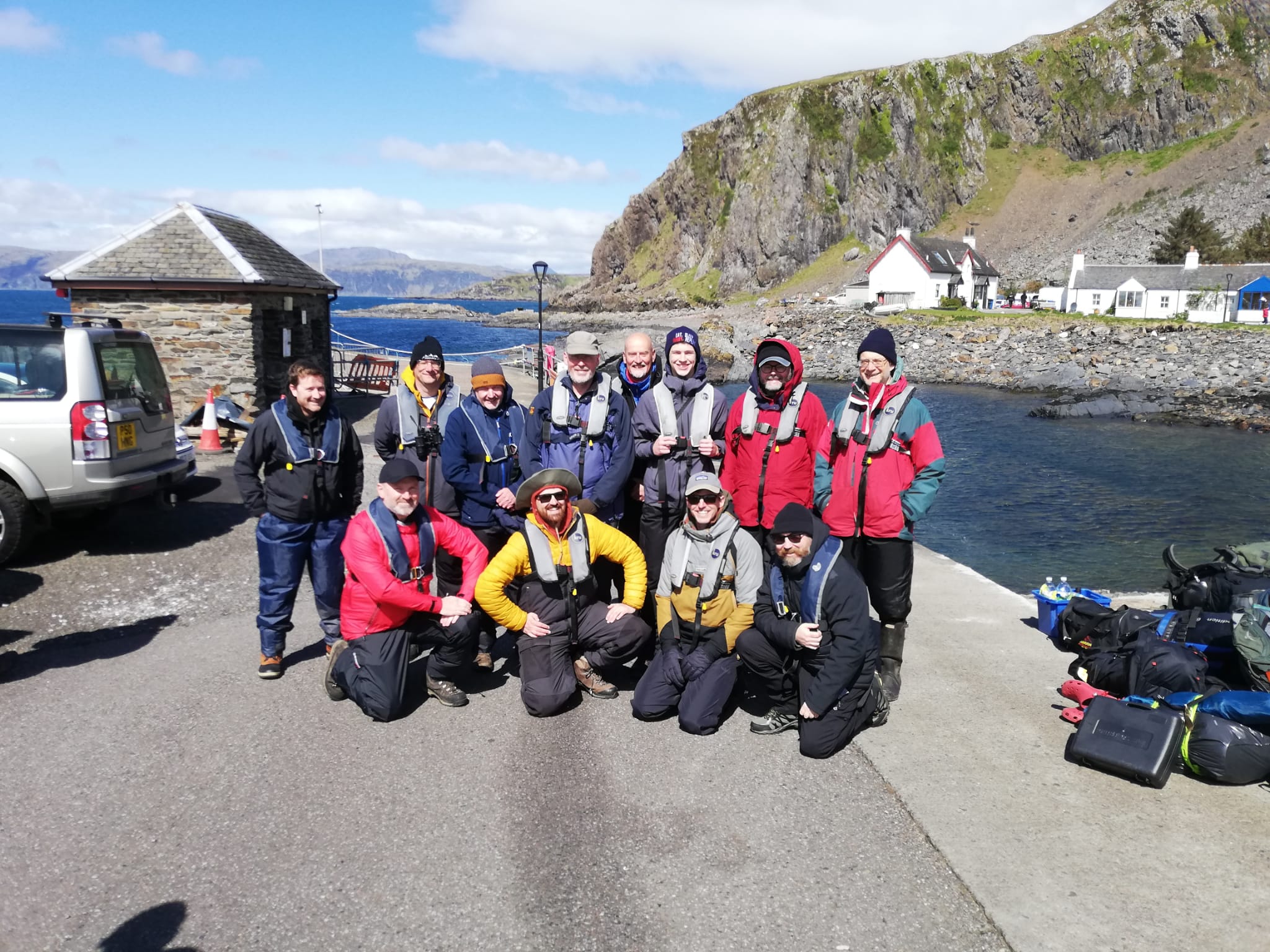
Every year over the May bank Holiday, for decades now, I have taken a ‘wilderness retreat’ with a group of friends and a widening network of people who love wild places. We spend time on small uninhabited islands, sometimes in silence, at other times making temporary community. The chat veers from (very) profane to the deeply spiritual, sometimes with no break in between. In fact, the rude and crude humour seems even to be a route towards the sacred, in the way it brings us to honesty and shared vulnerability. I am deepy grateful for these times spent with people who have become my closest friends. We have accompanied each other through good times and bad, as well as charting (and even inspiring) great changes in our individual life and faith.
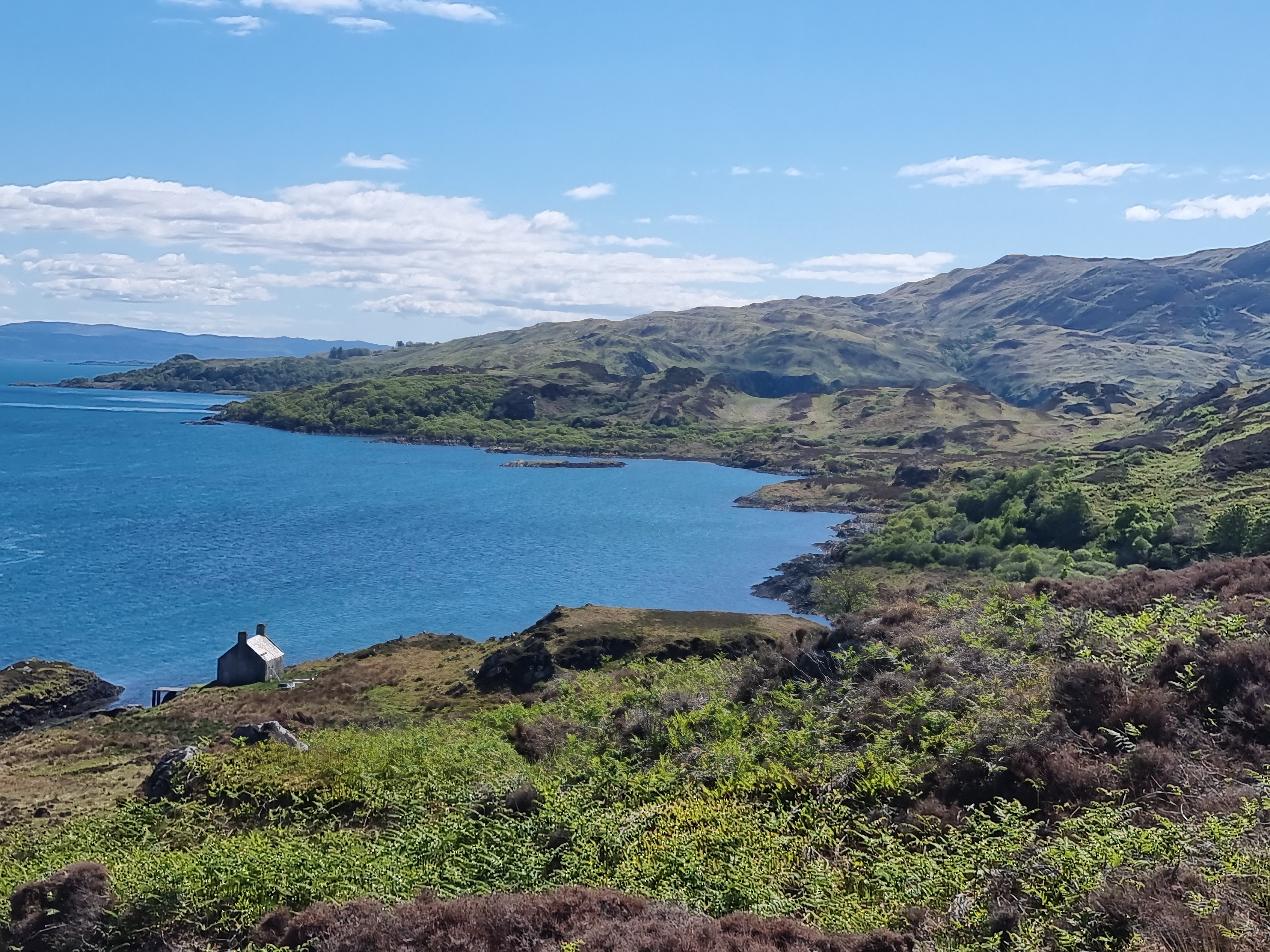
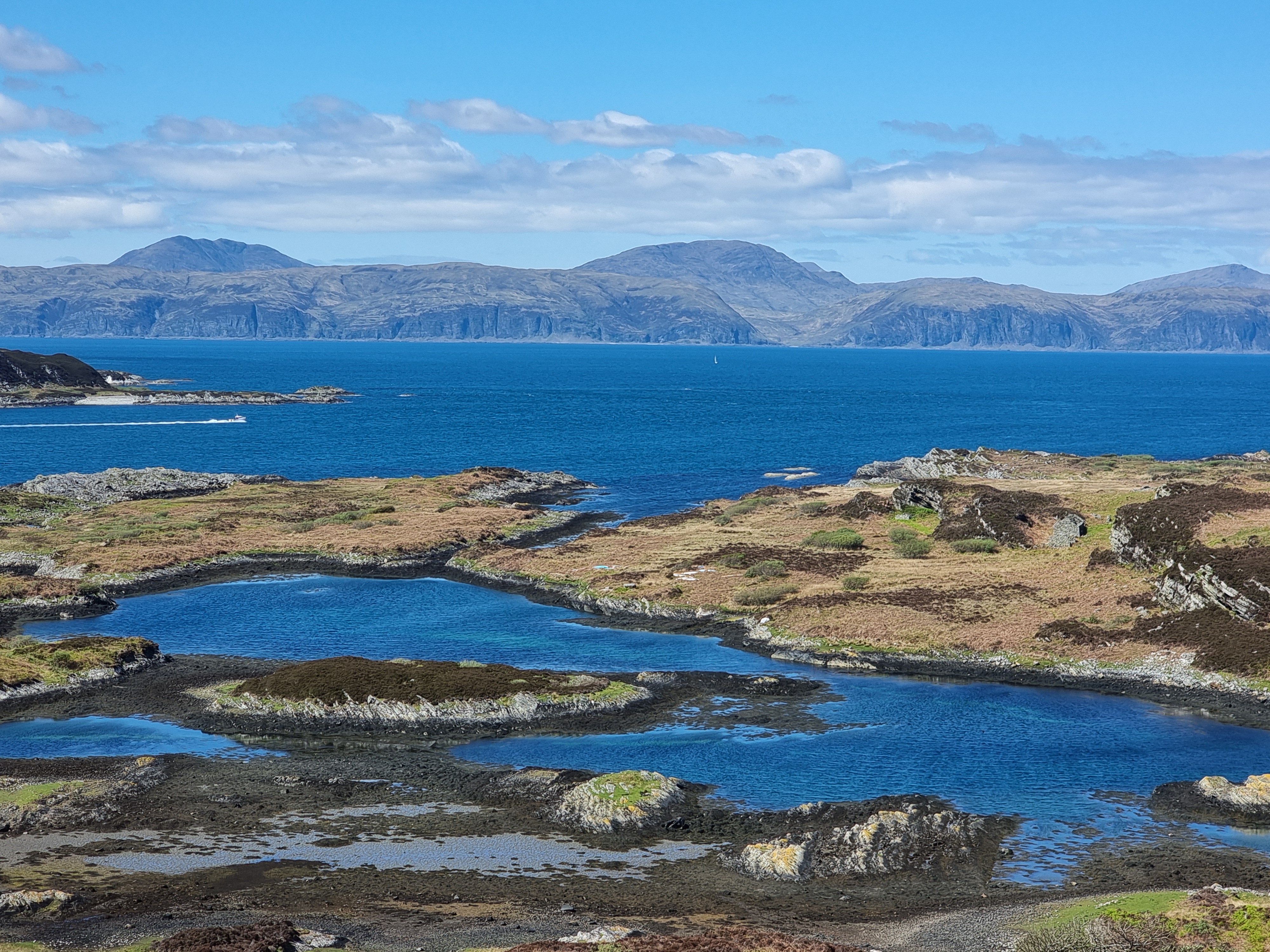
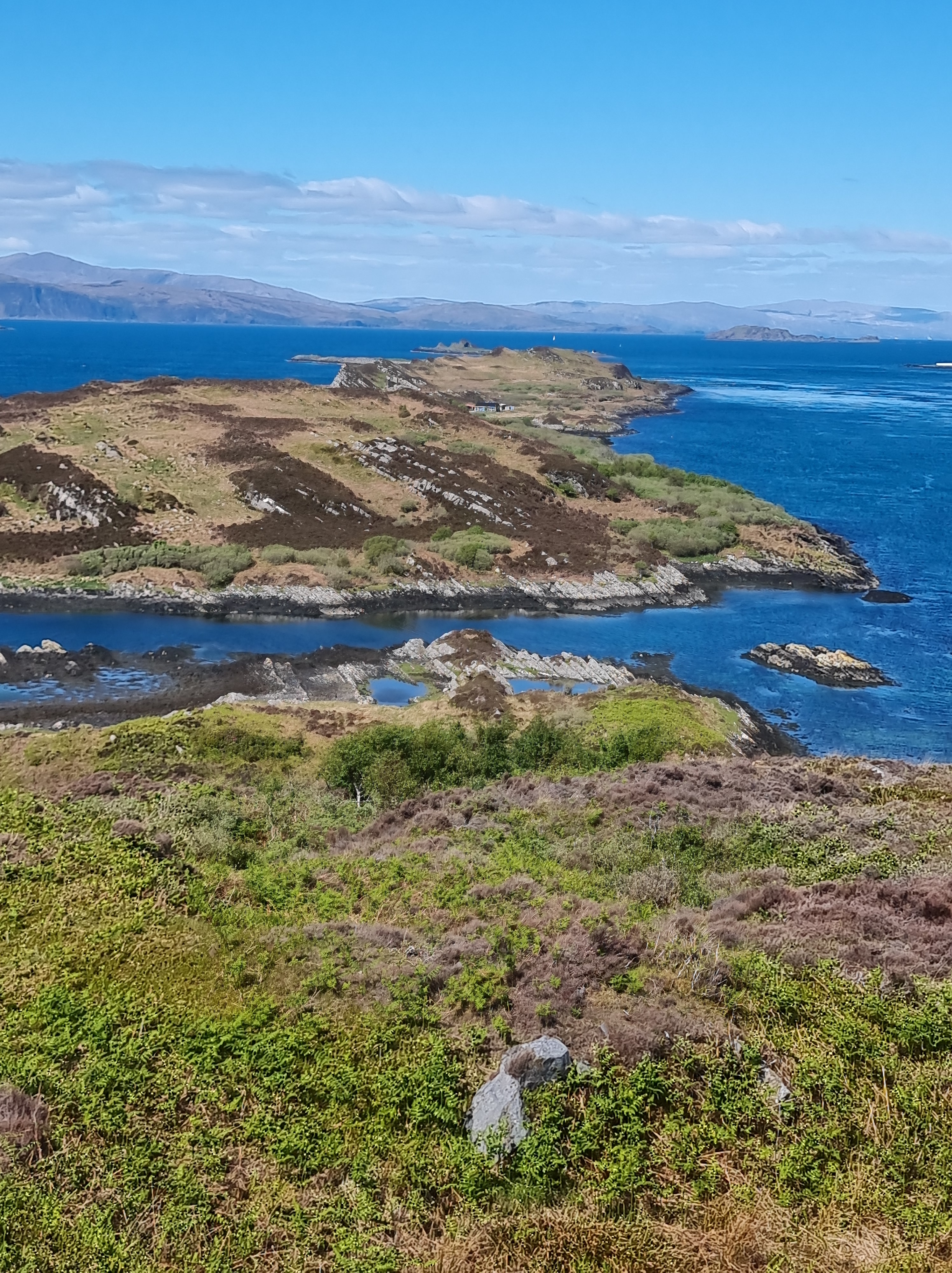
This year, we were heading to an island called Insh, but weather diverted us as the wind direction would make for a difficult landing for 12 people and all their tents and baggage. We ended up on the island of Lunga, tucked hard up against Scarba, the other side of the Grey Dogs tidal race.
In the end, the island was kind. We met (and were welcomed by) the owner. The sun shone. We saw otters, golden and sea eagles. Wild geese graced the skies above us. The ticks feasted on us. We sat around fires and shared life. We shared communion.
As I left, I took the island with me. My friends still carry me.
Each year, I try to bring ideas and make a theme for our gathering. This year was all about original goodness.
What has been happening in the meantime? The lovely Pope died. Trump has continued Trumping. After a fragile ceasfire, Gaza became a killing field again where genocidal racists do their worst. The Labour government has made a scapegoat out of the poor, cutting benefits that were already slashed beyond the point where they could sustain healthy life… this list is dragging me down down down so I had better stop.
Another thing that happened was a that the High Court here in the UK made a ruling – based on an interpretation of existing law – that concluded long-running dispute between some feminist advocacy groups and the Scottish government. It has been an ugly dispute, and the organisation supporting the action (For Women Scotland) has been backed financially by author J K Rowling, herself a divisive figure in this area.
This from Al Jazeera, here.
On Wednesday, five judges ruled unanimously that the term “woman” in the existing UK Equality Act should be interpreted as only people born biologically female, and that trans women, even those with GRCs, should be excluded from that definition.
The ruling further clarified, therefore, that trans women can be excluded from certain single-sex spaces and groups designated for women, such as changing rooms, homeless and domestic violence shelters, swimming areas and medical or counselling services.
“Interpreting ‘sex’ as certificated sex would cut across the definitions of ‘man’ and ‘woman’ … and, thus, the protected characteristic of sex, in an incoherent way,” Justice Patrick Hodge said while summarising the case. “It would create heterogeneous groupings.”
The court added that the ruling was not a “triumph” of one side over the other, and emphasised that transgender people are still protected from discrimination under UK law. However, some protections, the judges clarified, should only apply to biological females and not transgender women.
The campaign to limit the interpretation of sex has gathered much right-wing religious support, but I ave found it difficult to come to a clear view of this for myself. On the one hand, I see just how marginalised transgender people have been, and how dangerous this has been both in terms of violence and exclusion, but also suicide rates. On the other hand, the debate between different kinds of feminists was difficult to understand.
This ruling has forced me towards seeking deeper understanding. Where to start?
I could dig into the biology- which is far from conclusive. This from Steve Chalke via X
Yesterday’s Supreme Court’s ruling was not based on science. Sex determination is not ‘self-explanatory’. Sex is not simply about genitals, but also sex chromosomes & DNA. Courts used to declare it was ‘self-explanatory’ that being gay was a perversion. They were wrong then too! I stand with trans people, made, like me, in God’s image! #NOLO
Then along came a brand new album by Derek Webb. It broke me. Called Survival Songs, it is an album offering love and acceptance to the gay and trans community.
This album did not ‘change’ my mind, but it solidified it.
Given a choice, I will stand with those who are marginalised and excluded.
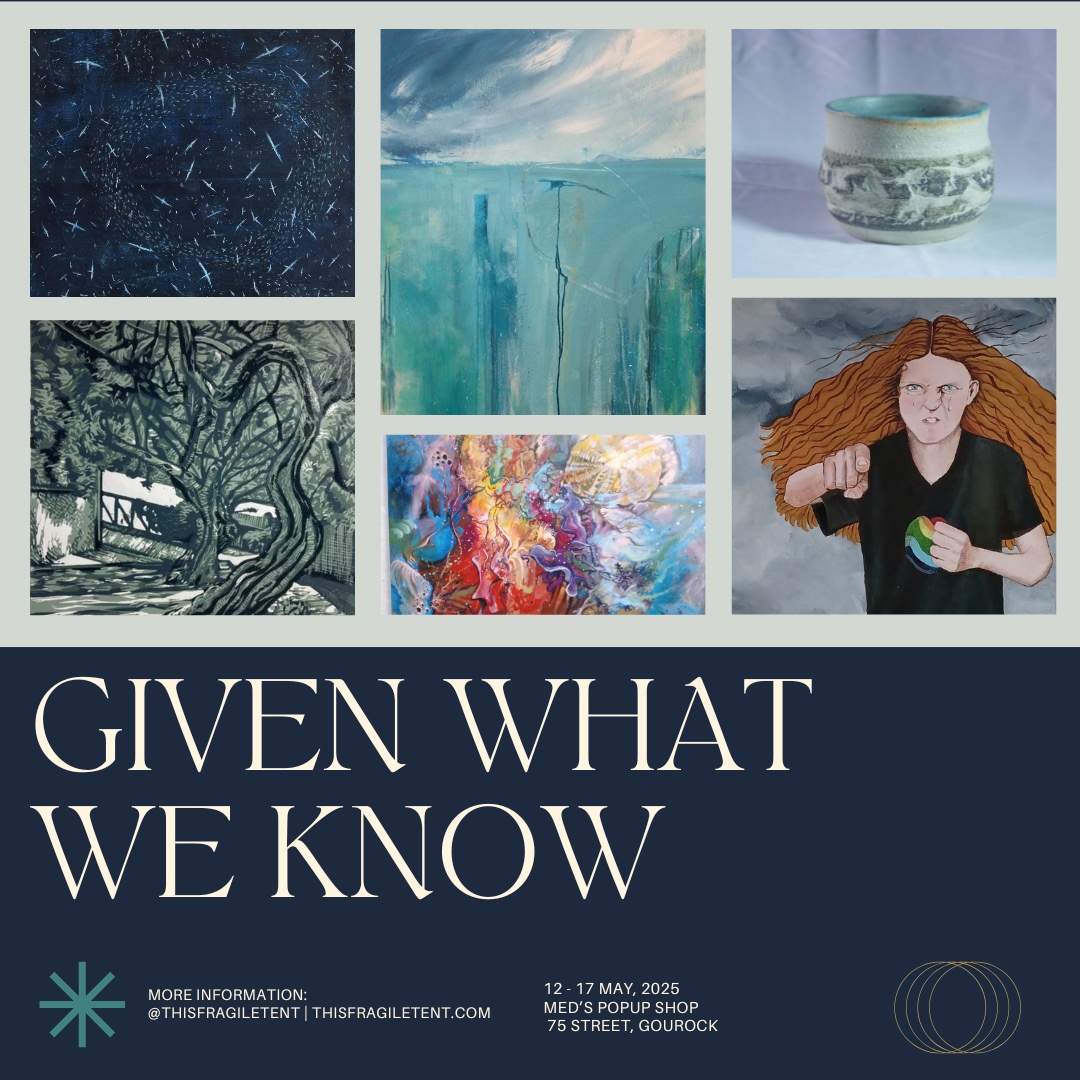
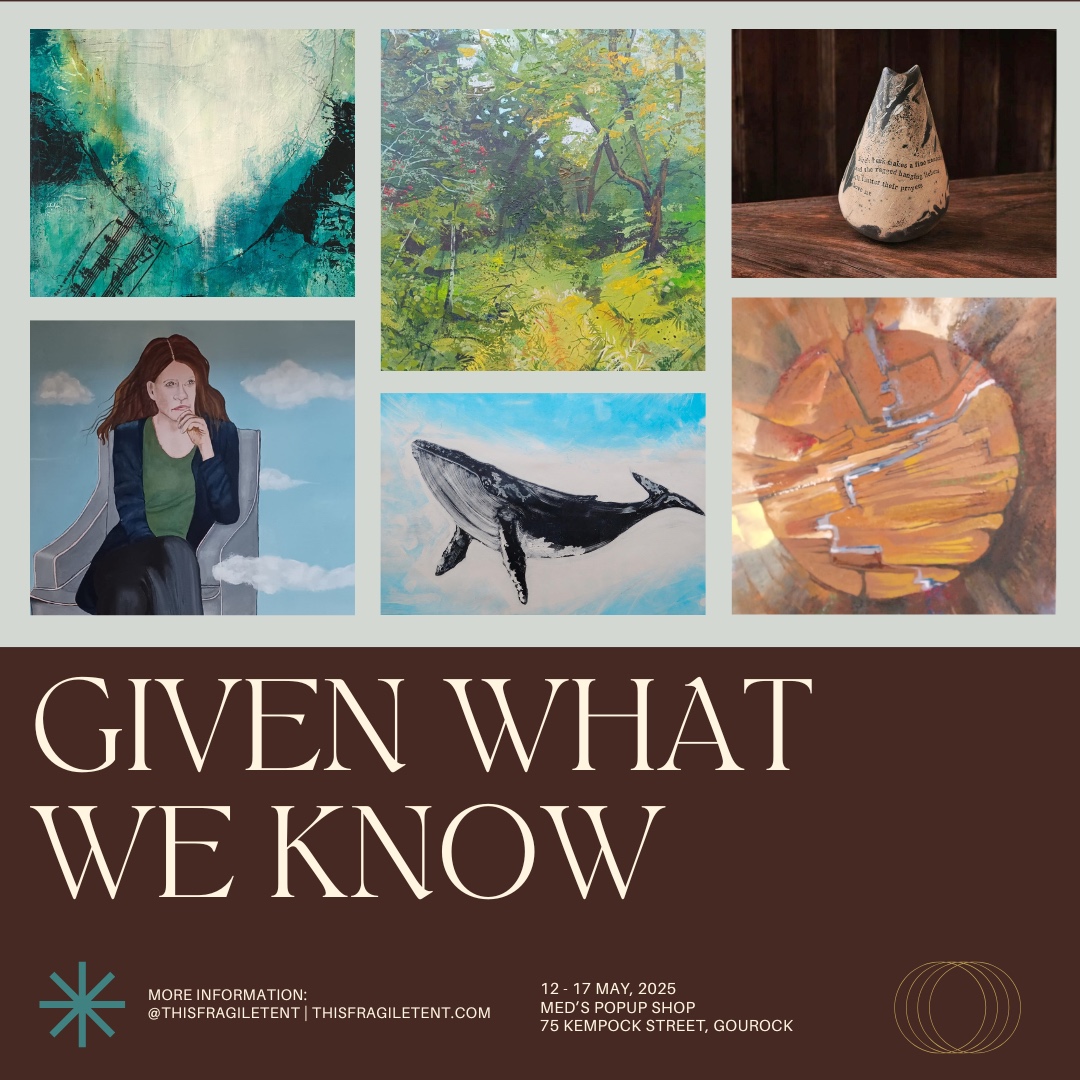
The art world here in the UK has a bit of a new trend, in the form of pop up art exhibition spaces, typically in old shops. Accross the Clyde from where we live there are two such spaces. They tend to get booked very quickly, so we booked some slots. Then we began to wonder…
Our son-in-law James makes ceramics ‘inspired’ by trauma following spending years as an oceanographer, watching the arctic icesheets melt. Meanwhile, our art and my poetry was constantly trying to explore themes of brokenness and earth connectedness. We started to wonder about a joint exhibition…
…but then we started to think bigger and invited some others to join us.
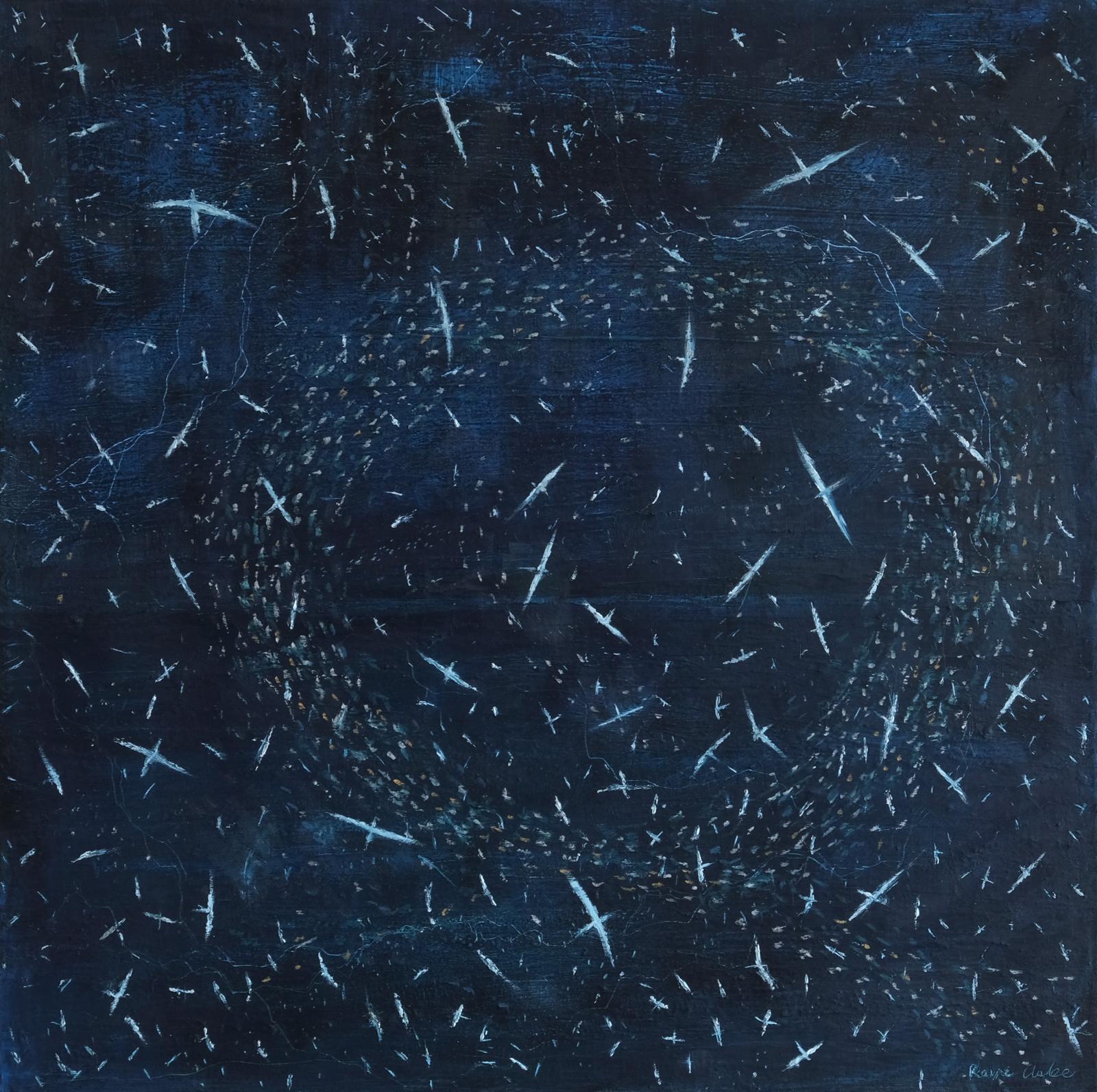
Raine Clarke with her printmaking and general creative magnificence.
Paul Knight with his creative explosion of ceramics, sculpture and ink drawings
Yvonne Lyon who is not content with being a singer-songwriter, so also makes stunning abstract art.
Here is the brief for the exhibition, based around a poem that some might recognise.
“Given what we know and what we fear about the end of things we hold dear, we will look to the birds. We will walk the woods that remain, and we will sing”
How do we respond to a world in omni-crisis in which our politics, our economics, our spirituality – even our protest movements – all seem broken?
In a world polarised and splintered by algorithms, what does goodness look like? We know there are no easy answers to these questions.
Perhaps, like us, you are experiencing hope as a rare and hard to reach commodity.
In this context, we need our artists and our poets more than ever…
Raine Clarke
Launch evening
On Monday the 12th of May, we will be having a launch evening in the exhibition space. There will be live music and Poetry, not to mention the odd tipple. Watch social media for more details!
I have been loving the start of the daily lent posts over on the proost.community blog. If you are needing something to give pause and focus during this season, you might want to check it out.
Even better, we are looking for contributions- poems, music, art, anything really.
Because today’s post was my poem, I thought I would replicate it here.
Spring window, Otter artwork by Sarah Woods.
This morning, up here in Scotland at least, the sun is shining, the sky is blue and the sea flat calm. If you had no connection to the world we are part of – if we were truly able to live in this moment alone – then it would be a day to truly glory in. In an age of smart phones and media feeds, many of us find this impossible. There is a background noise to our times that is oppressive. I will not list the reasons for this – you know already.
There is something that unites many people on all sides of the political spectrum just now – a sense that things are not right, that deep within our culture, our economics, our political systems, our ways of living life, something is not working.
Does this dichotomy remind anyone of anything? How about the beginning of 2020?
That was another glorious spring, with a different kind of oppressive background noise. It might be difficult sometimes to remember, this is not the first time that humans have lived like this. This is not the first epoch of injustice, of super-rich so-called-superheros, of wars and division making. Think about it.
So this morning I offer one of my own poems, written back in that 2020 springtime. It became part of a book illustrated by Si Smith.
Human races
The upright ape ascends from knapped flint to Silicon chip. He scratches sonnets in split slate and Solves problems (almost) as fast as he makes them. His alchemy promised gold, but instead just turned the Lights on, lighting a road ahead called Progress.
There is nothing new under the sun; the circle is still Unbroken. Empires rise whilst others fall; ours was Not the first at all. It turns out that our times were never Linear (just oscillation) and that for every page of Knowledge gained, another is forgotten.
But what are we, if not whisps of the same Spirit? We carry in us the same am-ness as all things that ever were, Hidden under thin skin and hubris, waiting for those moments Beneath stars or trees or tenderness when we remember; It is all about connection.
It has been a while since I have posted any new poetry here. This is not because I am not still writing, rather because the way that poetry allows me to explore ideas (which this blog is primarily about) fluctuates.
Today however, I am going to share a brand new poem, which makes some rather profound theological statements – ones that I know many of my friends will find troubling.
I’m not going to explore them here – at least, not yet. I am not even sure that I agree with them all just now.
This is one of the gifts of poetry – it can become it’s own voice, its own person. As well as a way of exploring then externalising, poetry can go further than this, and be part of a dialogue even with its author.
The dialogue does not even need to find agreement. It might be possible to hold more than one perspective – as if our theological constructs are just different poems.
It is in this space that this poem sits just now. In committing the words to keyboard and screen, I am able to stand back and consider them as if they were not mine.
Except they are mine. In writing them, I was consciously breaking through some barriers into places that feel new.
I was thinking about the book of Revelation today – perhaps the most controversial book in that library of books that we know as the Bible. I grew up in a kind of religion that took this book and used it as a lens to understand world events, particularly (but not exclusively) what has happening in the middle east.
This was before all the current madness, stemming from things like the Left Behind series of books, and all the American Christian Zionism.
Back then, we had people like Hal Lindsay and The Late Great Planet Earth. It was the same stuff and it earned him a fortune.
I still know people who live within this bizarre world view, in which world events are viewed through a particular, modern, Capitalist and elitist interpretation of scripture. In some ways this is the first and ultimate of conspiracy theories- ground zero. All the ingredients are there- the special secrets that will open your eyes to ‘reality’, the sense of being part of a special selection, the cataclysmic alternatives, the network of others who see things like you do and constantly reinforce your world view.
There is also the unforunate side effect of how these ideas, now almost mainstream in the US, have made victims out of already oppressed people and become a wierd distraction for many at best, perhaps actually morally corosive.
Perhaps these ideas are even antichrist.
I will not be deconstructing end times eschatology in this post. If you are interested in digging deeper into this, then I would recommend this podcast;
Back to my cogitations on Revelation. I was thinking about how we might (as with Keith Giles’ account) better approach this book as a confusing veiled analogy of the danger of Empire.
How powerfull, charismatic and despotic individuals can first seem like messiah, but then turn out to be beasts.
We do not have to look far to see examples of these kind of individuals. Ones for whom death, destruction, exploitation and subjugation are just political tools, used casually for personal power and profit.
But I will not name any person ‘Antichrist’. I have heard Christians name many people this way over the years. The Pope, Gorbachev, Putin to name but a few.
What I think I can call antichrist are those things that are against the teachings of Jesus – those things that are contrary to a movement towards goodness otherwise known as ‘the Kingdom of God’.
There seems to be a particular kind of antichrist-ness that uses the Bible as a means to achieve its aim. I find myself loathing this most of all – Jesus did the same. He seemed to reserve a special kind of anger for the religious people who were users, profiteers, division-creators, victim-blamers and hate dealers. Think about these examples;
The Sermon on the Mount:Jesus directly challenges the teachings of the Pharisees by emphasizing the importance of inner motives and true righteousness over outward actions.
“Woes upon you, scribes and Pharisees”:In the Gospel of Matthew, Jesus delivers a series of pronouncements condemning the religious leaders for their hypocrisy and self-righteousness.
Cleansing the Temple:A dramatic act where Jesus drove out those selling animals and money in the temple, criticizing their commercialization of a sacred space.
There is danger here of falling into that same old dualistic us/them, good/bad, holy/profane trap in which we retire into a trench built of sandbags full of our own rightness. But despite this danger, after conversations this week I am going to say this. Christians have no monopoly on Christ. We are all capable of being antchrist. This is true in the small things and the big things.
Lets subjugate everything to love, to kindness and to compassion – particularly towrds the weak, the poor, the broken. Anything else is empire. Anything else is antichrist.
Well, the Proost thing is continuing to grow. Thanks to Cameron, we now have a website, offering the sorts of community building functionality that we need, as well as offering a platform to start selling new and old Proost materials (although this is still in development.)
The Proost podcast continues, with plans to devlelop a new pod stream around poetry readings and discussion.
We have a partnership with some friends in Glasgow who will be hosting a Proost weekend later in the year – more to come on this.
One of the ways we are seeking to build community and make creative connections is through collaborative projects like our advent project. We loved this so much that we are seeking to repeat this throughout the season of lent.
We are looking for contributions to a daily post for each day of lent… Poems, videos, dance, moves, images, photographs, anything that might create a moment of pause and connection.
We will put these on the blog on our new website, as well as posting them on this page.
Drop us a message and we will include as much as we can!
(Incidentally, if you fancy becoming a proost member, you can sign up via our website.)
After a break, Proost is back with a new pod, this time with Cameron Preece.
In fact, there is a new website too, thanks to Cameron. It feels like a major step forward. We are slowly trying to put together the tools and on-line spaces that will allow us to make connections and build community for artists and creatives interested in exploring spirituality and social justice.
Cameron grew up in my home town attending the same school as my young people. In the pod, he talks about becoming a Christian via the youth work project run by our mututal friend, Paul Beautyman, then hitting a crisis of faith. Despite this, he went on to study for a theology degree, then masters degree. It is the subject of his masters degree research that we talk about most in this pod as it explores the connections between poetry and prayer.
The idea of poetry being used as a way to pray is not something I have heard discussed. Here on this blog, I have often described poetry as ‘spiritual’, but Cameron takes this deeper, into more specific territory.
A few months ago, I started a conversation with some people about indiginous spirituality. I had this itch that I wanted to scratch to do with how the Celtic tradition that I had found so deeply compelling might have some things in common with other indigenous spiritualities, so I reached out, looking for others who had connections and knowledge that I lacked.
Celtic idigenous traditions
My quest faced lots of problems. Firstly, reaching a definitive understanding of my own tradition is far from easy. The indigenous religion of the Celts stretches back thousands of years into myth and legend so it is hard enough to say much that is certain, and even harder to understand meanings that belong to a former culture and time. What little is known about the pre-Christian Celts mostly comes to us through highly questionable records of an occupying Roman Empire. Christianity came to these islands and first assimilated, then colonised the tradition, burying it under layers of ‘progress’. Some have tried to tell the Celtic story anew in order to make it meaningful – to me and others – but it can be hard to tease apart the facts from the fancy.
Perhaps this is part of the appeal to spiritual nomads and outsiders to institution like me. What we know as ‘the Celtic wisdom traditoin’ has a malleability that allows us to make it fit into whatever we want it to fit. It has subjective utility, but might be seen to lack authentic objectivity. In acknowledging this reality, it is then for each of us to decide whether the benefits outweigh the disadvantages.
For me, they most certainly do. Perhaps this is because I am a poet, more driven by spirituality of the mystical kind. Travelling in this tradition connects me with something visceral deep inside. It is a ‘feeling’ as much as an intellectual acceptance. I quite understand why friends of mine, more driven by systematic interpretation of scriptures might take a more cautious view.
Like all religious technologies, we must travel with a certain caution, looking around for other perspectives- paying particular attention to those that Empire has marginalised.
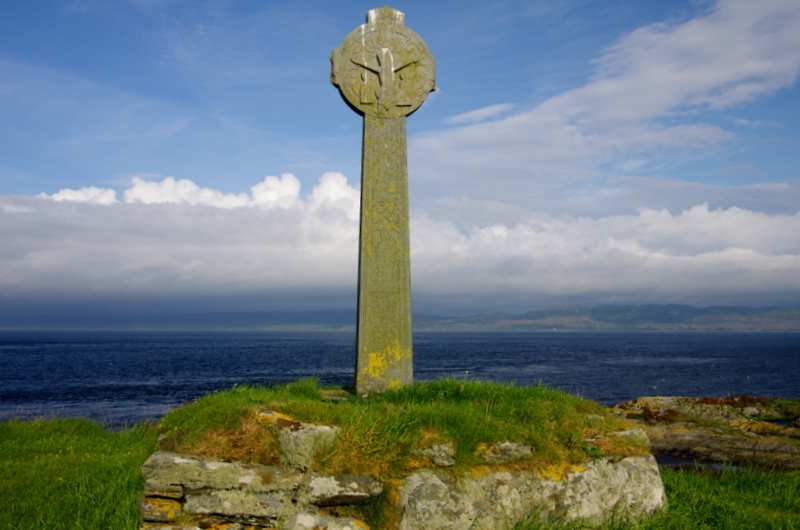
Celtic cross, Inner Hebrides, West Scotland
What do we mean when we talk about the ‘Celtic wisdom tradition’ then?
We have some tantalising clues in the form of stories and legends. Mostly these are survival traditions out on the fringes of the Celtic world- which like all cultures colonised by empire, retreated to the distant edge of its former hearlands – Atlantic coasts and islands or to rural Ireland and Wales.
We can also have some clues about the nature of this tradition from what is absent and outcast from mainstream religion. By this, I mean things that have been suppressed and persecuted that once belonged to ordinary believers. I have said more of this before, here for example. Many others have described and lamented what happened when indigenous, authentic and local spiritualities become subject to the priorities of institution and Empire.
Finally we know it as a deep ‘yes’ that we feel in our souls when we hear about ideas like ‘original goodness’ and hear how all things are connected and held together.
Colonialism and Christianity
Across the world, almost all indigenous cultures have been subjected to our colonial expansion – from St Kilda to Sarawak, through Australia and the Americas and so on. The Celtic experience might have begun earlier, but in many ways it was the same. Religion was an essential part of the ‘civilision’ of ‘native’ cultures – a conquest of the spirit alongside economic or geographical.
There is a problem here for followers of Jesus, in that Christianity has often been the religion of the worst and most oppressive forms of colonialism. I think however that the Celtic experience might heip us to decolonise Jesus from the religion that was made in his name. If we are right to describe Celtic Christianity as an assimilation of a the teachings of Jesus with pre-existing ideas, in such a way as to deepen and give further shape to the connections to earth and spirit, then we might conclude that this version of Christianity did not have at least some of the oppressive overtones that came later. Perhaps colonialism was done to Christianity as much as facilitated by it.
This does not get Chrsitianity off the hook. It remains a religion of the middle east, defined and propogated by the West, that grew and expanded because of the pursuit of Empire and profit.
Perhaps we should burn it all down and start again… but where do we start? How far back do we need to go? Whose teachings and example might be most helpful? Is there really a purer, less compromised, older and more true indigenous spirituality that we can still encounter?
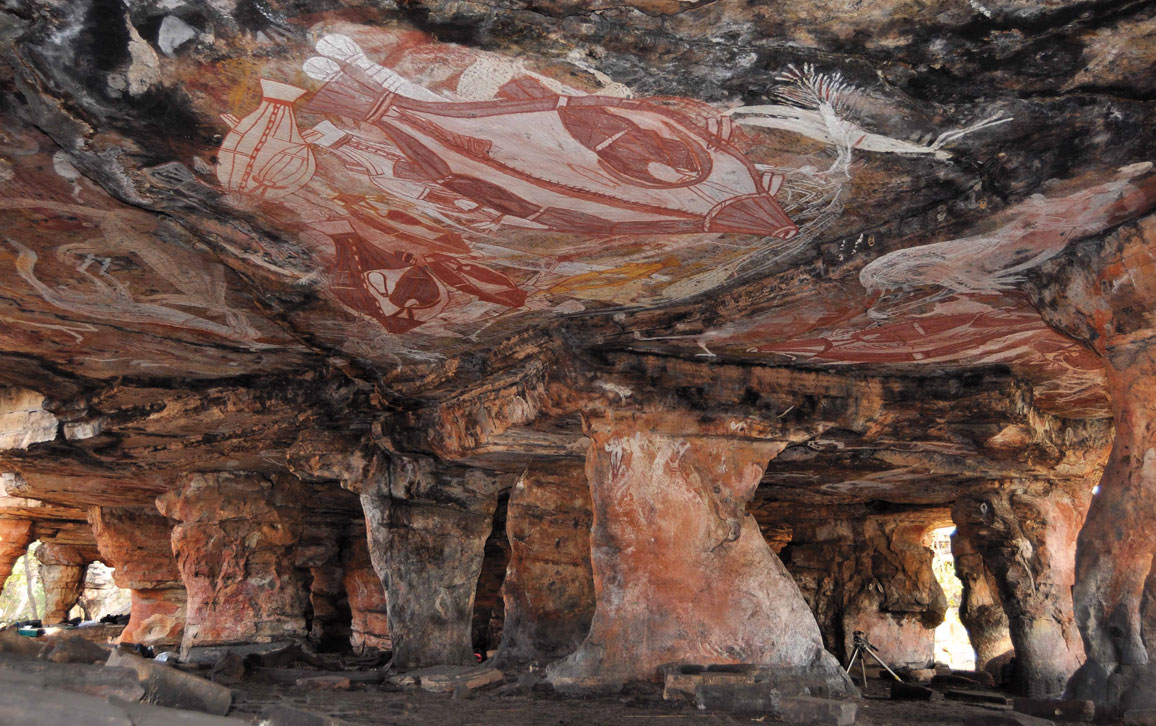
This is still my quest, and it led to me reaching out towards some other people who were trying to make sense of the spirituality they were encountering via indigenous people in their parts of the world- two very different parts of Australis, Canada and Middle England. It has been an interesting journey so far… five white people, trying to make sense of black, brown and red religion.
Can we make connections with other indigenous cultures?
Part of my motivation fot this journey has been a desire to remake/rediscover a religious story that was more earth-connected, more able to provide us with a mass movement away from the damage we are doing to eco-systems. It was this ‘earth connectedness’ I felt in my Celtic roots that seemed to find echoes in other indigenous traditions – connections to land and place, to animals and holy mountains, to the spirit in other things. At least, this is what I had heard glimmerings of in films and books.
Perhaps there was more than this. I started to wonder if all the condemnation of ‘primative’ religion I had grown up with – which was characterised as animistic, or pagan, or pantheistic – had lost some things that really mattered. We were told of the foolishness of a belief that trees or rocks or lizards have spirits. How backwards to worship simple totems or forest spirits. After all, we have the wisdom of the Bible. Look where that got us.
I remembered well the simple goodness of Bob Randall’s Kanyini;
I first encountered Bob as a commentator on cultural breakdown, whilst I was working as a social worker amongst men and women in mental health services, within broken communities in the UK, not Australia. Back then, any implications for religion seemed secondary. Now they seem inseperable.
But in the face of so much variety, so much diversity, is it really possible to make any general statements about indigenous spirituality? Can we claim that it is more ‘earth connected’ or more authentically human? Is it ‘better’ than what we have have experienced in our religious institutions?
This is the conversation I have been having with my four friends from far away – more of this to come.
I will leave you with a quote from the First Nations Version New Testament. This is a book written in English by a first nations pastor in America, working first with prisoners, later with others trying to reconcile the words of the Bible with their own culture and it’s colonial history. Here are the beatitudes, through first nations eyes.
It is the same, but also very different.
BLESSINGS OF THE GOOD ROAD Matthew chapter 5
3“Creator’s blessing rests on the poor, the ones with broken spirits. The good road from above is theirs to walk.
4“Creator’s blessing rests on the ones who walk a trail of tears, for he will wipe the tears from their eyes and comfort them.
5“Creator’s blessing rests on the ones who walk softly and in a humble manner. The earth, land, and sky will welcome them and always be their home.
6“Creator’s blessing rests on the ones who hunger and thirst for wrongs to be made right again. They will eat and drink until they are full.
7“Creator’s blessing rests on the ones who are merciful and kind to others. Their kindness will find its way back to them—full circle.
8“Creator’s blessing rests on the pure of heart. They are the ones who will see the Great Spirit.
9“Creator’s blessing rests on the ones who make peace. It will be said of them, ‘They are the children of the Great Spirit!’
10“Creator’s blessing rests on the ones who are hunted down and mistreated for doing what is right, for they are walking the good road from above.
11“Others will lie about you, speak against you, and look down on you with scorn and contempt, all because you walk the road with me. This is a sign that Creator’s blessing is resting on you. 12So let your hearts be glad and jump for joy, for you will be honored in the spirit-world above. You are like the prophets of old, who were treated in the same way by your ancestors.
SALT AND LIGHT
13“As you walk the good road with me, you are the salt of the earth, bringing cleansing and healingto all. Salt is a good thing, but if it loses its saltiness, how will it get its flavor back? That kind of salt has no worth and is thrown out.
14“As you walk the road with me, you are a light shining in this dark world. A village built on a hill cannot be hidden. 15No one hides a torch under a basket. Instead it is lifted up high on a pole, so all who are in the house can see it. 16In the same way, let your light shine by doing what is good and right. When others see, they will give honor to your Father—the One Above Us All.
FULFILLING THE SACRED TEACHINGS
17“When you hear my words, you may think I have come to undo the Law given by Drawn from the Water (Moses) and the words of the prophets. But I have come to honor them and show everyone their true meaning. 18I speak from my heart, as long as there is a sky above and an earth below, not even the smallest thing they have said will fade away, until everything they have said has found its full meaning and purpose.





 this fragile tent