What religion do we need, and can we remake it?

If you are reading this (after glimpsing the title) then I am going to make an assumption that, like me, you think that religion can be/might become/sometimes is part of the solution to some of the difficulties that assail the world we live in. Sure, you might (like me) be deeply frustrated by the fact that it has failed to be this so regularly and in so many ways, but (like me) you perhaps still have this feeling that ideas matter, and that ideas of the spirit perhaps matter even more…

I was listening to Brian McLaren talking about his new book (which I have not read yet) Life after doom: wisdom and courage for a world falling apart. He defined the ‘problem’, or the things falling apart in four ways

  1. Crisis of the planet – the planet not being able to cope with the amount humans take nor absorb the amount of waste we give it back
  2. Crisis of the economy – Our economic survival seems to be based on continuing to consume more and more
  3. Crisis of our politics – Our political systems seem incapable of envisioning or implimenting alternative solutions, even when offered a pathway by science
  4. Crisis of our religion – our religious institutions are not able to bring to us a deep conviction of our responsibility or connection to the living world we are part of.
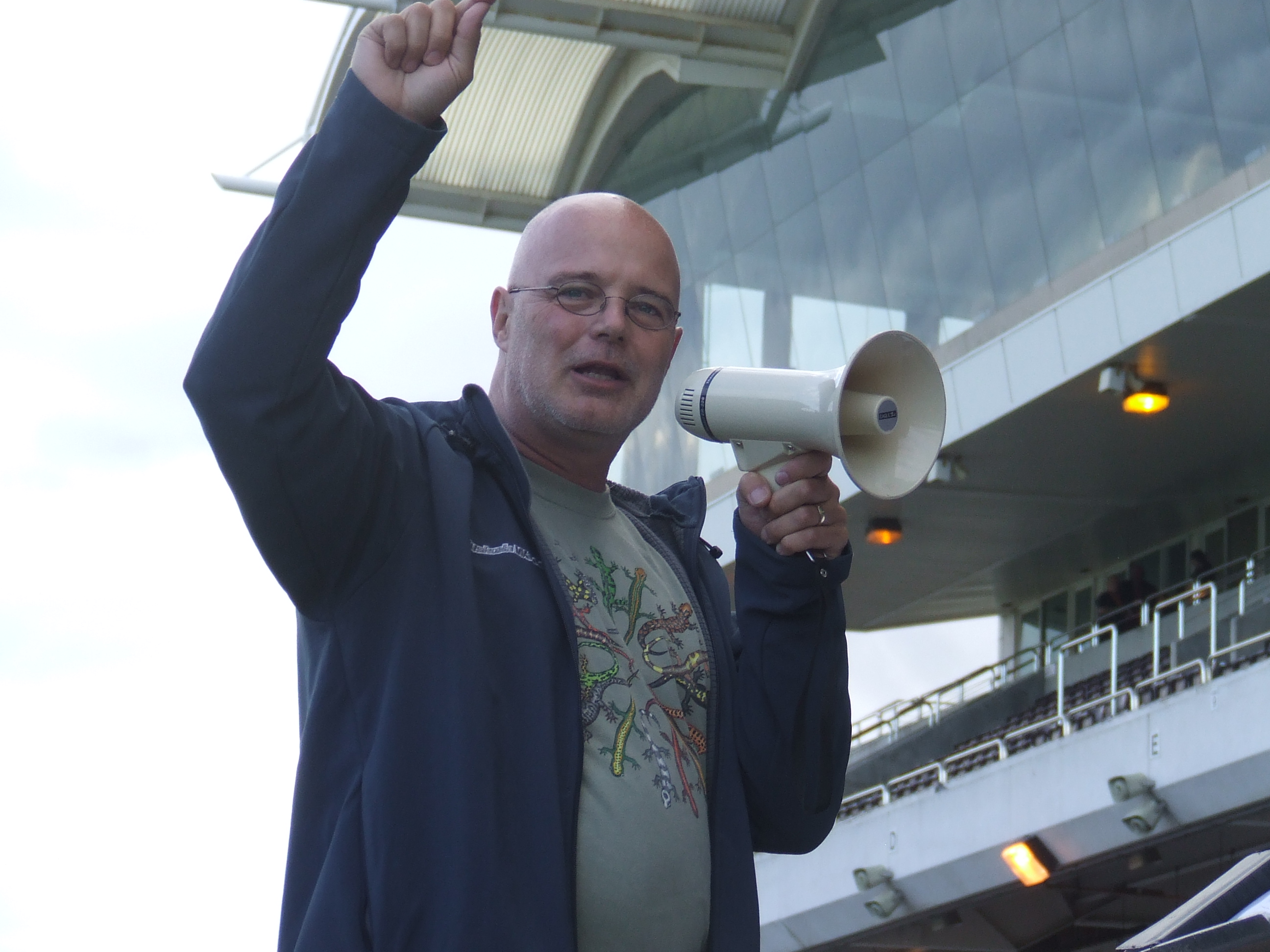
Brian McLaren makes do with a bullhorn after power failure at Greenbelt festival a few years ago..

I have written about all of these issues on this blog,but it is the last of the four crises that I have been thinking about of late. In fact, it has been a long term conversation with many of my friends too.

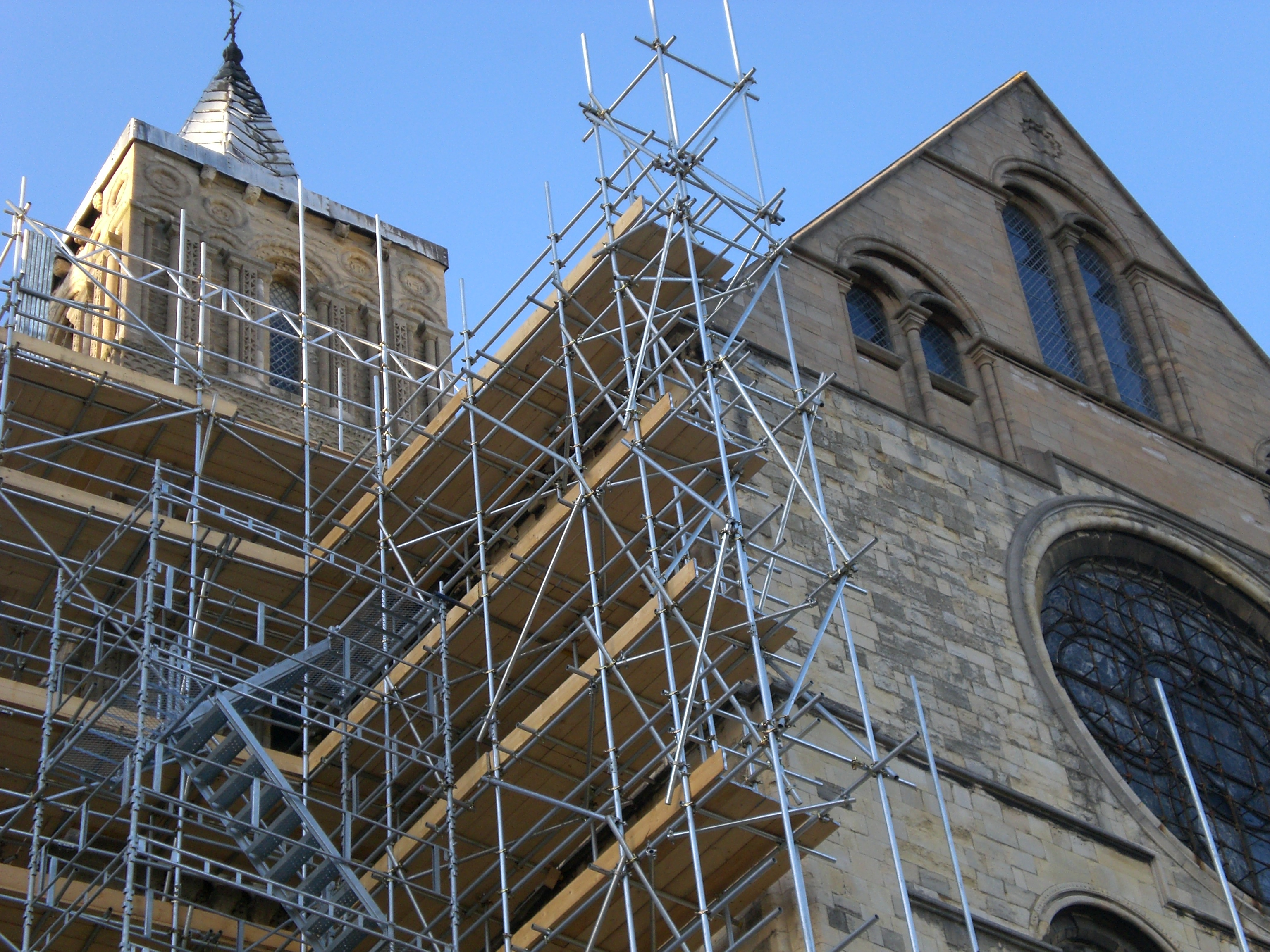
There is a similar-sounding issue that we might easily confuse this conversation with, aound CHURCH. I have spent too long on that journey… so much time has been spent trying to preserve the institution by making stylistic superficial changes in the hope that the centre can hold. I no longer think it can, but even if it does, how might Church inspire real change by doing business as usual? What dynamic ideas might be embraced without letting go of the old ones? The question I have begun to consider is whether it might be time to re-examine not just the flavours of religious institutions, but the fundamentals of the religion itself.

I should start by saying that I am NOT talking about inventing a brand new religion – I’ll leave that to the Scientologists. Neither am I able to comment on the reform needed in other faith traditions other than my own.

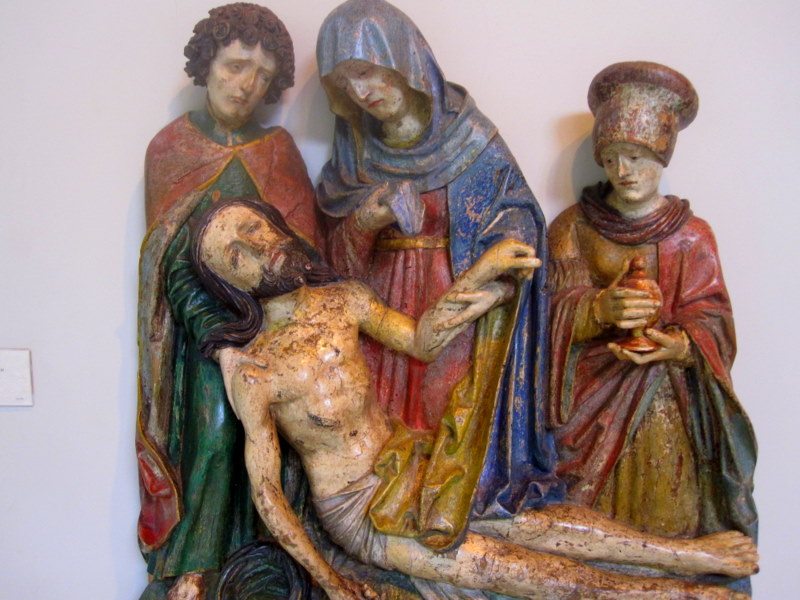
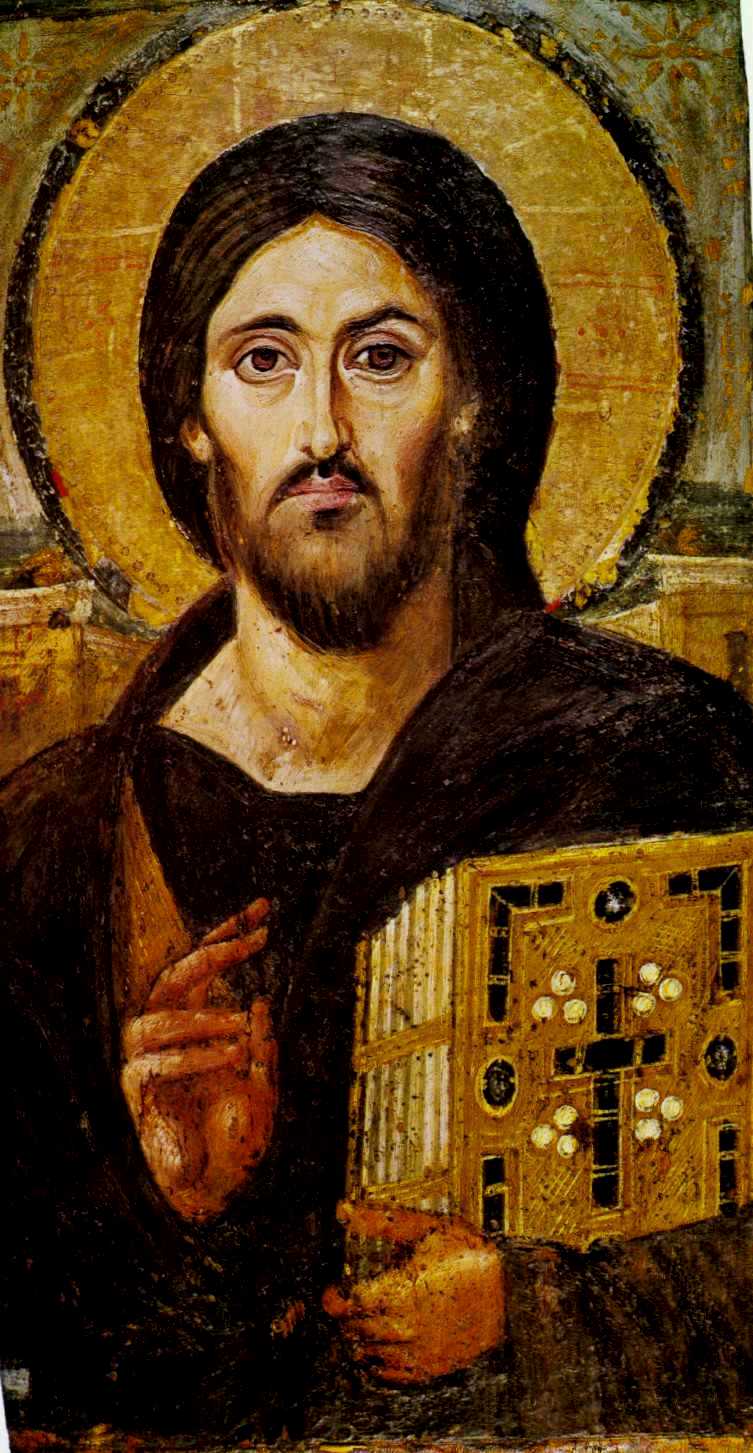
The religion that I both reject but also want to re-invent is the one named (perhaps despite his best warnings) after Jesus Christ, a historical figure whose teachings (I would argue) we have largely ignored.

Here is the thing – I don’t think I am alone. Back to those conversations with my friends. Most , like me, have left the institution of Church behind, but some are very much still within, working hard for change. The commonality between all of us is that we all long for something else, something better, but we all struggle to conceptualise what that is, and what it might look like.

I am going to try. It may take me a while. If you have thoughts or ideas that are triggered by my ponderings I would love to hear them- as long as you are kind.

From here.https://www.brin.ac.uk/figures/church-attendance-in-britain-1980-2015/

It is perhaps worth reminding ourselves of the reality of declining church attendance in the UK. It is not always a straightforward picture in the short term, for instance, some hard line conservative churches have actually grown in recent years- including the Free Church of Scotland and many Pentecostal or funamentalist gatherings – even though the long term trend is still downwards, some have seen significant increase in attendees.

But this brand of religion stays firmly within the ‘crisis’ territory outlined by McLaren above. The solutions they are offering – moral certainty in relation to homosexuality, gay marriage and the fear of Hell – do little to address the problems facing our age. In fact, given the dominance of American right-wing faith models across the whole world, we might argue that this religion is the problem, not the solution. It is at best a distraction, at worst, one that has fully accommodated itself with the same capitalist economics and politics that are throwing us towards destruction.

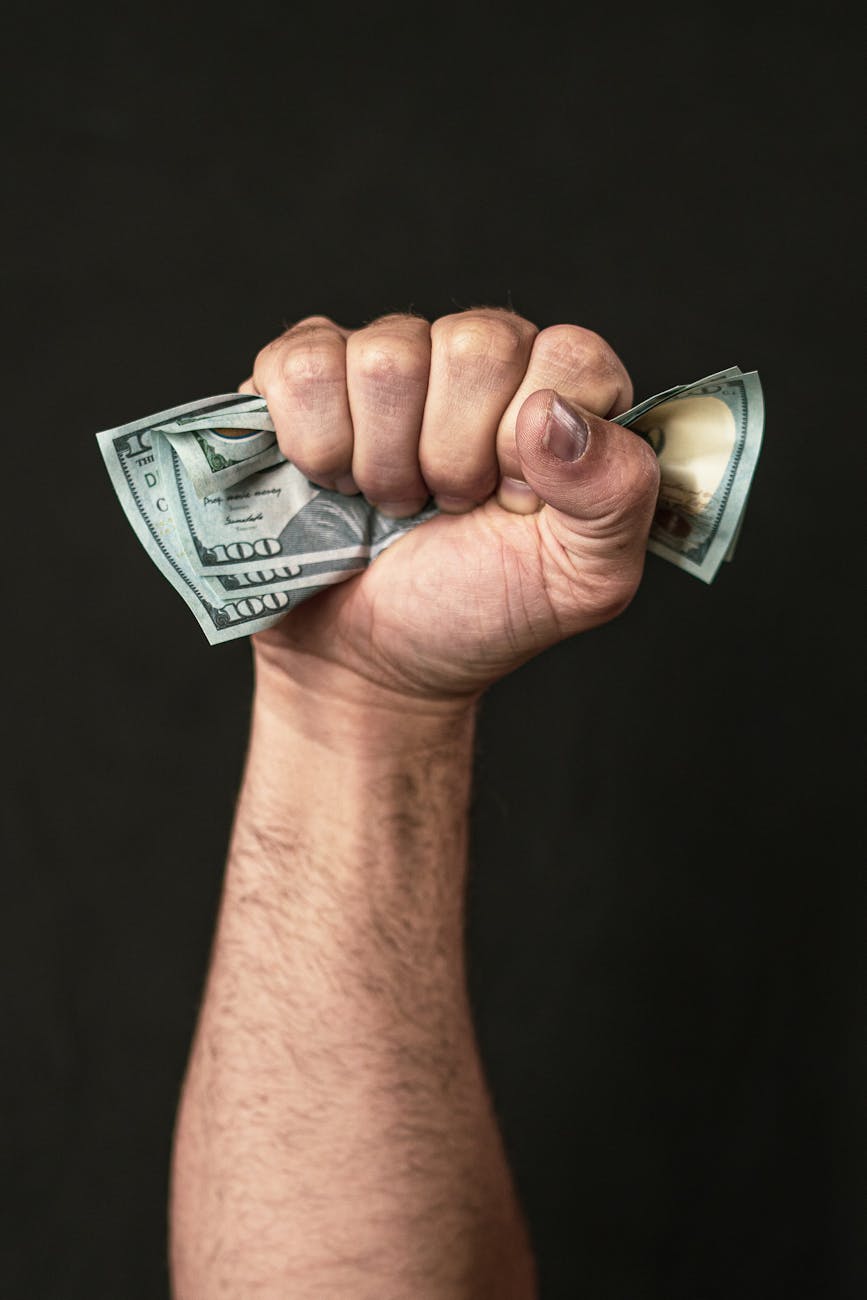
Photo by Jeff Stapleton on Pexels.com

It might be worth thinking about religion in terms of these different components’

  1. Origin story/ Messianic figure/ supporting documentation
  2. Core tenets/ docrine
  3. Mission and emphasis
  4. Community organisation

So this is where I will start… after I have done some more pondering anyway.

Rosa and Resonance part 3, connections…

A final look at Hartmut Rosa’s reframing of modernity, this time in order to place his thinking alongside some other broad themes.

Image by Si Smith, from After the Apocalypse

This post might be stating the obvious, but I wanted to sketch out a few ways that Rosa’s description of our human condition has resonated with many other themes explored on this blog. Here they are then, in no particular order…

Downshifting/slowing down/degrowth

If I am evangelical about anything these days, it is to encourage people to step back from those high pressure, high consumption, high stress lifestyles that can trap us in cycles of mortgage making and shiny-stuff-owning. Our experience has been that even when we percieve this way of living to be toxic, we find it extremely difficult to stop. Perhaps this is a cultural pressure, an mutual anxiety about being left behind or losing significance, or even falling into poverty and non-citizenship. Perhaps too this is an ecomomic issue, given that unsustainable growthism is built in to the very DNA of our ideas of what a ‘good’ economy might look like.

But even as I have tried to go against the flow – as I have turned towards simpler ways of life, as I have dug my veg beds and put up my poly tunnels – I have often wondered what difference I was making, even to myself. It has felt indulgent, a lifestyle new middle class dream in which I remake a paradise for me and mine. Is it credible that enough people might follow this path to make any kind of difference to the ecocide we are inflicting on the natural word?

Rosa had similar questions, and this led him away from ‘slowing down’ as a solution towards the more difuse and (dare I say) ‘spiritual’ idea of resonance. He pins his flag of hope to a solution dependent on a mass increase of connection to the essence, or the ground of our being, via deeper appreciation and communication with the natural world, or with the great beyond, or with art. Is this a crazy idea?

After the apocalypse

Perhaps it is crazy, but this idea oddly mirrors the arc of my last book – the collection of poetry entitled After The Apocalypse (Si Smith’s wonderful images for this book are all over these posts). I began writing the work for this book before the pandemic, as a kind of passive/active resistance to the rise of so many political and economic powers I found deeply troubling- the swing to the far right and the mainstreaming of lies and dishonesty, often in service of those who were happy to prioritise short term profit over climate or social justice.

In the end, because of the intervention of the pandemic. the book fell into three parts- before (protest) during (silence and enforced slowing down) and finally after, which dared to hope for change… even if the only way I could envisage this change was in a wider turn towards meaning, towards spirituality and connection with the earth.

Rosa would call this resonance.

It did not feel enough. I wanted to tear down border walls, remake the world better, liberate captives and feed the hungry. But given that none of these things were available to me (and even if they were, I am not the Messiah) what is left is to go deeper into the world, to live more fully and to connect with those I am in community with, both human and non human. If enough of us do this, then surely the wall will fall anyway.

(Celtic) Spirituality/Mysticism

It will be of little surprise that when Rosa talks of resonance, I hear it first and foremost as a spiritual matter.

Even the detail of how he described the process of resonance – in terms of how we feel a call towards something…

Phenomenologically speaking, we all know what it means to be touched by someone’s glance or voice, by a piece of music we listen to, by a book we read, or a place we visit. Thus, the capacity to feel affected by something, and in turn to develop intrinsic interest in the part of the world which affects us, is a core element of any positive way of relating to the world. And as we know from psychologists and psychiatrists, its marked absence is a central element of most forms of depression and burnout. Yet, affection is not enough to overcome alienation. What is additionally required is the capacity to “answer” the call: when we feel touched in the way described above, we often tend to give a physical response by developing goose bumps, an increased rate of heartbeat, a changed blood pressure, skin resistance, and so on. Resonance, as I want to call this dual movement of af<-fection (something touches us from the outside) and e->motion (we answer by giving a response and thus by establishing a connection) thus always and inevitably has a bodily basis. But the response we give, of course, has a psychological, social, and cognitive side to it too; it is based on the experience that we can reach out and answer the call, that we can establish connection through our own inner or outer reaction. It is by this reaction that the process of appropriation is brought about. We experience this kind of resonance, for example, in relationships of love or friendship, but also in genuine dialogue, when we play a musical instrument, in sports, but also very often at the workplace. The receptive as well as active connection brings about a process of progressive self- and world transformation.

From here.

Does this not sound like a mystical experience? An embodied call and response to something deeper than ourselves that ultimately is transformative?

Image by Si Smith, from ‘After the Apocalypse’

More than this, there is something about resonance that takes me back into my appreciation of the Celtic Wisdom tradition, which might be understood as first and foremost about connection with the great spirit that holds everything together. In other words, we resonante because we connect with the truest form of ourselves, which is god.

Rosa and resonance part 2…

the second part of three posts exploring sociologist Hartmut Rosa’s ideas of resonance. The first part was concerned with ‘dynamic stabalisation’ within modernity. You should probably read part one first!

Image by Si Smith, from the book ‘After the apocalypse’

Rosa’s definition of the problem, or perhaps the in-built dysfunctionality of modernity is highly persuasive, perhaps in part because we all have a sense of the gathering speed within our society and our culture. Stress is expected, even embraced. We are all running to stand still and we can not pretend that this is working out well either for us or for the planet. Having described the problem, does Rosa have a solution?

One obvious response to the accelleratoin critique is to… slow down. For a while, Rosa was known in Germany as the slow-down guru, but he was always uncomfortable with this description, at least in part because he doubted that ‘slowing down’ was actually possible. Even if we do indeed need to slow down, her thought that this was unlikely to be the full answer. Any attempt to change the course of modernity would be like swimming against the direction of a whirlpool. The rules of modernity are simply too engrained. Rosa was searching for other ways to engage and connect with the world. What he came up with was something called resonance.

In this video, Rosa takes us on the full journey. Strap in for the ride.

If you have stayed the course with this video, well done! If not, here are a few things I would point towards.

Alientation

Rosa identified alientation from the world as a defining quality – perhaps even a progressive quality – of human modernity. He describes alienation as “a specific form of relationship to the world in which subject and world confront each other with indifference or hostility (repulsion) and thus without any inner connection” (Rosa, 2019, p. 252)

I came accross this paper, exploring Rosa’a ideas in relation to nursing. Here is a quote;

In most cases, the interaction between caretaker and patient is no longer an encounter between two unique individuals who “speak with their own voice” each. Instead, the focus is on an ever-growing number of measurable, documentable, and above all optimizable parameters. How is the patient’s blood pressure? Their pulse? Their dosage of medication? What services are needed and how long will it take to perform them? What sort of insurance benefits are they entitled to? What kind of services can or should be billed? What qualifications do trained assistants need to perform what services? What parameters need to be recorded on what forms? Doctors and caretakers have to deal with documents, measurements, and display screens under constant time pressures; they are always trying to optimize their performance economically, technologically, medically, and temporally. Meanwhile patients expect the “optimal care” promised them; who their caretaker is doesn’t matter, so long as the services rendered are parametrically optimized in every respect. There is no longer any space, even at a conceptual level, for caretakers with an individual voice that cannot be made controllable (…) Nurses and caretakers, who need to account for their actions minute by minute, cannot allow themselves any open-ended interactions with their patients. (Rosa, 2020, pp. 81–88)

The eyes of every patient and child express a demand for resonance, and what is more, without resonant relationships, caregivers and educators cannot adequately carry out their work. Not only children, but also the ill (as well as the elderly and the homeless) want to be seen, heard, touched. They expect not just to be attended to, but responded to. (Rosa, 2019, p. 329)

As I may mention in my third post, this description sounds very much like something that Ivan Illich may have written 40 years ago.

Image by Si Smith, from ‘After the apocalypse’.

Resonance

It turns out that for Rosa at least, the opposite of the accelerating alienation is something he called resonance, defined like this;

…a kind of relationship to the world, formed through affect and emotion, intrinsic interest, and perceived self-efficacy, in which subject and world are mutually affected and transformed.

Resonance is not an echo, but a responsive relationship, requiring that both sides speak with their own voice. This is only possible where strong evaluations are affected. Resonance implies an aspect of constitutive inaccessibility.

Resonant relationships require that both subject and world be sufficiently “closed” or self-consistent so as to each speak in their own voice, while also remaining open enough to be affected or reached by each other.

Resonance is not an emotional state, but a mode of relation that is neutral with respect to emotional content. This is why we can love sad stories.[3]

From here.

I love that last little line about sad stories. Resonance is not happiness, neither is it positivity, or self actualisation. It is connection.

The components of resonance

Rosa believes that resonance can be identified and defined through four criteria: firstly, the ‘affection’ (or responsiveness) we experience in relation to an object, be it a piece of music or literature, a painting, a landscape or any ‘event’ triggering a personal reaction; secondly, the ‘efficient emotion’ which might be understood as our reaction to the ‘call’ of the specific external event in our own unique way; thirdly, the ‘transformation’ experienced by the subject in contact with this new external event and lastly, the fundamental ‘elusiveness’ of resonance in its long or short-term effects on the subject. 

Is this enough?

Can this central idea of resonance really describe the difference between an alienated modern human and a person living a good life? On the face of it, of course not. Rosa seems to have rejected the utopianism of Marxist theories, but their critique of structural inequality and more recently, the descriptions of colonial legacy of north/south inequality – Rosa’s resonance seems inadequate to engage with the scale of these things.

But perhaps this is the point. Trying to address big problems as small people is impossible. But small engaged, resonant people, en masse? Might he be on to something?

Hartmut Rosa and resonance part 1…

Image by Si Smith, from ‘After the apocalypse’

I came across the work of German sociologist Hartmut Rosa recently. His thinking had so many connections with things I find meaningful that I decided to do a deeper dive, which for me often means trying to gather some strands on this blog…

I would like to talk about Rosa in three parts, which will form three blog posts. The first will concern itself with ‘the problem’. In case this might seem negative, I would argue that sometimes we need a new perspective on things we already see. I think that Rosa’s work offers this in a new an fresh way.

On a personal level, Rosa’s thinking maps very closely to the narrative arc of my last poetry collection After the apocalypse. I will say more about this later, but for this reason, this post features some of the wonderful illustrations that Si Smith contributed to this book.

A return to the idea of modernity

The first insight I found interesting was that rather than the incessant talk about postmodernity (which has often felt like an elitist affectation to me) Rosa anchors his analysis of our society on a definition of modernity, along these lines;

Modernty is a form of society that (in order to survive) has to constantly speed up in order to stand still. It seeks to control all forms of human existence within the world, to constantly innovate and increase efficiency in all tasks.

In this way, modernity is always speeding up, or accelerating, if it did not do so, it would lose stability and things would fall apart. Rosa calls this phenomenon dynamic stabilization.

We should linger on this idea for a while. Firstly, it feels correct, particularly in light of growthism in our economics, or the phenomenon of planned obscelecence. We live with a strong sense of hurtling forward towards… well who knows, but it often feels out of control, as if it can only end badly, for us and for our non-human neigbours.

We can trace the way modernity affects our human relations in many ways. Here are a few examples;

  1. We look at a mountain and feel moved by beauty and form, so climb it. It is hard work so we build a road to get up easier and quicker. We build a sheter at the summit so we can enjoy the view from protection. We open a cafe there. We cut trees to preserve the view. It becomes popular. There are more eating places, shops selling things. It gets busy, polluted. The mountain is no longer beautiful.
  2. We feel stressed and exhausted in our work which makes ever more demands, so that we find it hard to spend time with our children. Nevertheless, we push them into an educational machine that makes the same demands of them, so that they too can get jobs that will exhaust them in the same way.
  3. Our religion, once a place of mystery and wonder, has been through a series of protestant improvements and innovations, in which each new and ‘better’ iteration has been seen as ‘true’.

Controllability

Rosa argues that modernity has at root a desire to control the world. With a nod to Charles Taylor, he describes this as a spiritual declaration of independence from nature.

This desire for control could be concieved of in terms of accumulation and greed, but arguably, it stems more from fear. Consider the degree to which the super wealthy might be regarded as ‘greedy’. Do they feel themselves to have ‘enough’? Or are there other more powerful drives to do with the fear of being left behind, of being less significant?

Wherever we come up against things that are not controllable – a pandemic for example, or the common everyday experience of death – modernity has a problem.

It is perhaps worth remembering here that Rosa is a sociologist, rather than a psychologist. he is less concerned with individual reasoning and more concerned with the dynamics that drive mass consciousness and mass behaviour. Often the logic of these dynamics is masked, even though they drive us in ways that are hard to understand.

Perhaps now is a good time to suggest watching this video, which attempts to sketch out Rosa’s ideas in wider form…

In part 2, I intend to consider the implications of Rosa’s ideas, and what his ‘solution’ to the problem might be…

Mark Berry and poesis…

The new Proost podcast is out, this time featuring a fantastic chat with Mark Berry.

If you don’t know Mark and his work here is a starter;

Before training to be a Youth Minister, Mark Worked as a Theatre and Music Lighting designer and a musician, he retains a deep love for the arts, and plays Guitar and Bass.

Mark began his ministry as a Youth worker in 1994, before becoming a Pioneer minister in 2005. His ministry has seen him sharing life with Far Right Skinheads, Gangs and Nightclubbers, growing a Church with unchurched young people in a secondary school, becoming a Chaplain and then a Director of a professional football club and running ‘Sanktuary’ an overnight café andsafe zone for the night time community.  

These days, Mark is working with prison leavers and (pertinent to this discussion) teaches a module on art and spirituality.

Here is the pod;

I very much enjoyed this chat – as I always do with Mark – there is so much in here that I feel the need to explore further, both in terms of my own ponderings, but also in relation to the broader issue of Proost. After all, Rob and I have done a lot of talking about what might emerge around Proost, but as yet there is no actual publishing or promoting going on. Having said that, I think this is right. We are determinded that if and when a new organisation emerges, it will do so because it is part of a movement of people who have some clarity about what they are about. We can’t do it by ourselves anyway so we need to explore and develop these ideas in community.

That word, Poeisis

In pod 10, we spoke a lot with Mark about this word, which had been very significant for him as he found meaning in artistic expression. My entry into this idea had been through theopoetics (you can read more about this here) and you may be able to hear me grappling to reach some kind of clarity as to how these things fitted together. In the end we got there, but it required a lot of subsequent chat with Mark, and another pod chat with Rob, which you can listen to here;

We would love to know what others think. Are these useful terms? Might they give clues as to our unfolding, our unveiling?

Allegory

I particularly love this; art making is itself an allegory, another way to encapsulate – no, to demonstrate – the ground of our being.

In making this statement, I am rejecting another common way to think about art, namely, as the means of defining the ‘specialness’ of humanity, as the only animals capable of abstract expression. (This also means rejecting at least in part, the ‘specialness’ of the individual artist.)

Instead, perhaps we can think about art as co-production, in deliberately deciding to join the great unfolding, the explosion of creativity which we are part of. You might chose to use religious language here- Creation and the endless excitement of a creative god – or you could just decide to leave this space wide open.

If we follow this logic, the intrinsic value of the art we make is found not in its percieved ‘excellence’, but rather the degree to which it enables reconnection to the creative stream at the heart of everything. Not that this is easy to define, but I think we know it when we encounter it.

Artistry

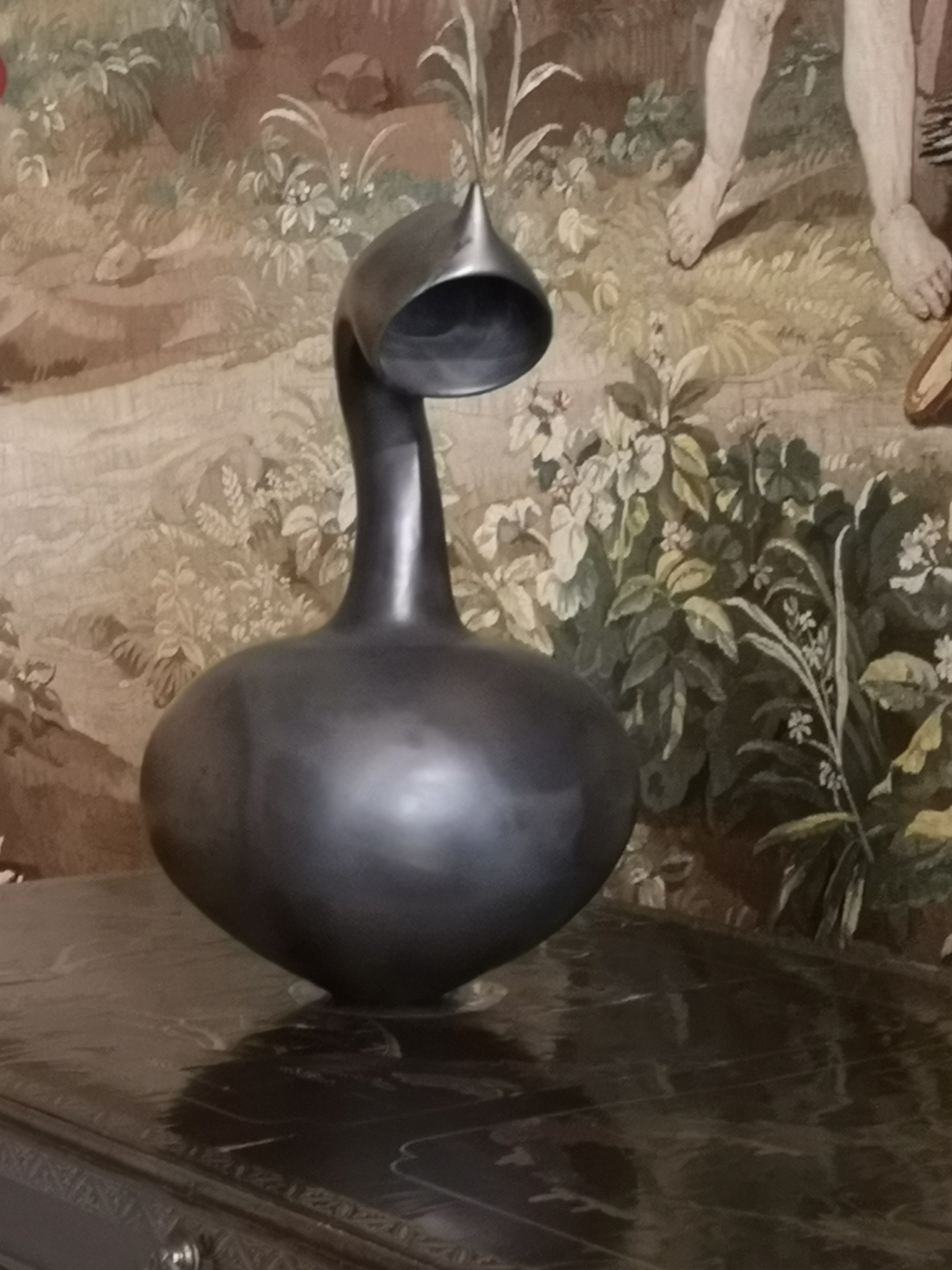
The above photo is of one of Dame Magdalene Odundo’s pots, on dsiplay in the appalling oppulence of Houghton Hall, Norfolk. The juxtaposition of empire plunder and black female art was by far the highlight of our vist there a couple of months ago.

In my above rejection of the centrality of the ‘great artist’ narrative, I must acknowledge that some people have particular gifts and skills. What they do with this gifting should be a matter for their own exploration and of course some will reach fame and acclaim in their own lifetimes. Many will not.

I am more interested in ordinary artistry – in the way that we all seek to orniment, to illustrate then to make meaning through object and experience. When we collectivise this pursuit, adding power to each other, becoming more than the sum of our individual talents, special things happen.

There has to be space and room for both.

The spirit level

Dominating world news this week has been the death of seven people on a private yacht, including the owner, Mike Lynch and his daughter. The 184 foot Yacht cost Lynch £40 million. We all understand why this is world news and these things were not;

In June of this year, Greek coastguards alegedly (according to eye witnesses) threw migrants overboard, to their deaths. You can read about this here.

Also in June, at least 11 people were declared dead and 64 others were ‘missing’ after two ships were wrecked off southern Italy.

According to a March report by IOM’s Missing Migrants Project, more than 27,000 people have died in the Mediterranean Sea over the last decade, whilst trying to reach southern Europe from northern Africa.

Meanwhile, the Italian Government has responded to these events by trying to prosecute rescue ships for ‘trafficking.’ It did not work, thanks to Italian courts refusing to play ball.

These disparities should shock us to the core, but…

.

The spirit level

.

Private planes need private pilots

You don’t fly them yourself

They land on private airports

Your private wings of polished steel

.

Private yachts need private sailors

You don’t sail them yourself

They sail to private islands

With private shores of swept sand

.

Private banks need private bankers

You don’t count the pound yourself

They digitise your billions

In private vaults of silicon

.

Private lands need private armies

You don’t guard them yourself

You raise up private watchtowers, put

Broken champagne bottles on private walls

Are there any lovers of poetry/art out there who might become patreon supporters?

It is always difficult to talk about money and so if this feels uncomfortable, move on. Otherwise, hear me out as I try to do justice to this rather tricky subject. After all, many of us wonder whether it might be possible to make a living through art and so I intend to be rather candid.

Michaela and I have been making a living through art, poetry and pottery for about eight years now and have loved every minute of it. We took a deliberate decision to live creatively and simply, knowing that this would have major financial implications. We have not regretted this decision for a moment and here we are, still doing OK, still making art, still paying our bills. We are proof that another way of life is possible, not just through sacrifice and ‘going without’, but by chosing to live towards what matters, what feels important. We only wish we had made the move sooner.

Let’s puts some numbers on it

We live these days on a shared income of around £25K per annum, roughly half of my (Chris’s) last annual salary when I was a Service Manager in health and social care. We have to declare a privilege here, in that we live in our own house, without a mortgage thanks to selling our old house and moving somewhere smaller. (We are aware that housing costs are a huge part of many people’e outgoings, and many feel that ownership outright is totally out of reach.)

We currently run two vehicles, both 11 years old and on their last legs. One is a van, necessary for all the ceramics events we do, the other an old runabout that we use locally. The hope is we can find a vehicle that will do both jobs, but for now, our biggest costs are keeping these two in running condition.

We are all seeing spiralling energy costs, and our art depends on an electric kiln!

Our income, as with many artists and creatives, had a big dip last year. We are OK, but it forced us to think carefully about what we do, how we use our time, what our output should be and how we might diversify. We make no complaints here, as most small businesses will be in the same place.

The business of selling art

There has always been an inherent contradiction in the fact that our decision to live more frugally and creatively was dependent from the start on other people using their disposable income to buy things that we make. Unsprisingly, when people worry about their own income, they have less capacity for purchasing art… although, conversely, many of us keenly feel the need to connect with object of meaning, or to lift a friend with that special thing from distance.

Our experience at the last major ceramics event might be instructive. Overall income was only slightly down from the previous year at the same venue, but the pattern of sales was very different. We make objects ranging from the teens of pounds to around £400 for the largest one-off pots and pictures. We would normally expect our main earnings to be from mid-range items of around £40-80 – vases, poetry plaques and the like – but at the last event, we sold almost nothing in this middle range. Unsurprisingly, most sales were smaller, sub £30 items. Many of these were bought as gifts and often came with lovely stories about the person they were bought for. However, over half our earnings came from the sale of our most expensive offerings.

Perhaps this pattern reflects the way our economy is working at present – many of us are feeling the squeeze, whilst others have done well – but also, through the conversations with customers, people are making conscious attempts to invest in objects of meaning. That is after all what art is for.

Art has always depended to a lesser or greater degree on patrons, on investors, on those able and willing to release money in support those who create the art. In exchange, these people form a relationship with the art, with the artist, and hopefully with the meaning the art is reaching for.

We can honestly say that the greatest pleasure in making our art comes at the point when we meet others who are moved by it. It is often an emotional exchange, full of stories of loss, of hope, of love. The purchase that comes after these exchanges may be very small, out of all proportion to the memory it leaves in it wake.

Of course, we are deeply grateful for these exchanges, but even beyond this, we have come to see them as part of the business of art itself. If we have a calling, it is towards this.

What about the Patreon thing?

One of the ways in which we have tried to diversify and build a different income stream is through this thing called Patreon.

If you have not heard of this before, this is a way for patrons of art (or ‘Patreons’) to support artists directly, through a monthly subscription (paid in American dollars!) In return (depending on what ‘tier’ you subscribe to) you recieve rewards in the form of art.

Seatree has a Patreon account, under the name of Seatree community. This has three tiers, as follows

  • Tier one ($3 a month) access to a monthly e-mal with a made-for-Patreon-only video based around a new poem.
  • Tier two ($10 a month) as above, plus a monthly hand written piece of art by Michaela, featuring the words of another poem, rendered in her own wonderful style as shown in the image above and the video below
  • Tier three ($20 a month) as above, plus a monthly piece of pottery, either as a surprise or one agreed with you.

We both love doing these Patreon things, but we really need to widen our community to make this work for us. If you would like to join us, you would be very welcome! Simply click here and away you go.

Here is a sample of one of the tier one videos (normally only available to those who subscribe, so I hope they will forgive me!)

What fuels white British hatred and violence?

This week, I blocked an old school friend on FB, after she shared a number of posts that were clearly racist, anti-muslim and anti-immigrant – oh and there was one of those ‘share this if you think we should look after our own before spending billions in foreign aid’ posts too.

The thing is, this woman was someone I remember as being a quiet, kind, nice girl. What happened to make her politics so angry, so violent? Part of the answer might be local – my home town happens to be the constituency seat of the repugnant Lee Anderson, former deputy chair of the Conservative Party and now a Reform party MP after his racism became too toxic even for the Tories. In other words this place;

I feel a deep sadness when I watch this film. If feels like the legacy of working class collective consciousness that gew up during the mid and post industrial period has been eroded down to a sort of angry desperation which is searching for someone/something to blame, and so is wide open to the easy answers, and the convenient victims, offered to them by dreadful men like Anderson.

I say ‘dreadful men’, but I ‘know’ him. I have not met him personally, but he used to work with Michaela’s uncle in the mines, before Thatcher closed them all, decimating whole communitiies during my teenage years. My late sister knew him when he worked in the constituency office of the then Labour party MP for Ashfield. His unfolding and unravelling to the extreme right has been the same trajectory as the wider politics of the area, so I feel ike I understand Anderson. He is that man in the corner of the pub who makes people laugh and holds court with his loud opinions. He has verbal intelligence, quick wit and that say-it-like-it-is bluntness that seems authentic and appropriately ‘northern’. Of course, he is also a bigot and as slippery as a greased rope.

Regretably, Anderson has read the room. His journey from Labour party staffer, to the top of the Conservative party, then to the extreme right wing has not been about principles, it has been about political electability. He has been able to ride that same wavecrest that saw the end of the ‘Red wall’ by Boris Johnson’s populist Tories. He took the racist rhetoric of people like Patel and Braverman, along with the fear mongering and division making over immigration, and gave it a Bentick miners welfare twist, leading him inevitably towards the right – and more than enough of the good people of Ashfield went with him.

Now we jave far right mobs on the streets, setting fire to police cars, stoning mosques and trying to burn down hotels housing asylum seekers – people fleeing from war, murder and rape. As if they are the problem. As if they have stolen our country. As if they are the wealthy elites storing up more and more wealth, more and more property. As if they closed down the mines and hollowed out the high streets, as if they clog the corridors of out Accident and Emergency wards. As if they personally emasculated each and every one of those red faced men standing at the bar in England football shirts.

We need some light relief.

How can this happen? How did people get so angry? How does this anger become a social movement- a moraly-bankrupt, based-on-lies eruption of fake-righteous activism?

Lessons from the past

Firstly, we have to pay heed to history. This is not the first time after all. It is almost a cliche to talk this way so i will not labour the point, but look at the economic circumstances that led to the rise of fascism in the 30s, or the battles against the racists and antisemites in east end of London in the austerity at the end of the second world war. In the words of the proverb Hope deferred makes the heart sick, but a longing fulfilled is a tree of life.

Political discourse

Politics is about the operationalise of ideas, right? It is about justice and looking after the weak and poor. It is the way that large diverse populations are able to work out differences and work towards peaceful consensus. It gives everyone a seat at the table. No? That is NOT what it is really like? OK, well can we at least agree that our system is the least worst option? Has the bar sunk so low?

What happens when politics loses contact with overarching ideology or principles? When power seems an end in itself?

What happens when – rightly or wrongly – the perception grows in a population that we are beset by ‘problems’. These ‘problems’ are defined poorly of course, because they are complex and filtered through information sources that are often untrustworthy and controlled by powers that have a vested interest. Then, what if the political system we vote for seems powerless to address these problems in a way that makes any obvious difference?

One answer is that clever people see this as a political opportunity. The Tories tried it first, by framing the problem in a way that could divide and anger just enough people to make a political difference at the voting booth. In the absence of hope, give them fear, give them anger. Give them hate, because nothing unites like a common enemy.

But who makes the best enemy? Who deserves our anger most? This takes us back to the question of by whom and how our ‘problems’ are defined.

We now have a Labour party fight-back, who have offered little or no hope in relation to those ‘problems’, rather playing a political card called caution.

The freedom of information

The internet. The ultimate expression of libertarianism. A free, open space in which everyone (or every geek at very least) has access to the same megaphone as the rich and powerful. Except that is not how things panned out.

Firstly, if everyone has a megaphone, that is a whole lot of noise.

Then there is that algorithm thing. We run a small business, and anyone who does this will be well versed in just how damned complicated a game we have to play to game Google towards recognising our humble offerings on the altar of the algorithm. The time this takes is entirely open ended. This is not a level playing field.

Much more seriously however is that other quality of the algorithm – the way it feeds on attention. The way it feeds us ever more extreme versions of what it thinks we are interested in. The way it allows us to exist outside our bodies as excarnate, silicone avatars, devoid of the mediating effect of fleshy proximity, insulated from responsibility. They become externalised egos, allowing us a certain liberty and freedom we would find appalling in reality. There are some unintended, but convenient to some, consequences to all this, in that extreme megaphones become much louder.

The two-dimensional slicone goggles starts to affect our every day ways of seeing.

Truth or fiction- who cares. Who is loudest? Whose content makes my outrage tingle most?

And some clever people know how all this works – they can game it, use it as a tool for mass maniplation. The Cambridge files laid all this bare, but there has been no corrective, no regulatory response. It sits there as an open undemocratic secret.

Photo by Karolina Kaboompics on Pexels.com

Is there an antidote?

Of course not- after all, we know what the internet has told us about vaccines. We have made our bed and we must lie in it. There is no medicine for this kind of poison.

I really do think this is true in one sense. We can’t make a world without extremes or without the algorithm. Thugs will always be thugs and politics will always be political. The poor will always be with us. Wars will always force refugees out on the terrible road, longing for distant mythical places of peace. It has always been this way.

Dear friends, I cannot hope for the end of violence, but I can sing of the present reality of love.

I can tell you that the same person I unfriended on facebook was kind to me in ways I will remember.

I can hope that deep inside each and everyone of us on all sides – rioters , counter-protestors, police – is god. That the deepst, most truest part of us all, is god.

I am still processing a poem I wrote a couple of weeks ago. Here it is again.

Given what we know

.

Given what we know and what

We fear about the trouble we’re in

We will bounce babies on our knees

We will run our fingers through loose earth, and

We will love one another

.

Given what we know and what

We fear about the state of our world

We will feed strangers

We will dance to the skirl of fiddles, and

We will pray

.

Given what we know and what

We fear about just how much is broken

We will embrace

We will light a candle in the empty church, and

We will plant trees

.

Given what we know and what

We fear about the misuse of power and money

We will play

We will wave willow and kick leather

We will laugh

.

Given what we know and what we fear

About the end of things we hold dear

We will look to the birds

We will walk the woods that remain, and

We will sing

Tales from the retail front line…

This week, we are running a pop up shop over the water from where we live, in a place called Gourock. The shop space is on a street full of galleries so always attracts people who love art, as well as the day trippers and the lunch hour wanderers. It has been pretty busy today, with a smattering of sales which were welcome, but I can honestly say that the conversations I have found myself immersed in have been much more important.

A social worker, beaten up by the job, unable to hold back tears. We spent ages talking about the strain and stress of it all and the skew we feel towards kindness in a system that has no recognition of what this look like sometimes.

A pair of former hospice workers, out to meet old colleagues.

A jazz musician fresh from a walk around Arran talking about the frustrations of the music business.

A childrens outreach worker, whose caring heart means that she is the one from her team who does the birthdays and the get-well gifts.

A teacher rejoicing that one of her colleagues has found her way towards something better than the strain of her current job, so she was looking for a gift to send her on her way.

Then there are those discussions that I will call ‘spiritual but not religious’.

Suddenly I find myself sharing the deepest parts of life with others. Perhaps some words in a piece of art have unlocked something. The shape of something half forgotten which then bursts out into the space like a brightly painted trout. I have had several of those today and each one has felt precious. In a world where so many people have left Church and formal religion behind, perhaps art and poetry – even pottery – might be one of the ways we can still connect, first with each other, then with something else, that I would tentatively still call god – even if she takes shapes I no longer know or wish to define.

So I am grateful for our little shop. I even think there will be people I have met today who I will meet again, who will become part of my journey as I hope to be of theirs.

I like this retail business.

An evening of protest poetry (but perhaps not what you might expect…)

I am just getting over a nasty dose of the old Covid and starting to look forward to running a pop-up shop in a lovely space over the water- McGilps.

The shop is a way for us to showcase our pottery to an increasingly art-interested Inverclyde. This will be our second time in McGilps, and last time I loved it. So many good conversations, and we sold some work, allowing us to continue doing what we do. Alsongside this trading, we have also tried to put on a couple of events, including a poetry reading or two.

In fact, the poetry evenings are starting to take a rather lovely shape. I choose a theme, then spend a long time gathering poems. I always start with a few favourites (including some of my own) but then the discoveries begin, though internet searches or dips into half-forgotten books.

The trick then is to make people feel welcome, comfortable and safe. This cannot be guaranteed despite our best effort, as the chemistry of a human gathering is partially imported and not fully manufactured in the moment. The last McGilps gathering was special though- one of those evenings which live on in the spirit long afterwards.

Next Thursday evening, we go again. You are invited. It will be free this time (last time we charged twenty quid, but it felt wrong to charge for such a beautiful space) although we will take donations for the Amos Trust.

This time we ill be exploring poems of protest and resistance. I have written a lot of these, perhaps too many. Poetry always seems to give important voice to oppressed people. The thing is however, protest poems are not just strident protest, not just the calling out of the powerful and the politics of justice. To illustrate my point, I offer you a teasers of one of the poems I hope we will read on Thursday. It may seem long, but it won’t when you read it.

.

What He Thought

BY HEATHER MCHUGH

.

We were supposed to do a job in Italy

and, full of our feeling for

ourselves (our sense of being

Poets from America) we went

from Rome to Fano, met

the mayor, mulled

a couple matters over (what’s

a cheap date, they asked us; what’s

flat drink). Among Italian literati

we could recognize our counterparts:

the academic, the apologist,

the arrogant, the amorous,

the brazen and the glib—and there was one

administrator (the conservative), in suit

of regulation gray, who like a good tour guide

with measured pace and uninflected tone narrated

sights and histories the hired van hauled us past.

Of all, he was the most politic and least poetic,

so it seemed. Our last few days in Rome

(when all but three of the New World Bards had flown)

I found a book of poems this

unprepossessing one had written: it was there

in the pensione room (a room he’d recommended)

where it must have been abandoned by

the German visitor (was there a bus of them?)

to whom he had inscribed and dated it a month before.

I couldn’t read Italian, either, so I put the book

back into the wardrobe’s dark. We last Americans

were due to leave tomorrow. For our parting evening then

our host chose something in a family restaurant, and there

we sat and chatted, sat and chewed,

till, sensible it was our last

big chance to be poetic, make

our mark, one of us asked

                                             “What’s poetry?”

Is it the fruits and vegetables and

marketplace of Campo dei Fiori, or

the statue there?” Because I was

the glib one, I identified the answer

instantly, I didn’t have to think—”The truth

is both, it’s both,” I blurted out. But that

was easy. That was easiest to say. What followed

taught me something about difficulty,

for our underestimated host spoke out,

all of a sudden, with a rising passion, and he said:

The statue represents Giordano Bruno,

brought to be burned in the public square

because of his offense against

authority, which is to say

the Church. His crime was his belief

the universe does not revolve around

the human being: God is no

fixed point or central government, but rather is

poured in waves through all things. All things

move. “If God is not the soul itself, He is

the soul of the soul of the world.” Such was

his heresy. The day they brought him

forth to die, they feared he might

incite the crowd (the man was famous

for his eloquence). And so his captors

placed upon his face

an iron mask, in which

he could not speak. That’s

how they burned him. That is how

he died: without a word, in front

of everyone.

                     And poetry—

                                        (we’d all

put down our forks by now, to listen to

the man in gray; he went on

softly)—

                  poetry is what

he thought, but did not say.

Heather McHugh, “What He Thought”, from Hinge & Sign: Poems 1968-1993 © 1994 by Heather McHugh and reprinted by permission of Wesleyan University Press. http://www.wesleyan.edu/wespress