The view from here…

Sometimes the wonder of the world we move through hits you between the eyes.

Last week I had to take M to a hospital appointment. She spent half her life very ill from Ulcerative Colitis, until 10 years ago when for no apparent reason, all symptoms disappeared. However because of all the steroids she took there have been concerns about the effect on her bone density. As it happens however, she seems to be doing OK.

We are all passing through, and many are walking a much harder path than us at the moment. We have no right to demand days like today- all we can do is to be grateful when they come.

On the way back home, we stopped for a picnic next to Loch Lomond. Green salad and French bread.  Me and my wife, with the smell of Spring in the air.

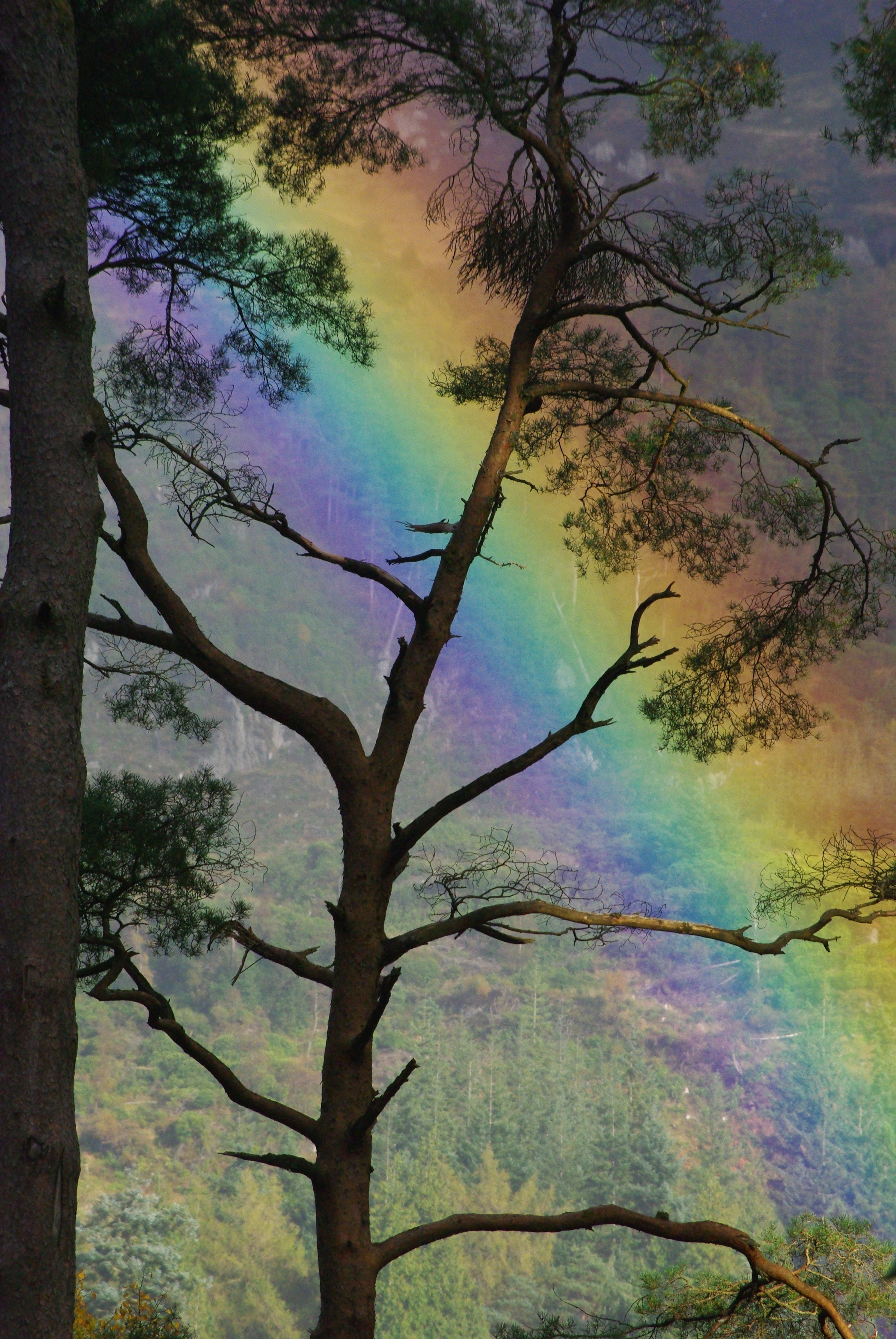
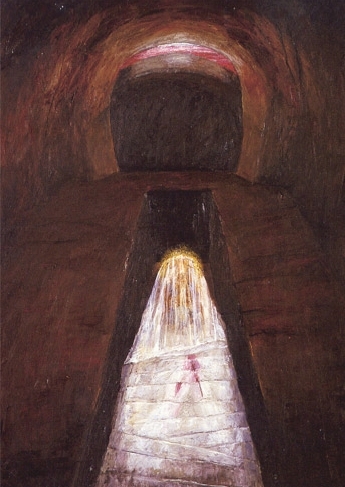
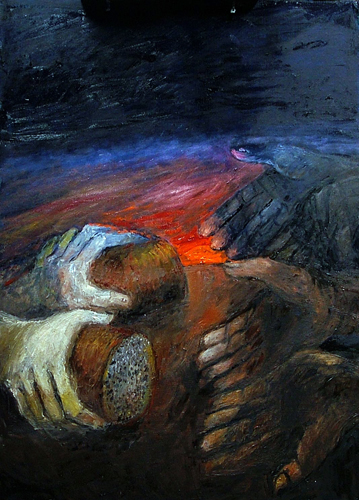
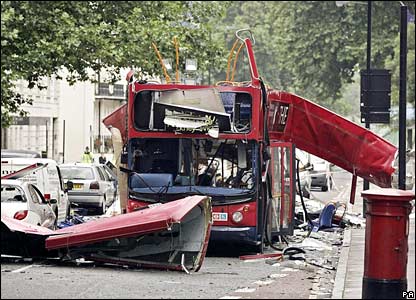
Michaela took these photos…

Listening to one of my social work heroes…

There is lots of good stuff on the new Greenbelt Website, including a new GTV section, full of short film clips with some of the speakers/performers at the festival.

One of them was Bob Holman. I was there to see him filmed- you can see me in the second row if you click on this link;

Bob Holman on GTV

Bob was one of the men who inspired me to believe that community activism and social work in particular could make a difference. As a young man, when I heard that friends were planning to be accountants, or hairdressers, or mechanics (but particularly accounts to be honest) I would shake my head slowly at the waste of a life. I believed passionately that life ought to be about helping others- connecting with people who were caught up in poverty or addiction and seeking to bring them to freedom.

There were of course lots of reasons for this- my own troubled and difficult childhood, and also my understanding of what Jesus was all about. These things met in the person of Bob- who because of his Christian faith, gave up a well paid job in a university and moved his family to a council estate, later moving to the still notorious Easterhouse in Glasgow. I do not know Bob, nor the detail of what he achieved, but what he did represented something noble and authentic at a time when Christianity appeared to have little to say about social action, and lots about saving people from hell.

The fact that I watched this video clip again (it is only short- 8 mins or so) at this point of my career is really poignant. All that naive but still cherished idealism about social work as a means to change society for the better, and to be the bridge for grace in the lives of the people I work with- this is all 21 years behind me. I now find myself on a trajectory out of social work all together.

As I reflect, the process of social work has taken a lot from me. After meeting so many people at their lowest ebb, or at their worst behaviour, my compassion and tolerance is blunted. But it has not gone altogether. After feeling the responsibility of managing situation that simply can not be managed, and seeking to help people who will not help themselves my motivation to keep standing in those difficult places has been eroded. But this too remains in part.

Above all, I am tired. I want a cave for a while where I will live out gentle days in the throwing of stones and the lighting of fires.

Then perhaps there might be a rekindling of the old part of me that was so excited by the story old Bob told.

I hope so…

Rowan Williams resigns…

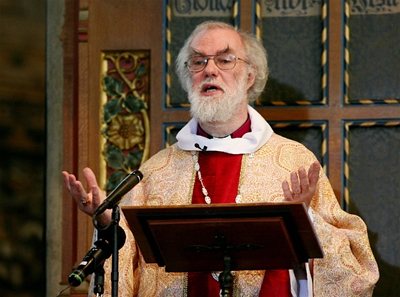
Today it was announced that Archbishop Rowan Williams is to resign as Archbishop of Canterbury and return to academia as master of Magdalene college, Cambridge from December of this year. I am not a member of the Anglican Communion, but my roots still reach back in this direction, and I feel a real sadness at the departure of this gentle, thoughtful and gracious man from his key leadership role.

His time as leader was marked by division- over women in ministry and homosexuality in particular. Time and again he has sought to be a bridge for debate and understanding, but the chasms remain between the liberal reformers and the Evangelical wing of the church.

Rowan Williams seems to have been criticised from both the liberal side (because of his reluctance to take on the theological conservatives in open warfare) and from the Evangelical side (because of his refusal to stand on a narrow interpretation of scripture on key issues.) But to me, there was always the feeling of deep integrity in all that he did. He has been a leader to be proud of. The Church in it’s widest sense will miss him greatly as it seeks to move into our new context.

As for the CofE- what next for the old girl? Who will be the next Archbishop? And what direction will he seek to steer? Can the Anglican Church survive in it’s current form?

The Guardian mentioned Archbishop Sentanu– who might yet be the first African born Black Archbishop. Another mentioned is Bishop Chartres, who has been opposed to the ordination of women, and was at the centre of the controversy over the way the church handled to recent protests outside St Paul’s Cathedral.

Whoever takes over, they will need our prayers, and could learn a lot from Rowan Williams.

Williams was never a popularist- there was little about what he said that could ever be reduced to a sound bite. It was always too thoughtful, too considered, to cerebral perhaps, or too poetic. So by way of grateful celebration for this man who truly has been an apostle in the fullest sense of the word, I will quote one of his poems.

It is slightly unseasonal, but nevertheless seems apposite for a man who seeks the depth of what it means to serve Jesus;

Advent Calendar

He will come like last fall’s leaf fall.
One night when the November wind
has flayed the trees to the bone, and earth
wakes choking on the mould,
the soft shroud’s folding.
He will come like frost.
One morning when the shrinking earth
opens on mist, to find itself
arrested in the net
of alien, sword-set beauty.
He will come like dark.
One evening when the bursting red
December sun draws up the sheet
and penny-masks its eye to yield
the star-snowed fields of sky.
He will come, will come,
will come like crying in the night,
like blood, like breaking,
as the earth writhes to toss him free.
He will come like child.

Rowan Williams

By the way- Greenbelt festival have just made all of their rich and varied back catalogue of downloadable talks free, including a couple by Rowan Williams here– well worth a listen.

Terrorism, religion and the group dynamic…

I spent much of today talking about terrorism. This is not usually part of what I do, but I was asked to attend a local awareness session. In the end it was rather fascinating.

What we tried to think about was the sorts of processes and relationships in our communities that might draw people into extremism, and right away, we people of faith have to concede that one of the most common drivers for this in the world at present is religion.

Many people would have in their mind a stereotypical terrorist, and they well be Muslim, male and aged around 25. There are real problems with these kinds of stereotypes of course, as I have spoken about previously here. There is also a real possibility that we exaggerate the potential threat, and this plays into all sorts of paranoid murky politics.

However, we now know that even our sleepy rural county of Argyll has been touched by terrorism. Several extremist groups have used outdoor centres/outward bound courses up here to breed team spirit, and the bombers who attacked Glasgow Airport a few years ago did so from a holiday home base in our area.

What brings people to the point of being able to justify the use of extreme violence? Of course this is not a new thing, and many would regard the drivers of inequality, imperialism and oppression as fertile breeding grounds. However, today we talked about some of the societal/group pressures that might draw people in;

Belonging

The need to be ‘saved’ from an old life, and released into a special calling, as part of an enlightened elite. So we see some people drawn into extremist groups out of situations of isolation, confused identity, drug addiction and poverty.

Crusade

People often see themselves as on a special mission, to right injustice and to live to a higher calling. There is an exclusiveness to this, and a tendency to see others as weaker, more contaminated, sinful, outsiders to the truth.

Narrowed world view

Extremists are united by a compelling narrative, often focussed on a single issue and simplified to black and white kind of thinking. In this narrative, there will be good guys and bad guys, those on the inside, those on the outside, and a call to fight back.

The drive to proselytise

The need to be bigger, more powerful, to convince others of the rightness of your cause, and to win converts. All other things are secondary and this end justifies all means.

Powerful, manipulative leadership

Leaders who convince, who have elevation over others and able to use hyper emotionality and  charismatic manipulation to bring cohesiveness and common purpose.

Distortions presented as fact

Leaders like this often present historical and theological perspectives, or downright distortions as fact. They emphasis certain aspects (for example eschatology, judgement, Jihad) over others (for example, forgiveness, grace, peace.) People are not encouraged to think for themselves, to test and debate issues, rather they are expected to achieve correct belief.

Removal and isolation

Before every act of violence, there seems to be something in common- a time of removal, sequestration. People are removed, or remove themselves from wider society, and focus on the purity and certainty of their cause, and the need for their final act.

Here is the challenge then- I invite those of you who have been involved in Christian churches to consider this list from that perspective. Those of you familiar with charismatic or fundamentalist denominations may find this list rather familiar. The point is, the group dynamics of religion that distort faith and breed a kind of hatred and destruction do not just belong to the other, they arise from who we are as humans.

Jesus seemed to understand this very clearly, and anyone who knows his teaching would see it as the antidote to all of the above. He seemed to reserve his anger almost exclusively for the kind of religion that valued the law (or religious understandings of the law) over people.

And yet we stand in the shadow of two thousand years of repeated examples of where the group dynamic within our churches has become toxic and released all sorts of hatred, judgementalism and even death as a result.


 

The visible presence of the living God…

I saw this the other day;


It is an installation by artist Berndnaut Smilde, who uses smoke machines and bits of trickery to form clouds in the middle of rooms. They only last for seconds, but I think they are really cool.

Th fact that this one is in the middle of an empty church is particularly poignant if you are wired like me. It conjures up Biblical images of the Host of God in the temple of the Ancient Hebrews – but in this case, within what looks like a run down and disused chapel, tarted up a little for the photograph.

It also asks some rather searching theological questions about our hopes for God and where we might encounter God. There are some clues in the Bible;

God is not contained, but is there when we gather.

God is not to be conjured up, but delights in our praise.

These are all very familiar concepts to anyone who has been involved in leading communal worship. I have spoken before about the tendency we had within lots of the services I have been involved with to try to whip up some kind of God-expectancy, or God-imitation as part of a religious show.

You could say that we made our own cloud in the middle of each and every gathering just like the one above. We tried hard to make visible the fact that God was there, whether or not we really believed it, whether or not it was true. If we had created some kind of evidence that he was there, this was enough.

But then I am reminded of an obscure passage from 1 Kings 19, when Elijah is in the middle of a particularly tough time. Prophets tended to upset people then (and now) and would have to flee for their lives;

And the word of the LORD came to him: “What are you doing here, Elijah?”

10 He replied, “I have been very zealous for the LORD God Almighty. The Israelites have rejected your covenant, torn down your altars, and put your prophets to death with the sword. I am the only one left, and now they are trying to kill me too.”

11 The LORD said, “Go out and stand on the mountain in the presence of the LORD, for the LORD is about to pass by.”

Then a great and powerful wind tore the mountains apart and shattered the rocks before the LORD, but the LORD was not in the wind. After the wind there was an earthquake, but the LORD was not in the earthquake. 12 After the earthquake came a fire, but the LORD was not in the fire. And after the fire came a gentle whisper. 13 When Elijah heard it, he pulled his cloak over his face and went out and stood at the mouth of the cave.

Then a voice said to him, “What are you doing here, Elijah?”

There is humour here I think. And love, and tolerance, and power. There is the man on the mountain scared out of his wits by what is happening all around him.

And then there is a whisper asking him- “What are you doing here?”

The clouds and the winds and the earthquakes come and go- but the point is not the transcendent experience, but the life we live in the wake of it all.

What are we doing here?

Shock- churches unite!

against Gay marriage.

I find it all so depressing.

Is there nothing else that Churches can unite behind or against?

I suppose the truth is that they DO- all the time, but no body notices. There is a feeling in me however that that the issue of personal sexuality, and the application of the word ‘marriage’ to same sex coupling still has the power to bring spittle to the lips of the faithful like no other.

Not poverty, or people unfairly imprisoned or tortured. Not restoring sight to the blind or declaring jubilee to those who are oppressed.

I know- for many of my fellow Christians, this issue is complex- full of difficult theological questions and wrapped up some kind of desperate struggle against a perception of a rising secular tide.

For me it is much simpler.

If we are to make any kind of mistake- err on the side of grace.

Oh- and get on with the things that are the proper business of the Kingdom of God.

The stuff in Matthew chapter 5, not the obscure bits of Leviticus. This bit for example;

16 The LORD said to Moses, 17 “Say to Aaron: ‘For the generations to come none of your descendants who has a defect may come near to offer the food of his God. 18 No man who has any defect may come near: no man who is blind or lame, disfigured or deformed; 19 no man with a crippled foot or hand, 20 or who is a hunchback or a dwarf, or who has any eye defect, or who has festering or running sores or damaged testicles. 21 No descendant of Aaron the priest who has any defect is to come near to present the food offerings to the LORD. He has a defect; he must not come near to offer the food of his God. 22 He may eat the most holy food of his God, as well as the holy food; 23 yet because of his defect, he must not go near the curtain or approach the altar, and so desecrate my sanctuary. I am the LORD, who makes them holy.’”

If you were born with a disability then you may not go to church?

Quite clearly we find this interpretation abhorrent. In our culture (but not the one of the ancient Hebrews) to be born with disability is not shameful. You are not to be hidden away lest other people are somehow made unclean. You are not condemned to a life that is less that those around you, or excluded from parts of civic life.

Does the parallel strike you?

Opening worship…

We had an Aoradh meeting tonight to plan some activities. We talked about a ‘benches’ event (using benches as meditations stations, possibly in conjunction with Cowalfest,) a Labyrinth, and we also had a long conversation about plans to collaborate with some friends in a local church in the creation of a new regular worship service.

This is a new departure for us for several reasons- firstly it would amount to a regular ‘service’ (however loosely we understand what this might mean.)

However, it also opened up a lot of discussion about what is meaningful to us in worship. Some of us still just love to sing. Others lived in the shadow of long experiences of overly manipulative music dominated worship services, in which we felt like we were being told what to do, what to experience, what to feel.

So, the journey continues; to find ways towards authentic, open hearted, hopeful, respectful and creative worship.

For me too there is still the challenge of finding how to use authentic, open hearted, respectful and creative worship music. For some time I have laid music aside. I still feel that I need to encounter wider ways to worship.

Tonight Michaela handed around some cards with images on made my Sieger Koder– they were a present from our friend Maggy, and part of a collection called ‘The Folly of God‘. They are intended as aides to contemplation and worship- in a purely visual sense. This is all a little alien to me really. I am much more driven by words.

But this is the point- to be open to the new. To be ready to be challenged, shaped changed by things that we encounter, take into ourselves, then give back.

Michaela has asked us to live with the image we picked and we will meet on Easter Sunday to speak about our experience.

Here are a couple of Koder’s paintings;