When I am dead my dearest…
1

Vodpod videos no longer available.
1st collector for Human rights, cats and really bad politics…
Follow my videos on vodpod
Mathew Paris said it all when he described the Conservative grass roots opinion of the European Convention on Human rights as akin to that of ‘political correctness’ ‘health and safety legislation’ and all other sorts of interfering European pettiness.
Paris suggested that this has nothing to do with the finer points of the law- nothing to do with how complex legal matters have been worked out following the incorporation of the convention into our law statutes back in 1998. Rather it relates to something baser and more instinctive.
Theresa May, the minister for ‘justice’ (I kid you not) so shocked her own Senior minister- the Home Secretary Kenneth Clark- that he later publicly ridiculed some of her Daily Mail style ‘factual’ statements. Interestingly enough, it seems as though the Prime Minister sided not with Clark, but with May.
The article that May had a problem with was this one-
Article 8: Right to privacy
(1) Everyone has the right for his private and family life, his home and his correspondence.
(2) There shall be no interference by a public authority with the exercise of this right except such as is in accordance with the law and is necessary in a democratic society in the interests of national security, public safety or the economic well-being of the country, for the prevention of disorder or crime, for the protection of health or morals, or for the protection of the rights and freedoms of others.
The strange thing is, article 8 reads like a slice of just about any Conservative Party Manifesto. It could be a clarion call for the protection of the men and women of middle England in their suburban castles.
However- the issue appears to be that this article is not just to be applied to US- but actually THEY want these rights too. The grubby grasping immigrants.
Lord forgive us if this is the essence of who we have become.
Here it is, raising up incongruously out of Pucks Glen…


Britain has been engaged in some small war or other for much of the last couple of decades. Small that is as they are not here- the public are not particularly involved, and most of the time are not even very interested.
The last couple- Iraq and Afghanistan- will probably come to define our age- along with the ‘credit crisis’, and the death of Princess Di.
When these wars are spoken about at all in the media, a strange kind of mythological language is used. We start from a position of ‘our brave boys’ (no argument there- mostly we send boys, and they are incredibly brave) who are part of the most professional, humane and most highly respected army in the whole world.
Criticism of the war is possible- in terms of the political decisions that have been made- but criticism of the actual way the war is being waged by our Generals is not countenanced.
If you are interested in an alternative perspective, then I would recommend listening to Start the Week on the i-player, here.
Frank Ledwidge was devastating in his analysis. He described how we lost the war in Iraq- including the humiliation in Basra, where our forces were rescued by an exasperated US army. We then went on the lose the war in Afghanistan, where we sent our troops to a place where they were only ever going to be seen as an invading unwelcome army- given our history in the region.
The scary thing about this is how little we are prepared to hear these critical voices. We have been brought up to view our own military misadventures as essentially good versus bad- the plucky resourceful Brit against the Hun/Jap/Red. We always triumph in the end- true character always does.
This ignores all the evidence to the contrary- the mounting body bags, the torture of prisoners, the resounding “NO!” echoing from the population of all these countries that we are supposedly liberating.
Them there is the stench of post imperialist self-interest, and the feeling of being manipulated by murky spinners of media messages- all of that gung ho ‘smart’ bombing and ‘shock and awe’-ing.
The discussion mentioned above identified some key myths that we really should watch out for (along with a few of my own suggestions)-
This weekend we had planned to travel down south to attend a baptism service at our old Church near Preston. The people getting baptised are young folk we have known all their lives, and sharing in this service would have been great. However, Michaela has not been well, so we had to call off last night. She is OK- an infection that is on the mend.
So I am sat at home thinking of my friends- missing them, but also feeling strangely grateful for the space, free from long car journeys and weekend busyness.
I love being at home, with no agenda- no pressure, no deadlines. It always feels like such an indulgence because of course there are many things that I could be doing- in fact many things that I should be doing.
But for now, they will wait…
Perhaps I am getting old- but if so, this is fine, at least for today.
Rehearsing old age
.
Today we rehearsed old age
And it was lovely
.
Our bones went soft
And our muscles ceased their strain
.
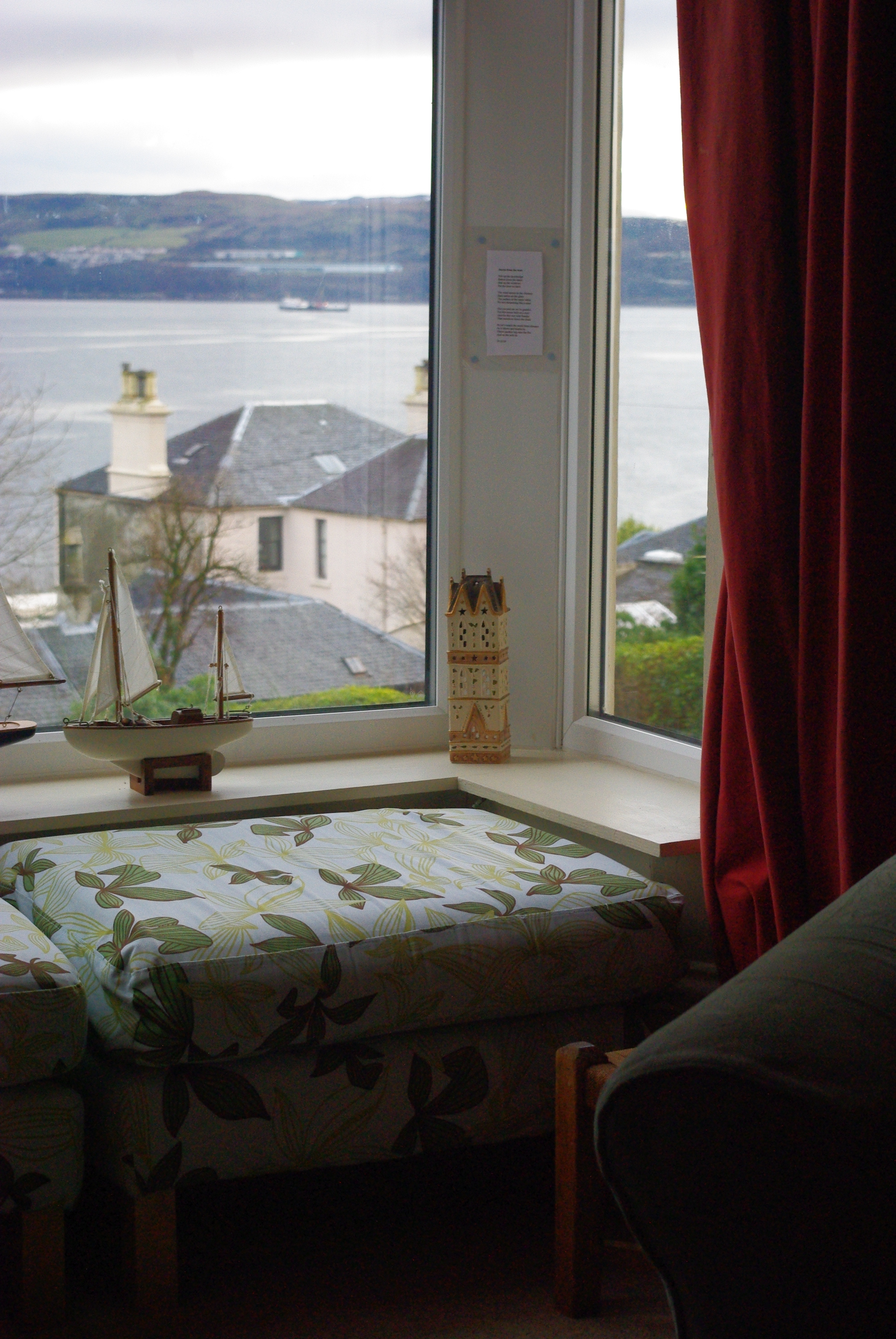
There is a storm on the old river
And kind grey light makes
Our faces take on
Graceful lines
And shadows
You on the sofa
And me in my chair
.
Today we rehearsed old age
And it was lovely
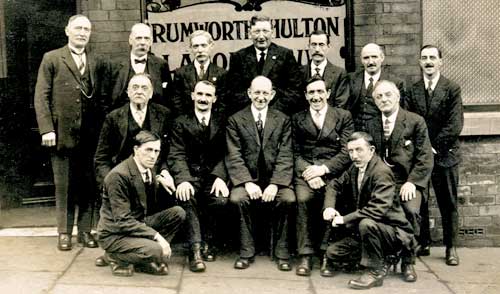
I like this word- it was coined (I think) by one of our friends- to sum up that formal-collective thing that you will find in churches and all other places managed by committee. It is used as an adjective- as in “I am not clubbable.”
And in many ways, I am not. I am fine with ritual, but hate stuffy formality. I love a good conversation, but find making small talk very wearing. I love to meet with my friends and dream big dreams but once these things become filtered through bureaucracy I have no interest. I think we are at our very best in community, but often find communing hard- it can strip you bear.
I have found the churchy kind of clubs to be particularly challenging- as all of the above mixes in with a certain kind of external ‘righteousness’ and ‘correct doctrine’ and ‘spiritual maturity’. This kind of rather intense clubbability can suck you dry- it can become all consuming in its demands of time and energy. It becomes a vortex into which life hoovered up to the exclusion of anything outside its gravitational pull.
I had had enough of clubs. I wanted to freestyle for a while- to adventure in company, not just to retire to the bothy and sing songs of the adventure of others.
Strange then that I now find myself a member (or about the become a member) of two local clubs- cricket, and (as of tonight) bee keeping.
I am sure that both will have their challenges- relationships and internal tensions- but the interesting thing about both, is the richness that they bring into my life. Both seem to give me more than I give out- they facilitate, encourage and enable. Members of the clubs seem to delight in sharing knowledge and offering advice- not so we might be just like them, but rather so that something that they are passionate about might have a life beyond.
Both are about sharing an activity- having a praxis in common. They are much less concerned with theory and doctrine. But that is not to say that theory and doctrine are not there or thereabouts- rather that these things are downplayed, and absorbed through contact with wider example.
So it is soon obvious that playing cricket is all about a certain kind of sportsmanship- some things are simply just not done. If you are out, you are gracious in defeat. You look after the inexperienced players and when competition becomes too heated, someone has a quiet word.
And through beekeeping, it seems that we learn patience. This is no overnight process.
Hmmmm. Perhaps I am clubbable after all.
I wonder if anyone heard this last Sunday morning-
(The programme blurb-)
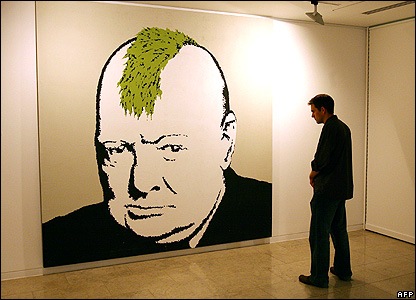
“For a couple of days in May 1940, the fate of the world turned on the fall of a leaf” says John Gray. He outlines the strange conjunction of events – and the work of chance – that led to Churchill becoming Prime Minister.
He muses on how Churchill was found by one of his advisers around one o’clock on the morning of May 9th “brooding alone in one of his clubs”. He was given a crucial bit of advice which may have secured him the job. What would have happened Gray wonders if he hadn’t been found and that advice – to say nothing! – not been passed on?
He also ponders whether it was it Churchill’s recurring melancholy which made for his greatness? “It’s hard to resist the thought that the dark view of the world that came on Churchill in his moods of desolation enabled him to see what others could not”.
“Churchill had not one life but several” says Gray. Without them all, “history would have been very different, and the world darker than anything we can easily imagine”.
Interesting for several reasons- the obvious historical one- the other leading candidate for Prime Ministership (who most MPs wanted) probably would have sued for peace rather than fought on against Hitler. As a pacifist, I would have supported him in this- but the end result of Churchill’s influence on British politics at this time was war- and history has rather sided with him on this one…
The other reason however is related to how we understand depression.
Churchill was stalked by what he called his ‘black dog’ all his life. He was prone to black moods and fits of despair- it separated him from those around him, and made him different.
Depression is a terrible thing- it destroys lives. But Depression is not only a terrible thing- and those who journey with the black dog often achieve a level of insight and depth of understanding that others do not.
Depression in this sense may actually be a means of equipping us for life.
Some time ago I wrote a post on why I found all the obsession with positivity rather difficult. All those shiny happy invocations to will ourselves to ever greater heights. Here it is- entitled ‘In which I find myself reacting against positive thinking’. This is really not because I believe that to be miserable is good, and that we are all doomed (although perhaps we might be when I come to think about it.) Rather I believe that we start from where we are- and I am sick of people telling us to be someone else.
Human life is made up of light and shade- and as well as pure white there are many shades of grey. My experience is that most art emerges from the shadows- most creativity is achieved through adversity- and perhaps great statesmen also need a hinterland…

Today we heard from the Labour leader.
I find so little to celebrate in what he said, or the way he said it (so said the Guardian– “Miliband’s pedestrian, drooping delivery did no justice to the ambition of his argument.”)
In saying this, I feel sad. Sad that once again I am writing out of negativity not from a position of hope. Sad too that the party I have roughly aligned myself with all my life appears so bereft of ideas.
A swipe at the Tories, the bankers and Southern Cross care homes- then a strange promise that people who work hard or volunteer will get preferential allocation of social housing. (Sounds a bit like ‘the deserving poor’ to me.) But at least ‘I am not Tony Blair (awkward pause…..)
I have been asking myself what is missing- and I think it is this- a visible value base that comes from a passion that is not merely manufactured, or self consciously media friendly.
I have also been thinking a lot about just how bankrupt our political/economic system seems to have become. When did commerce become capitalism, and when did capitalism become turbo-capitalism? How did the survival of our affluent way of life come to require the addiction of a whole nation to the accumulation of ever more stuff that we do not need?
And perhaps the most important question; what might be an alternative way of ordering our collective economy?
Ed Milliband’s father, the late great Ralph Miliband, was a Marxist Sociologist whose writing was an essential part of my student days. For a while, my hope was for an egalitarian socialism to take gentle hold in our country- mixed in the very British way of changing slowly whilst still holding on to idiosyncratic anachronisms- because it is better to accommodate and compromise rather than to revolt and overthrow…
But it seems that at least for now, ‘Free Market’ Capitalism has cleared the playing field of all opposition. The Berlin wall has been reduced to the dust of folk memory.
And in the middle of all this economic mess, Capitalism (despite being the cause of so much difficulty) continues to present itself as the solution.
I am no longer a political ideologue. All of that was killed by Blair and middle age. But still, where are the critical voices? Where are those who bring hope for change- for better ways of living that are not geared towards entrenching the global inequalities that condemn the poor south to be one large sweatshop for our supermarkets and high streets?
Do we need more riots? More kids in hoodies running away with box-fresh trainers and security tagged x-boxes?
As someone who tries to follow Jesus, I am ever more conscious of the way he had of standing as a faithful, hopeful, critic of the way we live. This is not the same thing as condemning and rejecting- rather it might mean that we should seek to participate, whilst at the same time hoping for better.
Hoping for voices to be raised that offer an alternative- that start not from a position of protecting the status quo, but instead long for justice for the global poor, and a sustainable, honest and healthy way of life for the rest of us. Looking for love, Grace and beauty, then seeking to nurture it.
Little of which did I hear today in Milibands speech. But perhaps there is time yet…
Time for a song I think…
We called in to see this exhibition, part of a collaboration in the Burgh Hall, Dunoon. It is there for the rest of the week- go along if you get the chance…
Soozie, a local artist (and nice person, based on our wee chat!) is making art that emerges from a dramatic change of life- a cochlear implant.
I love meeting people who are on journeys. They see things with new eyes- or in Soozies case, hear them with new ears. It made me think again about how much of the time we all spend in an artificial bubble- insulated by constant electronic static from the lovely things all around us. To speak to someone experiencing these things anew is a privilege.
Soozie has a blog, charting her experiences- here.
 this fragile tent