Strange political times…

About a year ago, in response to the looming general election result, I made some political predictions on this blog– always a risky thing to do. Here is what I said, as I seem to have been proved strangely sage-like…

  • We are going to have a minority Conservative government held together by a vague alliance with the Lib Dems. The alliance will be bought by the promise of a referendum on proportional representation.
  • This will create turmoil in the Tory party, as PR is unlikely to serve them well (in terms of seats.)
  • Actual reform of the voting system will not happen for a long time, and when it does, it will be a fudge that goes only some of the way, but perhaps only for the House of Lords.
  • The current hung parliament will achieve very little, and there will be another election in 2 years- whenever the Conservatives think that they have a chance of winning an absolute majority.
  • Brown will resign.
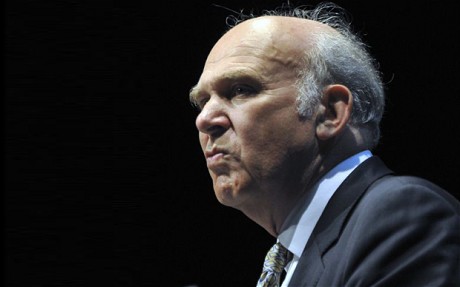
Frankly, some of these predictions were rather obvious. But others are still working themselves out. I still reckon that we are heading for another election next year- the alliance with the Lib Dems is being weakened by two things- firstly, the breakdown of the ‘Nick effect’- his star is waning visibly- he got in bed with the Devil, and the Devil appears to be dancing all over him. Secondly, the voices of criticism in the party are starting to be heard, led perhaps most visible by the always eloquent, if sometimes gaff prone, Vince Cable (the next Lib Dem leader?)
This morning, on radio 4, Vince Cable said something like this

 “Some of us never had many illusions about the Conservatives, but they have emerged as ruthless, calculating and thoroughly tribal.

“But that doesn’t mean to say we can’t work with them. I think they have always been that way, but you have to be businesslike and professional and you have to work with people who aren’t your natural bedfellows and that is being grown-up in politics. We are going to continue to do that.”

For a while at least.
Strange indeed that Cable, a serving minister, can talk like this about his colleagues in government. But then these are strange times. Even Cable would not stray so far from his party’s agreed line- there is now a visible distance between Clegg and Cameron.
Perhaps in no small part due to the humiliation over the referendum result of the Alternative Vote system- itself a pale compromise of what the Lib Dems were seeking to achieve- Proportional Representation.
In a conversation last week (and this time you will just have to take my word for it) I predicted this result- a resounding no. I reckoned that this was partly a punishment vote for Clegg, who has given us a Tory slash and burn government, and also because of the innate conservatism of the British people in making any changes to our unwritten constitution.
The other cataclysm of the recent elections is the collapse of the Labour party up here, and the rise of the Scottish National Party. I find it harder to make any predictions about this change- it is much closer to my sensitive bits somehow. I will have to have a bit of a think about this…

The spirituality to be found at a fireside…

This is a photograph taken on our recent retreat. I think the glow above the fire is an internal lens/filter reflection. Cheap filters are a problem I am told! But it looks like something has been created from our gathering- or perhaps the old truth that where we gather in his name, he is in the midst of us…

Gathering around a fire must be stamped somewhere in the middle of what it means to be human. After all, it must be just about our oldest form of social gathering.

There is a story about a micro technology project that visited a village in Africa, offering to install a solar powered lighting system. “Why do we need this?” asked the village elders. “What benefits would this bring to our people?” “Well,” replied the aid workers, “you will be able to work later in the evening, your children will be able to study and use computers and your wives will be able to prepare food more easily.” The elders considered for a while, then politely declined the offer of the electricity system. When asked why, they replied “There are enough hours in the day for work. In the evening, we gather round a fire and tell the stories that make us who we are.”

On our recent retreat, we gathered round a fire. It was tricky- there were no trees on the island and a fast tide race sweeping the shores clean, so we had to gather wood from nooks and crannies all over the rocky shores. We told stories of hopes and dreams, and prayed using incense that we scattered on the fire (to symbolise the fragrance of Jesus) and iron filings that sparked us into awareness of the power of the Spirit.

My your fireside be equally warm and welcoming, and may great stories be told…

Diplomacy by Xbox…

That was what I spat out when one of my fellow retreatants  passed on the news of the recent death of some of Gaddafi’s family– his son and three of his young grandsons.

On our return from the island, we learned too about the death of Osama Bin Laden– and the national rejoicing across the USA.

The contrast with the peace and tranquility that we had just experienced was palpable.

As if the final level of the game had now been successfully navigated. Time to put the controller down and go to bed. We can order Call of Duty 14 in the morning and start all over again.

We can take out some more towel heads tomorrow because it is not real- not real flesh and gristle we smeared on a whitewashed wall. Not real  just-brushed baby teeth that we smashed in. Not real martyrs that we made.

It was all on a screen.

We have the power, and might is always right.

Here is a little quote from Brian McLaren that says it all-

Joyfully celebrating the killing of a killer who joyfully celebrated killing carries an irony that I hope will not be lost on us. Are we learning anything, or simply spinning harder in the cycle of violence?

Aoradh wilderness trip 2011- some photos…

Fantastic weekend!

The island was wonderful, very much exceeding my expectations. It was perhaps the smallest of our retreat destinations, but at the same time was packed full of delights-

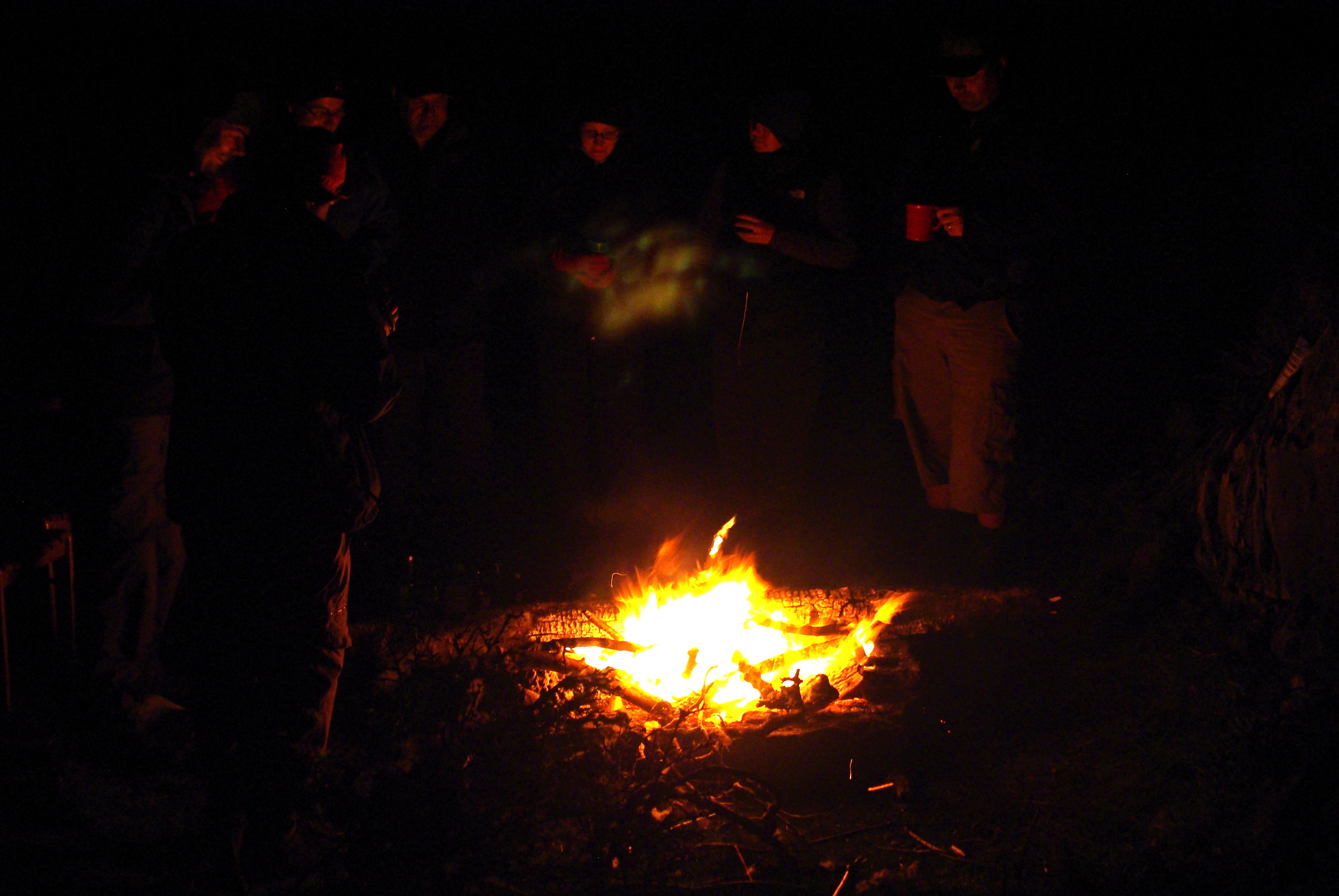
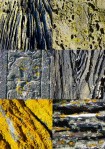
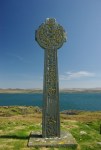
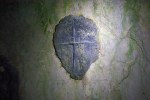
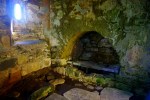
Ancient monastic sites- church, beehive cells, a hermits cave.

Wildlife like you would not believe- otters, seabirds, seals, corncrakes. Nearby ospreys (seen on the return.) Also- a complete absence of ticks and midges!

Sun- three days with barely a cloud. Sure, it was windy, but mostly gloriously warm. Warm enough for diving into the sea for some of us!

We sat round fires, walked out meditations and laughed a lot.

It was wonderful.

Thanks to all of you that came along…

Aoradh Wilderness Retreat 2011…

I’ll be off line for a few days…

Over the coming weekend, 11 of us will be heading off to a tiny uninhabited island for this years Aoradh wilderness retreat.

This year we will be here

There will be 11 of us this year- from London, Lancashire and Argyll, and I am really looking forward to it.

We have prepared some interesting things to do this year- dividing the time up into silent and social time.

See you when we get back!

Bible nasties 5- a little discussion about ‘truth’…

OK, I have been avoiding this a little, but perhaps it is time to dig into a few philosophical ideas about the nature of truth.

It is a long time since I studied philosophy as a student, so this may well be a little low rent- but I hope it’s relevance to our discussion about the nature of the Biblical truth will be obvious.

Correspondance theory

Thirteenth Century philosopher/theologian Thomas Aquinas said this “A judgment is said to be true when it conforms to the external reality”, which is a posh way of saying that if what you say of an object is correct, it is true.  Truth is a matter of accurately copying what was much later called “objective reality” and then representing it in thoughts, words and other symbols.

This kind of truth is the common sense kind- the see it, touch it, smell it kind. It is the kind of truth that we assume that the Bible uses.

Coherence theory

Truth is primarily a property of whole systems of propositions, and can be ascribed to individual propositions only according to their coherence with the whole. In other words, truth is only testable when understood within a wider system of ideas and concepts. To understand what is true, we have to approach it from within a set of wider propositions.

Which is exactly what we do with the Bible, even if we do not always acknowledge it. We read the book of Revelation not with the cultural assumptions of a first Century Jewish follower of Jesus, living under oppression and well used to the literary format of apocalyptic writing, but rather from the truth system of a 21st C people, in the shadow of all those end times theories.

Or we read the Gospel of John and the book of Romans, then reinterpret the rest of the Bible from a perspective gained just from an understanding of these two books.

Constructivist theory

Truth is constructed by social processes, is historically and culturally specific, and that it is in part shaped through the power struggles within a community. So the truth we encounter is an amalgam of the culture and context we live and walk in, and is rarely neutral- rather it tends to be shaped by those who have the most power.

So we see the the Bible used to justify war, slavery, racism, oppression of minority groups.

Consensus theory

Truth is what ever is agreed upon by a specific group.

There have always been groups whose readings of the Bible have been idiosyncratic and sometimes downright loony. The Westboro Baptist Church come to mind for example.

Pragmatic theory

Truth is verified and confirmed by the results of putting one’s concepts into practice. So it is only when we test our ideas and concepts in real life situations, or scientific method that we can engage with truth. In this way, truth is self corrective over time.

A recent refinement, known as ‘negative pragmatism’- “We never are definitely right, we can only be sure we are wrong.”

These two ideas of truth as also closely mirrored in theological approaches to the Bible. The 19th C enlightenment sought to prove God, with the Bible as it’s source material. CS Lewis and his huge intellect might be seen as a logical outcome of Pragmatic theory applied to theological truth.

More recently, apologetics have become less fashionable. We have been forced to accept that arriving at a final understanding of truth is always going to be problematic. Alfred North Whitehead,  said: “There are no whole truths; all truths are half-truths. It is trying to treat them as whole truths that play the devil”.
Next, a wee trip through some of the philosophical heavyweights to see what they have to say about truth-

Descartes

Truth is available to us as we apply our reason to external objects. But the ultimate arbiter of this external truth is- God. I think, therefore there is God.

Kant

Kant suggested that the problem with correspondence theory is that if an external object is to be ‘true’ then it has to be recognised, and considered internally- at which point it is no longer external, no longer objective. So our encounters with truth are changed by our own interaction with them- by the person that we bring to that truth.

Kierkegaard

For Søren Kierkegaard, objective truth has real limitations, in that it cannot shed any light upon that which is most essential to a person’s life- Objective truths(mathematical, scientific, physical) are concerned with the facts of a person’s being, while subjective truths are concerned with a person’s way of being.

He is also strong on the division between objective and subjective truth- objective truths are final and static, subjective truths are continuing and dynamic. Values, faith and ethics, according to Kierkegaard, can only be understood when filtered through an individuals subjective experience.

Some inconclusive conclusions…

So- where does all this take us to, in relation to the Bible?

For me, the philosophical approaches to truth open up the idea that any ‘facts’, when viewed from a human perspective are likely to be nuanced, complex and to serve hidden human purposes. If we believe that the Bible is a human document- even allowing for heavenly inspiration- then we have to accept that it is laden with these same questions.

There will continue to be those who will assert that the truth of the Bible belongs to God- and as such it is not contingent on our engagement with it, or understanding/belief of it- it just is. The trouble is that people who assert this often appear to be willing to commit themselves to a claim to understand this truth.

As for me, I am left with two useful starting points-

Karen Ward differentiates between ‘small theologies’ (or you could say small truths)- worked out in community, and ‘big theologies’ (big truths)- belonging to academia and the church hierarchy. In this way, I think that an idea of truth can be negotiated with your friends, in humility, and in respect of the tradition. Getting it all 100% ‘right’ is not an option, or even an aspirational goal. Rather we should expect to be teachable and open to transformation by the Spirit within us.

Then there is also that bit in Romans 14 where Paul talks about ‘disputable matters’-

1 Accept the one whose faith is weak, without quarreling over disputable matters. 2One person’s faith allows them to eat anything, but another, whose faith is weak, eats only vegetables. 3 The one who eats everything must not treat with contempt the one who does not, and the one who does not eat everything must not judge the one who does, for God has accepted them. 4 Who are you to judge someone else’s servant? To their own master, servants stand or fall. And they will stand, for the Lord is able to make them stand.

5 One person considers one day more sacred than another; another considers every day alike. Each of them should be fully convinced in their own mind. 6 Whoever regards one day as special does so to the Lord. Whoever eats meat does so to the Lord, for they give thanks to God; and whoever abstains does so to the Lord and gives thanks to God. 7 For none of us lives for ourselves alone, and none of us dies for ourselves alone.8 If we live, we live for the Lord; and if we die, we die for the Lord. So, whether we live or die, we belong to the Lord. 9 For this very reason, Christ died and returned to life so that he might be the Lord of both the dead and the living.

Paul is speaking to a church in the middle of a truth war, and he says, more or less- there are more important things to be getting on with…

Censoring Royal Weddings…

Apparently a planned satirical show in Australia that had been planned to use some footage of tomorrows Royal Wedding has been prevented from doing so by the Royal Family.

Sorry to be a sour pus- but I just do not get it. All this fuss over the weddings of anachronistic archaic figureheads. I remember the last Royal Wedding- I was on a walking holiday in the Lake District. I am off camping on a small island this time! You could say I am indulging in a little personal censorship.

All the Diana stuff- before and after her tragic death- it was always a total tabloid distraction from real issues. She seemed to me to be a rather vacuous person married to a chromosome too far.

As you might guess, I am not a Royalist- I have decided that I am a lazy Republican. I would rather be rid of the lot of them, but at the same time I am not sure what we would do instead. And they are rather decorous… A bit like visiting a Stately home- a crumbling relic of a time when the masses lived and worked at the behest and whim of the few. Perhaps we still do.

Anyway- here is the story.

Vodpod videos no longer available.

In which I adopt for myself, an anthem…

I first came across Over the Rhine a few years ago at Greenbelt festival- I was on my way somewhere and stopped for a few mins to have a listen, and found myself rooted right to the end of the set. I bought a couple of albums, which were OK, but more recently on the back of some rave reviews, I got hold of their new album ‘The Long Surrender’.

It is brilliant- soulful, bluesy, with tinges of Jazz and Country.

And it passed that test of all good music-of-meaning (which is all I am interested in these days)- it made me cry.

There is this one song, for instance, near the end, which I have decided to adopt as an anthem for a while. With apologies to my friends, it speaks of the best of us being broken- and in this broken vulnerability, we find each other and the beauty that life is all about…

There is also a wonderful sax solo that fades into brokenness and is tender and lovely.

Here it is- go buy the album!