New Monasticism podcast…

It is snowing here!

So my plans to go and work in the garden have been thwarted, and I am drinking tea and listening to podcasts. It’s a hard life.

But I came across something that I think is really important- a discussion at the London Centre of Spirituality about New Monasticism and Fresh Expressions of Church.

Bishop Graham Cray goes as far to describe New Monsasticism as a ‘New Wave of the Spirit.’ If he is right, then these small experimental groupings have a deeper relevance for the whole of church.

The discussion has a clear resonance for me, and my small community- Aoradh. Like most small groups, we ebb and flow, then ebb again. The energy we find as a group is easily drained by external and internal forces, and the need to seek renewal within practice becomes very real and urgent.

Strong themes that emerged from this podcast are perhaps those which most reflect our own situation-

  • Rule, order, seriousness
  • Spirituality allied with action
  • Courage, challenge
  • The pain/joy of community
  • Incarnation- being deliberately present, not removed.
  • Spiritual direction
  • Mission- rediscovering what this is about for us
  • Thanks to Moot for making this available, as I feel the need to rediscover a passion for what I do- to set my face in the Wind of the Spirit again…

    Lent 4…

    As he walked he began to leave something of himself behind. He felt the skin of civilisation being burned away by the sun…


    Driven away by the wild animals of the wilderness.


    But with the rhythm of every step there came this incredible music… singing to him


    It’s your time…. And mine.


    Ron Sexsmith- This is how I know…

    I think this man is a genius.

    From the darkness to a seed of light
    From a garden to a sheet of ice
    I feel you move in every sunrise
    In the trembling of the leaves
    This is how I know you’re near me

    From the ashes of a broken home
    I sent a message to the great unknown
    And through the music on the radio
    You came to set me free
    This is how I know you’re near me

    This is how I know our trials are not in vain
    This is how I know we’ll rise and love again
    This is how I know

    From a moment to a sea of days
    From an ocean to a single wave
    Out of nothing came the miracle
    That loved us into being
    This is how I know it will be

    The BIG society. Agggghhh!

    It will all come round again if you wait a while. There is nothing new under the sun.

    David Cameron (Michaela says she always finds herself shuddering when his name is mentioned) has this idea- and it goes something like this-

    Lets stop all these public services, and suggest that people just get on with it for themselves.

    The middle classes will come through.

    An army of people dressed in sensible shoes will organise committees to clear slums, dig sewers, set up homes for the incurables and feed Tiny Tim till his little tum is fit to bust.

    Cameron seems to have taken advice from Samuel Smiles.

    And meanwhile, all around us, community groups who might give structure and organisation to all this community activity are all going to the wall as they lose their funding.

    It is not as though I could ever be accused of being against community activity, or believe that the Big State can ever be the answer to all the issues that society throws up. But when a ‘big idea’ is used as a mask to do the same old confidence trick- cuts to services, and power and wealth to the already powerful and wealthy- then I start to feel the need to rant.

    Now, rant over- have a laugh at this little clip…

    Lengthening…

    … is the English language root of the word Lent.

    40 days

    40 days of rain to flood the earth in Genesis

    40 years for Israel to wander the desert

    40 days of hunger for Moses as he waited for the law of God on Sinai

    40 days for Jesus to wander and fast in the desert as preparation for 4 years

    And for us- tomorrow we feast on pancakes, as our own 40 days begin- then our Lenten journey towards Easter begins, when Christians traditionally make preparation for remembering and celebrating the death and life of Jesus through prayer, repentance, serving others or self denial/fasting.

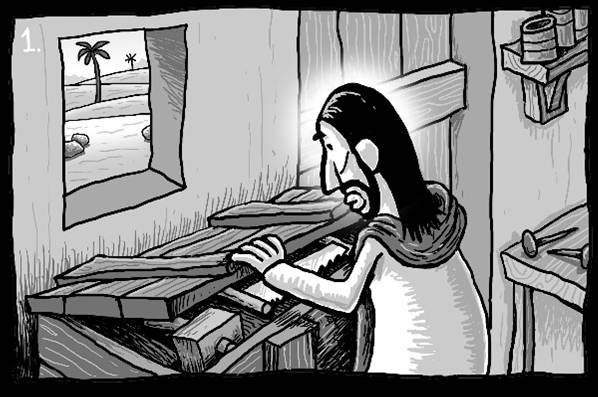
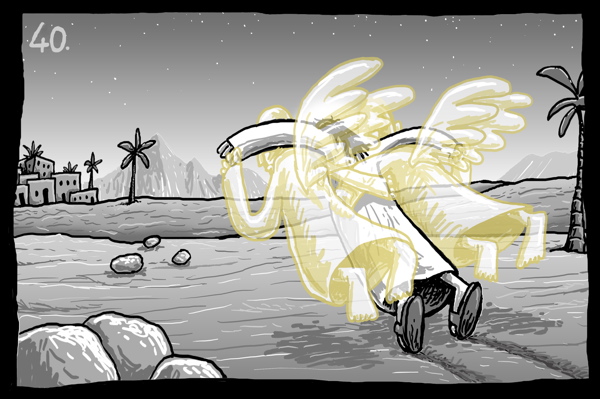
    To mark the Lent journey on this blog, I am going to use a daily excerpt from ’40’- a collection of images by Si Smith and my words- available from Proost as a book, download or movie.

    We in Aoradh have used it several times as a worship installation, but never as a daily Lent meditation.

    I do not usually fast during Lent- observance of such things were not a big part of the Evangelical tradition I grew out of- too ‘Catholic’ probably. But this our family have discussed finding something to forgo as part of our celebration of Lent.

    Emily suggested meat (we are vegetarian)

    William suggested fruit and veg, as this would leave chocolate and chips- and so all the 10 year old food groups are covered.

    I am not sure that they quite get it…

    A Victorian sugar baron and Spurgeon…

    We went to the James Duncan exhibition at Benmore Gardens today.

    Quite a story- which captures the character of Victorian industrial expansion, philanthropy, sponsorship of the arts and the importance of religion.

    Duncan was born in Greenock, to a father wealthy from selling books, but who died young. His son was a bit of a clever lad, who did very well in his studies- particularly chemistry. As a young adult in early Victorian Britain, he had a choice of industries to apply his science within, and chose the sugar industry- one of the engines of prosperity for the West of Scotland. Perhaps even one of the reasons my house was built back in 1840.

    After working for various companies, whilst on a wee trip down Loch Long, Duncan came up with a new way of refining sugar- slow boiling it to produce less waste and a higher quality product. He set up partnerships, factories first in Greenock, then in London- and made a vast fortune.

    But for this Christian tycoon, born into an age of philanthropy, with such wealth came responsibility. Or perhaps guilt. Duncan began to sponsor all sorts of philanthropic schemes- sewer works, slum improvements, hospitals, libraries, churches (interestingly, despite his Free Church background, he supported both Protestant and Catholic church plants. He was reputed to be giving away 20% of his £100,000 annual income.

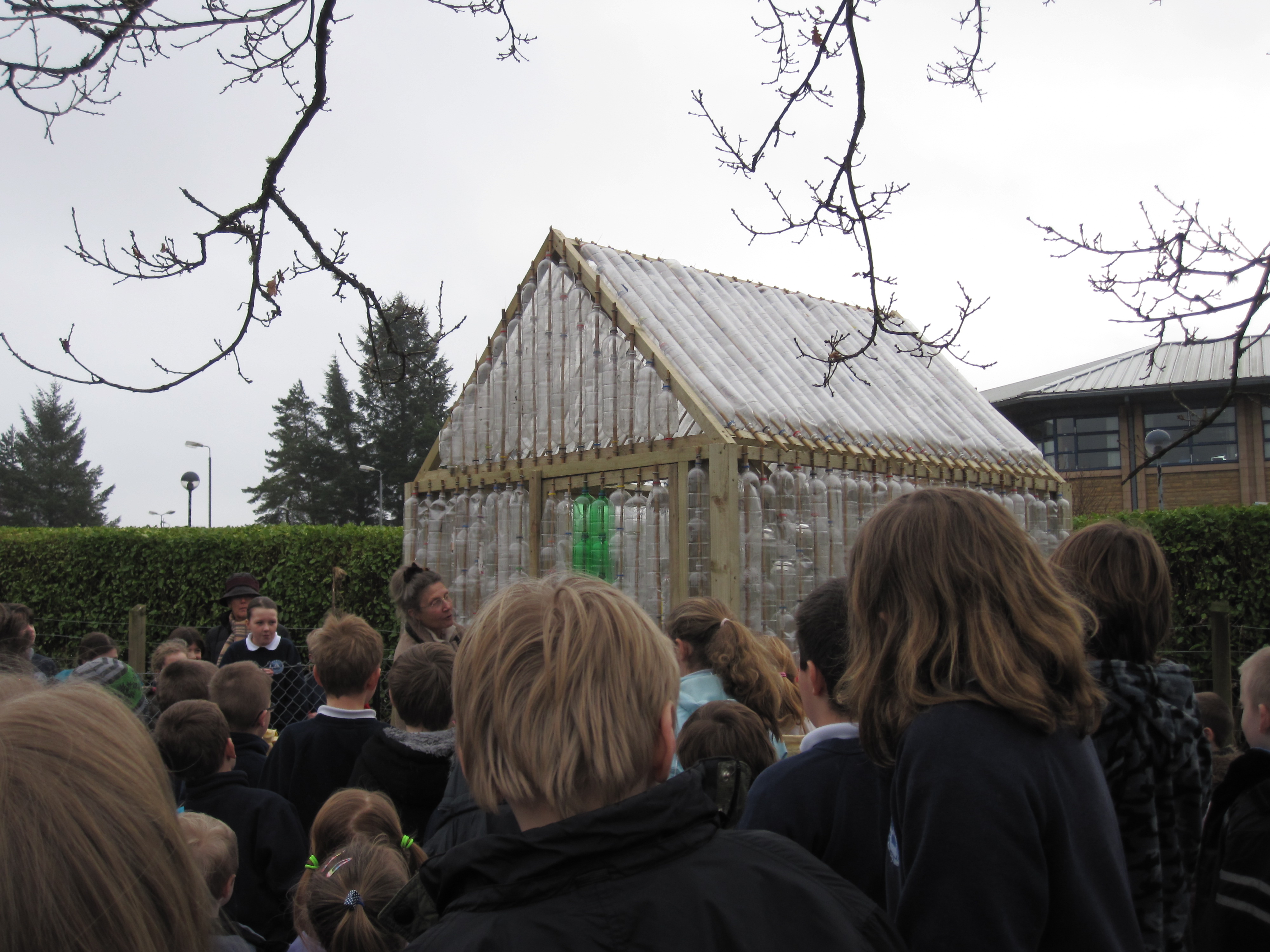
    Around 1870, he bought Benmore Estate, and set about making huge improvements to the landscape. He built the biggest glass houses in the whole of the country, planted millions of trees, and opened his land for vistitors.

    He also began to collect art. He was the first Scottish collector to buy impressionist paintings, and pretty soon, he needed more space to display his collection. He built a massive display hall next to his house at Benmore, and opened it to the public too.

    He lost his fortune as the sugar market was transformed by the lifting of trade barriers, and opening the British Empire to cheap imports. He vanished into relative obscurity, forgotten within his own lifetime.

    The place of my small sleepy town at the heart of the Empire is a surprise.  The morality tale of the rise of huge wealth at the expense of poor people half way across the world, whilst opening up a philanthropic urge to use this wealth responsibly at least in part for the poor people of this country, is also one that seems archetypal of the Victorian age.

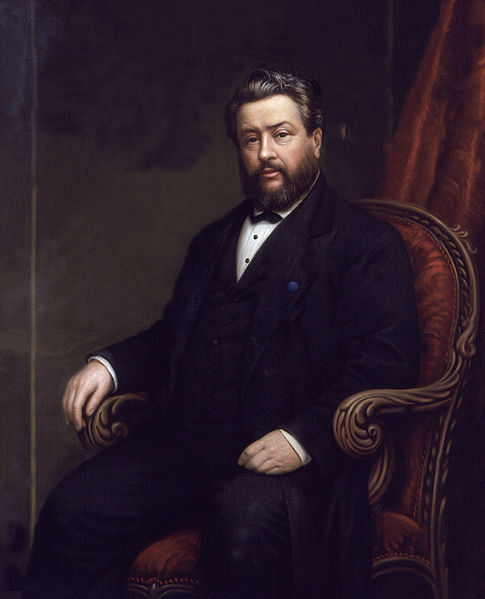
    There is another interesting footnote to this story. Duncan was a close friend of Charles Haddon Spurgeon– hero of the current Evangelical right wing, super-preacher and Pastor of the Christian world’s first mega church, the Metropolitan Tabernacle.

    Spurgeon took holidays at Benmore each year, and regularly preached to thousands of people on the grass of the formal gardens- people who flocked to hear his particular brand of muscular, Bible-first theology.

    Both Spurgeon and Duncan were men of their age- forged out of the fires of the enlightenment during a time when everything seemed certain and the world was ripe for improvement. God may or may not have been an Englishman, but he certainly showed favour on the righteous and industrious men of the British Empire. Or so it seemed.

    The legacy that these men left is far from insignificant. But from our perspective, it is nuanced and shadowed, like a finely carved marble statue, gathering layers of grime and bird droppings, belonging to another age.