The best hope for humanity is that in a thousand years, the ancient forests will have been restored.
The point here, in case it is not obvious, is that it will take at least that long. Forest (as opposed to tree plantations) are diverse, dynamic, self-regulating ecosystems made of up many many networks of interdependence. They are lung, they are larder, they are apothecary and place of our birth and becoming.
Arguably, the human race has spent the span of our existence fighting the forest. First ridding it of fierce creatures, then slashing an burning it in an attempt to tame it, then seeing it as a resource for us to harvest for profit, until almost nothing is left. We are at a turning point where – for the sake of our very existence – we have to have a conversation about forest.
There are signs that even the most conservative of us are starting to realise that we need more trees, but in the rush to plant, often driven by desires to soak up carbon or because of green-washing carbon offset schemes, we easily forget that forest is not just about trees. The trees are merely the canvas on to which forest is painted.
Old-growth forest – or even an old single tree – has a powerful, measurable effect on our human psyche and physiology. Many others regard these as places of deep spiritual renewal. Why is this? What is it about such places that root us, connect us, open us up, hold us?
I have been involved in a number of conversations about forest in the last few weeks and months, and as ever, writing about these conversations helps me process them.
Over the next period, this is going to be my theme.
Cue all sorts of soul searching as to why I do it? Well, no. I still find it useful to write as a means to think, to externalise to ‘park’ ideas that are running through my head. Sometimes this means long posts, which I really don’t expect anyone to read. In fact, I am surprised that anyone one ever reads things I post here.
Some reflection about how social media has changed over the past fifteen years seems appropriate though. When I started, blogs were the thing. Twitter and facebook were in their infancy, yet to blot out longer form on-line discussions. Now, blogs are either dinosaurs like mine, or corporate speak written by Chat GPT (or at least someone who writes like Chat GPT.) Their purpose was mainly to convince Google that static web pages have new content – something which I am sure has been made redundant by a new algorithm or two. If we really want to know anything, we watch videos on Youtube or scan Wikipedia. (Like I said, I am a dinosaur.)
Sporadic content will continue to accumulate here.
Also, I met some lovely people through my blog – my life would be so much less without them so I am grateful still to shelter in this fragile tent…
I am not given to slinging insults on this blog, unless at myself, so forgive the title.
I was thinking about how, in the face of global emergencies, we easily get side-lined on to thinking about one small part of the whole.
Consider the tree planting thing. Trees sequester carbon, so what we need to do is… plant more trees. Any trees, anywhere, even if this creates ecological disaster. Or consider the way that we seek to manage our consumer guilt by buying expensive ‘green’ products that we don’t need.
This post follows on from some earlier posts in the wake of my withdrawal from the Labour party, in response to Kier Starmer’s apparent abandonment of principles that the party was formed uponand his subsequent purge of the left wing of the party.I found myself longing for passion and principles to be at the centre of our politics again rather than the expedient pursuit of power. I also fear that without an ideological anchor, anything goes. In these posts, I have tried to describe what this might look like, if I ruled the world. (Which would be a very bad idea.)
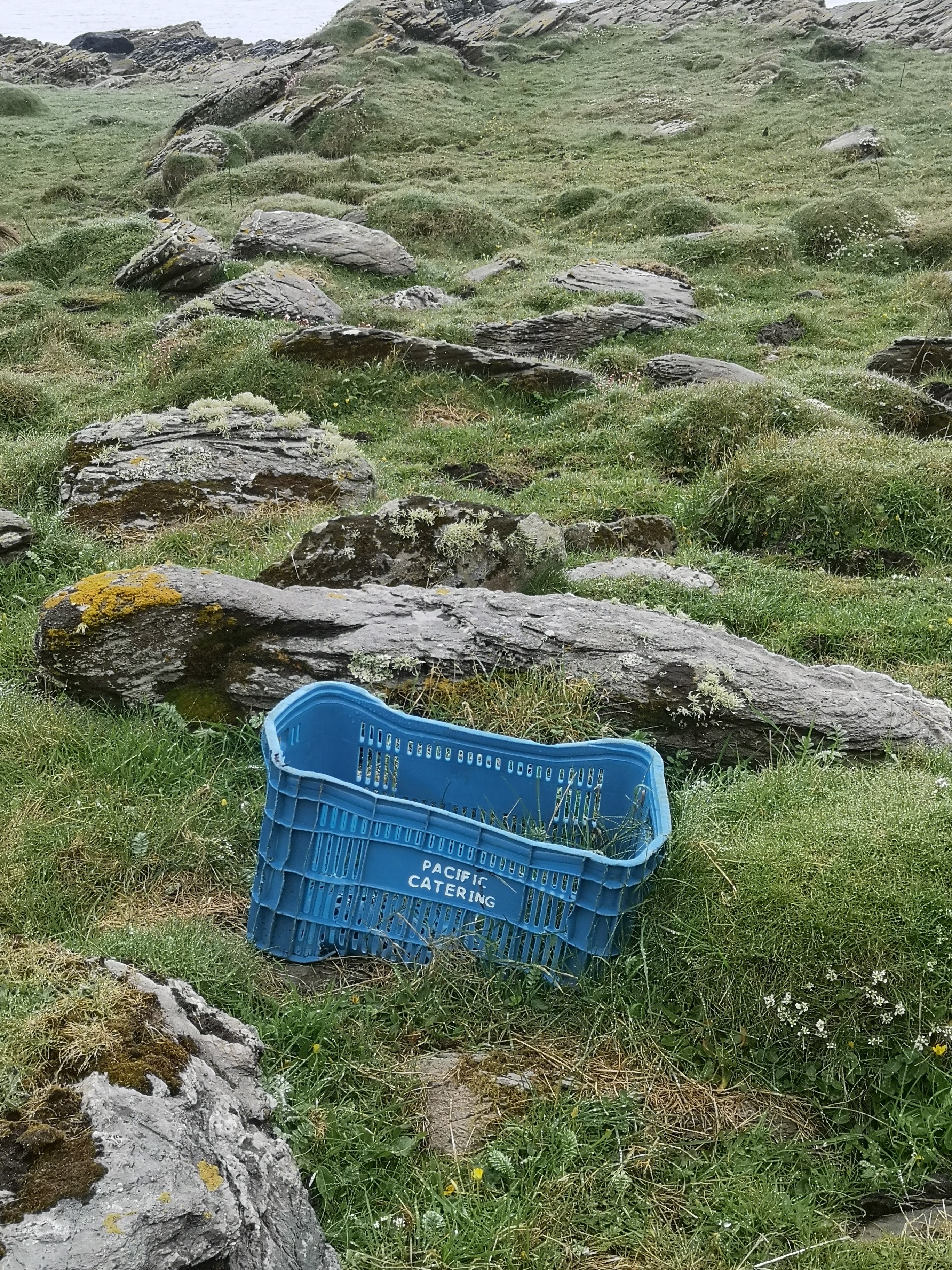
Aparently well-travelled waste on a Scottish island.
Our world desperately needs leaders. This is an obvious statement, but at a time when trust in the political process is rock bottom, and when we have experienced a series of ‘leaders’ who have failed to lead us towards any solution to the major problems facing our planet (climate change and it’s causal twin, rampant and widening inequality), we have to ask how we hold our leaders to account? Against which principles do we measure the policies they champion? How can we see past the distraction (deliberate or accidental) and how can we demand better if we do not know what better looks like?
The old ideologies, no matter how cherished, often feel inadequate. Can we take the best from them and make something genuinely new? There are many who are trying to do just that – with a predictable back-lash from the ‘establishment’. These voices are often forced out on to the margins by the UK political process – our two-party first-post-the-post election system, but consider this small idea from the ‘extremist’ group Extinction rebellion;
Ideas like this are only ‘radical’ if they seem disproportionate, but if we are serious about democracy, then we have to make our politics human-scale. This is not revolution, it is re-orientation, and we have never needed it more.
There is an asusmption here that decisions made by ordinary people would be better, but we have to remember that the messages and cultural cues that we live with are mostly concerned with things staying the same. We can argue over how much this hegemonic hold on our consciouness is deliberately constructed, but I would argue that for anything to change we need moral/spiritual/ethical yardsticks, alongisde working exemplars that make ideas seem more real. In these posts, I am trying to grapple with the yardsticks.
I do so not without considerable bias of course. I am left leaning, so suspicious of big-scale, non-human-level, top-down economic processes. My evolving faith background tells me that people matter, that compassion comes first and that we are here not just to exist, but to do good if we can. I was a social worker for many years, working with broken, marginalised people who were experiencing severe mental health problems and so this skews my focus to those at the margins. I make a living in a very small business, and raise veg to suppliment our small income, so I am convinced we can all live on much less. I live in a former wilderness in which everything is out of balance and diversity declining, so I am concerned about ecology and how we might preserve and restore. All of this makes me convinced that my priorities are the RIGHT ones, that my biases are in the direction of the angels and that my perpective is superior to yours.
It is not.
But then again…
Perhaps we can come to some broad agreement about what we build our future upon. If this is to be ‘owned’ rather than imposed, we have to have a conversation about it all. We might have to start by being clearer about the principles that have guided us in the recent past however, because I do not think we ever had THAT conversation before neoliberalism became so fixed and common-sense-immovable in the mind of our politicians.
We can surely agree that we want to live in a safe, prosperous country, free from oppression, protected from crime, with good education for our children and healthcare available to all who are sick. Despite some shifting of thresholds for these matters and the increasing exclusion of those on the margins, Britain is that country for most. It is still one of the best places to live on the planet. However, this comes at a terrible cost.
In terms of consumption, we use almost 100 times more energy per person than in the poorest countries, and most of this energy is still from non-renewables.
We are one of the least forested countries in Europe and our wildlife diversity is still declining alarmingly. One in seven of our native species faces extinction and more than 40% are reducing in frequency.
Our rich are becoming filthy rich, and our poor are becoming poorer. One in five of our children live in poverty.
On even these narrow parameters, something is wrong with our prosperity. Like our lifestyles, it is not sustainable.
Our politics, with it’s four year cycles and expedient short-termism, seems hellbent on ignoring this simple fact, in constantly kicking the can down the road, with a few nods at action that mostly are not worth a damn. Starmer seems to have deliberately cast himself in the same mould. Once again, there seems no escape.
But there are real alternative models of what a prosperous, fair and sustainable society might look like.
Back in 1973, E F Schumacher published his hugely precient and influential book Small is beautiful in which he described “The Problem of Production”, arguing even back then that the modern economy was unsustainable. Natural resources (like fossil fuels) were being treated as expendable income when in fact they should be treated as capital since they were – and are – very much not renewable, and thus subject to eventual depletion. He further argued that nature’s resistance to pollution is limited as well. He concluded that government effort must be concentrated on sustainable development, because relatively minor improvements, for example, technology transfer to third world countries, will not solve the underlying problem of an unsustainable economy. Schumacher’s philosophy is one of “enoughness”, appreciating both human needs and limitations, and appropriate use of technology His warnings went largely unheeded, so here we are.
More recently, Schmacher’s problem of production has been explored again through the idea of a circular economy, in which old linear inpout-output models are replaced by understanding that what we use up is gone for ever, but what we throw away is with us for ever. This idea has been applied on both a macro and a micro scale, for example in top-down planning in China and at the small company level, were waste products from one company become the raw materials for the next. Welcome as this model is, arguably it appears to be trying to redeem our current economic model whilst retaining most of the industrial processes.
Kate Raworth’s Doughnut economics has pointed us towards a different way to understand what a circular economiy might work by adding two crucial limitations – firstly, that of fair distribution of resources and secondly by adding an environmental limit on what the biosphere can sustain. It is about making our economics human scaled and nature scaled. Raworth argues that we need to be at least agnostic in relation of economic growth, which she sees as a poor measure of a functional economy, particularly when it tends to be the only measure used.
Towards circular connection
What I hope is emerging in this piece is a different way to view our economy. Smaller, more local, with an emphasis on reusing, recycling and repairing.
For example, why is it that all our domestic appliances are thrown away because they are not designed to be repairable? In a circular connected world ALL such machines would have a long life and companies would be expected to provide spare parts and repair instructions.
If we follow the logic, perhaps industrial production should be subject to scrutiny as to their sustainable practice in terms of both input and output, in terms of energy use and down the line waste implications. Taxation should be scaled to enure that less sustainable products pay more. Free market evangelists will bust a gut at the very thought, but although profit as a reasonable reward for innovation is not inconsistent with the model I am proposing, it must be mediated if we are going to stop the headlong slide into destruction we are on now.
Surely, if we have learning anything in the last decades it is that the market does NOT know best. It works always towards a concentration of wealth without responsibility;
What do I mean then by circular connection?
The ‘circular’ bit should be clear enough now. We must start seeing our activities as part of a cycle, not as linear input/output models. This principle can be applied at all levels, from individual families right through to companies to whole countries and then on to international relations.
This is the permaculture principle moved from the margins right to the centre of everything we do. Writer Emma Chapman defines it like this;
“Permaculture, originally ‘Permanent Agriculture’, is often viewed as a set of gardening techniques, but it has in fact developed into a whole design philosophy, and for some people a philosophy for life. Its central theme is the creation of human systems which provide for human needs, but using many natural elements and drawing inspiration from natural ecosystems. Its goals and priorities coincide with what many people see as the core requirements for sustainability.”
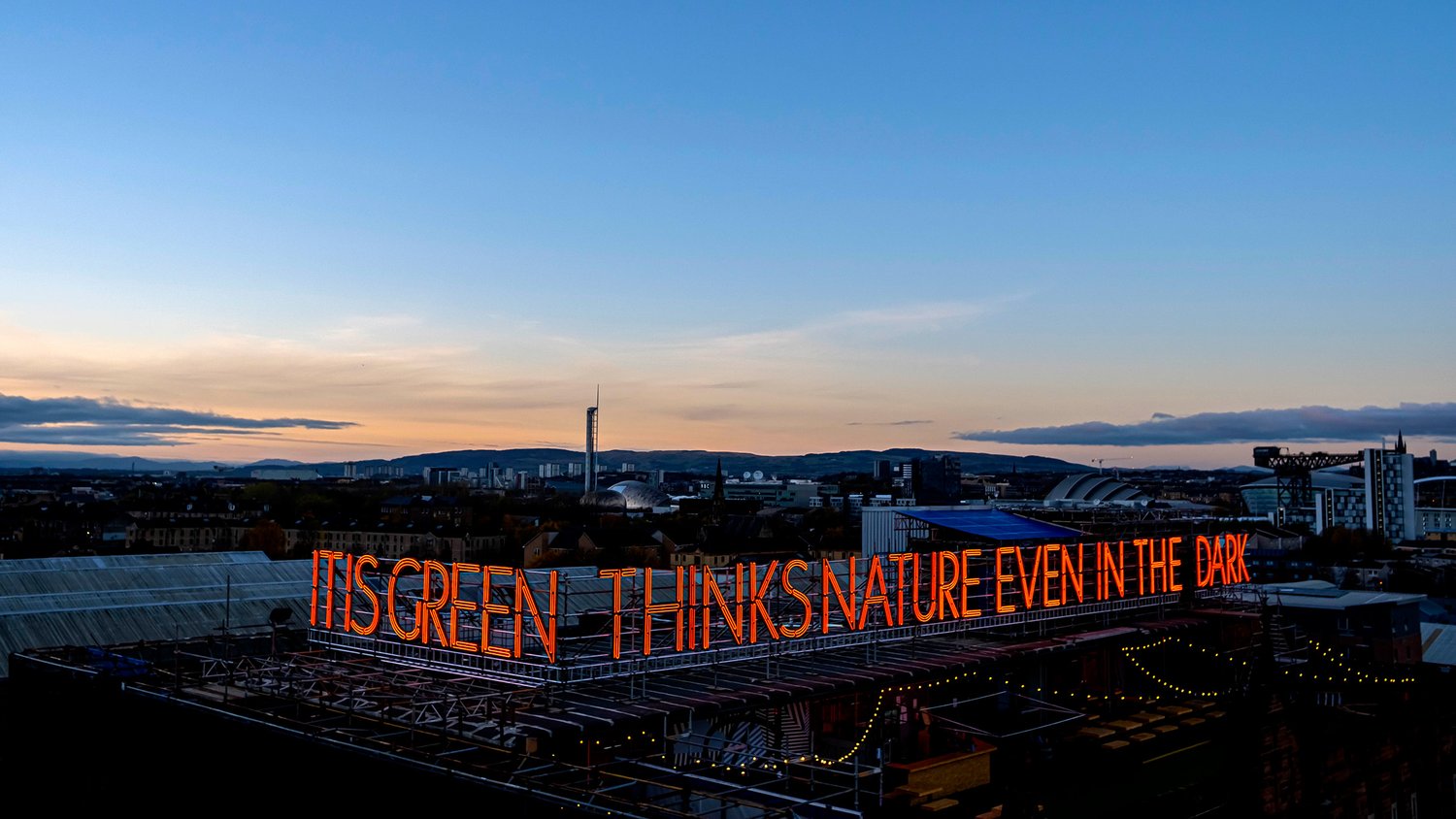
This means that when designing new societal structures/economic processes/government policies/industrial practices/gardens/transport systems etc etc, we have to learn to think like nature, even in the dark.
.
But man (and woman) can not live on bread alone, we are also spirit. We need to feel things before we can fully know them. This is where the ‘connection’ comes in. I will find it much harder to describe this, so perhaps it is best just to do so by sharing this poem.
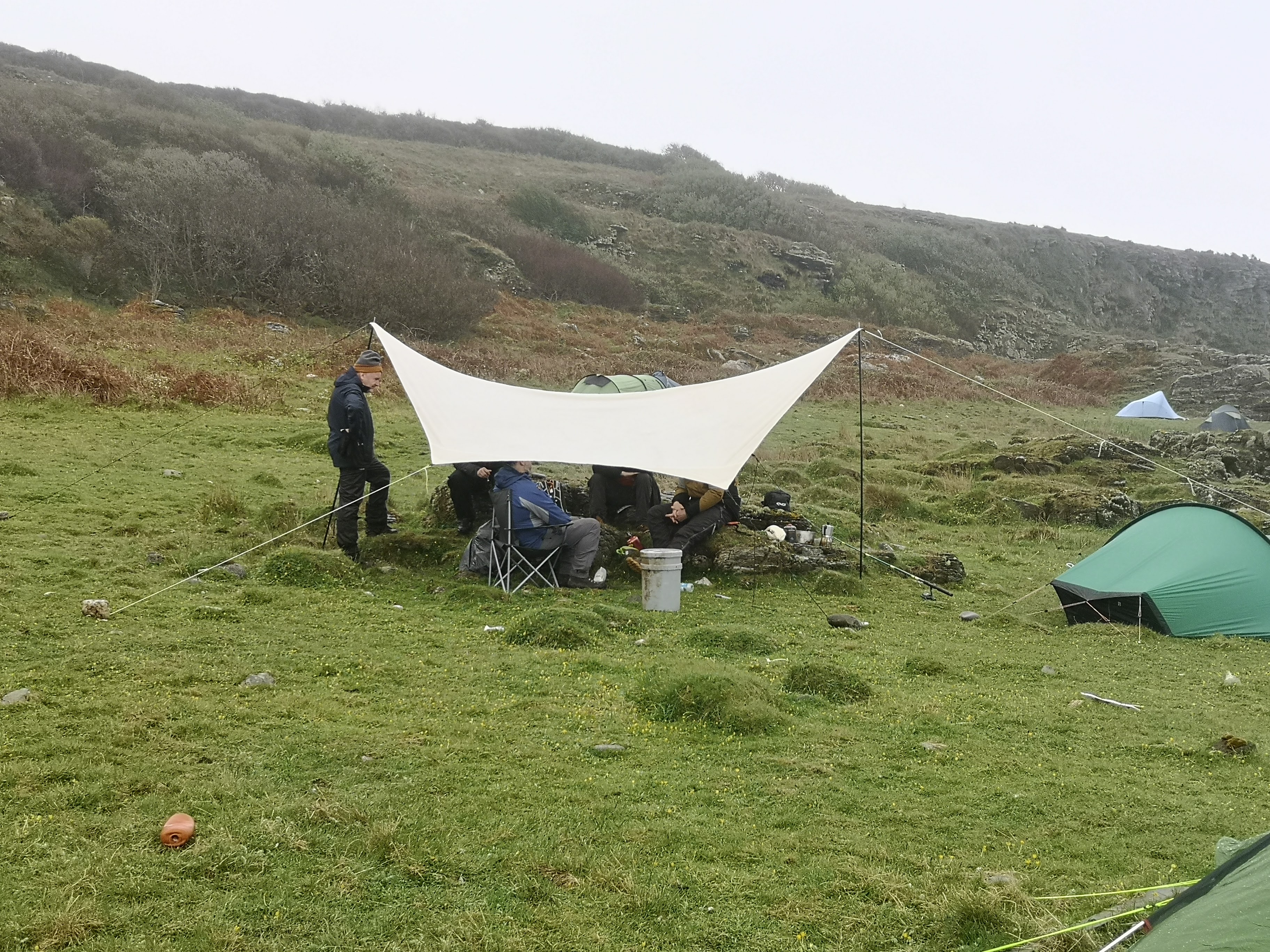
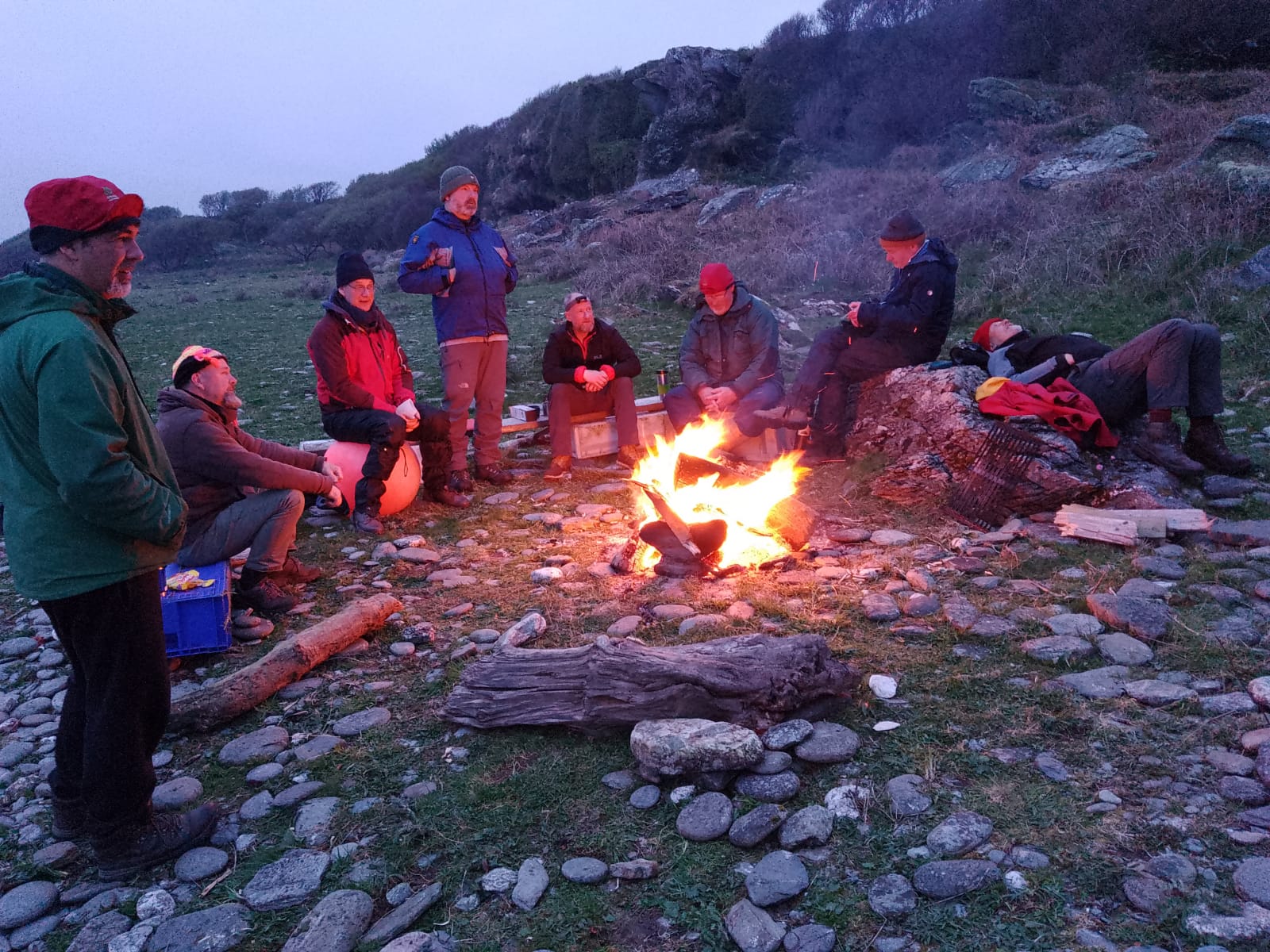
Another spring. It is the time of year that I love most for the great burst of hope and renewal it brings to the land I live and work on, but also to the human spirit. It is also the time when I travel to one of the many small uninhabited islands with a groups of friends to take what we call our ‘wilderness retreat’.
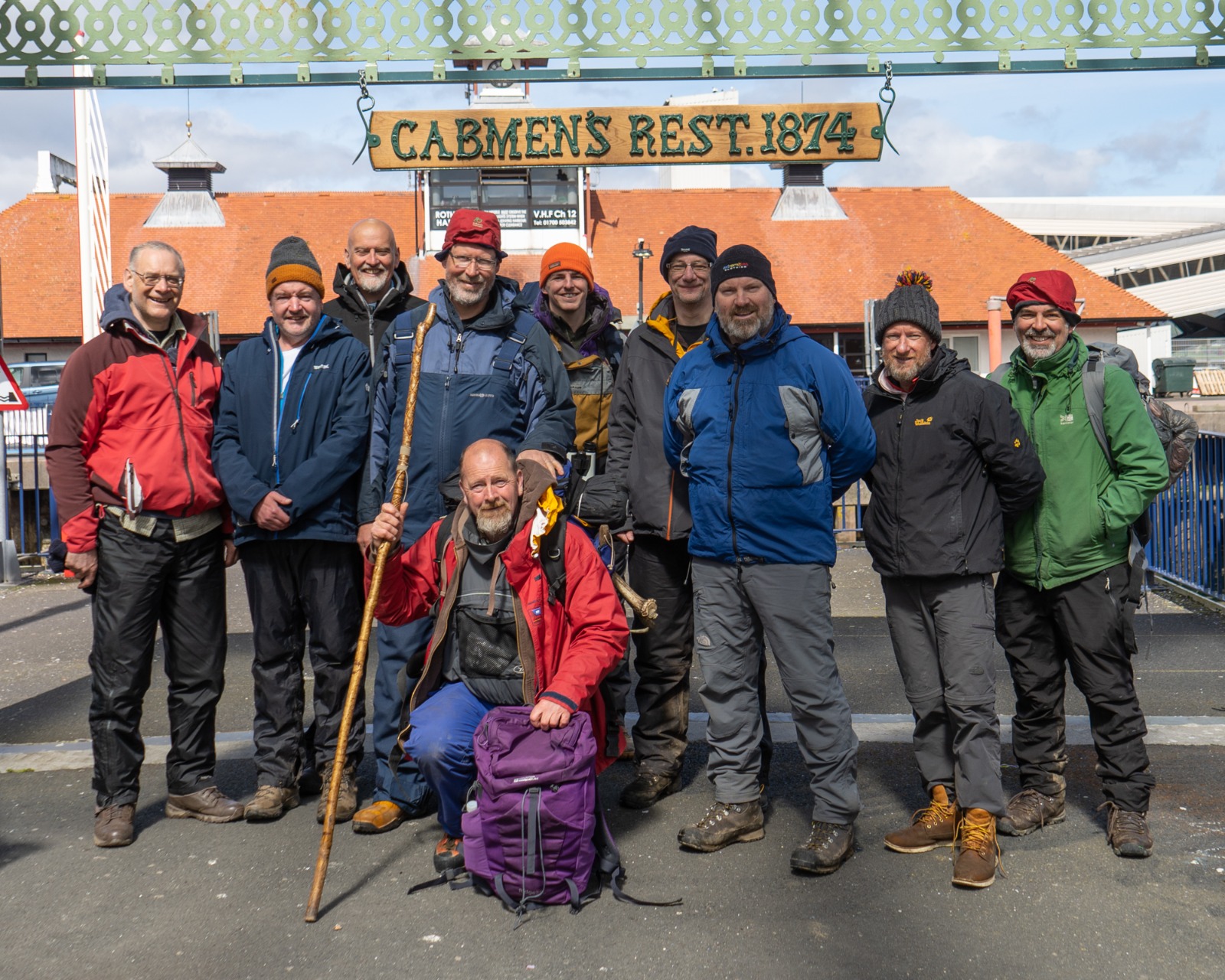
I have lost count of how many times we have done this, and even of the amount of different islands we have visited, but suffice it to say that it has been more than two decades and more than a dozen different islands, each one with different qualities. Along the way, the community of retreatants has expanded to form a body of people – mostly (but not exclusively) men – whose friendship I have come to value deeply. Quite simply, my life would be much less without them, and without the ritual of spending this time in remote places with them.
There is a generosity to these gatherings that I find hard to describe. Beneath the abusive banter, the profanity (often shockingly filthy), the preoccupation with certain bodily functions and the moans and groans from aging bodies something deep and profound happens. People care for one another. They share their food, their tots of whisky, their knowledge of wild animals and their store of stories. Neither does it ever feel like an exclusive group (I hope!) New people – friends of friends or contacts from afar – are welcomed to most of our gatherings. I try to turn no-one away.
In terms of religious allegiance (or not) we are also a fairly diverse group. Some are ministers of religion, others are atheist, or at very best agnostic. Some have firm evangelical certainty, others have travelled far to the fringe. Because of this, the practices we have evolved are never prescriptive. Mostly it is silence, then reflection. The island, the friendship and the shared hardship of rough country does the rest. Most of us can recall moments of deep trancedence, perhaps even leading to radical life change, but mostly the depth and joy is much more ordinary, much more earthy, much more…
There is a simplicity to spirituality mixed from vulnerbility, small community and wild places. Perhaps as get older, the questions that pushed me out of organised religion have rested, unanswered. It is enough to feel love and to let the sound of sea embrace me. I could give you a whole underpinning theology that might try to say why this makes sense, but I will not.
Rather, look at this;
Sometimes our group has been twenty-plus. This year there were ten of us. I missed those who could not come, but community is made with those who are there, and was no less rich for that.
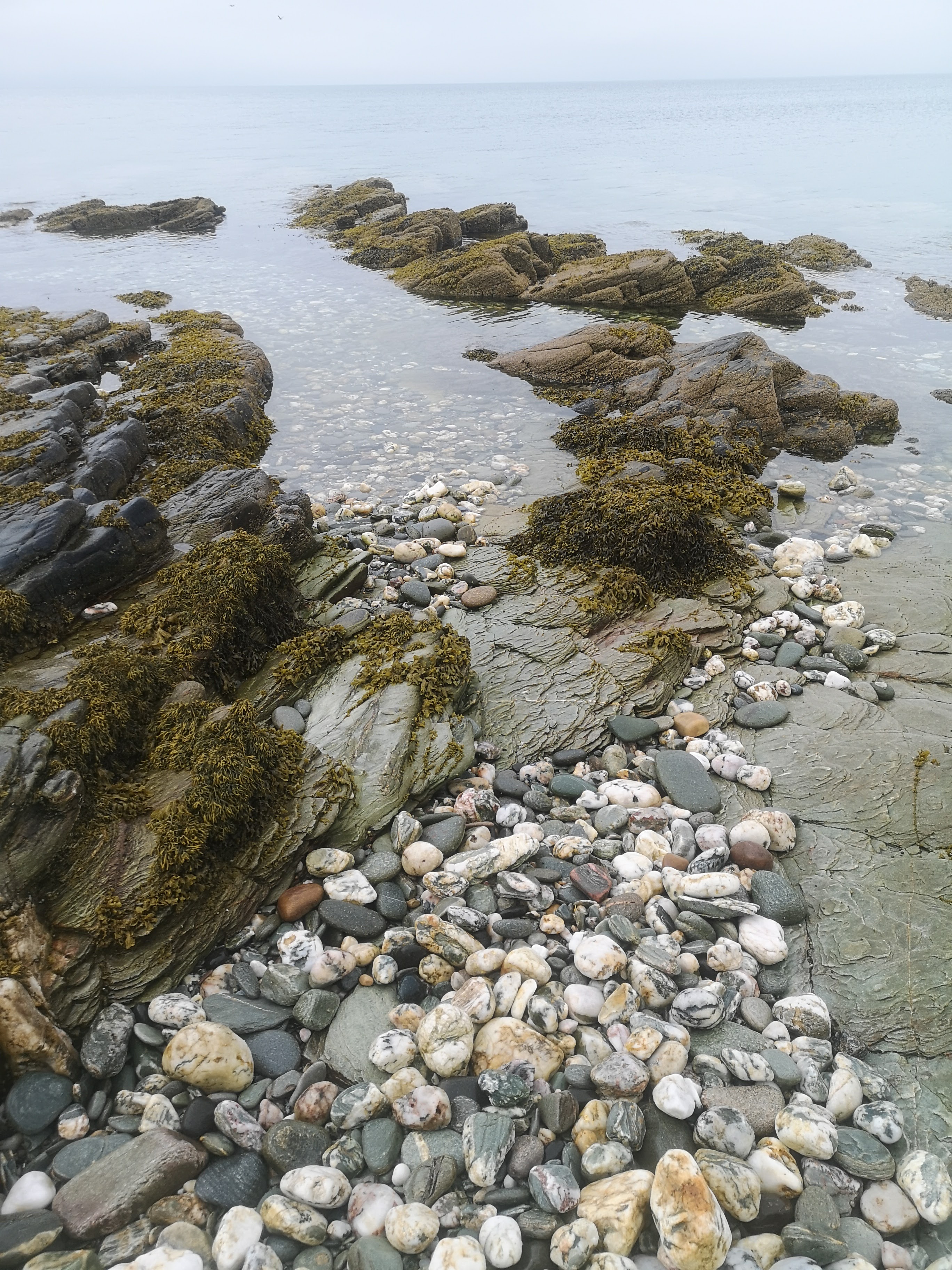
This year’s venue was Inchmarnock, an island I had not visited before because I had rejected it as boring, unglamourous, farmy and flat. I was wrong. It has a different quality to many of the off-shore islands we have been to, perhaps because it feels only recently abandoned, with ruinous farm buildings still containing vestages of the lives they once contained.
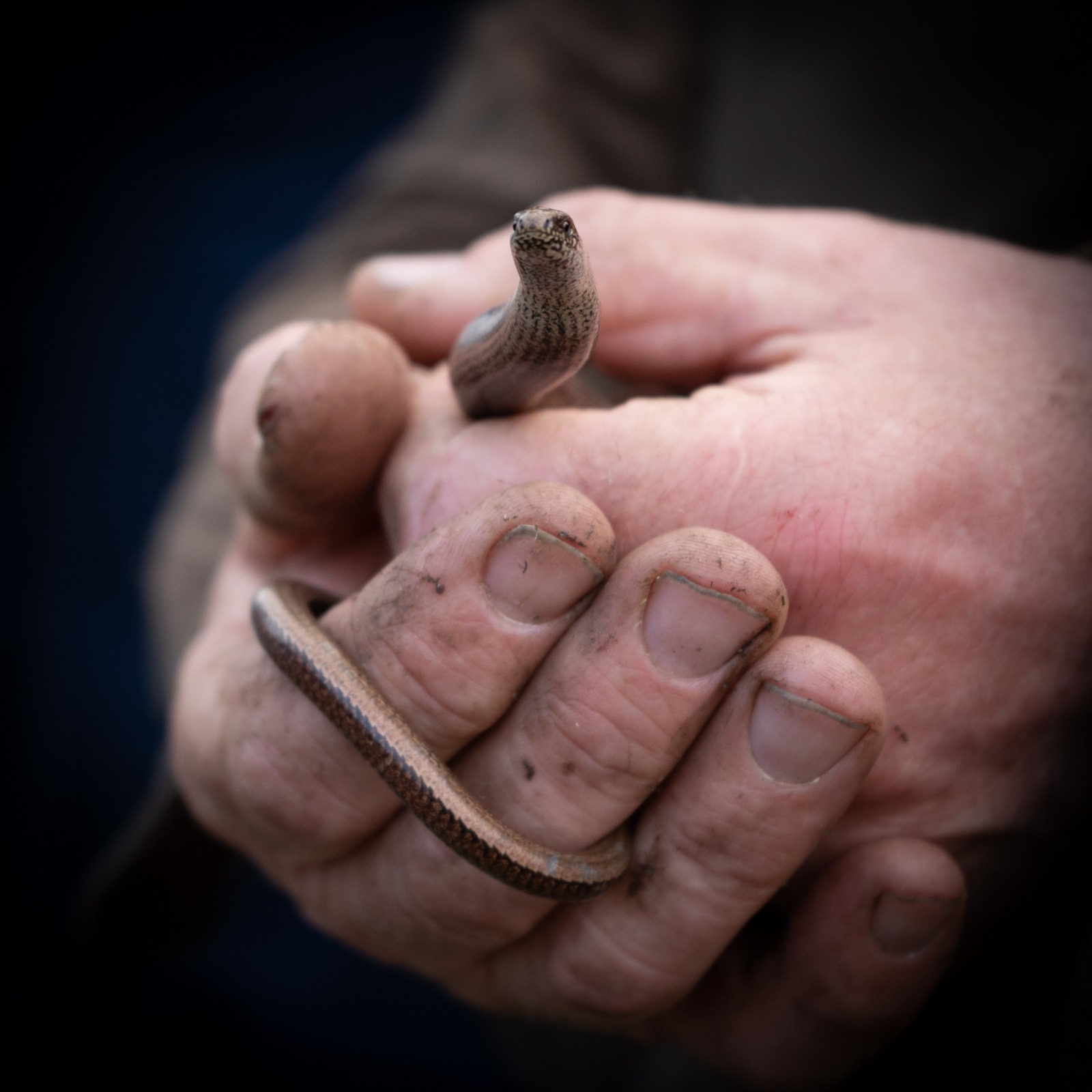
Massive highland cattle still wander freely, but we gave each other a mutually beneficial wide berth. There was plenty of other wild life to excite us though- a massive seal colony, barn owls, peregrines, otters and this little feller;
Photo by Andy Prosser. Slow Worm on Inchmarnock
From the outward boat, the birders amongst us got excited at a bunch of graceful Manx Shearwaters, and we think we might have later given the ornothological world a first, because late on the first night, when it was fully dark, the air was alive with their song as they returned (we think) to breeding burrows on the island – something not otherwise known, and might represent a brand new site where these iconic mysterious birds raise their young.
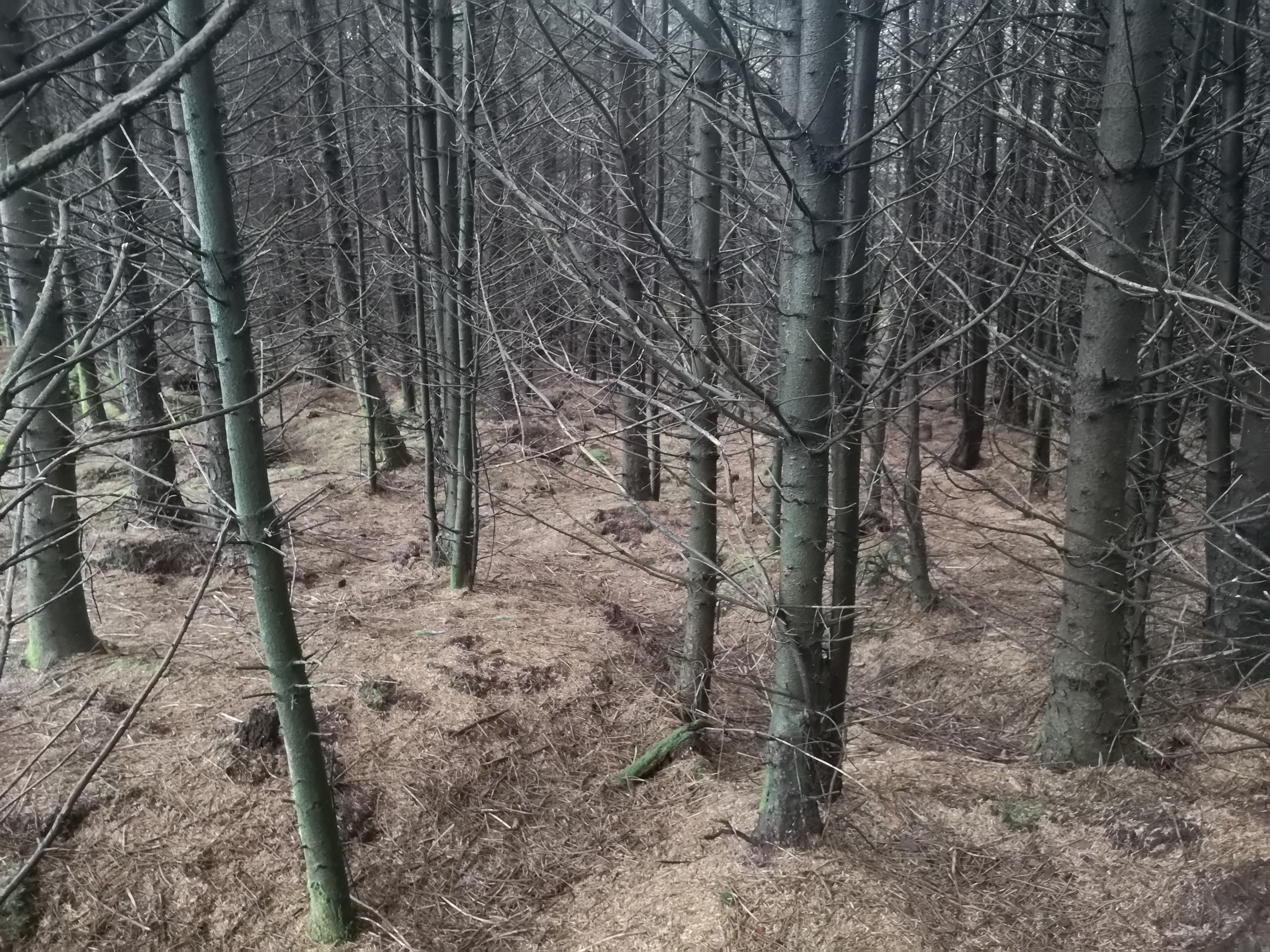
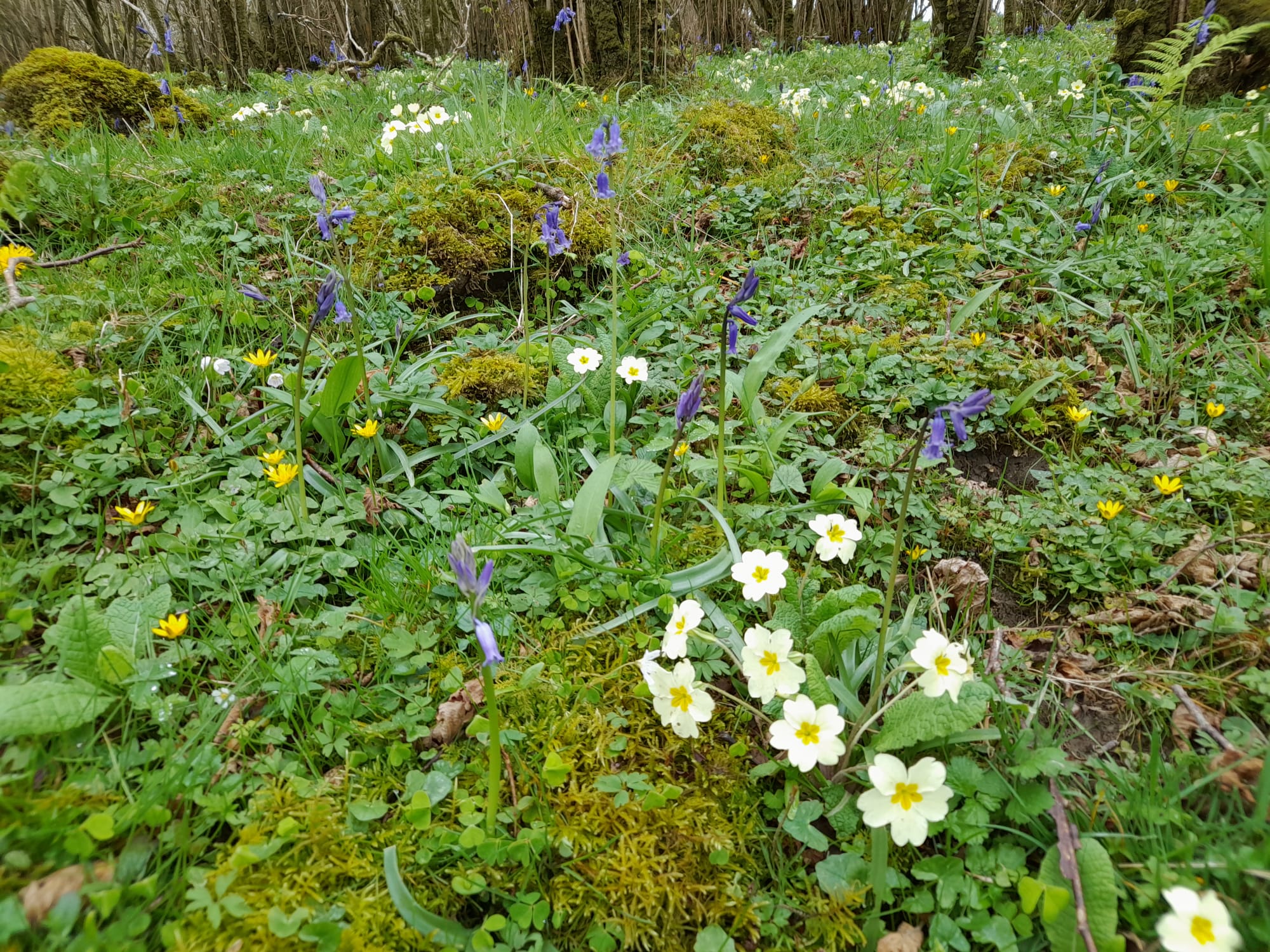
Another difference from many of our previous destinations is that the island is wooded, partly scrub oak, but large parts have previously been managed coppice, presumably for fire wood or fodder for cattle. The coppiced trees have not been cut for a generation, but stand in tall, many-limbed rows, still tended as if with purpose by the roaming cattle, who have made them into glorious labyrinths, down into which the sun filters through the spring tracery of the the hazel and birch to light the floor with carpets of spring flowers. It was like no-where I had been before.
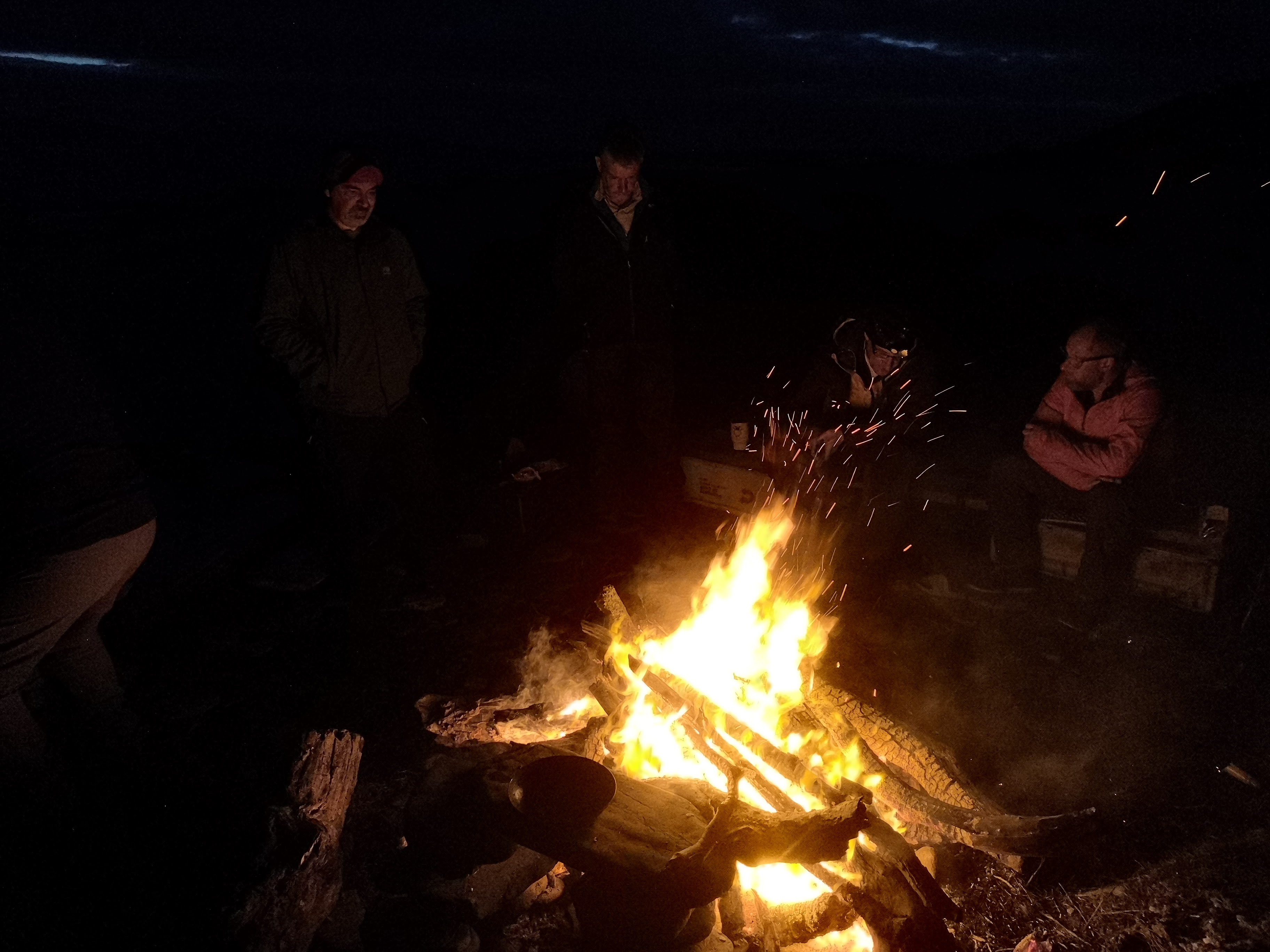
Each evening, over on our sheltered raised beach on the western side of the island, we shared the smoke and the warmth of the fireside. Paul cooked scones in a rock oven. Jokes were passed like hip flasks (which were passed too.)
This is simply the best account of the spirituality of wilderness I have ever read. It journeys from his mothers death bed, via the Californian deserts then back in time to grapple with apophatic tradition of the desert fathers of the 4th C BCE. The ‘stripping away’ that they sought as a spiritual discipline is not for the faint hearted, but Lane in his book describes too how many of us experience this in grief, in brokenness, in loss, as an inevitable part of a long life. This deeply resonated with me, after my own winter reflecting on loss and becoming lost in what was done to the exclusion of anything that might yet be.
Wilderness makes us small. The wild is indifferent to us like the stars and the sea. Before it all we are not just tiny, we are nothing. Despite this sometimes crushing reality, the desert fathers found that when we are almost eroded by harsh winds, so that it strips us of everything that we were, we find something else.
Connection? A realisation that we are part of it all? That we are held in the abyss? Perhaps all of these, but most of all, they found an indescribable love.
St John of the Cross, poet mystic, described the impact of wilderness in this way (forgive my paraphrasing) ;
It thrills us with wild beauty, but this often turns itself back to ‘the self’- we consume it, try to capture it and make it our own. Neverless, something of the divine filters in through nature.
It breaks us down, shows us as vulnerable and alone. It is hard and inifferent. It is dangerous. The divine is found at the end of our comfort, at the end of our coping.
Some places, for reasons we can not easily account for, are holy, sacred, blessed. Perhaps like those ‘thin places’ of the ancient celts, or the burning bushes. What was ordinary becomes mystically laden with the extra-ordinary. Doubt it as you will, but these experiences can be transformative.
On a short trip like ours, we can make no great claims of transformation, but feel a flavour of all three of the above.
It is good to be home, but the island, the friendship, that coppice- these I keep with me.
I don’t think I have shared these short extracts from our recent debut performance of ‘After the apocalypse‘, featuring the magnificence of Yvonne Lyon on keys/vocals along with Emily/vocals on fiddle and Will on guitar/vocals, both of Mactalla fame.
This is the line up we are hoping to take on the road as the year unfolds, but untill we had actually done a live performance, it was a total unknown quantity.
In the end, we booked the lovely Uig Hall and had a fantastic night. If I hoped for anything, it was to curate a happening, in which we collectively found depth and meaning. I think we managed this and more.
Thanks to James for all the techie stuff, and once again to Si Smith for his fantastic images.
(We are still open for venues/hosts by the way- get in touch if this is of interest.)
Great art? The soldier who self sacrifices for his fellow fighters? Grand scientific or techincal achievements? Space travel? Our god-like ability to make machines that think?
Or could it be something called love? Could active acts of compassion at all levels of human society show the very best of what we are?
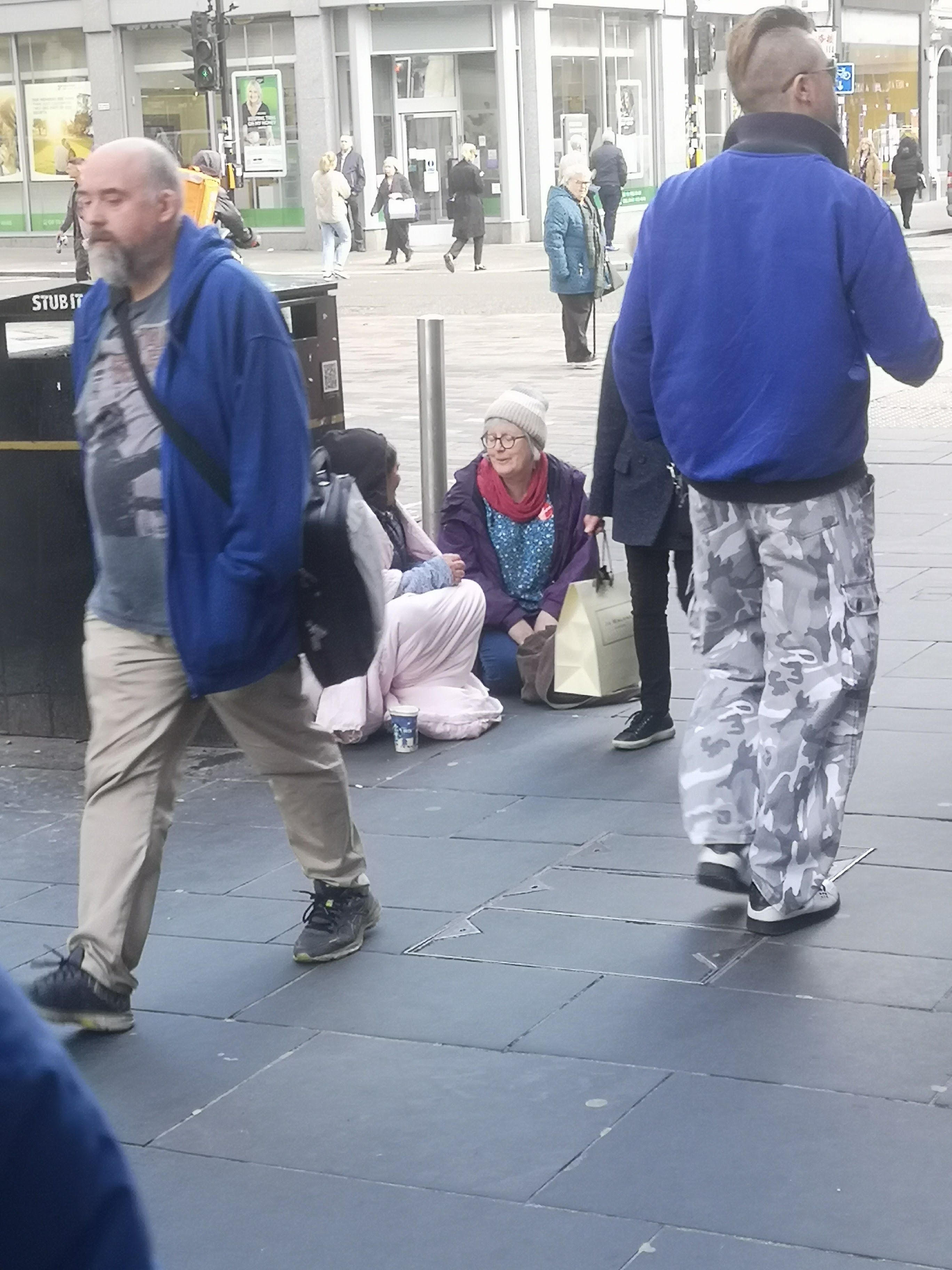
What I mean by ‘all levels’ is important here – from the lovely good neighbour who cared for my aging and difficult mother in her last years, through to the benefits system that fed her and the health care system that treated her. Within all these things we see a skew towards grace and goodness.
From whatever part of the religious/political/social spectrum you come from, I am sure most of you would agree with this, even if followed by a lot of clarification. Perhaps the devil is in the detail?
Or perhaps not. Perhaps it really is as simple as letting compassion come first, then working out the details from there, then looking back at those details through the lens of compassion in order to make sure we got things right. Then repeating this over and over again.
What would a government who tried to do this look like? Would it be totally impractical? What compromises would it have to make? What would it be forced to let go of?
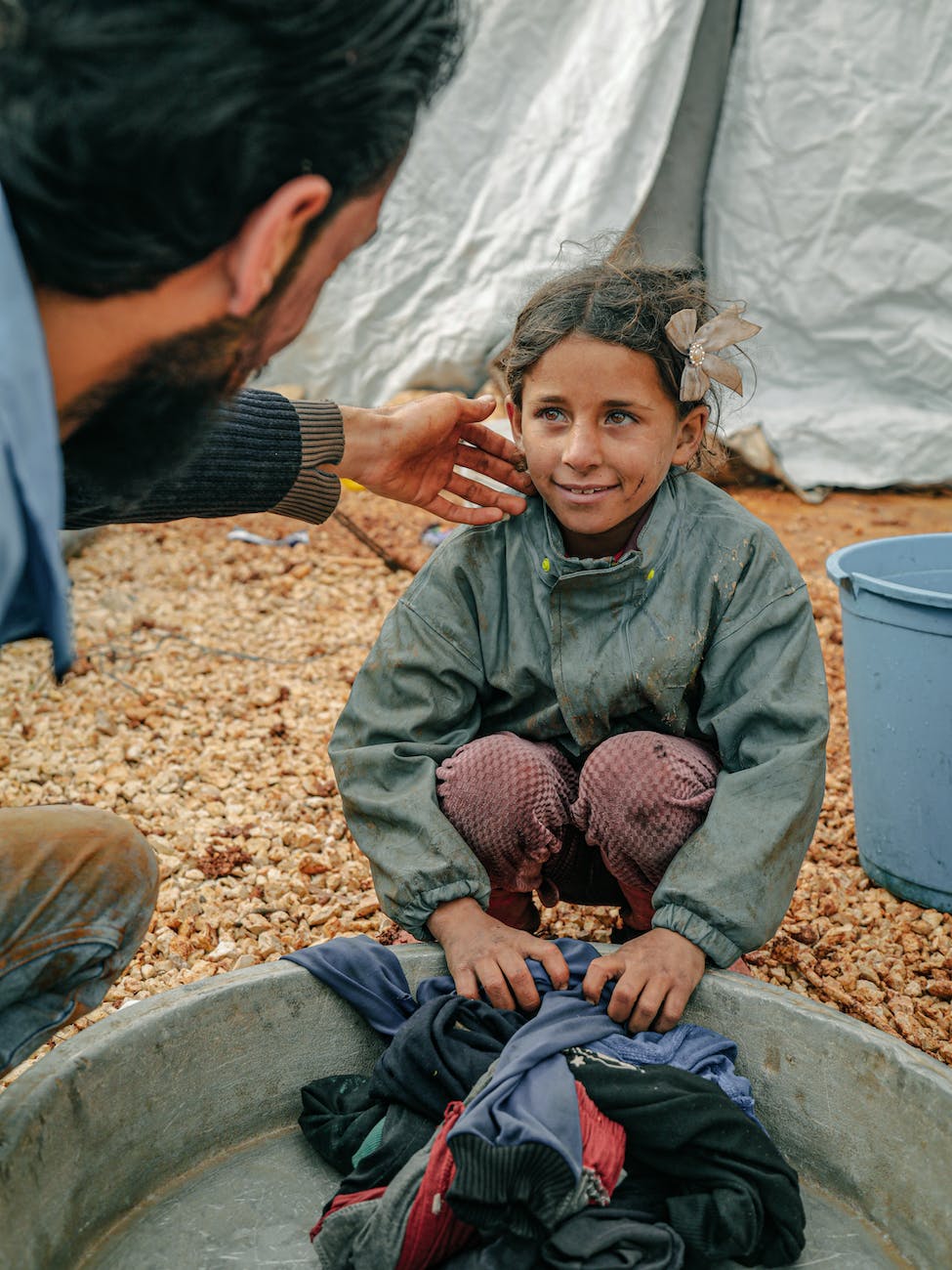
Here in the UK, the news is full of efforts by the governing Conservative party to manage the number of refugees that arrive from Europe in small boats, having made perilous journeys firstly across Europe from the war zones of the middle east and northern Africa, then onto the cold waters of the English Channel, the busiest shipping lane in the world.
What principles should guide our response to the realities of this situation?
I can be pretty categorical in saying that, no matter how hard the government tries to dress their response up as ‘cruelty to be kind’, it does not have compassion as a guiding principle.
I could say so much more about this – the ‘hostile environment’, the slowness of the system, the fear mongering, the constant use of the term ‘illegal’ when all other routes have been closed, the deliberate downgrading of accommodation used to detain people within (because hotels are seen as too cushy), the racism inherent in welcoming white Ukrainians whilst rejecting brown Syrians and Black Eritreans etc. etc.
The point here though is that actions like this are justifiable precisely because other things have been prioritised above compassion.
The narrative then used to describe the ‘migrant crisis’ is then viewed through a different set of principles – ones which serve better to keep those who are comfortable free from and disturbance of that comfort, and ones that make use of the baser human emotions (fear of the outsider, fear of losing what is ‘ours’) to keep or gain political power in a system in which small shifts in public opinion have huge reward for our two main political parties.
Obtaining or keeping power is more important than compassion. Middle class ‘prosperity’ is more important than compassion.
Oddly, we then see a scramble to make this lack of compassion look like… compassion.
Our government has tried to tell us that…
if we do not treat refugees badly, then we will encourage more to come, and this will place vulnerable people at risk
the real issue is the ‘criminal gangs of traffickers’ who are making money from the refugees
they are not real refugees, they are ‘economic migrants’ coming here for a ‘better life’
we can not take everyone- there is not enough room/acommodation/beds in the NHS, therefore we have to have a ‘fair system’ (even when we have anything but)
Our borders have to be secure because of the criminals/rapists/terrorists that otherwise will sneak in through the back door
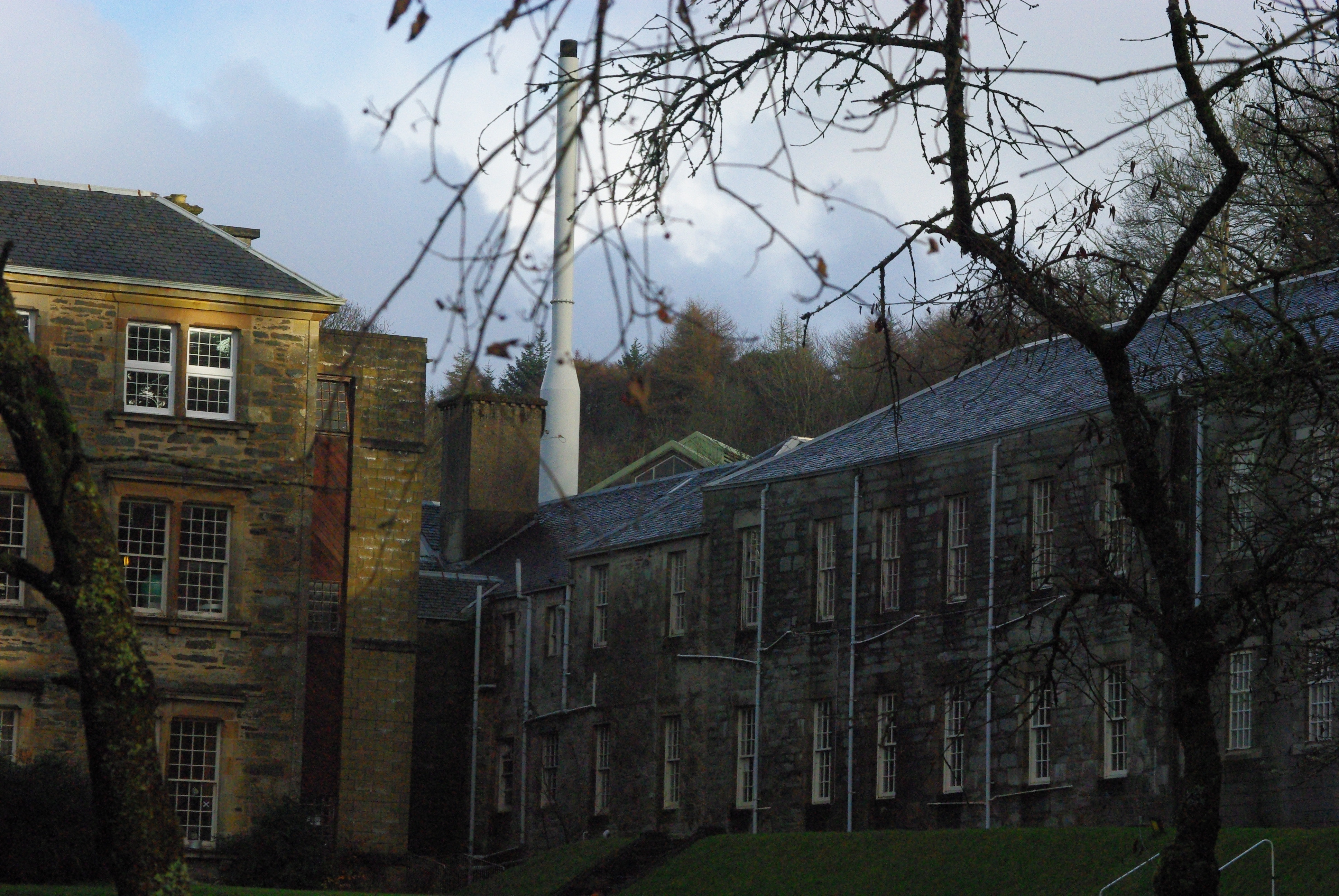
Argyll and Bute Psychiatric hospital, now mostly demolished.
Compassion is never perfect. It will lead us to make all sorts of mistakes. Consider the legacy of the Victorian Asylums, built at least in part with compassion in mind. It turns out that they did so much damage to the human spirit that we had to look back at them with compassion and compassionately replace them with something better. (There is a valid debate as to whether or not we have fully achieved this, but at least we can agree that the Asylums failed!)
As I said, perhaps it is as simple as letting compassion come first, then working out the details from there, then looking back at those details through the lens of compassion in order to make sure we got things right. Then repeating this over and over again.
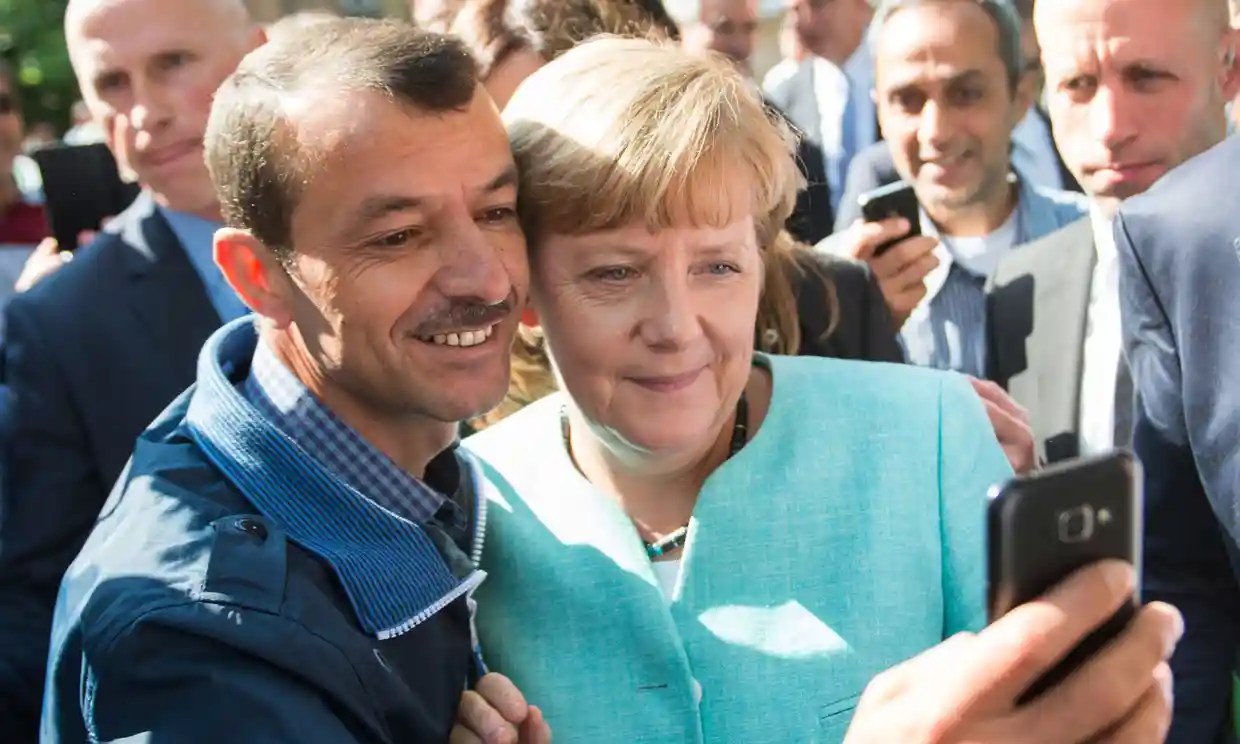
Compassion is also a hard sell. It will almost certainly have require personal and political compromise and sacrifice. It requires bravery – perhaps of the sort that Angela Merkel displayed in the way she led her country towards compassion for the millions of refugees Germany took in during the heights of the Syrian civil war.
Merkel, from a totally different part of the political spectrum that I am most comfortable with, took a huge political gamble because it felt like the right thing to do. I applaud her for it, and I think history will do so to.
Perhaps you may legitimately point of the impracticality of what I am suggesting. Merkel aside, not many people have been able to carry this kind of committment into politics, or rather it does not seem to have survived long within a political context. Merkel spent political capital she had already been able to accumulate. Corbyn was never allowed that opportunity.
You may be right, but I still reserve the right to measure any government (or government in waiting, such as Starmer’s Labour party) against this principle.
How can anyone who has been animated by the stories of Jesus do anything else?
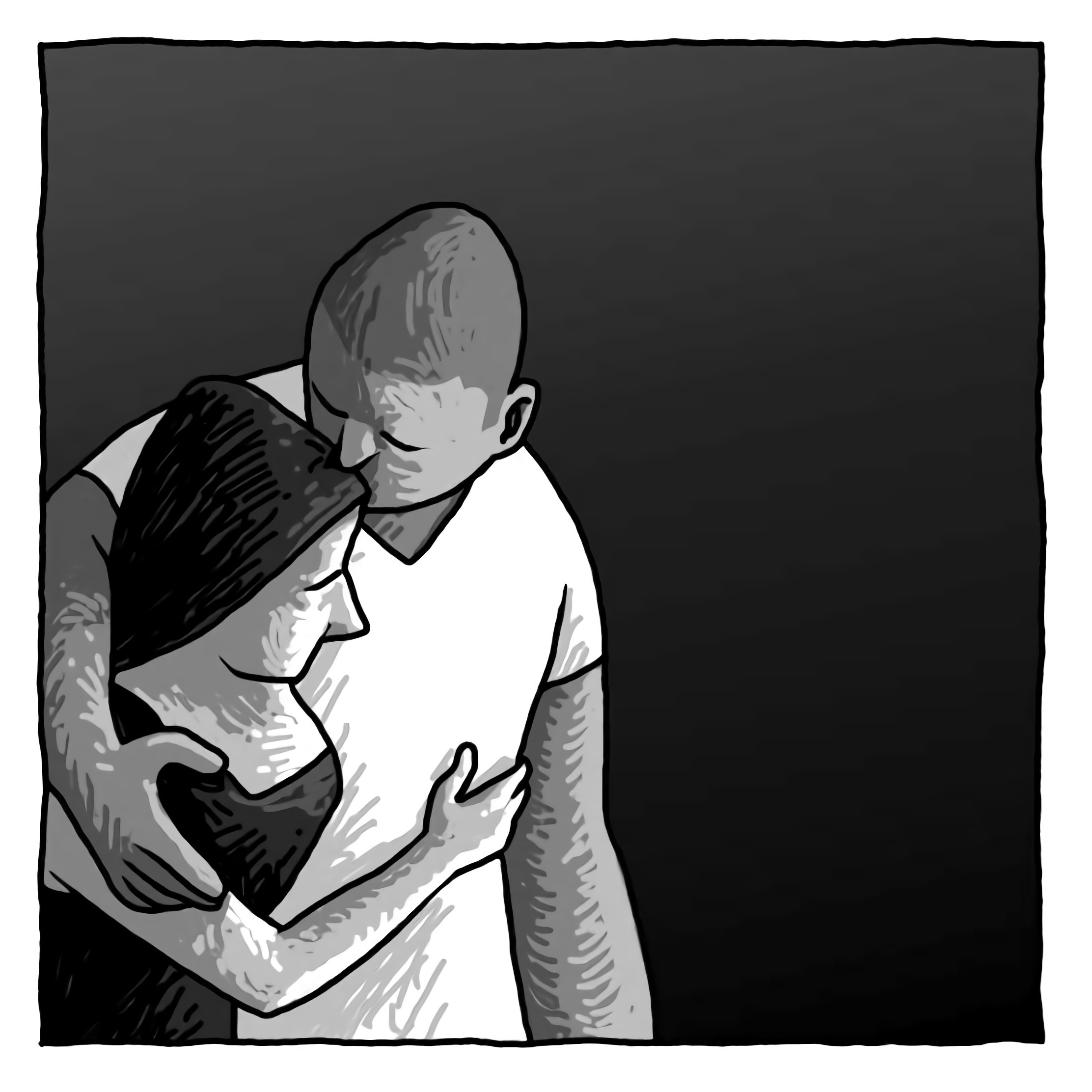
Imgage by Si Smith, from the book After the Apocalypse
Last year we published a collection of poetry called ‘After the Apocalypse’, written before, during and after the pandemic. It was concerned with anger, hope and desire for change in a world shadowed by all the things we know shadow it. (You can get a copy here.)
They are not hidden after all, but because we see them only through the lens of individual consumers, our only response is to hunker down in the deepest bunkers we can dig for ourselves and our small tribes.
I have shared these two poems before, but I share them again because of yesterdays post, dealing as it was with vitalising ideas, in this case, collectivism.
The poems are both constructed from ways of understanding the wild. The dominant one (arising during the enlightenment) views the world as a great big competition, in which we scratch upwards for ascendancy. The ‘good’ here is that only the fittest survive to pass on their victorious DNA to the next generation, who do it all again, and again. Mapped on to a world of individualsm, of personal accummulation and high garden walls this makes perfect sense.
Hermeneutic #1
Do not think
Trust instead in evolution
To shape the world, if not for best
At least for least worst
Do not act
Worlds are not built, they
Emerge through tectonic friction, they
Were abraded by natural forces
Far beyond your control
So do not rescue
Let weakness whither
Set the fittest free to celebrate
Ascendancy
Do not regulate
Let greed sow seeds
Like forest trees, set
Free markets free
However, my contention is that any truth contained in this way of looking at the world (which after all is a total distortion of Darwin’s writing) only reveals itself in geoplogical time, not human time.
It might also be true to say that humans have been so successful precicely because we have learned something we might call intelligent empathy. We learned to co-operate and to appreciate the needs of one another. It turns out that Wiliam Golding got it wrong.
Which brings us to the second analogy (or hermaneutic) which comes to us through an understanding of what is happened in the secret hidden world beneath our feet in that few inches of soil that sustains the whole life of the planet.
Scientists tell us that soil is not what we thought it was. It is not just accumulated inert dirt, it is in fact a living organism.
We are also now beginning to understand how funghal networks work in co-operation with trees, but what we know is already incredible, particularly when set as a contrast to the first hermaneutic above.
Hermeneutic #2
Tree is not tree without forest
Bird is not bird without sky
Man is not man on an island alone
With no fruit there is no fruit fly
Fungus is not just about fungus
It carries the world on its back
It holds under soil the truth of us all
It gives out but also gets back
In places of disconnection
Between the you and the I
May mycelium grow and nutrients flow
Lest all of us wither and die
Simply put, one species depends on another. Or I should say, many others. Here is some of what we know.
In the same way that we need to appreciate and nurture our soil, perhaps we also need to nurture and appreciate our communality, our shared humanity,
What does a society organised on this principle look like? That is the question that constantly nags at me. I call it the voice of the Spirit…





 this fragile tent