A face in the crowd

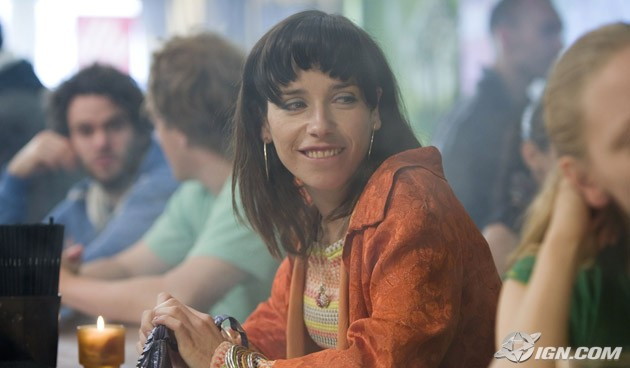
I saw a face in the crowd
It shouted out loud
With a message profound

I tried not to stare
At the wild red hair
Going white at the roots
But my attention was drawn
To a dress that was torn
Above bright red rubber boots

I breathe in the air
That shares the despair
Of a man in black
Who knows what disease
Is pushed out by the sneeze
Of his passing anorak

I see you but our eyes don’t meet
On the bus I wouldn’t share your seat
If you fell down I’d help you to your feet
Then return to my side of the street.

Poverty in the UK- Blog action day

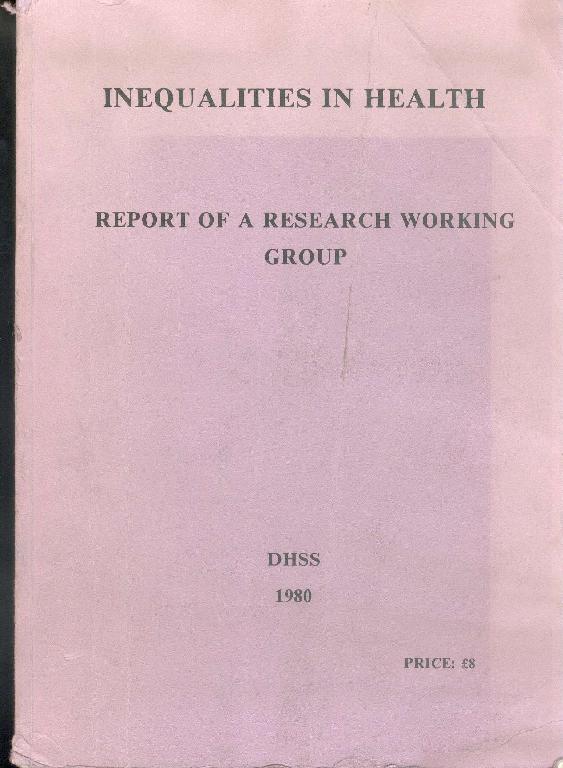
In the dying days of the ill fated Labour government in the late 1970’s, a report was commissioned from Sir Douglas Black into the causes and potential solutions to the inequalities in the health of the people of Britain.

This report, known as the Black report has become infamous amongst political and social scientists.

By the time the report had been completed, Thatcher had been swept into power on a platform of promises to break the power of the Unions, and to cut and control public expenditure. The report must have landed on her desk like an old kipper The Government wanted to bury it, but eventually released it on a bank holiday Monday, with a minimum of publicity. The report was never published- instead 260 photocopies were made available.

What was so controversial?

Black provided convincing figures that showed what many suspected—that the poorest had the highest rates of ill health and death. He argued that these rates could not be explained solely by income, education, mobility, or lifestyle, but were also caused by a lack of a coordinated policy that would ensure uniform delivery of services. He recommended health goals, tax changes, benefit increases, and restrictions on the sale and advertising of tobacco. Patrick Jenkin, the social services secretary, estimated with a shudder that Black’s proposals, which he hinted were little short of outrageous, would cost an unthinkable £2bn a year.

Excerpt from Sir Douglas Black’s obituary in the BMJ- here.

Leaving aside the economic questions raised by the cost of Trident nuclear weapons systems, or a war in the Falklands, the real political dynamite of this report was simply this- poverty makes people ill, and many of them die young.

This report was not talking about people who living marginal existences in sub-Saharan Africa- it was describing families living in one of the richest countries in the world- the worlds first industrialised country- Great Britain.

The Black report was not alone in reaching this conclusion. 28 years later World Health Organisation figures record a gap of 10 years between affluent Kensington and Chelsea, and post industrial Glasgow. Check out this article from the BBC.

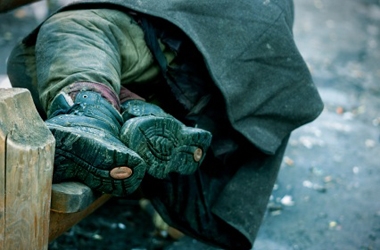
This hides the real issues though- the figures represent areas, not individuals at risk. For example, if you are a homeless rough sleeper, your life expectancy is 42 years.

There have been many discussions about how poverty leads to poor health in Britain. Poor diets, obesity, poor education, poor housing, unequal access to health services, stress- all these no doubt play a part- but the common issue that even the New Labour administration are not happy to dwell on is… poverty.

I do not intend to get into a discussion about how we define poverty- the whole relative or absolute thing. Poverty, once seen, is recognised by most of us. It is easy to blame. It is easy to be repelled and repulsed by squalid living.

Because poverty brutalises.

I have worked as a social worker for all my adult life. I have seen people living in conditions that are hard to believe. A man who lived in a house with a broken overflowing toilet for 15 years. A young woman whose body was broken by drug use and prostitution to the extent that she simply forgot to eat. A woman who was so caught up in her need to escape that she drinks the alcohol based handwashes in the hospital. And many many people who live in fear of a loss of benefit, because life is so marginal- with choices to be made over whether to feed the electricity meter, or the cat, or sometimes- the kids.

These people are not described as poor. We now talk about ‘social exclusion’. Almost as if we stopped inviting them to parties.

There are no easy answers. This, I think, is the reason that Jesus said the the poor would always be with us– and why the early church seemed to have at it’s very heart a desire to serve the poor. Strange then to hear these words of Jesus spoken as justification for inaction.

There are some national policy decisions that will always impact the poor. Progressive taxation, as opposed to the imposition of tax on food or fuel. Public transport, good social housing, employment opportunities and support, adequate benefits- particularly to single parents or vulnerable older people. These things are all good- and we might raise our collective voices in support… but for me there is also a personal dimension.

Because those of us who are paid to try to make a difference soon realise that all we do is administrate. We may have some small success- and this keeps us trying- but ultimately, we bring only sticking plaster to road traffic accidents.

But I believe in redemption and renewal, and lives transformed. And for this to happen- this brings humanity and hope to my own brokenness- and richness to my own poverty. As Jean Vanier put it

Jesus came to bring good news to the poor, not those who serve the poor! … The healing power in us will not come from our capacities and our riches, but in and through our poverty. We are called to discover that God can bring peace, compassion and love through our wounds.

Some more links to poverty issues in the UK

Child poverty

Save the Children

Health inequalities, Scotland

Renovation as a spiritual discipline…

This week I am on annual leave, and am taking the opportunity to do some work on the house.

Our house is old and well lived in so is always in need of renovation and repair. When time, energy and money allows, I will start a project, and work like a slave until it is done. I get stressed as I feel responsible for getting the thing finished.

This time, however, things are different- as I am the understudy to a craftsman.

Michaela’s uncle is up here to upgrade the plumbing.  This involves ripping out a massive inefficient old boiler that is asthmatic and rusty, and virtually rebuilding the boiler room around a sleek and compact new model. We will then rip out the old hot water tank, which is surrounded by a network of pipes- many of which are redundant.

What we will be left with is something that still burns the same gas, but quite a bit less of it, and will provide the house with heat and hot water just like the old one- only it will be reliable, and cleaner.

And after a day testing my bad back carrying huge bits of old plumbing, and sawing and drilling, I am tired, but not stressed. I am working with a man who has been a plumber for 40 plus years. There is next to nothing he does not know about pipes and plungers. And he has pride in a job not just done, but well done.

So, this left me thinking…

We, the church, are in need also of constant renovation. Some (perhaps me sometimes) would even wish to demolish and rebuild. Houses are to be lived in, and as we live in them, they become tired and worn. Plumbing leaks and boilers break down.

Technology brings new innovations- new gadgets and household appliances, new ways of using space, and so the building evolves and changes- or it’s value will plummet, and it might find itself only fit for selling on to property developers, or- dereliction and demolition.

But- people still need a roof- a place of warmth and shelter, where family can be nurtured and loved.

So renovation- which is born of hope, nurtured in vision and achieved through hard work, broken finger nails and skinned knuckles.

And as we renovate- how we need to learn under skilled craftsmen- men who need to prove nothing, and take no personal glory from the acts of resurrection they release. Rather the quiet satisfaction of a life lived well.

The Argyll forest in autumn…

Today we walked into the forest at Glenbranter.

It was a lovely autumn day, with the occasional shower serving to polish up the colours.

The trees have not yet given up the summer- some of them are still green. But others have decided to go out with a blaze of glory.

The forestry commission have worked hard to encourage people into the woods. They maintain footpaths, set up wildlife hides, and put on special events. Today there were exhibitions of birds of prey, films of ospreys and information about the experiment to re-introduce beavers to Knapdale. They have been extinct in Scotland since the 16th century, and the idea of them living in our woods again makes me happy.

So we waked past waterfalls and ate sandwiches watching the red squirrels…

And it was good to be alive.

Winter is coming. Soon the trees will be bare, and the nights cold and long. But this too will pass.

Capitalism, Durkheim and Rev. Billy.

Laurie Taylor on Radio 4 has set me thinking again, on his programme ‘Thinking allowed’- which looks at social scientific research. You can listen again here.

This time, he took me back to my ‘A’ level sociology days, and to the French 19th C philosopher Emile Durkheim, and his great work ‘Suicide’.

Durkheim wrote about a kind of existential crisis that people could experience in a time of economic crisis- when the norms and structures people have been used to living by break down, and people find themselves in a state that he called ‘anomie’.

Durkeim suggested that people need to be part of something bigger- to be integrated and linked, and when this begins to break down, the end result is anomie, which in turn, leads to a time when the anchors and moorings that hold us together are gone.

Durkheim thought that this was one of the three main reasons why people committed suicide- a breakdown of what made them human, and held them in community.

He suggested that the way to overcome this was through ‘moral education’, or ‘moral regulation’- and these things would be managed through the function of the institutions of society.

So, how does this relate to the current economic crisis?

Taylor made these fascinating comments. He sited a review of 2300 major research papers- looking at business research and training. The study concluded that the focus had been almost exclusively on minor techincal problems to do with the operation of markets, rather than the larger political and ethical considerations. Here is a quote from the researcher;

‘We have failed to teach our students the kind of social conscience and ethics and concern for the world and the environment and the poor that might have had an effect on the selfish exuberance of the finance markets’ Dr Harni.

I have heard a lot of economic ‘experts’ being interviewed giving opinion an comments as the economic crisis unfolds. They are often made to look fools by the events of the next day. It has often occurred to me that these are the same movers and shakers who moved and shook us into the current predicament, now being wise after the event…

But even from them, you hear some talk of ethics, and regulation. REGULATION- in the free market?

Almost like Dr Frankenstein wanting to cage the beast.

So is it too late? Will anomie, or whatever, result in a change to the way that we are? It remains to be seen. But the system we have in not sustainable.

Check this out, it made me smile.

This is cool- Kiva microfinance website

Check this out.

It is a site that allows you to make small loans directly to small businesses in parts of the world where, credit crunch or not, people would not get the money elsewhere.

My friend Pauline suggested that our group get involved.

This is a message that I was asked to send on to others- I would not send this via e-mail, but will post it here

Hi!

I just made a loan to someone in the developing world using a revolutionary new website called Kiva (www.kiva.org).

You can go to Kiva’s website and lend to someone in the developing world who needs a loan for their business – like raising goats, selling vegetables at market or making bricks. Each loan has a picture of the entrepreneur, a description of their business and how they plan to use the loan so you know exactly how your money is being spent – and you get updates letting you know how the entrepreneur is going.

The best part is, when the entrepreneur pays back their loan you get your money back – and Kiva’s loans are managed by microfinance institutions on the ground who have a lot of experience doing this, so you can trust that your money is being handled responsibly.

I just made a loan to an entrepreneur named Leonia Benitez in Dominican Republic. They still need another $400.00 to complete their loan request of $3,150.00 (you can loan as little as $25.00!). Help me get this entrepreneur off the ground by clicking on the link below to make a loan to Leonia Benitez too:

http://www.kiva.org/app.php?page=businesses&action=about&id=66911

It’s finally easy to actually do something about poverty – using Kiva I know exactly who my money is loaned to and what they’re using it for. And most of all, I know that I’m helping them build a
sustainable business that will provide income to feed, clothe, house and educate their family long after my loan is paid back.

Join me in changing the world – one loan at a time.

Thanks!

What others are saying about www.Kiva.org:

‘Revolutionising how donors and lenders in the US are connecting with small entrepreneurs in developing countries.’
— BBC

‘If you’ve got 25 bucks, a PC and a PayPal account, you’ve now got the wherewithal to be an international financier.’
— CNN Money

‘Smaller investors can make loans of as little as $25 to specific individual entrepreneurs through a service launched last fall by Kiva.org.’
— The Wall Street Journal

‘An inexpensive feel-good investment opportunity…All loaned funds go directly to the applicants, and most loans are repaid in full.’
— Entrepreneur Magazine

Blogged with the Flock Browser

Derek Webb and hope for the New World

I have been listening to Derek Webb’s album ‘Mockingbird’ today in the car, at high volume.

It gave me some hope for the world, that an American can write words like this;

Who is your brother?  Who is your sister?
You just walked past him. I think you missed her,
As we’re all migrating to a place where our father lives
Because we married into a family of emigrants.

So my first allegiance is not to a flag, a country, or a man
My first allegiance is not to democracy or blood.
It’s to a king and kingdom.

There are two great lies that I’ve heard.
The day you eat of the fruit of that tree, you will not surely die.
And that Jesus Christ was a white middle class republican
And if you want to be saved you have to learn to be like him.

So my first allegiance is not to a flag, a country, or to a man.
My first allegiance is not to democracy or blood
It’s to a king and a kingdom.

But nothing unifies like a common enemy
And we’ve got one, sure as hell.
He may be living in your house.
He may be raising up your kids.
He may be sleeping with your wife.
He may not look like you think.

Derek Webb, ‘King and a Kingdom” from the Mockingbird album.

Here is another song from the album…

Gods great big hoover. Or the last noo noo.

When I was but a lad, growing up in Nottinghamshire, I watched this film…

We attended a local Anglican church, and things started swinging with a bit of Holy Spirit revival. We sang choruses rather than hymns, I learnt to play the guitar, we had healing services and people ‘spoke in tongues’. All in a C-of-E church in small town Kirkby-in-Ashfield.

And there are memories that I cherish.

And some that I do not. Some still make me twist inside with that old faithful adolescent companion- pervasive raging cringing embarrassment.

Some of the memories that I shelved as just plain dysfunctional I have in recent times reached down, dusted off, and managed to look at through the eyes of the 41 year old man that now I am. And some of it, I can now even laugh at.

One of these things is the aforementioned film.

You see, there was a lot of fuss about the ‘end times’ in the 1970’s and 80’s. I suppose there always is a section of people somewhere in every generation, in some part of the planet, who are proclaiming the imminent return of Jesus, and the time of judgment and tribulation.

So in our church- the chick cartoons were circulating. If you have never had the pleasure- check them out here– you can still buy them. There was one spelling out the ‘truth’ about the second coming, along with rapture, tribulation, and most memorably, the lake of fire in which sinners (like I surely was- I was a teenage boy after all) would burn for eternity. Here is a sample;

There was also Chuck Smith, who I believe still is a big cheese in Evangelical circles, who told the world that Jesus was coming again in, I think, 1980. Jesus did not, but Chuck seems to have been able to recalibrate. We watched a film that came from Calvary Chapel in those days all about the end times, and the signs of the coming age that could be seen in the world around us- particularly in the re-birth of the Jewish nation. Compelling stuff- most of which was nonsense, and this is not the film that I am talking about.

We were also taken to see a film in a church hall. Where this was, I have no idea- because I remember having to travel in the church mini-bus to get there.

And this too gave me nightmares.

The film began with a song by the late great Larry Norman. Should have got him to sing it…

…and then the terrifying story unfolded. All ‘biblical’ and straight from the pages of the book of Revelation, or so we were told.

A woman wakes up, and her husband has gone. Rapturously raised up to heaven by (as my friend Janet described it) God’s Dyson.

And so came the rise of the beast, and the time of tribulation. All in cheesecloth.

Quite why people thought this was good material for kids, I have no idea.

There are still many who would use versions of this story to frighten people into the pews. Babylon is built anew each time they do, say I.