The cartography of competition…

A little while ago, I met someone for the first time, and took a dislike to him.

It did not really matter- we are not likely to have a lot to do with one another. But it troubled me as it was quite a strong reaction.

I bolstered myself with an examination of his faults. He liked to talk- all the stuff he had done, how good he was at things. I followed standard meet-new-person procedure, and asked him lots of open leading questions about himself and his stuff, but after a while I stopped as he did not really need the encouragement. He asked nothing about me at all.

After an hour or so of this- I was annoyed, and… strangely depressed.

Of course things are never one dimensional where human interaction is concerned. This man had been through a tough time and was rebuilding his life. He was also someone who had gifts in similar areas to my own, and the talent comparisons were inevitable- given the fragile self-esteem issues we artistic types tend to suffer beneath.

There was a whiff testosterone-competition in the air, and I did not like it, or what it did to me. It had no place in my idealised understanding of the elevation that art brings to the soul.

Not to mention the Jesus way of being that I set myself stumblingly towards…

But there is was.

In dysfunctional style I chewed on it all. And wrote the poem below.

We meet and move about one another
Probing, exploring borders
Negotiating
Presenting our petition
And revealing this badge of office-
Sewn on sleeves whilst our hearts stay hidden
Revealing carefully edited glimpses
Of whom we want to be
But are not yet.

Then begins the measuring
Of the size of armies
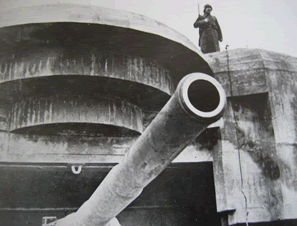
The bore of canon
And the reach of your rockets
As we carefully deploy our camouflaged troops
To occupy the high ground
To hide uncertainty behind
A cloak of accomplishment
And capability.

Sometimes it seems that who I am is only revealed
In understanding what you are not
In seeing you
And finding you wanting
In mapping out your strongholds
And avoiding them
And raising up my tattered flag
Above this uncomfortable alliance.

The last great liner leaves the Clyde…

I kind of knew that something was happening today out on the Clyde.

It was a beautiful day- one of those soft sunny October days when summer kind of forgets her wrinkles and hitches the tweed skirts and goes for a paddle. And the water was full of boats and sails. Naval vessels like great grey sleek speed boats, tugs pushing a bow wave way above their station and countless craft whose size was proportionate to the wallets of their proud owners.

But there was a kind of hummm to the day that was more than the sum of the distant outboard motors.

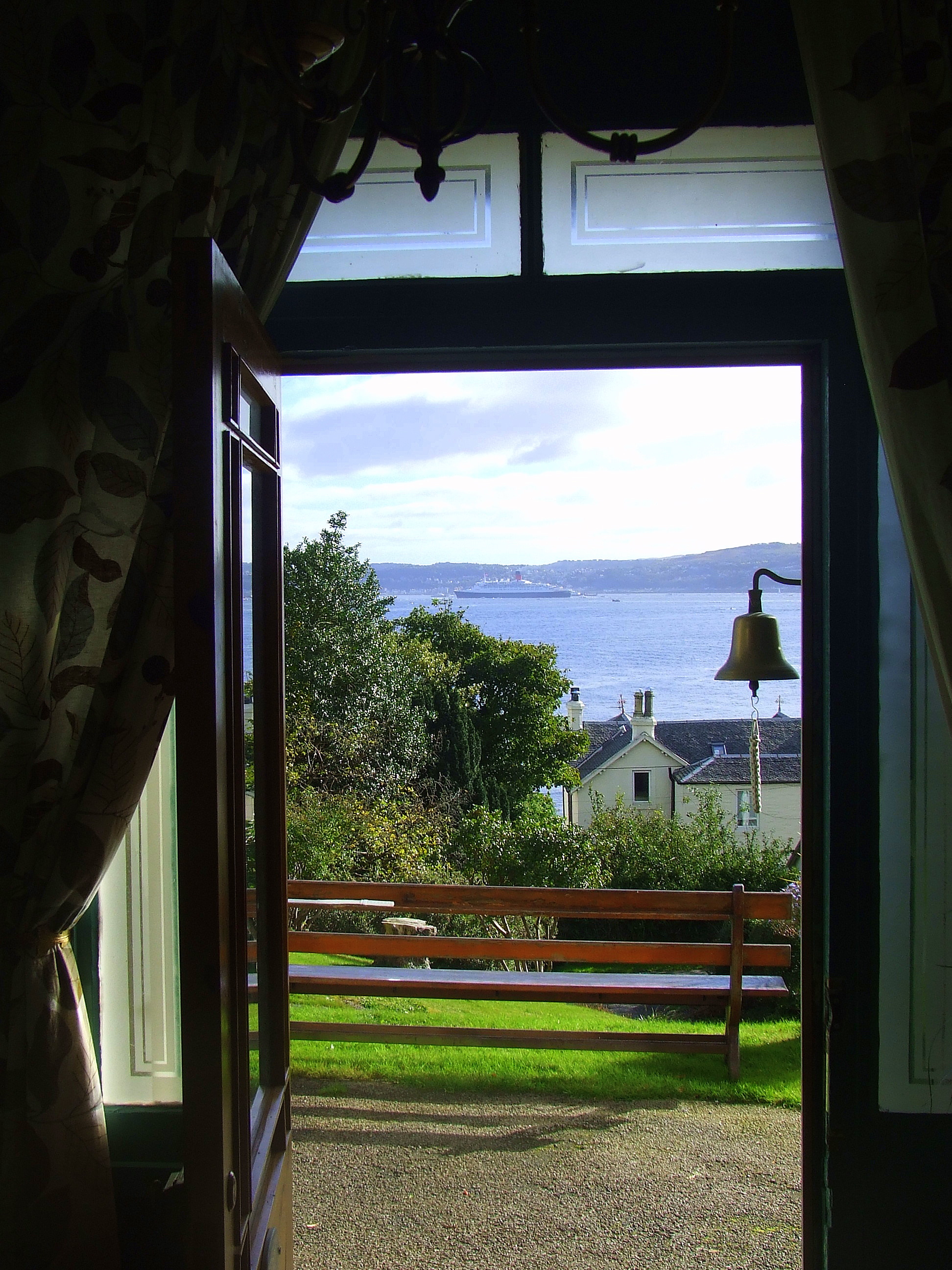
And then, I glanced up, and there she was- filling my doorway.

Then I remembered.

The QE2- making her last ever visit to the Clyde- where she was built. In a different age.

When the Clyde still made the best and biggest ships that sailed the seas.

And whole generations lived a life in sight and sound of the shipyards.

Late tonight the mighty ship made its way out again- to a mooring somewhere far away as a floating hotel. Fireworks split to cold night air and temporarily obscured the stars.

And with long mournful blasts on her foghorn, she was gone.

Graceful people and brokenness…

There are some people whose way of loving and looking after those around them is beautiful. I am privileged to know a few of them. One of them (although she will hate me saying it!) is my wife.

Their way of being is a gift to people around them. It can often be seen in a creative playfulness that seeks always to find ways to bring good things into the lives of those around them. So here is a list of things that I have seen some of my friends (and my wife) do in recent times;

A gift of an MP3 player, full of special music pre-loaded.

A trophy made up with ‘the resilience cup’ engraved on it, as a gift to celebrate the end of someones medical treatment.

Little cards made up with a message/meditation for every day of a trip away or a hospital stay.

Soup for weary workers.

Needs spotted, and quietly filled.

The spiritual gift of remembering anniversaries- birthdays and wedding days, but also days of bereavement or loss.

Card and letter writing.

Refusing to see the bad in people, and hoping for the best.

A travel pack made up for friends who have a long journey to make.

The people I know who do these kinds of things on a daily basis- they are blessed as they bless others. But it occurred to me recently, that they do not necessarily do this from a position of strength.

By this I mean that sensitive, kind, thoughtful people often carry their own scars.

Something put them out on the edge- whether this was childhood trauma, or difficult life experience. For some, this becomes a bitter stain. Others find that their swords are beaten into ploughshares…

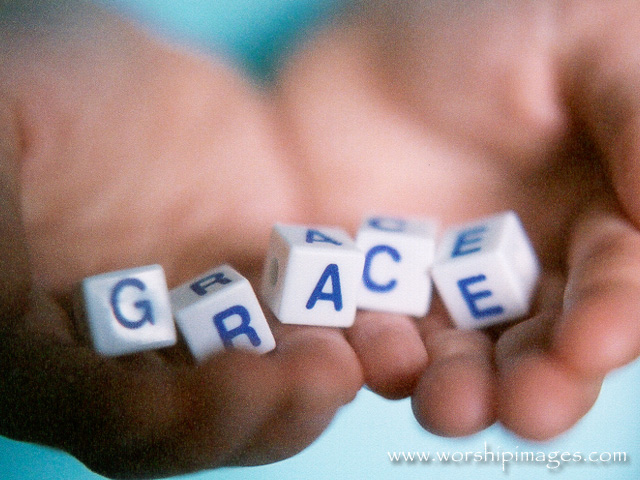
I think this is one of the ways that we see the Grace of God in the very fabric of humanity. Bad can be made good. Healing can come as we seek to heal. Sensitivity is born in the sensitised.

I have heard this instinct to serve others described as a need-to-be-needed. Or the application of that horrible phrase ‘people pleaser’. It may well be the case that there are unhealthy limits to this.

But my life, and the lives of many around me, would be so much the less without these ministers of grace.

Christian music is cool- honest… check out Sonseed.

I grew up listening to Christian ‘rock’ music. I have confessed this before. When others were listening to Meatloaf, or Aztec Camera, or Prefab Spout, or Genesis, or the Police- I was into a whole different vibe…

The legacy it left me with was a record collection that I can not easily share with most of my friends. Not that anyone still plays records.

I fessed up to this musical background here, on the Aoradh website.

So you will appreciate how gratifying it is to discover that the Christian music is now popular, trendy and culturally relevant.

Proof of this can be seen in the following clip- which is attracting huge attention on you tube. Thanks to TSK for the heads up.

Bare branches showing


Bare branches showing
Cold winds come blowing
Stealing this year away
Curlews are calling
The light now is falling
Dark nights are drawing in

There’s a crack in the church bell
There’s ice in the stairwell
Take care my love
Take care.
Close tight the windows
The day is only shadows
Come sit by the fire
With me

The far distant hillside
Is laced up in moonshine
No thoughts of the valley
Below
And maybe tomorrow
We can beg steal or borrow
Some time for just me
And just you

This house is now sleeping
Old floorboards creaking
The warmth’s all but gone
From the fire
So lets climb these stairs love
Dreams waiting a-bove
Let me lie in your arms
Again

Bare branches showing
Cold winds come blowing
Stealing this year away
Chris Goan, September 2007

Blogged with the Flock Browser

Leadership in the new context, lessons for post-charismatics…

There are many questions to be asked in the wake of the so called  ‘Lakeland outpouring’. I asked some of them here but I came across the post below on the ‘subversive influence’ blog. Check it out…

Reinterpreting the Lakeland Fallout : Subversive Influence

Because, I very much agree- the issue is not really about Todd Bentley- but it is about leadership. It is about the power and control we give to (or is taken by) Christian leaders- who are seemingly unassailable because they are seen as anointed from on high, and are perhaps supported by the machinery of a spiritual institution that is all powerful, at least to it’s members.

For people like me, who no longer feel inclined to ally myself closely with movements like these, it might be easy to step back into our small groupings and feel all superior. After all, we knew this was going to happen didn’t we?

But we are at a turning point in the history of the Christian Church in the west, at least. The old is shrinking, and the new is… well where exactly?

Is the church emerging? Is something new being built that will become the proclaimers of the Kingdom of God in this new context?

I hope so, but we have a long way to go yet- and it seems to me that like any other human organisation, our new church will experience conflict, broken relationships and lack of clear direction…

Jesus Promised us the Holy Spirit, as comforter and guide. But it seems that he has also always used LEADERS… and  we who have been part of whatever the ’emerging church conversation’ is now going to call itself desperately need leaders.

Brother Maynard said this;

My informal appeal to post-charismatic and missional bloggers for the month of September might be to spend some time thinking and writing on the forms of leadership (apostolic or otherwise) which we need to see in the church today. What characterizes this form of leadership? How do we recognize leaders, and how is their authority derived and exercised?

Well I am a month late- it is now October, but I will belatedly attempt to take up the challenge!

Leaders.

They have to be big strong accomplished and invulnerable don’t they? They have to charismatic and Charismatic, attractive and attractional, visionary and focussed. Leaders are focussed on goals and strategic targets- and the organisation of resources (money and people) towards the achievement of these.

Except I think that this kind of leadership no longer works. It is no longer works for me. It makes me want to walk in another direction. My context is Post-Christian semi-rural Scotland, and our attempts to engage with our neighbours in a place where church has a poor reputation, and for most, little relevance.

Before I go on, I had better describe something of where I live, work and worship…

I live in a small town, but I am still connected to friends who live in urban situations. I am used to management in my working life (which always seems to me to be a very different thing from leadership) and now find myself within a small community with no designated ‘leader’, with all the strengths and weaknesses that this leaves us with.

We are small. We seek to be partners with others, not competitors. Our ambitions are shaped by bringing our limitations and strengths together, offering them to God and asking him to use them. So for us, leadership remains very much like facilitation- taking a loose agenda and encouraging one another to take some risks. The true leaders are those who are prepared to take a slightly larger risk, whilst always seeking to put the love for others before the task at hand…

Tensions are manageable, but painful. People’s commitment to the group is based on relationship, so the very existence of our project demands that we look after one another.

For us, this sort of works- most of the time. I suppose it kind of fits our characters, the context that we have grown out of, and the time and energy our group members have to spare. There is a kind of core group, but a lot of others who are less involved, and might or might not see themselves as ‘members’, but still contribute to and benefit from some of the things we do.

But this kind of absence-of-leadership does not resolve all of the issues. I decided to make a list of leadership issues that apply in my own context. Forgive me if some of these are obvious- but I think that they need to be re-stated.

  1. As things get bigger, they become more complex. Does this mean that things must always be more centalised? Does the imagery of industrial or military command structures really ever fit a church context, or should leadership be best understood as a supportive network– where the comparisons are better made with web-based networking or discussion sites like Facebook or Wikiedia? Here, the issue is not control- although subscribers might have to agree to a degree of regulation. Rather it is a network based on trust and mutual commitment. LEADERSHIP in such a network seems to require a whole different set of skills- the maintenance of good communication, facilitation, ‘framing’ discussions and issues to allow others to engage and respond, providing opportunities for engagement- but not removing responsibility or using power.
  2. But power always remains an issue? There will always be power differentials. Some will always have more to say, more influence and more abilities etc. Does there need to be a way of balancing this- sharing it out? Whilst democracy might not be the aim, methods of engaging and making sure that the voices of the marginalised are moved to the centre also require leadership.
  3. We all need people to look up to. This may not always be healthy, as unrealistic expectations on both sides can emerge- but it seems to me that this network will form around people who others look to with respect. They in turn will look to others who they respect. The danger is that this system throws up more hierarchies- more Todd Bentley’s. We need to have a way of celebrating gifted individuals, whilst making sure that their giftings are not overvalued.
  4. We all need a hand on our shoulder sometimes. Finding sypathetic and understanding mentors in this network can be hard. Without mentoring, how do people grow into the new spaces that church is moving into? How are they held accountable? How is gifting recognised and encouraged?
  5. We all need to see the bigger picture. Housegroups are great, but most of us also love to meet in a larger group- to make some more noise at times, and feel part of something bigger. Internet connections are no substitute for human ones. To bring people together requires organisation. Organisations need to be led.
  6. Women, minority groups etc. can no longer be excluded, and must be encouraged. For too long, the white, male, middle class church professional has been centre stage. It’s time to share.
  7. Authority, orthodoxy and mission statements- these are corporate words, not Kingdom ones. In a network, these will still be important- but should be decentralised. People should be encouraged to work out their own understandings, within practice, not within the academy, or even the blogosphere! There might be some room for ‘big theology‘- but it should be general, and generous. The emphasis should be on ‘small theology’ (Karen Ward’s words not mine) worked out in community. Lets agree that we will disagree on much, but share most. There will always be a difference between broad PRINCIPLES and POWER STATEMENTS that rely on expert interpretations.
  8. Leadership should be judged by servanthood, not by status. Easily said, I know. But there are some things that can be done to encourage this- make some leadership positions time limited perhaps.
  9. People are always more important than projects. That is not to say that we should avoid doing stuff if it upsets people- but that we should get that 1 Corinthians 13 stuff out as a set of goggles through which we examine our programmes, lest they become resounding gongs.
  10. The roles of apostles ( and the other 5-fold ministries)? How does someone come to be called an apostle? I think that this is not a title, but a role performed by a very few- whose influence is recognised over a long period of time. These people have great responsibility, but will always be fallible and human. Let us never pretend they are super-Christians- in fact some of them will be super-human (in the sense of being all the more connected with their humanity). As for the other ministries- i wonder whether we should keep the focus LOCAL, and measure it in COMMUNITY…

I think that is enough for now…

Check out also this really interesting series by futurist guy that begins here

Blogged with the Flock Browser

Christian TV- should we just switch it off?

OK, so it is an easy target.

The TV preacher with his Lear jet, his many mansions and his inevitable fall from grace surrounded by sexual and financial scandals. It is a tired cliche that just seems to constantly replay itself.

Todd Bentley seems to be the latest in a long line.

But is there anything out there actually worth the airtime? Are people healed, are people inspired, is God transmitted or is he betrayed?

I occasionally flick through- I watched a bit of Bentley to see what the fuss was about. I remember a dreadful Christian Body Builders show- smashing bricks on your head for Jesus.

Then there are a lot of African revivalist preachers, a Catholic channel who seem to televise some very boring services, and have a phone in programme hosted by a very untelegenic nun. And there seems to be a lot of silver haired people pontificating from sofas- usually espousing right wing fundamentalist views.

There are music programmes too- soft rock Christian worship, or ‘CCM’ (Contemporary Christian Music) which is huge in the US- with its own charts, and awards ceremonies.

And then there are the money requests- often with promises of blessing in return. These make me feel ill.

But is it all bad? Perhaps not. Do people make commitments to Jesus? Apparently so. Is there ‘good teaching’ that inspires and informs? I am told that there is.

But boy do you have to wade through some rubbish if you wanted to find it. Here is a you tube clip poking some fun, but making the point…

TV is expensive. Money talks, and religion sells.

There seems nothing at all wrong with using the media, but is this the best that we can do?

First fires of autumn…

Michaela is doing a course in Perth (spirituality and bereavement) and so has been away overnight.

It has been a lovely day- the sun has been shining, but squalls come down the Clyde from time to time and the sky goes dark black.

There is a bite in the wind and the cold air carries less moisture, making each breath taste like crisp white linen.

But I miss Michaela, and tonight, I light the first fire of autumn to welcome her home.

And we will sit close

By the fire.

Global crisis and local Christianity…

We live in an age of perceived crisis.

Not necessarily real ones you understand in the way that our grandparents may have known- in the age of Hitler’s (anf Churchill’s) bombs falling on cities, of concentration camps, and nuclear proliferation.

Instead we have the perceived crises of;

Terrorism– the so called war on ‘global terror’- which we fight using as a weapon, global terror. International policy is formed out of the elevation of fear in a general population- fear of an unknown evil, mixed in with a dose of racism, and religion…

The credit crunch– do you get the impression that there is some kind of hidden hand holding economic strings that we are powerless to influence? Almost as if the burst in the artificial credit bubble was a natural disaster? Meanwhile stock brokers ‘feel the pinch’ and lose the odd sports car, whilst in more marginal places where debt has become a the only option, survival is harder. (Check out this post for more discussion on this issue)

Knife crime- reported as an ‘epidemic’ in the UK, despite at best marginal rises within particular demographic groups in our cities. Anyone would think we did not live in one of the safest societies in one of the safest country in the world!

Energy crisis- oil prices soaring, leading to uncertainty and fear all over the world’s economy. Suddenly oil fields previously politically unacceptable are opened up. And people buy cars with smaller engines, to sit in the same traffic jams…

And so on- house prices, food prices, natural disasters, global warming, etc etc…

I am not a conspiracy theorist. I am always much more prepared to believe in a certain kind of chaos that results in some opportunist winners, and some unfortunate victims.

However, I am more and more convinced that our system of free market capitalism should not stand uncriticised. That far from being the answer to the complex problem of human economic organisation, instead it has become an animal that, once fed, is as likely to bite off the hands of the zoo keeper as it is to pull his cart.

My friend Ali sent me this link today. He tends towards relish of a good conspiracy, but I agree that this critique makes interesting watching…

This is propaganda, but propaganda when used by the powerless can become protest- if not a check on the actions of the powerful, perhaps at least it can lead to a reformulation of their strategy. It reminded me again of Thatcher, the most unpopular British prime minister ever, until the Falklands war. Then she was the unassailable economic saviour of western capitalism…

And also of Moazzim Begg, and his experience at Guantanamo bay.

Which brings me to the point of this post. I am a Christian. I am part of a small local community. What should be the local response to all this stuff that fills the airwaves? Which voices should I listen to that are beautiful and true?

Global communication networks allow us to connect with people thousands of miles away, but there is so much information out there, how would you ever make anything heard, or know that what you hear is good?

The old adage of think globally, act locally often just seems like an empty statement. A bit like ‘global village’. For some the world may have shrunk- but the gap between those who have, and those who have not is larger than ever.

But I think that we Christians do recognise truth when it hits us between the eyes. It comes at us when we see one person who transcends the times, and speaks up for beauty and peace, and love.

I remember reading an open letter that Brian McLaren wrote to George Bush just after the attack on the World Trade Centre. Warning against vengeful and angry responses that will result in more victims, more broken lives and families.

Check this out for more discussion about how we might respond to crisis.

The other way that we encounter truth, is through the words and stories of Jesus.

Blessed are the peacemakers.

And blessed are those for whom crisis (perceived or real) commands compassion, and love.

(link here to beatitudes)

Angels on Dunoon pier…

We (aoradh that is) are just home after spending most of the day dismantling a worship/mediation space on Dunoon pier on the theme of Angels, as a celebration of Michaelmas

We used a vacant pavillion building on Dunoon pier- it used to be a bar/disco but has been largely unused for years. We have used it in the past as a 24/7 prayer room, and also as a space for a mediation labyrinth (check this out for more info on the labyrinth- you can get a kit from Proost also…)

It is a lovely liminal space- out above the water, close by the town centre,  with the passing of many feet as the ferries disgorge their passengers. In the daytime, it is bathed in a lovely light, and at night, it becomes a beacon out on the dark waters.

This time we worked with Kimberley Bohan – minister of the local Episcopal church, who brought the idea of Michaelmas to us. As with all of these community things we have done, we wanted to offer a place where people could just come in and encounter God. With no other agendas- no hard sell. Just hospitality and the rest up to the Holy Spirit.

The stations we set up in this space included a community collage, ‘messages’, The story of Raphael, a holy space, and a way of responding using post cards with Angel words.

I hope it was meaningful to people.

Here are some photos;