Emerging church- a review from the blogosphere…

Well, it had to happen.

The emerging church is no longer ‘the new thing’. In fact it might well now be the old thing.

Does that mean that we have now emerged, and so do not need the label or the ‘conversation’ any more?

Here are some links to blogs that wrestle with this issue- if you are interested in this issue, then these guys are well worth reading;

Jason Clark blogging at deep church

tallskinnykiwi

Scott McKnight

I have posted two earlier discussions in this vein too- here and here

So what do you think? Has the term become a liability- something to be defended, but useless as point of definition?

If so, why do I feel a sense of loss?

I think, for me, it has been a useful portal to a whole set of thoughts, challenges and concepts that have turned me upside down, but have been a real blessing in my life, and in people all around me.

It has also been a way that our small and isolated group could reach out to people in the wider world,and find support and common understanding. Does our planned but as yet unrealised) ‘Emerging Scotland Network’ (see here) need a new name even before it begins?

And if the label is dead- what next? The emerged church? The missional church? The new monastics of Dunoon/Watford/Wherever?

I suppose in others, I still wonder if this is a movement towards something, or away from something else? And whilst the journey may be life long, then there are still fellow travelers, and way side inns- otherwise who will survive the journey?

In my self, I just kind of feel that I have lost a lifeboat, and it’s back to swimming again.

So I will use the term for a little longer… how about you?

Melvin and the miracles

I had a trip to Oban this morning to attend a meeting in the hospital there. A good morning to be driving- not just because of the lovely still calm day, with mountains mirrored on lochs, but also because of Melvin Bragg on radio 4.

‘In our time’ is a history/philosophy/faith (or what ever else the polymath Bragg is interested in) discussion programme, in which an issue is chosen, and Bragg quizzes some handpicked experts around a BBC microphone.

I love the programme- even when I have not got a clue what it is being said- which is quite often. I suppose I just like the fact that complex issues like this can find some prime-time air-time. Well done the Beeb…

This morning the discussion was on MIRACLES. You can listen again as a podcast here.

I discovered that the Hebrew word translated as ‘Miracle’ means ‘sign’, or ‘wonder’. Something unexplained that points us to God. The programme dug into these areas;

What are they?

Are the accounts factual, dependable, or mythological?

How have they been understood through history?

What meaning did they have in people’s lives?

What role have they played throughout church history?

The discussion covered stuff from the burning bush to the signs and wonders of Jesus. It also asked some questions about the vast trade in relics, at one point, perhaps the greatest import into England from abroad, and how the reformation initially tried to sweep away all this stuff as superstition, and suggested that the time of miracles was over, replaced by the time of reason and faith.

And of how, with increasing distance from these signs and wonders, people became increasingly dependent on scripture as rational evidence for God. And so the importance and centrality of scripture as central to faith life and belief grew and grew.

But as we know, the Protestants never gave up on miracles. From the very beginning of the Reformation, groups would describe the supernatural intervention of God, both on a personal,local level, and nationally.

And there are even now whole channels of satellite TV full of so-called miracles. And thousands flock to shrines at Lourdes or Walsingham seeking their own miracles…

Within the Charismatic movement that has shaped me and my faith, the power of the Holy Spirit was expected to be revealed in miracles- healing, prophecy, deliverance and direct provision.  Although it seems to me that we often hyped up and overpromised, I still have many stories that I can explain no other way but by using miraculous language.

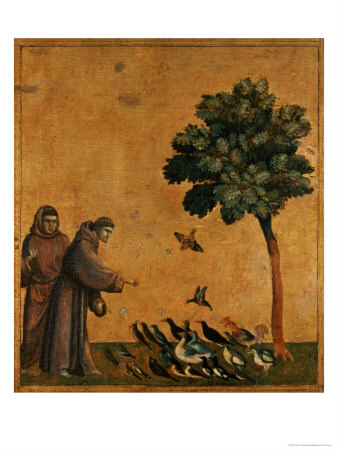
Melvin led an interesting discussion about what Francis of Assisi had to say about miracles. How even then there was a concern to test and discern when this was of God, or of the Devil or some trickery. Little changes it seems! He also quoted St Francis (I think) as saying that the greater miracle was to be seen in the action of a family who meet a perceived need of the other...

Love lived out always did seem miraculous to me- and perhaps even rarer than a former cripple dancing the Highland fling on the God channel!

I kind of think that encountering God will always mean encountering miracles. Signs, wonders. I doubt these will ever be conclusive universal evidence for faith and belief. Even those of Jesus did not seem to offer that.

But the meaning they bring to my friends, in the way they live out their lives towards God- this is real.

So thanks for the mental and spiritual work-out Melvin…

constructing amongst the deconstructors…

There are lots of concepts and key words that have been reference points for those of us who have been following this emerging church ‘conversation’…

Post-Christendom.

Post-Charismatic.

Post-Evangelical.

Post-modernism.

We live in world in flux. The personal angst seen in the popular culture of the sixties and seventies has found its way into the very structure of our society, and into our institutions. Everything is now questionable, everything is old and tired and broken down…

Another word we hear a lot is deconstructionism, a philosophical term first used by Jacques Derrida in the 1960s- who began to form a method of thinking about concepts that allowed him to get behind the assumptions and rationalisations that the modern world operated under. You can check out what wikepedia has to say about this stuff here.

I like this quote from John Caputo;

Whenever deconstruction finds a nutshell — a secure axiom or a pithy maxim — the very idea is to crack it open and disturb this tranquility.

The suggestion for we Christians is that not only are our institutions based on a whole set of modernist assumptions that are being challenged, but that the world we serve is likewise deconstructing itself about us, and we ignore this at our peril…

But here is another quote, culled from a useful article (here) by Alistair MacIndoe, from the Rock Church in Dumbarton.

And how long must it be before we learn that our task as Christians is to be in the front row of
constructing the post‐postmodern world? The individual existential angst of the 1960s has
become the corporate and cultural angst of the 1990s. What is the Christian answer to it? The
Christian answer is the love of God, which goes through death and out the other side. What is
missing from the postmodern equation is, of course, love.’
N.T. Wright 1

We Emerging types have used too many destructive words- perhaps even relished them, and the feelings of superiority this has given us.

But now the real work begins- the purpose that God gave was to go and tell people about Jesus- and (to paraphrase Francis of Asisi) if necessary, use words…

How we do this- how we start to tell again the stories of Jesus, and turn people again towards his beautiful way of living in these our complex times- this is for me to work out, with my community. So we turn to that other buzz-word at the moment-

Missional.

But, I am convinced that God is creative, and seeks to make and remake, not to break down and destroy. And so for we, his servants, it seems clear that we should start the spiritual cement mixers, and fire up the brick kilns. Busy times are ahead.

Lessons from my big sister-

I spoke to my sister today on the phone. It is always so good to speak to her, as she lives away down in Nottinghamshire, so we are not often enough in the same place.

We got into the usual conversation about God-projects that we are involved in. She and I know each other so well, that this one of those God-affirming kind of conversations usually- even when we are not very gracious or graceful in the way we describe particular people or things.

She described a youth Alpha course she is holding at her house- with 20 young people crammed in, all eager and hungry for knowledge…

And she described her own feelings of inadequacy (despite her very obvious gifts), and how she had to feed all these young people despite being flat broke after a whole series of added expenses this month.

But then she said that she had been thinking a lot recently along these lines;

Go with just what you have in your hands.

Nothing else.

You need to be no-one, but you.

You need nothing other than what you have.

The stuff that you think you need, the skills you admire in others- all this is a distraction- a delusion.

So in her case, this involved cooking a huge lasagna from veg grown in the garden, and feeding souls.

Good on you sis.

Lazarus laughs again…

There are many people mentioned in the margins of Bible stories… some by name.

There is the Gentile-convert-to-Judaism-convert-to-Christianity called Nicolas of Antioch, chosen as one of the seven stewards in Acts chapter seven- along with Stephen, the first martyr. Nick from Antioch- what was his story then? Spiritual gypsy perhaps? A bit of a hippy? But considered trustworthy enough to be given a role as a servant of the embryonic church, and mentioned by name for thousands of years to come…

Later recorded though (By Irenaeus- see here) as starting another Gnostic sect and getting his doctrine all Hippy-shaken.

Then there is Simon the Leper. Mentioned a few times, including as providing a feast for Jesus in his house in Bethany (Mark chapter 14)- you may remember this as the time when a woman broke an alabaster jar of expensive perfume and poured it on the head of Jesus- almost as if she had some idea that soon he would be anointed for burial… who was she- and what motivated her towards this act of excess- what had she seen in Jesus- how had he touched her life?

But back to Simon the Leper. How did he get his name? Was it because he was an extremely spotty kid and the cruel nickname stuck?

Or perhaps he really had been a leper?

If so, why was he mingling with people and not away in a leper colony with the other unclean people, outcasts, not party throwing?

Could it be that Jesus healed him? And after he showed himself to the priests, and was declared clean, he returned home, and his story was known far and wide?

We know that Jesus had some other friends in Bethany, whose story is more well known- the wonderful story of Lazarus, perhaps the most hen-pecked of people in the Bible, sandwiched between Mary the starry eyed dreamer, and Martha the houseproud (if grumpy) hostess.

It is the stories behind the stories that are fascinating- the filling out in three dimensions of these half glimpsed characterisations. Mary, who in many traditions was the same woman who broke the jar of perfume, and was known as Magdelene, from whence she had returned to live with her brother, under some kind of shameful cloud.

And after the events of the story- what happened to these people? Did they make the journey to Jerusalem to watch the triumph and tragedy and then glory of what we now know of as the Easter story?

Were they in the upper room when the Spirit came in power?

Was Lazarus the same man who went as a missionary to what is now Cypress, and whose bones still lie in a shrine there? Did his sisters go with him? Did Martha give those Cypriots what for when they trod dirt onto her clean floors?

So here is something I stumbled on that retells some of Lazarus’ story again- enjoy!

Braveheart, Inchailloch and Scottish/English history.

Back in the spring Ali and I took a canoe trip on Loch Lomond, and spent some time exploring the island of Inchailloch. Check out here for some details of this wonderful place…

The island was the site of an ancient nunnery, sacked by the vikings, and for hundreds of years was the burial ground for Clan McGregor- Clan of the famous Rob Roy.

dscf1159.jpg

My Daughter Emily told me that her school, like the good Scottish Grammar school that it is, is studying Scottish history. And in order to aid their 12 year old understanding, the kids are shown the Mel Gibson film ‘Braveheart’.

It is just possible that Emily told me this to wind me up, as she has heard me rant about this film. It takes so many liberties with history that the very idea of it being shown in school is enough to make me grind my teeth! You know the stuff- the wild and free Highlanders, living in high minded moral purity in the pure mountain air, are set upon by the despotic English, who receive their just deserts from the edge of a rusty Claymore…

Ignore the fact that the film Americanises and romanticises the story, re-drawing the characterisations to make the blockbuster market-friendly. Can we really learn anything from this view of history beyond the reinforcement of narrow stereotypes?

The narrow views that live on in football rivalry, and a kind of anti-Englishness that is understandable in part, but is a prejudice that is justified in many circumstances where people should know better.

But I am an incomer- born in England, with an English/Irish ancestry. Therefore this talk will get me into trouble…

I am well aware that I can never fully understand what it means to grow up as a Scot, and to learn to define yourself against the old enemy… with hostilities now ritualised and categorised according to the modern age. But I grew up as a working class northern English lad, in Thatcher’s fractured Britain. My English forebears experienced forced industrialisation and unrbanisation, and became the workers who fueled an empire, but reaped none of its benefits. The death of the UK as an industrial power was our story too. I say this because we all have out stories of ancestral hardship. Some of them are shared…

And my father is Irish, a Catholic from Northern Ireland. He comes from a town called Strabane, scarred still by bombings, shootings and violence, and polarised into groups defined by skewed historical inherited memory.

This redrawing of history to suit a particular prejudice is often the recourse of the powerful. In our case in Scotland, it seems to me that it is also something indulged in by our small nation, in order to justify chip-on-the-shoulder victim mentality. Ouch. That is harsh- but is there truth in there somewhere?

Scotland, in this view of history, is the proud wild nation, whose heart is to be found in the mountains of the North West. It has been beaten down and oppressed by the neighbourhood bully from the south for hundreds of years, but still, it’s heart beats strong and proud.

But when you look at the realities of history- these things are not so clear. The clearances were perpetrated by the English were they? Or was it the English-centric Scottish nobility? Were the famous and tragic battles fought in the name of Scotland, or were they as much Scottish civil wars, with only one outcome possible when one grouping has a modern, well equipped army on its side?

And what of these pure proud Highlanders?


On Inchailloch one of the graves is marked with the Clan McGregor motto- interpreted on the board above.

If unsure or if there is any back-chat, kill.

These were the times that the mythology of Scottish history sprang from. Desperate times, when old Clan loyalties may as easily been applied to local rivalries, or cattle stealing as to the cause of noble Scotland. Where life was brutal, and brutalised, and the domesticated folk in the south grew up in fear of the Highlanders coming south to raid and rampage, in perhaps the same way that we fear terrorist attack today. The Highlanders could be said to be Al Quieda, the IRA and the Taliban all combined into one for 17th and 18th Century lowlanders…

And we know that this was the mythology that was eventually exploited and wasted by the weak and foolish Bonnie Prince Charlie, as he followed his own power-hungry agenda, in the hope that France would support his cause. Resulting in a time of terror, then of terrible and vengeful persecution by the victorious English army that casts its shadow even today, 200 years later.

I love this country. If we move towards greater independence then let us do it with honesty and respect for the shared history of these islands.

And let us stop this small minded prejudice, that interprets everything through a set of distorted goggles. These sorts of narrow mind sets have been the cause of violence and hatred, and may yet be again.

We Scottish Christians, let us be people of peace and reconciliation. Where there is hatred, let us bring love.

Even to the English.

Blogged with the Flock Browser

Lost coins

The M6 unrolls it magic carpet in the early evening light
And the hills of Lancashire draw me close in welcome.
Though my life is blessed now in a land of milk and heather honey
Still I look across this scarred land
Softened by green growth
Seeded with my memories
And feel close to home

Rivington
Alan, Peter and me
Pounding and panting up the steep tracks
To rest and recuperate at the heady height of the Pike.
Above us only the TV masts poking the whispy cloud,
As in front the lights of Chorley flicker on.
Horwich is hidden by the curve of the land
And in the far distance, the flat lands meet the sea at Blackpool.

Closer, held in the folds of the fields
Along the old roads
Stand stone houses, built out of the quarries at our feet
Falling into the creases of the earth like lost coins
Hidden treasures.

Here was my world.
My place of communion.
My Eden
Or so it seems with hindsight.

Now I pass through, driving south
And a little rain makes the road ahead darker
In the warm car, surrounded by a sleepy family
I grip the wheel gratefully
But with a sadness
Move on.

© Chris Goan 24.5.05.

Gray theology revisited…

Earlier I posted a discussion about how we form our thoughts (our theology) towards God.

I confessed to being afflicted by a tendency to see the gray areas when others see black and white. Whilst I would not necessary wish my affliction on you, I have come to realise that it brings to me something that can be valuable as a spiritual tool in following after God.

I have come to believe that God reveals himself in the margins, in the cracks and crinkles of life. Perhaps this is because we have relegated him to this place only in our business and modern idolatry.

There are many big noise Christian leaders who appear to suggest that they have a mandate from God to bring him stage centre, and let him treat us to tricks and religious entertainment. The God Channel is full of this stuff. Forgive me if I seem judgmental and harsh- I too have longed for God’s tangible, measurable presence. But I have been around enough of this hot air to understand it for what it often is, and to be repelled by it.

My experience of God is more like the squares above.

The solid blocks are like our theology- fixed and orderly and predictable. Constructed into an organised and seemingly complete brick wall. But God is not contained by the bricks, even though he might be willing to be encountered within them…

So as you look at the bricks, there he is in the corner of your vision. But impossible to pin down, Impossible to define and domesticate…

Here are some more illusions to further illustrate the point, and to have a bit of fun at the expense of your psyche (click to enlarge);

Blogged with the Flock Browser

How do we come to our understandings of God?

I have been thinking a lot about how we come to hold a set of beliefs and understandings towards God.

I have found Pete Rollins (part of the Belfast based IKON group) two books really challenging- he has this way of using parenthesis or slashes to convey something of the complexity and essential unknowabilty of our fumblings towards theology. Check these out if your head can cope with this;

One of the problems/blessings (to get all Rollins-esque!) of my particular personality is that I tend to see more gray than black and white. Where others see a simple issue- he is wrong, that is truth, this is what the Bible means by this, this is what is wrong with the world/the organisation/the church- I find myself always saying yes, but…

This is not always helpful. It can result in lack of clarity and prevarication. It can skew me towards a fence sitting position that has lots of questions, but finds no firm ground for to walk forward on. Kind of like some critics would categorise the emerging church do you think?

But how about theology? Is this not all about TRUTH? If we loose sight of the essential propositions that we hold in common, then all is lost, surely? This is how I was brought up. There were some gray areas, but these were overshadowed by the towering edifices of truth that we were given and encouraged to stand on like high stone walls.

So faith converted to theology (our theory and thoughts towards God) in this way;

Except, for me, this never really worked. I spend too much time with people to ever think that simple answers to complex human questions will suffice.

This sometimes leaves me at a place of dissonance with other more concrete but sincerely held theological positions all about me. At times it challenges my faith itself, but I have come to believe far from being a negative thing, this process of engagement, doubting and testing is in fact the very stuff of faith.

And that the ambiguities and difficulties brought to us by our reading of scripture and engagement with the wonders and mysteries of God will always result in a degree of uncertainty and struggle- and it is through honest engagement in this struggle that we encounter the Living God.

Or perhaps this just suits my personality, and so I make my theology accordingly?

This is the question that has been occupying my thoughts recently. Do we always tend to make an Icon out of our own perspective, and seek out others who will agree with us, and therefore make it seem more true, more dependable and therefore give it an illusion of universality?

Perhaps then, we form our theology a little like this;

If this is true, then does it matter?

Perhaps not. Perhaps this is a human trait- the gift of individual perspective.

Where It seems to become problematic is when we think that we are right, and everyone else is therefore wrong. It might be that you have been part of a group or denomination where version one of the theology-receiving model is enforced- leaving no room for any of your own exploration. This can be abusive and damaging.

So can the opposite- let us never be guilty of making God in our own image!

Which of course, unless you agree with me- you are/are not!