Squeezing my stuff through the eye of a needle 2

Good old Laurie Taylor. He presents a radio programme called ‘thinking allowed’ on radio 4, looking at pieces of social research that say something about British society.

A recent programme had an article about possessions. He spoke to a sociologist who, building on earlier research into our relationship with the things we own, had spent a year speaking to people on a London street, getting to know something about them, the spaces the occupy, and the stuff they fill these spaces with.

I don’t know about you, but I have always had an uneasy relationship with the things I own. I follow Jesus, and he seemed to advocate freeing ourselves from the accumulation of things. He suggested that his followers did not even need two shirts on their backs. However, he also feasted and shared life with his friends (Lazarus for example)in their own houses, and so clearly he was able to appreciate some of the uses to which we can put the things we own.

My hero’s are often people who leave behind ’stuff’, in favour of life that is for God. I have quoted Mother Teresa- “We rob our brothers by all that we own.”

But I know that I can easily be motivated by the getting of, and the enjoyment in, the gadgets and gear that fills my life. It is always something that I have resisted, but I know it is there.

Back to the research. What it seemed to indicate was surprising. There seems to be a direct relationship between the accumulation of precious things- books, photos, treasures etc, that clutter our homes, and the strength, depth and number of our connections to PEOPLE.

If your home is empty and barren, then it is at least possible that your life will lack connections and significant relationships.

Where your treasure is, there is your heart also…? Is it possible that we value most objects because of their MEANING- and this meaning ultimately only has significance in relationship?

Perhaps it might be an interesting exercise to think about a list of your favourite things- a bit like the song. can we measure these things in terms of the degree to which they bring us into relationship with others?

Does this make them good?

I am not sure. Perhaps this idea is seductive- like the possessions themselves. Ultimately, we leave them behind…

But here, almost like a confession- is some of the stuff I value highly. Perhaps it says more about me than I would like!

Musical instruments- the ability to make something lovely out of strung wood.

My laptop- the creativity and connection this brings to me.

The house– space to be alone, and to be with my family and my friends.

Pictures- that record the growth of the kids and the years with Michaela

Books- for obvious reasons

Gadgets- all sorts of clever ways to achieve very little

Cricket balls- I love the feel of the leather in your hand…

The TV remote– It is mine. Step away from the remote control. It is mine.

Squeezing my stuff through the eye of a needle 1.

We are buying a new car.

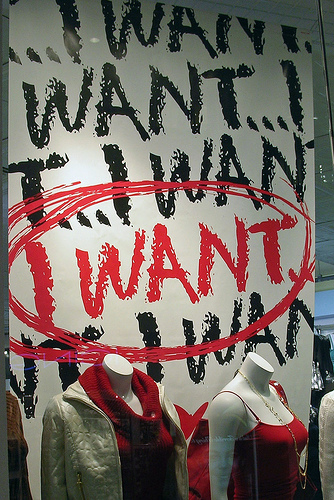
As ever in this process, the concept of NEED becomes a very elastic term. 

The council for the defence of this profligacy is something like this;

  • We live in a rural area, where I have to provide a car for my work.
  • Public transport is not an option, because where it exists, it is so infrequent that it is entirely impractical.
  • Our old car is very tired, and needs a lot of money spending on it. It has done a lot of miles, and lonely country miles at that.
  • Our cars have always been multi-purpose load luggers- house moves, PA gear, camping stuff, bikes, trips out with assorted kids, stone and logs for the fire.

The council for the prosecution is a little harsher of course.

  • So you need a new car- why not get another old banger? Why a shiny posh one?
  • Could it really be about strengthening your fragile ego?
  • Think of all that money- and the better uses that you could put it to.
  • It will break down anyway, and cost you a fortune!
  • All that stuff you espouse about looking after the world God gave us, and turning away from consumerism- you are a fraud!

But, whatever the verdict, and whatever the personal angst- the deed is done.

Blogged with the Flock Browser

Gravestones

At rest on Flickr – Photo Sharing!

In ground that heaves and rolls
Stands old gravestones
Old sailors home from sea
Tilting at the wind,
Leaning into years
Growing slow lichens
Like ragged green clothes.
Soon to lay down low
And silent.

And it made me think that you and me,
Now standing tall against it all
Straight and strong
Our roads still long
Are winding our way towards
Our own appointment with the friendly ground.
When we set aside this monument
To our mortality.


Summer 2004.

Blogged with the Flock Browser

Stuff we have heard/said in Church!

Lest we all take this stuff to seriously…

(first posted on aoradh’s website- here)

It is time for some painful stuff heard in Christian circles and reported back to us. These awful yet wonderful moments are just too good to waste.

And what is more- it is all true(ish.)

There was the pastor who took a detour from his sermon to have a little rant at the permissive society, and stumbled into the realm of gender politics. Catching himself in uncomfortable territory he stopped, and said this …people may say that I am homophobic, but I am NOT. I am GOD PHOBIC!

He did. Honest.

I was there, and as far as I was able to ascertain, there was no irony intended!

Another Pastor, whilst discussing wedding matters MEANT to say For an occasion such as this. Unfortunately, but to others great delight, what he ACTUALLY said was Fornication such as this…”

Then there was a blunder from me, whilst praying one day in good worship-leading, pompous style- You know the kind, the sort of prayers that are not prayers at all, but are just space fillers to make the songs seem a bit more spiritual.

Dear Lord, some of us are old, some of us are young, some of us are JUST RIGHT.

There was another minister who proclaimed that our worship should rise like incest before the throne of God. The shaking shoulders and streaming eyes were a mystery to him…

Another minister was telling stories to the kids in a service about the Tater family- you get the picture- Imi Tator, Agi Tator and Dick Tator. His personal favorite must have been Dick, as he made a particular point of asking the kids if anyone had a dick in their family…

Christians, you’ve got to laugh.

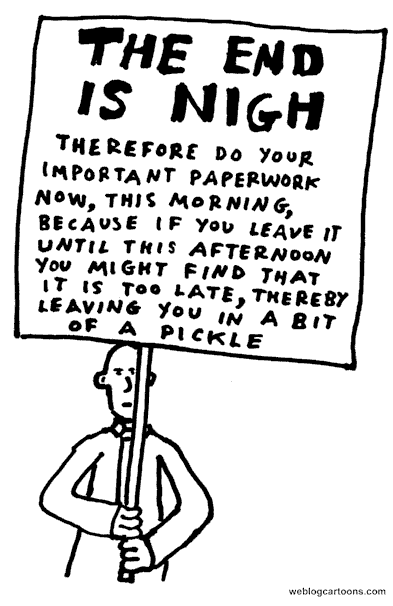
Hope you enjoyed some of Dave Walkers cartoons too!

Change 2


We people of faith seem to have an interesting relationship to change.

  • We celebrate a God who makes all things new.
  • In him, we become new creations- we are born again.
  • We believe in the continual transformative power of the Spirit in our lives.
  • But God is unchanging.
  • And we regard our understanding of TRUTH to be absolute, and therefore unchanging.

We also organise our faith into religious institutions- and institutions are usually extremely change resistant. There seems to be something about the experience of faith that is threatened by the prospect of change. It is almost as if our faith, so deeply felt and yet so fragile, is protected by a scaffolding of external certainty that can not easily cope with any suggestion that individual elements may need to be re-thought, or re-examined.

However, change is a difficult process for most of us as individuals too. I can clearly remember the times of transition in my own life, and none of them were easy. Some where forced- by those life transitions that we all face. Some were made as a result of choices- either positive ones, towards something new and exciting, and/or negative ones, away from things that I have rejected.

One of those pivot point in my own life came about as I began a scary and painful exploration of the tennets of my faith. There was a negative imperative within this- my experience of faith in may new Scottish context had been fraught with difficulties. A church on self destruct mode, an encounter with American fundementalism, and a conviction that something just was not working. There was also a longing for renewal, and a faint hope that new things were possible. But the more questions I seemed to be asking, the more may own scaffolding seemed to be falling away. At one point, I did not know if my faith could survive this.

But it more than survived- I found that it exploded into something wonderful and new.

There is an interesting discussion about change in the introduction to Brian McLaren’s book ‘A new kind of Christian’ . This book has been transformative to many who have encountered it- and caused huge controversy. McLaren is a prophet to some, a demon to many. I devoured his writing like a starving man at a feast.

McLaren described a process of change that begins with disatisfaction and pain. We feel oppressed and captured by our experience- unable to move on.

This becomes funnelled into a narrow space where we begin to look forward, but have no clear idea of what might be to come.

Then the shape of possibility allows us to come out of a funnel. This can be exciting and highly motivating. We might also be very rejecting of the past.

As the new thing takes shape, it opens out into normality, and perhaps the whole thing begins again.

The Church in the west is caught somewhere in this process. Looking for hope, but resisting the unknown. How we need the Holy Spirit. And how we need pioneers who are prepared to head off into the unknown!

Clutter

881934081_9f3a6bc280.jpg (JPEG Image, 321×500 pixels)

Clutter

I can hear a creaking
A groaning from the joists
Pipes and drains are leaking
Floor boards are tearing loose

Can you smell the horsehair plaster
Stripping off from lath?
This could bring disaster
Or perhaps could clear a freedom path
 
There’s a time for all things
The good book says
To reap, to weep, to build, to sing
To mourn a while before moving on

The marshal yards are empty now
And the cranes stand fixed and rusty
The shipyards moved to other towns
And the churches all lie
Empty

Lord teach me to move like water
Running from these mountains
Tear out my feet from concrete shoes
And dance me till I flutter

For freedom comes to those who find
Your keys amongst our clutter

 
Prayer room, Dunoon pier, 2006.

Blogged with the Flock Browser

Things change 1

Nothing stays the same.

Things all around us a changing. Some of this change is imperceptible, because we have become so inured to it. We are sold this kind of change every time we turn on the TV- newer, shinier things- improved and updated. Our economic system is entirely dependent on our continued addiction to the new, and the rejection of the old.

There seem to have been times through history when the general pace of change in the dominant societal forces make a step-change. Perhaps most of the rhetoric about these periods of history arise from the gifts given by hindsight, but nevertheless, every few hundred years or so, it seems the order of things as we know it comes under pressure. New ways of thinking and structuring ourselves mingle with new technology in a chicken-and-egg symbiosis, and many things that seem constant and reliable are tested by the new reality.

And so the age of castles and feudal allegiances became the age of printing presses, industrial production and scientific enlightenment. Empowerment of mass population leads to revolution and democratic endevour. And we see this new reality in the shape of towns, the growth of new organisations, and even the way we seek to understand and study God.

There was a great programme on BBC two a little while ago, presented by Steven Fry, and called Steven Fry and the machine that made us.

The programme was all about the first media entrepreneur Johann Gutenberg, who is credited with the invention of the first printing press at the very beginning of the 15th Century. Guttenberg went on to print the first Bible that was commonly available to ‘ordinary’ people, printed in his native German.

This invention has been credited to bringing about a step-change in western civilisation. Suddenly, written communication went from linear, individualised copies – owned exclusively by those with the time and money to invest in such time consuming frippery – to the mass market. Nothing was the same ever again.

In 20 years, these early printing presses had already turned out an estimated 20 million books. Fry used the wonderful term benign virus to describe the impact on society.

The Gutenberg Bible could be credited with leading almost inevitably to the Protestant revolution. Suddenly everyone could study the scriptures, and everyone became their own theologian. Or almost everyone. It was resisted of course- change usually is. In many parts of the Christian world, the Bibles were banned.

The step-change described above was perhaps one of the key factors that shaped the path of a society in its tranformation from the medieval world to the birth of moderism.

It has been said that we are in the middle of our own step-change, or paradigm shift.
The modern world, with all its assumptions of rational, ordered predictability, is being swept away by a new media revolution. Where is leads us, and how God will meet with us within it, is uncertain.

Like the Luddites, or the medieval church leaders, there are some for whom such change brings conflict and destruction. They faced new industrial realities- economic forces that were bigger than individuals, bigger than families, bigger than communities. No amount of smashed spinning jennies, or smashed printing presses can alter this.

Does this make change good, or bad?

I suppose this depends on your perspective. But ultimately, it is inevitable. It has few moral or value based imperatives, but rather it is the context into which we Christians bring our own values to bear.

Blogged with the Flock Browser

Into the wild…

A few weeks ago I watched this film.

I had already read the book, but this was one of those few occasions when the film some how took the raw material of the words and took them further. Like taking a charcoal drawing and turning it into a canvas laden with rich oil paint, in wonderful colour.

The film tells the real story of a young man from a privileged but dysfunctional background who turns his back on the modern culture, and decides to live a simple life- one of vital experience, deep relationships and particularly, one of absolute one-ness with the world and it’s wild places. He found his way into the Alaskan wilderness, where his ideals were tested to his own destruction, and he perished alone in an abandoned bus miles from anywhere.

This tragic event is somehow recorded in a way that is life enhancing, and beautiful. In his beautiful life, but tragic death, we are fed little slices of hope.

Life is so fragile, but those who really live- who transcend the narrow half lives that many of us fall into- these people, they seem to have found cracks through which has filtered something eternal, and somehow, more real.

Almost as if the Kingdom of God shines like a shaft of sunlight on the opposite side of the valley.

I was speaking to a friend of mine today who is a policeman. We were discussing the case of a missing woman who walked into the hills locally over a year ago now. No trace of her has ever been found. He told me that this is not such a rare thing in Scotland. People walk into the wilderness, perhaps to escape their demons, perhaps to celebrate them. Some perhaps are looking for an end to life, others it comes to as a surprise.

Not so long ago some forestry workers found a tent as they were clearing an area of forest. Inside the tent was the skeleton of a man who had lain there undisturbed for around 10 years.

Life is fragile.

But life is beautiful.

Lets not waste it.

Blogged with the Flock Browser

Elephant in the room

I have played the game
And learned to look
Through your narrow angle lens
Never noticing
Refraction

I have tried to sketch around a shadow
And from those half formed drawings
I concreted my soul into a shape
That contorted
And chaffed

And all along I tried not to look
At this elephant
In the middle of the room
Tasseled and castled
Ready for the spice filled forests
Where it will trumpet in the face
Of tigers

And though I am scared
By the size of this unknown beast
And the places it could take me-
Bring me a ladder
Or lend me a friendly trunk
And lets go.

5.3.07

Scottish religion?

As an incomer to this, my adopted land, it is impossible not to compare and contrast things ‘tartan’ from what I have known elsewhere. As a follower of Jesus, the greatest focus of this introspective examination has been how we do religion up here.

There is a great discussion about these issues on Brodie McGregor’s blog- which is on this link; http://viewfromthebasement.typepad.com/my_weblog/2007/04/emerging_or_sub.html
Brodie wrote a paper on Emerging stuff in Scotland, that I found really helpful- it is broken into digestible segments in his blog…

But what forms the character a place? Is there a convergence in the nature of the people? Perhaps we learn more than accents, taking on our style of communicating- of relating and of loving- from our environment. Are we also formed by landscape, by the mountains or the flat lands, or our closeness to the sea? Or is it the economy- those that have and have not, those in poverty or plenty?  Perhaps it is also about history, and ancestry, and our place in the story of ages?

Back to the spiritual dimension- of faith and belief, and how we express these things. Does our chosen expression of faith emerge from our own cultural heritage, or does it shape the way we are? I wonder if the way religion is understood and celebrated within any given culture becomes as influential to the formation of our towns and streets and institutions as DNA within our blood streams? Certainly, sometimes it seems that a bit of John Knox, along with a slice of Calvin and a hint of Iain Paisley can be found in every squared away, sensible building and every official institution.

As you travel up the west coast things change again…

But a few years ago, before we lived up here, I was walking through the lovely little town of Gairloch, in Wester Ross. I came across two little churches- so close, they were almost (but not quite) touching. They were separated by a few inches of clear air, but I imagined these inches to be stuffed full of inpenetrateable doctrinal difference.

I do not know the history of these churches, and certainly do not mean to criticise what I have no knowledge of. There may be very good reasons for having two such buildings- each one may be full on Sundays, and they may exist in harmonious fellowship.

But for me- this photograph has come to symbolise something of our Scottish religion.

I have said enough- here is the photograph, it can speak for itself.

Blogged with the Flock Browser

Tags: , , ,