The last couple of posts have been the start of a new journey for me, as I seek to put in to words a change in the way I understand the foundation of our being. I’m not alone in this kind of thinking- we stand at the brink of a paradigm shift in Western Christian thinking when old certainties are falling away, replaced by something far more generous and generative.
The problem is that when we start to talk about this new/old way to approach the divine, words fail- the old bible story about God giving the Israelites an unpronounceable, vowel-free name was making the same point- when we start to try to define, we too easily take up a position of power and control; we weaponise God in our own interests.
Perhaps too the idea of a God who both hides and shows his/herself in all of creation and is in and through and beneath each one of us is so simple and common-sense straightforward that it becomes hard to teach, hard to speak about, because the ideas have gone from the specific towards the universal. We humans look down our noses at universal things. We regard mystery not as something to embrace, but rather as a knowledge gap that needs to be overcome.
Which takes me to poetry, for what other language can allow both mystery and great simplicity? How else can we both the author and the conduit for feelings, emotions and ideas? How else can we move from the private, internal towards the open and universal, sometimes in a single line?
In my previous post, I spoke of the Christ. Not just Jesus, who stepped into our human history, but the Universal Christ through which all things live and have their being; the Christ who is “another name for everything”. I spoke of a book that has opened up my thinking on this subject hugely (Richard Rohr’s ‘Universal Christ’), which I very much recommend if you want to adventure in this area.
Then I remembered things I had written myself, half understanding them, reaching into the darkness.
I remembered this poem- written a couple of years ago, in an attempt to connect with the great Spirit that holds everything, otherwise known (by some) as The Christ.
I agonised over this line; I am all of these things and I am nothing
That word: nothing.
It seemed important, but felt like a betrayal.
Then it felt honest and true, in a way I could not quite explain, so much so that I used the line again and again.
I will not try to explain it any further, but can only ask that you read this poem in conjunction with my previous post.
This is the first in a series of blog pieces describing the place to which my faith journey has taken me. Out of these scattered thoughts, I am constructing a new creed, or rather I should say WE are constructing a new creed because these are not original thoughts. They arise from discussions, books, doubts, hopes and a profound feeling of HOPE for the emergence of a new kind of Christianity.
For each of these posts, I will try to follow the same format;
An introduction.
A look at the old paradigm.
A look at the new.
Finally, a ‘statement of faith’
I read a lot. Sometimes I read voraciously around a particular subject- one book leads to another and then another. Cricket. Everest. Climate change. Above all, matters of faith. A decade or so ago, I joked about Amazon being my spiritual director, so much did I come to rely on the ‘You might also like…’ function that they cleverly added into their business model. What becomes even more interesting is the way that books begin to explore the same new ideas from different perspectives- when this begins to happen, it is time to wonder whether something new is actually breaking out.
But books can only take you so far; the danger is that you end up pulled this way and that by the skill of the writer, moulded to their passions. Something needs to anchor them, and for me, that something is community- the place in which the ideas they contain are tried and tested, critiqued even. This might take an academic leaning, where the testing will typically be more forensic, or it might simply be about talking it over with friends. Books that explore theology seem to require an extra degree of community testing, as theology itself emerges from community.
With that in mind, I have to confess the importance of one particular book for the conclusions of this post, in that it has gathered a number of scattered thoughts and together and gelled them into something deeply meaningful for me in a quite remarkable way. The book is this one; The Universal Christ by Richard Rohr.
I have been so captivated by this book that I am ‘book clubbing’ it with some friends who live close by, and asking others to read it too whose views I trust, even if different to mine. I am going to make liberal use of some of Richard Rohr’s statements in this post.
Jesus; “Who do you say I am?”
In the first reformation, we discovered Jesus as the redeemer who saved us from the consequences of sin. Jesus, came to earth primarily to die- his teaching was largely incidental, the main action was to act as our cosmic get-out-of-jail card. Not all of us though, just the elect- those who followed the right form of belief (and this right form has been debated.)
This Jesus, through a process of re-invention, was formed from a particular reading of two main portions of the bible- the book of Romans and the Gospel of John. The rest of the bible was then backwards interpreted in the light of these two readings, and any inconsistencies ironed out.
The first reformation employed enlightenment thinking, with Jesus as the great sacrificial lawyer, subjected to eternal laws of damnation bigger than himself, bigger than God. Logic ruled, and as such, a logical framework was applied to religion, justified by the deification of the bible, which became the forth person of the trinity – perhaps the most important – because it was tangible. It could be held in the hand. It could be used like knowledge, as if it contained the very mind of God. As if it was a blueprint that (once interpreted through the correct form of faith) answered all questions, for all people, for all time.
So, the Word of God (Jesus) was largely obscured by the Word(s) of God (the bible).
If you think me harsh in that last statement, think about the yawning gap between what Jesus said and what our religion has become and remember that this religion is entirely justified by correct, orthodox readings of… the bible. But enough of that, for now. We will come back to the bible later!
Jesus, in the tradition I grew up in had another purpose. He was there to be worshipped. We had a thousand songs with which to do so- some of them positively weird in their aping of popular love songs. How odd then that Jesus is never recorded telling us to worship him. Not once. Rather he told us to follow him.
Follow him? What, into poverty? Radical inclusiveness? The constant call for re-connection, to find ever more ways to love? To make peace with our enemies? To give away our second shirts?
Nah, let’s just worship him instead.
Another name for everything
Jesus stepped into human history, but he was always the Christ.
Through him, all things were made, and have their being. He is both beginning and end. Through him all things are held together. He is the essence that lives in all creatures.
He is the unity of all things that we partially sense when the sunset fades into starlight.
He is love, light.
Through him all things are being made new, always, for all time.
And what of us? We are like him because he is the life within us. ALL of us, not just the chosen frozen few. Even the most dissolute, hardened, poisoned and venomous specimens of humanity, because even though we are like tombs in which the Christ is dead, he has this trick of coming back from the dead, remember.
The Christ, in the human form of Jesus, gave us the Sermon on the mount, in which he told us over and over again to love one another, particularly the poor and the broken, the weak and the stumbling. The Christ, in the human form of Jesus, excluded no one from his love. He became angry at those who sought to do so in the name of religion and he said ‘Follow me.”
The eternal, cosmic Christ, loves things by becoming them.
In this way, everything that we see and touch – everything of rock or fur or feathers; everything that smiles or weeps; everything that grows leaves or feathers; everything that hides in pools or in a twist in the stream or the tide – all these things are by their very nature, the Christ.
If we look, we will see him. That is what he longs for us to do. If we see him then everything changes, right? That climate change thing? The mass extinctions? The poverty? The racism? The sexism? The exclusion and dividing up into good and bad, in and out, saved and unsaved?
Remember that trick he does in making things new, even when everything seems too late? Even when the tomb is closed and the funeral party has ended?
Far from being subject to logical legalism, the Christ is much more interested in restoration- you could say, restorative justice. He seeks to connect us again to our own deep humanity, which is where he waits for us, at the core of our being.
Christ-who-was-also-Jesus calls us to participate with him in the great divide dance. It is remarkably close and remarkably ordinary.
I believe in the Christ, through whom all things have their being. He came into history as a brown-skinned man with the heart of a woman, but he is so much more than that; he is the very essence of all things and the glue that holds it all together. Other cultures know him by other names. He calls us to follow the way of love, which means looking for him in the most unlikely places; in the eyes of our enemies for example, or in a tangle of endangered forest. He is particularly to be found in all that is beautiful and all that is broken. He is also to be found in ourselves.
Like many of us, I spent much of the middle years caught up in cycles of frustration at the religion that had dominated the beginning of my life. I found myself at war with myself, and with the old certainties that felt anything but. Along with my friends, I spent hours and hours deconstructing and questioning, until it seemed like nothing would be left. In fact, sometimes perhaps nothing was- just a series of open questions allied to a residue of mysticism and social justice.
It didn’t help that the religion I knew often felt like a ‘moral trap’- a rigid code of ethics mined from interpretations of the Bible that left little wriggle room for embracing a whole range of major issues developing in the wider world;
Why should we care about climate change when our religion renders nature merely as a pretty backdrop against which the major business of faith (saving souls from Hell) takes place?
We simply could not understand how ‘Loving the sinner and hating the sin’ would always remain an exclusion criteria for LGBTQ people.
Our Jesus remained almost entirely white, male and rich. He lived happily within in a capitalist world, even if he sometimes made charitable trips to drip largesse to the poor, who remained poor regardless.
But there I go again, deconstructing… and I mentioned a pull towards HOPE.
For the first time in my life, I feel that something genuinely new is being born, and I wanted to write about this new thing, to celebrate it and to gather it together in writing, rather than just in conversation with my friends. I think this will be the first of many blog pieces on this subject. I hope also it will be helpful to some of you who have walked a similar journey.
What I will be trying to gather is no small thing- it will be my attempt to write down a new creed of faith. One that is true to the learning and becoming of the last twenty-thirty years. One that is true to our most recent ‘reformation’, sometimes known as ‘the emerging church’.
It is not really MINE, of course- but nevertheless, is one that I have been gathering, sensing and longing for, and read about in other books and talked about with people far more knowledgeable and well-read than I am.
What gives me the right to do this? After all, other creeds emerged from great theological clashes taking place at synods and gatherings of the giants of the Christian world. What right have I to ignore all these searing insights and just make my own religion from the bits that I chose to include- the nice, cuddly bits that ‘feel’ right to my post-modern sensibility?The only way I can answer that is to say that I have no choice, both because I have left behind what was (along with many others) and because I find myself becoming captivated by something new.
I am not a theologian, I am a poet, but I think this gives me an interesting perspective- after all, one third of the Bible is poetry. Also- if not our poets, who will speak?
I also believe that what we build on will always be the wisdom of what has gone before, but build we must.
The first (Protestant) reformation was necessary, in that it (sometimes at great cost) challenged the excesses and destructive unbalanced nature of the organised religion of the Medieval period, using the technology and scientific thinking of the day (The printing press and the Great Enlightenment). We now need to do the same for our time. For exactly the same reasons; the excesses and destructive/unbalanced nature of the remnants of our religious institutions. The power dynamic of these two reformations is different, a fact that I am grateful for as the worst I might expect is a little on- line abuse. I think it unlikely that I will be burned alive, but then again, I am sure I can smell smoke!
Of course, I am not suggesting for a moment that I am writing a creed that will last generations. This is very much a work in progress, and a collaborative one at that. I am happy for people to challenge what I say- but only if you do so thoughtfully and with grace. I have zero interest in hearing the same definitions thundered from concrete pulpits.
One of the great paradoxes of our humanity is that we are only individuals because of each other. Our distinctiveness, such as it is, is entirely dependent on our social context, for how else can we define our difference, our superiority, our own brilliance? The danger is, before we know it, we forget that we all matter to one another.
This is not a new problem of course, but nevertheless it is one that tends to grow like a cancer under certain toxic conditions. Wide and widening inequality. Fear-mongering by the powerful. The language of scarcity, even in the presence of abundance. Above all, when the distance between each other widens; when we isolate ourselves inside our insulated boxes…
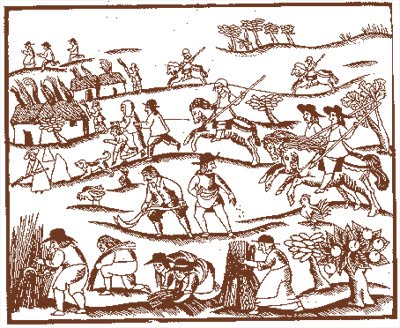
In 1649, Gerrard Winstanley put it like this;
…we shall prove it by the Righteous Law of our Creation, That mankinde in all his branches, is the Lord of the Earth and ought not to be in subjection to any of his own kinde without him, but to live in the light of the law of righteousness, and peace established in his heart.
And thus in love we have declared the purpose of our hearts plainly, without flatterie, expecting love, and the same sincerity from you, without grumbling or quarreling, being Creatures of your own Image and mould, intending no other matter herein, but to observe the Law of righteous action, endeavouring to shut out of the Creation, the cursed thing, called Particular Propriety, which is the cause of all wars, bloud-shed, theft, and enslaving Laws, that hold the people under miserie.
Signed for and in behalf of all the poor oppressed people of England, and the whole world.
Back then, the battle was being fought to preserve the commons; the long-held belief that people should have access to the land, place of nurture and fertility. The place where we are all equal. The enclosures that followed cut us off from our commonality.
But not from our connection to one another. Not from our need for connection. to each other.
Let me tell some stories of connection, and how they can transform us. They are remarkable only because they are mine. You have your own remarkable stories too.
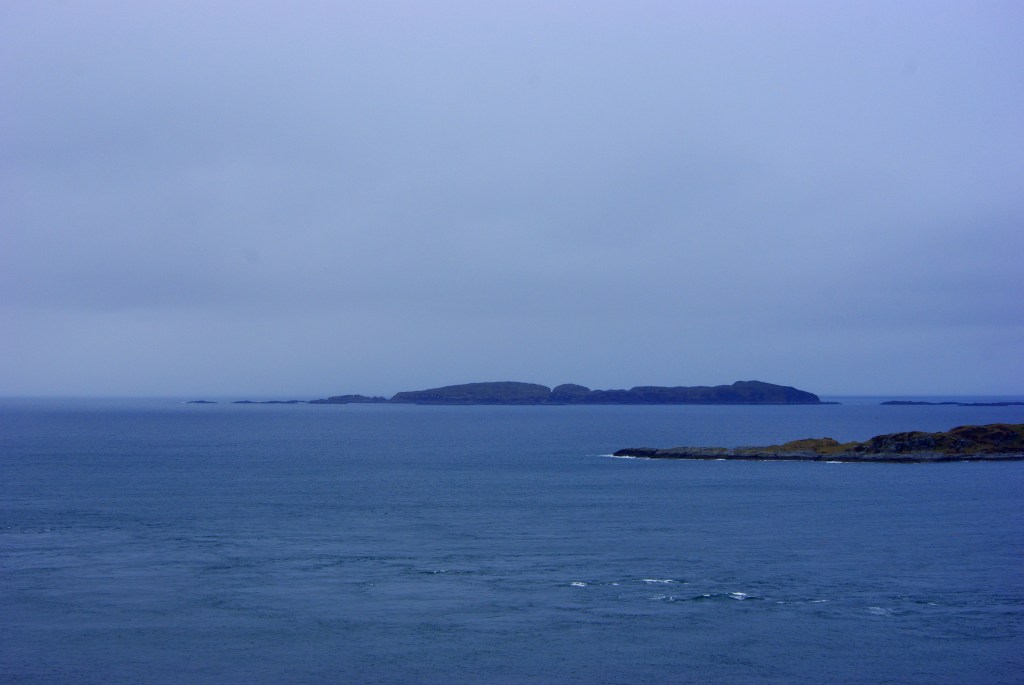
The first concerns our most recent wilderness retreat, at the beginning of last month. 19 men and one woman, camping on an uninhabited island. Uninhabited now, that is. In the past it was a place of monks. We sat inside one of their beehive cells, shoulder to shoulder and listened to some piano music played by an old man who learned tunes from a woman evacuated from St Kilda, and a whole line of human civilisation stretching back into the mists of humanity came to an end.
The music was our last connection with their humanity, but it brought us closer for a while. Friends lifted their armour and showed some vulnerable flesh. We remembered that even though we were on an island, we are not islands in and of ourselves. It was like being held in warm hands.
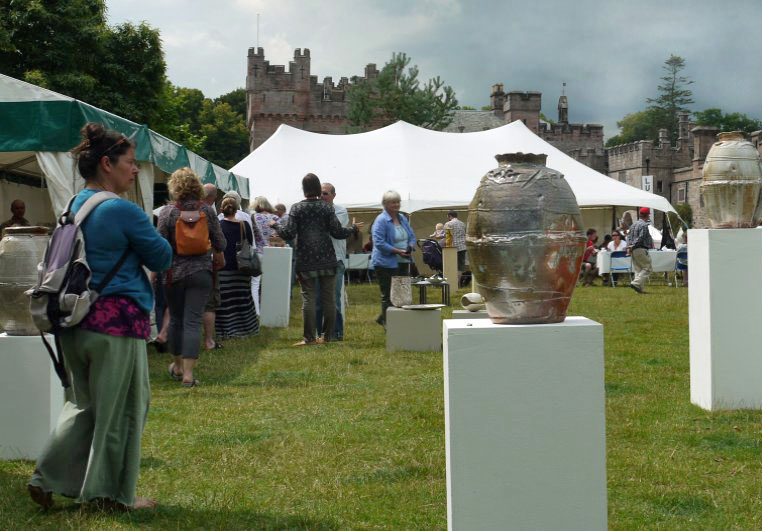
The second story took place in a field near Perth- the grounds of Scone Palace to be precise. We were there for entirely commercial reasons, selling ceramics. It was all about the money. Shifting product.
Except that it wasn’t, not entirely. It never is.
We make things that make use of poetry. In this way, we like to think that our objects carry meaning. It is not high art, or always very subtle.
I had made a small piece with this poem on it;
Memory, like a magic lantern Leaked some light and it fell on you From back when we walked together Then bid adieu Some part of you will always stay In me.
As I was wrapping it up, I casually asked if it was for her, or a present for someone else, and immediately felt that crackling in the air that happens when facades start to crumble. With tears running down her face she told me it was in memory of her mother, who had died.
There in the middle of the busy festival, we shared her grief. No-one else knew. I felt deep privilege because despite the hubbub of commercialism, here was something real, something that spoke of the beautiful cost of human love.
Following on from yesterday’s rant about political leadership, I think a little light relief is required.
I should declare a slight leaning towards Liverpool. Even though I can never be called a fan, I remember with fondness the days of Jan Molby and John Barnes in the midfield, and their ability to pass the ball through crowds. But this is not a football piece, not really. It is about leadership.
I should also declare another bias though. A week or so ago, I was talking to my daughter (who is most definitely a Liverpool fan) and told her that Klopp was a Christian.
“I’m not surprised” she said.
“Why not?” I asked.
She could not put it into words- but found herself having to concede a point that she did not want to concede, that despite all the Christian assholes who find their way in to the media and even end up leading our Churches, within the heart of many ordinary people of faith (not just Christians of course) there is something that I can only describe as a skew towards goodness. It is there, despite all the doctrinal hardness and fixed enculturalised beliefs, right across the faith spectrum. Don’t get me wrong- I don’t claim in any way that these people are better,- just that they often have a different motivation. Think about it, I said. The people in your life. your workplace who have shown you an instinctive kindness. Those people who are often the first to help out. What do they often have in common?
Having conceded the point, Emily tossed her head and said
“OK, OK, you’ve got me there. You can go and blog about that then can’t you.”
“Oh don’t be silly. I’m not going to do that” I said.
But then I came across this clip of Klopp (do you see what I did there?) talking about his management/leadership style.
There are a few things I really liked- his determination to understand people and remain committed to learning about the world around him. His openness to the other. His skill at communication, arising from ‘not caring what other people think’, whilst at the same time his empathy for the challenges faced by others.
Oh, and his faith. I have no idea what flavour/denomination/doctrine he belongs to, but I like the fact that he acknowledges it, finds no need to apologise for it, or to force it on anyone else.
I have to check myself when I think about our current political discourse, lest I sink into despair.
The problem is that this kind of thinking might just play right into the hands of the populists.
We are living in a time when we seem to be surrounded by complex insurmountable problems that traditional politics offers little obvious hope of solving.
Some of these problems are real (climate change, mass extinction of species and rampant inequality both within and between countries) but these tend to be minimised in the media because dealing with them means confronting the most powerful vested interests and lobby organisations on the planet. If you try to take on this kind of power, it can get ugly very quickly.
You could argue that the powerful were in trouble for a moment or two; the global economic downturn lifted the curtain on the operation of international capital. There might have been a whiff of revolution in the air, if not for the fact that the narrative was so effectively managed and austerity was applied brutally, in a way that punished none of the excesses of the rich, but made victims of the feckless poor.
Two tactics have been long been used by those in power to manage those of us who form the masses; distraction and fear. It is hardly surprising then to know that millions have been spent over the past decades to achieve both. Follow the money pouring in to think tanks and right wing media outlets and ask again whose needs are being served. Except you will struggle, because these same organisations go to extraordinary lengths to stop us finding out. Check out this article for example.
Deliberately or not, this too plays right into the hands of the populists.
What is needed, we start to think, is a STRONG leader. Someone who can shake things up. Someone who can drain the swamp. Even if that leader is impetuous, quick to anger, thin skinned, constantly lying, brazen, vulgar and with an almost unbelievably grandiose sense of self and his own accomplishments because at least he is STRONG.
What is needed, we start to think, is a leader of character. Someone who can tell it like it is, who has no truck with slick, well spun political correctness. It helps of course that our politics has been successfully detached from ethics, or from objective truth or scientific research. This leaves room for loud opinions of the sort that might once have been heard in the corner of the pubs we no longer go to (because we are busy watching 24 hour ‘news’ channels.) We hold our leaders to account for their entertainment value, not their policies.
What is needed, we start to think, is someone who is from our tribe- someone who will fight for us, who will make US great again. Someone who will drive away the others- those who are massing at our borders trying to take away what is ours.So our whole politics becomes tribal- we stick with what we know through think and thin, because that is what tribes do. Those from other tribe are the enemy, after all.
How do you combat this kind of leadership?
Cas Mudde, writing in the Guardian, suggested 4 ways for liberal parties to respond to populism;
A return to inclusive, not exclusive policies- ways of delivering benefits to all, not just the few.
People’s forums, citizens assemblies etc. whould be embedded into the decision making process
Social media outlets should be regulated and held accountable for misinformation, and the ‘megaphone’ they give populists.
Unity of centrists- establishing and maintaining the politics of common good. Avoiding the division that so often hands power to the loudest voice.
But- what about leadership? If we don’t want the Trump or the Farage, what DO we want? What do we need?
Corbyn in the UK has flirted with a kind of populism. He too has a power base in the grass roots of his party, and his message has flourished through social media, but has been largely shunned by the main media outlets. It seems however that whatever momentum he was gathering has stalled for now at least, derailed by the binary economics of Brexit. Perhaps it is time for him to consider a new kind of…
…O sod it all. I don’t care about strategy. Show me a leader with integrity. I want my leader to believe in something, I want him/her to start for a position of integrity. I want my leader to be brave in his or her pursuit of social justice and peace. I want them to care deeply about things much more than their own political success.
Sure leadership has to be about communicating those ideas, but I refuse to believe that the selling is more important than the product.
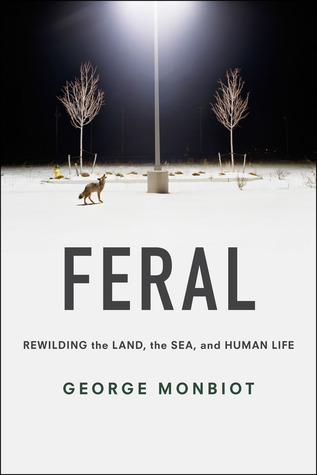
If my last couple of posts sparked your interest and imagination, then I would very much recommend that you read this book. It will change the way you look at the landscape forever;
Here is George talking about much of the things my blog posts have stumbled into;
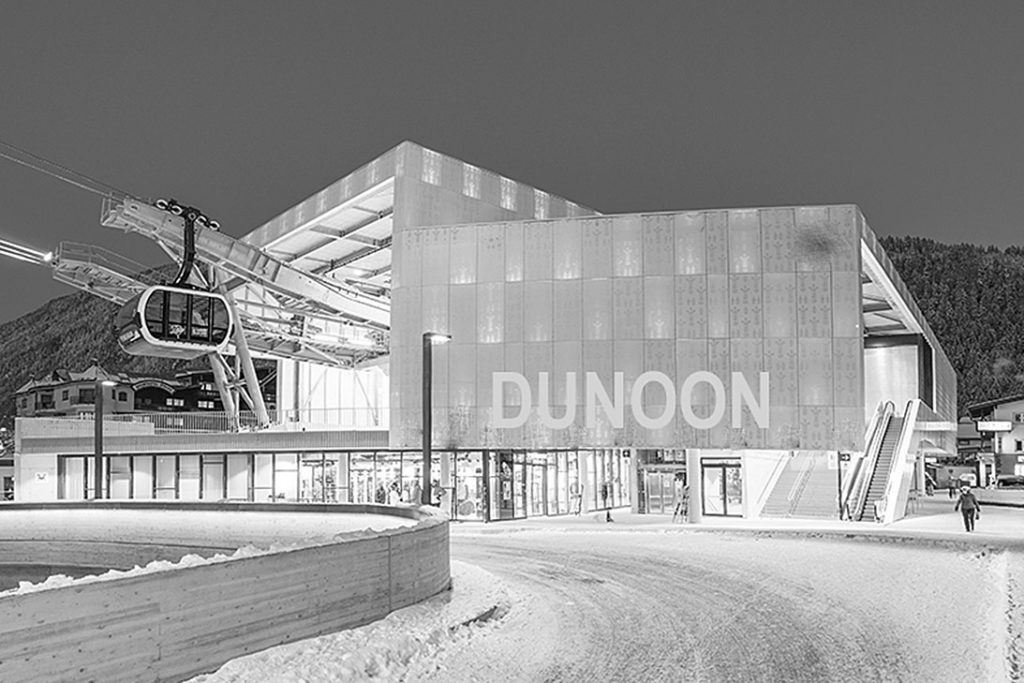
The Dunoon Project is a fantastic, ambitious, community led project, which intends to bring the hills of Cowal into Community ownership and establish a tourist hot spot with zip wires, toboggan runs, mountain bike runs and visitors centres. If it all works out, it could transform this area.
I wrote to them today, saying this;
Dear Dunoon Project
I have been following your progress with great interest, attending two public meetings and reading all your blurb. You deserve the highest praise for your vision, ambition and community mindedness and I for one want to thank you for what you are trying to achieve. I hear on the grapevine that the project evaluation report is now complete, and I look forward to reading this as soon as you are able to release it. I know that you are looking in to ways of making sure that the project actively involves and engages with the wider community at all levels so in particular, I hope that the report is able to give some indications as to how you might achieve this goal.
However, my reason for contacting you at this time is because I was reflecting on the challenge being brought to our political system by ‘Extinction Rebellion’. I began to think about this challenge from a Cowal perspective. What environmental choices are within the gifting of this community, both in terms of holding our own politicians to account and (as with the Dunoon Project) imagining direct community action? It occurred to me that the scale of the Dunoon Project offers a unique opportunity to make a major impact on the environment and ecology of this region.
The Cowal hills are beautiful, but also broken. The once-thriving, richly layered and interdependent eco-system of the great arboreal rain forest has been largely destroyed. Some things are gone forever; the giant elk and the hairy elephants disappeared thousands of years ago, followed by bears and wolves and then countless small animals and insects. Despite the strength of iconic species such as the red squirrel and pine marten in our area, many less celebrated species are declining and under great pressure. We cut down all the old trees and replaced them with contour-planted conifers that act as a barrier to wilderness, and are themselves a barren habitat, by comparison to what was there before. You may think that I overstate my case, that things are really not so bad, but sadly if you speak to any ecologist (which I am not) they may well tell you that I am understating the scale of the disaster that we have wreaked on our local environment. Consider the exploding numbers of deer, who have no natural predators. Everything is out of balance.
I have listened carefully to what the Dunoon Project has said about your environmental aims, and welcome them, but it seems to me that they were mostly cast in terms of ‘doing minimal harm’. I wonder, given the ambitious nature of the project, whether this is enough? After all, we might be able to do so much better than this because preservation is no longer enough. We have to look towards restoration.
It is not too late for Cowal. There are many examples inspiring of rewilding projects across Scotland. If you have time to do some of your own reading, there is a lot of information here; http://www.rewildscotland.org/
Imagine the forests returning to their natural state; Birch and Oak, which support hundreds of unique creatures. Crucially, the concept of rewilding can in many ways go hand-in-hand with tourism. Think of what the re-introduction of Beavers (often described as ‘eco-engineers’) has done for Mid Argyll, or the Sea Eagles for Mull.
The Dunoon Project has the potential to bring a lot of people into our hills. We can give them a thrill, but perhaps we can also give them a taste of something that is truly wild. Imagine how different our hills would be if there were areas in which Wolves or Lynx were roaming? There is increasing evidence that the re-introduction of carnivores has a remarkable effect on the whole of the food chain.
There is a cost to all this, but in a world that is beginning to come alive to the alternative, I would argue that we have no choice. We have to take any opportunity to seek to redress the balance. We have to (literally) rebel against extinction, and so my plea is for the Dunoon Project to do just that. Help us re-create an environment in Cowal that becomes an example of what is possible- something that we can all be proud of, and something that, rather than ‘consuming’ in the manner of small touristic excursions, we can all participate within.
I took a walk today- up the hill behind our house. It was hot, and the south-facing slope I toiled up was baking. Spring life was bursting out- in fact, you could actually hear the bracken pop and squelch as it was growing and unfolding.
The walk took me up into the Argyll forest, but it is not what it was. Not even remotely.
Of course, the giant elk and hairy rhinos are long gone, along with the bears and wolves and lynx. The western Atlantic seaboard was once covered in the great arboreal rain forest; mighty oaks, beech, birch- all of which supported a vast hierarchy of teeming life.
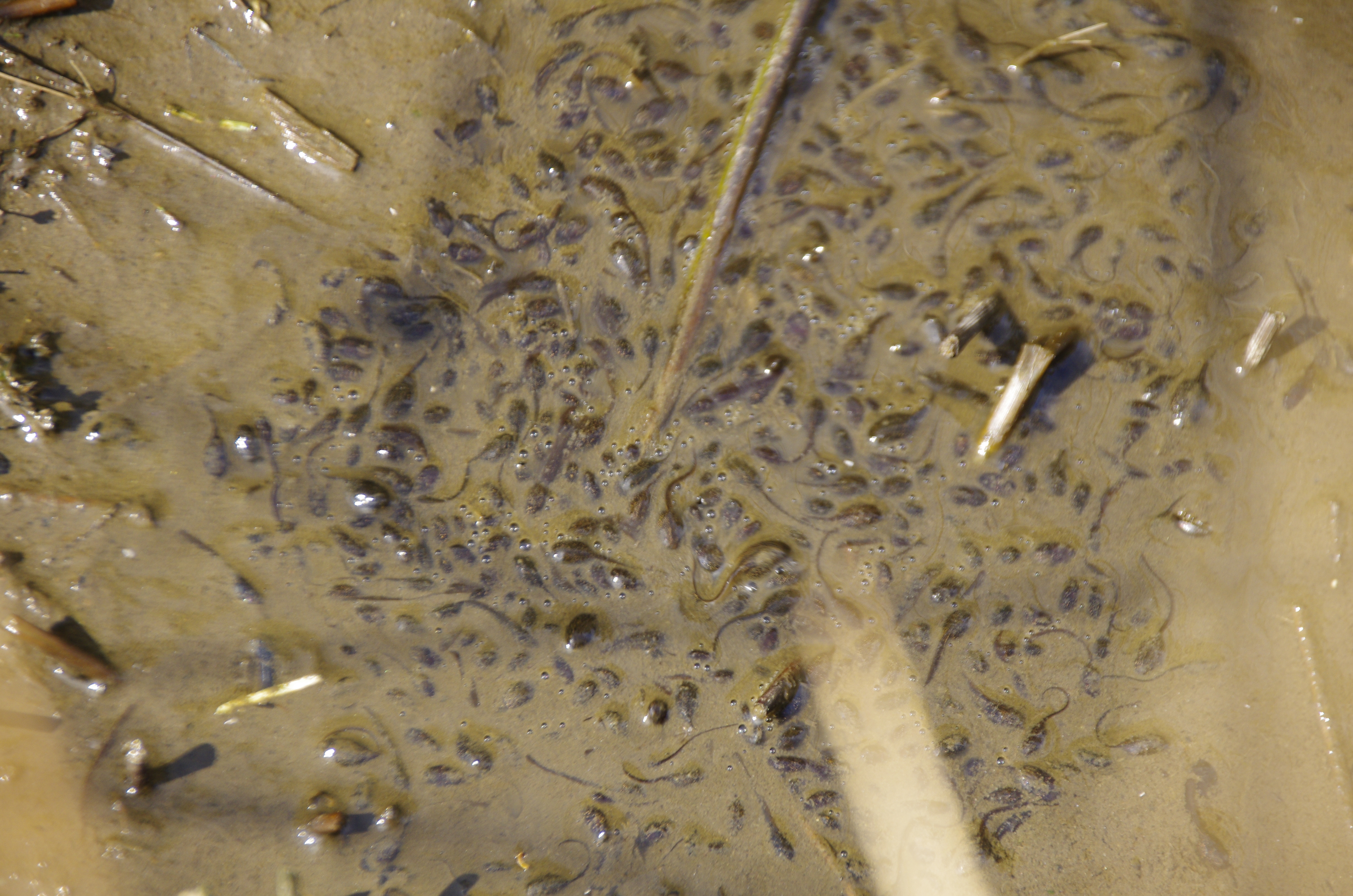
The thing about ecosystems like these, is that they only exist because of a harmony and balance, not just from competition, but also from inter-dependency. Our understanding of just how complex and deep this dependency went is only in its infancy, but we can get some clues from this;
The forest I walked up into was not like this any more. In many respects, it has become a barren desert. A graveyard of giants, like the bones of dinosaurs long gone- except in this instance, we have no meteorite to blame for their demise. The finger points at us.
The forest is now made up almost entirely of fast-growing cash crop spruces, planted in serried ranks, acting as a barrier to wilderness. The life they support is sparse, and totally out of kilter. Deer do well in the cover of needles, with nothing to control their numbers but the front end of our cars. Other animals are remarkable when we see them more because of their rarity.
Insect life is another new barometer, and we see a reduction in both numbers and variety.
This is not the rain forest, it is hollow cultivated imitation of it.
We live in a changing world. This is not a new thing, but the pace of change is no longer geological as it once was, rather we see huge change within human life-spans. It should not have been this warm today. What might have once been seen as a freak weather event has become the new normal. Lovely as it is to sit in the dappled sunshine, there are costs to other wild things;
Extinction Rebellion reminds us that there is hope. It is not too late. There is something yet worth fighting to preserve. Consider their three demands;
Tell the truth
In my context, I think this means seeing the forest for what it is, both in it’s remnant and it’s hollow imitation. I feel this like a kind of reverence.
Act now
Preserve what we have- but this is not enough. We need a massive programme of rewilding and restoration of natural resources. We need to allow the land to recover, and re-introduce apex predators, and large mammals. This will have costs and impacts which we may not fully understand until they happen. Agriculture has to fundamentally change, as will forestry. We have to support farmers and foresters financially and practically to become heroes not villains.
Beyond politics
ER want to establish people’s assemblies, because they believe that change is only possible if we establish a mass movement. We have to literally change our consiousness and our ways of life. We have to break the chains of materialism and commercial distraction.
This is my own small, on-line rebellion. I aim to make more.
Mindfulness. We see/hear it everywhere. It is touted as a spiritual/therapeutic hit for all; Lily-the-pink for the post modern age. It has much to recommend it; a simple moment of stillness that we can carry with us into our crazy lives.
Whilst appreciating the potential of mindfulness as a tool, something about it has always made me uncomfortable.
Is mindfulness just being used as a way to make the madness bearable, whilst changing nothing?
Perhaps it was the sense that a core tenet of an ancient faith was being appropriated.
Perhaps it was some of the people who I saw promoting it; expensive mindfulness retreats, shiny books, lots of mindfulness product.
Perhaps too it was a feeling I had that mindfulness should be a bi-product, not a short cut.
The technical, neutral definition of mindfulness and its relativist lack of a moral foundation has opened up secular mindfulness to a host of dubious uses, now called out by its critics as McMindfulness. McMindfulness occurs when mindfulness is used, with intention or unwittingly, for self-serving and ego-enhancing purposes that run counter to both Buddhist and Abrahamic prophetic teachings to let go of ego-attachment and enact skillful compassion for everyone.
Instead of letting go of the ego, McMindfulness promotes self-aggrandizement; its therapeutic function is to comfort, numb, adjust and accommodate the self within a neoliberal, corporatized, militarized, individualistic society based on private gain.
…
McMindfulness aims to reduce the stress of the private individual and does not admit to any interest in the social causes of stress. In corporations, “[m]indfulness training has wide appeal because it has become a trendy method for subduing employee unrest, promoting a tacit acceptance of the status quo, and as an instrumental tool for keeping attention focused on institutional goals.” Mindfulness, they argued, needs to reclaim an ethical framework that goes beyond privatized adjustment to a society based on market capitalism that contributes to stress and other sources of unhappiness. McMindfulness practices psychologize and medicalize social problems. Rather than a way to attain awakening toward universal love, it becomes a means of self-regulation and personal control over emotions. McMindfulness is blind to the present moral, political and cultural context of neoliberalism. As a result, it does not grasp that an individualistic therapized and commodified society is itself a major generator of social suffering and distress. Instead, the best it can then do, ironically, is to offer to sell us back an individualistic, commodified “cure” – mindfulness – to reduce that distress.
The other reason I am thinking about this is that every year, I lead a ‘Wilderness retreat’ over the May bank holiday weekend. An ever-expanding small band of friends hire some boats to drop us off on a small deserted Hebridean island for a few days. It is all about immersion in wilderness, the formation of temporary community, and engagement with Christian spirituality, albeit of a non-confrontational kind.
To extend the analogy used above, how is this not just a McWildernessretreat? Are we not just doing the same thing- consuming some space, taking lots of photographs to show what a adventurous people we are then returning to the same tramlines that we had only so recently vacated?
How is our own smug spirituality any different from those practitioners of McMindfulness who are after all doing their best to survive the wilderness of their own lives?
I suppose my answer to this is complicated. We get out of something what we give to it, so it is perfectly possible to engage with any experience in an eqo-first kind of way. But there are some things about our retreat that are different. Things that have me looking forward to it again more than I can say;
The Wilderness is real. It is challenging, humbling, uncomfortable and awe-inspiring.
The friendships are real. The conversations are real. The tears are real. The uncouth and poorly-judged jokes are real. The silent companionship is real.
Faith is real- or at least we make faith a deliberate part of our encounter. This is of course highly individual, but even on the level of ‘suspension of disbelief’ it is a vital component of our gatherings.
The hope for MORE is real. Not more stuff, more achievement, but just better. We are a group of people who want to be a force for good, even whilst the great wilderness forces us to acknowledge our own silliness and inadequacy.
You may feel (with some justification) that this does not get us off the hook – we too are creatures of our own culture – but nevertheless, I head out to the wild places with my friends in great anticipation, anxious to encounter the Great Stillness not as a cure-all, but as a discomfort, a disatisfaction.









 this fragile tent