Rethinking Economics…

EconomicsHome

A long time ago, as an extremely un enthusiastic undergraduate, doing a degree in Social Studies, I studied Economics. I remember very little. However, from time to time I still dip into the edges of Economic theory after distant memories are fired by Robert Peston or a rather pompous politician fatuously attempting to make macro economics sound like household budgeting.

Economics matters. The people who undertake pure economics degrees do so because they know that it is one of the routes into power and wealth- working in the City, or making their way into policy making or work with influential think tanks. However the subject is a mystery to most of us. What are people taught on these courses? Are they prepared to use what they know for the good of people and planet?

Back in 2013, I blogged about an interesting rebellion by economic students (see here.) They called themselves the Post Crash Economics Society, as they were mystified at what to them seemed liked the ultimate failure of economic theory (the economic crash) had resulted in no change to the curriculums followed by the Universities, and the dominant (and apparently entirely fallible) economic theories continued to be taught with far to little critical engagement.

4 years down the road, those rebellious students have entered the world of work, but it seems that little has changed at the universities.

A new book, describing the journey of the Post Crash Economics Society and a network called Rethinking Economics has now been published.

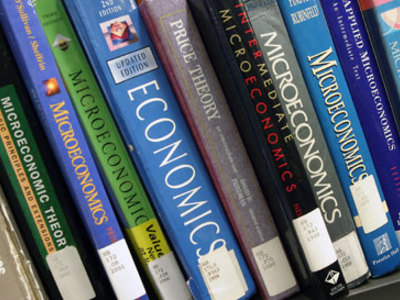
The book, entitled Econocracy, challenges the core of how economics is taught around the world. Check out the review here in The Guardian by Aditya Chakrobortty, who wrote this;

The most devastating evidence in this book concerns what goes into making an economist. The authors analysed 174 economics modules for seven Russell Group universities, making this the most comprehensive curriculum review I know of. Focusing on the exams that undergraduates were asked to prepare for, they found a heavy reliance on multiple choice. The vast bulk of the questions asked students either to describe a model or theory, or to show how economic events could be explained by them. Rarely were they asked to assess the models themselves. In essence, they were being tested on whether they had memorised the catechism and could recite it under invigilation.

Critical thinking is not necessary to win a top economics degree. Of the core economics papers, only 8% of marks awarded asked for any critical evaluation or independent judgment. At one university, the authors write, 97% of all compulsory modules “entailed no form of critical or independent thinking whatsoever”.

Remember that these students shell out £9,000 a year for what is an elevated form of rote learning. Remember, too, that some of these graduates will go on to work in the City, handle multimillion pound budgets at FTSE businesses, head Whitehall departments, and set policy for the rest of us. Yet, as the authors write: “The people who are entrusted to run our economy are in almost no way taught to think about it critically.”

It is worth checking out the Rethinking Economics website too, which spells out their challenge to traditional economic theory, which in practice is almost always Neoclassical Economics, of a particular kind.  They describe a number of ‘problems’ with economics, including;

One of the most pressing issues of our time is climate change. To tackle it, we need all the good ideas we can gather. Yet academic economics is not helping. Take the UK, for example: of the 24 Russell Group universities that have economics departments, only nine have environmental economics modules. Of those nine none mention ecological economics or other alternative economic perspectives.

They also describe the way economics courses approach the issue of inequality;

Currently, economics education raises one perspective – ‘neoclassical economics’ – to the sole object of study, which has grave repercussions for the way economists view inequality. In basic neoclassical economics, the distribution of income is treated as a natural outcome of market forces, and interventions are deemed to disrupt these forces. Power and politics, and historical questions about how inequality has arisen, are rarely addressed.

What is more, there are ideas within economics that tackle these questions: approaches such as feminist or development economics do address the historical and cultural reasons for ingrained and persistent inequality, and take a more real world focused approach in which economics can and should try to intervene.

But, because curricula leave out these approaches, economists’ ability to understand or address inequality are limited. And because so many economics graduates go on to work in think tanks or organisations like the World Bank, this lack of pluralism has very real and tangible effects across the world.

They suggest this alternative approach;

Our campaign aims to change economics so that it will educate the next generation of economic decision-makers in a diversity of approaches. We believe that graduates will have a much firmer grasp of global, regional, gender and racial inequality were they exposed to a range of competing perspectives and required to assess their strengths and weaknesses. We also emphasise an understanding of the historical causes of inequality and the ethical implications of different policies.

These changes will shape a new generation of economists who are open, engaged and socially conscious. These changes will also mean that economists will be equipped with a variety of tools, appropriate to the shifting and complex factors that sharpen inequality in our society. Without a reformed curriculum, economists and policymakers repeatedly think within the same parameters and fail to devise policies or build economies that work for the good of everyone within society. To address inequality, the ‘Overton Window’ through which politicians, economists and citizens understand the world must first be opened up, and the first step towards this is a pluralist curriculum.

Power to ’em.
Submissions needed for Proost Poetry Collection 2…

I am really excited to be able to give this a plug. A couple of years ago I was involved in curating a poetry anthology called Learning to Love. We are now officially launching the opening of a new collection for submissions.
We would be really grateful if you can share, tweet, pass on this message as far and wide as you can- we really want to connect with people who would not normally find a wider voice…
proost poets
Following the success of Proost’s first Poetry Collection (see here for more details) – we are now seeking poetry submissions for our next collection!
As before, this book hopes to gather voices from in and around the margins of our organised faith gatherings, and is particularly interested in hearing from poets whose writing has not previously found a wider audience. The collection of poetry is intended to be a resource for worship, contemplation, prayer and faithful prophetic criticism.
Poems should fit broadly into one of the following categories/chapter headings;
  • Ordinary/Sacred (God in all things. Everything is spiritual. Heaven in ordinary.)
  • Everyone is welcome (Refugees. Belonging. Inside/outside.)
  • Resisting (Disagreeing well. Protest. Justice. Inequality.)
  • Whole (Restoration. Becoming. Healing. Authenticity. Vulnerability)
  • Wild (Creation. Evolution. Uncivilisation. Our impact on the natural world)
  • Post Truth (What is truth? Where is it? Who defines it? Trump and Brexit)
  • Lament (The absence of God. Unfairness. Loss. Pain. Doubt.)
  • Hope (Where does our hope come from? Where do we see it?)
Submission process
Step 1: Form Please complete this form to tell us a little about yourself and your work. Step 2: Submit poems You will receive a confirmation email following completion of Step 1 providing the instructions and guidelines for sending us your work.
The closing date for submissions is the 28th of May 2017.
We charge no fee for submitting work.
Notes on selection process:
We are looking for poems with something to say – poems that open us up rather than close us down.Poetry at its best can be challenging, disturbing, uplifting, transforming and much more. If you write poems like this we want to hear from you. We are not interested in reputation or CV- rather we want to encourage those of you with a poetic/prophetic voice and let others hear it.
We will select poems for the collection if they fit the broad (and generous) ethos of the book and if they are of a quality and spiritual depth that moves us. This means that some
very good poems may not beselected. We hope that you will understand that we lack the  resources to give feedback on the reasons for our editorial decisions.
We look forward to reading your poems!
About Proost
Proost is a small publishing outlet aimed at gathering together resources from the creative edges of Church. Most of the material is made available for download- although hard copies of books can be purchased via a print-on-demand service.
If you have not done so already, check out http://www.proost.co.uk which is chock full of great music, art, movies, worship resources and books.
proostlogo

The Beatitudes, 2017…


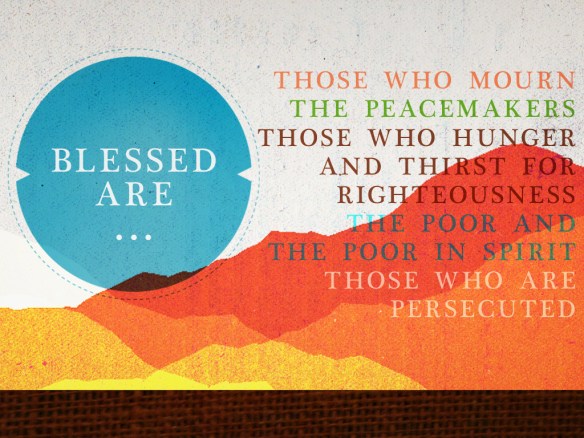
mainslide-blessedare

When Jesus saw the crowds, he retreated into the safety of his own penthouse suite and after he sat down his disciples came to him. Then he began to speak and taught them, saying:

Blessed are the rich, because their wealth trickles down like warm syrup and everyone else feasts like ants on the mess beneath their tables. Through them the heavenly economy surely prospers.

Blessed are those who are properly focused on the things that matter and do not get distracted by weak sentiment.

Blessed are the strong as they reach out to smite the weak and unproductive. Their nation will be the most powerful on earth. There will be no end to the wealth they accumulate.

Blessed are those who can control the message and shape it to their own demands. Blessed are their spokespersons. Blessed are the forks in their tongues.

Blessed are those whose charity is sensibly directed only to the deserving poor. May their tax burden be greatly reduced in gratitude.

Blessed are those who are stuffed full, for they will never scrounge from the rest of us. Blessed are those who are content, because they are obviously hardworking, responsible, decent people.

Blessed are those who are white, male and rich. They can make the world as they wish. They can take what they want. Any hole is theirs for the filling. Any pussy is theirs for the grabbing.. They can exploit whoever, whatever, to ensure their own advancement.

Blessed are the warmongers, for they will ensure our security. They will make our nation great and our enemies tremble at our feet.

Blessed are those who take no shit from anyone. May persecutions be heaped on the heads of all the small people who dare to question or deride those I have ordained for positions of power and wealth.

May no small slight be left unpunished, lest the proper hierarchy of all things be questioned. For heaven belongs to the rich and to them alone. All else should consume what they can, according to the riches they are able to grasp. Let the fire of aspiration burn in your souls so that the Kingdom might never be compromised; so that the economy might never lack confidence.

New…


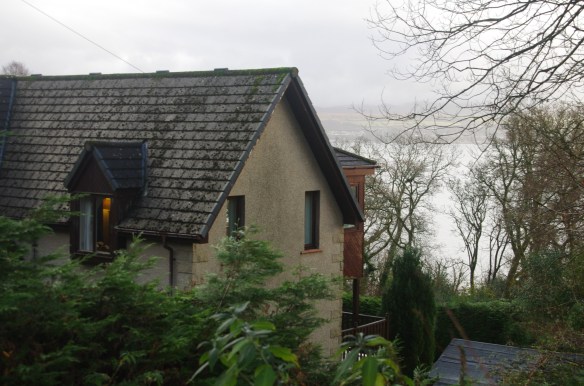
imgp9393

New year. New House. We moved two weeks before Christmas- an experience much better viewed in hindsight. How we would have managed without all the help from friends I have no idea (thanks again… and again.)

Moving house is an interesting experience from a psychological point of view. We had lived in our old house for 14 years- it was the only one that either of our kids (16 and 21) could really remember. We had many happy years there. It was a wreck when we moved in- we gave it a new roof, rewired it, put in a new driveway and countless other renovations, often achieved on a budget, using our own labour. In keeping with the national obsession, we improved it and added value. Old houses are never finished however- there is always another job to do- sometimes repeats.

Once we made the (not entirely voluntary) decision to move on, we entered the twilight zone. Three years of almost-sales went by. Life seemed stuck in some kind of loop. Eventually however the house did sell. Frantic searches were made for an alternative, and here we are.

I was too busy/exhausted for a while to feel any kind of loss of what was, or to notice the impact on Michaela or the kids. All three of them seem to have had a harder time with the change than I have. Perhaps that is because I felt the pressures of maintaining the old one more keenly, but I suspect it has more to do with the fact that I tend to always have my face towards the far horizon. I am excited by the new.

What really helped Michaela was to mark the transition. On our last night in the new house we invited loads of friends (many who had worked so hard to help us move) to share a take away in the almost empty house. It was obvious that friendship was much more important than any pile of bricks and mortar.

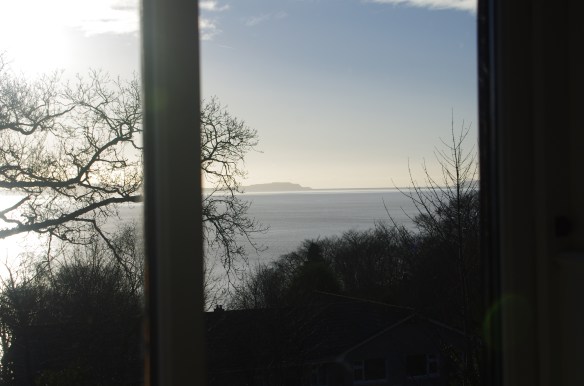
Having said all that, I am never happier than when at home, and this new home has been good to us so far. It is warm, it is surrounded by wilderness- red squirrels, deer and owls. It has old oak woods for a garden, through which you can see out along the Clyde towards Ailsa Craig.

There is a real blessing in a created space to share with those you love- something that not everyone is able to experience. I am deeply grateful.

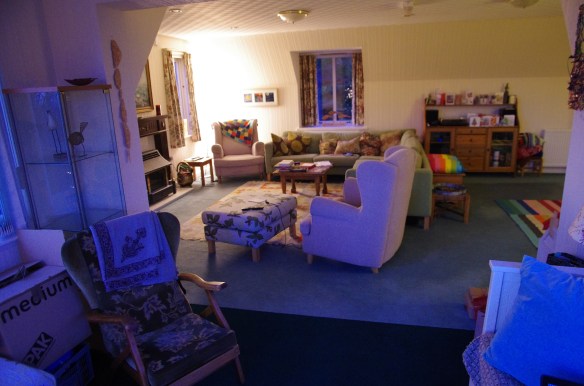
imgp9416

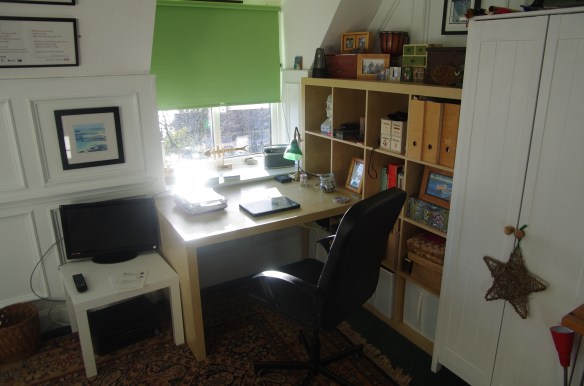
For the first time too, I have my own desk from which to write. Here it is;

imgp9417

Assuming I will ever deal with the distraction-

imgp9418

Superhero…

marvel-superheroes1

(Written in the wake of my son watching yet another one of those superhero films. Wondering what they tell us about our culture and our aspirations. And being a curmudgeon.)


Superhero


Tonight I am special

The atomic spider bit deep and now

I top the bill of this everyday freak show

looking down from height, my laser vision

scanning for photogenic girls to

save from the clutch of some comic-cut villains

because every empire needs a

convenient kind of evil

to scare the children to their bed and

the parents to their polling booths


Tomorrow I will be ordinary

I will commute through the same crowds as the crowd

all of us on our way to work in shops to earn money

to spend in other shops and if we are lucky

a little will be left for some compensatory

distraction. A movie perhaps?

We can watch the gods up there in their plastic palaces.

Fearing this truth:

that if we are all extraordinary

then none could ever be a super

and who would want a world like that?

TFT Christmas card, 2016…


imgp9348


Baby, breathing


A madman ascends to the gilded throne

The whole Empire convulses

A star tumbles down from the Eastern sky

Appalling portents in every Facebook feed

For we are, it seems, all doomed

(Apart from the celebrities)


Meanwhile in an alley behind the Chinese takeaway

Joseph and Mary are bin diving

Because nothing is made from wood these days

And they have no plastic

Mary wonders where they will lie

There are no stables in this town


It was always this way my friends

Just when hope was almost lost

When joy was replaced by mass distraction

And peace replaced by fear

Love comes down

Like snow


Like the soft sound

Of a baby

Breathing


The people of Aleppo…

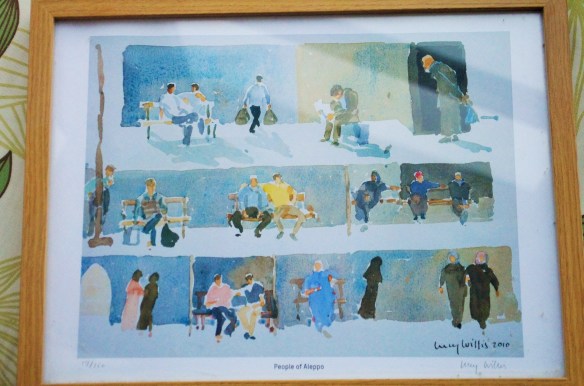
During our on going clear out pending next weeks house move, I came across a picture that Michaela bought for me a few years ago. We had agreed to only buy presents from charity shops and she had found a watercolour print- a series of quick wet into wet sketches, entitled ‘the people of Aleppo’.

IMGP9386.JPG

Of course, since then the picture has a whole new level of significance.

A couple of friends sit chatting on a park bench whilst someone takes home the shopping. An old man reads the newspaper while his friend pauses to chew the fat. Women walk home arm in arm and everyone lives outside in the sunshine. Life is ordinary, and all the more beautiful for that.

What happened to these folk?

Did they all survive, or are some still buried in the rubble of their former houses? Outlasted by this portrait done in happier times?

Have some fled and become refugees, scattered across a European landscape increasingly hostile to their presence?

Are some still there? Sheltering in cellars. Starved. Fearful. Awaiting the retribution of the approaching government troops.

Have some become heroes, rescuing others as part of the White Helmet organisation?

We will never know, but spare some thoughts friends for the people of Aleppo, who find themselves at the centre of a power play that they can never win. May they survive, somehow, to a time when they can once more sit in the street with no fear of bullet or barrel bomb.

I searched for the artist, Lucy Willis, and discovered that she is selling prints of this painting and others via Oxfam in aid of the people of Syria. Check this out here, as these might make fantastic Christmas presents.


The second simplicity…

israel-125year-old-man-laughing

I should be packing, but here I am again. I felt compelled to reflect on one of Richard Rohr’s meditations that landed in my inbox like manna. If you have not heard of him, you might like to check him out here, via his Centre for Action and Contemplation website.

Richard Rohr speaks of the one-ness of all things; the hope that we might come to understand ourselves not as individual units of consumption, satisfaction and distraction, but rather as held in a relationship with all things.

Today he used this wonderful phrase ‘the second simplicity’, which he defines like this;

As we grow spiritually, we discover that we are not as separate as we thought we were. Separation from God, self, and others was a deep and tragic illusion. As we grow into deeper connection and union, the things that once brought meaning and happiness to our small self no longer satisfy us. We tried to create artificial fullness through many kinds of addictive behavior, but still feel empty and nothing, if we are honest. We need much more nutritious food to feed our Bigger Self; mere entertainments, time-fillers, diversions, and distractions will no longer work.

At the more mature stages of life, we are even able to allow the painful and the formerly excluded parts gradually belong to a slowly growing and unified field.  This shows itself as a foundational compassion, especially toward all things different and those many people who “never had a chance.” If you have forgiven yourself for being imperfect, you can now do it for everybody else too. If you have not forgiven yourself, I am afraid you will likely pass on your sadness, absurdity, judgment, and futility to others. “What comes around goes around.”

Many who are judgmental and unforgiving seem to have missed out on the joy and clarity of the first childhood simplicity, perhaps avoided the suffering of the mid-life complexity, and thus lost the great freedom and magnanimity of the second simplicity as well. We need to hold together all of the stages of life, and for some strange, wonderful reason, it all becomes quite “simple” as we approach our later years. The great irony is that we must go through a lot of complexity and disorder (another word for necessary suffering) to return to the second simplicity. There is no nonstop flight from first to second naiveté, from initial order to resurrection. We must go through the pain of disorder to grow up and switch our loyalties from self to God. Most people just try to maintain their initial “order” at all costs, even if it is killing them.

As we grow in wisdom, we realize that everything belongs and everything can be received. We see that life and death are not opposites. They do not cancel one another out; neither do goodness and badness. There is now room for everything to belong. A radical, almost nonsensical “okayness” characterizes the mature believer, which is why we are often called “holy fools.” We don’t have to deny, dismiss, defy, or ignore reality anymore. What is, is gradually okay. What is, is the greatest of teachers. At the bottom of all reality is always a deep goodness, or what Merton called “a hidden wholeness.”

I love this. Not because I think that I have yet embraced this deeper sense of who I am in my second half of life. I can lay claim to no great maturity, and have more than my fair share of mid life complexity. However I know that in these words there is such hope.

Not just hope for a life of some kind of Zen like personal satisfaction, for what is the point of that, but rather a hope for all things, that at the end of all things, there is a wholeness that holds everything.