Poverty, fast food and ignorance, 2015…

Reversing poverty requires a more progressive tax system and a shift in the political mindset

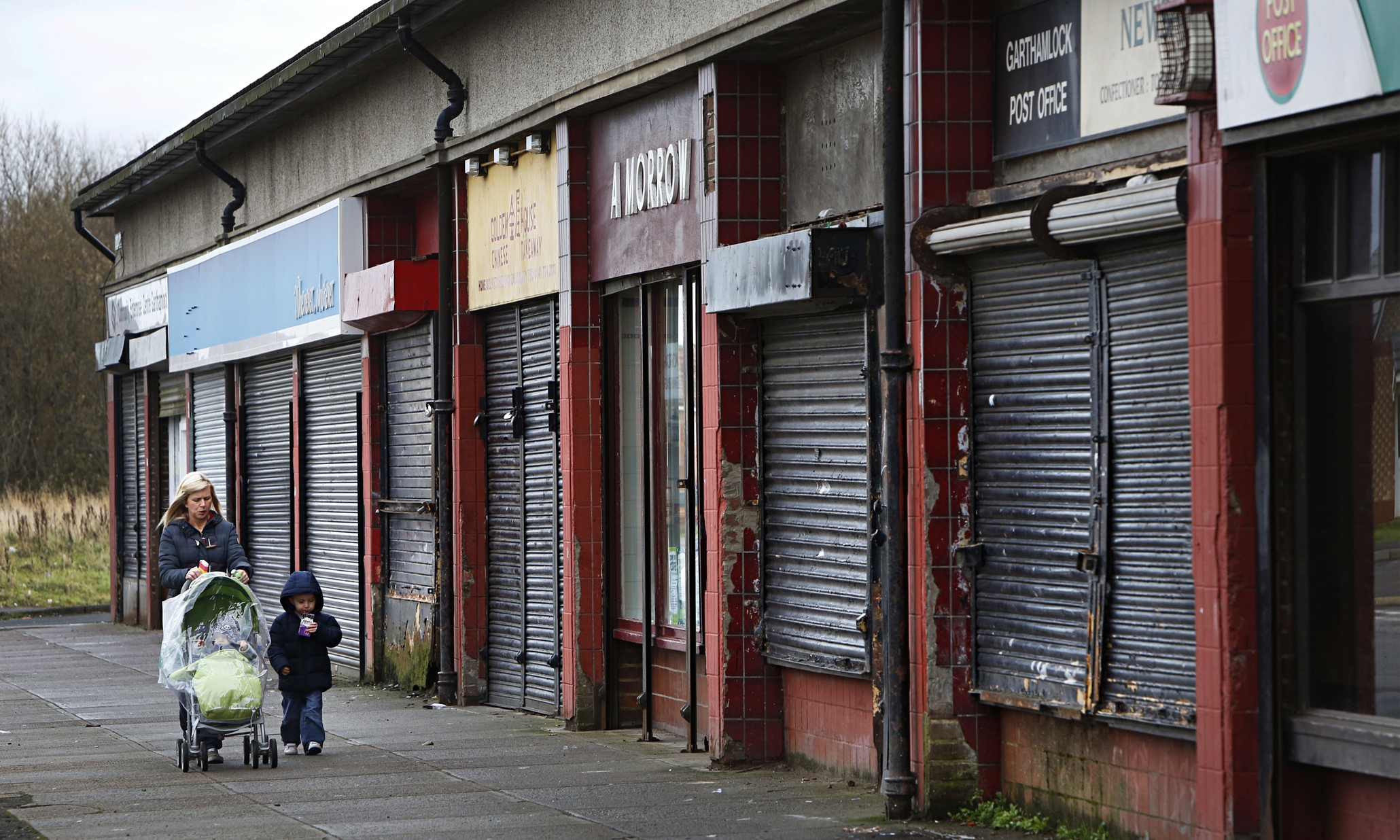
I heard an article on the radio the other day about fast food workers and their terms and conditions of employment that rather shocked me. It is no secret I suppose that those working in the catering industry are amongst the lowest paid and enjoy the poorest job security. The ultra-efficient food production system that gives us those addictive hits of over-salted fats and complex carbohydrates is in some ways most impressive. When it was being refined in the USA they were keen to extract every dollar out each gaudy outlets and so the human components become carefully managed production units, managed according to the footfall on an hour-by-hour basis.

What I did not know is that around 80% of those working in the fast food chains that we are all so familiar with are on one of those notorious ‘zero hour’ contracts, which basically means that they work only when required and their employer sends them home when demand slackens in order to save money. Many also have to sign an exclusivity clause in their contract that forbids them working a second job, so ensuring their continued availability, even when not actually being given paid employment. It will be no surprise to hear that this workforce has a very low level of unionisation.

One man told a story of how he always finds himself running out of money towards the end of his two week pay cycle, running out of food a couple of days before pay day, and then waiting at the cash machine at midnight as the money cleared in his account in order to be able to eat.

He described how difficult it was to keep working in the fast food industry when he was so hungry.

Someone employed to make the food that is almost the definition of excess (rather than need) is going hungry. Is this the society we are making; one in which a wealthy international elite can manipulate markets to the maximisation of their own profit margins whilst those at the bottom end of the ladder literally go hungry?

I think it is even worse than this however- somehow we have allowed ourselves to become convinced that this is a good thing; that hunger leads to aspiration and in turn to greater effort; that a good society is based primarily on the protection of wealth creation for the few so that the many can aspire to greater riches themselves. Alongside this is the ‘austerity’ narrative- the idea that the poor and old and weak are an unaffordable burden on a society that has been spending beyond its means and that this in turn rewards indolence and fosters worklessness and idleness.

What is almost entirely missing from the debate around these issues is any sense of objective analysis of the causes and effects of this poverty and growing inequality on our society. It is not as though this research does not exist- accumulated over 60 years by post war social scientists. The evidence base that could and should be driving our policies appear to be irrelevant to those in power whose reference points and inspiration appear to come from right wing think-tanks driven by a neo-liberal agenda, starting with ideas of libertarianism and concentrating on shrinking the state to allow full rein to the free market.

This is not evidence based policy, carefully thought through according to what we think might be the least worst option. It is driven instead by ideology and the primacy of the profit incentive. There needed to be a story told to justify the bitter realities of this ideology, and we have accepted it almost without question.

But there is much that would challenge this narrative should we care to look for it. I grew up in a single parent family, entirely dependent on the welfare state. Back in the early 80’s Britain was in the grip of another recession, one which saw over 3 million people unemployed as Thatcher rolled back all those state owned and supported industries. It is perhaps sobering to note that since 1983, the UK economy has doubled in size but the proportion of household falling below what might be regarded as minimum standards of living has also doubled.
Other research would suggest that 2 million more children live in deprived households than in 1999 and food poverty (measured in terms of numbers of meals per day and things like meat/fresh fruit and veg) improved in the last decade but has considerably worsened over the last 10 years. These issues are simply not on the national agenda however. Rather we have individualised everything as if the only cause of poverty is the individual action (or inaction) of the poor themselves.
As a social sciences graduate and someone who has worked in and amongst the poorest of our society for my whole career, I asked myself what I knew that set me at odds with the current direction our society is taking, and came up with this list;

  1. Inequality leads to unhappiness
  2. Poverty brutalises
  3. Poverty has to be measured relative to neighbours
  4. Poverty makes people ill
  5. Poverty is self-sustaining
  6. Poverty is mostly heritable
  7. Poverty is a Political choice
  8. Poverty is a theological issue

I wanted to think more about these things, to weigh again the research evidence and to raise my own small voice to push against those in power whose self-serving narrative is so apparently seductive to those of us with a degree of comfort, particularly when the mix is laced with an unhealthy dose of fear and prejudice.

So my plan is to revisit some of these issues here over the next few weeks and months…

sea tree swimming…

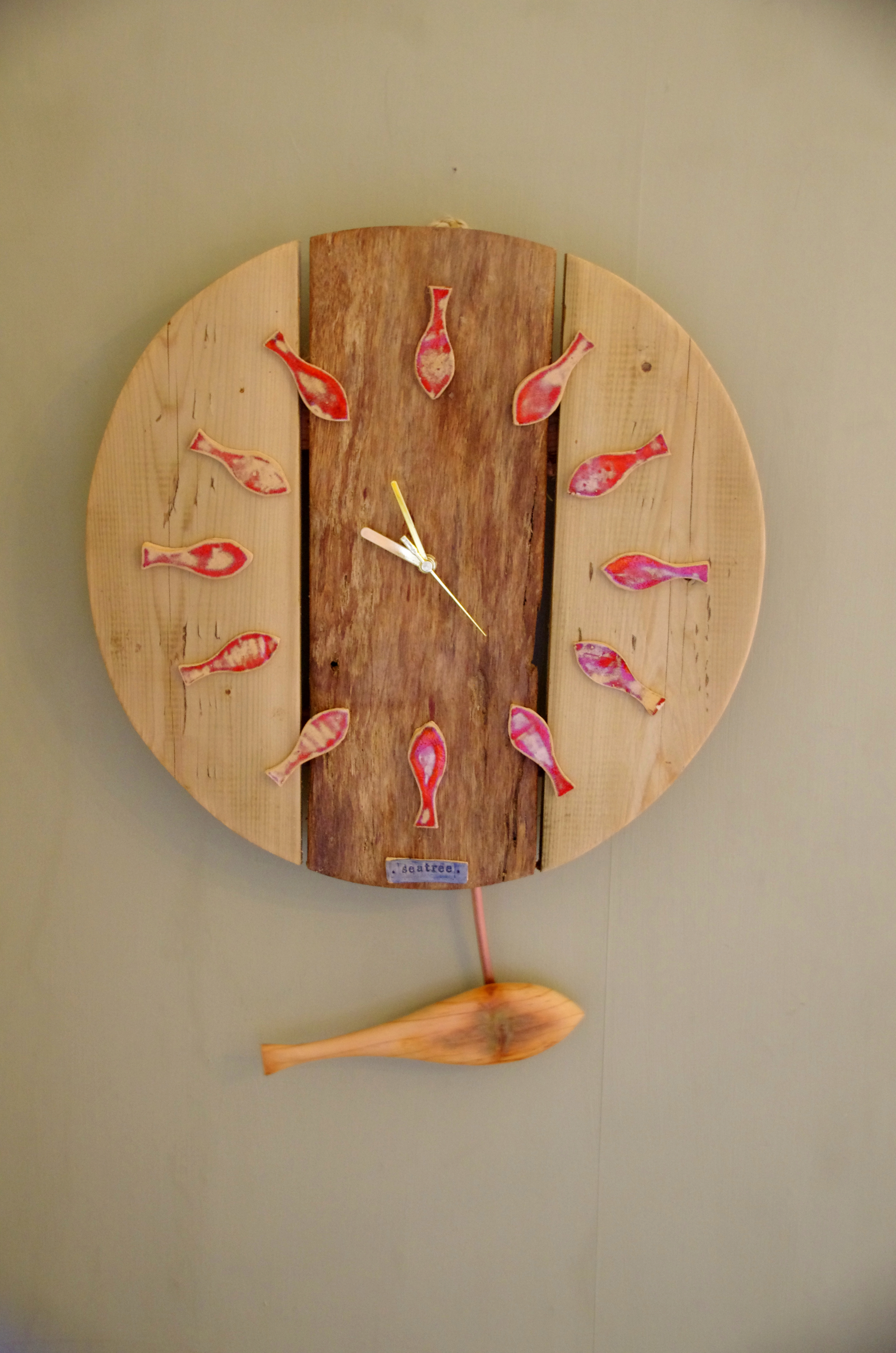
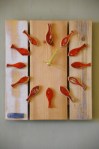
Fish clock, with pendulum, sea tree

A few years ago, partly as a means of coping with stress but mostly in continued longing for small acts of creativity, I started making things out of scraps of driftwood, copper and stones. Michaela was already creating all sorts of other things too; mainly from clay, so we started to make things together.

We made a lot of mistakes, but slowly we started to evolve a style of sorts; translated in the form of colours in glazes, raw materials and a general ethos; things had to be simple, made from recycled and found objects, or contain something of the sea and the sky. We started to gather the things we made under the label ‘seatree’.

For a while, we had a dream of this becoming our main source of income. Perhaps we could actually live in this simple way; making things that could provide for our needs, which were to be simple. In part, these dreams were thwarted and so they faded. I found it hard to find motivation to go back into my workshop. I was so busy with other things, so tired after my day job.

However, seatree never fully submerged; it was a thing that still bobbed around in the flotsam of our lives, bashed about on the odd circumstantial rock though it might be.

More recently, the things we make seem to be becoming appreciated. Galleries in a few different places are stocking them and things are selling. This is a surprise to me; I will never again sit at one of those dreadful craft fairs if I can help it, with people making appreciative noises whilst walking on by. What we make is so simple after all.

Perhaps we will never earn enough money from these things we make to making a living, but that is OK. On Saturday the rain fell, meaning that the cricket game I was due to play was cancelled. We have orders, so into the shed I went, with some reluctance.

But then I was lost into a familiar world of wood, of tools, of shaving and shaping. 10 hours later, I emerged, sore, dirty and yet alive- content within my dust-covered skin.

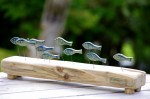
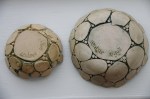
Here are some things that we have made;

The hoards massing at our borders…

calais-French-riot_3349918b

I have just listened to a news item about the ‘Migrant Crisis’ in Calais. The language used made me feel a bit sick. Apparently the migrants ‘stormed’ the tunnel terminal and ‘overwhelmed’ the customs officials who were ‘engaged in a constant battle’.

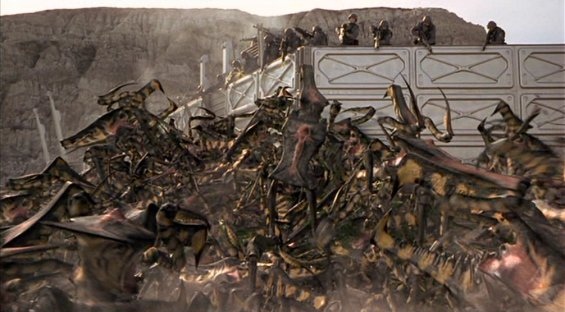
What struck me was this; the narrative we are being given reminded me of those ‘Star Ship Trooper’ films in which hoards of non-human insects (Migrants) are massing to overwhelm the poor humans (us)

This version of the story is unrelentingly one-dimensional. It plugs in to our deepest fears in exactly the same way as films about invading insect killers. The implication is that we are under threat- our homes, our children and our individual security is directly at risk. The outsiders have no story of their own that is relevant here- they are less-than, not-human, evil and malevolent.

star ship troopers

This narrative fails on so many levels as an adequate way to describe what seems to me to be happening in Calais;

  1. Perspective- last nights events involved around 150 desperate people. They were not an army, they had no claws or tentacles. They want only to find a better life for themselves and their children. There will be far more violence each evening in the drinking zones of our cities.
  2. The meaning for our comfortable lives. What does it say about our world that the huge inequalities and conflicts can stimulate such acts of desperation?
  3. What is good and what is evil here? There are other narratives that might shed light- the story of the pioneers who seek new opportunity in another land.
  4. Or an understanding of the legacy of Empire and the continuing enforced North/South inequality that sustains our own lifestyles at the expense of those parts of the world where the ‘others’ live.
  5. The operation of international capital that rewards the very few at the cost of the many.

Perhaps more than all of this however is the fact that when we treat the outsider as less than human, we too lose our humanity. We are diminished.

People like me, who have tried to understand the world in the light of the stories told about Jesus, have a particularly pressing need to watch for narratives like these. We are are called always towards the other; to seek ways of understanding, grace, engagement, love. This narrative takes us in a totally different direction from the one described above.

Firstly it should perhaps force us to reconsider our own feelings of fear and threat and to place them alongside the manifest unfairness and heartbreak that others are experiencing right on our doorsteps.

Next we should look for the real stories that are being lived by the other- those making incredibly perilous journeys (as humans have always done) towards the hope of better lives where they and their children might flourish. Some of them are fleeing oppression, violence and poverty. Others are educated with gifts and abilities that might be desperately needed within our stagnating aging population.

Finally, we should always resist the voices that demonise and scapegoat the other in order to achieve their own narrow political agendas. There seems to me to be a lot of this around at the moment and there are plenty of warnings from history of where this kind of thing leads.

Garden deer, the new generation…

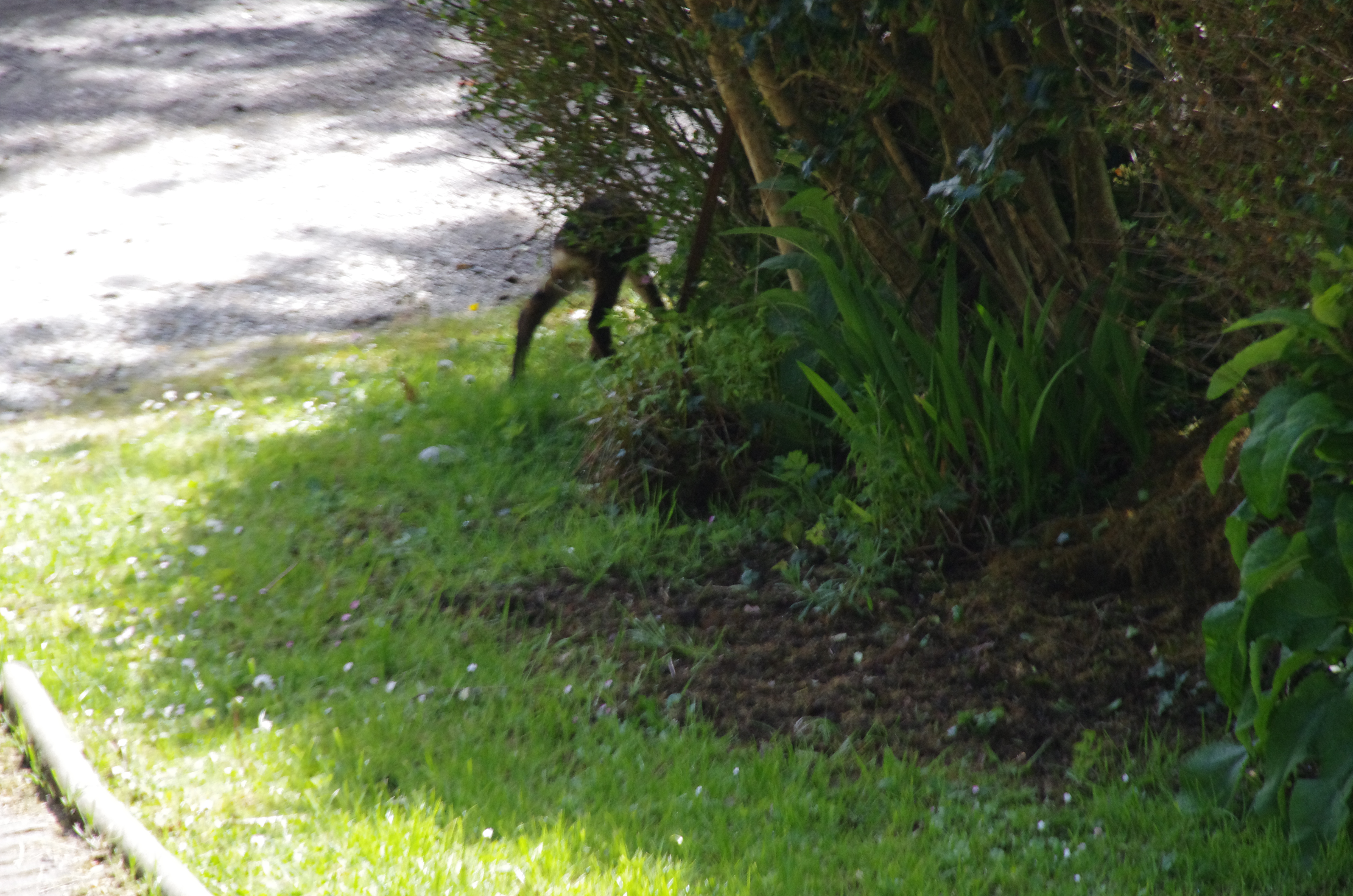
IMGP7988

Will spotted it first; a tiny shape nestled into the hedge.

S/he staggered on ungainly tiny legs, watched from distance by an anxious mother before settling down, quivering slightly, over-reliant on speckled disguise.

Botanical…

Spring 2015

I was in Edinburgh on Sunday with an old old friend, Simon. We were there to take Will to play cricket- a region match, West Scotland against the East. West won easily thanks to a century from one of the lads. Will only bowled 3 overs (1 for 11.)

Simon and I found time to walk the streets of the posh part of the city. It seemed like a place in a country I did not recognise; massive houses, posh cars, private schools (we were overshadowed by the massive gothic confection that is Fetters College, Blair’s place of unfortunate education.)

We stumbled across Royal Botanic Gardens Edinburgh and as Simon is a Landscape Architect by profession we had to go in. Not that I minded- I love gardens. I love the tranquility that an organisation of green things can convey. It was a lovely thing to do- walking round the place with my old friend, not needing to worry about silence but still quick to find slow moments of humour. It was hard to escape a slight feeling of unreality though- all the plants are imports, aliens, refugees, asylum seekers. Some were stolen by Victorian plant hunters and collected for their sheer weirdness, even though their survival in this new climate required a vast heated glass house. In the midst of those wealthy tartan streets it was easy to empathise.

The gardens are free to enter, although you have to pay to go in the glass houses. It is worth it though. (Locals to Dunoon- you get in free if you are a Benmore Garden ‘friend’.)

Losing our compassion…

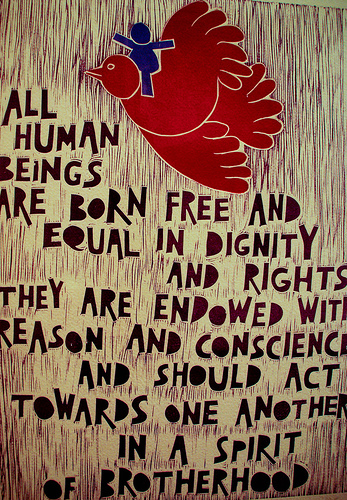
udhr_colour

The election is over and they won.

I am not quite sure who ‘they’ are any more- but I know them when I see them, I know them when I hear them. They are the ones who have an agenda that is motivated by many things but whose compassion is buried deep; it is not entirely absent, but is nevertheless entirely subordinate.

We have been fed a great deceit; that in a time of austerity, self interest is the only logical path. We have allowed ourselves to be convinced that efforts towards social justice are politically naive, as the poor only have themselves to blame. We have been convinced that the heroes of our society are the ‘wealth creators’, whose laudable desire to accumulate is the only social good that matters. The outsiders? Keep them out. The sick? Let them suffer quietly (and cheaply). Those fleeing violence and wars and poverty from other parts of the world? Not our problem.

So it is that our leaders are about to do away with the Human Rights Act- who wants Johnny Foreigner telling us what we should or should not be doing to the weakest in our society?

So too are they going to find ways of cutting £12 billion from our welfare budget- at a time when our population is aging and suicide rates are on the rise from all sorts of brokenness at the cutting edge of austerity. (Remember that only 6% of Welfare is spent on unemployment benefits. Pensions are by far the biggest share.)

Up here in Scotland we can feel slightly smug- after all, a surge of left leaning politics means that we are different. Except this difference comes at a cost- the old cross-border alliances are broken.

It is all about leadership, some say- we chose the wrong man, perhaps the wrong brother. He did not get his message across. Perhaps not, but I find myself wondering again- where did the compassion go?

I will not believe that this is the best we can do. I will not believe that self interest is ever the route to happiness and healthy societies. It walls us off in our small private spaces, counting each precious pinched penny and jealously guarding every inch of privet hedge- as if this was the way that life could be measured.

Christians should know better of course- we have read the beatitudes, but set them aside in favour of a twisted version of John 3 v16. We pretended that sober respectability equated to a very suburban kind of salvation, forgetting that our Saviour was homeless, workless and consorted with all sorts of unproductive people reliant on benefits and charity for their daily bread. Forgetting that at the end of the day, only three things remain; faith hope and love…

And the greatest of these is love.

Wilderness retreat pictures…

Looking back

We are just back from our annual Aoradh Wilderness retreat. This has become the highlight of my year for a whole variety of reasons; the chance to be deliberately reflective and prayerful, to share a beautiful place with others, to make new friendships and to reconnect with old friends.

A few days before I went I was rather dreading going though- I was extremely busy, chasing myself in all directions to try to pull things together for work, for various cricket matches and for the plans for the weekend. Several people were not able to come leading to the last minute scramble to make sure transport arrangements were viable. All of this meant that actually all I really wanted to do was to spend the weekend at home in front of the TV. However, the island cured all of that…

This year I had decided to give Cara a try- an island just below Gigha- but the weather meant that a risky transfer from boat to tender to beach was just not sensible, so we defaulted to an old friend, Eilean Mor in the MacCormaig islands. I have been there many times now and as it is such a tiny island I have come to know every inch of it. As Crawford said however, after the slight disappointment of not going somewhere new, this familiarity helped some of us to wind down and just settle into the lovely place.

The weather was foul for some of our time there too so the fact that Eilean mor has a bothy turned out to be something of an advantage. The other low point of the weekend for me was that I decided (for the first time) to take an air bed. I was the oldest there after all so I felt I had earned the right. Unfortunately I failed to ensure it was not punctured and like my dreams of comfort, it surely was. Not even a valiant attempt to mend it with melted plastic was able to solve the problem.

The weekend was really wonderful however- I laughed so much it hurt and had some really lovely conversations, both earthly and heavenly. There was much profanity, no small amount of flatulence and food was abundant. The otter was glimpsed by most, we took in a sea eagle or two and our wildlife experts had much to inform us of.

Thanks friends for our community and our shared journey- particularly those who traveled far (in a breakdown truck!)

Blogging Holy Week; Resurrection…

IMGP7698

So, here we are dear friends, after a sun drenched Easter Sunday. All things are possible. The death that swallowed light and life is over and new life has come.

By way of proof of this, Michaela and I spent our Easter Sunday on Inchcolm Island in the Firth of Forth, visiting the ancient Priory and soaking in the peace of the place, despite the tourists with their selfie sticks and the constant noise from the kingdom seagulls on the cliffs above.

The Priory is full of small spaces of life and worship, mostly intact but in places with half a vaulted ceiling curling like a waving hand to the years now past. Years full of all sorts of history, but speaking to us of a time when people thought that one of the prime responsibilities of Christians was to set themselves aside to pray- to pray for the success of the harvest, and the health of their Kings and the productivity of their Queens. To pray for success in fishing and victory in battle. They were the beating heart and the spiritual voice of their age.

I make no value judgement about the spirituality that these men lived their lives by – after all mine is surely just as compromised by my own prejudice – the question for me is for we people of faith to consider again what might be the beating heart of our own age that we need to tune ourselves to, and the spiritual truth that we should seek to voice.

For this has to be our quest, to bring the essence of what we are to Jesus, and allow this transformative encounter to lead us outwards on a new mission; not the mission of a previous age, or the mission that belongs to others, but our own mission. Our own small, humble, broken, imperfect crusades (minus the sword and spears).

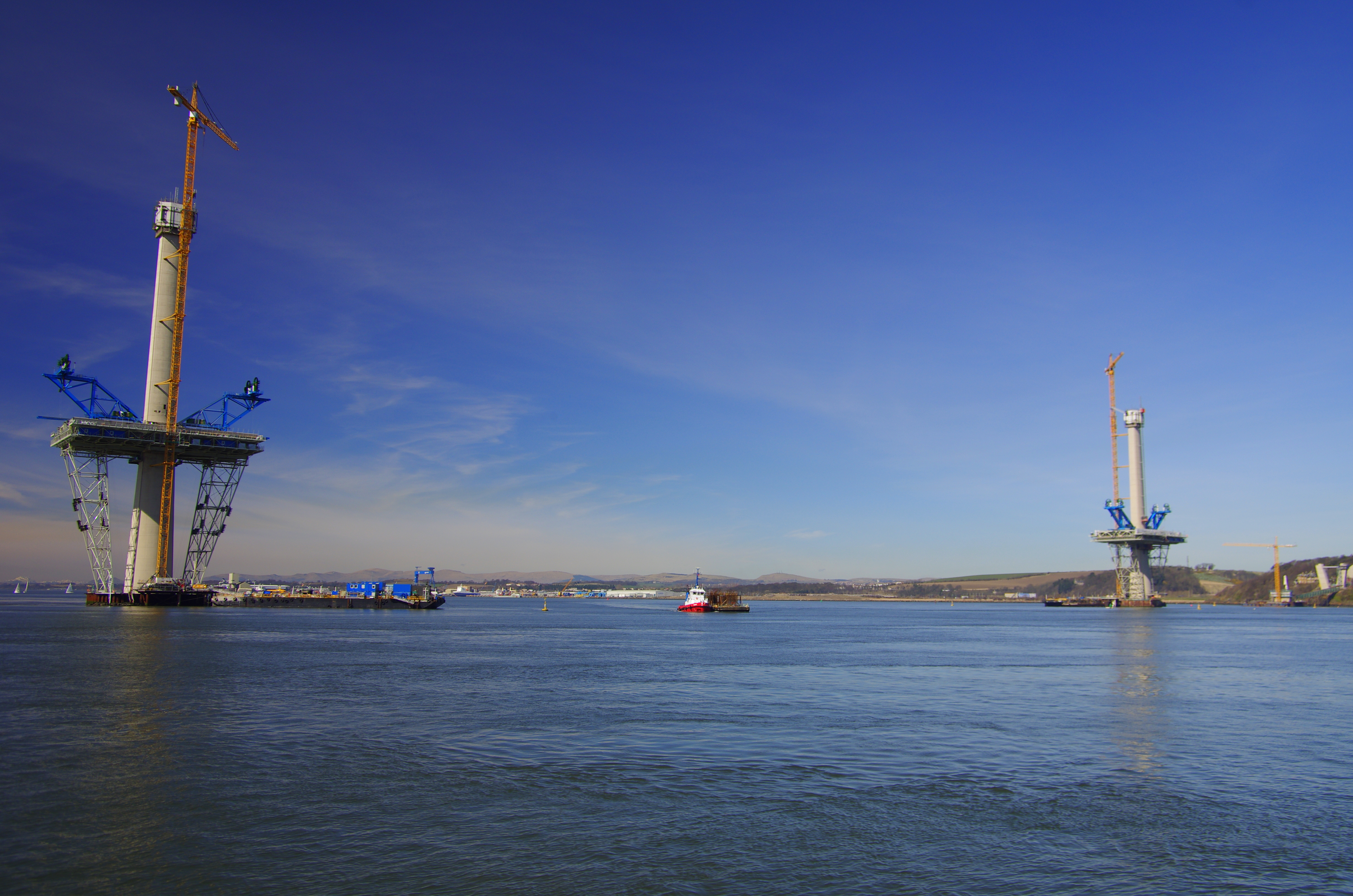
They are building a new bridge over the Firth of Forth. Giant new towers are thrusting up from the river bed and cranes are raising and lowering the girders and vast bucket loads of concrete. However all this is happening in the shadow of two other bridges.

There is the famous Victorian iconic masterpiece that we all know the shape of so well. It still carries rail traffic but it was not sufficient to meet the needs of modernity, so the Forth road bridge was erected, still carrying thundering loads of lorries and crowds of commuters, cursing as they inch to work through the rush hour traffic. This bridge is showing its age, hence the requirement for a replacement.

All of which is my (rather laboured) way of offering a prayer that on this Beautiful Easter day, the foundations of many a new bridge might be laid, over which we might travel together to new peaceful places. For what else might new life be for?

IMGP7711

IMGP7718

IMGP7719

Blogging Holy Week; Good Friday…

Carved stone cross, crucifixion, detail

Today marks one of the pivotal days within the Christian calendar so lets pause and dwell for a while on the story we find ourselves part of…

The scandal of the cross.

The unreasonableness of the cross.

The injustice of the the cross.

The laying down of all power and majesty; the ultimate vulnerability of the cross.

The end of all hopes on the cross.

The defeat of the cross.

The humanity of the cross.

The mystery of the cross.

The enduring symbolism of the cross.

ancient cross carved inside the hermits cave- 7th C

Perhaps too it is appropriate to personalise this story a little more, and ponder again how it relates to us; to our lives, our small stories.

I am increasingly uncomfortable with the atonement theories that I grew up with- if you are interested, some of my thoughts about all this can be read here.

Rather I find myself returning to another old word- redemption defined thus;

1.

an act of redeeming or atoning for a fault or mistake, or the state of being redeemed.
2.
deliverance; rescue.
3.
Theology. deliverance from sin; salvation.
4.
atonement for guilt.
5.
repurchase, as of something sold.
6.
paying off, as of a mortgage, bond, or note.
7.
recovery by payment, as of something pledged.

Somehow, I am being redeemed. How and why I am not sure, but nevertheless I chose to believe that engagement with the love and life of Jesus changes, restores and rescues me so that the man that I am is both more and less than I was. I also know this process to be necessary and incomplete.

Today I will carry a small cross, not because I believe myself to be a finished article, but because I know myself to be needful of redemption.

May you carry yours also.