Doing church the new/old way…

a church under reconstruction?

Michaela and I have just had a really lovely trip up north to spend some time with friends who are part of Garioch Church. We had been asked to be part of something called a ‘sounding board’- a group of people from outside the church who meet a couple of times a year to reflect on where the church is heading, and what challenges it is facing. We were looked after by Andrew and Jane magnificently and it was a privilege to hear something of their story, not least because it enabled us to reflect anew on our own.

Garioch is an area on the outskirts of the city of Aberdeen- a string of villages over a 10-15 mile area. It is a largely affluent place, with pockets of deprivation, fueled by prosperity from the oil industry. We had never spent any time in that part of Scotland before, and in many ways it felt like a different Scotland to the one we knew. It was busy, bustling, full of industry and people had a pace of life very different to our small west coast town.

The church has been trying to find a way of being authentically present in this new context. What they have done is really interesting and genuinely innovative. Rather than seeking to follow a familiar model of church planting, which goes something like- small group of people with lots of energy start a gathering, invite friends, it grows and so house becomes too small so they rent a hall, it grows so they need to buy own hall, appoint staff, etc, they did this;

Gairioch church wanted to remain based around homes, families, small community. They wanted to be a local, connected expression of faith- engaged in their small context. What they now have are three thriving home groups which are the focus of ‘church’. Once a month they meet in a school hall where they can make a bit more noise and feel a wider sense of connection.

Simple huh? Sounds very like that elusive but often used idea of trying to connect with a New Testament idea of what church looked like?

Alongside this deliberate emphasis on the small, they have found themselves having to grapple with some familiar themes- what does leadership look like in this context? How do you survive community? How do you continue reaching out when there is so much to do within the social context of community itself? What does teaching look like when traditional ‘preaching’ no longer fits? What about all the children? How do we manage all these competing demands with such limited time?

It was rather special to see them feeling for answers to all these questions- to appreciate the freedom that allows them to try, and the long tradition of Christian collectives who have done the same.

My own small community feels special too. We are different, in that we are one (rather isolated) community, and in many ways the pressure to lead, to organise, to manage is very different. As a result of this we are less hierarchical, more driven by the need to be joint travelers, not leaders and followers. This made for some interesting parts of our discussion at the sounding board day. How much do we as leaders, in taking responsibility, remove this in both obvious and more subtle ways from the people we lead?

I came home inspired, humbled and also grateful for the fact that people remain inspired by Jesus towards the new. That Christians in these times are still looking for new ways to love better, to live better, to serve better.

Yesterdays post was a rather cynical one about church names- I removed it as although a whiff of controversy in blogging is usually a good thing, I never like giving offence, and it turned out that some friends of mine have a church whose name I accidentally lambasted. As part of yesterdays post however, I said this, and I will repost it as a prayer for our churches everywhere!

I think the words of Jesus lead us on a path emphasising a whole different set of principles. Rather than our success he promised that the last shall be first. Rather than our satisfaction, he promised a hard road. Rather than storing up comfort and riches he pointed us towards the lost and the least.

When Church is defined as being the provider of success and abundance I also cringe for those whose experience has NOT fitted into this shiny stereotype. People who even whilst in this kind of environment feel unable to share pain and brokenness. People whose lives fall apart for no apparent reason.

I pray that the people in the shiny Churches grow in to abundant life, so that they can become a well of blessing for the rest of us whose lives are full of beautiful aching brokenness…

I think we can take heart and courage, because good things are growing in the cracks of Old Church.

The spirit of our age; home ownership…

our house, top left

What defines the people of Britain in 2013? What passions push us, what motivates our activity, what things give our lives meaning and satisfaction? I think these are important questions, ones that each generation need to ask, particularly those who have faith. We do this not just to understand, but also to respond in one of two ways;

  1. To celebrate what is good- to participate, to encourage. To enhance the flavours by the sprinkling of salt. To shine light onto good things
  2. To protest and critique when things are bad- where the image of God is trampled, where people are oppressed, where creation is being damaged, where violence rules

This is part of a series of posts in which I will try to grapple with some of these things within my country.

I live in a quiet seaside town, in a large house that was built back in the early Victorian era. Our house overlooks the sea and has lovely high ceilings and an open fire place. If you do not look too close at my rather rudimentary DI, usually done on a minimal budget it might be seen as a place that is the centre of what we British people all long for.

A large house, with views, sort of in the country. If we could have this, life would be happy. We would find fulfillment. We know this because the TV is full of programmes that tell us so. Location/Escape to the country/Grand designs/etc etc.

There has been a major change to all this within our lifetimes. In 1918 just 23 per cent of households owned their home. This figure began to rise quickly from 1953 and by 1971 equal numbers owned and rented the property they lived in. In the 1980’s however, Margaret Thatcher introduced a ‘right to buy’ scheme for people who lived in council-owned property (which was itself a massive reaction to slums owned by private landlords, reflected in a massive post-war house building boom.) Thatchers idea spread like wildfire for whom would not want to stand on their own piece of little Britain?

The introduction of the right to buy in 1980 saw a fall in social housing tenants, while the proportion of people in private rented accommodation fell steadily from 76 per cent in 1918 to a low of 9 per cent in 1991 before climbing after that. Prices have been booming and despite the other problems in the econom, they remain high, even climbing still.

Nationwide_450x303

Since then, there has been a slight dip in the proportion of people who own their homes; it currently stands somewhere around 65%. Hardly surprising given the current state of the economy. Our aspirations have not changed but in this country the rich are getting richer and the poor are falling through the cracks.

Also, the high price of homes makes those of us who own property feel very smug and safe. We are sitting on an appreciating asset with that wonderful word ‘equity’. However this means that other people, particularly our kids, will find it next to impossible to join us on that over-used phrase- ‘the property ladder’. The bottom rung is out of reach for most ordinary people. This enforces a sense of social injustice; what seems like a natural right for some is a distant dream for others.
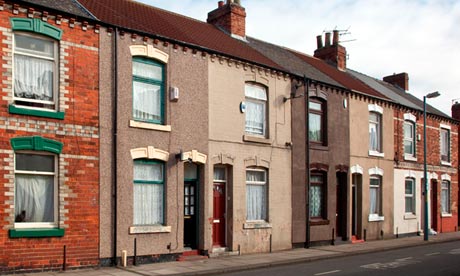
Houses in Middlesbrough

The questions that started me writing this post however is less about the economics of all this, and much more about what this trend of property worship says about us.

Let me tell you a couple of stories from the boundaries of my garden.

On one side there is an argument about the road access, and ownership of some land that has been a commonly used path for generations. Solicitors have been engaged, damage has been done, threats and violence resulted in the police being called and charges leveled. We have kept out of it all and tried our best to remain in relationship with both sides.

More recently another neighbor applied for planning permission to convert property to offer as a holiday let. This was refused at pre-planning stage because of various reasons, primarily the increase in traffic on our little access lane. They protested that their neighbours (us) were doing all that they wanted to do and more, and raised a complaint to planning about our micro enterprises. We had some sympathy about the apparent lack of fairness but tried to remind them that our house used to be a 9 bedroom hotel, and that what we were doing was relatively low scale compared to what it had been previously. However, their response was to engage a high powered planning consultant who is now engaged in a campaign to close down what we are doing. It is all very stressful, but the real pressure on us is an inability to understand how any one can be so apparently vindictive.

A couple of streets away, another friend is embroiled in another dispute over boundaries. Mistakes made by surveyors and land registry people have now meant that her house has been built partially on land owned by another. He has no use for this land whatsoever, it is a strip of waste ground on the edge of a vast piece of other ground, but this man began a campaign of harassment in the courts and in person, trying to extort thousands of pounds from various parties. It seems likely that he knew of the error all along and was biding his time to make an issue of it all.

What is all this about? It is possible that some of the people involved (like the man in the last story) have some psychological issues, even to the point of anti social personality traits. However I also wonder if what we are seeing is an emerging consequence of the spirit of the age.

To be a property owner is to stand on your own mini empire. This gives entitlement, privilege and exclusivity. But all empires need to be defended. Threats to the empire (real or perceived) promotes feelings of fear, insecurity, anger. And nothing angers us more than the sense that our rights are being infringed; that feeling when something that is ‘ours’ is being encroached upon by another.

Rarely do we see this for what it is- a passing delusion. A construct of our ways of living, ways of communing.

There is a long tradition within agrarian economies in which ownership of (or perhaps more accurately access to) the land is vital. It give access, identity, belonging, community, vitality. Alistair McIntosh’s book Soil and Soul captures these ideas brilliantly. In our post modern, post industrial economy, these things have become distorted by seeing land not as a resource, but rather as the ultimate consumer commodity by which we measure personal value.

Carrie'sDreamHouse

What should our response be to all this as followers of Jesus? We have to start with the idea that Jesus had little time for storing up resources on the earth. The sermon on the mount was fairly categorical about all this. Simon Cross posted this quote on facebook the other day;

“The matter is quite simple. The bible is very easy to understand. But we Christians are a bunch of scheming swindlers. We pretend to be unable to understand it because we know very well that the minute we understand, we are obliged to act accordingly. Take any words in the New Testament and forget everything except pledging yourself to act accordingly. My God, you will say, if I do that my whole life will be ruined. How would I ever get on in the world? Herein lies the real place of Christian scholarship. Christian scholarship is the Church’s prodigious invention to defend itself against the Bible, to ensure that we can continue to be good Christians without the Bible coming too close. Oh, priceless scholarship, what would we do without you? Dreadful it is to fall into the hands of the living God. Yes it is even dreadful to be alone with the New Testament.”

Soren Kierkegaard.

Ouch. The call of Jesus was to build communities of love, and to eschew placing our security on earthly things. House ownership seems to run potentially counter to both of these calls on our lives.

Are we in the church less susceptible to house-idolatry, or perhaps even more so? I suspect that the average church goer in the UK is more likely than to be a home owner than not. How do we model a relationship to our property that is not dominated by the same petty-empire building agenda?

There are of course other stories of houses in the NT- Lazarus and his sisters Mary and Martha for example obviously had a big place, able to throw parties and welcome the whole of Jesus’ travelling band of misfits. Jesus loved Lazarus. Then there were all those places that Paul referred to in his letters where secret groups of people met to worship and share life.

The issue, it seems, is not the ownership, but the meaning of the ownership in the lives of those of us who own. Perhaps more importantly, the use we put our places to. There might be an extra pressure on we followers of Jesus who own. It might be that we become camels trying to fit through needles.

I would in no way set myself up as a shining example of how we can work out the challenge of this in our way of living. However, here are some of the things that we are trying to do.

  • To see our house as a resource for the Kingdom, not just ‘ours’. Running a business here has sometimes felt a little in contrast with this, but we see ourselves as primarily providers of hospitality
  • To refuse to participate in border squabbles. The house next door was partially on our land according to the land registry, so we changed the registry record. There is a bigger challenge with other neighbours as mentioned above, but recently we were able to give some roof slates to a workman working on their property. They probably do not know, but it felt like it was good for our souls
  • Being a good neighbour is a process of small acts of kindness and demonstrated positive regard. This is an act of will- wishing the best for those around you, not just peering and sneering, not participating in destructive gossip

There is also a feeling I have that churches can express a collective challenge to the dominant property worship. Many already demonstrate this by using church buildings in flexible community-centred ways, even though many of our church buildings are not necessarily the most warm and welcoming pieces of architecture.

I have this idea for an installation in the middle of my town. It will probably not happen as my friends in Aoradh will politely raise their eyebrows at another one of my crazy ideas and after humouring me for a while will politely change the subject. But the idea is something like this;

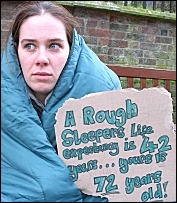
A shed in the middle of the square, painted, surrounded by pot plants. All in a ring of barbed wire stopping anyone getting near it. People will be asked to consider their own houses, what they mean to them, their regrets about broken relationships with neighbours, their worries about the exclusion from ownership of their children.

And also, to be grateful for the roof, the warmth and the place for family that many in the wider world, let alone in the UK, lack.

guildfordymcahiddenhomeless2

Home care

old-hands

This story has been on my mind over the last few days.

Increasingly, old people in this country are cared for at home. In some ways, we can be proud of this- people no longer go ‘into a home’ as they become more needful of care, unless they need ‘nursing care’ (which is often a rather ambiguous distinction however.)

This means that increasing numbers of older, frail people are living in their own homes, dependent on electronic monitoring systems and visits by care workers to assist with meals, toileting, even transfers from bed to chair.

And here is the problem. The cost of all this care is squeezed so tight that care workers have tiny slices of minutes before rushing on to the next home. Home care workers have long stopped all activities that are not deemed to be entirely necessary for physical care (cleaning, socializing, sitting with a cup of tea for a chat, shopping.)

Leonard Cheshire care have said that they will no longer participate in any contracts that slice care into 15 minute slots. Good for them. However, the real issue is the degree to which we allow care for our elders (the carriers of wisdom, learning and knowledge) to default to such a low common denominator.

Most home care is now provided by private or voluntary agencies whose workers are probably the lowest paid people in society. Councils are constantly trying to find ways of driving costs down, by re tendering or raising the thresholds for what they will provide. They describe the very real economic factors that force them to do this- reduced funding from central government, increased numbers of older people requiring care etc. These are complex, difficult times for social care provision and let no one pretend that the fault lies with the people trying to manage the front line of care. Some of the people (almost exclusively women) who do the hands on work are, in my opinion, only one step removed from sainthood.

But, forgive me for making a rather cliched simplistic point- Trident nuclear submarines cost about £2.5 billion per annum.

And another one- would an extra pound of tax per month from your wage slip make that much difference?

These are economic decisions that our government regards as politically unacceptable.

Yet we can live with the loneliness and isolation we inflict on our elders.

Home Care

.

The world has become these walls

Covered in pictures of what we once were

Before your heart stopped beating

Some days she hears him whispering

Pulling her closer

No regrets my love-

Just all our memories

Cradle to the grave

.

Each morning she waits for chemical relief

The meat of her is in rebellion

Each joint swollen like wet wood

Each vein pumping pitch black blood

Skin like a stone dressed in lichen

.

There is the rattle of the key from the keysafe

She stiffens, steels herself for dependency

As a stranger in a green tabard clamours in, high on bonhomie

The clock starts

.

How do I use of my fifteen minutes?

A hot meal or a warm bath?

That commode is unmentionable

What was it they said about having to pay for domestic care?

How did it get to this?

.

Then the girl is gone

And she sits alone again

Before her wall of memories

Why can’t we work together to stop children dying?

daniel pelka

So, another serious case review is convened to investigate the tragic circumstances of the death of a child at the hands of his parents.

This from The Guardian back in August. It makes for gut wrenching reading;

The mother and stepfather of Daniel Pelka will each spend at least 30 years in prison after a judge told them they had waged an “unprecedented” campaign of cruelty on the four-year-old boy.

Mrs Justice Cox said Daniel looked like a concentration camp victim at the time of his death and on the evening he suffered the fatal blow to his head had been force-fed salt and subjected to a form of water torture, which would have left him “terrified”.

The judge said it was possible the little boy, who was left to die in his filthy box room at the couple’s home in Coventry, may have been “lucid” after the final brutal beating and would have suffered “fear, anguish and physical pain” before losing consciousness.

She told his mother, Magdelena Luczak, 27, and her partner, Mariusz Krezolek, 34, that one of the most aggravating factors was the “chronic and systematic starvation” Daniel endured in the last months of his life.

“Both of you deliberately deprived him of food. He was literally wasting away,” she said. “His starvation was so chronic that his bones ceased to grow.” The judge reminded them that experts said during the trial that they had never seen such emaciation in the UK. “They likened his appearance to those who failed to survive concentration camps.”

Faced with stories like this, we first ask how on earth parents could do this to a tiny child. What kind of depravity could bring someone to such evil? Are they mad, or just bad?

Next we ask another question- why was nothing done about it? How come in this modern age, with billions spent on societal supports like social work, health, education and police, still we could not save this boy?

The most high profile case of the blame game that then follows on from these dreadful incidents was that known as ‘Baby P’. I have written extensively about this case- here for example. In this case, the media and the then Labour goverment (particularly Ed Balls) competed with each other to heap burning coals on the heads of people involved- particularly social workers. The arguments over how this tragedy became politicised and spun by a government on its last legs rages still.

Early signs are that we currently live in different times. David Cameron actually praised social workers in his speech at the recent Conservative Party Conference- which ironically contained many other policy statements that will fill social workers with rage and despair. The mood at present seems to be to accept that the nature of the social work task is incredibly difficult and that perhaps we can never save all children. There was another brilliant piece in The Guardian that tries to dig into the psychology of what happens when a social worker is faced with the messy reality of a family in difficulty (sorry, I know most of my references come from here, but it is my daily read!)

These were not bad or psychologically flawed practitioners; they were outmanoeuvred by aggressive parents, and overcome by the suffering and sadness in the atmosphere of such homes and in children’s lives. The case review on Daniel refers to how his home “was clearly one with a tense and sometimes violent atmosphere”. Caught up in such atmospheres, social workers become overwhelmed by anxiety and lose their purpose and focus.

Teachers, who tend not to visit the home, can be immobilised by how parents project into them their rage, lies and irrational beliefs – such as Daniel’s supposed eating “obsession”.

The case review concludes that Daniel “must have felt utterly alone and worthless … At times he was treated as inhuman, and the level of helplessness he must have felt in such a terrifying environment would have been overwhelming.” Perhaps the most painful truth that must be confronted is that, faced with the helplessness of children, social workers themselves can become helpless because they find the children’s suffering unbearable.

Every time we take a postmortem examination of the what when an why of one of these tragic incidents, there is a depressing familiarity about some of the conclusions. We always see ‘missed opportunities’ when professionals might have acted differently.

The other conclusion that might be inked in before the serious case review begins is this one- agencies will not have been seen to work together closely enough. They will not have ‘communicated’ or ‘co-operated’ effectively.

Why? It sounds so petty does it not? I have been reflecting on my almost 25 year social work career and trying to understand what this is all about. Here are my thoughts;

  1. Co-operation is about relationship. If you allow relationships between key people in different organisations to sour, it becomes almost impossible to work together. Everything stops. I can think of times when I have nurtured by dislike of opposite numbers, to the detriment of our respective services. I can think of other times when I have gritted my teeth and refused to allow myself to take offence, and I am much prouder of the latter. I have been part of a work culture however that operated in almost constant conflict and suspicion at high levels. This is a toxic mix that is almost psychopathic and is certainly highly dangerous.
  2. Under pressure, it is very easy to play the responsibility game. It is a very human thing- none of us can do everything, and when we perceive something to be the primary responsibility of someone else, we defer to them mentally as well as physically. This means that we tick boxes and pass them in them over, or we perhaps assume that they are attending to aspects of the whole that excuse us- after all there are usually a thousand other things clamouring for our attention.
  3. Different organisations have their own jargon, their own sub cultures. These greatly affect not only how they understand a particular set of information, but also how they respond to it. Some organisations revert to ‘doing it by numbers’, in an attempt to make sure that they are covered. This only succeeds in managing responsibility, it does not really save lives. Real people are messier than a checklist or two.
  4. Organisational cultures and value bases lead to in/out group mentalities. We are skewed towards suspicion of the other. Which makes point 1 all the more important. I have worked in situations in which the police actively denigrate social work and where social workers regard nursing colleagues with contempt.
  5. Sometimes people simply fear over reaction, or lack trust in partners to act in a way that they feel would be competent. There has long been a suggestion that if you tell a social worker about a child in need they will whip kids into care far too fast. The irony is that we now remove a far greater number of kids because of criticisms about the death of children when we have NOT done so. This culture has shifted but is remarkably persistent.

Are these things to blame for the death of children?

No, the cycles of damage done and received by individuals are cause the death of children. Drug use, alcohol use, broken people who break others. The blame game often answers few questions about why.

However, there is no doubt that some things will make it harder for us to co ordinate our efforts to save kids.

The watcher in the city…

cobbles, light

Prince Charming

.

I am the watcher watching those who watch

The shop windows blink

A man walks solely to prevent falling forward

-mouths clenched-teeth fuckers to the phantoms in his head

No-one meets the eye of the invisible woman at the checkout

She has no knight-errant

.

I am gasping for air in your waters

A cartoon shark swims by, making speech bubbles through a posh phone

Three girls on sex-stilts clatter out canned laughter

A bus passes like high tide

Sweeping the street clear of flotsam

The ship did not come in

.

I am monochrome

The colours bleed in the yellow light

A fug of fast food hangs like sulphur in the evening air

As a man pulls hard on his cigarette, making a warning light from his face

A girl walks with pretended purpose into empty shadow

Still hoping for Prince Charming

New Guinness advert…

Advertising; a black art, I am sure you would agree.

Except, Pete Ward’s Book ‘Liquid Church’ changed my view somewhat a few years ago. He suggested that advertisements are a good way to read culture. No one reads culture more carefully than the advertisers and so new trends in advertising are always worth noting.

The drinks industry has produced some of the most interesting adverts of late. They are selling us an idea of who we are, in communal form, or who it thinks we want to be.

I loved the new Guinness advert for example. It plugs into something simple and beautiful- the power of friendship, the brotherhood between groups of men, competitive yet held together by strong ties of something that could never be uttered, but what Jesus called love.

See for yourself. (Sorry about the advert before the advert. The world is a mad place.)

National Poetry Day…

Today is national poetry day in the UK. I thought it would be rude to let that one slip by unmarked…

Firstly, a wee thanks to all of you who sent poems for consideration for our up and coming collection via Proost. It has taken me longer than I thought to gather and sort them for the dreadful job of making final selections. I am still hoping that we will have a finished product out this year however. The delay has in part been because I am still getting submissions- which I have wanted to squeeze in. No more however please- I will now have to formally send them back with an apology…

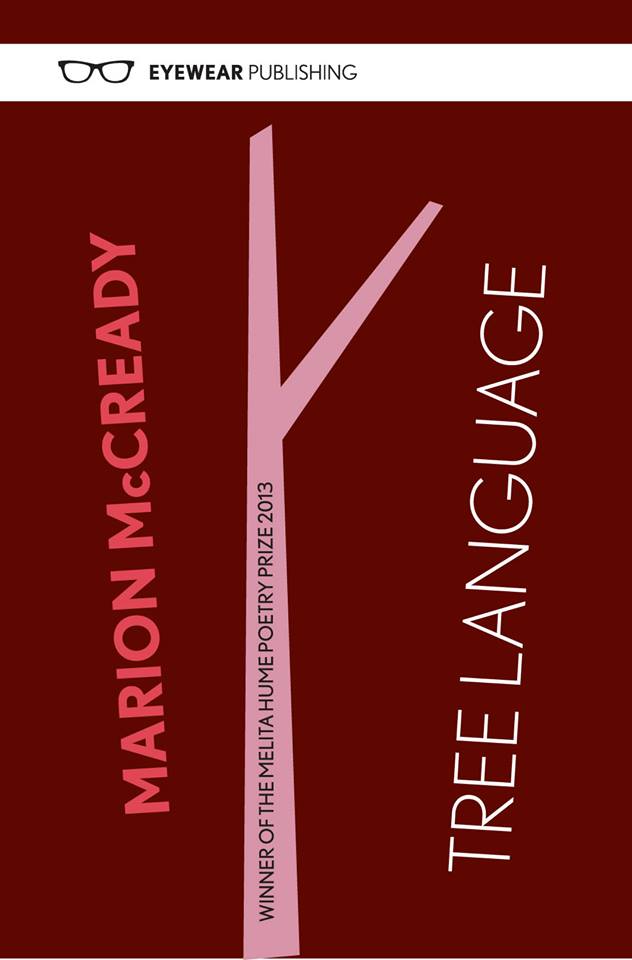
On this auspicious day, lets celebrate the achievement of a friend of ours, who is the winner of the Hume Poetry Prize 2013; fellow Dunoon resident Marion McCready. She has submitted some poems for the book mentioned above and they are simply wonderful.

Her book will be published by Eyewear in the Spring of next year. I look forward to getting my copy.

marions book

Marion is a proper poet- someone who has spent years honing her craft. By comparison, I am a scribbler of a few snatched lines in the edge of another confused day. However, this being National poetry day, here is something that I wrote today after last nights storms;


Storm, October

.

Last night the rain fell like anvils on the old house

Hammering me like pewter

And this morning the peninsular is an island again

High roads wearing half a hillside like ragged hats

The white-toothed burns bite at tree roots

And spit out stones like gristle

.

I fear what is to come;

Just over the dark horizon the troops are massing

Guns lowered in this direction

.

waterfall, pucks glen

Little Britain and grubby newspapers…

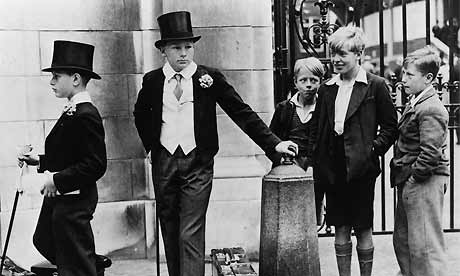
social class

In an epoch when so much is made of democracy, equality, social mobility, classlessness and the rest, it has remained a basic fact of life in advanced capitalist countries that the vast majority of men and women in these countries has been governed, represented, administered, judged, and commanded in war by people drawn from other, economically superior and relatively distant classes.

Ralph Miliband, 1969, from ‘The State in Capitalist Society‘.

Miliband was one of the people that I remember well from my student days 27 years ago. Words like those above seem ever more prescient.

Despite what The Mail will have us believe, his was always a quintessentially British voice- a kind of socialism mediated by gentle academia and quiet discourse. His writings take a deeply thoughtful and engaged look at who we are and what we are becoming, from an ideological perspective of the far left. His determination was to attempt to make Britain a fairer and more equal place. He had the deep respect of everyone, from a wide variety of perspectives.

To hear how he is being vilified at present makes me seethe.

I also think that we could all still learn from his writing- particularly his son Ed, who desperately needs some ideological testicles.

As for The Mail, it is what it is- a grubby small minded prejudiced rag that peddles a little Britain for a small slice of modern Britain. It does not understand the rest, and so seeks to smear it, using a tissue of half truths and distortions.

Which reminds me, I have posted this on my blog before, and was reminded of it by Grahams FB post;

Teaching not learning…

school-assembly


I had lots of good discussions on my recent wilderness retreat, one of them was a chat with Andrew about teaching in church.

This was relevant as in my ‘church’ we do not really do teaching- most of us have had a belly full of sitting in church services listening to people preach at us. This has been replaced by lots of different kinds of learning however- reading, internetting, discussing, visiting other places. Whether or not this is a fair exchange has been the cause of some discussion.

Andrew however (who is a NT scholar at Aberdeen University, so his opinion seems well worth listening to) described his own frustration with how church has become addicted to teaching, but has forgot entirely about learning.

I had to think about that- surely if someone is a good teacher, then this has to be measured by the degree to which his or her (but lets face it, in this context it is more likely to be his) pupils learn?  Well no, says Andrew, at least not in the context of Church. Rather, his experience of preaching/teaching is that it is mostly totally disconnected from learning; rather it offers a kind of moralised, spirtualised entertainment for the faithful. Rather than challenging anyone to change, to develop, to grow, to explore, to adventure with the Spirit, it actually just provides a religious diversion from real life.

Another friend of mine, Graham, called it ‘theological masturbation’ over on his blog;

 I used the phrase ‘theological masturbation’ where I referred to our tendency, in Bible study groups just to ‘self pleasure’. Groups becoming just sharing of points and opinions with no vulnerability or attempt to relate it in an active or missionary way to the world outside…

The interesting question is, if people are not learning from our teaching, what do we do instead? How do we set people free to learn for themselves?

My initial response to Andrew was that I thought it was something to do with hierarchy. Churches have people whose job it is to teach others- the paid ministers. Therefore the rest of us step back and leave the hard work to them. Sometimes they (and in turn, we) are inspired, but mostly we defer responsibility to them. What if we actually had to come up with our own solutions to the small theological questions that surround our every day life? Sure, it might be possible, even necessary, to not get into the meat of all of them, but no faith is possible without a search for meaning- and in this instance, the meaning we find is our own, it is not lazily appropriated.

However, I am not fully satisfied with this answer- after all, we are all standing in a long line of followers of Jesus, and to suggest that others have not got things to teach us is foolish. We are all subject to the influence of others, and why not at least listen to people who have given this more thought than we have.

There is still the issue of learning. What are we learning for? Is it to refine the subtleties of our doctrine? There has been a lot of this kind of learning after all. Or should learning be actually about being schooled in the disciplines shown to us by Jesus? These are perhaps best understood in terms of learning to love one another, to live in community, to let go of all the stuff that gets in the way, be they possessions, selfish obsessions, or sins. This kind of learning seems to be to be as much about unlearning, simplifying, going deeper and slower.

I write these things not because I have learnt well- rather because I am a long term remedial pupil in need of extra tutoring.

I think that is what the Holy Spirit was tasked with was it not?

Which makes me wonder again whether we have not made his job rather difficult- by filling the classroom with theological masturbation.

Perhaps what we actually need is a small island with no internet or phone reception…