Watch this; “the enclosure act mark 2″…

In the Name of Greatness is Dorothy Allen-Pickard’s winning film in the documentary category of the Intergenerational Foundation young filmmakers’ short film competition in association with the Guardian and the National Union of Students. It is written and performed by Nicki Williams.

It combines a powerful poem with moving images to address questions of debt, greed, consumerism and the need for community.

And it is a new poetry of protest…

Aoradh wilderness retreat, 2013…

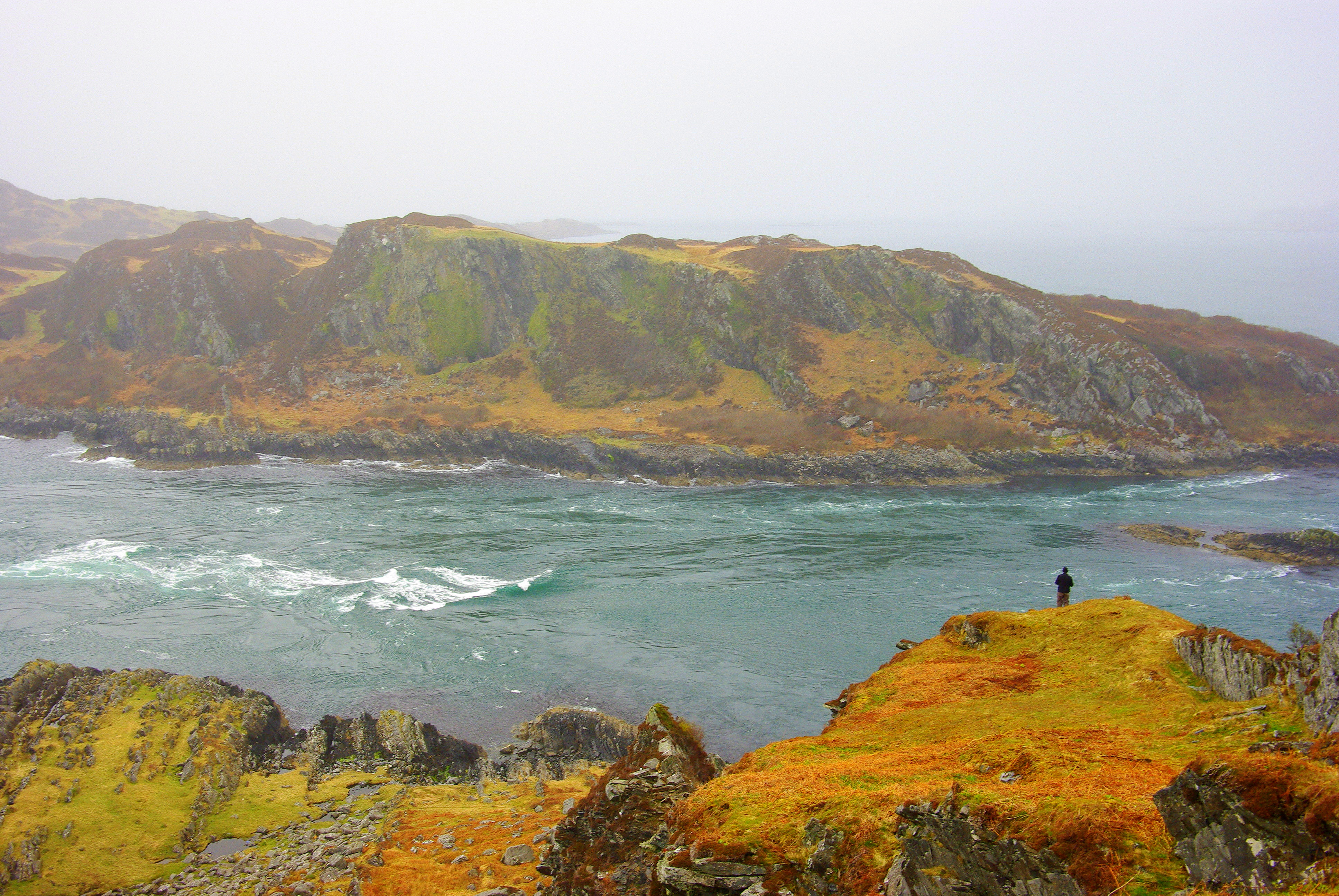
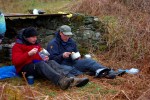
Andy in contemplation above the Grey Dogs tidal race

I am back!

Sadly, we did not manage to get on to Eileach an Naoimh, our planned retreat venue this year- the weather made a landing (via small inflatable from larger boat) rather dicey. Lindsay, the skipper of Sea Leopard II (highly recommended if you are in the need of a boat charter in these parts) had a good try,  from a couple of different points, but a storm was approaching, leaving only one sensible choice.

We had the choice of loads of other venues in the area, but opted for the northern end of Scarba- offering shelter from the approaching south west storm in the old birch trees in the hollow of big hills.

It was stunning, despite the weather being a challenge- made all the more special by two sea eagles who were our constant companions- huge birds, with 9 foot wingspans riding the winds over the raging tides of the Grey Dogs.

This year there were 11 of us who traveled in the end- a really great bunch of blokes from all parts of the country and many different walks of life. We had lots and lots of laughter, times of deep silence, prayer, fireside conversations and experienced the close camaraderie of sheltering in a rudimentary shelter rigged expertly by Sam and Neil.

There is so much I could say (and probably will) about our days together, but for now here are a few photos;

Thoughts on retreats in wild places…

The Garvellachs

I am going here again in a couple of days.

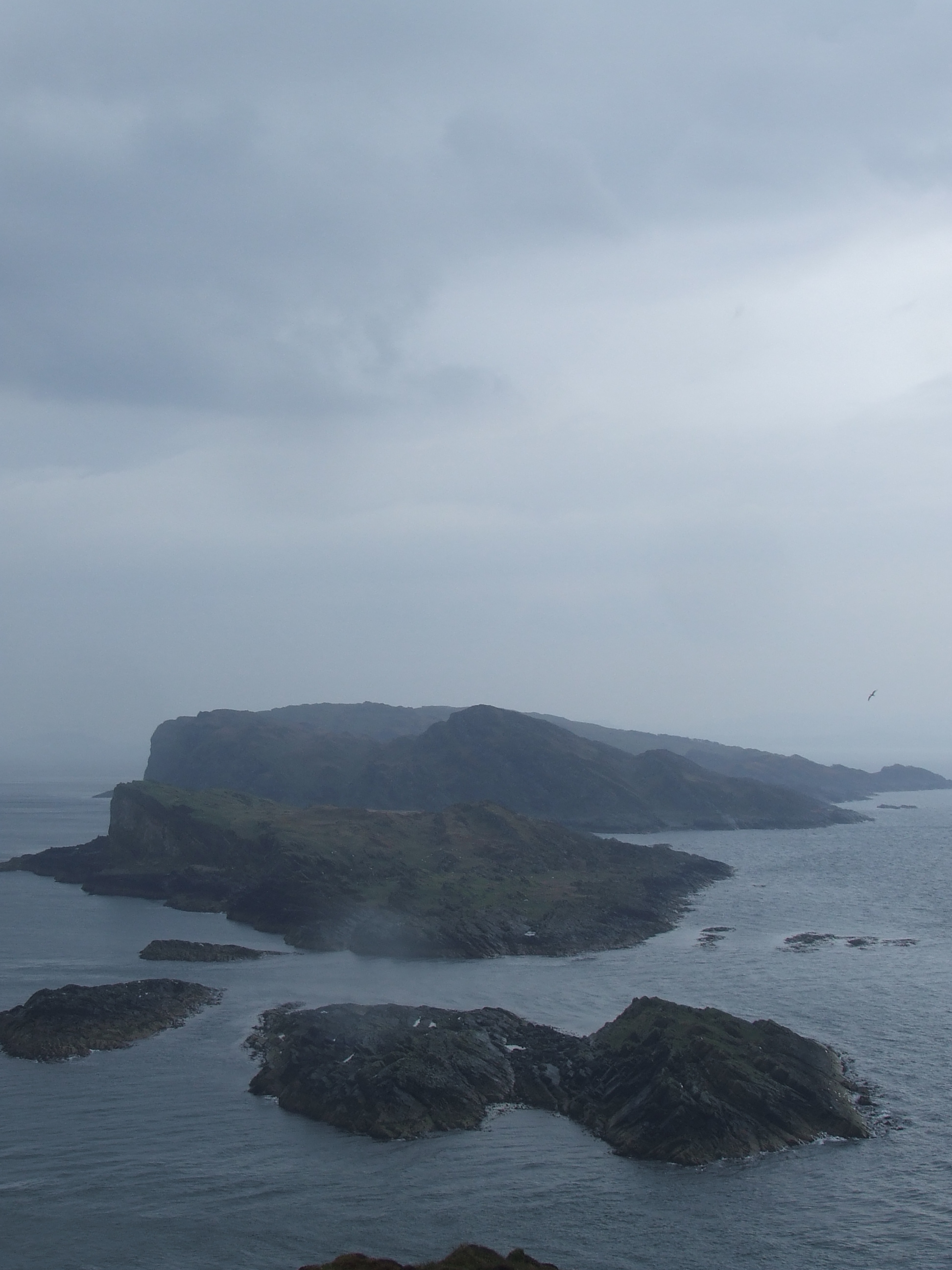
It is time for our annual Aoradh wilderness retreat. Each May bank holiday weekend, usually with old friends and invited guests, we hire a boat to drop us off for a couple of nights camping wild on an uninhabited island. This year we are returning to Eileach an Naoimh, one of the Garvellachs in the Ross of Mull, Inner Hebrides. The photo above was taken looking north at the other islands in the chain a few years ago, in less than ideal weather. The forecast for this weekend is better thankfully.

Eileach an Naoimh, even by west coast of Scotland standards, is a stunning place. It has soaring cliffs full of nesting birds on one side, and a rising green slope the other. It is also the site of an ancient Celtic monastery;

About 542, St. Brendan the Navigator founded a monastery on Eilach, presumed to be the island, possibly because of the combination of its isolation and good grazing. This may make the remains the oldest extant church buildings in Britain, although the earliest written record of its existence dates from the late 9th century. Columba is believed to have visited the island and it is one of the proposed locations of the Columban retreat isle of Hinba. Eileach an Naoimh may be the burial site of Columba’s mother Eithne.[5][6]

Remains of a chapel on Eileach an Naoimh

The monastery was destroyed by – or, at least, may have become excessively vulnerable to – Viking raiders, from about 800. The island has probably seen only intermittent occupation since, which has contributed to the survival of the ruins of many of the monastic buildings, including two chapels, beehive cells, and a graveyard with three crosses and another circular grave. The cells are contained in a pentagonal enclosure overlooking the rocky landing place on the south, which is guarded by various skerries. Beyond the enclosure there is another cell with two rooms. The oldest chapel is rectangular and may date from the 11th or 12th centuries.[7] The monastic ruins are the oldest ecclesiastical buildings in Scotland and the site is in the care of Historic Scotland.[8][9]

One of the lovely things about our retreats has been the chance to share the experience with others- friends and friends of friends – people who sometimes have never camped before, and certainly have never experienced that ‘noisy silence’ that is a Hebridean evening.

In case this sounds a little bit too idylic and romantic- there are many challenges of such journeys. It can be cold, very wet, and uncomfortable. There are no toilets, no tap water, no shelter apart from that which we make for ourselves. If the weather is kind, it is easy, but the weather changes so much even over a couple of days- this is one of the joys of being in such places; you see the weather coming, and you see it go. Sometimes it hits you right between the eyes.

I have been having lots of conversations with my friends about what we do, how we prepare, what we take etc. There are all the practical details- how much kit, what to leave out etc.

Then there have been discussions about what makes this a retreat, rather than a group of daft folk who like to get down with wilderness (which is worth doing in its own right after all.) Our trips evolved from friends being fools to friends trying to be more deliberate in our engagement with the God of wild places. These days we have simplified what we do considerably- we divide time into silent and communal, and gather round a fire in the evening using simple rituals to reflect on the day. This time we intend to use one of the chapel buildings to follow a days monastic pattern.

Finally I have had lots of discussions about how we best use our time, and what to bring that might help. I usually suggest that less is more- the fewer things we have between us and the nakedness of a wilderness experience the better. All sorts of things that in their own right can be good- books, cameras, art stuff etc, can become like static clutter: flotsam that chokes the pristine shore line.

What I always find most powerful is the combination of immersion in beauty alone, and then sharing this with times of companionship, laughter- making our individual experience communal.

One discussion with Sam surrounded what to take to write on. I have always taken notebooks and pens, but despite my conviction that (for me at least) writing is a primary spiritual discipline and practice, I usually write very little- in fact, when I try, what I write tends to feel forced and false- like I am doing it more for someone else rather than for me (or God.) I have felt a little guilty about this in the past- almost as if I am not doing it right- that I am playing at something.

I was reminded about this when listening to one of my favourite poets speak. Norman MacCaig’s work is saturated with wild Scotland- in particular the area called Assynt.  He spent each summer there walking fishing, meeting friends and sharing a dram or two. What he did not do over these summers was to write- this belonged to the darker times- when the wilderness came back to him- sometimes all in a rush- his famous ‘two fag’ poems. MacCaig had no religion- he was a avowed athiest – but his words have a life in them that I love.

Here he is speaking, and I find myself startlingly in agreement with much of what he says about the creative process- my love of free verse, and music, and my love/hate with imagery, which I feel like an addiction. I do not smoke, but my poems also usually drop out in no time at all, as if from nowhere. Or perhaps from seeds sown in the wilderness.

But I am getting technical again- there is time for all this writing later.

After the island.

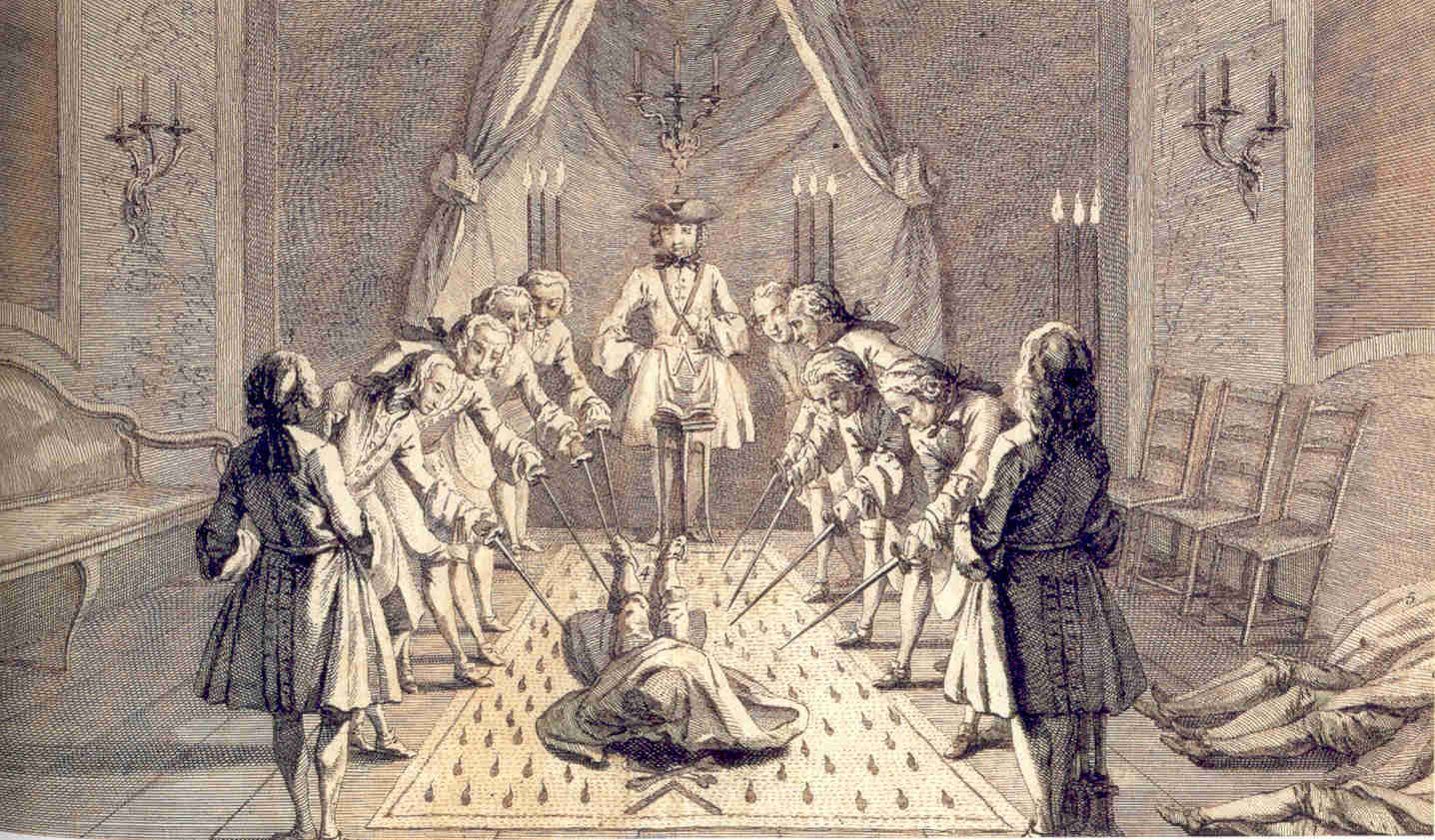
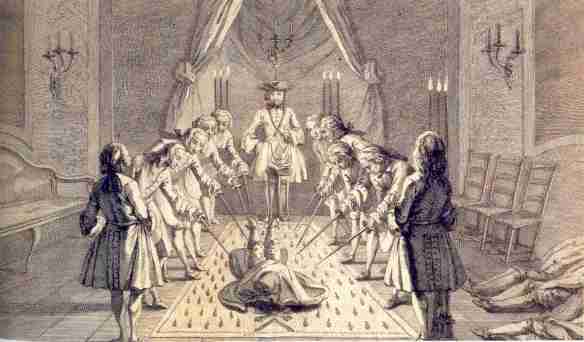
Freemasonry- benign oddity or the seed of corruption?

freemasonry

A few years ago, some friends and I put together a festival of art and worship in and around our home town. We brought together all sorts of music, visual art, prayer rooms, poetry. The final event was a worship concert led by a worship leader/song writer from England, who shall remain nameless- suffice it to say that he is of a prophetic bent.

The final concert drew a lot of people- the festival had been rather successful in gathering together our rather disparate and sectarian denominational groups. Sadly, not many people stayed to the end. The worship leader was used to lashing up a Holy Ghost storm, and when the response was more -shall we say – West of Scotland Presbyterian, he switched into Spiritual Warfare mode. It became a train wreck, and I am still wincing as I write this.

The rights and wrongs I will not debate fully here, but one of the issues that the worship leader thundered about was Freemasonry. His declaration was that it was the work of the devil, and the reason for all the spiritual oppression that held us all back from worship, and prevented God from working in our area. I always thought this to be wrong in both theory and application, and even years and years later, there are people in my town who regard Aoradh with great suspicion because of this event.

But what of Freemasonry? I was reminded again of the weirdness of it all whilst reading this article. It is an adventure into Co-Masonry, an order that welcomes men and women alike, but points out that all forms of Freemasonry in the UK are in decline, and have an aging membership.

At its postwar peak, membership of a fraternity that began as a sort of union for medieval stonemasons was boosted by returning armed service personnel as well as some of the most powerful men in the land. George VI, who died in 1952, is the last British king to be listed on the official UGLE website, which also includes Winston Churchill, an Archbishop of Canterbury and a surprisingly long list of celebrities from Nat King Cole to Peter Sellers. The royal connection continues today with the Duke of Kent, who is the current grand master of the UGLE.

Freemasons have long denied suggestions that it is a pernicious old boys’ network, arguing that it is a sort of gentleman’s club, concerned with moral and spiritual growth. Although in the UK the sense that freemasons are no longer the force they once were has given rise to jokes about suburban middle managers prone to rolling up their trouser legs and doing funny handshakes, there are signs elsewhere that membership confers preferment. The collapse of Propaganda Due or P2, an order that linked Silvio Berlusconi to the Italian central bank and the heads of all three secret services until it was closed down in the 1980s, did little to end suspicions.

Given this double whammy of conspiracy and mockery, it is no surprise that all parts of the fraternity are looking for a rebrand. Or the fact that Co-Freemasons want to disassociate themselves from the main branch, employ a PR company and launch a “recruitment drive” specifically aimed at attracting younger women.

A quasi-religion in decline? No surprise there- after all most Christian denominations have shrunk considerably over the past few decades in the UK- we have moved into a phase of individualised fluidity, when anchoring ourselves to clubs with Victorian rituals has really gone out of fashion for all but a few weirdos (like me.)

That is without making any mention of the scandals and controversies around Freemasonry. They are at the centre of more conspiracy theories than just about any other group, and quite frankly I am not interested. Neither am I that keen on categorising a whole group of people as ‘evil’ or corrupt just because of the clubs they belong to.

I simply do not know enough about it all to label people like this. I can attest to the fact that two of the nicest blokes I know- people active in their community, people who live and work with integrity and humanity – are also masons.

I do confess however to some prejudice. This from the same article;

There has been a long and often bitter history of mistrust between organised religion and freemasonry. At its most benign it led to a spat between freemasons and the former Archbishop of Canterbury, Rowan Williams, when he suggested their beliefs were incompatible with Christianity. He then got into trouble for appointing a freemason to be bishop, thereby proving many avenues are open to freemasons but still closed to women.

Touche.

The worship leader earlier mentioned was right in one sense- Argyll has long been a stronghold of Freemasonry. Each of our small towns has its own Lodge.

There is also, from local gossip, a strong link between our Council and the local lodges. Argyll has had one of the few ‘independent’ led councils- although the SNP currently lead the coalition.  There was a time when some of the senior council officers and the political leadership supposedly shared a common, yet secret brotherhood.

But of course, this is speculation- how can I know for sure? It is after all a secret organisation. If it is true, then no matter how good, how honest the people involved, then this kind of alliance has no part in a democracy. There is quite enough secret use of power even without a quasi religious overlay. We need greater openness, not a shared secret ritual for the chosen few.

So- the question- benign oddity or corruption? I suppose the answer is that Freemasonry can be both, even at the same time. Charity can go hand in hand with the promotion of mutual interest. This can happen equally in churches, cricket clubs or mosques. The difference is the secrecy – can Freemasonry survive without all the ceremonial mystique?

The spiritual side of all this, unlike the worship leader, I am happy to leave to God.
Seal…

IMGP4479

Bent like a banana

On her favourite rock

Skin still slick from the sea

Bulging like some old school cook

In an over-stuffed apron

But soon the surf will return like a cast spell

And the fat old girl is an athlete again

The reeds and the wracks wave her by, and she

Sometimes a shadow

Sometimes silvered with the spherical light

Becames a sharp toothed, brown eyed assassin

Three stars!

B&B 3 STAR


And here they are!

Yesterday we had a ‘secret visitor’ in our B and B- from visit Scotland. We knew that we would get a visit at some point, and we had our suspicions about this particular guest (which made for some nervous moments!)

As it happens, she said lots of lovely things about our service, the rooms and the general feel of our B and B, and more crucially, awarded us three stars!

Three stars signifies a B and B of ‘a very good standard’. Realistically, we will not meet the criteria for 4 stars because of our location, the lack of lighting on the driveway and the fact that our rooms are within a family home. Overall, we are delighted with the three stars, particularly so early into our trading.

So if you would like to have a stay within our three star B and B, taking in the wonderful views, and perhaps trying out some pottery as part of your stay- take a look at our website!

family room

Make the world better- return to the hope of community…

two_girls_forweb

Michaela sent me a link to a lovely site called The MOON Magazine– she had discovered it through her day job, which involves running a local community project called a ‘Time Bank’.

The ethos of time banking is to encourage people of all abilities and skills to donate time (which might range from proof reading, gardening, teaching Russian, feeding fish etc etc) in return for using the skills of someone else. Obviously there are practical benefits from this – we can get stuff done that we have not the skills to do ourselves – but the much greater benefit is found in the deep satisfaction that people get from doing something useful, and in making connections with other people. It answers some deep human need, and is the very foundation of community.

For example, we have made a ‘direct exchange’ with an accountant, who helps us with all the complex taxation stuff for our small business, in return for me cutting her grass. Not only do we get to provide one another with a service that fits our skill set, but we also get to meet interesting people, share lives and stories.

The MOON magazine is full of stories like this- things that people have done that make a difference to our relating to one another in a time when the prevailing culture would trend towards our isolation in boxes looking at screens (as you and I are doing right now!)

Check out these films for example.

The man who started Time Banks, Edgar Kahn has an article there in which he says something which chimed very much with my previous post;

It’s not that money and price aren’t useful; but we must not mistake them for the only determination of value. All of us have domains in our life that we define as priceless, where a reduction of their value to market price is unacceptable. Our relations with our loved ones, our families, our friends, for example, are not for sale. Some of us think that same principle applies to other domains: justice, democracy, spiritual realms, the planet.

We cannot let market price define value for a very simple reason. Price is determined by supply and demand. If something is scarce, its price is high. If something is abundant, its price is low. If sufficiently abundant, it has no market value; it is worthless.

Consider what that means: every quality that defines us as a human being is abundant. Every quality that enabled our species to survive and evolve is abundant. What are the qualities our species needed? Here’s a list: our ability to come to each other’s rescue, to care for each other, to work together, to come together to make decisions, to stand up for what’s right, to oppose what’s wrong. If we accept the message that money sends about value, then being admirable human beings is worthless.

Money sends another message: Your worth is determined by how much money you make. But most of the money in world markets is generated by money making money from money….

…Back in ancient Greece, Aristotle characterized such exchanges as making “barren metal breed.” Today making money takes the form of digits breeding digits in cyberspace. Now, as then, we seem to turn to oracles and soothsayers to divine a future that remains beyond our control or theirs.

Time Banks stem from an awareness that we cannot grant money an exclusive power to determine value. We need another medium of exchange that defines value differently and that sends a different message. Msg. Charles J. Fahey, a priest of the Diocese of Syracuse, New York, who was the director of Catholic Charities, put it this way, decades ago, when he announced: “I have good news and bad news for you,” which he summed in the words, “We have no money. All we have is each other.”

Amen.

If you want to change the world, if you want to make life deeper, more fulfilling, more satisfying, then build community. Find friends you can laugh and share with, hold things in common. Stop thinking that money is going to help with any of this- beyond a certain level, money just enslaves both those that have it and those that want it.

(By the way, those last things were not original ideas, they should rightly be attributed to Jesus.)

Neoliberalism- what comes next?

capitalismrocks

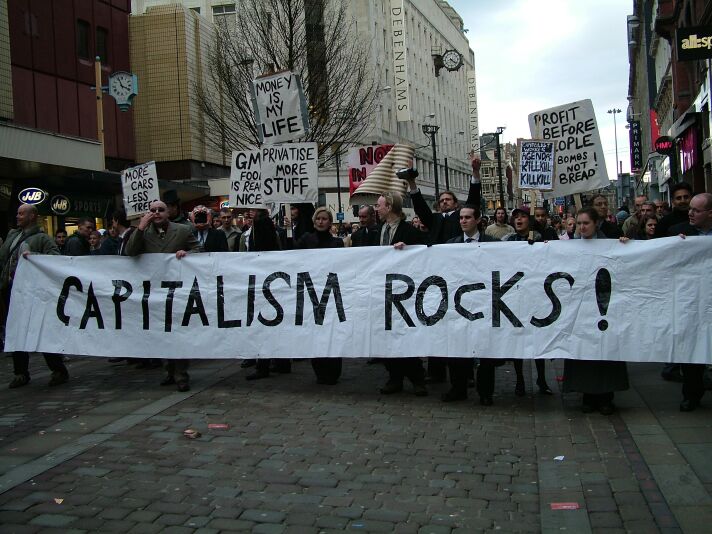
Regular readers of this blog will know that I have written a lot about the political-economic status quo- if indeed there is such a thing in these times of economic turmoil. Some of this has been about challenging some of the ‘common sense’ truisms that we have become so used to that we hardly question. Some of too has been my way of expressing frustration and protest in the face of manifest injustice – a system in which the rich get richer, live longer, are better educated etc etc, whilst the poor are blamed as feckless and ‘skyvers’.

Throughout I have also felt this constant desire to see an alternative- a better way to organise our commercial fiscal and tax system. I can catch glimpses of this, in small things between individuals and groups, but the system will tell us that what we have, beyond a bit of tweaking, is as good as it can get.

It is this kind of thinking that allows those of us that call ourselves followers of Jesus to also accept greed, avarice, unjust economic relationships and exploitation as somehow morally justifiable, even necessary components of our society.

Egalitarianism, redistributive taxation and collectivised centrally controlled economies- these have been proved to be bankrupt ideas (we are told) which stultify and stagnate entrepreneurialism and innovation. We only have to look at the failure of communism, and the spectre of British industry circa 1976.

I came across an article in a journal called Soundings, which is a left wing journal interested in a new kind of politics. They are publishing a book online, a chapter a month, called After Neoliberalism? The Kelburn Manifesto.

The first chapter is available here– and sets the scene with some analysis of where we are now. It makes as much sense as anything I have read for some time. Here are a few extracts;

Every social settlement, in order to establish itself, is crucially founded on embedding as common sense a whole bundle of beliefs – ideas beyond question, assumptions so deep that the very fact that they are assumptions is only rarely brought to light. In the case of neoliberalism this bundle of ideas revolves around the supposed naturalness of ‘the market’, the primacy of the competitive individual, the superiority of the private over the public. It is as a result of the hegemony of this bundle of ideas – their being the ruling common sense – that the settlement as a whole is commonly called ‘neoliberal’…

Ideology plays a key role in disseminating, legitimising and re-invigorating a regime
of power, profit and privilege. Neoliberal ideas seem to have sedimented into the
western imaginary and become embedded in popular ‘common sense’. They set the
parameters – provide the ‘taken-for-granteds’ – of public discussion, media debate
and popular calculation.

One key strand in neoliberalism’s ideological armoury is neoliberal economic
theory itself. So ‘naturalised’ have its nostrums become that policies can claim
to be implemented with popular consent, though they are manifestly partial and
limited. Opening public areas for potential profit-making is accepted because it
appears to be ‘just economic common sense’. The ethos of the ‘free market’ is taken
to licence an increasing disregard for moral standards, and even for the law itself.
Commercialisation has cultivated an ethos of corruption and evasiveness. Banks,
once beacons of probity, rig interest rates, mis-sell products, launder drug money,
flout international embargoes, hide away fortunes in safe havens. They settle their
‘misdemeanours’ for huge sums that hardly dent their balance sheets. Similarly,
when private firms that have been publicly contracted fail to meet targets they are
allowed to continue. Graduates stacking supermarket shelves are told they don’t
need to be paid because they are ‘getting work experience’. Commercialisation
permeates everywhere, trumps everything. Once the imperatives of a ‘market
culture’ become entrenched, anything goes. Such is the power of the hegemonic
common sense.

All this strikes me as a good analysis of the heart of our culture- one that has been shaped by the ‘common sense’ that we have been given. It is really hard to challenge this kind of hegemony – even in our selves, our own understanding, our own lifestyle, let alone that of other people.

What is needed is a new kind of ‘common sense’. A new kind of way of understanding the world that we live in, and the economic relationships we have with one another.

Christians already have this of course- what I would term the common sense of the New Kingdom. This kind of common sense values people before profit, seeks to form relationships of love and service. Quite how Christianity became so intertwined with Capitalist Colonialism I have no idea. Other than at some point we decided that being like Jesus was simply impracticable- against common sense.

It will be interesting to watch the unfolding to the Kelburn Manifesto to see if the left might yet have something to teach Christians…