According to our home secretary (herself the daughter of immigrants) this is the problem we are facing, and she has the solutions to the problem.
The solution, it seems is to bring in the most draconian policies against refugees ever attempted.
Why are we doing this?
Is this really a necessary corrective to an unfair, out-of-control, chaotic situation that is dividing our country? Is this about taking back control of our borders and keeping our streets safe from marauding gangs of rapists and pick-pockets?
Or is this just performative cruelty, intended to assuage the far right scapegoating of a tiny minorty? The desperate move of a deeply unpopular government lead by a prime minster seeminly devoid of an ideas that might bring hope of compassion to a country beaten down by cost of living rises, decades of austerity and rampany inequality.
It is almost as if the people who arrive here seeking asylum are not people at all… as if their pain is not our pain, as if it belongs elsewhere. We can justify this lack of compassion only by asserting our own victimhood, and it is this that Reform and Tommy two-names are exploiting as a political blunderbus, aimed downwards at those most vulnerable.
Labour appear to have decided that the answer is to get a blunderbus of their own.
What we are not seeing in this ‘debate’ is any real attempt to address the so-called refugee crisis on the basis of facts. The ecomonic/demographic analysis of the impact of refugees in this country is always secondary to political perspective and the fear and hatred whipped up by those able to use it as a political weapon. Lets push back on this if we can. What can we say about the numbers?
Is the UK facing a particular problem not seen elsewhere?
Well, in terms of numbers of assylum seekers per head of popuation, the UK is in 17th place in Europe so this is clearly a global problem, not a UK problem. If the ratio of brown faces to white faces is the concern here (and I think it might be that simplistic for many) then despite our colonial history which makes our connection to – and responsibiity for – many of the most troubled places in the world, still there are 17 nations within Europe that take more people than we do.
Are there too many people here already?
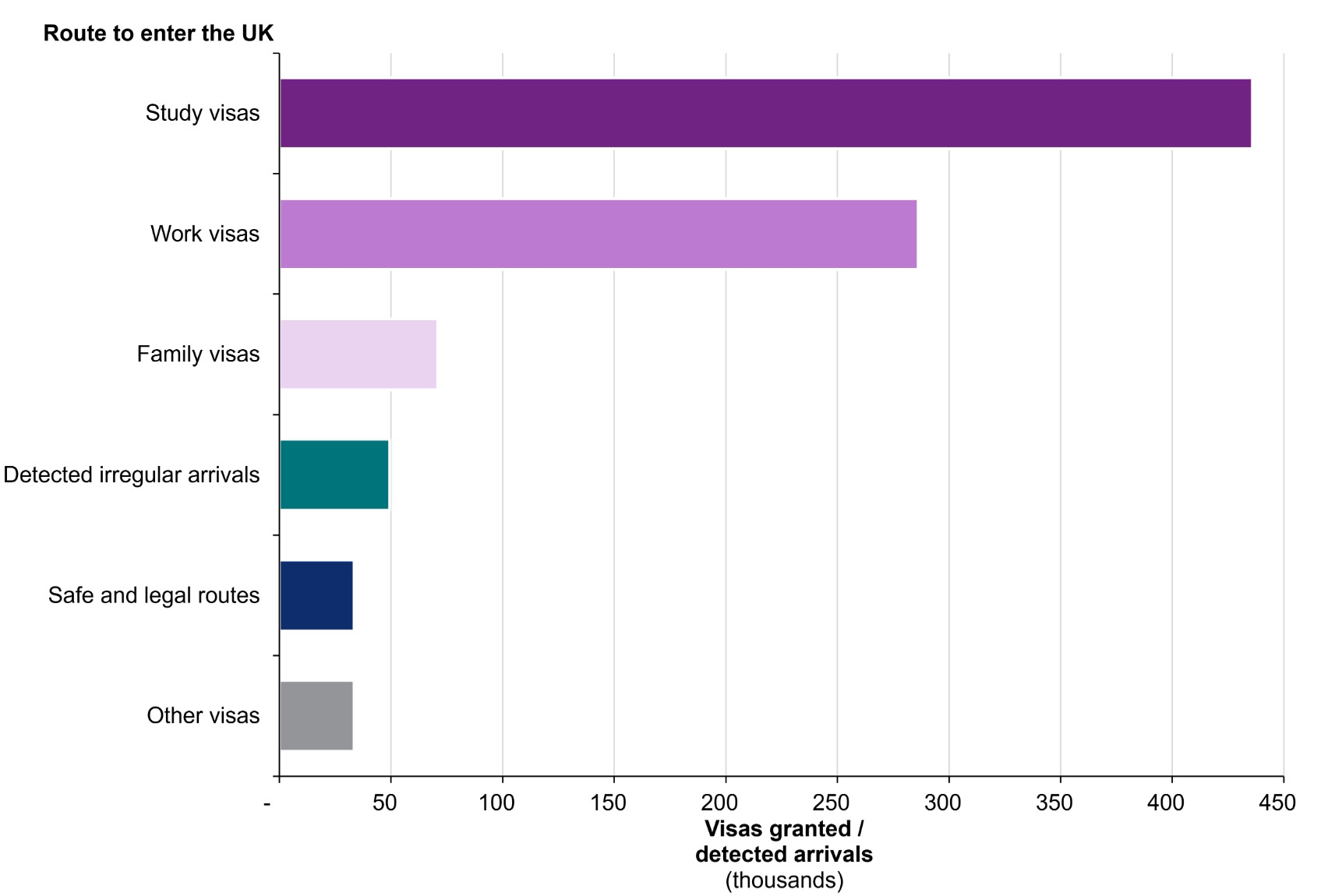
Is Britain full? Are we being overwhelmed? Numbers can be so difficult to get our heads round, but here are the stats for this year’s immigration to this country from the UK government’s own figures.
The vast majority of immigration into this country is people who come here to work or study.
Is the system broken and out of control?
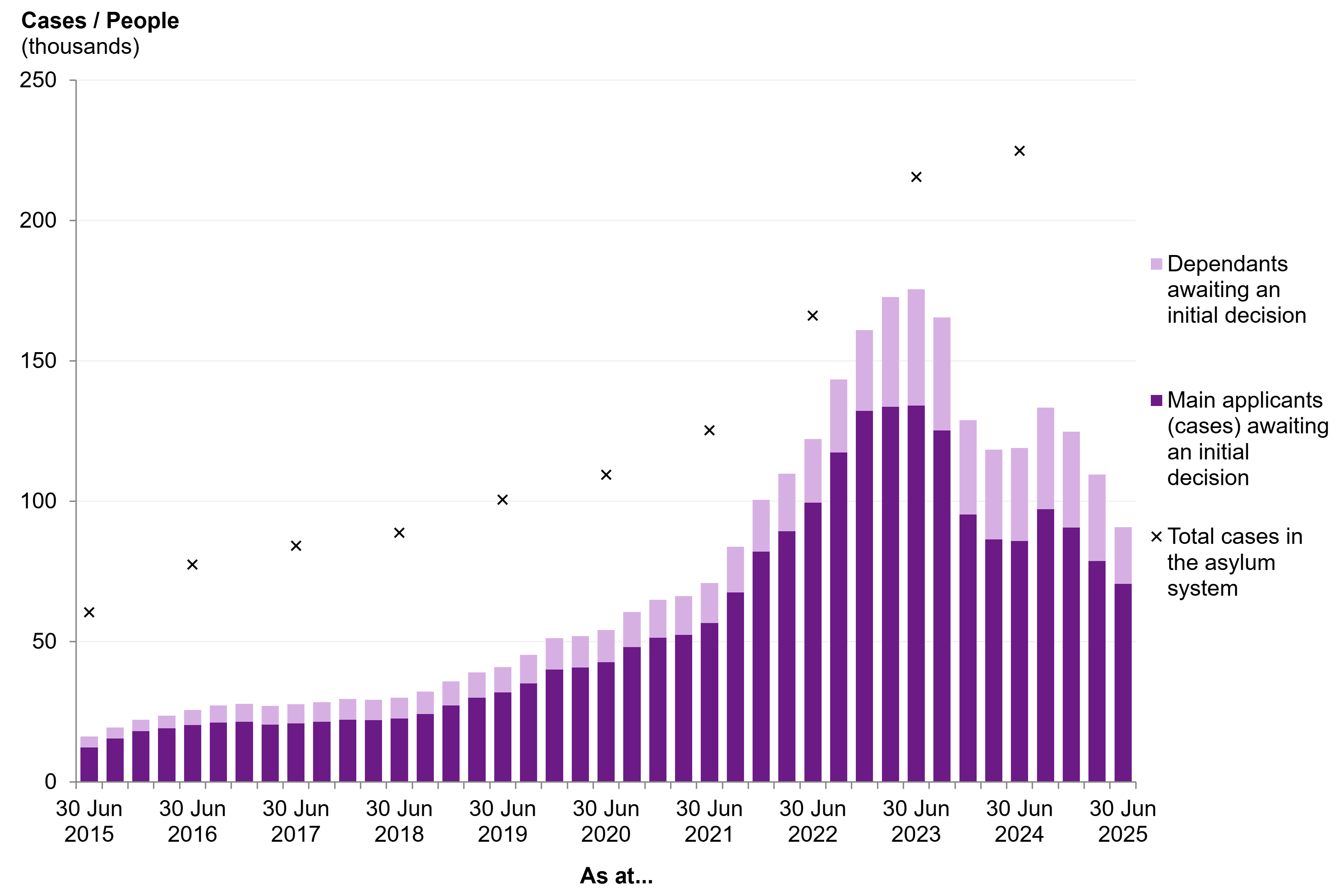
Here are the numbers of people who are currently in the asylum system, waiting to be processed. As in the Channel 4 documentary clip above points out, people in this system have years of waiting, followed often by seemlingly arbitary and draconian decisions which then go back to court, and meanwhile people live half-lives of waiting in poor accomodation, excluded from participation in economic or community life.
We perhaps have to conclude that this system is indeed broken, but that this has been the result of political choices driven by ideology of the sort that Labour are now embracing.
Are migrants a drain on our economy?
This is certainly the message we see pounded out repeatedly on our media outlets – the cost of hotels, the fact that the NHS cannot cope etc etc.
Leave aside the fact that asylum seekers are not allowed to work, or that the benefits they recieve are miniscule (£49.18 per person per week if they live in self-catered accommodation, or £9.95 per person per week if meals are provided. This money is loaded onto a pre-paid debit card and is intended to cover basic needs like food, clothing, and toiletries.)
Leave aside also how the NHS, and many of our other institutions are dependent on immigrant workers to sustain their activities, or the fact that our aging population desperately needs the creativity, vitality, youth and enterprise brought by incomers.
And consider this report which offers wholy different approach to that which our Labour government are pursuing;
Welcoming Growth – the case for a fair and humane asylum system is a new policy report, supported by PCS, which has launched today (17). The report reveals that every refugee accepted into the UK would contribute over £260,000 to the UK economy if the proposed changes within the report were adopted. This includes a net benefit to the public purse of £53,000 each.
The four key policy changes within the report include:
Asylum claims to be processed within six months
Legal assistance at all stages of the application process
English language support from day of arrival
Employment support from day of arrival.
Speaking ahead of the launch in parliament, PCS general secretary Fran Heathcote said: “Today we are witnessing the government neglect its own plans for growth by taking a harder line against some of the most vulnerable people who come to this country, fleeing war, persecution and violence. To threaten refugees with the removal of their only belongings to pay for their cases is frankly a line I would expect from Reform.
“Our report shows that through embracing a humane and fair approach to asylum we could assimilate refugees into our communities whilst ensuring they can contribute and support themselves. This report provides positive solutions, not divisive decisions which continue to fan the flames of hate.”
Other key findings within the report include:
Overall economy – The four changes to the asylum system would mean a contribution to the UK economy from every refugee of £265,788 over 12.5 years from arrival.
Accommodation – The changes to the system would result in a net saving in accommodation costs of £42,000 per asylum seeker over a 12.5-year period from arrival. This equates to a 34% saving in the total cost of accommodation for asylum seekers over the period (from £144,000 to £79,000). This is because by expediting the application process to six months, people can be self-sufficient sooner – meaning housing costs would be paid by the individual, rather than the state, a year earlier.
Public Purse – The four interventions in the model would benefit the UK exchequer by £53,000 per refugee over 12.5 years from arrival. This includes a net contribution of £7,000 for every refugee to the public purse just by expediting the asylum application system to six months and providing legal assistance throughout the process. This financial benefit takes into account all the associated costs of supporting asylum seekers from arrival, as well as the expense of creating and implementing the four proposed changes to the asylum system.
Employment – Every £1 invested in English classes and employment support from day one results in £9 in increased salary–over the 12.5 years from arrival. This equates to a 76% increase in total employment income, reflecting the cumulative effects of faster processing, language training, and employment support. This, in turn, means significant benefit to the economy and public purse.
The London School of Economics (LSE) report, commissioned by PCS and Together With Refugees
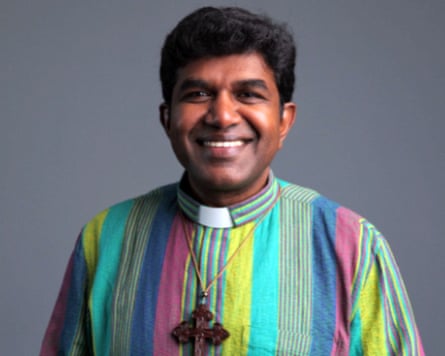
If then, these draconian, punishing proposals by appear NOT to be based on actual research, or on factual understandings of the challenges brought by the arrival of refugees on our shores, why are they being proposed at all? I was so heartened to read these words from Rt Rev Dr Anderson Jeremiah, the bishop of Edmonton.
“We are scapegoating asylum seekers for the failures and political divisions caused by successive governments in the last 15 years – the failures of successive governments to address wealth inequality, funding for education, the cost of living and primary healthcare and infrastructure.
“Every day I meet homeless people who have fallen through the cracks in our system. And yet in singling out asylum seekers we are laying the burden of society’s problems on less than 1% of the UK population – when the number of millionaires and billionaires is on the rise.
Rt Rev Dr Anderson Jeremiah: ‘We can’t isolate one section of people and label them as a problem that can be easily addressed.’ Photograph: supplied
“There are politicians who are trying to hold on to compassion in public life. But at the same time there is a pressure to have a singular problem on which all things can be blamed.
“But we are a connected society. Our environmental crisis is deeply connected to the conflicts which lead to people to our borders. We can’t isolate one section of people and label them as a problem that can be easily addressed. If one part of the body hurts, it hurts the entire body.”
Something I wrote for a Greenbelt event a couple of years ago- which came back to me recently when discussing brokenness. Originally it was written to make comparisons between organised church and psychiatric care.
There was a concern in the land
In every town the roads were lined with beggars
There were homeless orphans and widows cast out onto the streets
Lunatics were stoned by children
And melancholics drowned their sorrows with gin
The pain of it all was in the middle of us
The Jesus in the least of these
Was weeping
So the good people gathered
“What is needed” they said “Is asylum.”
A safe home where broken people can live out their lives in care-
Protected from all of the mess of life,
Fed and warm and watered.
So money was gathered
Stones were shaped and raised
Staff were retained and clothed in starched clothing
-The heavy doors were opened wide in welcome
And so they came- the halt, the sick, the lame
The motherless and the pregnant child
All those broken by worry and grief
The shakers and the mutterers
All the awkward squad
The outsiders now came inside
They were home at last
It went well for a while
All was orderly and planned
Starved frames filled out
Songs were sung again in the entertainment hall
Gardens were laid and tended
Sheets danced in the evening sunlight
And a bell rang out to warn of the dowsing of night candles
But time passed, and shadows fell
Budgets were tight, and the paint peeled on windows
The good folk who had once been so generous had other calls on their coin
A few still visited on feast days but for the most part
Out of sight became out of mind.
And there was trouble
The awkward squad was still awkward
The asylum split into ‘us’ and ‘them’
‘We’ had roles- uniforms and clipboards, rotas and registers
Big bunches of keys danced at our belts
We had dreams- of advancement, romance and families
We had homes away from this home
‘They’ stood the other side of our desks
Dirty and lacking in motivation
Ungrateful and manipulative
Un co-operative with our assessments
Lacking insight into the nature of their dysfunction.
They had ceased to be like us
Rather, they lived out regulated half-lives
They ceased to be flesh
And became instead a collection of paper
In manila folders
Despite all the material provision- something was missing
Despite all the person centred plans, the person was not at the centre
Despite the close press of humanity, there was no family
Despite all the risk assessments, there was no adventure
Despite all the planned activity, there is no purpose
Despite the safety of the high walls, I am still destroyed
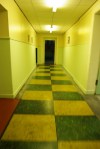
I went for a meeting today in a posh new hospital. Everything squeaked as if in disapproval of my polluting presence.
I was there to chair a meeting about one of the patients, who had been transferred there recently to receive more specialist care. She had previously spent most of the last 40 years of her life as a resident of the local psychiatric hospital. Things went wrong after the death of her husband, and she somehow lost herself in the grief of it all. The whole range of psychiatric science was rolled out for her benefit – drugs that greyed her vision, Electric Shock Therapy that blew holes in her memory then finally psycho surgery in an attempt to cut grief out of her brain with a scalpel.
And here she remains – toothless, but given to scratching. Occasionally abusive but still with sense of humour intact.
She used to be a worker, a wife, a mother. She used to go on picnics and loved to dance. She enjoyed holidays and gossiped with her friends about the comings and goings of the village.
But that was 40 years ago.
Today we met to discuss her future care – a likely move to a specialist nursing home, and the legal issues around that given her lack of capacity to understand or to give consent.
But in the middle of this, she looked at the ceiling and said;
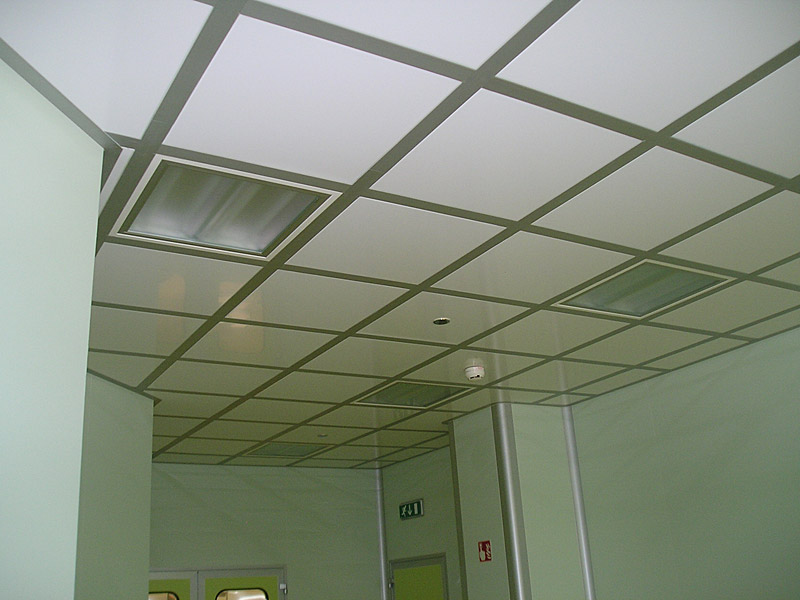
I hate those squares. Everything is square in here. Put me outside next to the beech hedge. Just put me outside.
And I looked out at the brown beech hedge, with dry leaves still rattling on the close cropped branches.
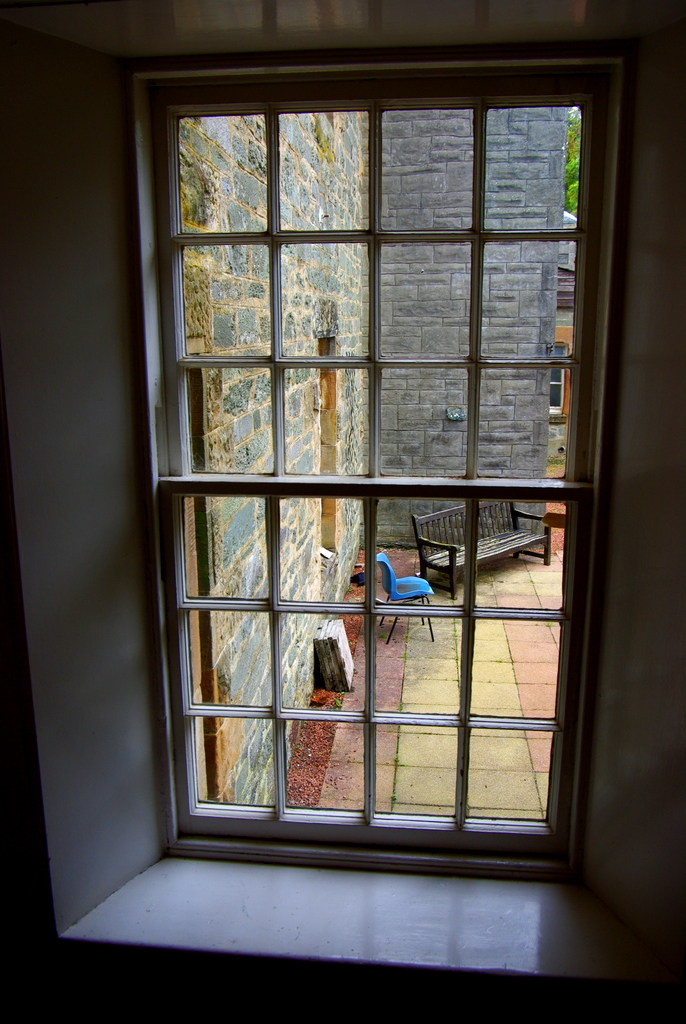
Through the square window.
And I wanted to wheel her out there, and sit her under the winter sky, wind waving her long grey hair in a curve of protest against all those bloody awful squares.
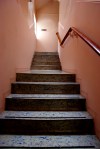
Argyll and Bute hospital is at the end of its useful life. Soon it will be ‘reprovisioned’.
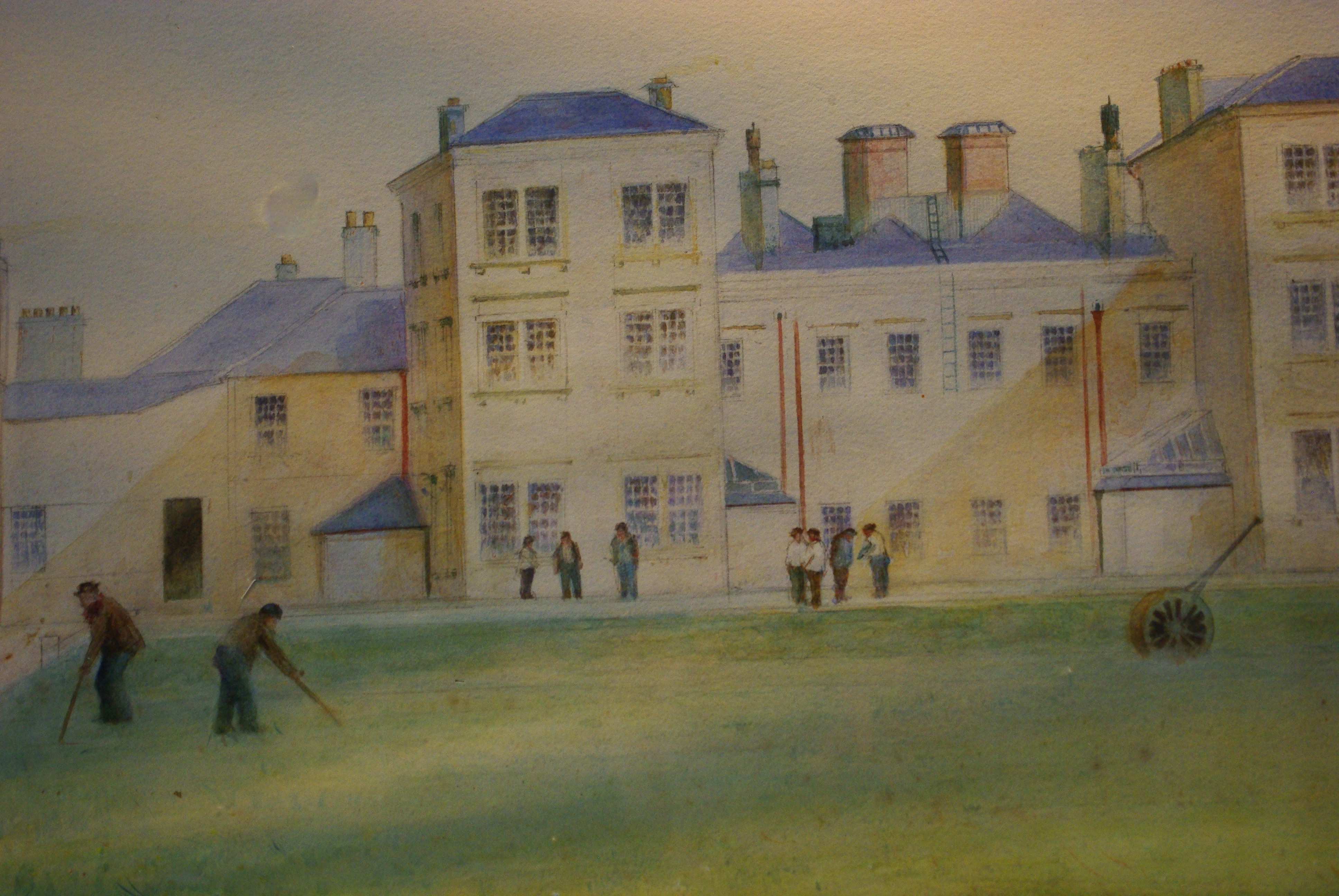
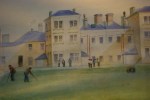
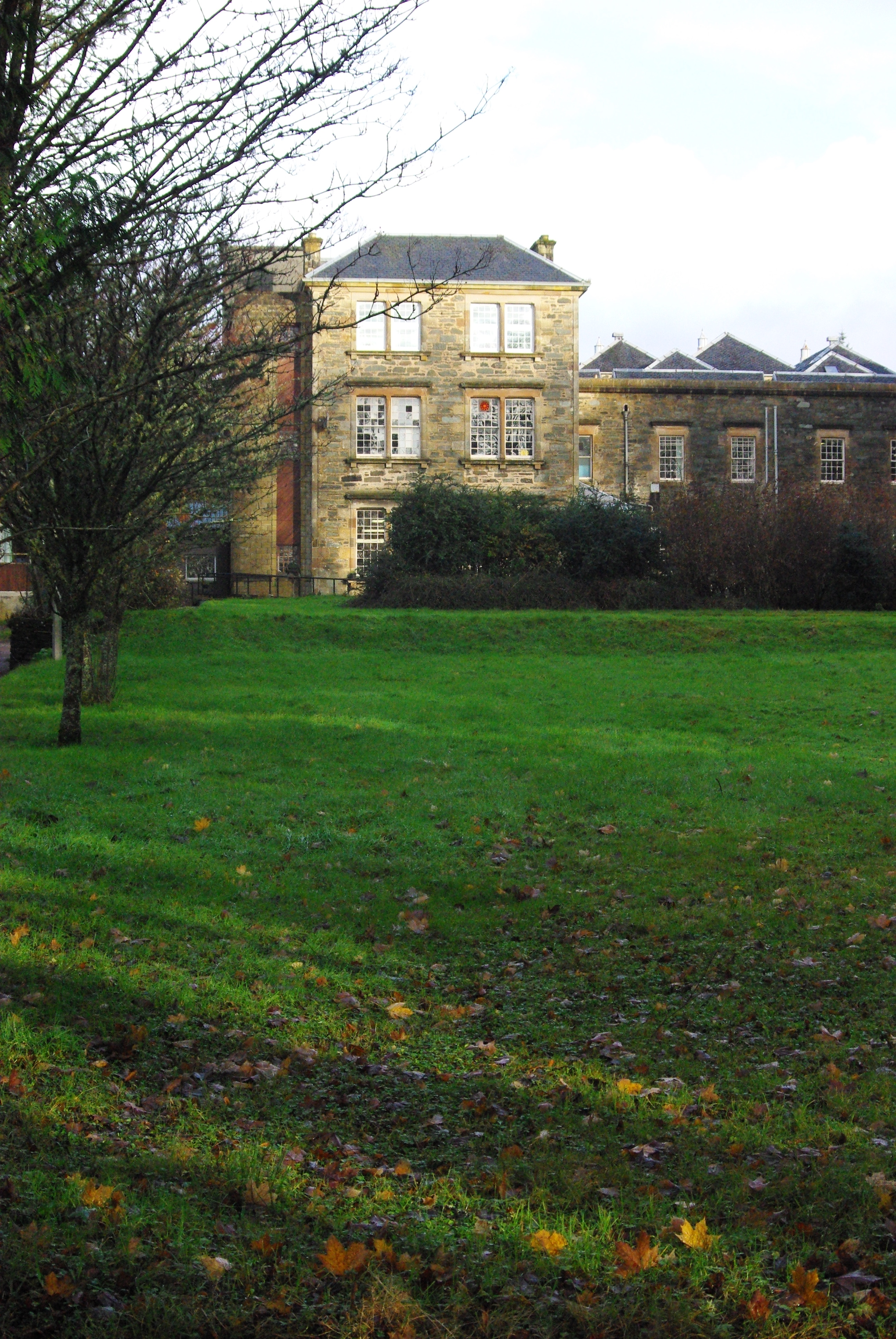
Hanging in the old reception area is a painting of the hospital from what I imagine is about 100 years ago. It shows a rear view of the hospital, at a time when it was a permanent home for hundreds of patients. If they could only tell their stories. I assume the painting was done by a patient at the hospital- it has a naive feel about it that is very affecting.
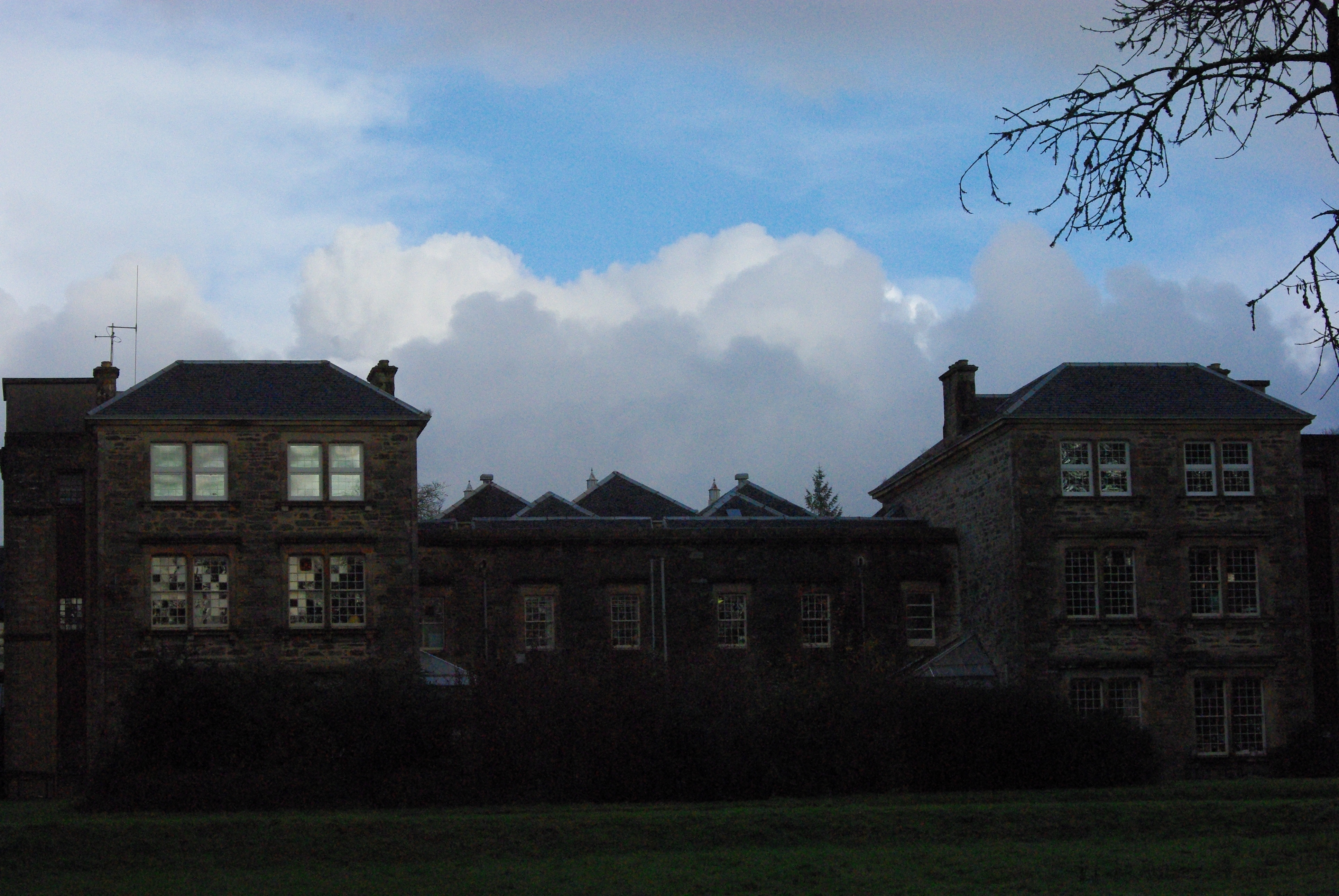
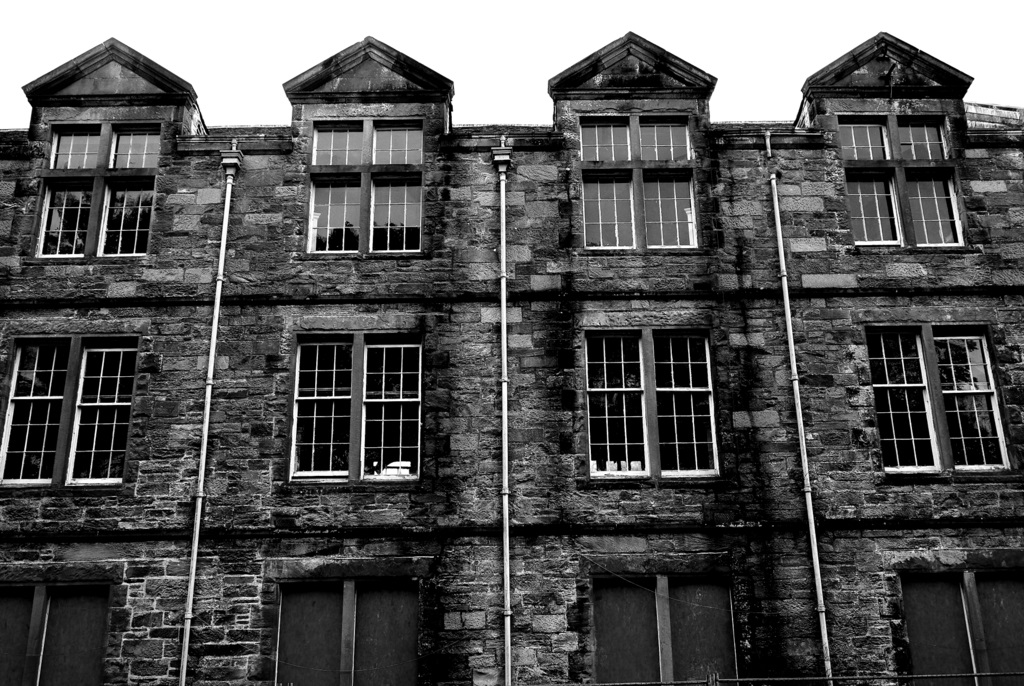
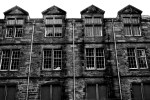
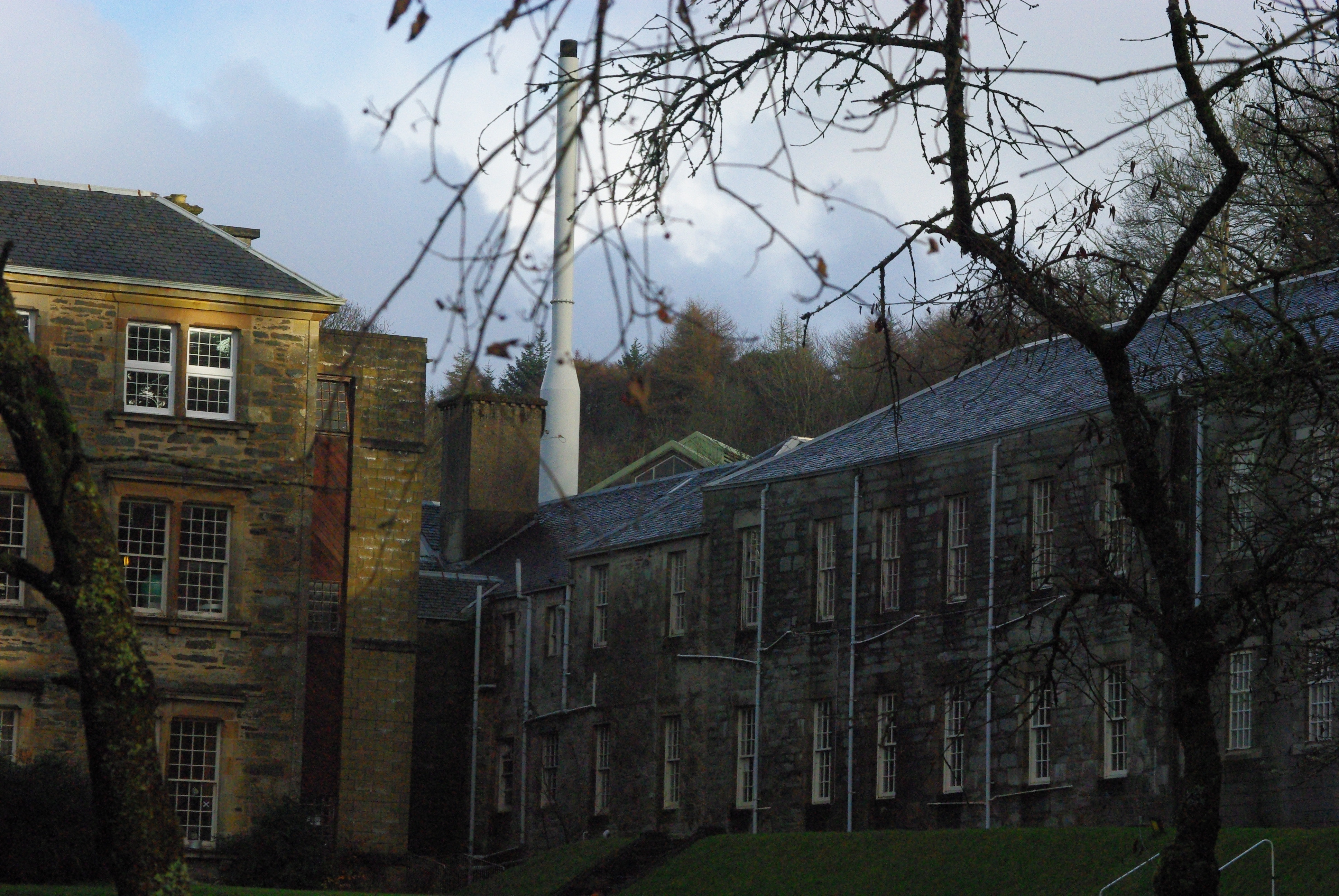
I took my camera today and took some shots between meetings. I wanted to record something of a visual monument to one of the last of a breed of failed social/medical experiments known as the ‘asylum’. By any measure, it was a desperately failed experiment. In the name of humanitarian treatment of the mentally ill, we removed people from society, and warehoused them in institutions. Even when these were well run (and the stories of abuse that was handed out by some staff are appalling) then the end result was that people were lost. They stopped being brothers, sisters, children, bakers, lovers- and became- patients.
I was in Lochgilphead today, with a series of meetings- including one at Argyll and Bute hospital. The building dates from 1862, and is one of the very few Victorian ‘lunatic asylums’ still in use today.
Lovely old building it might be, but it is a total anachronism. Built to house hundreds of patients from all over this area, only a handful of the original wards are still open, whilst the cost of maintaining the structure eats away at resources desperately needed by community services more fitted to present day understanding of treatment and support of people experiencing mental ill health. It is hoped that a new purpose built facility will (hopefully) replace it soon…
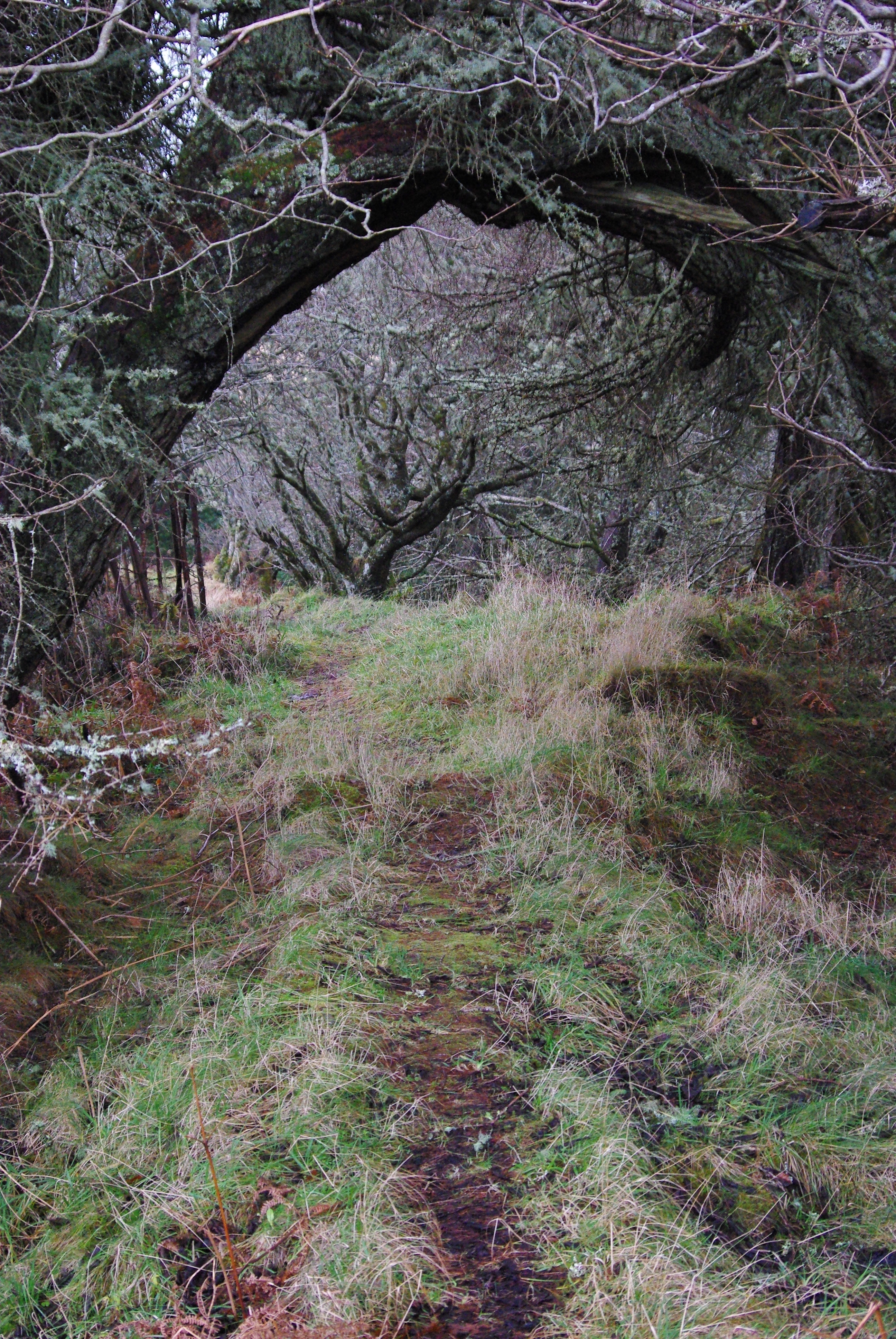
It stopped raining today, and I decided to take the camera into the woods at lunchtime.
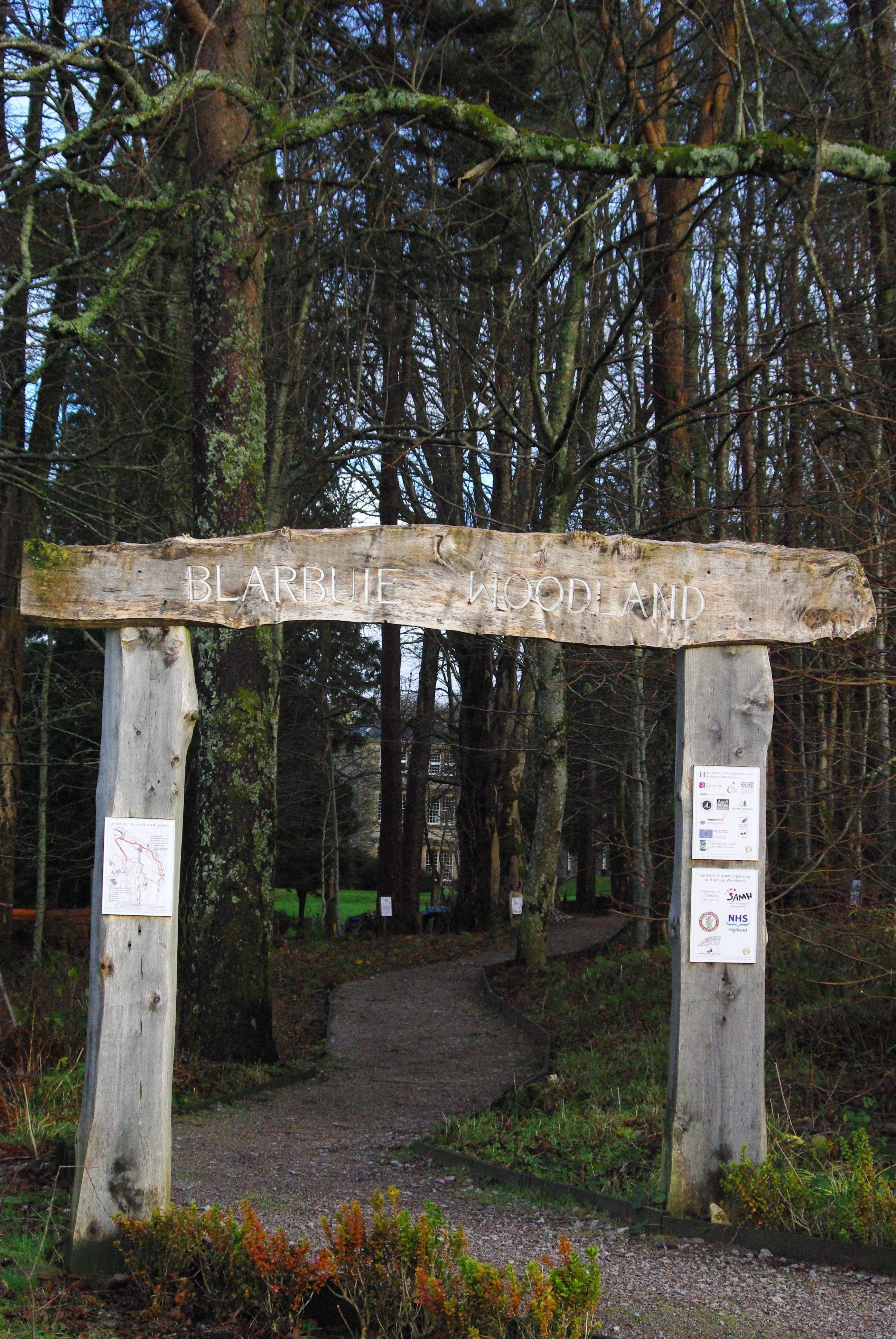
I walked into a forest that until recently was managed by a woodland project run by patients from the hospital. The project has lost it’s funding now, as patient numbers have dwindled, and as segregated projects like this are now regarded as a potential obstacle to recovery, as they are not supportive of integration back into the community.
It was lovely though…
The subject I was chewing on as I walked, was the huge change that this areas has seen. The hospital was built as a means of providing what was regarded as much needed humane treatment of ‘lunatics’ and ‘idiots’. These very terms are now insulting and offensive, but at the time the hospital was progressive, impressive and planned to ‘scientific’ principles.
Even the trees I walked in were planted as a means of sheltering (or perhaps hiding) the hospital.
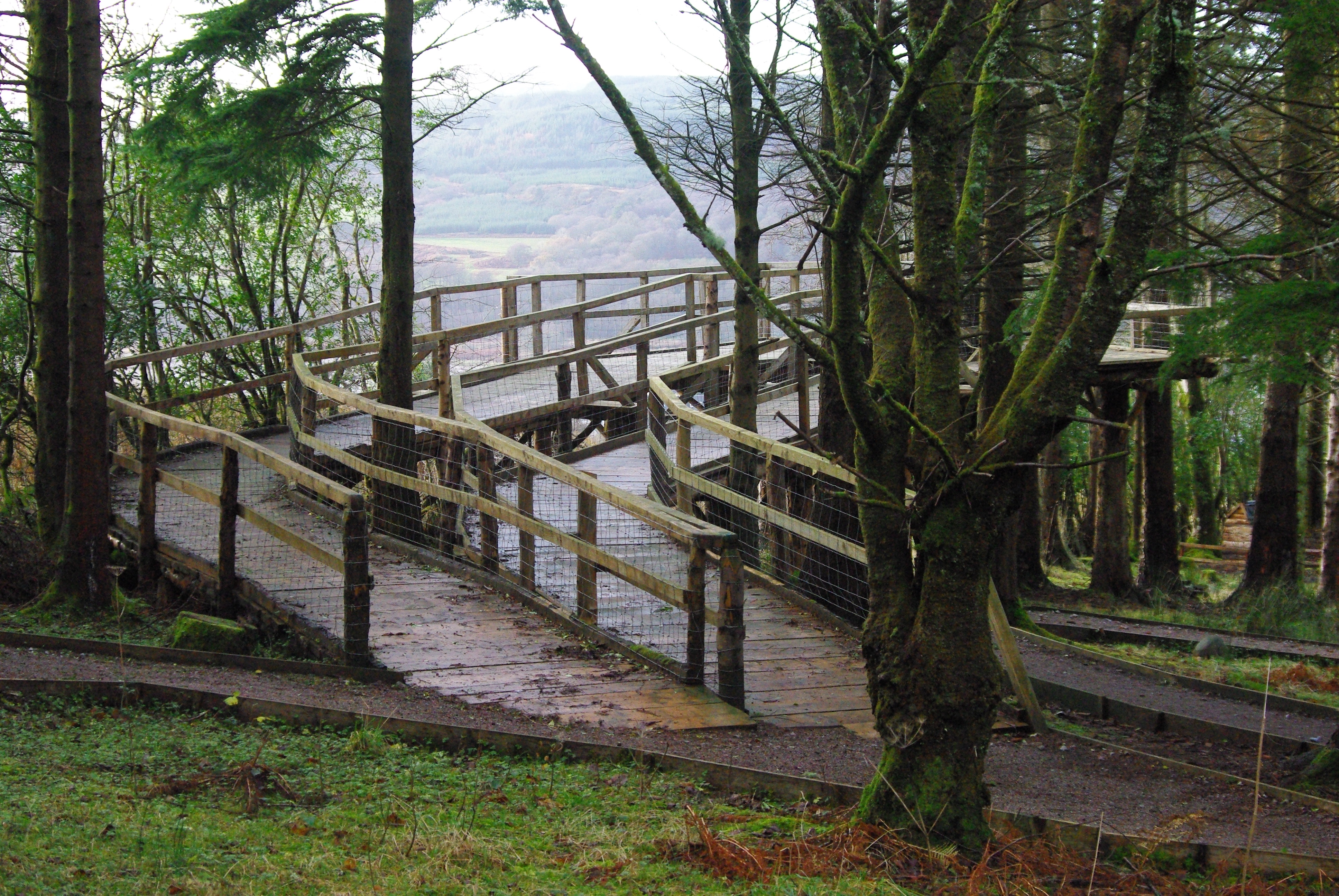
Evidence of the attempts to use the forest as a resource were everywhere- the notices describing different trees, the carvings, the rough wooden tables- and this…
I think it was built to make the best of a view, but in effect, it stands as a temporary monument to a rather meaningless industry.
A bridge into nowhere.
The people that made it are no longer in the hospital. I hope and pray their lives are rich and meaningful, and that the time spent working in these woods is a happy memory. But the fact is, such forms of occupational therapy are no longer part of common psychiatric practice.
And I thought of that other late Victorian institution that I am so familiar with- the modern protestant church. The buildings that were the places of the Protestant institutions still adorn all of our towns and cities- many are lovely too. Most of them are just as empty as this old hospital.
The parallels are pretty obvious. What both offered was good- perhaps even the best of what was possible in their day. They were raised with such energy and optimism. They changed the landscape of their times.
But as time passed, the rituals and routines that they followed became less and less in tune with the wider world. In some case, it was even toxic– what started off as an enclave of hope, became a backwater, where lives stagnated. Escaping such situations can be so very hard…
And what industry there is continued to look towards the institution. It was contained within the stone walls and the boundary fences.
There will be a new hospital soon, which will not be perfect- there will be more compromises, more challenges- but we hope that the focus will shift to outside these old stone walls and into our homes and houses- where real lives are situated.


 this fragile tent