You can find echoes of the same idea written many hundreds of years before by the prophet Isiaiah. Behold, I am doing a new thing; now it springs forth, do you not perceive it? I will make a way in the wilderness and rivers in the desert.
For some reason, this sentence always pokes me in the heart, right where I hope from. It has often come to me with tears. It was out of this place that I wrote this poem…
The great Becoming
.
How small we made you.
How constrained by our constraints;
We wore you like a lapel badge,
Pocketed you like a personal passport, then
Raised you at our borders like a flag.
We locked you in the pages of
Our Book, then threw away the key.
.
But how we worshipped you.
How we pointed at you with steeples.
You asked us to follow you, to
Give away our second shirts, but instead
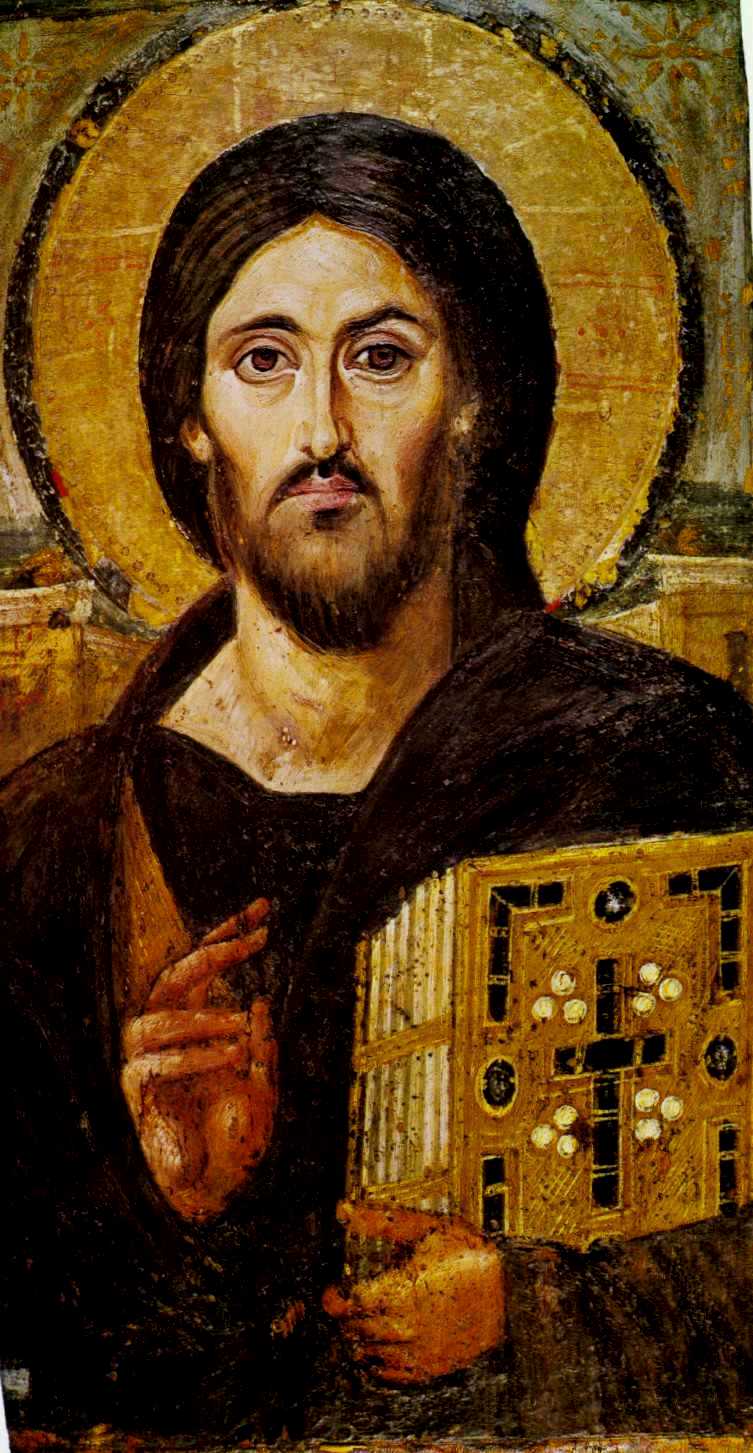
We made a million icons, each one framed in gold.
We swayed and raised our egos, singing love songs-
Not to you, but to idealised versions of ourselves.
.
How is it that still, you love things by becoming them?
How was it that this brown-skinned man with the heart of a woman
Took upon herself another name for everything, so we could
Encounter her in all these beautiful things and bleed with her when she
Lies broken? And just when all seems lost, she whispers still;
See, I am making all things new.
Even you.
I think that when I first read these words, I saw them (or they were described to me as) the description of a one-off event – most likely a supernatural Jesus event – or prehaps an individualised thing done by our own personal Jesus. It may well refer to both of these things, or it might mean something… bigger.
What if this is a constant kind of ‘being made new’?
Rather than describing a divine rescue plan for a chosen few, what if it is the description of a great cosmic unfolding that began with an explosion of love so powerful that nothing can stop it from reaching outwards, and continues on and on not just through history, but through each and every one of us, every bade of grass, every living and love-made thing?
An unfolding that can be sensed in the kindness of strangers, the flow of water or the feeling we get in the pit of our stomachs when we stare up at stars…
We celebrate the Cosmic Christ, the God who loves things by becoming them (with a nod to the writings of Richard Rohr and his grounding in the Fransican tradition.) Christ might also be a word which means ‘another name for everything’.
Christ the substance through which all things have their being. S/he might be understood as the shared am-ness of all things. Through Christ we are interwoven and connected to all created things both human and non-human. Through Christ we are drawn to be lovers of the earth not because we are ascendent, but because we are included and interdependent.
Learning from the Celtic tradition, this same Christ is the very ground of our being, the truest deepest part of our personhood and our shared humanity. Sin is that which prevents us from being our truest selves, and this can be seen both in our individual lives and our collective brokenness.
This might mean that we discover Christ in our own souls not by addition, but by subtraction (with a nod to the wisdom of Meister Eckhart) by finding our way through all the mess, trauma and bad choices through to what was there all along, waiting for rediscovery and re-connection.
Remarkably, the story of Jesus (the historical Christ rather than the Cosmic Christ) suggests that god has been revealed not only through nature (the first incarnation) but through taking on flesh (the second incarnation) The life and death of Jesus is a deep call towards sacrificial love towards our human and non-human neighbours.
Christ taught a gospel of grace, in which we remember that the god who is the light behind our light and the soul within our souls knows our woundedness, and waits for us to journey towards her. A Christ who no longer is the deserter of earth, but an example of its greatest lover. A Jesus who is no longer a supra-human ‘other’, but rather one of ‘us’.
After the Celtic tradition, we seek to take our place in world where nature is the gift of being, but grace is the gift of wellbeing.
In other words, we enter the Kingdom of God (which the historical Jesus called us to take our part within) is way to describe a non-dual, engaged way to collaborate in the service of healing, peace-making and acts of love towards the world, with a particular emphasis on those parts of the human and non-human world that are broken, enslaved, endangered or subject to injustice.
So far, in terms of trying to uncover an origin story, perhaps it is. In future posts, I hope to turn again to examining the degree to which this story might influence our practices, our ways of worship and our organisational structures- following the narrative logic that it might suggest to us.
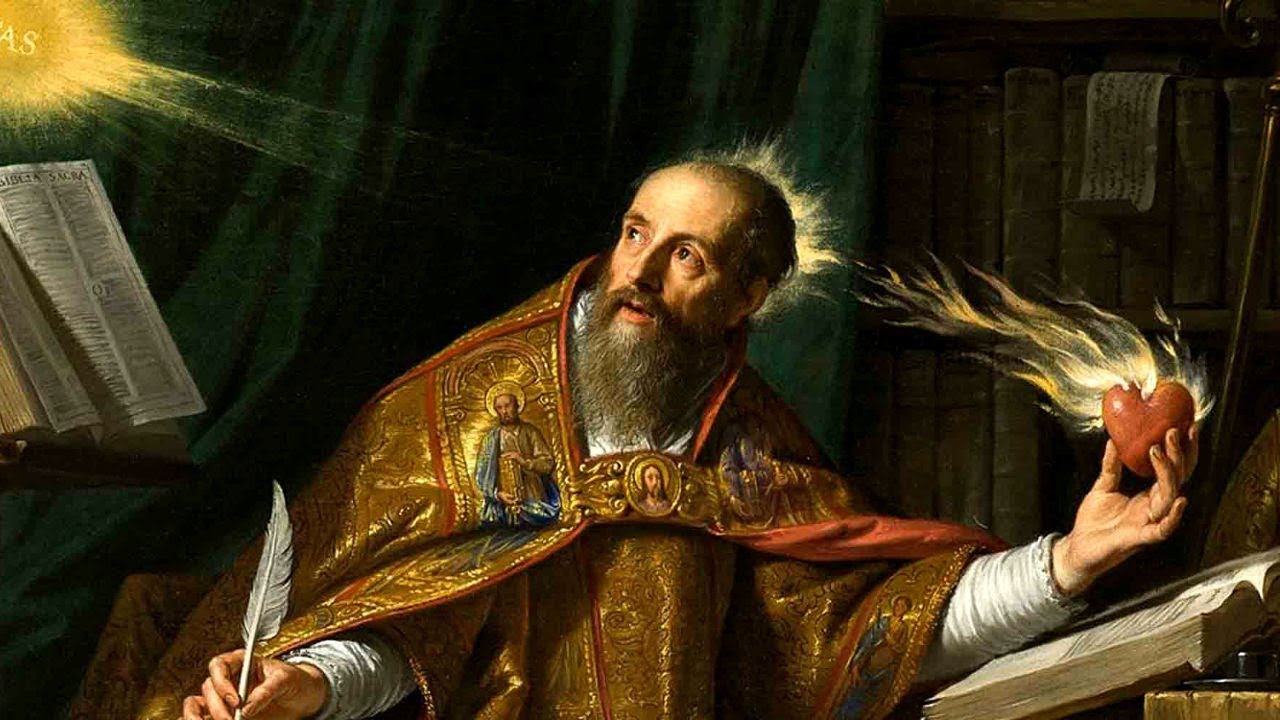
One more thing before we leave this story though. I made reference to how we might discover God in our souls through subtraction rather than addition. This takes us back to an old debate between Pelagius and Augustine of Hippo.
Pelagius, thought to have been a learned Celt, from somewhere in the British Isles or Ireland, travelled to Rome and started to write things that upset Augustine, who had proposed the idea of original sin as a theological technology for making sense of our relationship with god, and to give meaning to the death of Jesus on the Cross. Pelagius held with the Celtic tradition, which saw humans as containing the living god in the core of our being – clearly not compatable with original sin.
One side called us towards the inate dignity and sacredness of each and every soul. The other required salvation through a narrow gate, controlled by the power of the Church. You can guess who won the argument. Pelagius was written out of the Christian story.
What would the world look like if Augustine had lost the argument with Pelagius? What if we had never been convinced of our ‘original sin’, but instead built our thinking around the idea of original sacredness at the core of everything that has breath?
Without the empire that would we have had the religion of Christianity at all? What else might have filled this space?
What if the old Chritstianity is at the end of one of its natural cycles of existence?
What if it needs to be born again, and if so, who will be the midwives?
The point of this series of post is simple- renewal of a whole religious tradition to make it fit for purpose. For many, this is heresy of the kind that previously would have earned me a bloody end, but revolutionary reformulation is needed more urgently than ever.
After all, despite the grand proclaimations, what current use is western religion as a means of healing and restoration in our current broken world? I would argue that this is not just a minor issue requiring a slight shift of focus. Rather we need to remake our religion at source.
In this post, I attempt to reconsider our origin story, but first we have to consider the one that is still firmly in place.
When considering the stories told about the life of Jesus – those that have come to us through the inspired/historically accurate/mythological/unreliable (delete words as appropriate) written record – this thought occured to me;
If, by some strange circumstance, we lost all the scriptural records apart from the death and resurection story, would modern Christianity be any different? If we knew nothing of the teachings of Jesus – which we have ignored in large part anyway – could modern Christianity still stand?
Then there is a subsiduary thought.
If we only had the records of his teaching, and how he lived his life, WITHOUT the death and resurection story how might Christianity have developed- if it had been allowed to develop at all?
I think this is a significant question because (arguably) the religion Paul made – and was later adopted as the official religion of Empire – concerned itself to a large degree with the next life, not this one.
The origin story of this religion went something like this.
God is a divine judge who can bear no sinfulness, but because of his great love, he sent his only son into the world to be tortured and killed, taking on the rightful punishment of the rest of us, so that those who practice correct belief might be saved from eternal hellfire.
The degree to which ALL followers of the Christian relgion understood the origin story to be like this is, of course, debateable, but perhaps we can agree that this became the dominant Christian ‘good news’ story (or Gospel) fairly early, particularly in Rome, centre of the new Holy Christian Empire.
Meanwhile, those inconvenient teachings of Jesus slipped quietly down the list of priorities. For example, just off the top of my head;
The first shall be last and the last shall be first stuff
You don’t need two shirts on you back
Blessed are the poor (in spirit) and his recognition of the beauty and dignity of all people
Harder for a rich man to entire the kingdom than a camel through the eye of a needle
The band of malcontents, failure and low-lifes he spent his time with, who he saw as his disciples
Non-violence, offering the other cheek
The ‘new kingdom’ (perhaps better understood as ‘anti-Empire’)
Breaking national /ethical morality codes by speaking to women and Samaritans, lepers and Roman soldiers
The radical inclusion of outcasts and outsiders
The call to love for all and everything, even enemies
That question again- to what extent are these sorts of teachings central to our practice of the Christian religion?
Is it possible that we have made them at best ‘optional’ matters, much less important than saving souls from hell? We might hear preaching about them, but I think we can see clearly how Empire is always more important than the Kingdom of God’s anti-Empire messge. The dominance of American Evangelicalism is only the latest version of the same.
The goggles we have been given to look back at Jesus through make it very difficult to look afresh at the religion we have inherited, but if we were to invite an uninformed alien to read the gospels then visit one of our cathedrals, or attend one of our evangelical worship services, surely they would be very confused?
How did we end up here?
If the story of Jesus is the origin story not just of our religion but of our whole culture, it is hard to deny that this story does not seem to have been adopted whole. Rather it has all-too-often been interpreted in such a way as to protect the powerful and ignore the needs of the weak and oppressed. (One of the key ways that this replacement trick seems to have been wrought is by the deployment of a theological construct called ‘original sin’ but we will return to this later.)
Do we need a new origin story? Might we yet redeem our religion from the clutches of Empire? More than this, might there be somethng in this new origin story that might be useful to us as we grapple with the world that has been made in the shadow of the old one?
My answer to this is yes – and no.
Yes because the story as laid out above is not fit for purpose so we have to replace it. I say this because it fails to challenge the fundamental economically over-reaching, socially unjust and environmentally unsustainable problems created by the western culture it has sustained and developed within.
No because (many would argue) this was never the real story in the first place. The religion named after Jesus lost itself along the way. It became corrupted by those very things he spent so much time warning us against. Therefore, the task is not to make a new story, but to strive to find the one that was always there.
No also because rather than inventing anything new, perhaps the better strategy is to go back and examine what other followers of Jesus found most persuasive. We are not the first generation to grapple with these issues and perhaps others had a better story in the first place, engaging better with the problems described above?
This is difficult work, even for those of us who have been through painful deconstruction of the religion we previously knew. Where should we start? Who can we trust to guide and inspire us? After all, the Christian religion – particularly in Protestant form – sometimes seems like one long argument in which successions of men (it is always men) think they have a better grip on Truth than those before, and where did all of that get us?
One lesson we might take from the Protestant project is the failure of attempts to create correct belief based on ever more narrow readings of scripture, as if an ascendant Christian tradition would eventually reach a final ‘true’ position on all things – because the Bible says so. This approach has so many problems, but perhaps the more obvious one is that it is based on an unexamined and unacknowledged set of assumptions about the nature of scripture itself and the blind spots deployed to protect those asssumptions. I have written a lot about this – if you are interested, perhaps here is a good place to start.
If this approach was always flawed, and even worse has failed to deliver a religious framework that can engage with the crisis facing our society, perhaps we must instead find ways to prioritise practicalities and praxis – the efficacy and usefulness of religion. After all, what is belief for?
Or to put this another way – who cares what you believe if it does not change you/the world towards better? The saving souls business has too often been a distraction convenient to vested interests opposed to any real change.
It might be worth mentioning here my own process as I grapple with what might be described as ‘reconstruction’, along these lines;
I acknowledge those whose teaching/writing/leadership has inspired me, consciously holding on to the things I inherited that are ‘good’. These act like signposts or filters or channels through which I measure and encounter the new
I pay attention to what sings in my soul. I have decided to trust my own embodied reaction as a guide for accepting and adventuring. If I read something or encounter something and it lights me up emotionally/physically/spirituality (even intelluctually) then I follow this down and let it lead me to new places. are
What is useful? By which I mean the degree to which ideas contribute towards my understanding of peace love and justice. If they do not seem immediately useful in this regard, I am not necessarily rejecting them as ‘wrong’, rather I am far less interested.
Enough with picking over the old story, what about a new/old one?
If you are reading this (after glimpsing the title) then I am going to make an assumption that, like me, you think that religion can be/might become/sometimes is part of the solution to some of the difficulties that assail the world we live in. Sure, you might (like me) be deeply frustrated by the fact that it has failed to be this so regularly and in so many ways, but (like me) you perhaps still have this feeling that ideas matter, and that ideas of the spirit perhaps matter even more…
Crisis of the planet – the planet not being able to cope with the amount humans take nor absorb the amount of waste we give it back
Crisis of the economy – Our economic survival seems to be based on continuing to consume more and more
Crisis of our politics – Our political systems seem incapable of envisioning or implimenting alternative solutions, even when offered a pathway by science
Crisis of our religion – our religious institutions are not able to bring to us a deep conviction of our responsibility or connection to the living world we are part of.
Brian McLaren makes do with a bullhorn after power failure at Greenbelt festival a few years ago..
I have written about all of these issues on this blog,but it is the last of the four crises that I have been thinking about of late. In fact, it has been a long term conversation with many of my friends too.
There is a similar-sounding issue that we might easily confuse this conversation with, aound CHURCH. I have spent too long on that journey… so much time has been spent trying to preserve the institution by making stylistic superficial changes in the hope that the centre can hold. I no longer think it can, but even if it does, how might Church inspire real change by doing business as usual? What dynamic ideas might be embraced without letting go of the old ones? The question I have begun to consider is whether it might be time to re-examine not just the flavours of religious institutions, but the fundamentals of the religion itself.
I should start by saying that I am NOT talking about inventing a brand new religion – I’ll leave that to the Scientologists. Neither am I able to comment on the reform needed in other faith traditions other than my own.
The religion that I both reject but also want to re-invent is the one named (perhaps despite his best warnings) after Jesus Christ, a historical figure whose teachings (I would argue) we have largely ignored.
Here is the thing – I don’t think I am alone. Back to those conversations with my friends. Most , like me, have left the institution of Church behind, but some are very much still within, working hard for change. The commonality between all of us is that we all long for something else, something better, but we all struggle to conceptualise what that is, and what it might look like.
I am going to try. It may take me a while. If you have thoughts or ideas that are triggered by my ponderings I would love to hear them- as long as you are kind.
It is perhaps worth reminding ourselves of the reality of declining church attendance in the UK. It is not always a straightforward picture in the short term, for instance, some hard line conservative churches have actually grown in recent years- including the Free Church of Scotland and many Pentecostal or funamentalist gatherings – even though the long term trend is still downwards, some have seen significant increase in attendees.
But this brand of religion stays firmly within the ‘crisis’ territory outlined by McLaren above. The solutions they are offering – moral certainty in relation to homosexuality, gay marriage and the fear of Hell – do little to address the problems facing our age. In fact, given the dominance of American right-wing faith models across the whole world, we might argue that this religion is the problem, not the solution. It is at best a distraction, at worst, one that has fully accommodated itself with the same capitalist economics and politics that are throwing us towards destruction.
This one features an interview with Jonny Baker, who probably needs no introduction to readers of this blog, but here goes anyway.
I first met Jonny back in the early 2000’s, during a very different time of my life, and perhaps a very different context for Christianity/faith/spiritual exploration in the UK. Back then, Jonny’s blog was one of the go-to places for connecting to all sorts of new things that were happening, under labels such as ‘alternative worship’, ’emerging church’, ‘small missional communities’ and eventually, the more anchored, institutional ‘contextual expressions’ of church that came under the title of ‘fresh expressions’.
He is a long time member of one of the first of these ‘small missional groups’ Grace, which is still going strong. I remember a rather sniffy review of one of their services in The Guardian in which Jonny was described as ‘an aging youth’, which I think is Guardianese for youthful looking and all round cool dude.
As an interesting aside, back then, blogs were a thing. Even this one! (As a rough measure, during the early days articles on this blog would recieve hundreds, sometimes thousands of hits, whereas now, dozens. But who is counting?) They were the primary way that we discovered new things, had debates and conversations, heard about new books etc. Jonny’s blog, along with a bunch of others were very important to us. The emergence of so many other communication platforms are one sign of just how much things have changed over the past decades. Our interior and external worlds now have to contend with a part of our persona’s that are neither one nor the other, but also both – fused and formed in the digital, online world. Hmmmmm.
Jonny was doing lots of other things too – he worked/s for the Church Mission Society, in the vanguard of considering how faith engages with culture. Later this morphed into a whole new way of seeing the ministry and the development of pioneer minister training within the CofE. All this makes him an excellent candidate for a podcast trying to reflect on how the context for faith may have shifted and changed, and what art and resources might be relevant to our shifting context…
He is also a father and grandfather these days – one of his sons is rather famous too, the wonderful Harry Baker, poet extrordinaire.
But there was another key reason to inerview Jonny, and that was because he was one of the people (Along with Jon and Ad) to found Proost.
So, if any of this interests you, the third Proost Podcast first takes us through some of the fascinating history, but then moves on to consider our new context…
We would love to know your thoughts. If this is of interest to you, please share the pod because we are trying hard to develop a communal conversation about what a new proost might look like.
We also have a closed facebook group here, which we would love to welcome people to- it is closed so we can keep our conversation generous and generative, not because we want to keep anyone out!
Trigger warning- this is a small diversion into Bible history. For some this might be a turn-off right there, whereas others may find it goes to places that they are simply uncomfortable with. There will also be bible scholars who will take issue with some – or all – of the things I am saying, because we are dipping into a vault of murky ancient history filtered through a religion which claims the authority of God on whatever it has sanctified.
But sometimes, in order to make things new, we need to look backwards too – in this case, to the very beginning – so that we can see where we came from, and perhaps where we turned left when we could have turned right.
So, feel free to disagree. Go and do your own research and I hope that this brings to you your own meaning. Find your own story, just as I look for mine.
I was at an Iona community family group meeting last weekend, in which we were discussing Christian humanism. I confess to approaching the discussion warily, as it seemed likely to be rather esoteric, but what actually happened was that it opened a window into something that I found interesting intellectually and more importantly, to offer ideas that might be very useful as we seek to rediscover our story. Or perhaps it would be better to say ‘as we seek to rediscover purpose, mission, our concepts of goodness and our prophetic voices’.
Just little things like that.
For those who have read this far who have no allegiance to Christianity, past or present, perhaps I should say a little bit more about this ‘story’ thing. Western culture was founded – or perhaps it would be better to say shaped then continuously disrupted – by the Christian story. I would argue that what we made of this story was always full of obvious tortuous distortions of the words of Jesus, such as we know them. After all, how can we reconcille conquest, empire, the accumulation of wealth, slavery, poverty, capitalism, etc etc with the words of Jesus? Christianity became a religion that had little to do with the core elements of the story Jesus told.
This is a bold statement, I know, but one that I believe I could ‘prove’ in a court of law.
Arguably, the tensions created by this disconnect have always been there throughout Christian history, characterised by purges against heretics, or successive Protestant reformations. Always, people talked about going back to true religion and recreating the purity of the early church. The source material for this protesting and reforming was always the Bible- viewed through the context and passions of the people reading it.
Part of the problem – the nature of the torturous distortions perhaps – comes about when we ask what the Christian story that we built western culture on actually is/was. There is the story of love, compassion, caring for the weak and poor, looking after widows and orphans. The inverted power structures, the value given to each person. The living lives colectively and fairly. But this never fitted easily with the cultures we created. What did fit was a different gospel, which might be understood as how personal sin results in eternal damnation, but for the sacrificial death of jesus.
Despite the sometimes cataclysmic changes that these religious arguments brought about, we have a different problem now. Churches are empty. Sure, I know there are exceptions, but here in the UK, the number of people who attend church is still declining, still aging, still arguing and as such the Church is less and less relevant as a moral or political force. It still has an important ceremonial function, but it has no prophetic voice. It has no story that anyone is listening to. Perhaps, given the tortuous distortions I refered to above, this might not be a bad thing.
But the end of one story (if indeed that is what we are seeing) leaves an empty space. People have always looked for meaning and purpose and without a story, what do we have? In a post-covid world, overshadowed by global warming and mass extinctions, how do we conceive of a better story? In a political system dominated by inequality and the failure of our institutions and political/economic systems to bring hope, how do we shape our story towards better things?
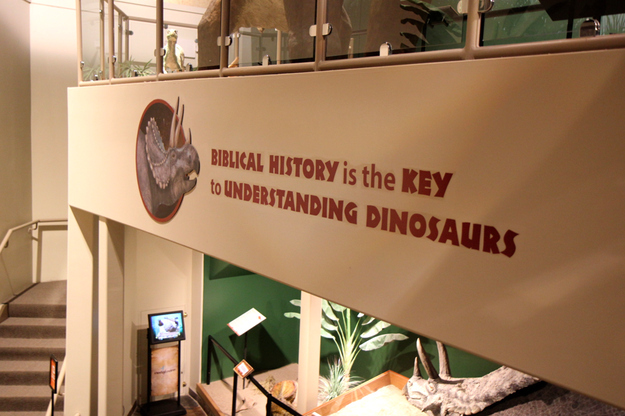
Can’t remember where I got this from. The Creation museum perhaps?
Given what I have said above, the Bible would seem to be a strange place to start, right? After all, even now there are plenty of people in the world who seek to use it as blunt weapon to bludgeon us towards their story – often a very narrow story that seems very much to be part of the problem; a story that is anchored to textual determinism, at least in relation to some of the words of the Bible, which is seen as a unified, divinely inspired and heavenly-delivered holy text.
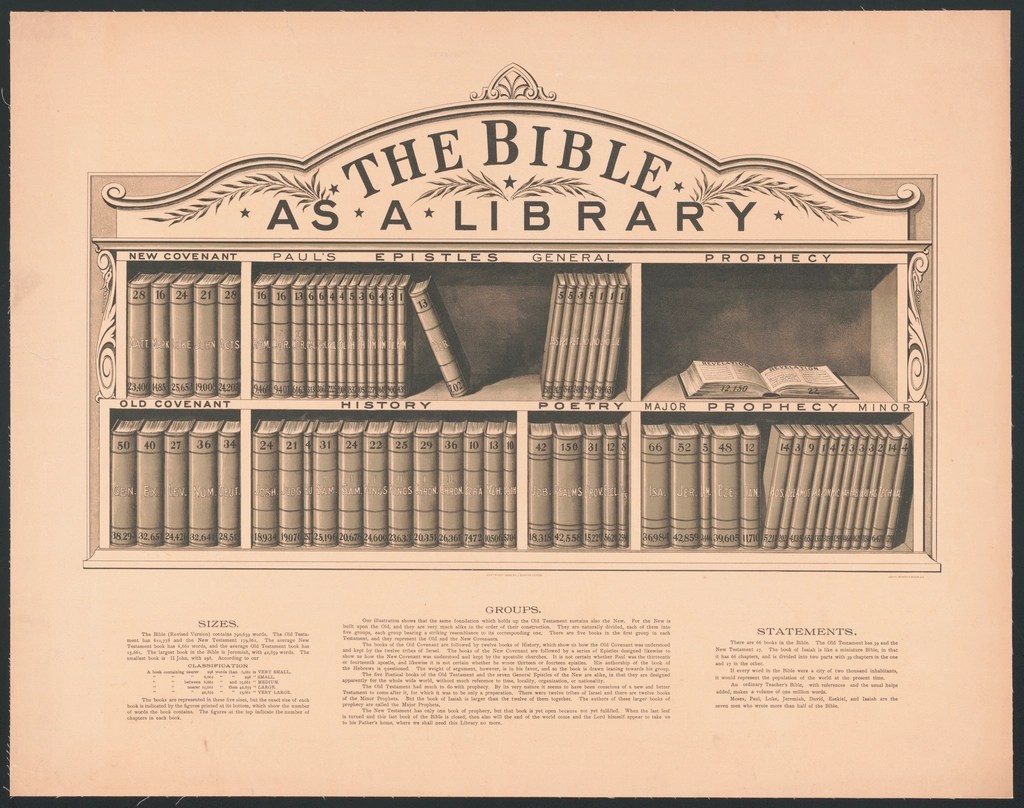
But what if the Bible is much less than that, but at the same time, much more? What if it is a library of miss-steps, half truths, mythological history and open-hearted laments? What if it is one third poetry? What if there are no other books in human history that are like it?
More pertinently, what if the Bible – or at least the books of the new testament – contains great big clues as to how the words of a man called Jesus became repackaged into a religion called Christianity by a Jewish religious genius (who never actually met Jesus) called Paul?
This was what we ended up talking about at our meeting.
Remember those clues I mentioned above? Here is what we think we know – with the usual warning that some (many!) will take different views.
The oldest of the four gospels is Mark’s gospel. It is very different from the others, so much so that later scribes have tried to give it a different ending. He does not include the resurection.
The other gospels seem to quote freely from Mark, but spin off into other directions. They add many of the ideas that MAY have been influenced by Paul.
Paul never met Jesus, and we can infer tensions between him and the other apostles who actually did – many of whom get a very bad press in the gospels! Paul’s encounter with Jesus was mystical, and he seemed to trust this more than he did the words or experience of those who had been his disciples.
Paul was a sophisticated, educated man. The other apostles were not. (But Jesus picked them!) Without his innovation and leadership, it seems unlikely that the early Christian church would have survived – many other Jewish movements did not after all. The difference was… Paul.
The oldest actual book to be included is thought to be St Paul’s first letter to the Thessalonians, in which some believe he was correcting or addressing issues that had been created by an earlier letter around the second coming of Jesus.
This letter may well have been the Didache (pronounced did-a-kay), which was a letter from the apostles in Jerusalem giving instructions as to how to run a church. As such this letter certainly predates most of the NT books, but may well be earlier than them all. More on this later.
The canon of scripture that evolved over the next many centuries involved many good people struggling to make sense of a complexity of writings that most of us have no idea ever existed. The struggle to do this well, according to a set of principles that made sense, is to be honoured. But we have to remember that the library of diverse books that entered the canon was a human construct, that was shaped by context, best understandings and compromise.
All of which should leave us room to treat these incredible documents with respectful skepticism. After all, they are strong enough to allow our questions, our doubts, our various entanglements. The ‘truth’ they contain is no less real if we question its historicity for example (there are plenty of problems reconciling the Bible with the archeological/historical record.) We might learn as much from apparent contradictions as from attempts to ‘make it all fit’.
The bottom line here is that our interpretations and understandings of the Bible- what it is, what it has to say, what it means for our lives, our politics, our priorities – what STORY it leads us towards depend a lot on what we think the Bible is. If we are to allow it to shape us, I would argue that we must first loosen up a little. It is OK to take the book/s out of their leather case. Doubt them and see where the doubts lead. Believe them and see where the beliefs lead.
If you want to know more about the complex and fascinating (to me anyway!) bible history, then it can be difficult to know where to start. There is so much out there and unless you are an academic (and I am certainly not) then it is difficult to know who is dealing with these issues honestly and who is coming at them with a perspective pre-formed by their own tribe.
The Bible Project has tried hard to bring some of the acedemic perspective to a wider audience, with video’s like this one;
More controversially perhaps, and thanks to my fellow (and inspirational) Iona community family group member, I would point you towards some of the writing and speaking of a man called James Tabor, who communicates well around many of these issues, including via his excellent you tube channel. Videos like this one;
So where does all of this take me to? Can it really be a way towards a new and better story?
I think so, firstly because it allows us to break with the old one – not to dismiss it, but to include and transcend it. After all, arguably this is exactly what Paul did to the teachings of Jesus – brilliantly, and perhaps problematically. Secondly because It might encourage us to project new – yet faithful – understandings onto our context in a way that is free from some of the distortions. Of course, we will no doubt make new distortions, and for this we need those who will doubt and test them too.
Finally, I want to return to the Didache. I had never heard of this document, and this was interesting to me too. How is this not better known? (Perhaps you are far ahead of me however and the problem was just my ignorance.)
James Tabor has a blog piece that talks in more detail about this document. You should read it, but I will quote from it here;
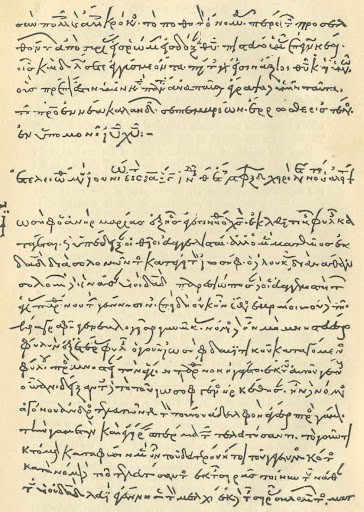
The Didache was discovered in 1873 in a library at Constantinople by a Greek, Priest Father Philoteus Bryennios. This precious text, dating to the late 1st or early 2nd century CE, is mentioned by early Christian writers but had disappeared. Father Bryennios discovered it in an archive of old manuscripts quite by accident.
TheDidache is divided into sixteen chapters and was intended to be a “handbook” for Christian converts. The first six chapters give a summary of Christian ethics based on the teachings of Jesus, divided into two parts: the way of life and the way of death. Much of the content is similar to what we have in the Sermon on the Mount and the Sermon on the Plain, that is, the basic ethical teachings of Jesus drawn from the Q source now found in Matthew and Luke. It begins with the two “great commandments,” to love God and love one’s neighbor as oneself, as well as a version of the Golden Rule: “And whatever you do not want to happen to you, do not do to another.” It contains many familiar injunctions and exhortations, but often with additions not found in our Gospels:
Bless those who curse you, pray for your enemies, and fast for those who persecute you. (1.3)
If anyone slaps your right cheek, turn the other to him as well and you will be perfect. (1.4)
Give to everyone who asks, and do not ask for anything back, for the Father wants everyone to be given something from the gracious gifts he himself provides. (1.5)
Many of the sayings and teachings are not found in our New Testament gospels but are nonetheless consistent with the tradition we know from Jesus and from his brother James:
Let your gift to charity sweat in your hands until you know to whom to give it. (1.6)
Do not be of two minds or speak from both sides of your mouth, for speaking from both sides of your mouth is a deadly trap. (2.4)
Do not be one who reaches out your hands to receive but draws them back from giving. (4.5)
Do not shun a person in need, but share all things with your brother and do not say that anything is your own. (4.8)
As well as the similarities, there are real differences from the Christianity of Paul however. Communion for example is to be a simple thanksgiving meal of wine and bread with references to Jesus as the holy “vine of David.” It ends with a prayer: “Hosanna to the God of David,” emphasizing the Davidic lineage of Jesus. The bigger issues raised by the Didache are these (again via James Tabor);
The entire content and tone of the Didache reminds one strongly of the faith and piety we find in the letter of James, and teachings of Jesus in the Q source. The most remarkable thing about the Didache is that there is nothing in this document that corresponds to Paul’s “gospel”―no divinity of Jesus, no atoning through his body and blood, and no mention of Jesus’ resurrection from the dead. In the Didache Jesus is the one who has brought the knowledge of life and faith, but there is no emphasis whatsoever upon the figure of Jesus apart from his message. Sacrifice and forgiveness of sins in the Didache come through good deeds and a consecrated life (4.6).
The Didache is an precious witness to a form of the Christian faith more directly tied to the Jewish orientation of Jesus’ original followers. I encourage my readers to take a look for themselves. There are many versions both on-line and in print. You can begin here: Early Christian Writings: The Didache.
I wonder how this makes you feel?
Perhaps you are weary from all this deconstrction – I certainly am. The idea of being confronted with documents that start to undermine the very nature of the divinity of Christ might be the last thing we need. Anyway, this is not defnitive. The Didache is just an ancient document that never made it into the canon of scripture that became the Bible. It contains other problems too- not least the apocalyptic vision that Paul may have been clarifying and correcting in his letter to the Thessalonian church. Perhaps this document describes an evolutionary early set of followers trying to establish some kind of common practice. Perhaps we needed a theologian such as Paul to bring the whole story together.
But then again…
As with all theology, my last question is always , So what? How might these ideas lead to liberation, to renewal, to a new story?
What is most important, the details of doctrinal correctness, or the heart and spirit of the matter? It is the latter that gives us our story is it not, and to me at least, this rings all the more true when set free.
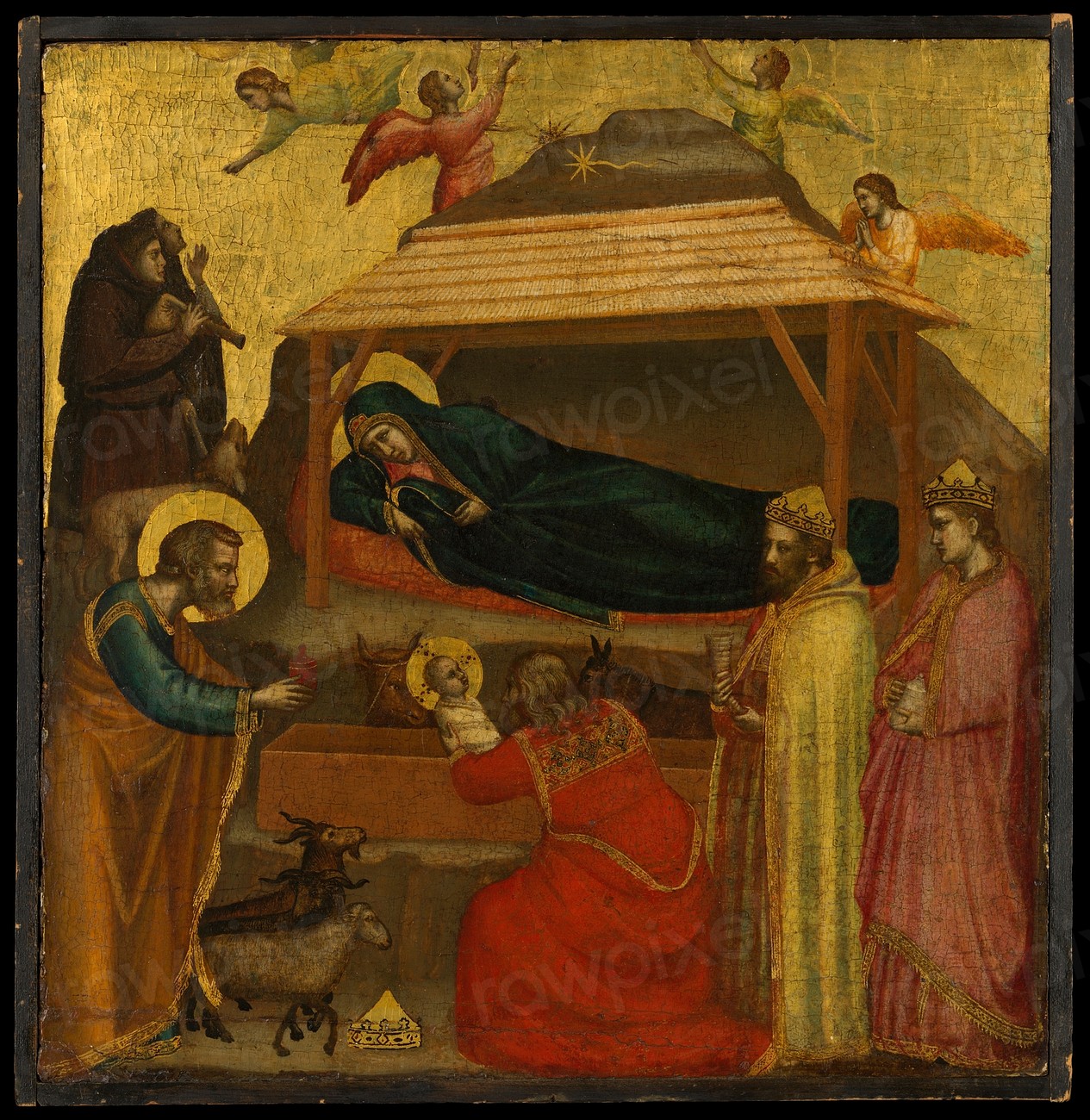
In the tradition (rather than the pedantic interpretation of scripture) these were men of learning coming from the east – but they are sometimes described as kings, but also this strange title ’Magi’, thought to be from the Greek magos which itself is derived from Old Persianmaguŝ from the Avestanmagâunô, i.e., the religious caste into which Zoroaster was born…
Think about that for a moment. These Magi not only held a different religion but came from a country/empire/culture that had oppressed and enslaved the people of Israel, as recorded throughout Hebrew scripture, yet here in the Gospel of Matthew they are given star status, centre stage, in stark contrast to the behaviour of Herod, King of the Jews.
They were wise enough (or crazy enough) to read the wisdom of stars thenset out on a journey inspired by what these stars told them. That does not seem like wisdom to me, it seems foolish.
Perhaps in a world of idiots, a fool is held to be wise. Wisdom has a context – and becomes prophetic when it sees what others cannot. Is this what the Magi were to their own context?
We can assume they were learned men, but knowledge and wisdom are not the same.
Perhaps they were just born that way, -gifted with stillness from birth. But then again, the personal security required for this kind of stillness seems to come from privilege – from bring raised by good loving parents in a safe and secure home.
Were they old or young? The wisdom of age after all can become conservative requiring a dose of wise recklessness from new generations. Was there this tension in their midst, an old mentor and his young followers, or a young whipper-snapper who was held back by the affectionate tolerance of his older teachers?
But how else might be become wise, if not through sustaining movement through adversity? We always seem to gain more from dark valleys than from mountaintops; from brokenness and depression rather than success and achievement. Perhaps the Magi were survivors.
Can wisdom arise from religion- from resting in scripture and following a narrow discipline and tradition? The evidence for this is at best mixed, but certainly I have met people like that. People whose faith has opened them up to deep learning rather than locking them down into doctrinal prisons. People of the open questions rather than the glib answer. The fact that these Magi made this journey at all suggests that they must have been people like this.
All I know is that we need wisdom now. We need people who read the stars, searching for new truth, new incarnations.
We need them to travel towards the light they have seen, and to navigate the messy politics they encounter along the way, taking no heed of the doubters, the scoffers, those who think their wisdom crazy.
We need them to cross the religious divide and break down barriers.
We need them to give gifts to hopeless causes, in order to bring hope.
As advent unfolds I have been allowing myself to look forward towards hope… to imagine the coming of a new kingdom/insurection/revolution in which goodness and compassion are central. In other words, I am trying to rest again in the spirit of the Magnificat as sung by Mary and recorded in just one of the Gospels…
46-55 And Mary said,
I’m bursting with God-news; I’m dancing the song of my Savior God. God took one good look at me, and look what happened— I’m the most fortunate woman on earth! What God has done for me will never be forgotten, the God whose very name is holy, set apart from all others. His mercy flows in wave after wave on those who are in awe before him. He bared his arm and showed his strength, scattered the bluffing braggarts. He knocked tyrants off their high horses, pulled victims out of the mud. The starving poor sat down to a banquet; the callous rich were left out in the cold. He embraced his chosen child, Israel; he remembered and piled on the mercies, piled them high. It’s exactly what he promised, beginning with Abraham and right up to now.
Luke 1 46-55 (the message translaiton)
I have been over in Northern Ireland for a few days to see my father, immersed in the usual chaos of old age – medication, money and care. I went with my brother, and we spent a little while exploring a place that he knew better than me, as he had spent a lot of his childhood over there. (Our family circumstances are complicated.) Here is the grave of my grandparents, both of whom died before I was born, having worked in the flax mill that took such toll on the health of local people.
My family were all born into a town called Strabane, right over on what now is the border with the Irish state in Tyrone. It is a bustling booming town now, because of cross-border trade, but until very recently was a place with one of the highest unemployment rates in all of Europe. Strabane was the most bombed town during the troubles, with the highest proportion of it’s citizens killed. It is overwhelmingly Catholic (91%) and as such was an epicentre of republicanism. There are many of these dotted about;
Until recently, many of the streets would have kerbs painted in sectarian colours across the province, but I was surprised to see that most of this has been removed. However, the tribalism remains firmly in place, seen in many subtle ways. One of the more obvious at present is that in republican areas you will see many flags and banners supporting the Palestinian cause in Gaza, whilst in unionist areas, lamposts are flying the Israeli flag. The currency and apparent group-think of this division are shocking to outsiders, but not to those who live with it day-by-day.
In Strabane town centre there is quite a lot of public art, most notably around the lovely Alley Theatre, but also this piece, which lists a number of famous people born in the town, including former president of the USA, Woodrow Wilson, Musician Paul Brady and writer Flann O’Brien. It does not mention other illuminaries such as William Burke, the 18th Century serial killer, but does give a shout out to a woman called Cecil Francis Alexander who wrote many favourite hymns from my childhood- ‘There is a green hill far away’, ‘Once in Royal David’s City’ and the ubiqiotous ‘All things bright and beautiful’…
… which takes us back to the root of all this.
The violence and trouble unleashed on Ireland has been blamed on many things; religion (of course), politics, the British, ignorance – all of these things may have played a part, but Cecil Fancis Alexander’s hymn gives us another clue, containing as it does (in original form at least) this verse;
The rich man in his castle, The poor man at his gate, God made them high or lowly, And ordered their estate.
For much of the last centuries, the Irish were considered as the lowest of all. Alexander, from a wealthy background, was part of a ruling class, married to an Archbishop. She spent her time on charitable pursuits amongst the deserving poor. She lived at the time when around one million people starved to death in what came to be known as the Irish Potato Famine but seemed unable to see the injustice right in front of her nose.
Perhaps you think me unfair to someone living in such a different time and place, but I will not sing this hymn, even with the verse above ommitted. Instead I will thrill once again to young Mary as she sings those words of the magnificat; The starving poor sat down to a banquet; the callous rich were left out in the cold.
I took a morning walk alongside the border river Foyle, which runs through the middle of Strabane thinking about an old concept suggested by the author Phillip Yancey. In his book ‘What’s so amazing about Grace’, he painted a picture of what he called ‘ungrace’, or the opposite of grace. Families, communites and societies who are characterised ungrace seem to experience it in almost like toxic waste or poisoned water.
Ungrace leaves a legacy that can only be overcome by one thing.
I am not into making new year’s resolutions- I tend not to keep them. However this time of year is the time to take stock, to dream of what might be ahead.
As well as the personal stuff it is a great time to wave some spiritual litmus paper in the stew of culture that we swirl around in. What is there that we can celebrate? What should we protest? How does the life of Jesus within us open us up to new ways of living in this new year?
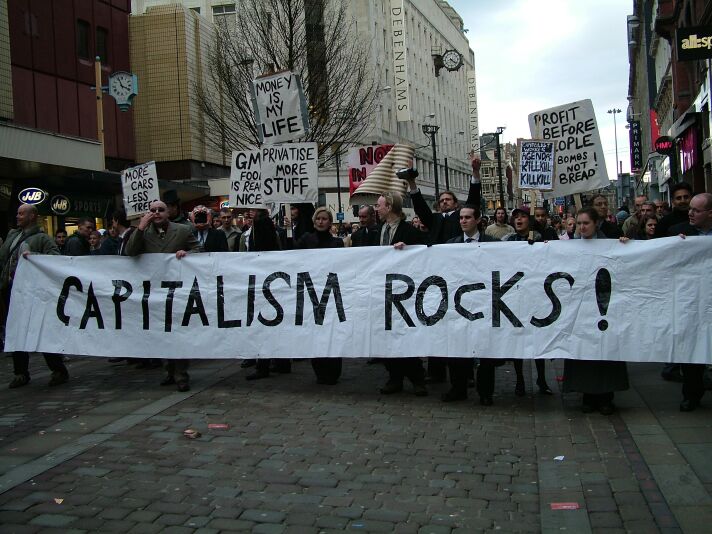
A year or so ago, I wrote a post reflecting on the relationship between Capitalism and Christianity. This seems even more relevant now as austerity measures hit the poorest and weakest in our economy. Something is wrong– not just at an economic level, but rather in our very ways of being.
There are some encouraging signs that the Church is starting to realise this however- and that we need to be the voice of instability, not conformity. Sometimes it seems that our religion is like smoke blown into a hive while the honey is stolen. The Pope appears to understand this, as does Archbishop Welby.
The problem, it seems to me, is that church often claims to be separate from society (the old sacred/secular duality) at the same time as being indistinguishable from it perhaps in the following ways (as listed in my earlier post but with a few refinements and additions.)
By emphasising personal, individual salvation above all else. The only useful purpose of mission is to save people from hell after they die. This means that active engagement in any other activities (particularly ‘social issues’) is downgraded, or even downright suspicious. For many these activities are only really acceptable if used as a trojan horse to smuggle in the gospel message.
By embracing success culture.We use the same corporate structures, we reward our religious successes as we would our CEO’s, we value hard measurable outcomes, we construct programmes about personal empowerment and success.
We make mission a kind of hostile take over.Business success involves out-performing the opposition, and rejoicing in their bankruptcy. We need to sell more, penetrate all markets, dominate the marketplace, crush to opposition.
Christianity became a lifestyle choice that required no change to the way we live our economic lives.Yes, I know there is the old ‘tithing’ argument around Evangelical churches, but we drive the same cars, live in the same houses, take the same holidays, fill our lives with the same gadgets- or (and here is the sting) even if we do not have these things, we aspire to them. St Jobs is venerated in many a trendy Christian Church every time people meet.
We bought into lives characterised by individualism above the collective.The model given to us by the life of Jesus and the early church was all about learning to live in loving community- how we live for one another, how we hold things in common, how we find ways of including the poor, the weak. Can we still hold these things as defining characteristics of church?
We failed to demonstrate any kind of radical alternative.The best that we have been able to offer is how to live as better Capitalists- more sensible, more responsible, with greater probity. The Protestant Work Ethic lives on- in each one of us who finds comfort in our pews as much as our pension fund (even if both are more sparsely populated than previously.)
We did not see injustice, inequality, poverty, unfair taxation, usury, over-consumption, environmental destruction, as any of our business.Which relates to point 1.
Even where there was visible discomfort with Capitalism, we lacked any coherance, we lacked leadership, we did not become a critical movement.Rather we splintered and focused on totemic side shows live homosexuality and women bishops- all of which destroyed our credibility to speak prophetically into our culture anyway.
Our mission to the poor was conditional on redeeming them to become like us.Difficult one this, but stay with me. There are lots of examples of Christian engagement with the poor, from the good old Salvation Army right through to the new food banks. However, these activities might be seen as cleaning up the edges of Capitalism– but also justifying the dominant ethos. It encourages us to lift people back into becoming productive consumers – just like us. This fails to engage with any idea that we need to become more like them; that the problem is caused by people just like us.
We forgot that the Church exists not to give us a better life, but to serve the lost and the least.If we are serving the lost and the least, how can we have convinced ourselves that our unsustainable greedy lifestyles are God-given rewards for our moral superiority- which we Brits built an Empire on, and then passed the baton to the USA?
We failed to form partnerships with other grass movements for change.Because anything outside of the walls of our particular church is suspicious, we are reluctant to engage with all those good ‘holy’ groups whose members are seeking to redeem and restore- the environmentalists, those working for social justice etc.
I am not happy to leave this list just as a set of negatives, so here are my hopes/prayers for the Church in 2014;
May our evangelical zeal be set free from the tramlines of heaven/hell. May our concept of salvation be much more gracious and generous, and may our evangelists be empowered to be agents of the Kingdom of God.
May we see success for what it always is- a distraction from our call towards personal weakness, humility and love.
May we stop competing.
May we be among the first who chose to live differently- more simply, less driven by crazy consumerism. May we be a new kind of Amish people- not rejecting of technology, but neither enslaved by it.
May our living draw us together, rather than forcing us apart.
May our way of living be genuinely different- may we be consumers of less, wasters of less, sharers of more. May we party hard, love greatly, laugh a lot and weep when the time is right for weeping. May we be the first to demand products that last, that are updateable, that do not denude the environment or depend on the slavery of others and the raw materials dug out of some other part of the world for our own benefit.
May we be angered by injustice, by poverty, by destruction of the beauty all around us, and may we express this anger in protest, in art, in full engagement.
Rise up people who would show the way- give them a prophetic voice. Lead us out of our concrete wildernesses.
May we see first the value in the other, not the rightness in ourselves.
May we see our privilege for what it is; the inverse of the poverty of others.
May we look for beauty and shine light on it. May we seek out flavour to savour with our salt. May we find out where Jesus is and try to join him there. May we seek partnership and friendship with other groups.
Let this be the year of a different kind of revolution…
My sister challenged me to right something lighthearted here, and leave behind all the heavy economic/theology etc for a while, at least in part because some of it was making her cry (which in my book is no bad thing!)
I tried sis, I tried, but then I come across this;
I am trying not to get too excited by this old man. He is after all human, and like all of us, will be shown to have clay feet. But in the meantime he makes my heart dance.
At last someone is using a traditional seat of global power to speak the words of Jesus into the madness of our age. Those in power are rattled. The small people are engaged.
People get crucified for this kind of thing you know.
It has always been a bit of a strange thing to me how followers of Jesus came to be seen as collectively ‘holier than thou’. How over the millennia we serially get caught up in elaborate morality systems, measuring others by how much they share the same code and punishing those who do not.
It is not as though this was the model for life that Jesus gave us. As far as we are able to understand his way of teaching, way of living, he seemed to react against those in his time who lived this kind of religious life. Remember all those exchanges with the Pharisees, who had a rigid rule to measure everything against. By total contrast, Jesus seemed much keener for his disciples to live deeply and fully, opening themselves up to the wild ways of the Spirit and subjugating all sorts of rules to the overarching principle called love.
Having said that, let us not pretend that morality has no place within the life of faith. It is not as if anything goes. Choices we make in life have consequences – even passive choices. But those outside the holy huddles will often accuse those inside of rank hypocrisy, suggesting that we do not live according to our principles, let alone live up to the life of Jesus. Remember these words attributed to Ghandi?
I like your Christ. I do not like your Christians. Your Christians are so unlike your Christ. The materialism of affluent Christian countries appears to contradict the claims of Jesus Christ that says it’s not possible to worship both Mammon and God at the same time.
Or these, which he wrote in his autobiography;
I heard of a well known Hindu having been converted to Christianity. It was the talk of the town that, when he was baptized, he had to eat beef and drink liquor, that he also had to change his clothes, and that thenceforth he began to go about in European costume including a hat. These things got on my nerves. Surely, thought I, a religion that compelled one to eat beef, drink liquor, and change one’s own clothes did not deserve the name. I also heard that the new convert had already begun abusing the religion of his ancestors, their customs and their country. All these things created in me a dislike for Christianity.
All of this starts for me to highlight the fact that although shaping our souls towards love may involve a constant processions of moral choices, morality itself should not be the starting point.
There was a story in The Guardian yesterday that made a rather different point about morality- suggesting that there might be an inverse relationship between highly developed ethical/moral belief and ethical/moral action. In other words, perhaps those who have rigid moral belief might be LESS likely to act on these beliefs.
Ethical philosophy isn’t the most scintillating of subjects, but it has its moments. Take, for example, the work of the US philosopher Eric Schwitzgebel, who’s spent a large chunk of his career confirming the entertaining finding that ethicists aren’t very ethical. Ethics books, it turns out, are more likely to be stolen from libraries than other philosophy books. Ethics professors are more likely to believe that eating animals is wrong, but no less likely to eat meat. They’re also more likely to say giving to charity is a moral obligation, but they were less likely than other philosophers to return a questionnaire when researchers promised to donate to charity if they did. Back when the American Philosophical Association charged for some meetings using an honesty system, ethicists were no less likely to freeload.
One take on this is that ethicists are terrible hypocrites. As Schwitzgebel points out, that’s not necessarily as bad as it sounds: if philosophers were obliged to live by their findings, that might exert a “distortive pressure” on their work, tempting them to reach more self-indulgent conclusions about the moral life. (And there’s a case to be made, after all, that it’s better for people to preach the right thing but not practise it than to do neither.) But another possibility bears thinking about. It’s plausible to suggest that ethicists have an unusually strong sense of what’s right and wrong; that’s what they spend their days pondering, after all. What if their overdeveloped sense of morality – their confidence that they know what’s what, ethically speaking – makes them less likely to act ethically in real life?
Hmmm, what if our churches carry a similar kind of ethical corruption? Later the article describes something called “moral licensing”, the deep-seated human tendency that leaves us feeling entitled to do something bad because we’ve already done something good. It explains why people give up plastic bags, then feel justified in taking a long-haul flight, obliterating the carbon savings. It’s also why, if you give people a chance to condemn sexist statements, they’ll subsequently be more likely to favour hiring a man in a male-dominated profession.
How might this play out in our religion? A focus on those parts of us that are good so we can blind ourselves to those parts of us that are not? A compartmentalism that means we can live externally moral religious lives whilst compromising on some of the most basic ways of loving our neighbours.
One reaction to this (a very common one in our churches) is the call from the pulpit to be MORE moral. The call to purify, to get our moral codes sorted and organised. The degree to which this ever works is rather doubtful, to my mind at least. We are all of us a complex mess of aspiration and failure at the surface and subliminal levels; old sinful habits die hard in me.
What we need to do then, we followers of Jesus, is to return to trying to understand his relationship with morality. We have to remember that the moral leaders of his day clearly regarded him as immoral. He drank, he mixed with the unclean and ungodly, he broke religious rules, he disrupted churchyness, smashed up tables, upset good people and seemed to prefer low-lifes.
Morality was something to be challenged, to be tested, to be subjugated towards love. Morality was not to be seen as the goal, or the most valid measure, not even of righteousness.