Religious fundamentalism and the hope of peace…

My friend and former neighour Terry sent me a link to this;

This seems to be a move to bring together different religion around a central universal higher law of compassion. Here is a quote from the Charter for compassion site;

The Charter for Compassion is a collaborative effort to build a peaceful and harmonious global community. Bringing together the voices of people from all religions, the Charter seeks to remind the world that while all faiths are not the same, they all share the core principle of compassion and the Golden Rule. The Charter will change the tenor of the conversation around religion. It will be a clarion call to the world.

The woman who appears to have been the catalyst for this move is called Karen Armstrong. It seems that she is a former Nun, who has become a controversial figure after writing about her own experience of religion, and increasingly becoming a proponent of comparative religion.

I found another clip from a TED speech that Karen Armstrong gave;

I found Karen’s point about religious people ‘preferring to be right rather than compassionate’ to be all too true.

Terry and I are chewing on this a little. Is it good, or bad, or indifferent?

Is fundamentalism always bad? I have seen Christian fundamentalism at close quarters, red in tooth and claw, and can no longer stand close to much of it. The damage that can be done in this context is great but…

I have also seen passion and fervency lead to great compassion, and acts of service and self sacrifice.

And as a follower of Jesus, I do believe him to be the place and person towards whom we are all heading. I am happy to engage with other faiths, but I would always approach them, as much as I am able, through my understanding of who Jesus is.

So what would he think of this charter?

I wonder if he would look at Karen Armstrong, see all that she is and say- ‘well done, good and faithful servant…’

What do you think? I reckon it’s time for another vote…

Three weddings and a flash of the blindingly obvious…

civil-wedding

We have been away in Staffordshire at a wedding this weekend- a friend of ours from student days called Gaynor, and it was great to see her so obviously happy and in love with her now husband, Chris. They became an ‘item’ on a trip up north to visit us, so all the better.

This is our third wedding of the year- all of them lovely, all of them very different. John and Fiona’s wedding in a idyllic highland chapel- a Christian ceremony, full of their own faith and hopes for the future. Then there was my brother-in-law Chris’s wedding to Emma in a Unitarian chapel. It was another lovely family ceremony, led very well by a minister, and a chance for them to make their commitment to one another before God and man (and woman of course.)

Gaynor and Chris’s wedding was an entirely civil affair- held in an old converted barn, presided over by a representative of the hotel, with a registrar in attendance. God was not mentioned, but I think he was as happy as we were to see them committing themselves to one another. There is something good and whole and lovely about two people finding one another and learning to love.

So- three weddings. One Christian, one Unitarian and one civil. May they all be blessed with long and happy lives together.

I found myself asking familiar questions again about the place of faith in the lives of those of us who live in 21st Century Britain.

For some time it seems the Christian church has had its place as a marker of life’s transitions- births deaths and marriages. For some (like John and Fiona) a live faith means that this is a natural decision. For others, the church offers a solemnity and tradition that also has its place.

But many others see this tradition as irrelevant to how they might live their lives. They might seek their own spiritual path outside the traditional Christian Church, like Chris and Emma. Or they might celebrate their life together with friends in a civil ceremony, like Gaynor and Chris- an honest and faithful statement that does not need church, and church has no honest part of the rest of life.

Now none of this is a surprise. For me, the decline in the centrality of the institution of church is not even necessarily a reason for mourning- although it could be argued even by those who have no faith that the loss of church as an anchor and facilitator for society is potentially problematic- as nothing else seems to be taking over. I have mentioned old Durkheim and the concept of ‘anomie’ before (here.)

cimg0216

So what about my little eureka moment? Well during the wedding, I think I found myself smacked between the eyes by a bit of an evangelical cliche.

I missed Jesus so much.

Not the Christian wedding ceremony- or church- but simply the person of Jesus.

I took me by surprise, as for some time, I have journeyed into an understanding of the Kingdom of God, and the image of God in people, that made me increasingly aware of how God is present and participating in places that we Christian’s have often regarded as Godless and secular.

But here I found myself again longing to hear the words of Jesus- longing for the words of the sermon on the mount to fall again like manna.

And for my friends to believe again in the possibility of a better way- not because it would make them (or me) better, but rather because if we set our faces to living this way, then the world could indeed be changed forever.

Sex and the internet…

freeimages.co.uk techonology images

About 10 years ago, a some friends of mine were exchanging a computer system.

The receiver of the computer had never had one before, and knew next to nothing about the internet, which, it is interesting to note, was not uncommon 10 years ago. He asked what the internet was all about.

I suggested that it was mainly about 3 things- making money, mad religion and perhaps most of all, sex.

He was most taken with the later of the three, and asked what I meant by sex.

I replied that every sexual perversion known (and a few that are not) was available at the click of a button.

Unable to resist, he asked “Like what?”

Not wanting to reveal any expertise whatsoever, I asked him for suggestions. He (rather quickly I felt) came up with sex with donkeys.

Quick as a flash, my other friend typed into the address bar http://www.donk…….. (best not complete the link just in case I lead you into temptation!)

And there is was.

Which kind of made the point. And then some.

A few months ago, in response to the hysteria around the Olympics, I posted a poem called ‘Cheerleading’ (here).

This item is the most popular one I ever wrote in terms of the ‘hits’ it receives. It has a picture of some Cheerleaders, but I can not imagine that most of the people who visit this post linger there for very long. Poetry probably amounts to a big disappointment.

Which brings me, in a round about way, to the point of this post. A question-

There is one other thing that occurs to me- the viewing of pornography is clearly something that is common to many men (and some women.) It seems at least possible that this secretive and shameful activity is as common amongst Christians as without. It is just that we are even less likely to be open and honest about it. Which will almost certainly make the activity even more secretive and compulsive.

If this is an issue with you, or you just want to protect your computer from uses that you are unhappy with- then you might like to check out X3 watch.

Post charismatic Christianity?

I have just started this book, by Rob McAlpine.

I have blogged before about my own Charismatic background- here for example… So the title of this book grabbed me.

I have found myself wanting to re-examine much of my own Charismatic experience again- something I have avoided doing in any detail until recently. I suppose these experiences are full of all sorts of mixed feelings and emotions. They left me with such mixed baggage.

For me, the it began with a yearning for God in my formative years, that met the electric possibility of a God who was present and active and empowering through the Holy Spirit.

But there was always the hope for more, amid the hype and exaggeration, and the plain madness of some people and situations I found myself in. I was often an outsider- not able to experience fully what others were blown away by. And feeling attracted and repelled in equal measure.

As a worship leader, I could always hide behind a guitar… it was possible to be there, and to be seen to participate, but to only have the shape of participation, not the fullness of it.

As a young man- I thought I was alone in my doubts. I thought I lacked faith, and my sin was insulating me from God like a rubber blanket on a live cable.

There were also many times though when I caught glimpses of God. When I was as sure as I can be that he was there amongst us. There are many things that happened that I can not easily explain in any other way.

Here’s a quote from the book that captured some of my own experience;

They are tired of hearing the stories of the good old days, jaded from hearing too many prophecies about the great move of God that seems to be just around the corner, fed up with exaggerated or even fabricated stories of healings and miracles, and disillusioned with a view of spiritual formation that is lived through a weekly crisis moment at the front of the church…

Pg 17.

That is not to say that I want to reject or deny the work of the Spirit. May the Spirit have free reign to do with me as he will.

But I hope that it is possible to find my way to him, and his to me without all the baggage that has become so unhelpful to me.

And from my reading of this book so far- it seems that I am not alone.

Christian TV- should we just switch it off?

OK, so it is an easy target.

The TV preacher with his Lear jet, his many mansions and his inevitable fall from grace surrounded by sexual and financial scandals. It is a tired cliche that just seems to constantly replay itself.

Todd Bentley seems to be the latest in a long line.

But is there anything out there actually worth the airtime? Are people healed, are people inspired, is God transmitted or is he betrayed?

I occasionally flick through- I watched a bit of Bentley to see what the fuss was about. I remember a dreadful Christian Body Builders show- smashing bricks on your head for Jesus.

Then there are a lot of African revivalist preachers, a Catholic channel who seem to televise some very boring services, and have a phone in programme hosted by a very untelegenic nun. And there seems to be a lot of silver haired people pontificating from sofas- usually espousing right wing fundamentalist views.

There are music programmes too- soft rock Christian worship, or ‘CCM’ (Contemporary Christian Music) which is huge in the US- with its own charts, and awards ceremonies.

And then there are the money requests- often with promises of blessing in return. These make me feel ill.

But is it all bad? Perhaps not. Do people make commitments to Jesus? Apparently so. Is there ‘good teaching’ that inspires and informs? I am told that there is.

But boy do you have to wade through some rubbish if you wanted to find it. Here is a you tube clip poking some fun, but making the point…

TV is expensive. Money talks, and religion sells.

There seems nothing at all wrong with using the media, but is this the best that we can do?

Melvin and the miracles

I had a trip to Oban this morning to attend a meeting in the hospital there. A good morning to be driving- not just because of the lovely still calm day, with mountains mirrored on lochs, but also because of Melvin Bragg on radio 4.

‘In our time’ is a history/philosophy/faith (or what ever else the polymath Bragg is interested in) discussion programme, in which an issue is chosen, and Bragg quizzes some handpicked experts around a BBC microphone.

I love the programme- even when I have not got a clue what it is being said- which is quite often. I suppose I just like the fact that complex issues like this can find some prime-time air-time. Well done the Beeb…

This morning the discussion was on MIRACLES. You can listen again as a podcast here.

I discovered that the Hebrew word translated as ‘Miracle’ means ‘sign’, or ‘wonder’. Something unexplained that points us to God. The programme dug into these areas;

What are they?

Are the accounts factual, dependable, or mythological?

How have they been understood through history?

What meaning did they have in people’s lives?

What role have they played throughout church history?

The discussion covered stuff from the burning bush to the signs and wonders of Jesus. It also asked some questions about the vast trade in relics, at one point, perhaps the greatest import into England from abroad, and how the reformation initially tried to sweep away all this stuff as superstition, and suggested that the time of miracles was over, replaced by the time of reason and faith.

And of how, with increasing distance from these signs and wonders, people became increasingly dependent on scripture as rational evidence for God. And so the importance and centrality of scripture as central to faith life and belief grew and grew.

But as we know, the Protestants never gave up on miracles. From the very beginning of the Reformation, groups would describe the supernatural intervention of God, both on a personal,local level, and nationally.

And there are even now whole channels of satellite TV full of so-called miracles. And thousands flock to shrines at Lourdes or Walsingham seeking their own miracles…

Within the Charismatic movement that has shaped me and my faith, the power of the Holy Spirit was expected to be revealed in miracles- healing, prophecy, deliverance and direct provision.  Although it seems to me that we often hyped up and overpromised, I still have many stories that I can explain no other way but by using miraculous language.

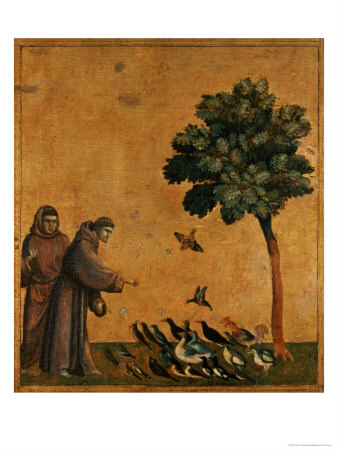
Melvin led an interesting discussion about what Francis of Assisi had to say about miracles. How even then there was a concern to test and discern when this was of God, or of the Devil or some trickery. Little changes it seems! He also quoted St Francis (I think) as saying that the greater miracle was to be seen in the action of a family who meet a perceived need of the other...

Love lived out always did seem miraculous to me- and perhaps even rarer than a former cripple dancing the Highland fling on the God channel!

I kind of think that encountering God will always mean encountering miracles. Signs, wonders. I doubt these will ever be conclusive universal evidence for faith and belief. Even those of Jesus did not seem to offer that.

But the meaning they bring to my friends, in the way they live out their lives towards God- this is real.

So thanks for the mental and spiritual work-out Melvin…

The Bible- and how we read it 2- my answers!

OK- I’m a sucker for a smart-ass challenge, but Jeffrey reckoned I should have answered the questions I asked here

So, I’ll have a go.

But I have to say that these are working notes, not complete answers. If you want complex theology- go elsewhere…

Question 1- ‘Disputable matters’ (From Romans 14) can we agree to disagree, or is truth more important?

Strange beginning I suppose- it is just one small verse in the middle of one of Paul’s longest letters. But this letter is the one in which he repeatedly circles around the issue of reconciling the legalism of the Jewish people (and his own background as a legalist-in-chief) with the New Kingdom, and life amongst the gentile believers. But I had missed this verse until recently, and I it suggests a tolerance and respect for different views and emphases does it not?

So for may answer to this one- narrow understandings of anything should always be subordinate to LOVE.

Question 2- How did people manage in the pre-modern era, when the Bible as we know it either did not exist, or was not available?

Well who knows? They seemed to have their fair share of sects and heretical groups I think? Perhaps too theological power was very centralised- Rome and the rise of Christendom…

But it seems clear that faith was the meaningful centre of lives and communities WITHOUT universal or even widespread access to the Bible. Was faith less real, or less true? I do not think so- it just existed in a different time and place.

That is not to say that reform was unnecessary, or that the medieval world is what we want to get back to!

Question 3- Can you be a Christian and never have read the Bible?

Clearly you can. It does not say in the Bible that you need to read it to be a Christian does it? Even Paul talks about scripture being ‘useful’ for teaching and instruction- not necessary.

But why would you not read and study the Bible if you could, and you had any interest in God?

Question 4- Who decides/rules on interpretation of scripture? Do we look to history, and God’s revelation to Christians before us? Do we allow particular theological experts to make executive decisions in relation to Christian history? Or should the emphasis be on our own engagement with the text- and it’s life in our lives?

I think I kind of implied my answer in the way I framed the question! I feel skewed towards small theologies, worked out in community, according to the leading of the Holy Spirit, and in the respectful shadow of those people of faith who went before us.

Question 5- Is there a FINAL version of biblical truth? Did modernity almost get us there, with perhaps a bit of tinkering required, or is there a need to start again with some basics? Does every generation need to wrestle anew?

Again, I think you could guess where I am going. I do not think that we have any right to claim a final version of truth- any more than Calvin, or Luther could have done- or for that matter, Augustine. How about Paul then? Did he have everything sorted? (Sorry, not meaning to ask yet more questions…)

Question 6- Systematic theology- good or bad?

I am not really qualified to answer this- I am no expert. I suppose it depends on the system, and on the theologian. But most systems are sooner or later tested to destruction, unless they are adaptive and responsive. Does that make the syncretic, and thus heretical? I do not think so- again, if we read the modernist reforming fathers like Calvin and Luther- do we agree with everything they said?

Question 7- Truth- what did Jesus mean by this? Lessons from the Pharisees?

I do not think I can do justice to this one. He clearly had no time for the way the Pharisees did the truth thing- and what they did has always looked a lot like highly elaborate systematic theology to me. But he did say that ‘They shall know the truth and the truth shall set them free’. I can only ask more questions again…

Question 8- Scripture- ‘God breathed’? Does this mean the Bible, or something else, that we have TAKEN to mean just the Bible?

Paul was obviously not speaking about the Bible as we know it today, as this collection of books simply did not exist- it took another 1700 years to sort this out, more or less.

He was clearly talking about the OT- but this too appears to have had a variable canon. He may well have been talking about other books now lost to us, and others soon appeared to regard his letters as Scripture.

The view that God ordained the Canon of Scripture as a complete, harmonious and unified whole, without error or contradiction, sent down from heaven on golden cushions (like the Mormon golden plates) simply has never made sense to me. This is partly because the Bible is shot through with contradiction and mystery- it is this that often makes it so compelling, and what theologian have spent millions of hours trying to resolve.

The Bible also makes no such claims for itself.

Don’t get me wrong- I do not mean to devalue the Bible, just value it honestly and completely, not by creating a mystical distance that leads to placing it in a glass case, not your back pocket.

Question 9- CONTEXT- where you start from- does this affect what you see, even (or particularly) in the Bible? Are there contextual ways of understanding the words- for example in relation to divorce, or women covering their heads, or homosexuality- or is this a slippery slope to heresy?

Oh dear- the danger of Syncretism again…

I think though, I have come to a view that it is impossible not to read the Bible contextually- in both obvious and more subtle ways. The critique made of Christianity arising from modernity and the enlightenment is a powerful one- the suggestion that we needed the Bible to be a blueprint, measurable and dissectable- because this was the only way to contextualise it.

The question that is gaining so much air time is whether or not the new post modern context demands a new reading- a new understanding, or whether this should be resisted and defended against as accommodation to the spirit of the age.

I think we need both new and old readings- and the freedom to pursue both.

Question 10- AUTHORITY- what does this mean in terms of the Bible? Is the authority given to us, to interpret and understand in the light of the Spirit, or to the words themselves?

I am clear that the words have authority only as given to them by the Spirit of God. We revere the words in as much as they bring God closer to our understanding, and ope ourselves to letting him speak to us through them.

Jesus promised that he would send the Holy Spirit- he did not promise to send us a rule book that would be our guide for all things, for all time, did he? Was the promise of the Holy Spirit as a comforter and a guide just a temporary one until the Bible Canon was agreed? (There I go again with the questions….)

Question 11- When the Bible talks about the ‘Word of God’- what does it mean? Jesus, or the written words themselves?

I think it is clear that one of the names given to Jesus in the Bible is ‘Word of God’. The Bible never claims to be that- although some of its words are accredited directly to God. Some are clearly the words of men, in worship of God, or even questioning of God. Much is written in the forms and convention of Hebrew poetry, and the meanings conveyed by these forms, and the imagery intended, has not been passed into our understanding.

Using the term ‘God’s word’ to describe the Bible is a modernist thing. When it is called this thunderously by preachers wishing to imbue their own words with a heavenly authority, I am afraid I find myself wincing.

So- these are may working notes in answer to the questions. If you disagree- then you are right to. I am not suggesting that I have these things sorted out. I am engaged on a journey towards the origin of all things. How could I ever have grasped everything that is to be known about him- or even written about him in the Bible?

What is God doing 4- The eternal perspective, free will and Mystery…

This is a continuation of excerpts of an article on how we understand pain and suffering- which were begun following watching the film ‘God on Trial‘- see here and here and here for the others.

Free will


Following on from the point above, many would point to the fact that most of the worst disasters on the planet could never be thought of as ‘acts of God’. Wars are fought over many things, sometimes even religion, but we can not blame God for our refusal to live in peace with our brothers and sisters. War is rarely, if ever, ‘just’, and innocents always suffer.

As for famine and starvation, we tend to blame droughts and pestilence, and mass movements of people to escape disasters. But there seems little doubt that there is enough food in the world to feed everyone. It is just that we eat most of it in the rich west. Many would point out that the poor are poorer and more vulnerable following on from imperialist history and the capitalist system that perpetuates the inequality in the present day. Starvation and vulnerability to flood and many other so called natural disasters could be seen as economic problems, not natural ones. Men and women were given free will. This is the world that we made. And we blame God.

But there are still many dreadful things that happen to good people, for no apparent reason, except what sometimes seems like some kind of life lottery. Some have, some have not. Some suffer, others prosper. In the words of the writer of Ecclesiastes, “…all is meaningless…”

The eternal perspective


Many have emphasised the temporal nature of our stay on this earth- the one certainty about being born is that we are all going to die. My faith in God reminds me that whatever this life holds for me, there is more. It also teaches me that I can choose how to live my life- what I do with it, and how I use the talents, great or small, that he gave me. One day I will have to account for how I helped those suffering, sick, hungry and dirty whom God placed in front of me. Jesus said that if you do this for the least of these, then you do it for him.

There is a rich legacy of spiritual songs left behind by black slaves taken to America to work the plantations and mills of the New World. Most seem to focus on the eventual end of suffering brought on by death, and the blessing of the hereafter. Critical voices have been raised against a religion that promises good things in the by and by, whilst tolerating dreadful injustice in this world – even justifying them and giving them the sheen of respectability. This seems to be very like the ‘opium of the people’ that Marx referred to so disparagingly. We should remember, however, that the great anti-slavery reformers like Wilberforce, were also motivated by their faith in God.

Mystery
God works in mysterious ways, his wonders to perform’, or so says the old hymn. We still hear this quoted, as if to excuse all the bad things that happen in this world.

Could it be, however, that there is a hidden purpose, yet to be revealed? Perhaps there are complex webs of circumstances that might have a final wonderful outcome, and God, like a master strategist, has a great cosmic war game laid out before him, and he will have his Waterloo.

Again, there seems to be some truth in these words. Life has a way of moving on. Difficult circumstances often forge wonderful solutions, and give birth to new and beautiful things.

After a blazing forest fire there comes fresh and clean new growth. Out of war came peace and the United Nations. Out of grief and loss comes a woman giving her life to supporting others in similar circumstances. After brokenness and humility come eternal life.

We are fearfully and wonderfully made, and our capacity for resilience and adaptation is seemingly endless – particularly in situations of adversity.

We search for meaning, but “My ways are not your ways, and neither are my thoughts your thoughts, declares the Lord.” (Isaiah 55: 8).

What is God doing? SIN

In response to the my recent post about the film ‘God on Trial’ I am going to post excerpts from an article I wrote called ‘What is God doing?’

This is the big question for all of us trying to stumble through life. What is it all about? If there IS a God, what is he doing? Does he not see all the pain and suffering in the world? Why does he allow the flowering of such evil in the lives of those created in his image? How about landslides and Tsunami’s and earthquakes? So many lives snuffed out casually and with no discernible heavenly distress. What is he doing?

Some members of my family, who I love, have looked at this God of ours, and come to the conclusion that religion is all smoke and mirrors, behind which lies emptiness. Evolution brought us here, they would say, and we will leave nothing behind but a DNA chain (if we are lucky) when we end. On the few occasions I have tried to talk about this a little more with them, we have rarely got beyond the spectre of starving children. No God of love could allow such a thing, ergo there is no God. I try to reply, but even to my ears, the words sound weak, and inadequate. Because I too want to ask Him, what are you doing?

The teachings of the church over millennia have had to grapple with these same problems, and some explanations have been offered. Some of these answers now seem shallow at best, and others downright repugnant. Perhaps we should not judge too harshly those who have carried the responsibility of interpreting such mysteries for others. A simple certainty can be very seductive.

I decided to try to gather together some of the main perspectives that had been handed down to me through my own tradition – a kind of review of the arguments- a view from the anthill.

Sin

Some would say that bad things happen to people for a reason, as judgement on those who have sinned and displeased God. We can justify this statement by following the story lines of the Old Testament – evidence of a punishing and wrathful God can be found. There have been those throughout the history of the church who have used this image of God to explain famine, flood and loss in battle. More recently, through high profile disasters, voices have again been raised proclaiming Gods judgement on those outside his laws. The attack on the twin towers in Manhattan was seen as just rewards on New York’s gay community. The Tsunami was proclaimed as an attack on the largely Moslem countries found around the Indian Ocean. Sure, many non-Moslems, and non-gay people died, but they were innocent victims killed by friendly fire. I am not making this up, honestly!

A powerful school of thought, which has gained dominance, particularly in evangelical and fundamentalist circles, has increasingly seen the course of history in terms of dispensations. The world as we know it is in decline- sliding towards its inevitable destruction. It has been so bad that first God decided to remove his Holy Spirit, and eventually will remove his Church, prior to the end times, when the world will be destroyed, and replaced with Planet Earth, mark 2. The end result is a world view that sees the sinful and faulty planet as a hopeless case. The sooner we all leave it, the better. The more we isolate ourselves and live as a people set apart, the better. When bad things happen, they will be an inevitable consequence of living in a world fragmenting and falling into destruction.

Other teachers who have studied the Bible describe a different version of the fall of man- going something like this. God made the world, and over all placed men (and women). He gave free will to his people, and when they turned from Him, all creation groaned. Everything became out of balance, distorted and discordant. From this process, rivers flood, volcanoes erupt and people fight, grab and lust- sin is let loose on all creation. God did not give up. Throughout history, he has tried to offer men and women redemption and the chance to participate with Him in a different way of being, but we live in a world untransformed and awaiting a final day when, according to the bible, Jesus will return. According to this view of history, our understanding of sin is still crucial to ideas of why bad things happen in the world, but it is about an unfolding process, not about individual guilt.

Powerful and biblical though this picture is, I still feel pangs of dissatisfaction. Does God sit next to some great cosmic scales of justice waiting for the sands to run out, watching us all running our little human races? Having the means to intervene and sort out this mess, but not the inclination?

This image of God troubles me greatly. This is a distortion of all that I have come to believe and hope for. I believe in a God who tempers anger with mercy, to such an extent that he sent his own Son to take on the sin of a fallen world. I believe in a gospel that proclaims the coming of a new Kingdom HERE and NOW, introducing the constant tension between our calling to work for good in our time, whilst living in hope for a future when all things will be made new.