The Bible- and how we read it 2- my answers!

OK- I’m a sucker for a smart-ass challenge, but Jeffrey reckoned I should have answered the questions I asked here…

So, I’ll have a go.

But I have to say that these are working notes, not complete answers. If you want complex theology- go elsewhere…

Question 1- ‘Disputable matters’ (From Romans 14) can we agree to disagree, or is truth more important?

Strange beginning I suppose- it is just one small verse in the middle of one of Paul’s longest letters. But this letter is the one in which he repeatedly circles around the issue of reconciling the legalism of the Jewish people (and his own background as a legalist-in-chief) with the New Kingdom, and life amongst the gentile believers. But I had missed this verse until recently, and I it suggests a tolerance and respect for different views and emphases does it not?

So for may answer to this one- narrow understandings of anything should always be subordinate to LOVE.

Question 2- How did people manage in the pre-modern era, when the Bible as we know it either did not exist, or was not available?

Well who knows? They seemed to have their fair share of sects and heretical groups I think? Perhaps too theological power was very centralised- Rome and the rise of Christendom…

But it seems clear that faith was the meaningful centre of lives and communities WITHOUT universal or even widespread access to the Bible. Was faith less real, or less true? I do not think so- it just existed in a different time and place.

That is not to say that reform was unnecessary, or that the medieval world is what we want to get back to!

Question 3- Can you be a Christian and never have read the Bible?

Clearly you can. It does not say in the Bible that you need to read it to be a Christian does it? Even Paul talks about scripture being ‘useful’ for teaching and instruction- not necessary.

But why would you not read and study the Bible if you could, and you had any interest in God?

Question 4- Who decides/rules on interpretation of scripture? Do we look to history, and God’s revelation to Christians before us? Do we allow particular theological experts to make executive decisions in relation to Christian history? Or should the emphasis be on our own engagement with the text- and it’s life in our lives?

I think I kind of implied my answer in the way I framed the question! I feel skewed towards small theologies, worked out in community, according to the leading of the Holy Spirit, and in the respectful shadow of those people of faith who went before us.

Question 5- Is there a FINAL version of biblical truth? Did modernity almost get us there, with perhaps a bit of tinkering required, or is there a need to start again with some basics? Does every generation need to wrestle anew?

Again, I think you could guess where I am going. I do not think that we have any right to claim a final version of truth- any more than Calvin, or Luther could have done- or for that matter, Augustine. How about Paul then? Did he have everything sorted? (Sorry, not meaning to ask yet more questions…)

Question 6- Systematic theology- good or bad?

I am not really qualified to answer this- I am no expert. I suppose it depends on the system, and on the theologian. But most systems are sooner or later tested to destruction, unless they are adaptive and responsive. Does that make the syncretic, and thus heretical? I do not think so- again, if we read the modernist reforming fathers like Calvin and Luther- do we agree with everything they said?

Question 7- Truth- what did Jesus mean by this? Lessons from the Pharisees?

I do not think I can do justice to this one. He clearly had no time for the way the Pharisees did the truth thing- and what they did has always looked a lot like highly elaborate systematic theology to me. But he did say that ‘They shall know the truth and the truth shall set them free’. I can only ask more questions again…

Question 8- Scripture- ‘God breathed’? Does this mean the Bible, or something else, that we have TAKEN to mean just the Bible?

Paul was obviously not speaking about the Bible as we know it today, as this collection of books simply did not exist- it took another 1700 years to sort this out, more or less.

He was clearly talking about the OT- but this too appears to have had a variable canon. He may well have been talking about other books now lost to us, and others soon appeared to regard his letters as Scripture.

The view that God ordained the Canon of Scripture as a complete, harmonious and unified whole, without error or contradiction, sent down from heaven on golden cushions (like the Mormon golden plates) simply has never made sense to me. This is partly because the Bible is shot through with contradiction and mystery- it is this that often makes it so compelling, and what theologian have spent millions of hours trying to resolve.

The Bible also makes no such claims for itself.

Don’t get me wrong- I do not mean to devalue the Bible, just value it honestly and completely, not by creating a mystical distance that leads to placing it in a glass case, not your back pocket.

Question 9- CONTEXT- where you start from- does this affect what you see, even (or particularly) in the Bible? Are there contextual ways of understanding the words- for example in relation to divorce, or women covering their heads, or homosexuality- or is this a slippery slope to heresy?

Oh dear- the danger of Syncretism again…

I think though, I have come to a view that it is impossible not to read the Bible contextually- in both obvious and more subtle ways. The critique made of Christianity arising from modernity and the enlightenment is a powerful one- the suggestion that we needed the Bible to be a blueprint, measurable and dissectable- because this was the only way to contextualise it.

The question that is gaining so much air time is whether or not the new post modern context demands a new reading- a new understanding, or whether this should be resisted and defended against as accommodation to the spirit of the age.

I think we need both new and old readings- and the freedom to pursue both.

Question 10- AUTHORITY- what does this mean in terms of the Bible? Is the authority given to us, to interpret and understand in the light of the Spirit, or to the words themselves?

I am clear that the words have authority only as given to them by the Spirit of God. We revere the words in as much as they bring God closer to our understanding, and ope ourselves to letting him speak to us through them.

Jesus promised that he would send the Holy Spirit- he did not promise to send us a rule book that would be our guide for all things, for all time, did he? Was the promise of the Holy Spirit as a comforter and a guide just a temporary one until the Bible Canon was agreed? (There I go again with the questions….)

Question 11- When the Bible talks about the ‘Word of God’- what does it mean? Jesus, or the written words themselves?

I think it is clear that one of the names given to Jesus in the Bible is ‘Word of God’. The Bible never claims to be that- although some of its words are accredited directly to God. Some are clearly the words of men, in worship of God, or even questioning of God. Much is written in the forms and convention of Hebrew poetry, and the meanings conveyed by these forms, and the imagery intended, has not been passed into our understanding.

Using the term ‘God’s word’ to describe the Bible is a modernist thing. When it is called this thunderously by preachers wishing to imbue their own words with a heavenly authority, I am afraid I find myself wincing.

So- these are may working notes in answer to the questions. If you disagree- then you are right to. I am not suggesting that I have these things sorted out. I am engaged on a journey towards the origin of all things. How could I ever have grasped everything that is to be known about him- or even written about him in the Bible?

What is God doing 4- The eternal perspective, free will and Mystery…

This is a continuation of excerpts of an article on how we understand pain and suffering- which were begun following watching the film ‘God on Trial‘- see here and here and here for the others.

Free will


Following on from the point above, many would point to the fact that most of the worst disasters on the planet could never be thought of as ‘acts of God’. Wars are fought over many things, sometimes even religion, but we can not blame God for our refusal to live in peace with our brothers and sisters. War is rarely, if ever, ‘just’, and innocents always suffer.

As for famine and starvation, we tend to blame droughts and pestilence, and mass movements of people to escape disasters. But there seems little doubt that there is enough food in the world to feed everyone. It is just that we eat most of it in the rich west. Many would point out that the poor are poorer and more vulnerable following on from imperialist history and the capitalist system that perpetuates the inequality in the present day. Starvation and vulnerability to flood and many other so called natural disasters could be seen as economic problems, not natural ones. Men and women were given free will. This is the world that we made. And we blame God.

But there are still many dreadful things that happen to good people, for no apparent reason, except what sometimes seems like some kind of life lottery. Some have, some have not. Some suffer, others prosper. In the words of the writer of Ecclesiastes, “…all is meaningless…”

The eternal perspective


Many have emphasised the temporal nature of our stay on this earth- the one certainty about being born is that we are all going to die. My faith in God reminds me that whatever this life holds for me, there is more. It also teaches me that I can choose how to live my life- what I do with it, and how I use the talents, great or small, that he gave me. One day I will have to account for how I helped those suffering, sick, hungry and dirty whom God placed in front of me. Jesus said that if you do this for the least of these, then you do it for him.

There is a rich legacy of spiritual songs left behind by black slaves taken to America to work the plantations and mills of the New World. Most seem to focus on the eventual end of suffering brought on by death, and the blessing of the hereafter. Critical voices have been raised against a religion that promises good things in the by and by, whilst tolerating dreadful injustice in this world – even justifying them and giving them the sheen of respectability. This seems to be very like the ‘opium of the people’ that Marx referred to so disparagingly. We should remember, however, that the great anti-slavery reformers like Wilberforce, were also motivated by their faith in God.

Mystery
‘God works in mysterious ways, his wonders to perform’, or so says the old hymn. We still hear this quoted, as if to excuse all the bad things that happen in this world.

Could it be, however, that there is a hidden purpose, yet to be revealed? Perhaps there are complex webs of circumstances that might have a final wonderful outcome, and God, like a master strategist, has a great cosmic war game laid out before him, and he will have his Waterloo.

Again, there seems to be some truth in these words. Life has a way of moving on. Difficult circumstances often forge wonderful solutions, and give birth to new and beautiful things.

After a blazing forest fire there comes fresh and clean new growth. Out of war came peace and the United Nations. Out of grief and loss comes a woman giving her life to supporting others in similar circumstances. After brokenness and humility come eternal life.

We are fearfully and wonderfully made, and our capacity for resilience and adaptation is seemingly endless – particularly in situations of adversity.

We search for meaning, but “My ways are not your ways, and neither are my thoughts your thoughts, declares the Lord.” (Isaiah 55: 8).

What is God doing? SIN

In response to the my recent post about the film ‘God on Trial’ I am going to post excerpts from an article I wrote called ‘What is God doing?’

This is the big question for all of us trying to stumble through life. What is it all about? If there IS a God, what is he doing? Does he not see all the pain and suffering in the world? Why does he allow the flowering of such evil in the lives of those created in his image? How about landslides and Tsunami’s and earthquakes? So many lives snuffed out casually and with no discernible heavenly distress. What is he doing?

Some members of my family, who I love, have looked at this God of ours, and come to the conclusion that religion is all smoke and mirrors, behind which lies emptiness. Evolution brought us here, they would say, and we will leave nothing behind but a DNA chain (if we are lucky) when we end. On the few occasions I have tried to talk about this a little more with them, we have rarely got beyond the spectre of starving children. No God of love could allow such a thing, ergo there is no God. I try to reply, but even to my ears, the words sound weak, and inadequate. Because I too want to ask Him, what are you doing?

The teachings of the church over millennia have had to grapple with these same problems, and some explanations have been offered. Some of these answers now seem shallow at best, and others downright repugnant. Perhaps we should not judge too harshly those who have carried the responsibility of interpreting such mysteries for others. A simple certainty can be very seductive.

I decided to try to gather together some of the main perspectives that had been handed down to me through my own tradition – a kind of review of the arguments- a view from the anthill.

Sin

Some would say that bad things happen to people for a reason, as judgement on those who have sinned and displeased God. We can justify this statement by following the story lines of the Old Testament – evidence of a punishing and wrathful God can be found. There have been those throughout the history of the church who have used this image of God to explain famine, flood and loss in battle. More recently, through high profile disasters, voices have again been raised proclaiming Gods judgement on those outside his laws. The attack on the twin towers in Manhattan was seen as just rewards on New York’s gay community. The Tsunami was proclaimed as an attack on the largely Moslem countries found around the Indian Ocean. Sure, many non-Moslems, and non-gay people died, but they were innocent victims killed by friendly fire. I am not making this up, honestly!

A powerful school of thought, which has gained dominance, particularly in evangelical and fundamentalist circles, has increasingly seen the course of history in terms of dispensations. The world as we know it is in decline- sliding towards its inevitable destruction. It has been so bad that first God decided to remove his Holy Spirit, and eventually will remove his Church, prior to the end times, when the world will be destroyed, and replaced with Planet Earth, mark 2. The end result is a world view that sees the sinful and faulty planet as a hopeless case. The sooner we all leave it, the better. The more we isolate ourselves and live as a people set apart, the better. When bad things happen, they will be an inevitable consequence of living in a world fragmenting and falling into destruction.

Other teachers who have studied the Bible describe a different version of the fall of man- going something like this. God made the world, and over all placed men (and women). He gave free will to his people, and when they turned from Him, all creation groaned. Everything became out of balance, distorted and discordant. From this process, rivers flood, volcanoes erupt and people fight, grab and lust- sin is let loose on all creation. God did not give up. Throughout history, he has tried to offer men and women redemption and the chance to participate with Him in a different way of being, but we live in a world untransformed and awaiting a final day when, according to the bible, Jesus will return. According to this view of history, our understanding of sin is still crucial to ideas of why bad things happen in the world, but it is about an unfolding process, not about individual guilt.

Powerful and biblical though this picture is, I still feel pangs of dissatisfaction. Does God sit next to some great cosmic scales of justice waiting for the sands to run out, watching us all running our little human races? Having the means to intervene and sort out this mess, but not the inclination?

This image of God troubles me greatly. This is a distortion of all that I have come to believe and hope for. I believe in a God who tempers anger with mercy, to such an extent that he sent his own Son to take on the sin of a fallen world. I believe in a gospel that proclaims the coming of a new Kingdom HERE and NOW, introducing the constant tension between our calling to work for good in our time, whilst living in hope for a future when all things will be made new.

Rob Bell, ‘Breathe’

We have used quite a lot of Rob Bell’s ‘Nooma‘ DVDs in our group. There are about 20 of them at present- each one a little package of creative film making, Bell’s unique presentation style, and subtle reframings of things we thought we knew…

Bell’s high profile (his church is huge and his books and films are known the world over) has meant that he has also come in for a lot of criticism. For many, he is a heretic. For me, he is a man with something to say, who says it well.

I found a copy of one of the films on-line. They cost about £10 to buy, so this might be a way to enjoy one of them (in low quality, with the annoying subtitles) and find out what the fuss is about. Then you can save up and buy some for you and yours!

May it bring to you something new about the wonders of God.

Fragile circles of life

All around us, life is circling.

Some circles are big, some very small.

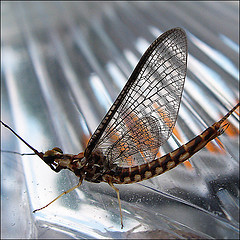
Insects that live a whole life in one of our days. Breakfast sees the end of childhood, lunch the weight of middle age responsibility, tea time the creaking of age, and with night, the sleep of the dead. Until the next generation comes into being.

Or consider the life of these tall trees.

Each slow forming ring of growth, evidence of their elevation over our own anxieties.

Each falling leaf layering the soil, laying down the food for the coming spring.

Each spreading branch offering the arm of shelter to a thousand lesser creatures. And me.

Seeding slowly and deliberately.

But even the tallest trees

Will one day

Fall.

And what of us?

What of our life time? We tend to see our journeys as linear. Even then, perhaps we are comfortable with the now, less so with the tomorrow, and the future is a foreign country, were be dragons.

Away we go, off into middle distance – always forward, but often acting as if we are standing still.

But we are born not to die,

But to live.

To trace our own arc through this space of ours –

To windmill wide and open,

To love this life

And let it love us back

Perhaps unlike any of these other circles, we humans have this gift (this curse) of knowing

Knowing and seeking to know more

Seeking to connect and to overlap these circles-

Seeing where they depend one on the other

Seeing where they smash into one another

Vulnerable to the sharp jagged things

But capable

Of such joy

Acts of the Apostles- whatever happened next?

As I have mentioned previously (here) we have begun a study in our group called ‘Exilio’, which combines a study of a Book called Exiles by Michael Frost with a study of the book of Acts.

The whole thing is intended as a way to consider the nature of the life of faith in this post- modern/Christendom/enlightenment western world that we live in.

One of the exercises given to us has been to read parts of Acts in a public place.  This places the stories of the first followers of Jesus firmly in our own context in a quite powerful way. The stories of these Christian communities forming and storming, living and loving in their own imperfect imitation of the Jesus way…

It set me thinking… what happened next?

We know a little- through surviving fragments of history. We know that the stories of Jesus spread like wildfire through the Empire of the Romans. We know that to be a Christian was often to be considered a dangerous subversive, and to be subject to state censure and persecution. Far from eradicating this plague of proselytisers we know too that the very capital of the Empire became the hub of an underground network.

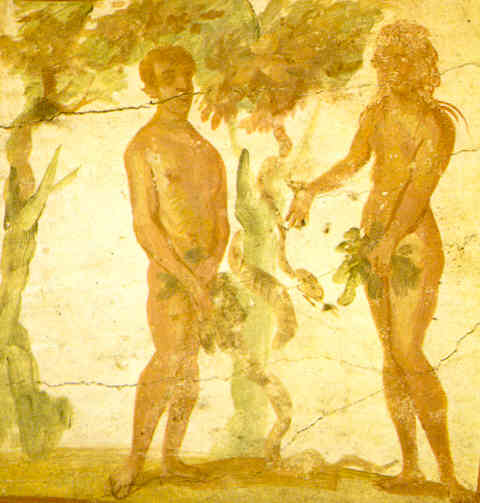
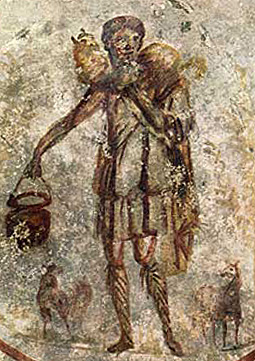
And in some cases, this network was literally underground! Christians from the 2nd Century until the adoption of Christianity as a state religion in 380, made miles of tunnels in the soft Volcanic rock below the city of Rome- where they were thought to meet in secret, and to make shrines to dead martyrs.

Here are some of the symbols left like boy-scout patterns for others to follow;

What was it like to live in those times? What did Jesus mean to these people that he would become the centre of their lives- at risk of everything?

How much of our their world view, their understanding of God, or their doctrine would we recognise today?

But how much could we learn from them?

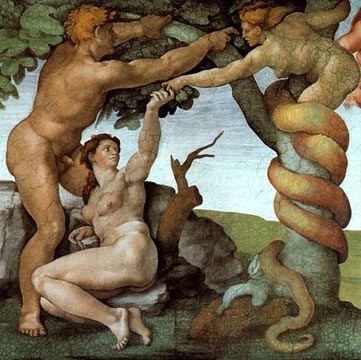
Here are some more of the marks they left- Adam and Eve, and Jesus, the Good Shepherd.

What marks will our generation of Christians leave behind?

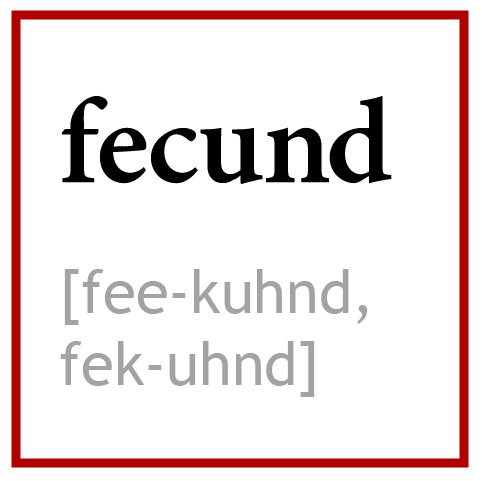
Favourite words 2-‘fecund’

I came across this delicious word a few years ago, then tried for ages to find a poem/song I could fit it into. It is one of those words that is a pleasure to roll around the teeth.

It is also another microcosmic sermon…

fe·cun·di·ty (fi-kuhn-di-tee)
1. the quality of being fecund; capacity, esp. in female animals, of producing young in great numbers.
2. fruitfulness or fertility, as of the earth.
3. the capacity of abundant production: fecundity of imagination, ideas.

There have been times in my life when I have experienced what can only be described as the presence of God.

I can not easily describe, or explain these experiences. I only know that at the time, I never wanted to be anywhere else again. The air seemed to crackle with a kind of electricity, and everything, anything was possible.

One word which seems to capture something of this experience is- fecund…

As a response to one of these times, I wrote these words;

Listen to Him, you sons of Eden
As He opens the way for words to fall on you
Like the dew of the morning on the mountains
Gentle showers of rain upon the hillside.

I breathe in the air that smells of heaven
It’s verdant and green like the early springtime
In the leaves of the trees is the voice of Jesus
Pregnant with grace, and bringing new life

Wave after wave after wave after wave
Here is falling

My heart is bursting and
I’m falling down

On my knees,
On my knees.

Reflections on the futility/centrality of sport

athens_olympic_stadium_greece_2.jpg (JPEG Image, 600×391 pixels)

Stuart Cutler, whose blog I enjoy, said something interesting about sport here

He said “when you deconstruct any sport, it is ridiculous…”

I reckon he’s right. It set me thinking about something else-

“Bread and circuses”

A phrase used by a Roman poet to deplore the declining heroism of the Romans after the end of the Roman Republic, and as the Roman Empire began. “Two things only people desire- bread and circuses”. In times of unrest, the Roman governors threw huge spectacles, and handed out free bread.

At present, the Olympics fill our screens, but it seems only a sneeze since the football world cup raised a million hopes and dreams for English football fans. Flags waved from suburban windows and on car aerials. There was probably another song in the charts about football coming home, badly sung by an embarrassed set of England footballers. And the sun shone on the hopes of the whole nation, at least for a while…

I suppose I am a sports snob. I love cricket, and so got all worked up over the Ashes win over Australia (we were soon humbled by the return matches in Australia, which we lost 5-0!) but I am genuinely bemused at the effect of watching some men kick a ball about on a football field.

It has been suggested quite seriously by economic and political analysts that the success or otherwise of the England football team (and perhaps that of other nations too, even Scotland!) has a measurable effect on the nation. People’s spending patterns change, they impregnate one another more or less frequently, they vote differently, and crime and public order offences fluctuate like the league table itself. Such is the power of public entertainment, filtered through mass media, to a population hungry for meaning- for significance rather than the mundane predictability of life.

The Romans knew this, and perhaps little has changed, apart from the forms of entertainment themselves. They used to idolize men who fought and killed for entertainment. We now just reserve our thirst for blood for whoever the current England manager is. Why would anyone want that job?

But I too also love those moments of magic when a man or woman transcends what all have the right to expect, pushing beyond every psychological and physical barrier, and against all the odds, winning the prize.

A sublime goal scored by the 18 year old Michael Owen

A 6 smacked high over the boundary and into the crowd by Andrew Flintoff, right into to the hands of his proudly watching father (who promptly drops it),

And the time when I heard about Eddie the Eagle strapping on his milk bottle bottom glasses and launching himself from his garden shed, in training for the Olympic ski jump.
I remember these moments. As much as they can be, in a disposable age, they become almost eternal- they are public property, the milestones of our lives. We store them away like songs and smells that always take us back to particular time and place, and in their own way, they are as beautiful as sonnets.

But it is not enough. How can we elevate football or cricket or rock music or package holidays or anything for that matter, to become the pre-eminent point of emotional and spiritual expression in our lives? It seems to me that so many of us have let these manufactured things become the mechanism for fulfillment and borrowed success in our lives. We fill the voids in our lives with off-the-shelf imitations of reality, sanctioned and given shared legitimacy by TV. As with all things, it is hard to go against the flow.

We could talk about the state of the earth, of inequality, of poverty and starvation of children, of global warming and the melting polar icecaps. Or about the death of conversation, the end of community, and the breakdown of family life. But it is all a bit earnest, a bit oppressive. The issues are too big for us to grasp, and anyway, we are all entitled to a bit of a rest at the end of a working day, right? A bit of down time, a good match?

Yes, but time goes by so quickly. We start out full of optimism, and all too soon our children have grown, and mortgages have become the millstones that tie us to jobs offering little beyond a wage check. I believe in an eternal perspective, which offers a life in so many more dimensions. And in a God who sends his Spirit amongst the crowd, stirring like a wind on the waters, reminding us of what it means to be made in the image of a creative, Creator God, softening us from the plastic wrapping of our lives, bringing in life and love and freedom. Calling us to be so much more than passive observers of the TV screens-

But to see Flintoff in his pomp, humbling the mighty Australians, making them look like children bowling at their older brother, punching a smooth extra cover drive, then rocking back and smashing a square cut of withering power past a startled baggy green cap…

Blogged with the Flock Browser

Greenbelt,

Well, for good or ill I have persuaded Michaela to come along to Greenbelt this year, along with the kids Emily and William (Emily was desperate to go so took no persuading at all!) This means taking the kids out of school as the school hols are different in Scotland to those in Englandshire.

This years speakers include Brian McLaren and Philip Yancey, and I am very much looking forward to hearing them both. Music looks less exciting, but there is always something that grabs you that you had not heard of (I really enjoyed ‘Over the Rhine‘ last year.)

Greenbelt gives me the feeling of connection with something bigger- something vital and creative, and fills me with hope for the people of Jesus in this country.

It is a chance to meet up with some old friends, particularly Mark and Dee from Wales. It will be good too meeting up with Si Smith, and perhaps getting to meet some of the Emerging Scotland folk…

It looks like we might be performing some of ’40’ also at a Proost lounge evening during the festival (see here for details of 40, or check out the ‘my writing’ bit of this blog- here.)

Hope to see you there!

Blogged with the Flock Browser

Blessed are those who hunger and thirst for righteousness…

Blessed are those who hunger and thirst for righteousness…

Blessed are those whose spirit
Rises to meet mine

And who are never satisfied with

Easy compromise

Blessed are they who lay down their rights
To look for my righteousness

Blessed are they who quest

Beyond dogmadogma1.gif

Into me

Blessed are they as they as they escape
The confines of what is known

To search for more

Blessed are those who are vulnerable
And whose necks are stretched

To my sword

For it will fall

Kindly

And blessed are those dirty streets
Where rests

My manna

Blessed are they

For there I am planting

My Kingdom