Gaza- how do we allow the violence to stand unchallenged?

I was watching some footage of the violence in Gaza on the news today.

A house destroyed by a tank shell. A mother and three children still in the rubble.

Two small bays covered in blood and concrete dust carried into a hopelessly overwhelmed hospital, staffed by western volunteers. Lacking crucial supplies because of a blockade imposed by the same people who now send the bombs.

Ali posted a link to this film below. If you have any interest- sit down with a coffee and watch it through…

What are we to make of this?

There are two main perspectives it seems;

Israel the defender of the free against the forces of terror.

Israel came into being as a rag tag group of survivors of a Nazi Holocaust took control of their own fate. The Jewish Diaspora was called home, to the land promised by Yahweh.

From the very beginning, they faced overwhelming odds- first the British ‘peacekeeper’ force, who were overcome by the gallant Zionists (albeit using terror tactics.) Then, outnumbered several times, they fought back attacks from every point of the compass by the surrounding Arab nations.

These surrounding nations could not accept the reality of a re-established Jewish nation, and so set themselves on a war footing- committed to driving Israelis into the sea, and returning Palestine to the Palestinians.

But Israel got tough. It’s fighters tenacity and idealistic strength were more than a match for anything the Arabs could throw at them, so the Arabs turned to terrorism.

So Israel fights on still- sending planes and tanks into the hills and streets of Lebanon, and Gaza- in measured, professional response to the missiles launched and the suicide bombers sent.

Israel the victim, striking back.

This view of Israel seems to find a ready home within some Christian groups- most notably, right wing Evangelicals. I have always struggled to understand this. As far as I can make out, this seems to be for a lot of reasons;

  • Theological reasons- Modern Israel is seen through a set of Old Testament goggles. Israel is the promised land of the Jews, and so God will always favour Israel.
  • Escatological reasons- there are understandings of the ‘end times’ predicted by the book of Revelation that centralise Israel- as a necessary stage for the final dramas of the Human Race. As such, the watchers and readers of the coming great tribulation seem to value their understanding of this Biblical prophetic work more highly than human life- or at least, Arab human life.
  • Political reasons- the American Religious Right has become a powerful political force. Mingled in with this is a strong bias towards Israel- perhaps for the reasons above- perhaps also because of other business interests- that familiar relationship between political and economic power. The accommodation with the spirit of the age that the Book of Revelation may also be understood to be commenting on.
  • A lack of understanding because of a media bias. The film above makes this point very strongly. To hear a journalist of the stature of Robert Fisk describe just how strong the media blackout has been on any critical news reports describing Israeli aggression gives more than a little pause for thought.
  • A willingness to believe ‘Christian’ sources, and discount any information that emanates from contradictory sources- such as Amnesty International, the Red Cross, or even Christian Aid.

So- to the second understanding…

Israel the aggressor, the war criminal.

Here a different Israel can be seen.

A people formed in terrible adversity who went from the victims of genocide, to the perpetrators of terrible human rights abuses within a single generation.

This is a story of UN resolutions ignored. Of internationally recognised borders ignored. Of property and land destroyed and violated. Of thousands of women and children murdered.

And of an allegiance with the worlds only remaining superpower, with an unlimited supply of armaments.

Of thousands killed in the refugee camps of Lebanon. Rockets and shells fired into densely populated slums- full of civilians.

Of an on going occupation of the West bank, and Gaza- against specific UN resolutions. Whose brutalised young people, raised on stories of martyrdom and oppression, lacking opportunities for work, or the hope of any kind of stable life. Lacking all the advantages of a people who live the other side of the fences and walls that surround them- these young people then turn to the very violence employed by zionist terrorists only 50 years ago.

They put bombs on buses and in hotels. They strap explosives to their bodies and walk into school yards.

What should our response be?

I am a follower of Jesus. In his name, we stand as peace makers, healers, chain breakers and bringers of sight to the blind.

No-one carries a sword in the name of the Prince of Peace. Even if many (starting with Peter in the garden) have made that terrible mistake.

So let us stand with Jesus with the poor and oppressed- wherever they are, and whomsoever is the oppressor. Let us seek to understand, and never call this weakness. Let us seek to love, and never call this treason. Let us seek to reconcile and never call this surrender to terror.

And let us raise voices that hold to account those who wield the sword over the weak. Let us be never accommodate and excuse evil- even when it is wrapped in a flag, or the ideology of freedom.

Let us also remember some of the followers of Jesus who remembered the way of the Kingdom under terrible oppression.

Have we not come to such an impasse in the modern world that we must love our enemies – or else? The chain reaction of evil – hate begetting hate, wars producing more wars – must be broken, or else we shall be plunged into the dark abyss of annihilation.

Like an unchecked cancer, hate corrodes the personality and eats away its vital unity. Hate destroys a man’s sense of values and his objectivity. It causes him to describe the beautiful as ugly and the ugly as beautiful, and to confuse the true with the false and the false with the true.

The church must be reminded that it is not the master or the servant of the state, but rather the conscience of the state. It must be the guide and the critic of the state, and never its tool. If the church does not recapture its prophetic zeal, it will become an irrelevant social club without moral or spiritual authority.

Returning violence for violence multiplies violence, adding deeper darkness to a night already devoid of stars… Hate cannot drive out hate: only love can do that.

Quotes from Martin Luther King



Church: as garden, park, glen and meadow…

the-church-in-emerging-culture

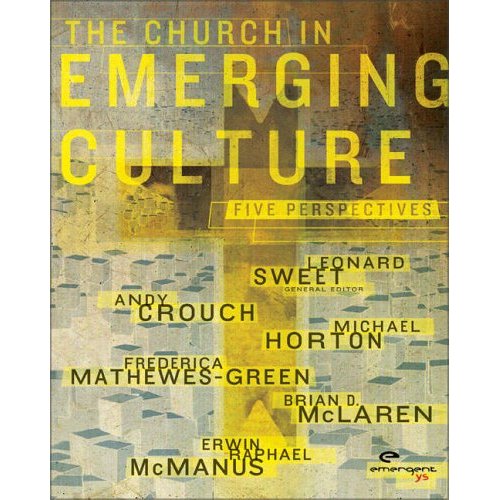
I have been reading this book- ‘The church in emerging culture’, ed Leonard Sweet. It takes a look at where church is up to from 5 perspectives- Andy Crouch, Michael Horton, Fredrica Mathewes-Green, Brian McLaren and Erwin McManus.

I have lost my way with it a little- more because of the format I think. Each person writes a chapter, then the other authors get a chance to put in footnotes and comments. I like the idea, but in practice, it makes for a strange book- lots of the comments are congratulatory, or disagreeing whilst being terribly nice.

However, there is an introduction by Leonard Sweet in which he uses this image to make us think about the different ways of being church. I have simplified (because I had to- the bloke it too clever for me!) the discussion, and reproduce it here.

What do you think? Is this a good analogy?

I suppose the interesting thing is that flowers and fruit grow in all of these places- and they can all be very beautiful…

Garden- traditional church?formal-garden

An ‘enclosure’- fenced off enclave of righteousness. Rooted in traditions. Collaboration between divine gardener (God), master gardeners (ministers) and horticulturalists (theologians), along with the canonical seasons.

Fruit and flowers grow and are appreciated.

The outside of the garden is of little concern. The garden is shaped and hallowed.

The garden demands that we walk slowly, prune quickly, earn the flowers by hard work- composting them well with the goodness distilled from previous generations.

Alien seeds are not tolerated. Constant struggle to win back the garden from the encroachment of time and surrounding wilderness.

Park- evangelical church?phoenix-park

Made for walking. Tied together by paths and vistas. Taking the old story of nature, and reforming it in new ways.

Rather than setting up high barriers, the park regulates the space by RULES. It is open to visitors at appointed times and under the supervision of park-keepers.

Technology and innovation are employed in parks- fountains, play areas- things that attract visitors.

The park manager decides which features to include in the park, borrowing from a wide variety of flora and fauna- but does not do so uncritically- always striving to work within the opportunities given by landscape and tradition.

Glen- progressive church?welcome-to-glen-clova-scotland

The glen is an open and unprotected, surrounded by encroaching vegetation and forest.

It is defined by the relationship between landscape and soil fertility that allows settlement. The edges of the glen- its crags and steep slopes, require hard work to navigate. People avoid these places because of the fear of falling.

Glen dwellers revel in the mystery of the seed and season. They travel in packs of people of group consciousness. They are concerned with the cultivation of food from the land to feed the hungry, not about the beauty of gardens and parklands.

In the garden, you are what your parents planted- here, you are what your seeds become…

The people of the glen have to be highly adaptable and innovative to survive. The thin soil easily washes away, and new production methods have to be embraced.

However, in the Glen, tradition is powerful. People are more likely to look backwards than forwards. The reformers often seek to purify what already exists…

The meadow- emerging church?meadow-grass-blue-flowers

A tract of moist grassland where flowers and grasses grow in profusion- all muddled together. There are also boggy places with fragile mosses and lichens. Willows and shrubs also grow there. They just happen. They are not managed by humans. The are rich in botanical (theological) diversity.

They are what first grows after devastation- for example, a forest fire.

Meadows are then inventive, creative and developmental.

The plants that grow in the meadow are intermingled and to some extent dependent. A Flax will never become a meadowsweet, but they will grow side by side. Beauty is evident in each. Fruit grows amid flowers and weeds.

Dwellers in the meadow are not interested in rules or doctrines- but rather in images and relationships and stories that bring people together.

There may be no easy, well trodden paths, but the meadow invites you to run through it bare foot. In this way, every generation can cut its own path. Every generation can turn from a world in which we have tried to garden everything and walk free.

In the meadow, all parties are active, none are passive.

In the meadow, there is a high rate of invention, but a high rate of failure. Plants come for a while, but die away to be replaced by other plants, as the soil conditions and moisture levels change.

Religious fundamentalism and the hope of peace…

My friend and former neighour Terry sent me a link to this;

This seems to be a move to bring together different religion around a central universal higher law of compassion. Here is a quote from the Charter for compassion site;

The Charter for Compassion is a collaborative effort to build a peaceful and harmonious global community. Bringing together the voices of people from all religions, the Charter seeks to remind the world that while all faiths are not the same, they all share the core principle of compassion and the Golden Rule. The Charter will change the tenor of the conversation around religion. It will be a clarion call to the world.

The woman who appears to have been the catalyst for this move is called Karen Armstrong. It seems that she is a former Nun, who has become a controversial figure after writing about her own experience of religion, and increasingly becoming a proponent of comparative religion.

I found another clip from a TED speech that Karen Armstrong gave;

I found Karen’s point about religious people ‘preferring to be right rather than compassionate’ to be all too true.

Terry and I are chewing on this a little. Is it good, or bad, or indifferent?

Is fundamentalism always bad? I have seen Christian fundamentalism at close quarters, red in tooth and claw, and can no longer stand close to much of it. The damage that can be done in this context is great but…

I have also seen passion and fervency lead to great compassion, and acts of service and self sacrifice.

And as a follower of Jesus, I do believe him to be the place and person towards whom we are all heading. I am happy to engage with other faiths, but I would always approach them, as much as I am able, through my understanding of who Jesus is.

So what would he think of this charter?

I wonder if he would look at Karen Armstrong, see all that she is and say- ‘well done, good and faithful servant…’

What do you think? I reckon it’s time for another vote…

Three weddings and a flash of the blindingly obvious…

civil-wedding

We have been away in Staffordshire at a wedding this weekend- a friend of ours from student days called Gaynor, and it was great to see her so obviously happy and in love with her now husband, Chris. They became an ‘item’ on a trip up north to visit us, so all the better.

This is our third wedding of the year- all of them lovely, all of them very different. John and Fiona’s wedding in a idyllic highland chapel- a Christian ceremony, full of their own faith and hopes for the future. Then there was my brother-in-law Chris’s wedding to Emma in a Unitarian chapel. It was another lovely family ceremony, led very well by a minister, and a chance for them to make their commitment to one another before God and man (and woman of course.)

Gaynor and Chris’s wedding was an entirely civil affair- held in an old converted barn, presided over by a representative of the hotel, with a registrar in attendance. God was not mentioned, but I think he was as happy as we were to see them committing themselves to one another. There is something good and whole and lovely about two people finding one another and learning to love.

So- three weddings. One Christian, one Unitarian and one civil. May they all be blessed with long and happy lives together.

I found myself asking familiar questions again about the place of faith in the lives of those of us who live in 21st Century Britain.

For some time it seems the Christian church has had its place as a marker of life’s transitions- births deaths and marriages. For some (like John and Fiona) a live faith means that this is a natural decision. For others, the church offers a solemnity and tradition that also has its place.

But many others see this tradition as irrelevant to how they might live their lives. They might seek their own spiritual path outside the traditional Christian Church, like Chris and Emma. Or they might celebrate their life together with friends in a civil ceremony, like Gaynor and Chris- an honest and faithful statement that does not need church, and church has no honest part of the rest of life.

Now none of this is a surprise. For me, the decline in the centrality of the institution of church is not even necessarily a reason for mourning- although it could be argued even by those who have no faith that the loss of church as an anchor and facilitator for society is potentially problematic- as nothing else seems to be taking over. I have mentioned old Durkheim and the concept of ‘anomie’ before (here.)

cimg0216

So what about my little eureka moment? Well during the wedding, I think I found myself smacked between the eyes by a bit of an evangelical cliche.

I missed Jesus so much.

Not the Christian wedding ceremony- or church- but simply the person of Jesus.

I took me by surprise, as for some time, I have journeyed into an understanding of the Kingdom of God, and the image of God in people, that made me increasingly aware of how God is present and participating in places that we Christian’s have often regarded as Godless and secular.

But here I found myself again longing to hear the words of Jesus- longing for the words of the sermon on the mount to fall again like manna.

And for my friends to believe again in the possibility of a better way- not because it would make them (or me) better, but rather because if we set our faces to living this way, then the world could indeed be changed forever.

Sex and the internet…

freeimages.co.uk techonology images

About 10 years ago, a some friends of mine were exchanging a computer system.

The receiver of the computer had never had one before, and knew next to nothing about the internet, which, it is interesting to note, was not uncommon 10 years ago. He asked what the internet was all about.

I suggested that it was mainly about 3 things- making money, mad religion and perhaps most of all, sex.

He was most taken with the later of the three, and asked what I meant by sex.

I replied that every sexual perversion known (and a few that are not) was available at the click of a button.

Unable to resist, he asked “Like what?”

Not wanting to reveal any expertise whatsoever, I asked him for suggestions. He (rather quickly I felt) came up with sex with donkeys.

Quick as a flash, my other friend typed into the address bar http://www.donk…….. (best not complete the link just in case I lead you into temptation!)

And there is was.

Which kind of made the point. And then some.

A few months ago, in response to the hysteria around the Olympics, I posted a poem called ‘Cheerleading’ (here).

This item is the most popular one I ever wrote in terms of the ‘hits’ it receives. It has a picture of some Cheerleaders, but I can not imagine that most of the people who visit this post linger there for very long. Poetry probably amounts to a big disappointment.

Which brings me, in a round about way, to the point of this post. A question-

There is one other thing that occurs to me- the viewing of pornography is clearly something that is common to many men (and some women.) It seems at least possible that this secretive and shameful activity is as common amongst Christians as without. It is just that we are even less likely to be open and honest about it. Which will almost certainly make the activity even more secretive and compulsive.

If this is an issue with you, or you just want to protect your computer from uses that you are unhappy with- then you might like to check out X3 watch.

Post charismatic Christianity?

I have just started this book, by Rob McAlpine.

I have blogged before about my own Charismatic background- here for example… So the title of this book grabbed me.

I have found myself wanting to re-examine much of my own Charismatic experience again- something I have avoided doing in any detail until recently. I suppose these experiences are full of all sorts of mixed feelings and emotions. They left me with such mixed baggage.

For me, the it began with a yearning for God in my formative years, that met the electric possibility of a God who was present and active and empowering through the Holy Spirit.

But there was always the hope for more, amid the hype and exaggeration, and the plain madness of some people and situations I found myself in. I was often an outsider- not able to experience fully what others were blown away by. And feeling attracted and repelled in equal measure.

As a worship leader, I could always hide behind a guitar… it was possible to be there, and to be seen to participate, but to only have the shape of participation, not the fullness of it.

As a young man- I thought I was alone in my doubts. I thought I lacked faith, and my sin was insulating me from God like a rubber blanket on a live cable.

There were also many times though when I caught glimpses of God. When I was as sure as I can be that he was there amongst us. There are many things that happened that I can not easily explain in any other way.

Here’s a quote from the book that captured some of my own experience;

They are tired of hearing the stories of the good old days, jaded from hearing too many prophecies about the great move of God that seems to be just around the corner, fed up with exaggerated or even fabricated stories of healings and miracles, and disillusioned with a view of spiritual formation that is lived through a weekly crisis moment at the front of the church…

Pg 17.

That is not to say that I want to reject or deny the work of the Spirit. May the Spirit have free reign to do with me as he will.

But I hope that it is possible to find my way to him, and his to me without all the baggage that has become so unhelpful to me.

And from my reading of this book so far- it seems that I am not alone.

Christian TV- should we just switch it off?

OK, so it is an easy target.

The TV preacher with his Lear jet, his many mansions and his inevitable fall from grace surrounded by sexual and financial scandals. It is a tired cliche that just seems to constantly replay itself.

Todd Bentley seems to be the latest in a long line.

But is there anything out there actually worth the airtime? Are people healed, are people inspired, is God transmitted or is he betrayed?

I occasionally flick through- I watched a bit of Bentley to see what the fuss was about. I remember a dreadful Christian Body Builders show- smashing bricks on your head for Jesus.

Then there are a lot of African revivalist preachers, a Catholic channel who seem to televise some very boring services, and have a phone in programme hosted by a very untelegenic nun. And there seems to be a lot of silver haired people pontificating from sofas- usually espousing right wing fundamentalist views.

There are music programmes too- soft rock Christian worship, or ‘CCM’ (Contemporary Christian Music) which is huge in the US- with its own charts, and awards ceremonies.

And then there are the money requests- often with promises of blessing in return. These make me feel ill.

But is it all bad? Perhaps not. Do people make commitments to Jesus? Apparently so. Is there ‘good teaching’ that inspires and informs? I am told that there is.

But boy do you have to wade through some rubbish if you wanted to find it. Here is a you tube clip poking some fun, but making the point…

TV is expensive. Money talks, and religion sells.

There seems nothing at all wrong with using the media, but is this the best that we can do?

Melvin and the miracles

I had a trip to Oban this morning to attend a meeting in the hospital there. A good morning to be driving- not just because of the lovely still calm day, with mountains mirrored on lochs, but also because of Melvin Bragg on radio 4.

‘In our time’ is a history/philosophy/faith (or what ever else the polymath Bragg is interested in) discussion programme, in which an issue is chosen, and Bragg quizzes some handpicked experts around a BBC microphone.

I love the programme- even when I have not got a clue what it is being said- which is quite often. I suppose I just like the fact that complex issues like this can find some prime-time air-time. Well done the Beeb…

This morning the discussion was on MIRACLES. You can listen again as a podcast here.

I discovered that the Hebrew word translated as ‘Miracle’ means ‘sign’, or ‘wonder’. Something unexplained that points us to God. The programme dug into these areas;

What are they?

Are the accounts factual, dependable, or mythological?

How have they been understood through history?

What meaning did they have in people’s lives?

What role have they played throughout church history?

The discussion covered stuff from the burning bush to the signs and wonders of Jesus. It also asked some questions about the vast trade in relics, at one point, perhaps the greatest import into England from abroad, and how the reformation initially tried to sweep away all this stuff as superstition, and suggested that the time of miracles was over, replaced by the time of reason and faith.

And of how, with increasing distance from these signs and wonders, people became increasingly dependent on scripture as rational evidence for God. And so the importance and centrality of scripture as central to faith life and belief grew and grew.

But as we know, the Protestants never gave up on miracles. From the very beginning of the Reformation, groups would describe the supernatural intervention of God, both on a personal,local level, and nationally.

And there are even now whole channels of satellite TV full of so-called miracles. And thousands flock to shrines at Lourdes or Walsingham seeking their own miracles…

Within the Charismatic movement that has shaped me and my faith, the power of the Holy Spirit was expected to be revealed in miracles- healing, prophecy, deliverance and direct provision.  Although it seems to me that we often hyped up and overpromised, I still have many stories that I can explain no other way but by using miraculous language.

Melvin led an interesting discussion about what Francis of Assisi had to say about miracles. How even then there was a concern to test and discern when this was of God, or of the Devil or some trickery. Little changes it seems! He also quoted St Francis (I think) as saying that the greater miracle was to be seen in the action of a family who meet a perceived need of the other...

Love lived out always did seem miraculous to me- and perhaps even rarer than a former cripple dancing the Highland fling on the God channel!

I kind of think that encountering God will always mean encountering miracles. Signs, wonders. I doubt these will ever be conclusive universal evidence for faith and belief. Even those of Jesus did not seem to offer that.

But the meaning they bring to my friends, in the way they live out their lives towards God- this is real.

So thanks for the mental and spiritual work-out Melvin…