Proost advent 20…

Following the tradition of calling in favours from family, Chris asked his son Will to record himself singing this re-written version of everyone’s old favourite carol ‘In the bleak midwinter’… Will (who is a trad music player in various bands) had sung this version previously and does a simply stunning version here, somehow more powerful in its stark urban simplicity.

He recorded it on his phone inside a Glasgow tenement flat which he and his girlfriend Rachel are in the middle of renovating. It has no kitchen or bathroom, but it does have a piano.

The words are below…

Bleak midwinter

.

What can I give him, wealthy as I am?

Does he need an i-phone or a well-aged Parma ham?

Should I bring him trainers, a pair of brand-new jeans?

Or Halo for the X-box (whatever the hell that means)

.

In a tower block in Camden, a woman breaks her heart

Her credit score is hopeless, her marriage fell apart

Her cupboards all lie empty, her clothes are wafer thin

Her kids can thank the food bank for turkey from a tin

.

If I were a kind man, I would bring good cheer

I would house the homeless, if for only once a year

I’d buy my cards from Oxfam, for virtue is no sin

I’d send some Christmas pudding to poor old Tiny Tim

.

In the bleak midwinter, frosty winds still moan

And Mr Wilson’s waited ages to get the council on the phone

He’s worried cos his boiler has given up the ghost

And since Mabel got dementia, she feels cold more than most

.

If I were a wise man, I would do my part

I’d sell that gold and incense and invest it for a start

In gilt-edged annuities and solid pension schemes

For without good fiscal planning, what can ever be redeemed?

.

In a lock-up by the roadside a bastard-child is born

To another teenage mother whose future looks forlorn

A host of heavenly angels up high in star-strewn sky

Sing blue-scale hallelujahs as lorries thunder by

Advent 24: Christmas evening…

Still, we feel the tingle.

The picture postcard version of Christmas never happens – we don’t have snow or Victorian choirs. (We do have robins, and the recent arrival of a small baby though.)

Here we have been lashed and slashed by storm after storm and it is unnaturally warm. The darkness lasts even longer, before the hooded light bleeds in with a yellow hue, making the day seem reluctant, forboding.

The shadow behind this advent has been Gaza. I have mentioned it in passing during the course of these meditations but it has been there all along. How can we seek the truth of a story set in a place of such current brutality and violence? How can we seek justice through this story when the opposite of justice is so current? How can we seek peace in this story when children lie under the rubble of a building so recently collapsed? How can we talk of love when industrial slaughter is justified by hate and vengence right there in plain sight on our screens day-by-advent-day?

But then the answer comes. What else should we do, if not this?

What else is Christmas about?

I know, we can easily coorie in, behind our storm lashed window panes and make it all about us and those closest to us. We can hide in our own interior spaces and consume.

Like I am doing right now.

But Christmas eve is not for guilt, it is for wonder.

It is for being open to the possibility of goodness, in spite of all the evidence to the contrary.

It is about Emmanuel, God with us, promising peace on earth, if we will heed his call to make it, one house at a time.

It is about love, for family yes, but also spilling out wider to embrace as many as we can.

So, dear friends, may your home be warm this winter. May the lights be bright. May the table be loaded with goodness and may you be loved, not because you have earned it, but just because you are beautiful.

May whatever you have be enough.

If threre is an anthem to this Christmas eve, perhaps it is this one. Glen Hansard and Lisa O’Neil, performing Shane MaGowan’s old party song with such tenderness and joy at his funeral…

Advent 23: on wisdom…

I woke thinking about the wise men today.

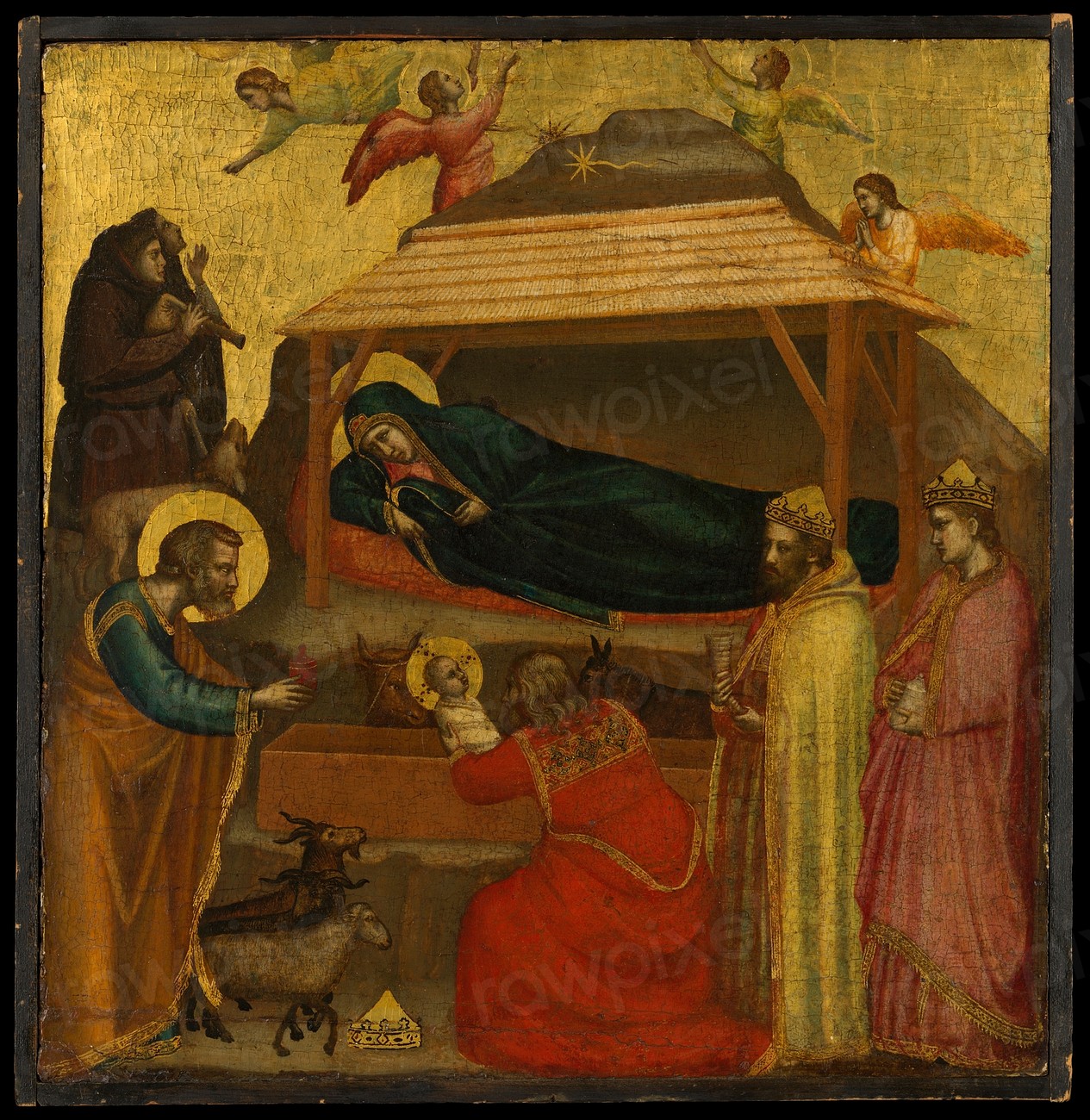
In the tradition (rather than the pedantic interpretation of scripture) these were men of learning coming from the east – but they are sometimes described as kings, but also this strange title ’Magi’,  thought to be from the Greek magos which itself is derived from Old Persian maguŝ from the Avestan magâunô, i.e., the religious caste into which Zoroaster was born…

Think about that for a moment. These Magi not only held a different religion but came from a country/empire/culture that had oppressed and enslaved the people of Israel, as recorded throughout Hebrew scripture, yet here in the Gospel of Matthew they are given star status, centre stage, in stark contrast to the behaviour of Herod, King of the Jews.

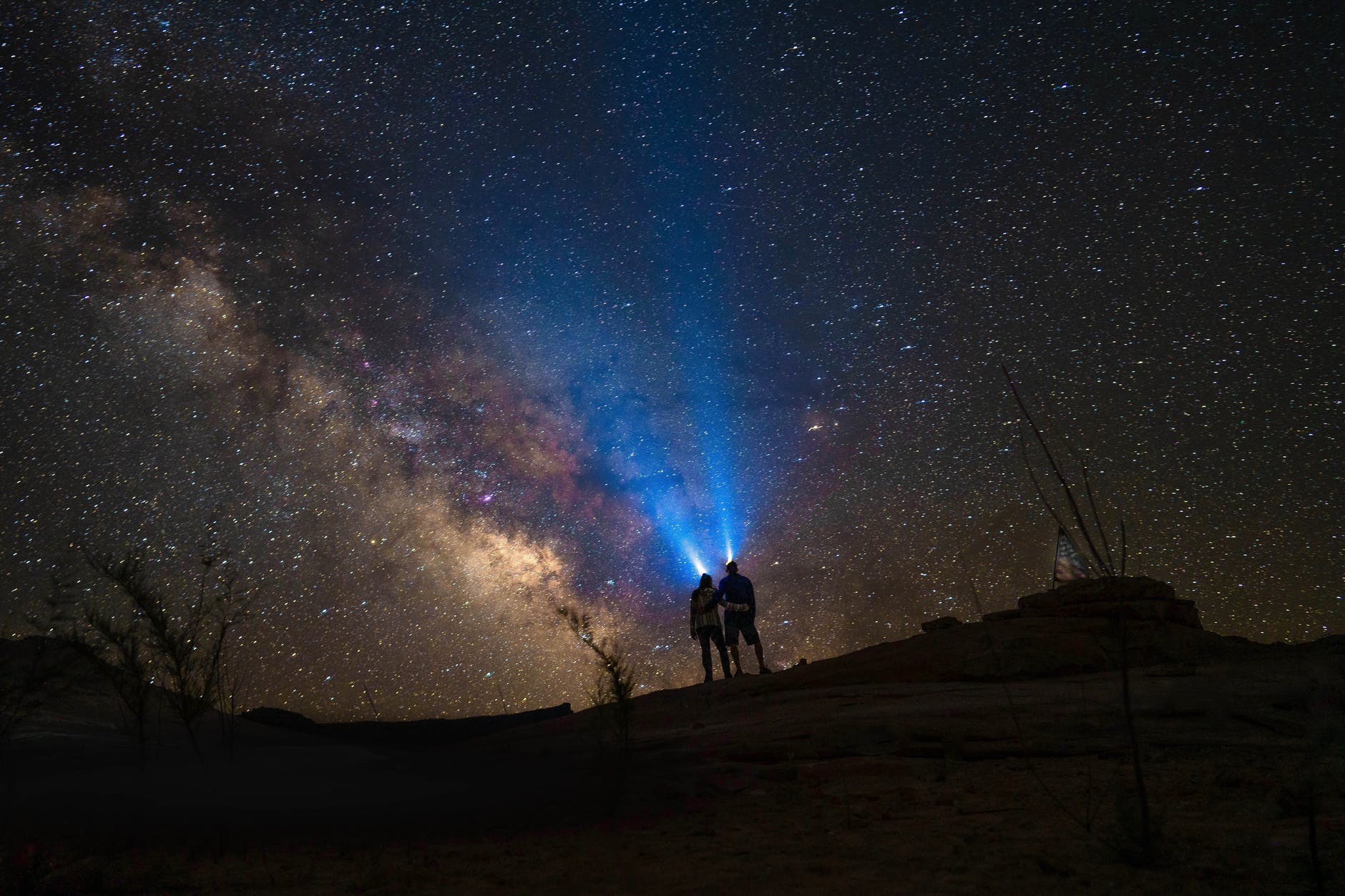
They were wise enough (or crazy enough) to read the wisdom of stars thenset out on a journey inspired by what these stars told them. That does not seem like wisdom to me, it seems foolish.

Perhaps in a world of idiots, a fool is held to be wise. Wisdom has a context – and becomes prophetic when it sees what others cannot. Is this what the Magi were to their own context?

Photo by dennis George on Pexels.com

How did they become wise?

We can assume they were learned men, but knowledge and wisdom are not the same.

Perhaps they were just born that way, -gifted with stillness from birth. But then again, the personal security required for this kind of stillness seems to come from privilege – from bring raised by good loving parents in a safe and secure home.

Were they old or young? The wisdom of age after all can become conservative requiring a dose of wise recklessness from new generations. Was there this tension in their midst, an old mentor and his young followers, or a young whipper-snapper who was held back by the affectionate tolerance of his older teachers?

But how else might be become wise, if not through sustaining movement through adversity? We always seem to gain more from dark valleys than from mountaintops; from brokenness and depression rather than success and achievement. Perhaps the Magi were survivors.

Can wisdom arise from religion- from resting in scripture and following a narrow discipline and tradition? The evidence for this is at best mixed, but certainly I have met people like that. People whose faith has opened them up to deep learning rather than locking them down into doctrinal prisons. People of the open questions rather than the glib answer. The fact that these Magi made this journey at all suggests that they must have been people like this.

Adoration Magi Giotto di Bondone by The Metropolitan Museum of Art is licensed under CC-CC0 1.0

All I know is that we need wisdom now. We need people who read the stars, searching for new truth, new incarnations.

We need them to travel towards the light they have seen, and to navigate the messy politics they encounter along the way, taking no heed of the doubters, the scoffers, those who think their wisdom crazy.

We need them to cross the religious divide and break down barriers.

We need them to give gifts to hopeless causes, in order to bring hope.

Advent 17: legacy…

As advent unfolds I have been allowing myself to look forward towards hope… to imagine the coming of a new kingdom/insurection/revolution in which goodness and compassion are central. In other words, I am trying to rest again in the spirit of the Magnificat as sung by Mary and recorded in just one of the Gospels…

46-55 And Mary said,

I’m bursting with God-news;
    I’m dancing the song of my Savior God.
God took one good look at me, and look what happened—
    I’m the most fortunate woman on earth!
What God has done for me will never be forgotten,
    the God whose very name is holy, set apart from all others.
His mercy flows in wave after wave
    on those who are in awe before him.
He bared his arm and showed his strength,
    scattered the bluffing braggarts.
He knocked tyrants off their high horses,
    pulled victims out of the mud.
The starving poor sat down to a banquet;
    the callous rich were left out in the cold.
He embraced his chosen child, Israel;
    he remembered and piled on the mercies, piled them high.
It’s exactly what he promised,
    beginning with Abraham and right up to now.

Luke 1 46-55 (the message translaiton)

I have been over in Northern Ireland for a few days to see my father, immersed in the usual chaos of old age – medication, money and care. I went with my brother, and we spent a little while exploring a place that he knew better than me, as he had spent a lot of his childhood over there. (Our family circumstances are complicated.) Here is the grave of my grandparents, both of whom died before I was born, having worked in the flax mill that took such toll on the health of local people.

My family were all born into a town called Strabane, right over on what now is the border with the Irish state in Tyrone. It is a bustling booming town now, because of cross-border trade, but until very recently was a place with one of the highest unemployment rates in all of Europe. Strabane was the most bombed town during the troubles, with the highest proportion of it’s citizens killed. It is overwhelmingly Catholic (91%) and as such was an epicentre of republicanism. There are many of these dotted about;

Until recently, many of the streets would have kerbs painted in sectarian colours across the province, but I was surprised to see that most of this has been removed. However, the tribalism remains firmly in place, seen in many subtle ways. One of the more obvious at present is that in republican areas you will see many flags and banners supporting the Palestinian cause in Gaza, whilst in unionist areas, lamposts are flying the Israeli flag. The currency and apparent group-think of this division are shocking to outsiders, but not to those who live with it day-by-day.

In Strabane town centre there is quite a lot of public art, most notably around the lovely Alley Theatre, but also this piece, which lists a number of famous people born in the town, including former president of the USA, Woodrow Wilson, Musician Paul Brady and writer Flann O’Brien. It does not mention other illuminaries such as William Burke, the 18th Century serial killer, but does give a shout out to a woman called Cecil Francis Alexander who wrote many favourite hymns from my childhood- ‘There is a green hill far away’, ‘Once in Royal David’s City’ and the ubiqiotous ‘All things bright and beautiful’…

… which takes us back to the root of all this.

The violence and trouble unleashed on Ireland has been blamed on many things; religion (of course), politics, the British, ignorance – all of these things may have played a part, but Cecil Fancis Alexander’s hymn gives us another clue, containing as it does (in original form at least) this verse;

The rich man in his castle,
The poor man at his gate,
God made them high or lowly,
And ordered their estate.

For much of the last centuries, the Irish were considered as the lowest of all. Alexander, from a wealthy background, was part of a ruling class, married to an Archbishop. She spent her time on charitable pursuits amongst the deserving poor. She lived at the time when around one million people starved to death in what came to be known as the Irish Potato Famine but seemed unable to see the injustice right in front of her nose.

Perhaps you think me unfair to someone living in such a different time and place, but I will not sing this hymn, even with the verse above ommitted. Instead I will thrill once again to young Mary as she sings those words of the magnificat; The starving poor sat down to a banquet; the callous rich were left out in the cold.

I took a morning walk alongside the border river Foyle, which runs through the middle of Strabane thinking about an old concept suggested by the author Phillip Yancey. In his book ‘What’s so amazing about Grace’, he painted a picture of what he called ‘ungrace’, or the opposite of grace. Families, communites and societies who are characterised ungrace seem to experience it in almost like toxic waste or poisoned water.

Ungrace leaves a legacy that can only be overcome by one thing.

Grace.

Advent 12: seeking justice…

Photo by JJ Jordan on Pexels.com

The Advent waiting is a framing of looking forward in hope towards a time of peace, but it is not a magical peace, brought about by a Messiah who creates peace by the slaying of enemies – this was one of the things that got Jesus in so much trouble. Rather it is a peace that is won by peacemakers, one small step at a time. Here is a statement that I am wrestling with this morning;

There is no peace without justice.

I think this is true. Making peace must involve at some level, the rebalancing of manifest unfairness, partiularly in relation to those who hold power, because power has this way of padding itself at the expense of others – not just materially, but in the way it feeds egos. By the same token, powerlessness debilitates.

This takes us towards another element of this peacemaking- the inevitability of conflict. At first this seems paradoxical, until you remember that as the advent story unfolded, it was full of conflict. Making peace involves challenging injustice.

The way we do this is key. The great protest movements – the marches, the mass demonstrations – championed by Ghandi and MLK give us heroic templates, but hindsight tends to gloss over the messy painful nature of the personal interactions, even when faced with injustice that (at least from our current perspective) is so transparent. Currently we see other mass protests on the streets demanding a cease-fire in Gaza, a cause which seems so right, despite the fact that some seem to think this protest is not ‘British’.

If you callenge power, you should expect it to get ugly.

Most injustices however are not on this scale. They are small, grubby ones that we encounter in the mess of daily life. I am struggling with one just now. I hate conflict but have found myself making a complaint to a community employer because of serious problems in the ways they are treating their staff. I now need to see this through, but today, I am taking pause, and asking these questions;

Is my cause just, or have I got things out of perspective?

If my cause is just, how do I seek peace alongside justice? How do I hold on to integrity?

It is easy to make war in the name of peace, so how can I treat my ‘enemy’ with compassion, whilst still seeking a just outcome?

This is part of my advent journey.

Peace never cost nothing.

3 again…

toy train


3 again


Christmas came, then went

Leaving me overstuffed with sweet things


My son has ridden out

On his new bicycle

Tweeted it on last years tablet

Gangled his long limbs into new jumpers

Rolled his old-fashioned eyes at jokes

Smiled his easy way through slow days

Stretched on the sofa

Unlike me, oblivious to the time

Swiftly passing


Today he found a box of old toys

Spent two hours slotting wooden rails into pleasing curves

Marshalling brightly painted carriages

Careless of the dead battery in Thomas the Tank’s engine


Between Christmas and the turning year

There should always be a window

Where we can be three again


TFT goes all seasonal…

Last night we had our first proper Christmas celebration- a lovely evening with friends from our old ‘house group’- reading, praying, sharing gifts (a secret santa kind of thing) and even singing the odd carol. Michaela had planned a ritual involving listening to U2’s song ‘Peace on Earth’ (uncharacteristically dark and mournful for her!) and also re-lending some money our group had invested with Kiva.

Earlier we put up Christmas decorations. To prove it, here are some (slightly cheesy) photos!

Ad venting…

_IGP4087


We are all caught up in the Christmas madness again. Over the last few years I have railed and moaned about all the wasted money and fake snowflaking. I will not do that this year- partly because it has been said, but also because it is better to start closer to home.

However, I always find myself conscious of those who are outside the plastic bubble we make out of Christmas. I suspect that Jesus would be too. That is what this poem is about;


Ad vent


Who can ever expect the unexpected?

For what is hope to those from whom hope has been taken?

Why promise light but leave us in darkness?

I stand in this shit of tinsel and trimmings

Unmoved

The bells are not ringing

.

I live in the space between

What is

And what may never come.


The relationship between materialism, happiness and Christmas…

consumerism

There are some things that all the worlds religions kind of agree on- almost as if in the distillation of spiritual wisdom of the the millennia, certain concepts were inescapable. One of these is our attitude towards possessions. Quite simply, they are more often than not regarded as an obstacle to enlightenment, not a path towards it.

Perhaps the most hard core religious response to the accumulation of wealth and possessions was Jesus- we all know the biblical passages and the perenthetical BUT we have added on to each and every one of them. It remains one of the great human paradoxes as to how Consumer Capitalism has been able to grow in a western culture dominated by Christianity- not just in spite of our faith, but almost because of the way we live it out. We have come to believe that Jesus is at heart a white middle class respectable home owner.
visa cross

There was a brilliant article by George Monbiot in The Guardian yesterday that opened all this up again for me. He took a long look at consumerism, sharing some research about the impact of materialism on well being, sociability and mental health. He pulls no punches; Worldly ambition, material aspiration, perpetual growth: these are a formula for mass unhappiness.

Monbiot quotes a lot of research into the impact of materialism- here are a few examples;

There has long been a correlation observed between materialism, a lack of empathy and engagement with others, and unhappiness. But research conducted over the past few years seems to show causation. For example, aseries of studies published in the journal Motivation and Emotion in July showed that as people become more materialistic, their wellbeing (good relationships, autonomy, sense of purpose and the rest) diminishes. As they become less materialistic, it rises.

In one study, the researchers tested a group of 18-year-olds, then re-tested them 12 years later. They were asked to rank the importance of different goals – jobs, money and status on one side, and self-acceptance, fellow feeling and belonging on the other. They were then given a standard diagnostic test to identify mental health problems. At the ages of both 18 and 30, materialistic people were more susceptible to disorders. But if in that period they became less materialistic, they became happier.

In another study, the psychologists followed Icelanders weathering their country’s economic collapse. Some people became more focused on materialism, in the hope of regaining lost ground. Others responded by becoming less interested in money and turning their attention to family and community life. The first group reported lower levels of wellbeing, the second group higher levels.
shop window

These studies, while suggestive, demonstrate only correlation. But the researchers then put a group of adolescents through a church programme designed to steer children away from spending and towards sharing and saving. The self-esteem of materialistic children on the programme rose significantly, while that of materialistic children in the control group fell. Those who had little interest in materialism before the programme experienced no change in self-esteem.

Another paper, published in Psychological Science, found that people in a controlled experiment who were repeatedly exposed to images of luxury goods, to messages that cast them as consumers rather than citizens and to words associated with materialism (such as buy, status, asset and expensive), experienced immediate but temporary increases in material aspirations, anxiety and depression. They also became more competitive and more selfish, had a reduced sense of social responsibility and were less inclined to join in demanding social activities. The researchers point out that, as we are repeatedly bombarded with such images through advertisements, and constantly described by the media as consumers, these temporary effects could be triggered more or less continuously.

third paper, published (paradoxically) in the Journal of Consumer Research, studied 2,500 people for six years. It found a two-way relationship between materialism and loneliness: materialism fosters social isolation; isolation fosters materialism. People who are cut off from others attach themselves to possessions. This attachment in turn crowds out social relationships.

As we read these studies, we instinctively know them to be true; there are no surprises here. Perhaps this is because of some kind of spiritual residue left in our psyches from all those religious people who made these discoveries previously. Perhaps also each generation has to learn it anew.

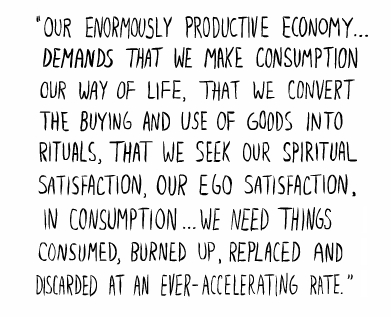
However, we in the West are more than pilgrims who have wandered off into some consumer-bog, we have become hostages.
consumerism

A few years ago I read Pete Ward’s excellent book ‘Liquid Church’, in which he suggested that  ‘rather than condemn the shopper as materialist Liquid Church would take shopping seriously as a spiritual exercise.’ What Ward was seeking to do was to get the church to engage fully with the culture we are part of- to flow in its veins. I found this idea very helpful at the time- it enabled me to move from a fixed blinkered position which saw culture dominated by consumerism as universally bad (despite my full participation within it) towards a deliberate attempt to read culture through its patterns of acquisition. So if you look hard at lots of the advertisements we are bombarded with you will start to see the yearning behind the selling. What the advertisers are trying to do is to connect us with something beyond the physical aspect of the object, into the meaning it brings into our lives- so a car is not a good piece of engineering, it is a symbol of freedom, of self expression, of celebration of our lives.

Having understood this however; having looked again at our culture through its predominant consumer characteristics, where does this take us? I am more and more convinced that it takes us towards one thing only- the need to become engaged critics. Enraged critics even.

Let us turn over some tables in the temple.

Which brings us to Christmas again.

I know, I know, the calls to make Christmas less consumer-driven are getting a bit old. I have been banging on about it on this blog for years. Lighten up a little! Have some fun! There is nothing wrong with spending a bit more at Christmas after all.

Except, as our religious forefathers knew, and as Monbiot has underlined, let us not kid ourselves that any of this is making us happier. Let us not suggest that buying lots of stuff (even for others) is making us more sociable, more loving, more empathetic, more caring.

Rich and poor alike are caught up in this addictive destructive cycle. What would it mean to be clean?

What would it mean to be free?

TFT Christmas card 2012…

IMGP3179

Sometimes darkness lies with open arms

Casting no shadows;

No zones of jagged uncertainty

The folded black is bosom-soft

An iris around the eye

Could it be that dark is not opposed by light

But is the place where light is falling?

For the night is not defeated by starlight-

It is anointed.

At the edge of this suburban half light

Beyond the reach of neon

Darkness is waiting

Like pregnancy

For light to be born

IMGP3178


May you be richly blessed this Christmas.