Terrorism, religion and the group dynamic…

I spent much of today talking about terrorism. This is not usually part of what I do, but I was asked to attend a local awareness session. In the end it was rather fascinating.

What we tried to think about was the sorts of processes and relationships in our communities that might draw people into extremism, and right away, we people of faith have to concede that one of the most common drivers for this in the world at present is religion.

Many people would have in their mind a stereotypical terrorist, and they well be Muslim, male and aged around 25. There are real problems with these kinds of stereotypes of course, as I have spoken about previously here. There is also a real possibility that we exaggerate the potential threat, and this plays into all sorts of paranoid murky politics.

However, we now know that even our sleepy rural county of Argyll has been touched by terrorism. Several extremist groups have used outdoor centres/outward bound courses up here to breed team spirit, and the bombers who attacked Glasgow Airport a few years ago did so from a holiday home base in our area.

What brings people to the point of being able to justify the use of extreme violence? Of course this is not a new thing, and many would regard the drivers of inequality, imperialism and oppression as fertile breeding grounds. However, today we talked about some of the societal/group pressures that might draw people in;

Belonging

The need to be ‘saved’ from an old life, and released into a special calling, as part of an enlightened elite. So we see some people drawn into extremist groups out of situations of isolation, confused identity, drug addiction and poverty.

Crusade

People often see themselves as on a special mission, to right injustice and to live to a higher calling. There is an exclusiveness to this, and a tendency to see others as weaker, more contaminated, sinful, outsiders to the truth.

Narrowed world view

Extremists are united by a compelling narrative, often focussed on a single issue and simplified to black and white kind of thinking. In this narrative, there will be good guys and bad guys, those on the inside, those on the outside, and a call to fight back.

The drive to proselytise

The need to be bigger, more powerful, to convince others of the rightness of your cause, and to win converts. All other things are secondary and this end justifies all means.

Powerful, manipulative leadership

Leaders who convince, who have elevation over others and able to use hyper emotionality and  charismatic manipulation to bring cohesiveness and common purpose.

Distortions presented as fact

Leaders like this often present historical and theological perspectives, or downright distortions as fact. They emphasis certain aspects (for example eschatology, judgement, Jihad) over others (for example, forgiveness, grace, peace.) People are not encouraged to think for themselves, to test and debate issues, rather they are expected to achieve correct belief.

Removal and isolation

Before every act of violence, there seems to be something in common- a time of removal, sequestration. People are removed, or remove themselves from wider society, and focus on the purity and certainty of their cause, and the need for their final act.

Here is the challenge then- I invite those of you who have been involved in Christian churches to consider this list from that perspective. Those of you familiar with charismatic or fundamentalist denominations may find this list rather familiar. The point is, the group dynamics of religion that distort faith and breed a kind of hatred and destruction do not just belong to the other, they arise from who we are as humans.

Jesus seemed to understand this very clearly, and anyone who knows his teaching would see it as the antidote to all of the above. He seemed to reserve his anger almost exclusively for the kind of religion that valued the law (or religious understandings of the law) over people.

And yet we stand in the shadow of two thousand years of repeated examples of where the group dynamic within our churches has become toxic and released all sorts of hatred, judgementalism and even death as a result.


Shock- churches unite!

against Gay marriage.

I find it all so depressing.

Is there nothing else that Churches can unite behind or against?

I suppose the truth is that they DO- all the time, but no body notices. There is a feeling in me however that that the issue of personal sexuality, and the application of the word ‘marriage’ to same sex coupling still has the power to bring spittle to the lips of the faithful like no other.

Not poverty, or people unfairly imprisoned or tortured. Not restoring sight to the blind or declaring jubilee to those who are oppressed.

I know- for many of my fellow Christians, this issue is complex- full of difficult theological questions and wrapped up some kind of desperate struggle against a perception of a rising secular tide.

For me it is much simpler.

If we are to make any kind of mistake- err on the side of grace.

Oh- and get on with the things that are the proper business of the Kingdom of God.

The stuff in Matthew chapter 5, not the obscure bits of Leviticus. This bit for example;

16 The LORD said to Moses, 17 “Say to Aaron: ‘For the generations to come none of your descendants who has a defect may come near to offer the food of his God. 18 No man who has any defect may come near: no man who is blind or lame, disfigured or deformed; 19 no man with a crippled foot or hand, 20 or who is a hunchback or a dwarf, or who has any eye defect, or who has festering or running sores or damaged testicles. 21 No descendant of Aaron the priest who has any defect is to come near to present the food offerings to the LORD. He has a defect; he must not come near to offer the food of his God. 22 He may eat the most holy food of his God, as well as the holy food; 23 yet because of his defect, he must not go near the curtain or approach the altar, and so desecrate my sanctuary. I am the LORD, who makes them holy.’”

If you were born with a disability then you may not go to church?

Quite clearly we find this interpretation abhorrent. In our culture (but not the one of the ancient Hebrews) to be born with disability is not shameful. You are not to be hidden away lest other people are somehow made unclean. You are not condemned to a life that is less that those around you, or excluded from parts of civic life.

Does the parallel strike you?

Worship music remix 3- transcendence…

The first two pieces in this series are here and here.

We are just back from our monthly Aoradh ‘family day’. This is the closest we come to a ‘church service’ that we do regularly within Aoradh. It usually involves filling up one of our houses with people, then one of us will co-ordinate a period during which a selection of folk – kids and adults – will take turns to lead others through a song, a prayer, some meditation, a poem, a clip from you tube. It is simple, messy and lovely.

Then we eat together.

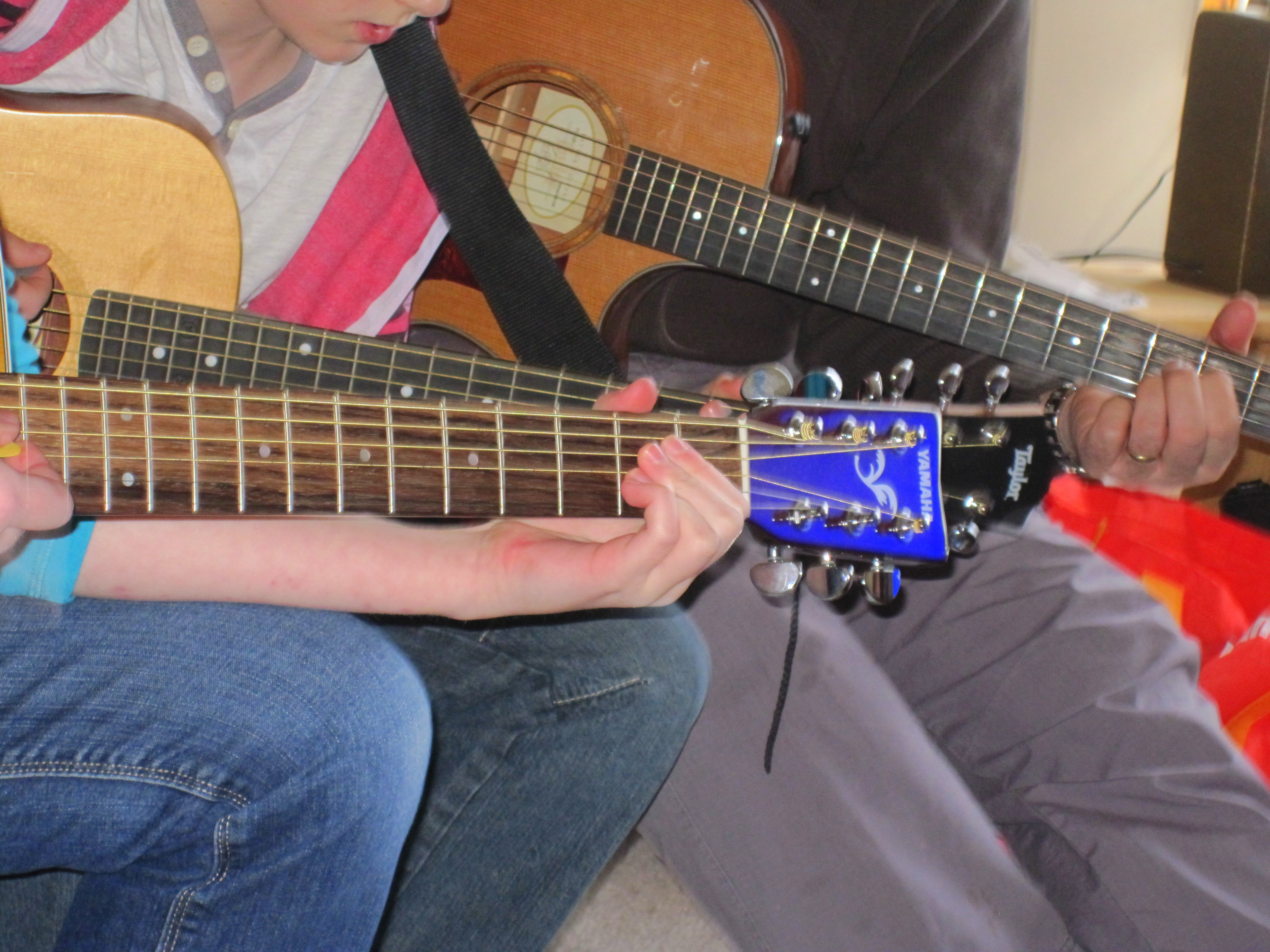
Today I was thinking about the distance I have travelled within the scope of what ‘church’ might mean. I was playing my guitar along with William and Rachel, and really enjoying it, because this is something I do fairly rarely these days.

There was a time when it was my whole life.

I was a ‘worship leader’ – one of those blokes (and they usually are blokes) who stand in front of people and whip up some spiritual fervour by the application of soft rock love songs to Jesus. I lived for those moments when the music took flight, and something kind of opened up. At such times, music was more than just notes. Performance became less about technique, and more about an attitude of humility and receptiveness.

But in the course of my journey from ‘organised’ church, other principles started to dominate the way I thought about worship. Primarily, I was convinced that the culture of ‘church’, with all its big and small liturgies, assumptions and traditions, easily came to be a black hole that swallowed people whole. It left us with no room for the other. It became about us, not about them. They were only important if they were willing to become like us. I was convinced that church should exist to send and to serve, not endlessly feed itself.

Our corporate worship was the same. It was all about music and preaching. Other ways if worshipping were not necessarily wrong (although some were guilty by association) but they were just not our thing. We knew what we liked and this was enough.

As I think about this now it is like a rainbow of only one colour. Still impressive, but monochrome.

It can also be so selfish, so self centred. Worship like this exists to make us feel good. The end we aim for is a spiritual/emotional high for us, dressed up in the clothes of adoration of the God that we make in our own image.

But I overstate my case. A monochrome rainbow can still be beautiful.

The word that came to sum up the change I was finding in my own aspirations in worship was this one;

Transcendence.

By which I mean the experience of God in the ordinary. The incarnation of the maker of the universe within the temporal, messy world in which we live and love.

Transcendent moments fill our lives if we look for them. And the more we attune ourselves to the looking the more we see.

They are everywhere in the natural world; sunsets, new leaves, mushrooms in caves, the lick of new born fur, the light of the moon on still water, the smell of rain on dry earth, the sea that goes on for ever. All these things will happen whether or not we are there as witnesses. But when we look in a certain kind of way a hollow space opens up in the middle of them into which we can meet with something transcendent. Into which we can invite/be invited by the living God.

They are everywhere too where humans also are. In conversations, in touch, in the longing for justice, in the decision to forgive, in the deciding to repay hurt with love, in the listening and in the laughing. Because God is a God of communion. God commands love, and love requires direction. Perhaps above all, the transcendent God is immanent when we come together in community.

They are encountered in art, because art can become a bridge to something beyond our business. Films, books, poems, paintings, sculptures, music.

They can even be encountered in church – for me, especially when we sing, when the chordal voices find the vault of the building and make it vibrate.

I had become so trapped in a view of God that was limited to one colour of the huge spectrum from ultaviolet to infra red and beyond, that I needed to go cold turkey. The guitar needed to go away for a while so I could hear the birds sing.

So I had some time to speak to people, with no agenda other than love.

So I could be creative, and make art in service of the Creator.

How about you? Where might your ordinary space become pregnant with the extraordinary, capricious, magnificent Living God?

God of the uncool, friend of the socially challenged…

I noticed this on FB the other day (Thanks Ian Emery.)

…when the Gospel story is accompanied by a fog machine and light show, I always get this creeped-out feeling like someone’s trying to sell me something. It’s as though we’re all compensating for the fact that Christianity’s not good enough to stand on its own so we’re adding snacks.

But more importantly, I want to be part of an uncool church because I want to be part of a community that shares the reputation of Jesus. Like it or not, Jesus’ favorite people in the world were not cool. They were mostly sinners, misfits, outcasts, weirdos, poor people, sick people and crazy people.

I liked it because (and I know this might be a surprise to some of you) I am not cool.

I never have been cool, and never will be a trend setter. Thankfully, there comes a point in life when you do not care much about coolness any more. We sink into the stew of middle age and bob like dumplings. In case you needed evidence-

Now don’t get me wrong, I am sure Jesus loves cool people too, but I sometimes wonder if it might be easier for camels to pass through the eyes of needles than it might be for cool people to…. you get my point.

Emerging church became Missional church, and some folks wanted to stay out on the trendy edge, using words like ‘Hipster Christians‘ and ‘Christian pirates’ but it left me rather cold- and I think this is why-

We have one place for the uncool people—our ministries—and another place for the cool people—our church services. When we actually bump into one another, things can get “awkward,” so we try to avoid it.

The truth is we’re all guilty of thinking we’re too cool for the least of these. Our elitism shows up when we forbid others from contributing art and music because we deem it unworthy of glorifying God, or when we scoot our family an extra foot or two down the pew when the guy with Asperger’s sits down. Having helped start a church, I remember hoping our hip guests wouldn’t be turned off by our less-than-hip guests. For a second I forgot that in church, of all places, those distinctions should disappear.

The article is from an American church situation, but this seems rather familiar.

We are all guilty of seeking significance for ourselves, our ministry and our ‘art’. But it is good to be reminded that these are not the measures of fruitfulness used in the New Kingdom. Paul preferred to describe ‘Fruit of the Spirit’, which emphasise things like love, kindness, gentleness, peacefulness, self control.

No mention of coolness.

Worship music remix 1- introduction…

This is the first of a series of post on worship music. My current working titles for he others include ‘Authenticity/Creativity’, ‘Transcendence’ , ‘Songs of community’ and ‘What is so special about singing anyway?’- hopefully these will emerge over the next few weeks. But in the meantime, here is a bit about my own journey, in which I have to acknowledge some rather negative aspects to my experience…
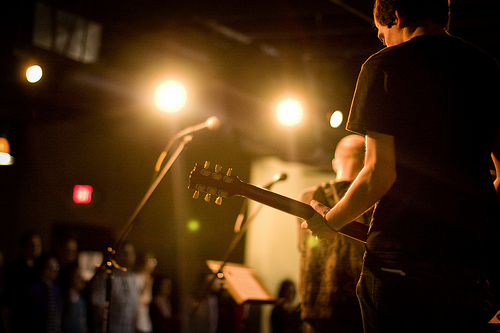
I have written before about my own previous encounters with worship music- the practice of which has been extremely important to me.

I started out singing in a church choir. I had a high pure voice as a boy, and sang solos in church. I learned to play piano, and church organ- earning some pocket money playing at weddings and funerals.

Later we discovered simple choruses- and during the late 70’s and early 80’s I started playing guitar. We played simple songs such as ‘We have come into this house’ and ‘Freely’, and were indebted to the songs of the ‘Fisherfolk’, whose music became the soundtrack to the Charismatic revival that swept through the Church of England. I still feel a strange nostalgia for the simplicity and ‘wholesomeness’ I remember from this time- and the music was a huge part of this.

I then spent 15 years as part of a large independent church in the north of England- in which my major contribution was musical. I eventually became the leader of the music team. We made a journey through all the waves of new church music that emerged- at first it was all sourced via new songbooks- which would come out every now and then- but later the machine that poured out songs  (mostly from America) used many different portals- books, CD’s and increasingly, the internet. Vineyard soft rock worship was something we constantly imitated- although the shiny happy Hillsongs worship always left me a bit cold.

Following a move to Scotland, I continued to lead worship- now in a small Baptist church. Through connections there, I also became slightly itinerant- leading worship in the USA, Europe and for some different events in Scotland.

Then I stopped.

I found it increasingly difficult to sustain any kind of passion for this kind of worship. It had become so formulaic and anchored within a narrow world view- based on  set of core assumptions that were all-dominant even if rarely spoken. I was increasingly finding myself at odds with these assumptions, which were grounded in a particular American Evangelicalism.

Then there was the place of this kind of worship at the centre of all of our services. At first, worship music was all about FREEDOM- it was the means by which we escaped ritualistic liturgy and ‘made room for the Spirit.’ Except the longer we did this, the more liturgical and rigid we became. The formula went something like this-

Open service with a time of ‘praise’- 

Upbeat high energy praise songs. However, there were (and presumably still are) far fewer exuberant praise songs than quieter ones, so we tended to do the same 10-15 or so over and over, after which typically the kids will leave for Sunday School, and we hear notices.

Time of ‘worship’

We then have more singing- quieter songs now which worship leaders try to theme slightly, with a nod towards the coming sermon. In my experience, we often talked about worship being about a much broader thing than just music, but in practice other artistic forms of collective worship had little part in our services. The odd bit of drama, or music/power points. Possibly a bit of dance. The job of the worship leader here is to generate some intensity and expectancy as we prepared to hear the preaching of Gods word- mainly by singing songs.

The sermon

Teaching within this tradition is of paramount importance. We talk of being ‘fed’ by this teaching, and skillful preachers were the top of the tree in terms of status. The very best preaching has this goal of creating a climax– you could call it a spiritual/emotional crisis- during which the congregation is expected to ‘make a response’. This might mean coming forward for prayer for healing and deliverance. The public nature of these crises is valued as some kind of statement before man and God, but I have long wondered whether it might also serve the purpose of measurable ‘success’ of the peaching.

And while all this happens, the music has a vital role again- ecstatic, emotional love songs to Jesus. Matching/creating/heightening the emotion of the event. A benign manipulation of our emotions in the name of Jesus.

The sending out

The last part of the service was about commissioning the congregation to go out into the world, changed by their encounter with God in the service. Songs tend to be more martial, triumphalist and perhaps more hymn-like.

All of this can be energising and vibrant- it can also be very ego-centric for those of us on the stage.

That is not to say that all this has no value- but I think we greatly exaggerated it. People were challenged and even changed in these services, but most were not- they were just caught up in the weekly merry go round. I once heard these services described as like a weekly wedding with the same couple getting married each time. And me, the wedding singer.

About 5 years ago I decided that I could do it this no more. The ‘crisis point’ of services seemed to me increasingly to be manufactured and divorced from the reality of the lives of the people present. At worst it became a religious show- a pep-me-up for the dwindling faithful. The particular context I was part of did not make this easier as there was also a surface dishonesty about levels of conflict and political in fighting.

There were other reasons why I walked away- firstly, theological ones. I found myself adventuring into new ideas, questioning and rediscovering aspects of my faith- and the Evangelical assumptions of many of the songs I had previously used became very difficult to sing. They tended to be strange quasi-erotic love songs to Jesus, or triumphalist war songs for the army of God. They use the Bible as source material- but only parts of the Bible that come pre-packaged by Evangelical assumptions.

And they tend to be American, arising from the cult of the super worship leader- a strange cool guy (mostly male) who has an expensive guitar. His music only finds wider release if he is marketable, and hopefully photogenic. Then the music goes into a highly profitable (but not necessarily prophetable) machine, which spews out visuals, CD’s and sheet music for the whole band. All worship leaders have their favourite super worship leader. We aspire to be like them, and to make music that is a second rate version of their music.

Secondly, I was discovering other forms of worship that I could connect to in a different way- both older forms of worship (from a contemplative tradition) and also new forms of ‘alternative worship’, which had more in common with performance art that with praise and worship as I had used to understand it.

I am a few years down the line now though- and have been involved in many a prayer room, curated worship space or wilderness meditation event. These experiences are very precious to me, in my on going attempts to reach towards God, and to offer my worship.

But I still love to sing. Gatherings with friends still often involve getting out some of the range of instruments our family have accumulated. And within my community (Aoradh) we still sing when we gather from time to time. What I have however, are a set of open questions that I am still working through-

  • Where are the songs of lament, of thanksgiving, of hope, of brokenness, of joy, of doubt, that fit this new context?
  • What songs are counter cultural- challenging the idolatry of the consumer driven unsustainable way of life our churches are embedded within?
  • This new context- what songs might collectively release us towards a different kind of mission? Encourage us to seek after justice, truth, beauty- and when we find it, to sustain it?
  • If these songs are the cultural carriers of our theology- then what of our faith do we want to celebrate? How do we move towards songs that are more open, less reductionistic, more comfortable with mystery and less concerned with the promulgation of fake certainty?
  • Where are the songs of community- not of individuality- all of that personalised spirituality from the God of success?
  • Are there different kinds of songs needed for small community contexts?
  • Why do we need to sing the songs of the machine- how can we encourage local expressions emerging out of community?
  • What of the old is still usable? From the 1560s or the 1960s?
  • I long for poetry- deep and honest lyrics. I am sick of the same old sacred rhymes- grace/face, love/above, sing/bring. We can do so much better.
  • I long for music that carries emotion, not just a steady tune. Where are the solo instruments, and the complex rhythms and harmonies? I am so tired of soft rock.
  • Is all this just because I am looking for something new, something trendy? Am I overreacting?
So, the journey continues- think I will go and get my guitar…


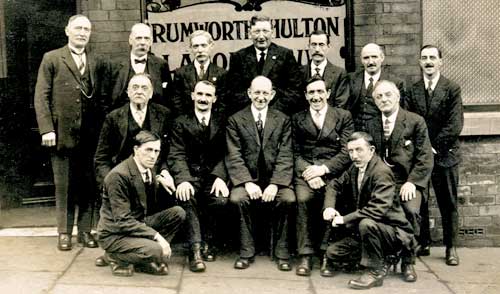
Clubbable…

I like this word- it was coined (I think) by one of our friends- to sum up that formal-collective thing that you will find in churches and all other places managed by committee. It is used as an adjective- as in “I am not clubbable.”

And in many ways, I am not. I am fine with ritual, but hate stuffy formality. I love a good conversation, but find making small talk very wearing. I love to meet with my friends and dream big dreams but once these things become filtered through bureaucracy I have no interest. I think we are at our very best in community, but often find communing hard- it can strip you bear.

I have found the churchy kind of clubs to be particularly challenging- as all of the above mixes in with a certain kind of external ‘righteousness’ and ‘correct doctrine’ and ‘spiritual maturity’. This kind of rather intense clubbability can suck you dry- it can become all consuming in its demands of time and energy. It becomes a vortex into which life hoovered up to the exclusion of anything outside its gravitational pull.

I had had enough of clubs. I wanted to freestyle for a while- to adventure in company, not just to retire to the bothy and sing songs of the adventure of others.

Strange then that I now find myself a member (or about the become a member) of two local clubs- cricket, and (as of tonight) bee keeping.

I am sure that both will have their challenges- relationships and internal tensions- but the interesting thing about both, is the richness that they bring into my life. Both seem to give me more than I give out- they facilitate, encourage and enable. Members of the clubs seem to delight in sharing knowledge and offering advice- not so we might be just like them, but rather so that something that they are passionate about might have a life beyond.

Both are about sharing an activity- having a praxis in common. They are much less concerned with theory and doctrine. But that is not to say that theory and doctrine are not there or thereabouts- rather that these things are downplayed, and absorbed through contact with wider example.

So it is soon obvious that playing cricket is all about a certain kind of sportsmanship- some things are simply just not done. If you are out, you are gracious in defeat. You look after the inexperienced players and when competition becomes too heated, someone has a quiet word.

And through beekeeping, it seems that we learn patience. This is no overnight process.

Hmmmm. Perhaps I am clubbable after all.

Cars that go nowhere.

I like museums.

When we go to them as a family, I find myself falling into a trance like state. I stand and read all those pieces of writing and little bitty labels. I do not bother with most of the gimmicky interactive stuff- I just like to encounter things that carry with them meaning from the past.

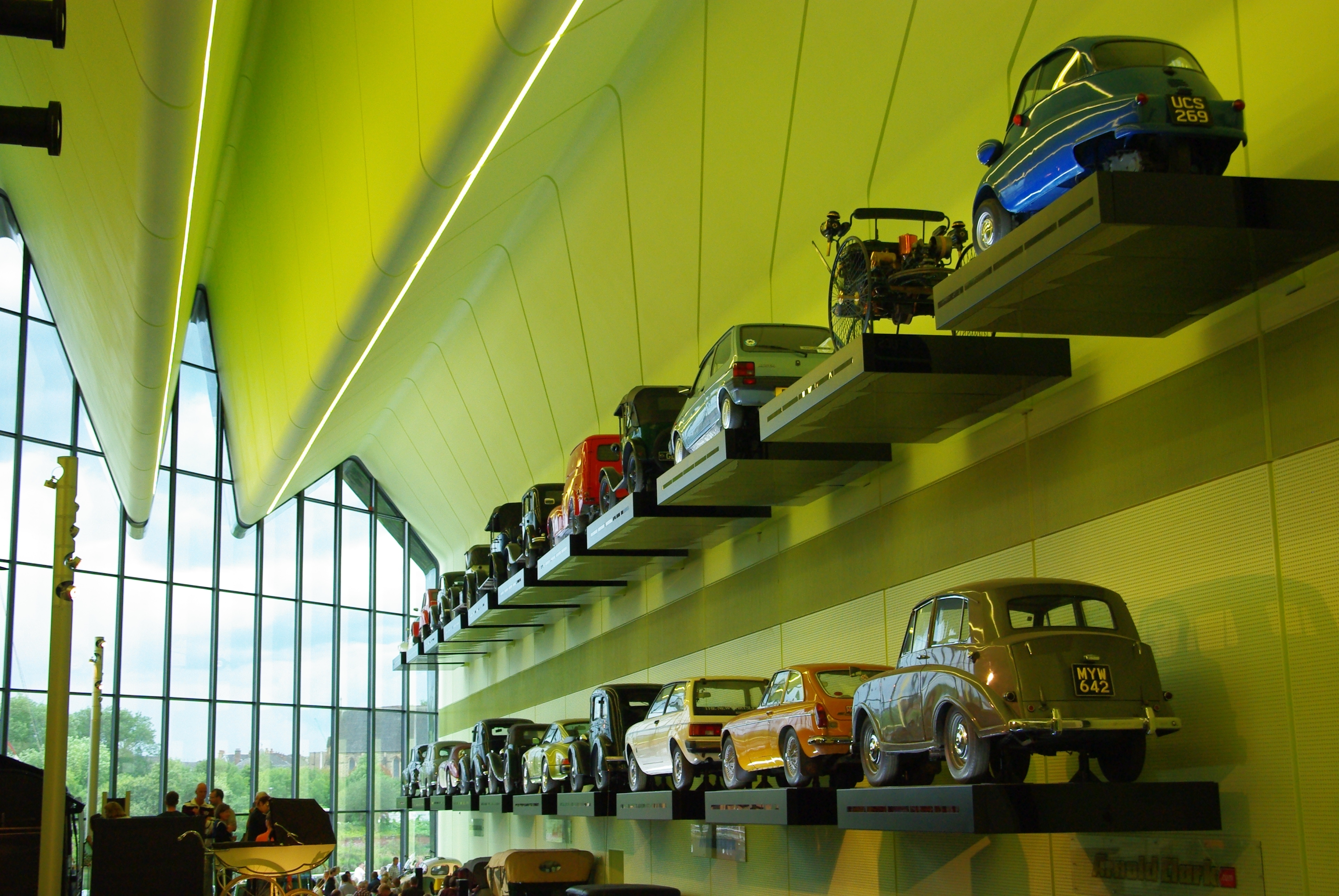
The weekend was a case in point. We went to the stunning new Transport Museum on the banks of the Clyde in Partick, Glasgow. It was full of cars and motorbikes and trains. Everyone else soon gravitated towards the cafe but I wandered- intrigued by a model of a battleship or a 1932 Argyll motor car. I enjoyed it all.

And it occurred to me how we humans love to organise things- to place them in some kind of category and shelve them all away so we can make sense of it all. It is the very life blood of those who curate museums.

And perhaps too those who curate our experience of religion.

So here is a picture for you- you can make your own analogous links…

Humanity reshapes itself, so another little think about church…

I do not usually repost anything from Jonny Bakers blog- despite being a very frequent visitor- simply because I always assume that most of you have also already read it! However, I will make an exception today as he pointed (via Steve Collins) to an article about ‘Curated Membership Communities.’

Jonny’s interest in curation as applied to worship was the subject of his recent book, that takes a journey through communities whose experiments with worship have interesting parallels with how art might be shaped, curated and displayed.

But I am more interested in what implications these apparent changes in dominant social entrepreneurial groupings might have for church. That is, church in the broadest sense.

I liked this from the article-

even in a world of immensely powerful social technology, shared experience is what drives us to care about and contribute to others. As the social graph has come online, we’ve been able to keep better track not only of our friends, but all the amazing people we haven’t met yet. The explosion of curated membership communities is an attempt to create the shared experiences which bring us into contact with those people, giving us access to the amazing world which we can see, if not fully yet grasp.

We have become used to discussions about post modern society, shaken loose from the ordered structure of modernity by the coming of a new communication revolution, and perhaps characterised above all be individualism. It has been a regular theme on this blog too- as have my own grapplings with the feeling that I have that we post moderns still crave connection. And this has to be collectivised in some way beyond what might be possible on a computer screen because this is simply not enough- it is not human enough.

It has not been clear up till now what might replace our empty social clubs, community centres and (of course) churches. What might come to facilitate our shared journeys of faith? What channels might the Spirit of God find in which to travel through and in our society?

We have tried so hard to force some kind of solution- both to try to preserve the old, and also to convince ourselves that there is a methodological answer to evangelism in this new context. It is almost as if we forgot that we are followers of Jesus into culture, not his advance guard.

Meanwhile, it seems that the humanity shaped petri dish may indeed be producing some new organic shapes and formations.

Which brings us back to this idea of the ‘Curated Membership Community’. Here are a few thoughts that occur to me in relation to church-

  • Leadership- curation implies facilitation, encouragement, hospitality, nurturing and a celebration of creativity. It is far less interested in management, or hierarchical structure, or hard measurable outcomes. This sounds remarkably similar to the church-I-would-love-to-be-part-of.
  • Membership- this is an interesting concept.’ Belonging’ in this new context seems to come through friendship, aspiration, inspiration from those who have pioneered new ideas, and to be more driven by ethos than specific tasks. Membership is fluid, flexible, and might also be fairly shortlived, as streams of connection merge and cross-fertilise.
  • These new groupings are perhaps a re-invention of the idea that our collectives are more than just the sum of individual one to one relationships- rather that there is also an aspect of human character that emerges when we are part of something larger- when we share our hopes, passions and values, and when these things allow us to flow together- not as our primary purpose, but rather as a natural consequence of our togetherness.
  • The emphasis then is in the creation of ‘social capital’- “The benefits of participation tend to come in the form of the members sharing their extended network of skills, connections, and other resources with one another. In other words, it is other members more than the organizer or curator who provide value to each other.” So rather than becoming passive consumers of religious product, we might be learning to become co-conspirators with one another to discover and celebrate for ourselves, and in the process of doing this, carry each other forward.

None of this is really new thinking- it has been the very substance of the ’emerging conversation’ as we have called it- but what is more interested is how these ideas are playing out in the wider world- perhaps in particular in the commercial world, sick to death of megalithic faceless conglomerates, and looking for something on the human scale that they can once again believe in, and share with their friends.

What was on the edge, is becoming part of the mainstream.

Hmmmmm….

The spirituality of log stacking…

`

So here is my little ten part sermon based on the stacking of logs.

You can make your own analagous links.

  1. Stacking logs can not be rushed
  2. There are no machines that can stack them for you- bend your back and get stuck in
  3. Beginning carefully is very important- you will be building on these foundations
  4. Neatness is not important, but a well stocked log pile will probably be orderly
  5. Fresh air needs to circulate in, over and through the pile or the logs won’t dry, and will go stale and mouldy
  6. The rigidity and strength of a log pile comes from the closeness- the proximity- of its individual logs
  7. The big ego-bulging logs are the hardest to stack- they tend to topple and teeter and can easily bring the whole thing crashing down
  8. The smaller logs tend to be the glue that hold together the whole structure
  9. The higher you build the pile, the more unstable it will become
  10. The pile is not an end in itself- no matter how decorous. It exists to store and dry fuel that can then burn bright in service of the other