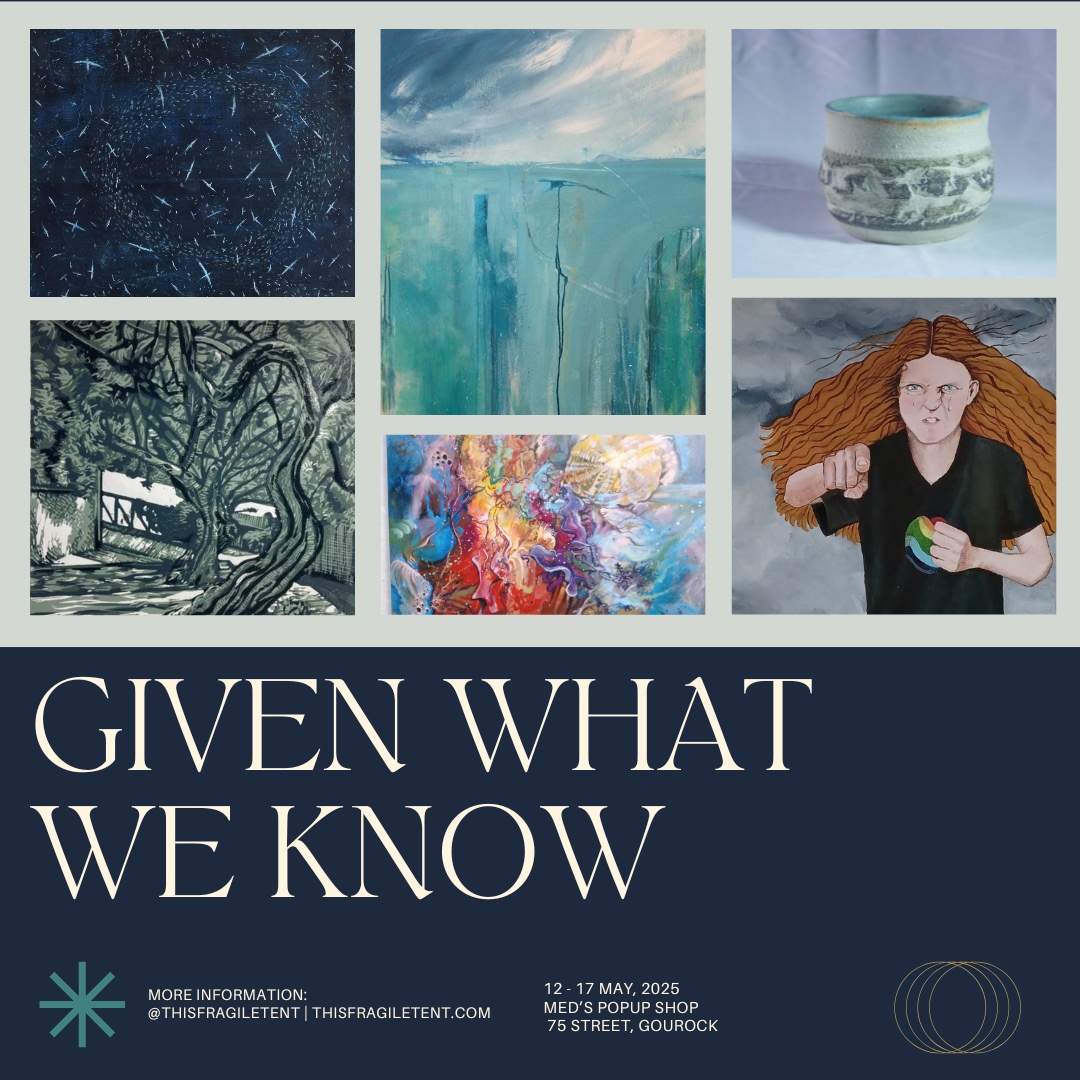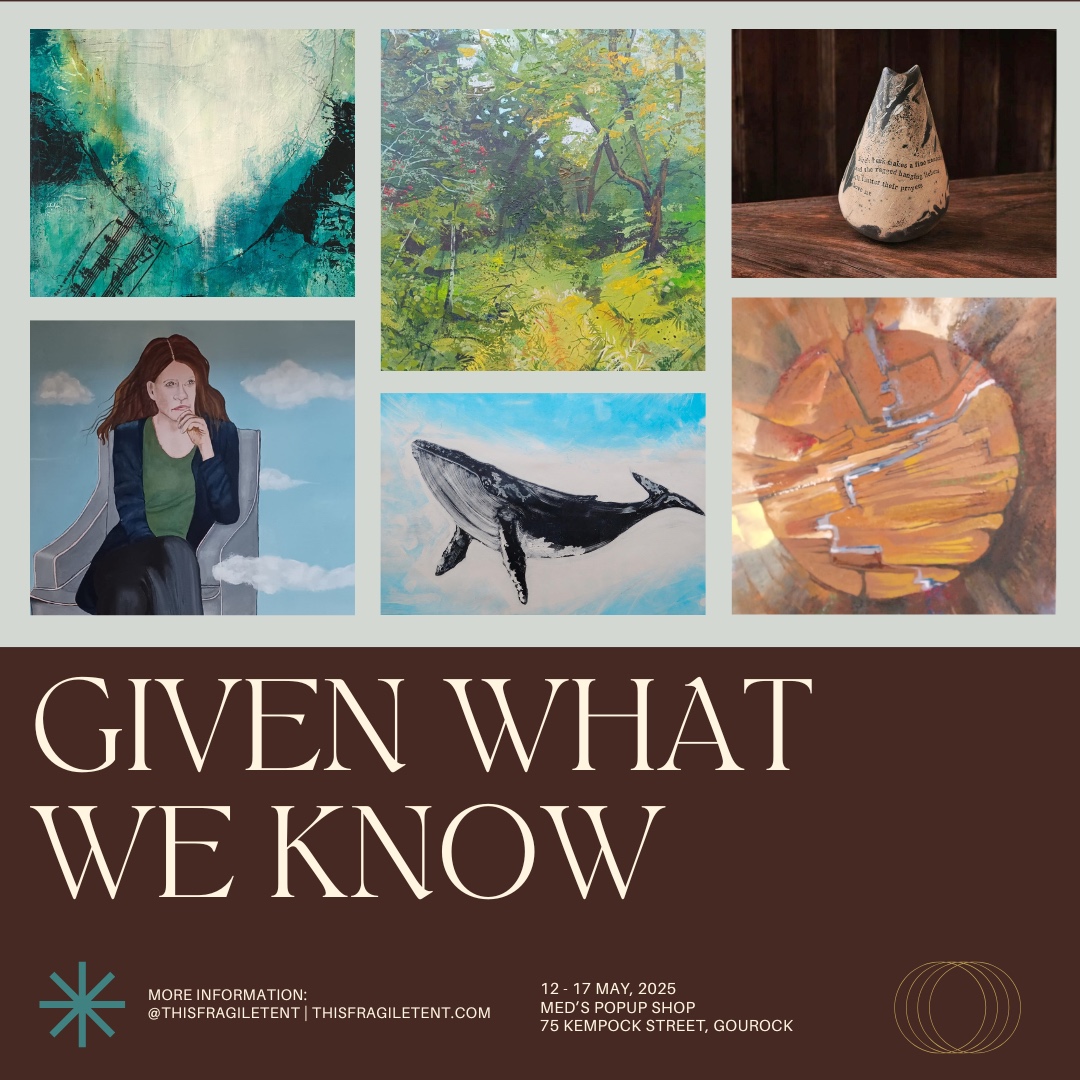
“Given what we know” pop up art exhibition…

The art world here in the UK has a bit of a new trend, in the form of pop up art exhibition spaces, typically in old shops. Accross the Clyde from where we live there are two such spaces. They tend to get booked very quickly, so we booked some slots. Then we began to wonder…

Our son-in-law James makes ceramics ‘inspired’ by trauma following spending years as an oceanographer, watching the arctic icesheets melt. Meanwhile, our art and my poetry was constantly trying to explore themes of brokenness and earth connectedness. We started to wonder about a joint exhibition…

…but then we started to think bigger and invited some others to join us.

Jules Cadie with his landscape inspired paintings

Jenny Philips with her stunning playful portraits

Karen Komurcu with her beautiful linocuts

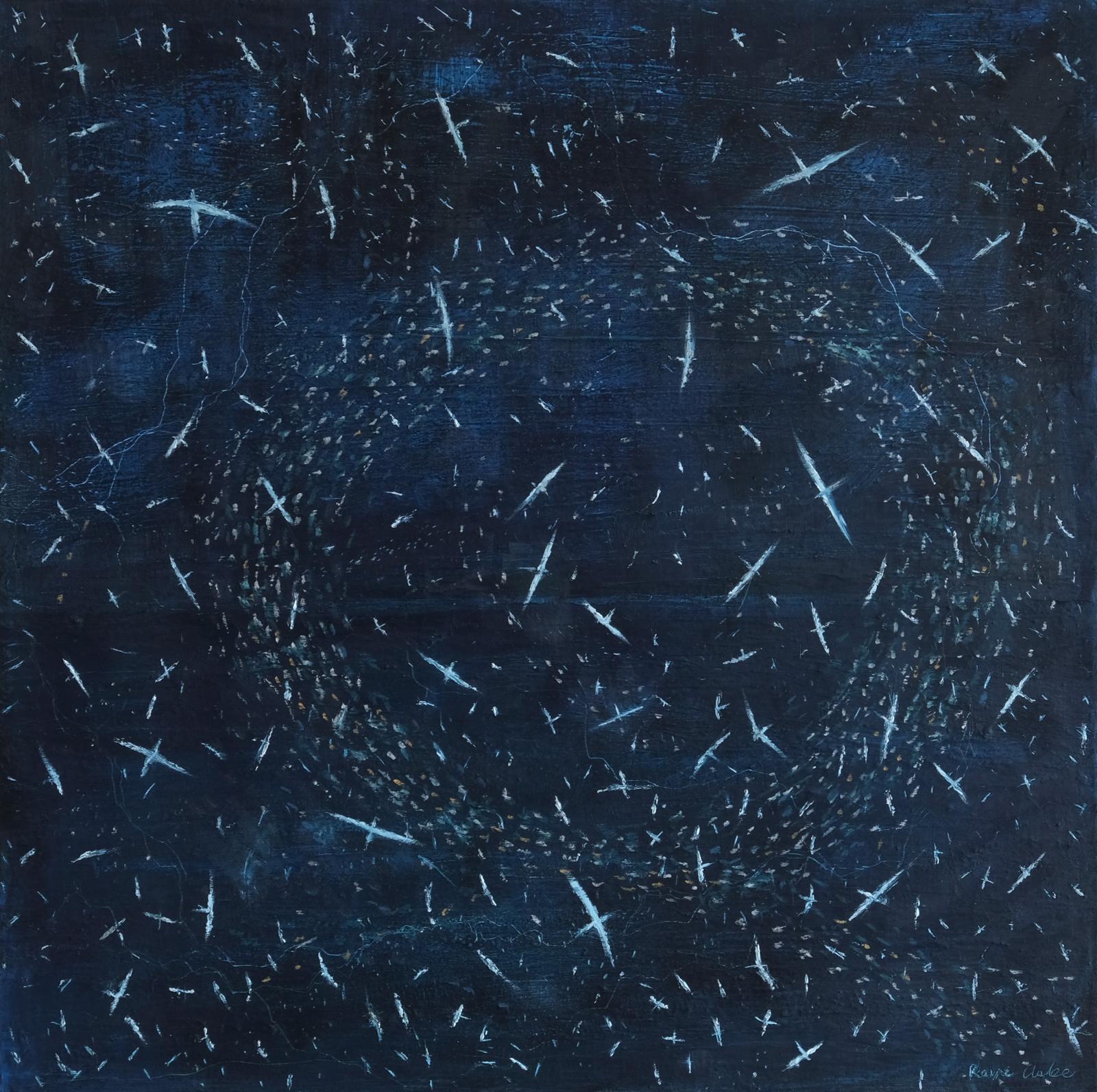
Raine Clarke with her printmaking and general creative magnificence.

Paul Knight with his creative explosion of ceramics, sculpture and ink drawings

Yvonne Lyon who is not content with being a singer-songwriter, so also makes stunning abstract art.

Here is the brief for the exhibition, based around a poem that some might recognise.

“Given what we know and what we fear about the end of things we hold dear, we will look to the birds. We will walk the woods that remain, and we will sing”

How do we respond to a world in omni-crisis in which our politics, our economics, our spirituality – even our protest movements  – all seem broken?

In a world polarised and splintered by algorithms, what does goodness look like? We know there are no easy answers to these questions.

Perhaps, like us, you are experiencing hope as a rare and hard to reach commodity.

In this context, we need our artists and our poets more than ever…

Raine Clarke

Launch evening

On Monday the 12th of May, we will be having a launch evening in the exhibition space. There will be live music and Poetry, not to mention the odd tipple. Watch social media for more details!

If you can join us, please do!

Not Messiah, but memory…

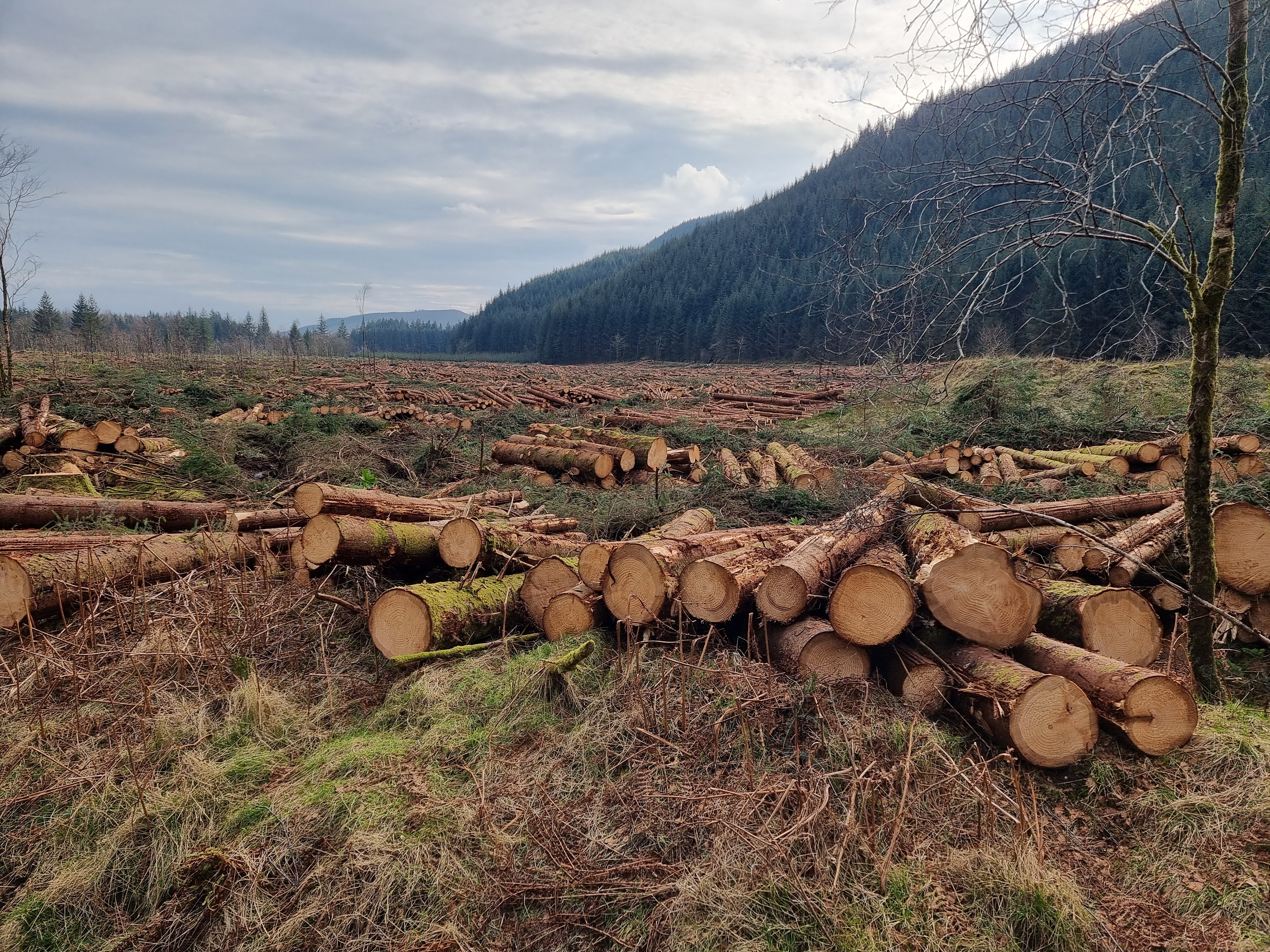
Clear felled plantation, Glen Massan, Argyll

It has been a while since I have posted any new poetry here. This is not because I am not still writing, rather because the way that poetry allows me to explore ideas (which this blog is primarily about) fluctuates.

Today however, I am going to share a brand new poem, which makes some rather profound theological statements – ones that I know many of my friends will find troubling.

I’m not going to explore them here – at least, not yet. I am not even sure that I agree with them all just now.

This is one of the gifts of poetry – it can become it’s own voice, its own person. As well as a way of exploring then externalising, poetry can go further than this, and be part of a dialogue even with its author.

The dialogue does not even need to find agreement. It might be possible to hold more than one perspective – as if our theological constructs are just different poems.

It is in this space that this poem sits just now. In committing the words to keyboard and screen, I am able to stand back and consider them as if they were not mine.

Except they are mine. In writing them, I was consciously breaking through some barriers into places that feel new.

.

Christus

.

Not Messiah, but memory –

You are what we once forgot.

Woodsmoke.

A curve of earth

Towards completeness.

.

Not God, but goodness –

You are what we left behind.

Compost.

A fecundity of light

Awakes this forest floor.

.

Not Risen, but wide open –

We are not just the sum of skin.

Mycelium.

An animal whom, despite of evolution

Finds value most in kindness.

.

Not Saviour but revelator –

We search the stars in vain.

Insemination.

A pulse pounds insistently when

There should by rights be silence

.

CG March 2025

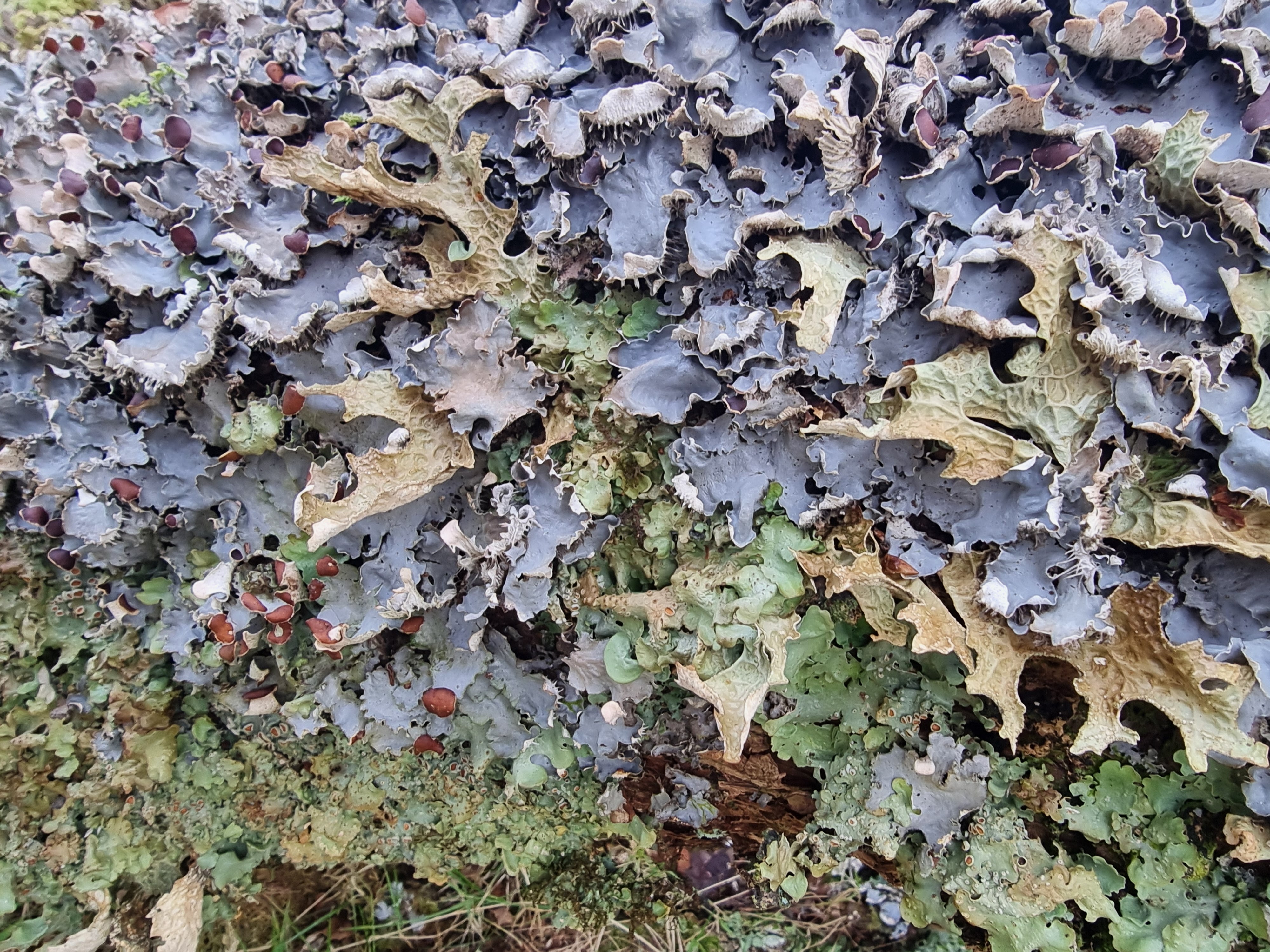
Temperate rainforest floor

Oh America…

Photo by Pixabay on Pexels.com

Eight years ago, I wrote this, quoting Richard Rohr;

Our very suffering now, our crowded presence in this nest that we have largely fouled, will soon be the one thing that we finally share in common. It might be the one thing that will bring us together politically and religiously. The earth and its life systems, on which we all entirely depend, might soon become the very thing that will convert us to a simple lifestyle, to a necessary community, and to an inherent and natural sense of the Holy. We all breathe the same air and drink the same water. There are no Native, Hindu, Jewish, Christian, or Muslim versions of the universal elements. They are exactly the same for each of us.

It was an attempt to hold on to the idea that things would turn again towards good – in the wake of that first Trump victory in 2016. What I did not say in this post was that I wanted to be an active part of the resistance. I spent years writing and agitating, longing for better. Pleading for a world in which justice-making would push back the war mongers, the hate dealers and those who would exploit our human and non-human brothers and sisters for profit.

It almost seemed possible that the arc of history was turning. Trump lost. Bolsonaro lost. Johnson was toppled. But in a world of Starmer and Biden, any kind of radical shift was managed out of our expectations from the outset.

And now, the Mad King is back once more, vengeful in his dotage, full of fear and thunder, spewing lies and bombast, promising to prosecute an agenda that can only make things worse.

It feels like Nero, fiddling whilst Rome burns.

Perhaps this really is the fall towards the end of the civilisation we have known.

If so, this will not be the first time civilisations have fallen – in fact, they all must, eventually. You could even make a strong argument that would say ours is overdue. In his book Life After Doom: Wisdom and Courage for a World Falling Apart, writer Brian McLaren suggested that there were four possible future scenarios for our planet, based on current climate research- Collapse Avoidance, Collapse/Rebirth, Collapse/Survival, and Collapse/Extinction.

In Collapse/Avoidance, we heed the warning, take radical action, lower emissions, etc. The danger is, all we do is kick the can down the road for a further collapse in the future.

In Collapse/Rebirth we experience the pain of things falling apart – our lifestyles, our security, etc. and we finally wake up to the need to live differently on this planet. We consume less, throw less away, distribute more equally.

The other two outcomes I will leave to your own imagination.

Photo by Polina Zimmerman on Pexels.com

But I can not go back to that same place I found myself in 8 years ago.

I learned that if you spend too long in protest – eating only bitter seed out of a half empty bowl – then you will start to lose yourself. You are in danger of just picking at scabs till they leak.

This is not to say that we should not stand against injustice – of course not. But this is not enough. We must also live and love.

This poem has become increasingly important to me, so I offer it here in a format we have previously offered to our patreon feed. I hope our patreons will forgive me, but it feels very necessary just now….

Rapture rescue…

Interesting stuff.

Naomi Klein contrasts different responses to global crisis, and specifically uses this term- ‘Rapture rescue’-  a kind of global economic secular event through which some get saved, and others get left behind.

We see this perhaps in the response to terrorism- there is in the West a longing for some kind of second coming to sweep aside the evil and leave us safe in our holy escape pods. Some used to believe that war would achieve this.

Or perhaps capitalism itself could be seen in this way- there are those who believe– who live well and play to the rules of the holy market, and the unfaithful. Some of these can be rescued- but only by becoming like us.

Then there is climate change, which Klein talks about a lot here. Those who still deny the science seem bound up in a defensive wall of self interest. The crisis is external doubt, and the possibility of a threat to a way of life.

The ‘Rapture’ image hit me hard, as it makes a lot of sense- religion is both the engine of our underlying assumptions about the world, and also the means through which we justify and apply a kind of sacred redemption to our actions and lifestyles.

This being true, how might our faith still be an engine, but rather an engine for grace– for us, our neighbours and our environment? How might this  lead us to work for change NOW, not to wall ourselves away from the unfaithful, the undeserving, the already-lost?

Well I liked the simplicity of what Klein said, here-

“If we want the transformation, we can’t wait for it to happen in some massive jolt, we have to plan for it and model it…”

“Only a crisis, actual or perceived produces real change, and when that change occurs this depends on the ideas that are lying around. That is our function, to keep ideas alive until the politically impossible becomes politically inevitable.”

We Christians are carriers of perhaps the best ideas- contained within the life of Jesus. Our function is to keep these stories alive, and to try to live them out in our context.

Well our context is changing…

Climate change, science, and religion…

The news is full of the news about scientists supposedly manipulating statistics in relation to global warming.

In case you missed it, the University of East Anglia has a Climate Research Unit, and some kind soul got hold of hundreds of e-mails that staff had been sending to each other over the last few years, and made them available on t’internet.

Should you be interested enough in to take a journey into banal academia- they are all here.

The timing of this release of information, immediately prior to the Copenhagen conference on climate change which begins next week. I am sure that the intention of whoever leaked the information was to undermine the scientific case for climate change. Most people believe that this is possibly one of the most important conferences in modern history- there is simply so much at stake.

Most of us are simply not that informed. We hear competing scientific voices, and note that a political consensus is gathering speed, and feel periodically concerned for the future. We in the west are guilty about our car use, our power hungry lifestyles and our central heating, but this does not really result in many real changes to our way of life- beyond the odd energy saving bulb.

Then there are the conspiracy theorists- t’internet is full of them. Of how ‘climate change’ is really a tool to spread fear and alarm amongst the populace, and so divert attention from the evil plans of the Cabal that are really running the world according to their own self interests.

We need the scientists. And we need them to be clear, and give clear summaries in words that we can understand. Most scientists are simply not that good at doing this. There is, however, a good summary of the arguments, and the most recent science via the good old BBC- here.

Science is never fully neutral of course. It always has a line of enquiry, influenced by all sorts of things, and all sorts of value based issues. The myth of ‘pure science’ has been killed for most of we post-moderns. It really should be no surprise that the people at East Anglia University were trying to make sure that we saw things from their point of view.

There is also the questions of what motivates those people who lobby on behalf of a skeptical stance on climate change? Whose interests are being served by this lobby? Oil companies? Industries who are reliant on production systems that will no longer be profitable if forced to examine green house gas emissions in detail?

Like many of us, I think that the way of living that we are caught up in is not sustainable. Not just because of its cost to our planet, but also because of its socio-political impact, and the consequences for the worlds poorest people, in the worlds poorest countries- who tend to be the most vulnerable to climate change. We need our leaders to LEAD, and we need to hold them accountable.

These debates have found their way into faith groups.

It is great to see groups like Tear fund and Christian Aid making it clear that they see it part of the life of Christians to look after all of creation.

However, there is another side to Christian’s engagement with this issue. Evangelicals in the USA will tend to be skeptical (unlike Evangelicals in the UK for example.) Check out the ‘We get it’ campaign– which appears to suggest that the policies to reduce global warming will result in more deaths for the worlds poor, in terms of food price rises and energy shortages. Hmmm some interesting twists of logic going on in that one!

The motivation for these fixed positions, which are labelled ‘Biblical’ of course, puzzles me. Is it just that if you call yourself a ‘Conservative Evangelical’ you just naturally do not want anything to change? Is is about self interest- the American way of life? Or is it the association with big business? Or is it a reluctance to trust science- through which all sorts of evils like evolutionary theory and abortion have entered the world?

Perhaps things are starting to change however-

So friends- for the sake of future generations, lets watch and pray about the Copenhagen conference. We have much to gain, but also much to lose…