
Interesting discussion in housegroup the other night.
We are continuing with a study on Acts of the Apostles as part of the Exilio study, and we are up to chapters 25 and 26. It is in this passage that Paul manages to offend the Jews (again) and they get the Roman Governor to throw him into prison.
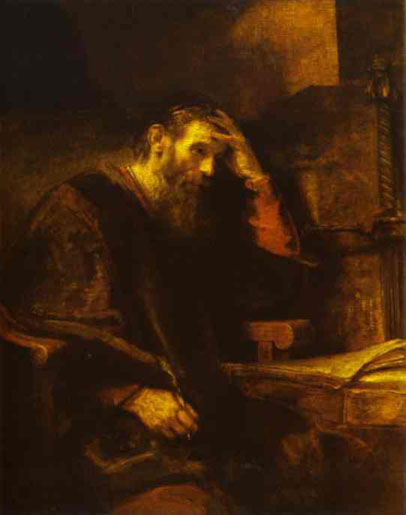
This is not a new thing, Paul has been on the end of imprisonments and beatings in just about every town across the region. Each time, it works out for the best in the end.
But this time, when he is offered a trial, he does something he has not done before- he appeals to Caesar.
Paul was a Roman Citizen. We do not know how he acquired this status, but according to Wikipedia (so it must be true) citizenship was granted for one of the following reasons
- Roman citizenship was granted automatically to every male child born in a legal marriage of a Roman citizen.
- Freed slaves were given a limited form of Roman citizenship; they were still obliged in some aspects to their former owner who automatically became their patron.
- The sons of freed slaves became full citizens.
- Auxilia were rewarded with Roman citizenship after their term of service. Their children also became citizens.
- Only Roman citizens could enlist in the Roman Legion. However an enlisted Roman legionary was deprived of many of his rights. He could not legally marry, and therefore all his children born during his military service were denied citizenship, unless and until he married their mother after his discharge.
- Some individuals received Roman citizenship as a reward for outstanding service to Rome.
- One could also buy citizenship, but at a very high price.
- People who were from the Latin states were gradually granted citizenship.
- Rome gradually granted citizenship to whole provinces; the third-century Constitutio Antoniniana granted it to all free male inhabitants of the Empire.
It iseems clear that in acquiring and then using his rights as a full Roman Citizen, Paul was pulling rank. I wonder if in some way he was taking a step back- no longer being Paul, but rather reverting to Saul…
Citizenship seemed to involve swimming in some murky waters;
Roman citizenship was also used as a tool of foreign policy and control. Colonies and political allies would be granted a “minor” form of Roman citizenship, there being several graduated levels of citizenship and legal rights (the Latin Right was one of them). The promise of improved standing within the Roman “sphere of influence”, and the rivalry for standing with one’s neighbours, kept the focus of many of Rome’s neighbours and allies centered on the status quo of Roman culture, rather than trying to subvert or overthrow Rome’s influence.
The granting of citizenship to allies and the conquered was a vital step in the process of Romanization. This step was one of the most effective political tools and (at that point in history) original political ideas (perhaps one of the most important reasons for the success of Rome).
As a precursor to this, Alexander the Great had tried to “mingle” his Macedonians and other Greeks with the Persians, Egyptians, Syrians, etc in order to assimilate the people of the conquered Persian Empire, but after his death this policy was largely ignored by his successors. The idea was to assimilate, to turn a defeated and potentially rebellious enemy (or his sons) into a Roman citizen. Instead of having to wait for the unavoidable revolt of a conquered people (a tribe or a city-state) like Sparta and the conquered Helots, Rome made the “known” (conquered) world Roman.
There is the rather telling line in Acts 26 in which Festus suggests that Paul had done nothing wrong, and so would have been free to go, had he not have appealed to Caesar.
Paul was never free again after this point.
So- the question that hit me was whether in playing this political game, Paul got it wrong somehow. Perhaps he stopped relying on God, and the rollercoaster ride of following the Spirit into the missional life he was called to.
Because he was human. We easily forget this, I think as we read the accounts of his life in Acts, and as we live out doctrine based on his inspired writings. But there are enough hints of his human frailty despite the esteem in which he is described. The falling out with other people, the ‘thorn in his flesh’.
But if we can read the Roman Citizenship thing in this way- it seems harsh. Almost as if God is vengeful, merciless towards the mistakes of Paul, his faithful but imperfect servant. Is this a God you recognise?
It kind of reminds me of Pilgrims Progress, by Bunyan- a work that I have always disliked. Pilgrim has a road laid out before him, and should he step off this road- should he make the wrong turn, then he is in for trouble…
The fact is, this way of understanding the life of faith is just too deterministic. Almost as if Paul lived out a life of micro cause and effect, making choices like moving chess pieces, leading to sacred or profane consequences.
Almost as if God has mapped out a plan- a pre-determined track for each of our lives, and our task in life is to find it, and stumble along taking the utmost care to stay on this path at all costs…

If this is not true, then how does God interact or respond to our choices? Is he just a (mostly) benign presence watching from afar as we, the ephemera, live out our little lives?
I think that this view of God neither matches the account from the Bible, nor my own experience.
I have come to believe that life is indeed about choice- decisions made in the presence of the Spirit of God, as we move through the difficult terrain of life. Some things go bad. But the Spirit is still there, still prompting and calling us on to a higher deeper way of loving others and serving the Kingdom.
And some decisions have consequences that go beyond the immediate situation. Does that mean that we can count on miraculous intervention by Angels to rescue us? I do not think so. But then again…
But if not, it is perhaps good to remember that the mission of Paul began anew- on a journey to Rome, and through the wonderful letters written to early outposts of the Kingdom that survive today.

 A study has been launched to find a new use for the oldest Christian settlement on the River Clyde.


 this fragile tent