

On my continuing mission to find out a little more about Islamic culture, I am have been reading the Persian poet known as Attar.
To imagine the world of Attar, we have to make a journey back around 800 years, to a far corner of what is now Iran, and to the ancient City of Nishapur, standing astride the silk road that connected the Mediterranean tradesman with the mystery and spices of the far East. In the year 1000CE, it was among the 10 largest cities on earth. After the husband of Genghis Khan‘s daughter was killed at Nishapur in 1221, she ordered the death of all in the city (~1.7 million), and the skulls of men, women, and children were piled in up in high pyramids as a warning to others, and a visible sign of the grief of a despot.
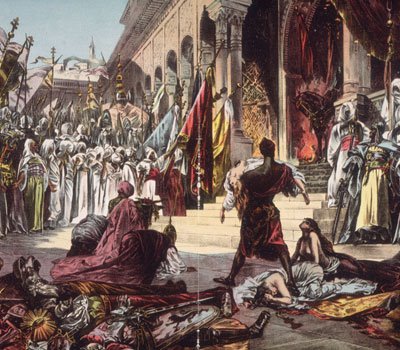
On of the people who was thought to have died in this massacre was Attar. At the time, he was said to be 101 years old.
The little we know of his life has been recorded as having been a chemist, a physician, a perfume maker and a Sufi– those who sought to live by a science whose objective is the ‘reparation of the heart and turning it away from all else but God’.
And as well as his ministry through herbal preparations and the study of essences that bring life, he was a prolific poet and mystic.
Time for some poetry…
Mysicism
The sun can only be seen by the light
of the sun. The more a man or woman knows,
The greater the bewilderment, the closer
to the sun, the more dazzled, until a point
is reached where one no longer is.A mystic knows without knowledge, without
intuition or information, without contemplation
or description or revelation. Mystics
are not themselves. They do not exist
in selves. They move as they are moved,
talk as words come, see with sight
that enters their eyes. I met a woman
once and asked her where love had led her.
“Fool, there’s no destination to arrive at.
Loved one and lover and love are infinite.”
The Newborn
Muhammed spoke to his friends
about a newborn baby, “This child
may cry out in its helplessness,
but it doesn’t want to go back
to the darkness of the wombAnd so it is with your soul
when it finally leaves the nest
and flies out into the sky
over the wide plain of a new life.
Your soul would not trade that freedom
for the warmth of where it was.Let loving lead your soul.
Make it a place to retire to,
A kind of monastery cave, a retreat
for the deepest core of your beingThen build a road
from there to GodLet every action be in harmony with your soul
and its soul-place, but don’t parade
those doings down the street
on the end of a stick!Keep quiet and secret with soul-work.
Don’t worry so much about your body.
God sewed that robe. Leave it as it is.Be more deeply courageous.
Change your soul.”
 this fragile tent