Twisting with our fate…

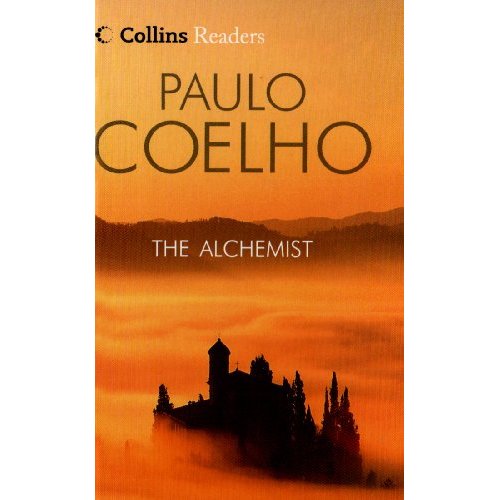
I am reading this book at the moment;

I have heard people talk about it for years- it was written in 1988 after all, and became a publishing phenomenon in the early 90’s. At some point it arrived on one of our bookshelves, but I always avoided it because of some vague association in my mind with new age self fulfilment self help books.

However, different time of life and all, and different spiritual outlook, so in search of a book to read on the ferry that fitted easily in my pocket, I picked it up.

And I am really enjoying it.

Enjoying the writing and the story telling- which is ‘magical realism‘. A shepherd boy who meets a king who tells him his destiny, and he sets off on a journey in search of this destiny, along the way finding the depth of things – the Soul of the World. 

But also enjoying the theological questions that it is bringing to me. In many ways the book proposes a spirituality that is a mash up of all sorts of influences- a bit of Jesus, a lot of Eastern mysticism, a lot more Coelho.

It suggests that each of us have a destiny, which we discover by listening to our hearts and following the omens and signs that the Soul of the World scatter in our way. Most do not dare to follow this destiny as it involves risk and pain, but when we do, the whole world conspires to deliver what we desire.

At first, there is what Coelho called ‘beginners luck’, we start out, and things fall in place. But the journey towards destiny always involves testing.

On the face of it this kind of simplistic magical thinking is the exact reason why the book has remained on the shelf for so long. It is too much like the prosperity gospel charlatans or the ‘success is yours if you go for it’ nonsense.

What rescues the book is its gentle thoughtfulness, and words like this;

We are afraid of losing what we have, whether it is our life or our possessions or our property. But this fear evaporates when we understand that our life stories and the history of the world were written by the same hand.

What has been occupying my mind is this question of fate. This post discussed some of the issues around vocation, and I suggested that I did not believe that God had a golden path planned out for us. In a reply to this, Paula suggested an alternative something like a flow chart with lots of different potential paths.

But as I think about the heart of the matter – the desires that in in the middle of us – I have to acknowledge the thought that we each carry unique individuality and creativity. The accident of our birth impedes or facilitates how this might shape our lives, but ultimately the degree to which this uniqueness is worked out is about the choices we make.

I wrote this line recently about God ‘twisting with our fate’. Mingling with us, laughing with us, prompting us, singing with us in success and holding us in failure.

Is this the same thing that Coelho is painting- the same fragments of the truth from the Soul of the World?

All I can say is that life is not for standing still, and movement has to have some direction, even if the way is indistinct and fraught with danger.

New belief…

Over the past few years, often charted on this blog, the defining codes of faith on which I have sought to live my life has changed considerably.

At first it fragmented. I was no longer sure if I believed at all, let alone had confidence in the traditions I was part of. This was sometimes traumatic. Later however faith began to emerge again less as a set of resounding assertions about the nature of the divine but more as a process of faithful questioning.

In other words, it could be regarded as faith not as the opposite of doubt but rather doubt as an integral part of a living faith journey. I wrote about this before, here.

Along the way, the emphases I place have shifted considerably. I do not think that the correct goal for the life of faith is perfecting our theology- either from the point of view of knowledge, or narrowing down our understanding of ancient text until we have nailed down every errant verse to fit an integrated whole. Rather I think that attempts to do this will always be futile, and distractions from the real business of faith, which is all about how it releases us to live.

This has led me to worry far less about all those ‘questions-in-a-bubble’ theological arguments- the sort that no one really cares about apart from theologians. Such intellectual sparring can be entertaining, but when it is mixed with angry defensiveness or attack in the name of truth I walk away.

But to suggest that what we believe does not matter is foolish.

Our actions are driven in both subtle and obvious ways by the core ideas that we build our lives on. Here is an example from a psychological point of view.

>Core belief;  People are inherently evil and untrustworthy, particularly those who are ‘different’.

>Leading to guiding assumptions; I am at risk, my family needs to be defended, you are a threat, I need to prepare for hostilities.

>Leading to instinctive interactions; Distrust, hostility, defensiveness, aggression, tendency to isolation  and separation.

Everything that Jesus taught us about love is based on the idea that if this becomes the core of everything we believe then our core assumptions about the world and our instinctive reactions to it are all affected. In this way, love is not weak, nebulous and irrational, rather it can change the whole world.

But (unfortunately perhaps) life involves a whole lot of other questions to which we have to at least form working theories, if not absolute conclusions.

So back to the point of this post- the forming of new tenants of faith out of all of the questioning. It is another regular theme on this blog- what to construct after all the deconstruction. There comes a point (or at least there has for me) when I start to feel more comfortable with making tentative statements about what you believe again.

Although as I think about it, as a young man raised in Evangelical/charismatic settings, saying what you believed was not  often necessary- it was obvious as we all kind of knew what was held in common to be ‘true’. The point at which belief was really defined was in the negative- that is when someone (usually outside out immediate group) got it wrong. We could then dissect their incorrect doctrine and discount it and in doing so we could also discount them.

I confess that there is this tendency in me still- I continue to strive towards grace in this as in many things.

What I am starting to construct however, I do not construct alone- everywhere I see a convergence of a new kind of consensus around some basic ways of approaching faith. It seems to me to be cross denominational, but typical of those of us who may have come through all of those ‘posts’ discussions (post modernity, post evangelical, post charismatic, post Christendom.)

So, here are a few of the things that I have come to believe, structured around the ancient Apostles Creed. I expect things to change- I will be carving nothing in stone, nor nailing anything to church doors- these theories are not external, they are made of flesh, some sinew, and even a little muscle.

1. I believe in God, the Father almighty, creator of heaven and earth.

I do. I believe that this unfolding universe began in the mind of God, and he let it all out in a burst of creativity. I also believe that we embody this god-quality of creativity as we are made out of the dust of the heavens, in the image of the Creator- and that this imposes deep responsibilities on us in relation to the heaven and the earth.

2. I believe in Jesus Christ, His only Son, our Lord.

If there is one thing of faith that lives in me, it is the idea, the hope, the person of Jesus. Immanuel, God-with-us, walking in our filth and turning every thing upside down. I believe in the New Kingdom he proclaimed as being here, and near.

And if I believe in Jesus, then what we know of his ways has to be the place that I start from in relation to all other belief. I have to start with the stories and parables he told, and the way he lived his life in relation to everyone around him.

And I have to concede that love is the most important thing- far more important than judgement, or doctrine, so if I am going to make any error, I am going to strive to make it on the side of love and grace. This will inform my relationships to everyone, particularly those who are marginalised or oppressed.

3. He was conceived by the power of the Holy Spirit and born of the Virgin Mary.

To be honest, this is not something I think about often- but I rest on the stories I have inherited.

4. He suffered under Pontius Pilate, was crucified, died, and was buried.

5. He descended to the dead. On the third day he rose again.

6. He ascended into heaven and is seated at the right hand of the Father.

These stories too live in me and inspire me.

7. He will come again to judge the living and the dead.

Perhaps Jesus will come again- but I am not going to spend too much time thinking about this as we were not put on this earth just to hope for some kind of swift exit or heavenly Dunkirk. We are here to learn how to love, and how to put this into action.

I believe that we should not fear judgement from a loving God, and that all of us need grace.

8. I believe in the Holy Spirit,

I do- despite all the charlatans and the hype. I believe in the Spirit of God within us.

9. the holy catholic Church, the communion of saints,

I want to believe that the collectives of the followers of Jesus might be the conscience, the peace makers, the justice dealers, the healers, the party makers and the gardeners of this world. I hope for communities of people who support one another in this direction, whilst learning to love.

I believe that God is present in these gatherings, but also elsewhere. I believe that he reveals himself to people of other faiths, and none.

10. the forgiveness of sins,

Oh yes.

11. the resurrection of the body,

I was never quite sure what this meant- something to do with a day to come when all our bodies will be raised incorruptible. To be honest, I think this is another one of those that I will just shelve with a bit of a shrug.

12. and life everlasting.

Yes, I have this hope that we might be more than flesh but also Spirit, and that those Spirits that leave before us might yet be waiting for us elsewhere.

Is this ancient creed enough to define the central things of our faith now?

As I read it over, I do not think it is. Firstly, I continue to think that we have over emphasised right belief- even to the point of burning dissenters at the stake. The creed is all about belief, and very little to do with our response to it.

What I am hungry for is to see right ways of living and ideas of how love can be put into action.

So I would add to the list above a few of my own;

13. I believe in love

For those reasons above.

14. I believe that we are called to be active subjects of the Kingdom of God, and to participate with him in acts of creativity, healing, peace making, protesting, lamenting, redeeming and the formation of community.

15. I believe in the mission/adventure/pilgrimage that God releases us on.

16. I believe that my ideas of God are incomplete and imperfect, and that not every question can be answered. And that that is OK.

Aoradh Easter service…

We are just back from a lovely Easter service.

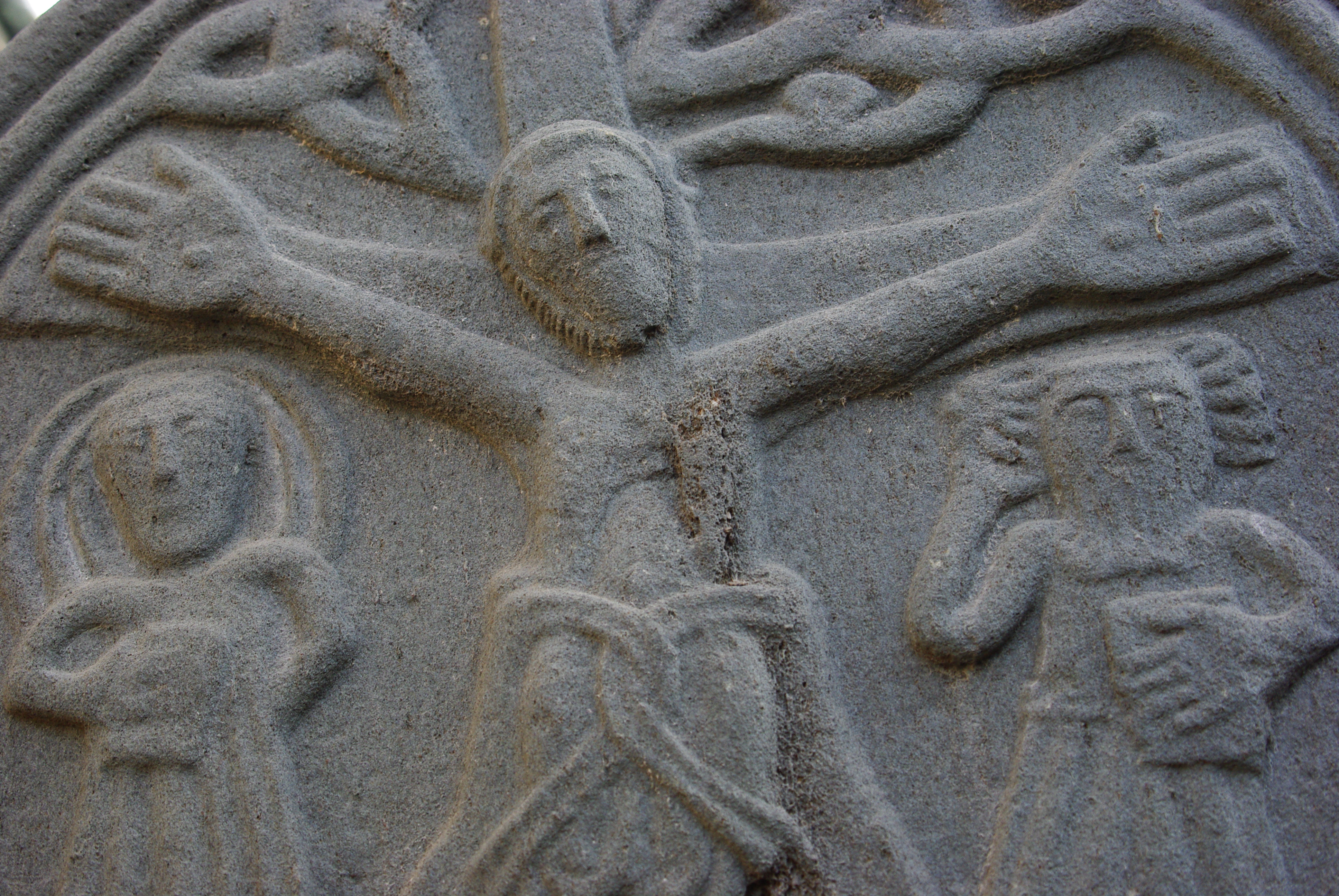
Thanks to the kindness of Aileen, one of our local ministers, we were given permission to use the beautiful Inverchaolain Chapel– out along Loch Striven. It is a small simple stone building, cupped in the bowl of the hills next to the Loch.

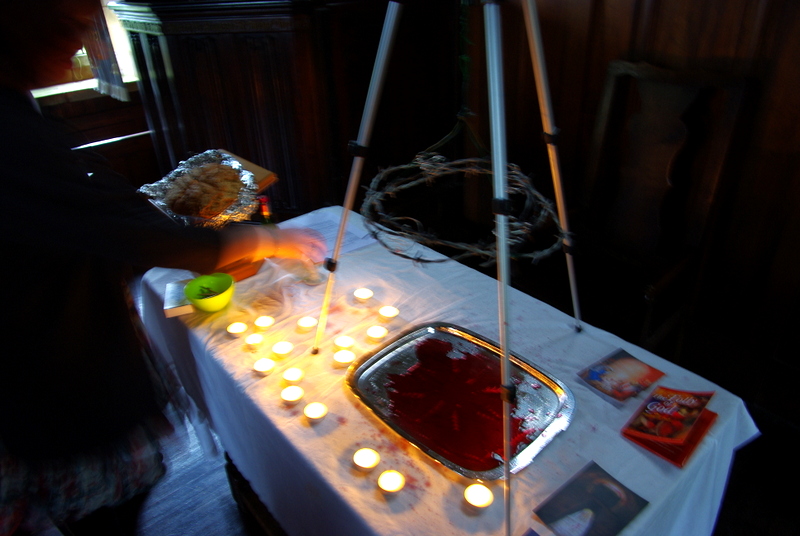
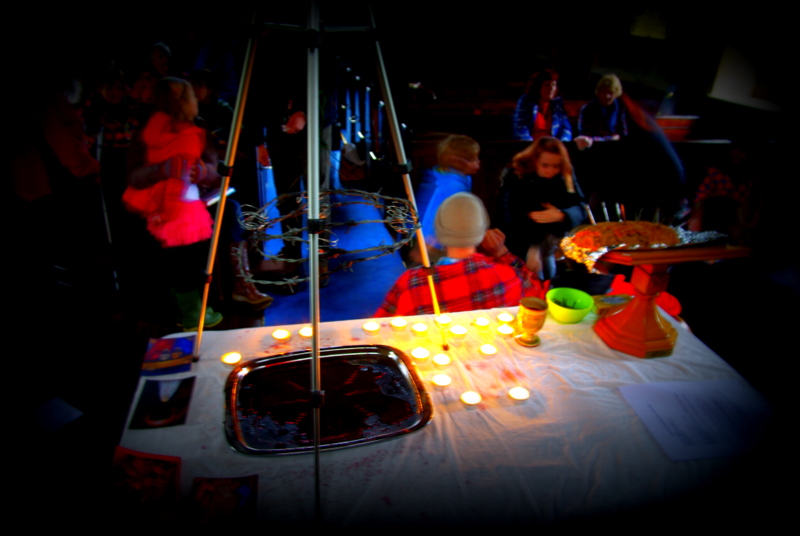
Audrey led us through a liturgy, using some ideas borrowed from Tabled– which is a fantastic collection of creative ideas for communion. We used two objects- one was a crown of thorns suspended with little baskets containing frozen cubes of wine, which dripped down onto a silver tray and a white cloth. The other was a loaf of bread into which we asked people to push nails. The images were powerful and Audrey’s words complimented them wonderfully.

(By the way- if you try the frozen wine thing, bear in mind that wine does not freeze very well- better to use water with some food colouring.)

Afterwards we went back to Andy and Angela’s as the planned picnic was rather rained off. No matter though, we took with us something precious that brought a deeper sense of the death of Jesus, and his resurrection then, and through us, now.

‘The wrath of God was satisfied’

Within churches across the western world, many of us will be singing this line today- from the modern hymn by Stuart Townend, ‘In Christ alone’. The whole verse goes something like this;

In Christ alone! who took on flesh
Fulness of God in helpless babe!
This gift of love and righteousness
Scorned by the ones he came to save:
Till on that cross as Jesus died,
The wrath of God was satisfied –
For every sin on Him was laid;
Here in the death of Christ I live.

It is a great hymn, deeply emotional and soaring in its melody. However I increasingly find the one dimensional nature of it’s theology really difficult. It is this one line about the wrath of God. It conjures up the idea of some kind of unstoppable force of holy hate and destruction in the universe that was narrowly averted only by the torture and death of Jesus.

This is another one of those underpinning assumptions of Evangelicalism that most of us accepted as unassailable truth- Jesus died the horrible death on the cross that was rightfully ours and because of this, God was able to undertake some kind of divine conjuring trick for some of us. This was the only way to overcome the natural forces of justice in the universe. It was the only way to deal with the wrath of God.

For non theologians like me, the fact that this kind of understanding of the atonement of the cross is not the ONLY way of understanding the central drama of the Christian faith might come as a surprise. Recently of course, a number of hugely controversial books have emerged taking a new look at the issue. The authors of these books (Rob Bell, Steve Chalke, Brian McLaren) have often been subjected to the outrage of the faithful.

So, on this Good Friday, I thought that it might be worth examining some of the other understandings of atonement- the other ways that followers of Jesus have attempted to come to terms with the enormity of a God who would come to earth to die such a death.

The name given to the theory of atonement outlined above is ‘Substitutionary atonement’ or sometimes ‘Penal Substitution’. However rather than talk more about I think it would be useful to take a journey through atonement in church history.

Firstly, there is a summary of some of the ideas in this clip by Tony Jones, along with some of his own hard hitting alternatives;

There are other theories of atonement, but here is a quick summary of the dominant ones again;

Moral influence

In this view the core of Christianity is positive moral change, and the purpose of everything Jesus did was to lead humans toward that moral change. He is understood to have accomplished this variously through his teachings, example, founding of the Church, and the inspiring power of his death and resurrection.

This was the atonement theory dominant in the early church in the second and third centuries and was taught by the Church Fathers. It was also popular into the middle ages and beyond.

Ransom theory

Jesus liberates mankind from slavery to Satan and thus death by giving his own life as a ransom. Victory over Satan consists of swapping the life of the perfect (Jesus), for the lives of the imperfect (mankind).

Christus victor

Here Jesus is not used as a ransom but rather defeated Satan in a spiritual battle and thus frees enslaved mankind by defeating the captor. This theory continued to influence Christian theology for a thousand years.

Satisfaction

This theory grew from the work of the 11th century theologian Anselm.  Mankind owes a debt not to Satan, but to sovereign God himself. A sovereign may well be able to forgive an insult or an injury in his private capacity, but because he is a sovereign he cannot if the state has been dishonoured. Anselm argued that the insult given to God is so great that only a perfect sacrifice could satisfy and Jesus, being both God and man, was this perfect sacrifice. Here we see the influence of earthly politics projected onto the heavens.

Penal substitution

The Protestant reformers developed Anselm’s theory.  Instead of considering sin as an affront to God’s honour,  rather sin is regarded as the breaking of God’s moral law. Placing a particular emphasis on Romans 6:23 (the wages of sin is death), penal substitution sees sinful man as being rightfully deserving God’s wrath with the essence of Jesus’ saving work being his substitution in the sinner’s place, bearing the curse in the place of man (Galatians 3:13).

A variation that also falls within this metaphor is Hugo Grotius’ “governmental theory“, which sees Jesus receiving a punishment as a public example of the lengths to which God will go to uphold the moral order.

Some would argue that all these theories contain part of the truth, and (in the absence of certainty) I think I would agree with this.

Apart from this thing that we call ‘the wrath of God’.

I would contend that our theological projections of God are always partial, always incomplete and always emerging from our cultural perspective. So it was natural for the children of the modern enlightenment to see God as embodying a force of logical, highly technical justice. It seemed like the elevation of mankind towards democratic freedom mediated by the purity of the law was a process ordained by God, and so this must also be the character of God himself.

God the judge- stern, inflexible, bound by the fine detail of the law, but able to save a narrow few through a technicality.

But today we remember the death of a man Jesus.

The scandal of the cross.

The unreasonableness of the cross.

The injustice of the the cross.

The laying down of all power and majesty, the ultimate vulnerability of the cross.

The end of all our hopes on the cross.

The defeat of the cross.

The humanity of the cross.

And the mystery unfolds within us.

Is God inspired by our politics?

Interesting article in the Guardian about a study led by Lee Ross of Stanford University in California into the interaction between faith and politics.

 …the Jesus of liberal Christians is very different from the one envisaged by conservatives. The researchers asked respondents to imagine what Jesus would have thought about contemporary issues such as taxation, immigration, same-sex marriage and abortion. Perhaps not surprisingly, Christian Republicans imagined a Jesus who tended to be against wealth redistribution, illegal immigrants, abortion and same-sex marriage; whereas the Jesus of Democrat-voting Christians would have had far more liberal opinions. The Bible may claim that God created man in his own image, but the study suggests man creates God in his own image.

If you are like me, you are right now deciding that those whose political views you do not share are the ones who have invented more of their Jesus than you have.

Because basically Jesus is like a really good version of me. Me on a good day.

 Preachers, politicians and co-believers tend to emphasise and de-emphasise different aspects of the Christian canon; so conservative Americans study the Old Testament with its homophobic rhetoric and eye-for-an-eye morality, whereas liberals look to the New Testament Jesus who was sympathetic to the poor and the meek.

Evangelical politics is not, of course, limited to the US. Many social conservatives in the UK align themselves with the Christian right, and MPs such as Nadine Dorries take inspiration from US campaigns against abortion or gay rights. But perhaps the most striking aspect of the study is that it turns on its head the claims by many religious politicians, such as Republican nomination candidates Rick Santorum (“I’m for income inequality”), Rick Perry (“Homosexuality is a sin”), or the UK’s Nadine Dorries (“My faith tells me who I am”), that their politics is inspired by their God. This study suggests instead that their God is inspired by their politics.

I suppose this was the risk God took in giving us all free will.

The foolishness, the folly of God.

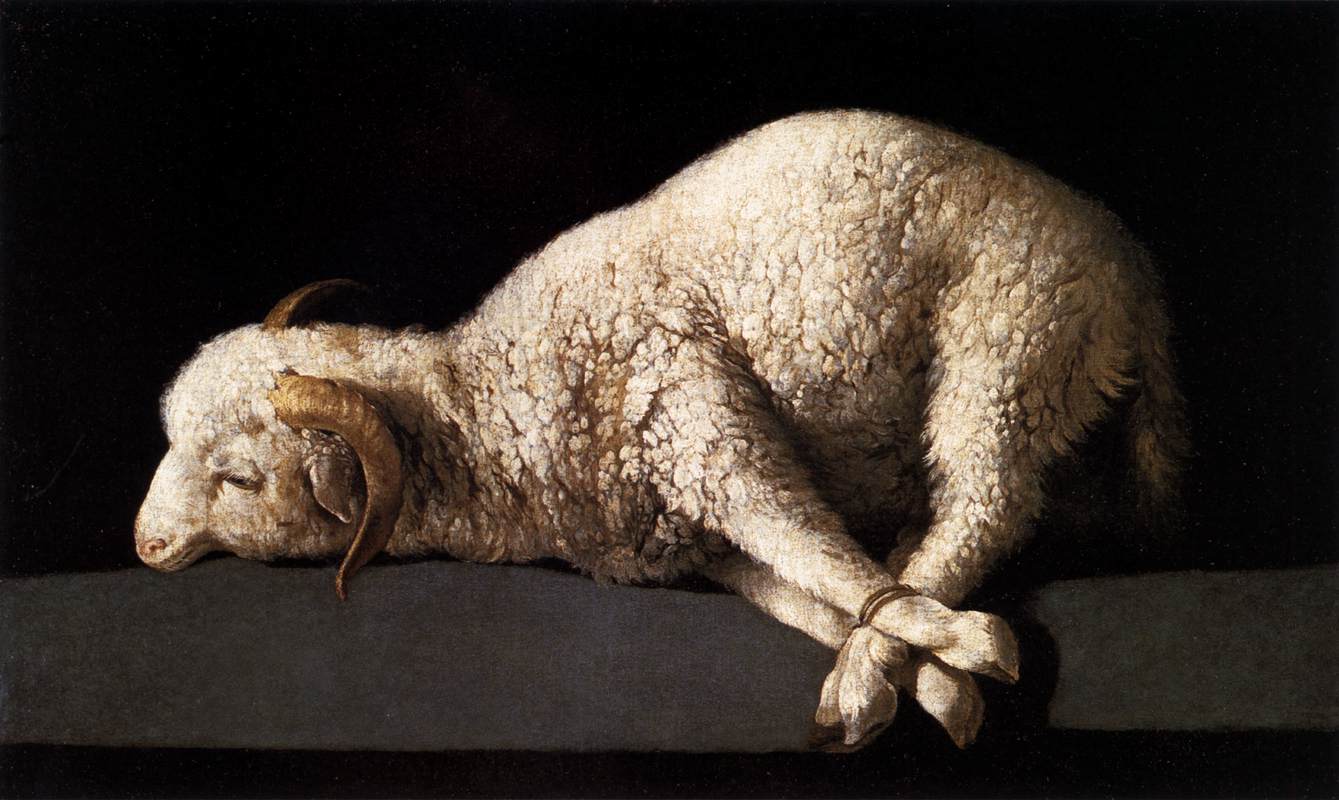
Who lies like a bound lamb on the altars we build.

Interviews with Jesus…

I liked this series of ‘interviews’ with Jesus– a simple and rather old fashioned didactic vehicle, but very well written- direct and controversial whilst full of love and fun- rather like the man himself. Thanks to Chris Howson for pointing them out.

They are recorded in Spanish, but the English transcripts are available.

The producers of these narratives are a brother and sister- María and José Ignacio López Vigil, based in Ecuador and Nicaragua, and clearly come from a perspective influenced strongly by Liberation Theology, and engagement with justice issues in South America.

I am thinking of trying to use some of them here…

Here is one typically challenging example.

RACHEL The microphones of Emisoras Latinas are still here on the Mount of the Beatitudes. Before us we have a panoramic view of the Sea of Galilee, and with us again, in an exclusive interview, is Jesus Christ. In an earlier segment, Jesus, you referred to the second part of the historic discourse you gave on this mountain. What did you speak of in that second part?

JESUS Well, first of all I blessed the poor people and congratulated them.

RACHEL And after that?

JESUS After that I cursed the rich people.

RACHEL You… cursed?

JESUS Yes, I cursed the rich people.

RACHEL Can you repeat your words for us?

JESUS I said it then, and I say it now Woe to you who are rich, who are well-fed, because you will go hungry. Woe to you who laugh and make fun of the poor, because very soon you will weep and cry out when God empties your coffers, when God rips off your clothes and your jewelry and leaves you without bread and without money to buy anything, just as you did with your workers!

RACHEL Those are very hard words.

JESUS Much harder is the heart of stone of people who don’t want to share.

RACHEL Perhaps there are people listening to us now who are wealthy but also generous – people of humble spirit. Would you curse them also?

JESUS Once a rich young man with a good heart wanted to join our band. He wanted to put his hand on the plow of God’s Kingdom.

RACHEL And what did you tell him?

JESUS You have to choose either God or money. If you want to join us, first share out your wealth among the poor.

RACHEL If those were the conditions… I don’t think many rich people would have taken part in your movement.

JESUS A few understood, but the truth is that in those days, as in these, it’s easier for a camel to pass through the eye of a needle than for a rich man to enter the Kingdom of God.

RACHEL Your message doesn’t sound politically correct. Don’t you feel it’s too radical?

JESUS Radical, yes. We took the axe to the root, because the root was rotten.

RACHEL They have always taught me that you were meek and humble of heart, but now I find you a little … how to say it? … a little intolerant.

JESUS God does not tolerate injustice, Rachel. In the end God will not ask us about rites or prayers, God won’t ask us about fasting and temples. We will be examined only regarding our justice, and God will be relentless with those who are unjust.

RACHEL You’re quite stirred up …

JESUS Didn’t you ask me to recall what I said on this mountain?

RACHEL Even so, could we close off our program by restating that your message is really a message of peace?

JESUS God’s message is fire upon the earth, and I can’t wait till it’s blazing! Listen, Rachel, if every morning of your life you don’t earnestly desire for there to be an end to wars, violence, lies, envy, power-mongering, then you’ll never understand my message.

RACHEL Is there anything else you’d like to add?

JESUS Look toward the horizon, Rachel. In these very days in which you’re living, I see signs in the heaven that announce a storm coming. Let those who have eyes to see observe the signs, and let those who have ears to hear listen to what’s going on.

RACHEL We are talking with Jesus Christ in his second coming to our modern world, which is ever more unequal – and therefore ever more violent. The Mount of the Beatitudes, Rachel Perez, Emisoras Latinas.

MUSIC

ANNOUNCER Another God is Possible. Exclusive interviews with Jesus Christ in his second coming to Earth. A production of María and José Ignacio López Vigil, with the support of the Syd Forum and Christian Aid.

Easter- the story in the garden…

I wrote this piece for our Aoradh Easter gathering… He is alive!

It was still dark when Mary left the house.

Not that she had been sleeping. The house was full of fear since Jesus had been taken. Fear of the soldiers coming by torchlight and beating on their doors. Fear that they too would face a long lingering death on a cross.

But there was something worse than fear- worse even than death. When they killed Jesus, everything that Mary had hoped for- everything she had believed in- had fallen apart.

All she had left was a dead body.

To prepare for the grave.

She would have gone sooner- but yesterday had been a religious festival, and the pew police would have been out in force to prevent anything that looked like work. Particularly this kind of work, for this kind of man.

So she carefully closed the door behind her, and gathered her cloak against the morning chill and walked softly through the empty streets towards the edge of town.

As the sky lightened to the east, she came to a small hilly area, full of cool early morning shadows, and grand old trees. It was the garden of a rich man- where he had prepared a tomb for his family.

He had been one of those ‘secret’ supporters of Jesus- Mary felt anger burn in her- another powerful religious type who had a reputation to maintain. Where was he during the terrible mock trial…and the beating…and the humiliation….and the long walk toGolgotha? Still- he had supplied the tomb which was not without risk, and had also paid for some expensive perfume and spices with which to prepare the body. Guilt money she thought, bitterly.

It was already getting lighter as she walked under the trees, the dew on the grass soaking the hem of her skirt. It suddenly occurred to her that the tomb would be closed. The stone would have been rolled across the entrance and her journey would have been in vain. A sudden anxiety quickened her steps.

A rocky outcrop lay ahead, still laced with morning mist. She was almost there.

As she reached the tomb, shafts of low sunlight were beginning to filter through the trees, making it hard to see clearly.

The tomb was open.

Someone had moved the stone.

Mary’s pace slowed almost to a stop. She walked as if through water. And she had forgotten to breathe.

Standing in the entrance to the tomb, her eyes had to adjust to the darkness. She finally took a shaky gasp of air, and steeled herself for the task ahead.
Steeled herself for another glimpse of that broken body.

But the stone cut slab lay empty.

Empty apart from the winding sheets.

At first, she could not take it in. What was this? What did it mean?

Then it hit her like a new bereavement. It was not enough that they should just kill him, they also needed to erase his memory from the people. The last thing they needed was a shrine to give a focal point for more of his kind of revolutionary activity.

They had taken the body.

They had taken her Lord.

……………………………………………………………..

Later, when she told the story (and there were always people who wanted to hear it) she would always struggle to remember what happened next.

She knew that she had started running- retracing her steps through the garden, and back into the town. The streets were coming alive, and she must have looked like a mad woman, running crying over the cobbles and hammering on the door.

She knew too that Simon and John set off to the tomb to see for themselves, because she followed behind.

She remembered walking the garden, hardly able to see the ground in front of her because of her tears.

In the middle of it all, she found herself back at the tomb- but she was no longer alone. Two men, dressed in white stood with her. She was past caring who they were, or where they had come from but remembered the surprise in their voices when they asked her “Woman, why are you crying?”

A strange question to ask anyone in a tomb.

Then she stood in the morning light again, not knowing what to do, where to go, who to speak to. Feeling desperate, alone and hopeless.

Suddenly, came another voice- “Who is it you are looking for?”

She mumbled something about the taking of a body, and taking him for a gardener, began to ask if he knew anything about what had happened, when another word stopped her in mid sentence.

“Mary” he said.

Spoken softly and gently- with a tinge of humour, and a dripping with of love.

It was a word on which her whole life pivoted.

He was alive.

And now, so was she.


“In the name of Christ, I quit being a Christian…”

Not my words, but the words of novelist Anne Rice– see this recent article in the Guardian.

I confess not to have read anything that she has written- I am not into Vampire related literature, but others who are tell me that she is very good.

This is what she said on her facebook page

For those who care, and I understand if you don’t: Today I quit being a Christian. I’m out. I remain committed to Christ as always but not to being “Christian” or to being part of Christianity. It’s simply impossible for me to “belong” to this quarrelsome, hostile, disputatious, and deservedly infamous group. For tenyears, I’ve tried. I’ve failed. I’m an outsider. My conscience will allow nothing else.

And later-

As I said below, I quit being a Christian. I’m out. In the name of Christ, I refuse to be anti-gay. I refuse to be anti-feminist. I refuse to be anti-artificial birth control. I refuse to be anti-Democrat. I refuse to be anti-secular humanism. I refuse to be anti-science. I refuse to be anti-life. In the name of Christ, I quit Christianity and being Christian. Amen.

Check out her facebook page– it has literally thousands of responses- mostly supportive, but some predictably angry-

I read Rice’s comments, and find myself in full agreement. In the circles I move in, these are not controversial. There seems to be an increasing number of Christians who can no longer cope with Christianity- or rather what we have made of it.

The challenge for organised religious Christianity is to find a way to engage with us again. Some will return later- we will have our times of rebellion, but then come home. Others will never come back- it is too hard to return to an environment that may have been perceived as abusive and manipulative.

Many more are looking for a way to re-engage and network with a different kind of Christianity- even though we are not quite sure what this looks like. We know what it is NOT, but lack certainty as to what it could be.

But it is certainly about a return to Jesus- to a radical, counter cultural faith that turns over the tables in the temple- that takes another look at all this baggage we have accumulated.

And it will happen. It is happening.

Here is another status update from Anne Rice-

My faith in Christ is central to my life. My conversion from a pessimistic atheist lost in a world I didn’t understand, to an optimistic believer in a universe created and sustained by a loving God is crucial to me. But following Christ does not mean following His followers. Christ is infinitely more important than Christianity and always will be, no matter what Christianity is, has been, or might become.

Amen.

Jesus the magician…

Bad day today- so needed cheering up. Time for some t’internet comedy.

I came across this clip- and watched in trepidation, as I do not really like people laughing a Jesus. It is like someone mocking your wife or child- if only they could see what you see…

On second watching- there seemed to be a deeper meaning here.

Something to do with the Jesus we make use of.

The Jesus who shifts product.

The Jesus who gets us what we want.

The Jesus that we can wear like a lucky charm to ward of all unpleasantness…

The Jesus who is made after our image.

Hmmmmm….

Pat Robertson says Haiti ‘made a pact with the Devil’

Pat has been sounding off again.

Alistair pointed me in the way of this-

Oh dear.

The scary thing is that millions of Americans take what Robertson says seriously.

When Marx called religion the ‘opium of the people’ he perhaps had in mind drug dealers like Pat.

Haiti lives in the shadow of its colonial past. Check out the brief historical summary here. It has not just that America has been a poor neighbour, but you could say a rather devilish one.

Incidentally, the slave revolt that ejected the French happened before Napoleon III of France was born!

Robertson brings shame to Christians with his ludicrous pronouncements.

He does not speak for me. Nor, I suspect, for Jesus.

I have heard lots of talk about corruption, as the worlds press is full of appeals for money and aid. Lest this slow down our willingness to open our wallets- can I suggest checking out OXFAM