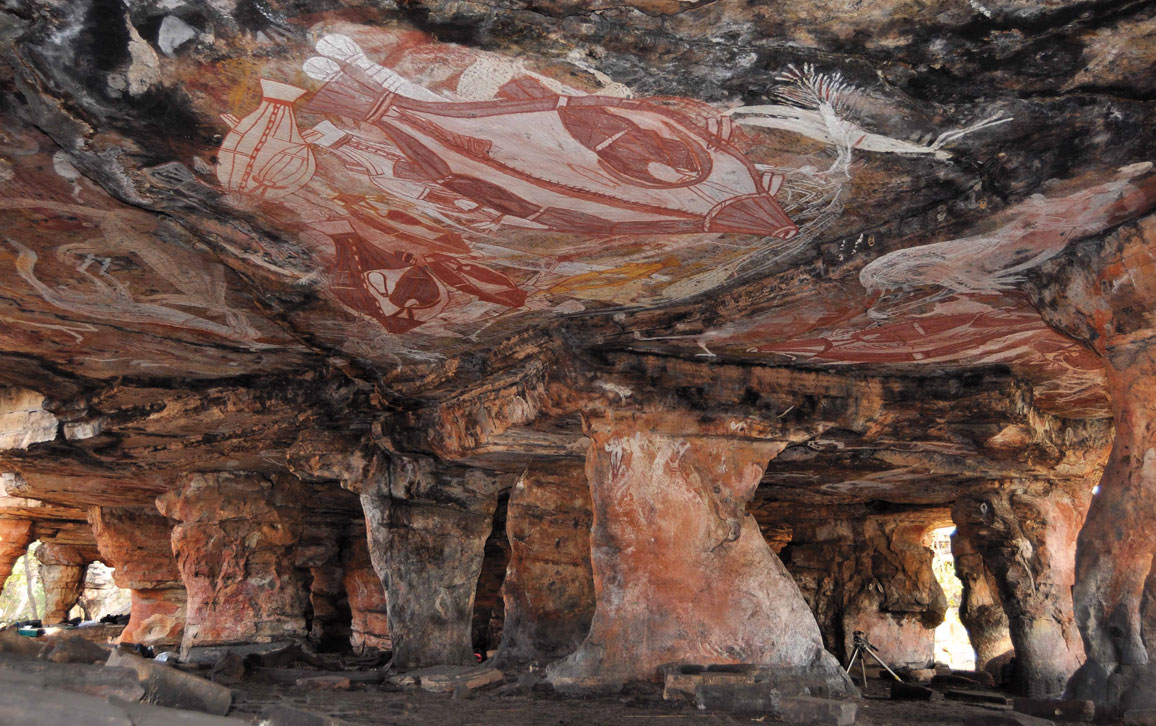
Indigenous spirituality 1 – can we learn from where we came from?

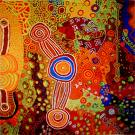
Australian Aboriginal rock art, 28 000 years old

A few months ago, I started a conversation with some people about indiginous spirituality. I had this itch that I wanted to scratch to do with how the Celtic tradition that I had found so deeply compelling might have some things in common with other indigenous spiritualities, so I reached out, looking for others who had connections and knowledge that I lacked.

Celtic idigenous traditions

My quest faced lots of problems. Firstly, reaching a definitive understanding of my own tradition is far from easy. The indigenous religion of the Celts stretches back thousands of years into myth and legend so it is hard enough to say much that is certain, and even harder to understand meanings that belong to a former culture and time. What little is known about the pre-Christian Celts mostly comes to us through highly questionable records of an occupying Roman Empire. Christianity came to these islands and first assimilated, then colonised the tradition, burying it under layers of ‘progress’. Some have tried to tell the Celtic story anew in order to make it meaningful – to me and others – but it can be hard to tease apart the facts from the fancy.

Perhaps this is part of the appeal to spiritual nomads and outsiders to institution like me. What we know as ‘the Celtic wisdom traditoin’ has a malleability that allows us to make it fit into whatever we want it to fit. It has subjective utility, but might be seen to lack authentic objectivity. In acknowledging this reality, it is then for each of us to decide whether the benefits outweigh the disadvantages.

For me, they most certainly do. Perhaps this is because I am a poet, more driven by spirituality of the mystical kind. Travelling in this tradition connects me with something visceral deep inside. It is a ‘feeling’ as much as an intellectual acceptance. I quite understand why friends of mine, more driven by systematic interpretation of scriptures might take a more cautious view.

Like all religious technologies, we must travel with a certain caution, looking around for other perspectives- paying particular attention to those that Empire has marginalised.
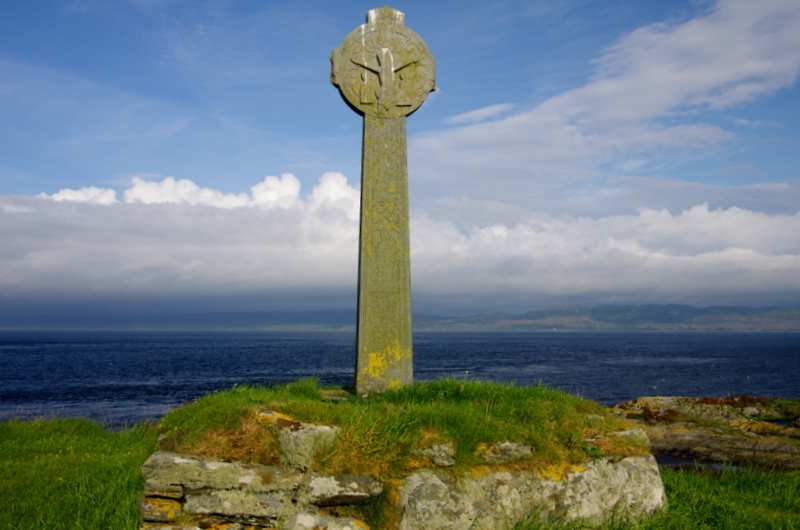
Celtic cross, Inner Hebrides, West Scotland

What do we mean when we talk about the ‘Celtic wisdom tradition’ then?

We have some tantalising clues in the form of stories and legends. Mostly these are survival traditions out on the fringes of the Celtic world- which like all cultures colonised by empire, retreated to the distant edge of its former hearlands – Atlantic coasts and islands or to rural Ireland and Wales.

We can also have some clues about the nature of this tradition from what is absent and outcast from mainstream religion. By this, I mean things that have been suppressed and persecuted that once belonged to ordinary believers. I have said more of this before, here for example. Many others have described and lamented what happened when indigenous, authentic and local spiritualities become subject to the priorities of institution and Empire.

Finally we know it as a deep ‘yes’ that we feel in our souls when we hear about ideas like ‘original goodness’ and hear how all things are connected and held together.

Colonialism and Christianity

Across the world, almost all indigenous cultures have been subjected to our colonial expansion – from St Kilda to Sarawak, through Australia and the Americas and so on. The Celtic experience might have begun earlier, but in many ways it was the same. Religion was an essential part of the ‘civilision’ of ‘native’ cultures – a conquest of the spirit alongside economic or geographical.

There is a problem here for followers of Jesus, in that Christianity has often been the religion of the worst and most oppressive forms of colonialism. I think however that the Celtic experience might heip us to decolonise Jesus from the religion that was made in his name. If we are right to describe Celtic Christianity as an assimilation of a the teachings of Jesus with pre-existing ideas, in such a way as to deepen and give further shape to the connections to earth and spirit, then we might conclude that this version of Christianity did not have at least some of the oppressive overtones that came later. Perhaps colonialism was done to Christianity as much as facilitated by it.

This does not get Chrsitianity off the hook. It remains a religion of the middle east, defined and propogated by the West, that grew and expanded because of the pursuit of Empire and profit.

Perhaps we should burn it all down and start again… but where do we start? How far back do we need to go? Whose teachings and example might be most helpful? Is there really a purer, less compromised, older and more true indigenous spirituality that we can still encounter?

This is still my quest, and it led to me reaching out towards some other people who were trying to make sense of the spirituality they were encountering via indigenous people in their parts of the world- two very different parts of Australis, Canada and Middle England. It has been an interesting journey so far… five white people, trying to make sense of black, brown and red religion.

Can we make connections with other indigenous cultures?

Part of my motivation fot this journey has been a desire to remake/rediscover a religious story that was more earth-connected, more able to provide us with a mass movement away from the damage we are doing to eco-systems. It was this ‘earth connectedness’ I felt in my Celtic roots that seemed to find echoes in other indigenous traditions – connections to land and place, to animals and holy mountains, to the spirit in other things. At least, this is what I had heard glimmerings of in films and books.

Perhaps there was more than this. I started to wonder if all the condemnation of ‘primative’ religion I had grown up with – which was characterised as animistic, or pagan, or pantheistic – had lost some things that really mattered. We were told of the foolishness of a belief that trees or rocks or lizards have spirits. How backwards to worship simple totems or forest spirits. After all, we have the wisdom of the Bible. Look where that got us.

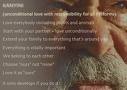
I remembered well the simple goodness of Bob Randall’s Kanyini;

I first encountered Bob as a commentator on cultural breakdown, whilst I was working as a social worker amongst men and women in mental health services, within broken communities in the UK, not Australia. Back then, any implications for religion seemed secondary. Now they seem inseperable.

But in the face of so much variety, so much diversity, is it really possible to make any general statements about indigenous spirituality? Can we claim that it is more ‘earth connected’ or more authentically human? Is it ‘better’ than what we have have experienced in our religious institutions?

This is the conversation I have been having with my four friends from far away – more of this to come.

I will leave you with a quote from the First Nations Version New Testament. This is a book written in English by a first nations pastor in America, working first with prisoners, later with others trying to reconcile the words of the Bible with their own culture and it’s colonial history. Here are the beatitudes, through first nations eyes.

It is the same, but also very different.

BLESSINGS OF THE GOOD ROAD Matthew chapter 5

3“Creator’s blessing rests on the poor, the ones with broken spirits. The good road from above is theirs to walk.

4“Creator’s blessing rests on the ones who walk a trail of tears, for he will wipe the tears from their eyes and comfort them.

5“Creator’s blessing rests on the ones who walk softly and in a humble manner. The earth, land, and sky will welcome them and always be their home.

6“Creator’s blessing rests on the ones who hunger and thirst for wrongs to be made right again. They will eat and drink until they are full.

7“Creator’s blessing rests on the ones who are merciful and kind to others. Their kindness will find its way back to them—full circle.

8“Creator’s blessing rests on the pure of heart. They are the ones who will see the Great Spirit.

9“Creator’s blessing rests on the ones who make peace. It will be said of them, ‘They are the children of the Great Spirit!’

10“Creator’s blessing rests on the ones who are hunted down and mistreated for doing what is right, for they are walking the good road from above.

11“Others will lie about you, speak against you, and look down on you with scorn and contempt, all because you walk the road with me. This is a sign that Creator’s blessing is resting on you. 12So let your hearts be glad and jump for joy, for you will be honored in the spirit-world above. You are like the prophets of old, who were treated in the same way by your ancestors.

SALT AND LIGHT

13“As you walk the good road with me, you are the salt of the earth, bringing cleansing and healing to all. Salt is a good thing, but if it loses its saltiness, how will it get its flavor back? That kind of salt has no worth and is thrown out.

14“As you walk the road with me, you are a light shining in this dark world. A village built on a hill cannot be hidden. 15No one hides a torch under a basket. Instead it is lifted up high on a pole, so all who are in the house can see it. 16In the same way, let your light shine by doing what is good and right. When others see, they will give honor to your Father—the One Above Us All.

FULFILLING THE SACRED TEACHINGS

17“When you hear my words, you may think I have come to undo the Law given by Drawn from the Water (Moses) and the words of the prophets. But I have come to honor them and show everyone their true meaning. 18I speak from my heart, as long as there is a sky above and an earth below, not even the smallest thing they have said will fade away, until everything they have said has found its full meaning and purpose.
Return to Kanyini…

A few years ago I wrote about this film on TFT;

Back in 2008 I wrote this;

The concept of kanyini has been brought to us by a beautiful man called Bob Randall who grew up as an aboriginal boy on the outskirts of a cattle station in central Australia. His father was a farmer of Scottish extraction, but appears to have had no concern for him at all. Like 50,000 other black kids of mixed race (between 1910 and 1970) he was forcibly removed from his mother, and sent to school hundreds of miles from home. He was forced to learn the rules of white culture- the clothes, the way of life, the religion. He learnt to appreciate the contradictions between the words of Jesus, and the actions of these, his followers. Since then, he has been a welfare worker, a songwriter, and author, and now, works with Australia’s black community.

To be a native Australian in these times is to be part of a community with huge problems- health, crime, substance misuse, soaring suicide rates. It is a community living in the shadows of the sky scrapers of new Australia, but also in the shadow of genocide, in which everything ans almost everyone who was part of the oldest culture in the world was all but destroyed.

It is also the story of a Diaspora of westerners (particularly Celts from Ireland and Scotland) often still under the shadow of their own experience of oppression and injustice, who become in turn the oppressors, murderers and rapists of a whole culture.

It is their story, but it is also ours. It is the story of what happens when we become disconnected from who we are.

Because to hear Bob Randall speak is to feel the pull of something wonderful. He describes a culture where people are connected to land. Birds, trees, all living things- they are family. The proof of this connection is that we are… alive! And because everything is connected, everything is OURS, not MINE. Everything is already created in a perfect state and our job is to become part of it.

Bob describes his memory of life as a kid like this;

These were beautiful people, because they lived in a beautiful way.

Bob’s concept of Kanyini feels right. It has simple truth- and seems to encapsulate the idea of community as I understand it should be. It has 4 components;

  • belief system

  • spirituality

  • land

  • family

I am reposting this partly because I found the film in full (as above), but also because I think that this list is a good one to consider as we look again at the year to come this is a good place to start.

If life for the people in this film started to unravel as they lost connection with the things above- might the same be true for us?

How do we challenge this, for ourselves and our communities? Our connection to something we can believe in/live for, our connection to the divine, our love of where we are located, our existence within an extended family (whether or not we have blood ties.

May 2013 be your year of Kanyini.

‘Road to recovery’, and ‘spiritual capital’….

BEWARE- this is quite a long post, but please bear with me dear readers, as I think it deals with rather important stuff… but then I would say that, wouldn’t I?

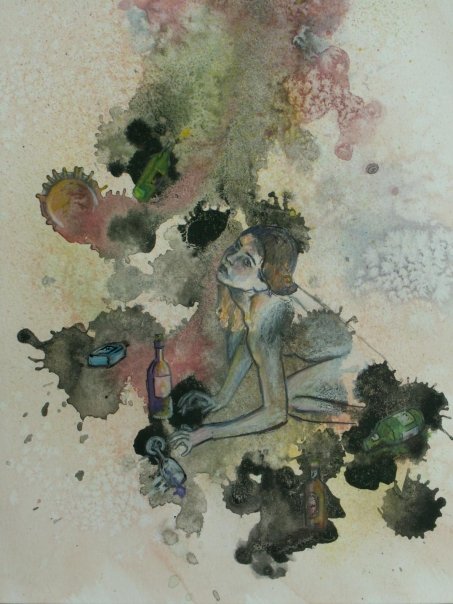
recovery

Powerful image from here.

I love it when you come across something unexpected that reeks of the Kingdom of God…

I spent all day yesterday at a development day and Annual General Meeting for the Cowal Council on Alcohol and Drugs. I am one of the volunteer directors of this company, who provide counselling and support for people with addictions in this area. I am proud to be part of the organisation, which like all such voluntary sector small companies has had some challenging times.

At present, I think it is a good healthy place to work, and brings genuine help to people who suffer from addiction to drugs and alcohol in our area. Our area (the west of Scotland) has seen too many lives cut short and families devastated by addiction. But there are many people who we are not able to help- and the purpose of yesterday was to try to consider how we might set our agenda for next year to do better.

I was part of a discussion yesterday about the concept of ‘recovery’.

Recovery is a word that I am very familiar with from the point of view of mental health services- in this context, it is life giving and hope enhancing. Check out the Rethink website, or the Scottish Recovery Network site. I seriously think that any Christians interested in seeing the words of of Isaiah 61 made real in our time should become familiar with what is happening in the area of Recovery- a lot of the sites are full of personal stories that make you weep. Chains are breaking, and we people of faith ought to celebrate and support as much as we can.

Until recently I was not aware of how much the concepts of recovery are starting to cross over into the the field of addiction.

This is an excerpt from a recent Scottish Government document called ‘The road to recovery‘, which specifically addresses addiction to drugs-

81. What do we mean by recovery? We mean a process through which an individual is enabled to move on from their problem drug use, towards a drug-free life as an active and contributing member of society. Furthermore, it incorporates the principle that recovery is most effective when service users’ needs and aspirations are placed at the centre of their care and treatment. In short, an aspirational, person-centred process.

82. In practice, recovery will mean different things at different times to each individual person with problem drug use. Above all, people aspiring to milestones in recovery must have the confidence that they can achieve their personal goals. For an individual, ‘the road to recovery’ might mean developing the skills to prevent relapse into further illegal drug taking, rebuilding broken relationships or forging new ones, actively engaging in meaningful activities and taking steps to build a home and provide for themselves and their families. Milestones could be as simple as gaining weight, re-establishing relationships with friends, or building self-esteem. What is key is that recovery is sustained.

83. Recovery as an achievable goal is a concept pioneered in recent years with great success in the field of mental health. The Scottish Recovery Network has been raising awareness of the fact that people can and do recover from even the most serious and long-term mental ill-health. 32

84. The strength of the recovery principle is that it can bring about a shift in thinking – a change in attitude both by service providers and by the individual with the drug problem. There is no right or wrong way to recover. Recovery is about helping an individual achieve their full potential – with the ultimate goal being what is important to the individual, rather than the means by which it is achieved.

‘Recovery’ is essentially a collection of grass roots movements growing out dissatisfaction by users of services who are sick of being ‘done to‘ by professionals, and are looking to break free- not only from the specific difficulties affecting their lives, but also from the industry and economy generated by medical, social and political attempt to ‘cure’ them. The fact that recovery is now forming a part of government documents is both a triumph and a threat. It is a threat because there is a real danger that the word becomes just a word. It stops to carry any passion, or any hope…

But back to our discussion yesterday.

One of the things evident to anyone seeking to discuss the possibility of recovery with people who have been forced beyond the edges of society by addiction, mental illness or stigma and discrimination, is that there can be no recovery without mental wellbeing, and there can be no mental wellbeing without real opportunities to build friendships, find meaningful activities and participate in our towns and communities as both recipients and a contributors.

I have blogged several times about the idea of Kanyini, and how the loss of identity, purpose and spirituality amongst Aboriginal people has led to a loss of their very selves. Anyone who has spent any time amongst people with addictions (who have may also have lost everything) will resonate with Kanyini. Bob Randall speaks movingly of how his own people have fallen into addiction, isolation and mental illness…

There was a discussion yesterday about how we might be able to encourage these things in our organisation, and more importantly, our community-

  1. Recovery capital– how do we give power and control back to people who use our services, and provide change opportunities, not ‘slots for treatment’?
  2. Social capital– how do people find meaningful social connections, from a position where trust and opportunities have all but disappeared?
  3. Spiritual capital- this gave some pause for thought, so more on this one below!

What is ‘Spiritual capital’? I suppose this rather depends on your definition of spirituality- but lets not get into that just now. In this context, I think Spiritual capital refers to MEANING. The meaning on life, the meaning of love, the meaning of small stuff, and the biggest stuff.

Most of us do not need to dig into this too much- we have no time, and the scaffolding around our lives- jobs, marriages, mortgages, etc- means that we are insulated from the biggest questions. But people who have none of this scaffolding and have reached the end of all their coping, even the bottom of the bottle- these people have a whole different place to look at spirituality from.

Interestingly, the discussion in one of the other groups seemed to get into RELIGION. There are some Christian organisations involved in addictions work. Some of them use high octane charismatic deliverance kind of stuff- which to be honest, I kind of find slightly disturbing. But then again, if it is meaningful and helpful to people involved, great. My fear is that one addiction is replaced by another on, called GOD- and this can indeed be a dangerous addiction for some…

But I wonder if Spiritual capital can be seen more commonly in encouraging people to consider things relating to the heart of who we are, rather than the material stuff that we surround ourselves with…

And in this, I think people who have suffered addiction, or experienced mental health problems, have much to teach the rest of us…

As for me, it started me thinking about a writing project, and I had a great conversation about the possibility of a ‘recovery cafe’ with my mate Ali…

Community… the journey into we

For much of my life, I have longed for community.

I have experienced flickers of what this might mean- but only in shadow, and sometimes only in hindsight.

The motivation for community comes through my understanding of the way Jesus called us to live- a collaboration of imperfect people who make a decision to love and to lay down self in order to serve others. And in doing this, others might see the Father God reflected in their gathering and their living.

If I look honestly at myself, this longing for community also arises from my own need to find a place of acceptance and security. A home from which to adventure, and a place to return to for healing and encouragement. (Perhaps in this longing, community starts again to be about ME?)

And mixed in with this is a sort of unexpressed idealistic theory that tells me that if we are able to move towards a pure community- then all things will be possible. Broken people will find healing, creative people will find expression. Needs will be met through sharing and burdens will be carried together. And because this community will shine like a beacon into its context, then it will become infectious- missional.

Kind of reminds you of the stories in the book of Acts? These stories have always been my inspiration. The homes opened up, the holding of things in common, the motivation towards the poor. Above all, the resting and the working of the Holy Spirit…

So, what gets in the way?

I know from my own experience that community is not always benign. Sometimes, the closer we get to one another, the more damage we do- the old hedgehogs analogy. The more we open up our lives, the more our facades of niceness are eroded, and the inner grasping kids emerge into the gathering.

Some people bring a toxicity with them that most communities will struggle to contain. There were people like that in the early church- Paul mentions them, and advises his friends to have nothing more to do with them. I bear the scars of broken and hurtful relationships- like we all do. I still torture myself in the making of decisions to walk away.

Then there is the issue of leadership and power. It will always become an issue at some point. Some take power deliberately, and use it indiscriminately for their own ends. Others are surprised to find that something of themselves has become oppressive to others almost unwittingly.

But perhaps above all, in Christan communities, we have lost the meaning of WE, and allowed our spirituality to be centred on the ME. WE have allowed our connections to one another, our way of living, and our spirituality, to be indistinct from the world about us.

I have spoken elsewhere about Kanyini, and how the original Australian people understood community. Once lost, this community is in danger of loosing themselves. We Christians began as people defined by community. It was out identity, and the beauty of it changed the world for ever.

But now, we see an overwhelming emphasis on personal morality, private experience, and even the accumulation of personal wealth, health and happiness. The danger is that people come to gather together in churches that are removed from the dirty messy stuff of life, to celebrate an abstract form of collectivism that is almost like a fossil version of the real thing. We forget our calling, our identity as people defined by our communality, our communion together, with God.

I have no answers of course- this would imply that I have sorted this out, and I certainly have not. But neither am i prepared to let go of my idealism.

I will lay down again for friends, knowing that I will be trampled on at times.

I will open wide the doors of my house, even though I resent the intrusion.

I will believe that this network of people God placed me within has a transformative power- not just for the community itself- but for all who are blessed by contact with it. And where the contrary is true- I will ask forgiveness for my own imperfection.

And I will chose to believe that where we gather, there is God in the midst of us…

Kanyini

Thanks to the heads up from Craig in Australia, I have been doing some research and thinking about the concept of Kanyini. Craig was kind enough to send this to me in connection to some ‘wilderness meditations’ we are working on- finding locations to provide cues and context for drawing close to God (some of this stuff can be found here; www.aoradh.org/index.php?option=com_content&task=category&sectionid=24&id=80&Itemid=62)

The concept of kanyini has been brought to us by a beautiful man called Bob Randall who grew up as an aboriginal boy on the outskirts of a cattle station in central Australia. His father was a farmer of Scottish extraction, but appears to have had no concern for him at all. Like 50,000 other black kids of mixed race (between 1910 and 1970) he was forcibly removed from his family, and sent to school hundreds of miles from home. He was forced to learn the rules of white culture- the clothes, the way of life, the religion. He learnt to appreciate the contradictions between the words of Jesus, and the actions of these, his followers. Since then, he has been a welfare worker, a songwriter, and author, and now, works with Australia’s black community.

To be a native Australian in these times is to be part of a community with huge problems- health, crime, substance misuse, soaring suicide rates. It is a community living in the shadows of the sky scrapers of new Australia, but also in the shadow of what amount to a genocide, in which everything about what has been described as the oldest culture in the world has been all but destroyed.

But it is also the story of a Diaspora of westerners (particularly Celts from Ireland and Scotland) often still under the shadow of their own experience of oppression and injustice, who become in turn the oppressors, murderers and rapists of a whole culture.

It is their story, but it is also ours. It is the story of what happens when we become disconnected from who we are.

Because to hear Bob Randall speak(check out the links below) is to feel the pull of something wonderful. He describes a culture where people are connected to land. Birds, trees, all living things- they are family. The proof of this connection is that we are… alive! And because everything is connected, everything is OURS, not MINE. Everything is already created in a perfect state and our job is to become part of it.

Bob describes his memory of life as a kid like this;

These were beautiful people, because they lived in a beautiful way.

Bob’s concept of Kanyini feels right. It has simple truth- and seems to encapsulate the idea of community as I understand it should be. It has 4 components

  • belief system
  • spirituality
  • land
  • family

I very much recommend checking out the film about Bob from the schools site below, or there are other links to the Kanyini film on the second link.

www.teachers.tv/video/22396


www.wyldheart.co.uk/kanyini.html